by Lorato | Sep 3, 2026 | Accolades and Achievements, All News, Alumni, SMU Media, Student Media
Sefako Makgatho Health Sciences University (SMU) has recognised the research achievements of Professor Tshwafo Elias Motaung, Head of the Department of Chemistry and Chemical Technology, following his attainment of a National Research Foundation (NRF) C2 rating.
 The C2 rating places Prof Motaung among established researchers whose recent research outputs demonstrate sustained productivity, coherence and continued engagement with their field. According to the NRF classification, reviewers are “firmly convinced that the applicant is an established researcher”, with the rating recognising researchers who have produced quality work and demonstrated the ability to conceptualise problems and apply appropriate research methods.
Reflecting on the achievement, Prof Motaung said the rating represents an important milestone in his academic and research career. “The NRF C2 rating is a significant milestone for me because it represents recognition of sustained research engagement and productivity over many years. I see it not only as a personal achievement, but also as an acknowledgement of the contribution of my students, research collaborators and colleagues who have been part of this journey.”
Prof Motaung’s academic journey began at Shakhane Secondary School in Makeneng, Qwa-Qwa, where he passed matric with distinction in Mathematics and Natural Sciences. He subsequently obtained a BSc in Chemistry, a BSc Honours, and an MSc from the University of the Free State, followed by a PhD in Chemistry from the University of KwaZulu-Natal and a postgraduate diploma in higher education.
His professional career spans more than two decades and includes academic, research and leadership positions. He began his career at the University of the Free State as a tutor of Physics and Chemistry and laboratory assistant before progressing to Assistant Professional Officer and Junior Lecturer. He later served as a Senior Researcher and Research Leader at the Council for Scientific and Industrial Research (CSIR) in Port Elizabeth.
He subsequently became an Associate Professor and Head of Department at the University of Zululand, later serving as Professor and HOD. Between 2021 and 2024, he was a Senior Professor and head of the Materials Science niche area at the University of South Africa. Since October 2024, he has served as Senior Professor, SMU Senate Representative and HOD at SMU.
Prof Motaung’s research focuses on the preparation and characterisation of polymer blends, composites and nanocomposites, as well as the extraction, preparation and characterisation of cellulose. His work has included research into biomass, nanomaterials, renewable energy, water treatment and sustainable materials.
Speaking about the direction of his research, Prof Motaung said scientific research should ultimately contribute to addressing practical challenges facing society. “My research interests are strongly connected to the need for sustainable solutions. Materials science provides opportunities to transform renewable resources and waste materials into useful products and technologies, particularly in areas such as water treatment, renewable energy and sustainable materials. The objective is to ensure that our research does not remain confined to the laboratory but contributes meaningfully to society.”
His research record includes numerous peer-reviewed publications, conference presentations, book chapters and postgraduate supervision. He has supervised or co-supervised students at the Honours, MSc, and PhD levels and has successfully supervised five postdoctoral researchers.
For Prof Motaung, developing the next generation of researchers remains an important part of his academic responsibilities. “Research excellence is also about building people. Supervising postgraduate students and mentoring emerging researchers help us develop the skills, knowledge, and confidence required to sustain the research enterprise. I consider the success of students and young researchers who have worked with me to be an important part of my own academic journey.”
His international research experience includes projects in India, Italy, France and Sweden, supported by organisations including the NRF and CSIR. He has also delivered keynote and invited presentations at international scientific conferences. The C2 rating adds to a career marked by research and innovation awards, including recognition as an Emerging Researcher by the CSIR and as a Productive Researcher at the University of Zululand.
Looking ahead, Prof Motaung said the achievement would encourage him to deepen his research collaborations and continue contributing to the development of research capacity at SMU. “This recognition motivates me to continue pursuing impactful research, strengthen collaborations and create opportunities for postgraduate students and emerging researchers. I am particularly interested in contributing to a research environment at SMU where innovation, collaboration and the development of sustainable solutions are encouraged.”
For SMU, Prof Motaung’s achievement reinforces the university’s commitment to excellence and innovative research. His work contributes to the institution’s broader mission of advancing knowledge while supporting research, education, and innovation in ways that can advance sustainable development and societal wellbeing.
By Tumelo Moila

by Lorato | Sep 3, 2026 | All News, Alumni, SMU Media, Student Media
Sefako Makgatho Health Sciences University (SMU) has reaffirmed its commitment to building a more inclusive and accessible learning environment through a disability awareness workshop that brought together staff, students and disability inclusion practitioners at the SMU Sports Complex.
 The initiative formed part of the university’s ongoing efforts to deepen understanding of disability, challenge misconceptions and promote meaningful interaction with persons living with disabilities. The workshop encouraged participants to reflect on the barriers that may prevent people with disabilities from participating fully in university life.
Tshidiso Ntshabele, SMU Deputy Director: Campus Health and Counselling and Chairperson of the South African Association of Campus Health Services, emphasised the importance of making disability awareness an integral part of the university experience. “Disability awareness must not be treated as a once-off initiative,” Ntshabele said. “It should become part of how we engage with one another, develop our systems and create an environment in which every member of the university community feels valued and included.”
The programme also featured Dr Gundo Nepfumunda, Assistant Director at the Office of the Premier in Limpopo, who addressed disability inclusion and special programmes. Her presentation highlighted the need for institutions to move beyond awareness and towards meaningful participation and equal opportunities for persons with disabilities. “True inclusion requires more than good intentions,” Dr Nepfumunda said. “We need systems and practices that enable persons with disabilities to participate equally and with dignity.”
The workshop also drew on the experience of institutions that have established disability offices and support structures, including Tshwane University of Technology (TUT) and the University of Limpopo (UL). Their participation enabled SMU staff and students to learn from existing practices and consider approaches that could strengthen disability support across the university.
 Mosimaneotsile Mohlake from the Reakgona Disability Centre at UL delivered a presentation on disability etiquette in higher education, offering practical guidance on respectful communication and engagement. “Sometimes barriers are created unintentionally through assumptions and everyday behaviour,” Mohlake said. “Respectful engagement begins with listening, asking rather than assuming, and recognising the person before the disability.”
One of the workshop’s most poignant moments came when second-year Dental Therapy student Kamogelo Maseema shared her lived experience of navigating university life as a person with a disability.
Her testimony gave participants a personal perspective on the challenges students with disabilities can encounter, while underscoring that inclusion has a direct impact on educational experience, wellbeing and a sense of belonging. “Inclusion becomes meaningful when people listen to our experiences,” Maseema said. “Students with disabilities should be part of the conversations and decisions that affect our lives.”
Beyond the formal presentations, the workshop became a celebration of inclusion, with performances by SMU mascots, music and dancing creating an energetic atmosphere.
The event reinforced the collective responsibility of the university community to advance dignity, accessibility, equality and participation. It also reflected SMU’s broader institutional commitment to respect, diversity and student-centredness.
For SMU, the workshop marked another step towards cultivating a campus culture in which students and staff are equipped to understand disability, challenge barriers and help create an environment where everyone can participate and thrive.
By Dimakatso Modise

by Lorato | Sep 3, 2026 | Accolades and Achievements, All News, Alumni, SMU Media, Student Media
What began as a childhood dislike of Mathematics and Science culminated in an outstanding academic achievement for Hermy Madimetja Mantjiu (23), who graduated with a BSc Honours in Statistics (summa cum laude) and received the Dean’s Excellence Awards for Outstanding Performer and Overall Achiever during the 2026 School of Science and Technology’s autumn graduation ceremony at Sefako Makgatho Health Sciences University (SMU).
 Mantjiu, originally from Kalkspruit (Ga-Magongoa) in Limpopo and raised in Soshanguve, Block SS Extension 5, known as Jukulyn, credits hard work, discipline, perseverance and the support of his family for shaping his journey. “I did not always enjoy Mathematics and Science. In fact, I hated both subjects at first,” Mantjiu said.
His attitude towards the subjects changed around Grade 11, when he developed a genuine interest in understanding how things work and began challenging himself academically. That turning point ultimately led him towards Statistics and a university career that has seen him progress from student and academic tutor to part-time junior lecturer.
One of the people who played a significant role in developing his passion for Mathematics was his former class teacher, Emmanuel Sekepe. Mantjiu said Sekepe’s enthusiasm for the subject inspired him and continues to influence him in his role as a mentor. “My former class teacher, Mr Emmanuel Sekepe, made me fall in love with Mathematics,” he said. “What makes our relationship even more meaningful is that he is now my mentor.”
His mother, Priscilla Mantjiu, was also a constant source of encouragement, reminding him to practise, remain focused and continue working towards his goals. Mantjiu also acknowledged the support of his late friend Precious Maswanganyi, his former roommate at Arebeng 1 student residence (Pretoria), and his close friend, Sphesihle Moloi, particularly during difficult periods.
“Meeting Hermy in 2022 was a hidden blessing. He became like family—kind-hearted, selfless, and always willing to help others. His academic success is no accident; it reflects his hard work, resilience, and willingness to learn. I saw him struggle with Linear Algebra, but with encouragement, he overcame that fear and excelled. Seeing how far he has come fills me with pride, knowing I played a small part in his journey,” Moloi recalls.
For Mantjiu, achieving summa cum laude represents far more than an academic distinction. “It represents years of hard work, sacrifice, consistency and believing in myself,” he said.
Consistency became particularly important during his transition from high school to university. He described his first year as a major adjustment, requiring him to adapt to different modules, a faster pace of learning and greater independence. His response was to establish a daily study routine. “I made a commitment that I would not finish a day without studying something, even if it were only a small amount,” he said.
 His journey was not without moments of doubt. During his second year, Mantjiu considered abandoning his degree, but faith, encouragement, and his determination to continue helped him persevere.
Today, his academic journey extends beyond his own studies. As a junior lecturer in the Department of Statistical Science at SMU, he helps first-year students understand Statistics, an experience he says has strengthened his own knowledge by requiring him to explain complex concepts from different perspectives.
Mantjiu believes Statistics and data analytics can contribute to evidence-based decision-making in healthcare, education, business and government. With skills in R, Power BI, Excel and Python, he hopes to contribute through research, teaching and the practical application of Statistics.
He also wants to inspire young people who may doubt their ability in Mathematics and Science. “Do not decide that you are incapable before you have given yourself a real chance,” he advised. “Practise consistently, ask questions when you do not understand, and do not be afraid of making mistakes.” Mantjiu describes his journey in three words: “Consistency, perseverance and faith.”
His achievement reflects the transformative potential of education and the importance of institutions such as SMU in developing academic excellence, cultivating talent and preparing graduates to contribute meaningfully through education, research and professional practice.
By Tumelo Moila

by Lorato | Sep 3, 2026 | All News, Alumni, SMU Media, Student Media
Sefako Makgatho Health Sciences University (SMU) has celebrated the outstanding academic achievement of Thapelo Motsetse (29), who graduated with a BSc in Mathematical Science summa cum laude and was recognised as the Overall Top Achiever among BSc undergraduates.
 Motsetse’s achievement is the culmination of three consecutive years of academic excellence, having been recognised as a top achiever from 2023 to 2025. For him, the accomplishment represents far more than academic recognition. “It means everything to me,” he said. “It represents three consecutive years of being a top achiever. It shows consistency, growth and dedication.”
Raised in Kutlwanong (Odendaalsrus), in the Free State, Motsetse attended JC Motumi High School. Growing up under the care of a single mother, Lisebonyane Annacleta Motsetse, he says his childhood instilled in him discipline, self-reliance and a strong belief in education. “As a child, I was curious and quiet, always drawn to problem-solving,” he said. “I learned early that education was the one thing that could change my future.”
His natural aptitude for mathematics became evident from an early age. While other subjects demanded considerable effort, mathematics consistently came naturally to him, eventually shaping his decision to pursue it as a career.
His transition to university-level mathematics, however, presented significant challenges. Modules such as Advanced Calculus, Abstract Algebra, and Mathematical Analysis demanded a higher level of critical thinking, while financial pressures compounded the difficulties of undergraduate study. Motsetse credits disciplined study groups, consultations with lecturers, early-morning revision and regular exercise for helping him remain focused.
“Discipline, intensive and early morning studying while exercising and training my body at the gym every day” were central to his routine, he said. “I believe a healthy body supports a healthy mind.”
 His experience at SMU also extended beyond academic achievement. As a Statistics Tutor, Motsetse has developed his leadership, communication and mentoring skills while supporting fellow students. He believes tutoring has strengthened his own understanding of mathematics and statistics. “Many students are not bad at mathematics; they just need it explained differently,” he said.
Motsetse’s academic interests span mathematics, statistics, modelling, and programming. With skills in Python, R, Stata and Excel, he sees the integration of these disciplines as essential to solving complex real-world problems. “Mathematics gives us the theory, statistics gives us the method to interpret data, modelling helps us predict, and programming makes it practical,” he said.
Now pursuing a BSc Honours in Statistics at SMU, Motsetse has already achieved distinctions in Probability Theory, Sampling Theory, Biostatistics, Multivariate Analysis and Categorical Data Analysis. His postgraduate ambitions include developing expertise in machine learning and statistical inference in preparation for a career in data science and statistical research.
Ultimately, Motsetse hopes to use his expertise to address economic and health challenges while inspiring young people from communities such as Kutlwanong to pursue demanding academic careers. “I want to contribute to a South Africa where numeracy and statistical literacy are improved, and where we use data not just for profit, but to uplift communities, create jobs and solve real problems.”
Through academic excellence, research potential and a commitment to mentorship, Motsetse’s journey reflects SMU’s contribution to developing skilled mathematical scientists equipped to advance innovation, evidence-based decision-making and healthcare and societal development in South Africa and beyond.
By Tumelo Moila

by Lorato | Sep 3, 2026 | All News, Alumni, SMU Media, Student Media
Sefako Makgatho Health Sciences University (SMU) has strengthened its commitment to community health education by equipping young learners with knowledge to make informed decisions about substance use during a Drug and Substance Abuse Campaign at Tsitsing Primary School in Rustenburg, North West.
 Held in strategic collaboration with the Office of Kgosana Koketso Rakhudu – Kgotla Ya Rakhudu Tsitsing, the campaign targeted Grade 6 and 7 learners under the theme, “Empowering Young Minds, Choosing a Better Future”. The initiative carried the clear message: “Say No Today and Choose Life Forever.”
The campaign sought to raise awareness of the physical, psychological and social consequences of substance abuse while encouraging learners to protect their health, education and future aspirations. It was facilitated by a multidisciplinary team comprising Paballo Maledu, Community Health Interventions Manager at the Office of Kgosana Koketso Rakhudu; Dr Evah Molapisi, Physiotherapy Lecturer at SMU; and Lebogang Lefine, Lecturer and Occupational Therapist at SMU.
Dr Molapisi stressed the importance of engaging young people before harmful behaviours become established. “Early intervention is critical when addressing substance abuse among young people. By engaging learners while they are still developing their identities, values and decision-making skills, we have an opportunity to equip them with knowledge that can influence the choices they make throughout their lives,” she said.
She added that health sciences professionals have a responsibility to take health education beyond the university and clinical environment and directly into communities.
The programme addressed the risks associated with substances including alcohol, cigarettes, cannabis, vapes, hubbly bubbly and other drugs. Learners were encouraged to consider how substance use could affect their everyday functioning, relationships, education and participation in recreational activities.
 Lefine said empowering learners with accurate information was essential to building healthier communities. “Young people need to understand that their choices today can have a lasting impact on their health, education, relationships and future aspirations,” she said. “Through this programme, we wanted to create an environment where learners could ask questions, understand the consequences of substance use and recognise that they have the power to make healthier choices.”
The occupational therapy component focused on how substance use can interfere with learners’ participation in meaningful daily activities, social interaction, education and recreation. The physiotherapy component highlighted the potential impact on physical function, including breathing, cardiovascular fitness, coordination, balance, reaction time, energy levels and recovery after physical activity.
Learners were encouraged to reflect on activities they enjoy, including soccer, netball, running, dancing, cycling, swimming and playing with friends. The message was direct: “Your body is your greatest tool for movement, play and sport. Protect it.”
The partnership demonstrates the value of taking SMU’s health sciences expertise into communities to address health challenges through education and prevention. By engaging learners at an early stage, the initiative supports the development of an informed and resilient generation capable of making healthier choices.
Through community engagement initiatives such as this campaign, SMU continues to advance its mission of transforming health services through excellence and innovation while contributing to the health and wellbeing of the communities it serves.
By Dimakatso Modise

by Lorato | Aug 26, 2026 | All News, Alumni, SMU Media, Student Media
Sefako Makgatho Health Sciences University (SMU) reaffirmed its position as a leading institution for health sciences research and innovation as it hosted the 2026 SMU Research Days from 19 to 21 August under the theme, “Artificial Intelligence Frontiers and Technology in Health Sciences: Transforming Science, Healthcare and Education.”
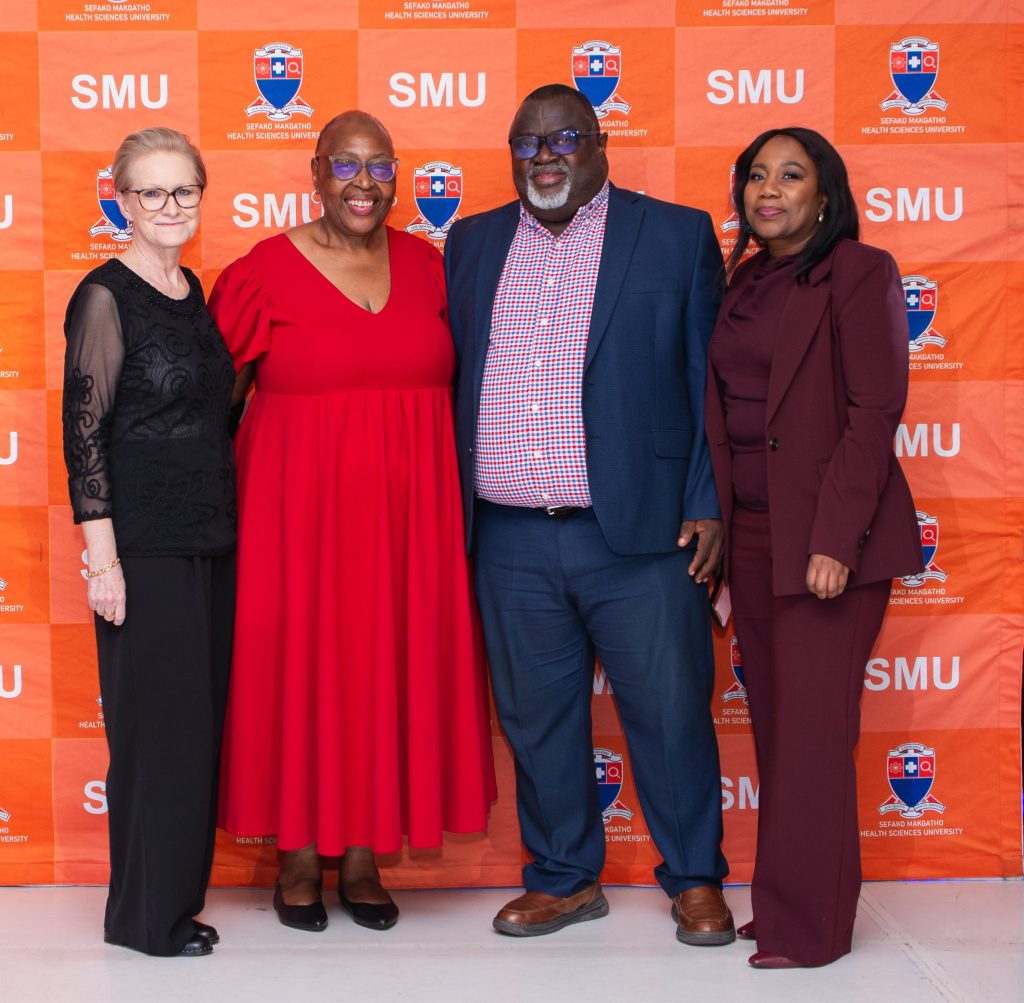 The three-day programme brought together researchers, academics, undergraduate and postgraduate students, postdoctoral research fellows and independent researchers to showcase work addressing critical challenges in science, healthcare and education. The event reflected SMU’s commitment to using research and innovation to advance knowledge and contribute meaningful solutions to society.
Officially opening the programme, Professor Douglas Maleka, Acting Deputy Vice-Chancellor: Academic and Research, highlighted the central role of research and innovation in advancing SMU’s academic mandate and strengthening its contribution to society.
A key highlight was the keynote address by Professor Joshua Oluwole Olowoyo, an environmental health scientist specialising in environmental toxicology, exposure assessment and human health risk assessment. His presentation, “Navigating the New Frontier: Artificial Intelligence Utilisation, Ethics, and Competency in Science and Health Sciences,” examined the opportunities and challenges presented by artificial intelligence in science and healthcare.
Prof Olowoyo stressed that the adoption of AI must be matched by appropriate competencies, ethical safeguards and responsible use. His message aligned closely with the Research Days theme, demonstrating how emerging technologies can support scientific discovery, healthcare delivery and education when implemented with rigour and accountability.
Research presentations spanned Medicine, Health Care Sciences, Pharmacy, Dentistry, and Science and Technology, showcasing the breadth of scholarship within SMU. The diversity of projects demonstrated the university’s contribution to research addressing both local and global health challenges while providing opportunities for emerging researchers to develop and share their work.
The programme culminated in the SMU Research Days Gala Dinner and Awards Ceremony on 21 August at Batter Boys in Montana, Pretoria. Acting Vice-Chancellor Professor Dini Mawela joined university leadership, researchers, academics and guests in celebrating the achievements of the research community. Gauteng MEC for Health and Wellness, Honourable Faith Mazibuko, attended as a guest speaker and underscored the importance of research and innovation in strengthening healthcare systems and improving health outcomes.
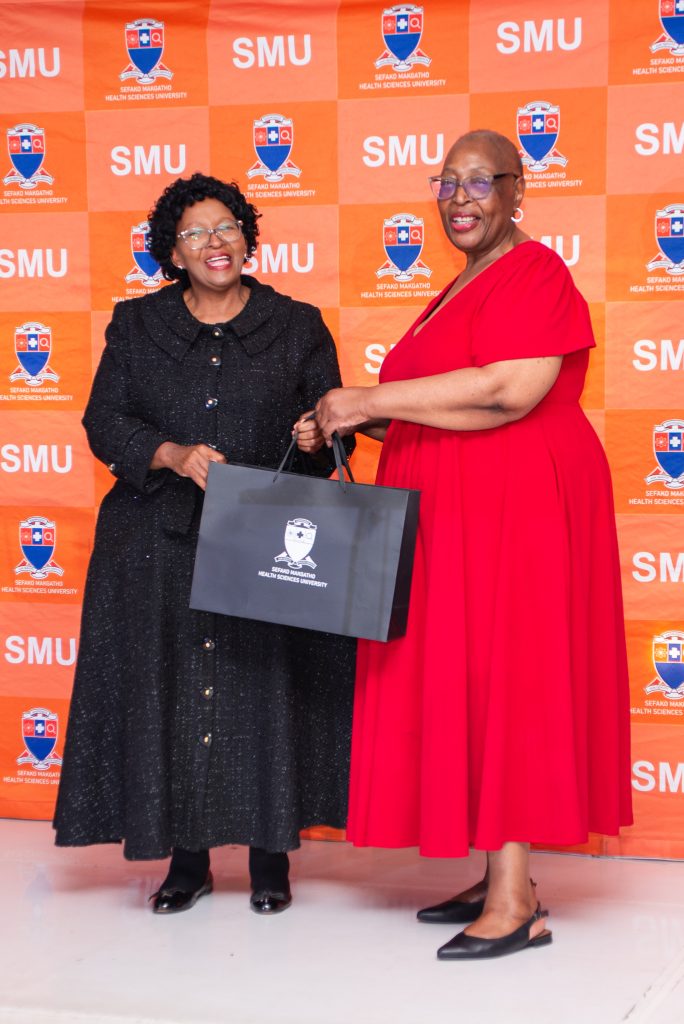 The evening also recognised the 2026 Research Days winners. Eliyah Sischy won the Poster Presentations category for “Kaposiform Haemangioendothelioma Complicated by Kasabach-Merritt Phenomenon”. Jasmine Ntokozo Sizani took first place among Undergraduate Students for “The Influence and Impact of Job Shadowing and Early Exposure to Student-Led Research”, while Tukiso Magomane Matlakala won the Postgraduate Students category for “Knowledge of South African Audiologists on the Management of Tinnitus”.
Among Postdoctoral Research Fellows, Refilwe Matshitse ranked first for research on the green synthesis of graphene quantum dots and carbon dots with potential antiviral properties against SARS-CoV-2. Candice Van Wyk won the Independent Researchers category for her study on the association between self-reported harmful oral habits and temporomandibular joint disorders among oral hygiene students.
The awards were presented by members of the judging panel and university leadership, including Professor Gloria Selabe, Professor Mapaseka Seheri and Professor Maleka.
The successful conclusion of SMU Research Days 2026 reaffirmed the university’s role in cultivating a vibrant research culture and developing researchers equipped to address complex health challenges. As AI continues to reshape the health sciences, SMU remains committed to advancing excellence, innovation and ethical responsibility in research, education and healthcare.
By Dimakatso Modise