by Lorato | Nov 20, 2025 | All News, SMU Media, Student Media
In a decisive move to tackle the escalating global threat of antimicrobial resistance (AMR), Sefako Makgatho Health Sciences University (SMU) and Dr George Mukhari Academic Hospital (DGMAH) hosted a high-impact Antimicrobial Stewardship (AMS) Symposium on Monday, 17 November 2025. The event forms part of global, World Antimicrobial Resistance Awareness Week (WAAW), observed annually from 18–24 November under the theme: “Act Now: Protect Our Present, Secure Our Future.”
 AMR occurs when bacteria, viruses, fungi, and parasites no longer respond to standard treatments, rendering common infections increasingly difficult to manage. The consequences extend far beyond clinical settings, threatening food systems, animal health, and the environment. WAAW seeks to raise awareness, strengthen best practice, and mobilise urgent One Health collaboration to curb the spread of drug-resistant pathogens.
The symposium brought together pharmacists, medical practitioners, microbiologists, nurses, and other professionals committed to improving antimicrobial use across the healthcare system. Speakers delivered focused presentations on key stewardship challenges and emerging solutions. Highlights included:
- Global Point Prevalence Survey findings in Outpatient departments, presented by SMU/DGMAH clinical pharmacists Lindiwe Mnukwa, Ama Annor, Tsholofelo Makgale, Pinky Ntuli, and Nombuyiselo Shokane.
- Microbiology susceptibility trends for 2025, presented by Dr Grace Ntlemo, Pathologist / Microbiologist,
- Infection Prevention and Control (IPC) – AMS contributions by Matron Millicent Boshoga, IPC – Assistant Manager Nursing, DGMAH.
- Evidence-based guidance on Ceftazidime–Avibactam provided from Pfizer Pharmaceuticals by Silindokuhle Davidson (Medical Science Liaison Hospital Business Unit).
- Targeted treatment strategies for Clostridoides difficile, presented by Clinical Pharmacist, Tsholofelo Makgale, SMU/DGMAH.
- Resistance patterns in adult intensive care units by Dr Khunou, ICU Medical doctor/ Consultant, DGMAH.
- Infectious disease case studies led by Dr Thandekile Manzini, Infectious Disease Specialist (SMU/DGMAH) & Dr Ntsizi, Internal Medicine medical doctor (SMU/DGMAH) and Fumani Baloyi, Medical student (SMU)
- Updates on Gauteng’s Provincial antimicrobial guidelines delivered by Professor Andries Gous, Clinical Pharmacy Department/AMS Chairperson, SMU/
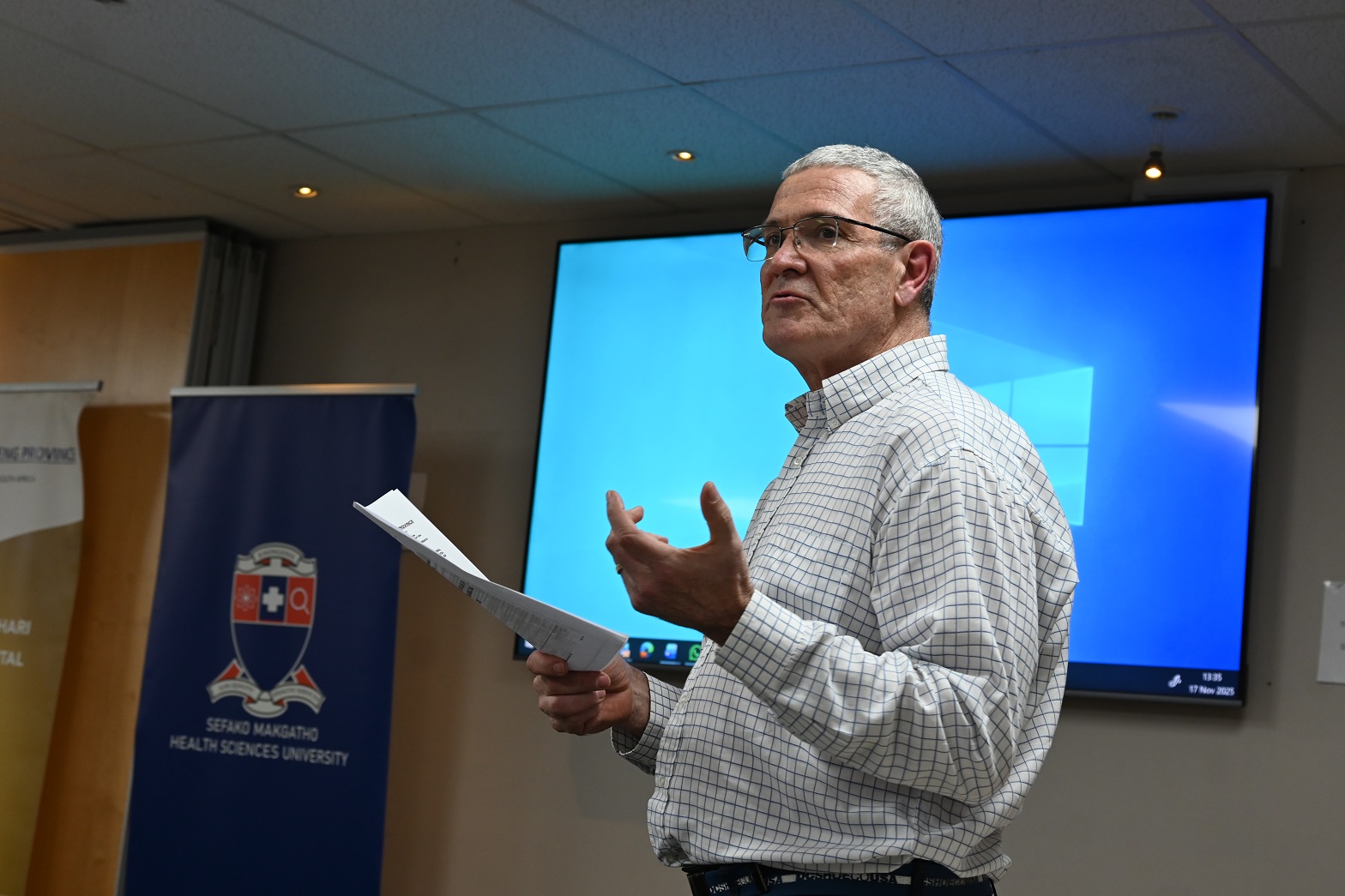 The event was organised by Professor Andries Gous, Chairperson of the DGMAH AMS Committee, in collaboration with the hospital’s Clinical Pharmacy team, SMU’s Department of Clinical Pharmacy, and Pfizer Pharmaceuticals. Attendees were also provided with campaign materials and patient information leaflets to extend stewardship advocacy beyond the symposium.
Its timing could not have been more relevant. “On clinical rounds, I see how challenging some infections have become to treat. The session on hand hygiene was a real eye-opener—sanitisers are our first line of defence against dangerous pathogens. This symposium has been incredibly informative, and I’m eager to put these lessons into practice every day,” said Emmanuella Owusu, a Master of Pharmacy in Clinical Pharmacy student at SMU.
Professor Gous underscored the urgency: “AMR is not a distant challenge—it is happening now. Every stakeholder, from healthcare providers to environmental managers, has a role to play. Immediate, coordinated action is essential to protect our present and secure our future.”
Alongside the symposium, the Gauteng Department of Health has issued two significant circulars guiding antimicrobial governance. The first, concerning Ceftazidime-Avibactam, formally notifies stakeholders of updates related to the medicine.
The second circular provides detailed directions on the Provincial Antimicrobial Therapeutic Guideline. It instructs pharmacy departments to select antimicrobial options aligned with stock availability, emphasising that the guideline supports—rather than replaces—clinical judgement. Healthcare workers are encouraged to consult infectious disease specialists, microbiologists, or clinical pathologists before making recommendations. Approved in November 2024 and June 2025, the guideline was implemented by institutional committees, supported by provincial stewardship structures.
Together, the symposium and newly issued circulars demonstrate a clear provincial commitment to strengthening antimicrobial stewardship. Gauteng’s health sector is intensifying surveillance, expanding education, and driving coordinated action to safeguard life-saving medicines and protect future generations.
By Tumelo Moila
by Lorato | Nov 20, 2025 | All News, SMU Media, Student Media
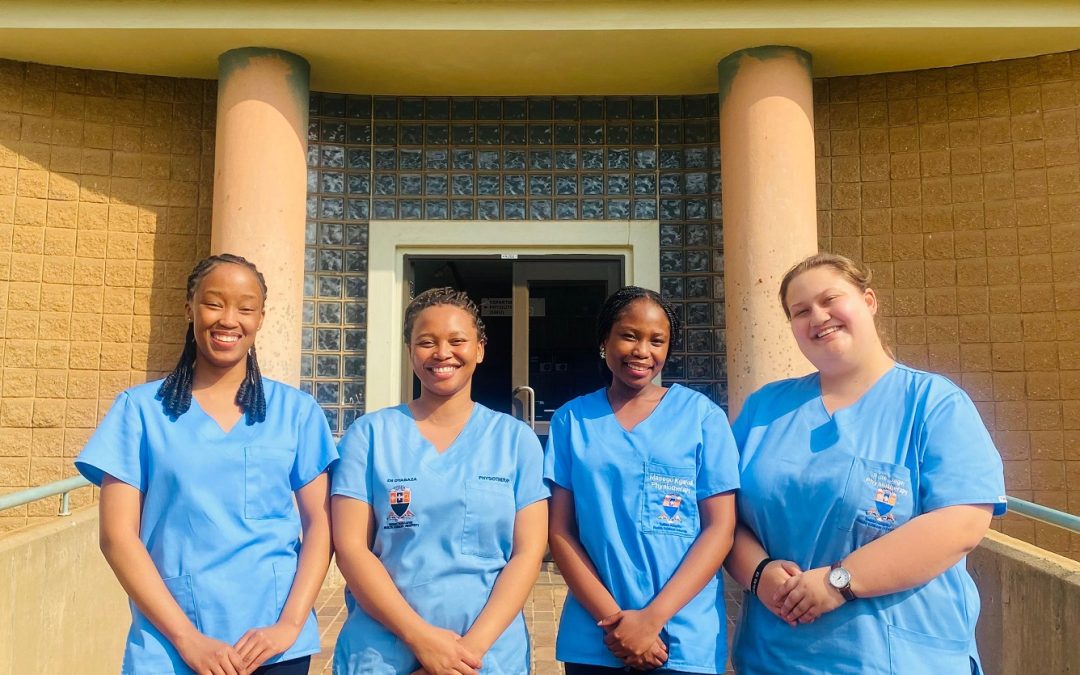
A simple moment of frustration at Soshanguve Clinic 3 has grown into a powerful community health initiative led by Sefako Makgatho Health Sciences University (SMU)’s fourth-year Physiotherapy student: Toys With a Purpose. What began as a struggle to assess a four-year-old patient without suitable play tools has evolved into a dedicated paediatric therapy space designed to make rehabilitation more effective, engaging, and child-centred.
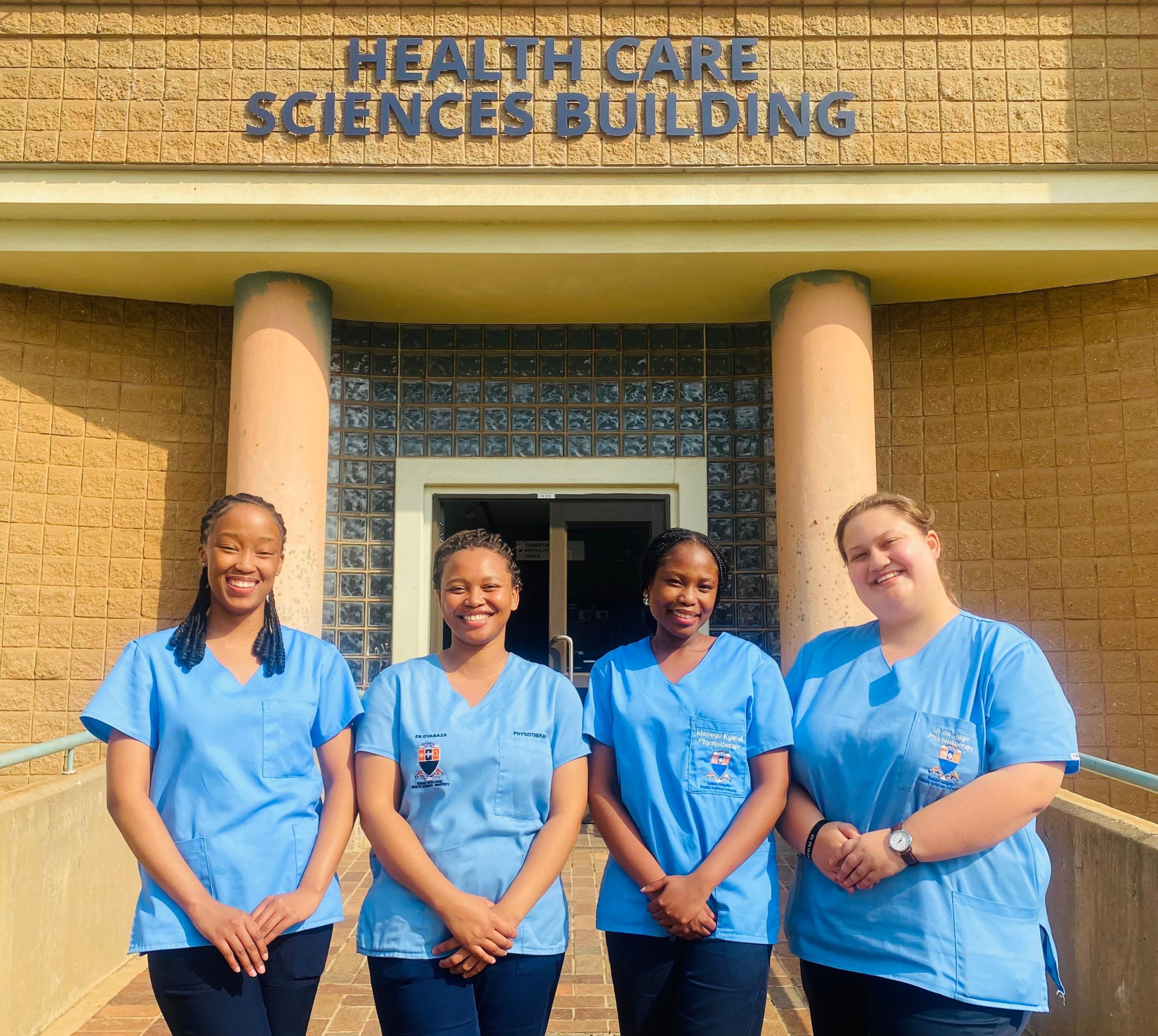 The project was sparked when student Tshegofatso Bafetanye realised the clinic lacked even basic items needed for paediatric assessment. “Assessing a child is very different from assessing an adult. Children are easily distracted and don’t always follow instructions, so toys and play therapy are essential. I simply wanted to observe the child’s knee and hip movements, but there wasn’t a single ball in the department,” Bafetanye explained.
That small challenge exposed a broader issue: the clinic had limited space and almost no appropriate equipment for paediatric rehabilitation. The group—Tshegofatso Bafetanye, Eza Ngwekazi Dyabaza, Masego Kgarodi and Rialene de Jager decided to act. “What started as frustration became a vision to create a space where therapy feels natural, playful, and meaningful,” the students said.
Their motivation was clear: every child deserves rehabilitation that is functional and joyful. Although the clinic’s clinicians were dedicated and skilled, the lack of resources restricted treatment outcomes. The students are committed to designing and sourcing affordable, safe, functional toys that support coordination, motor development, balance and emotional regulation.
Space constraints remained a persistent challenge “I saw the cylinders and wanted to facilitate four-point kneeling with an adolescent patient, but there was simply no room,” said de Jager.
The students also acknowledged the group that worked in the department before them—Shereen Dlamini, Khanyisile Aphane and Tshepiso Kekana —whose clean-up efforts created a foundation on which they could build. Their work made it possible for this new initiative to move beyond problem-identification into problem-solving.
 Working with the multidisciplinary rehabilitation team, the students established a dedicated paediatric playroom equipped with purposefully selected toys and structured learning zones. Guided by the DIR/Floortime model and supported by developmental theories from Vygotsky and Bronfenbrenner, every toy was chosen to promote emotional, cognitive, social and physical growth.
The result is a dynamic, inclusive therapy environment where children are more confident and engaged, therapists can assess motor and social skills more effectively, and caregivers are equipped with simple, cost-effective strategies they can use at home.
On 20 August 2025, the students hosted a health talk with the rehabilitation team, supervisors, and nursing executives. The session functioned as both an official launch of the new space and a refresher on the importance of play in paediatric therapy. The response was overwhelmingly positive.
“You’ve taken us back to the basics, the fundamentals of matwork, hands-on therapy, and purposeful play. This is amazing. I’m so excited,” said rehab team member Lindelwe Mazibuko.
Toys with a Purpose embodies the principles of community-based healthcare: resourcefulness, compassion and collaboration. It reflects not only the students’ clinical knowledge, but also their leadership and commitment to improving children’s rehabilitation.
The group expressed gratitude to the rehabilitation staff, caregivers, previous student teams, and Physiotherapists David Seloa, Kwandiswa Shoba, Karel Rasakanya and lastly, their lecturer and block supervisor, Frida Kotsokoane, who made the project possible.
In their words, the initiative is more than a project; it is a lasting commitment to creating therapy spaces where children can thrive through play.
By Tumelo Moila
by Lorato | Nov 20, 2025 | All News, SMU Media, Student Media
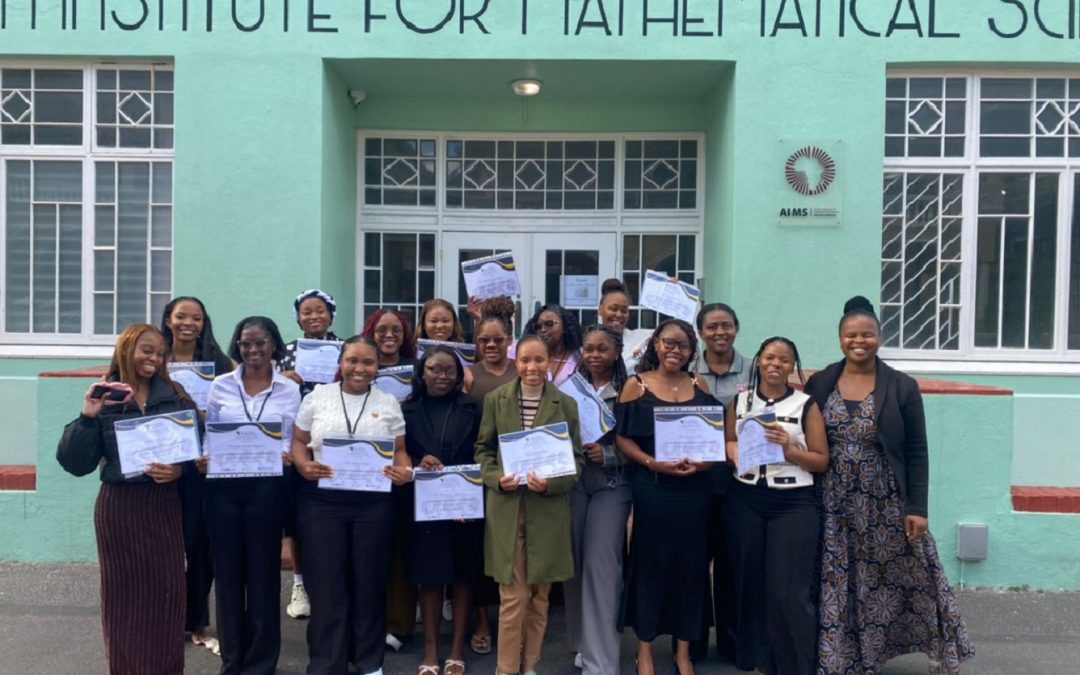
A cohort of sixteen female Mathematics and Applied Mathematics lecturers and postgraduate students from Sefako Makgatho Health Sciences University (SMU) recently participated in the WAFIRA-SA3 2025 Workshop, hosted by the African Institute for Mathematical Sciences (AIMS) in Muizenberg, Cape Town, from 30 October to 1 November 2025. The three-day programme, themed “Advancing Women in Mathematical Sciences,” brought together women from across Africa to strengthen leadership, research, and mentorship capacity within STEM disciplines.
 WAFIRA—short for Women’s Advancement Forum: International Exchanges, Research & Academia—is a continental initiative launched in 2014 by AIMS in partnership with African Gong. The programme equips women in science, technology, engineering, and mathematics with leadership tools and professional networks to help them thrive in academia and industry. Since its inception, WAFIRA has empowered more than 1,500 women across Africa through workshops and mentorship programmes. The name “Wafira”, derived from Arabic, signifies abundance—a fitting reflection of the initiative’s goal to cultivate an abundance of women leaders in STEM.
The SMU lecturers and postgraduate students joined other African academics for an intensive programme combining leadership training, personal development, and collaborative reflection. The opening day focused on empowering women for growth, exploring both intrinsic enablers—such as confidence, resilience, and lifelong learning—and extrinsic ones, including institutional support and inclusive environments. “Empowerment starts from within, but it flourishes in spaces that value women’s voices,” said Dr Rejoyce Gavhi-Molefe, one of the workshop facilitators.
The afternoon sessions centred on mentorship and work-life integration, underscoring the importance of balance and intentional engagement between mentors and mentees. Participants reflected on strategies for effective communication, professional boundaries, and mutual accountability. SMU participant and Junior Lecturer Kelebogile Medupe noted, “The session helped me see mentorship not just as guidance, but as a partnership built on trust and shared growth.”
Day Two placed emphasis on leadership and international collaboration, highlighting the transformative power of global partnerships in advancing research and visibility. Dr Elizabeth Rasekoala, Founder of WAFIRA, urged participants to lead boldly and intentionally: “Leadership is not bestowed—it’s cultivated through competence, confidence, and courage. Women must position themselves to access global opportunities that match their ambitions.”
A lively panel discussion followed, featuring voices from academia, research, and industry. Panellist Dr Juliet Nagawa, a WAFIRA alumna, shared, “Mentorship changed the trajectory of my career. It opened doors I didn’t even know existed.” The discussion underscored that institutions must formalise mentorship frameworks to ensure sustainability and equitable access to leadership pathways.
The final day of the workshop encouraged participants to design career progression roadmaps and reflect on their leadership journeys. Guided by facilitators, they crafted personal strategies for self-management and long-term success. “I leave this workshop with clarity, confidence, and a community of women who inspire me to dream bigger,” said Sindiswa Mnguni, participant and Junior Lecturer at SMU.
The workshop concluded with a certificate ceremony, celebrating each woman’s growth and commitment to leadership. In her closing remarks, Dr Rasekoala reminded participants that “the WAFIRA network is more than a programme—it’s a movement. We are building a legacy of abundance, where women in STEM lead, innovate, and transform Africa.”
The sixteen SMU lecturers and postgraduate students returned home inspired to champion mentorship, gender equity, and innovation within their departments—embodying WAFIRA’s vision of empowering African women to lead with purpose, resilience, and impact.
By Tumelo Moila

by Lorato | Nov 20, 2025 | All News, SMU Media, Student Media
At just 23, Vuyo Delight Dlakude has become a name to watch in South Africa’s nursing and research community. A Community Service Professional Nurse at Edenvale Regional Hospital, Dlakude represents a new generation of healthcare professionals — bold, disciplined, and deeply committed to advancing patient care through evidence-based practice.
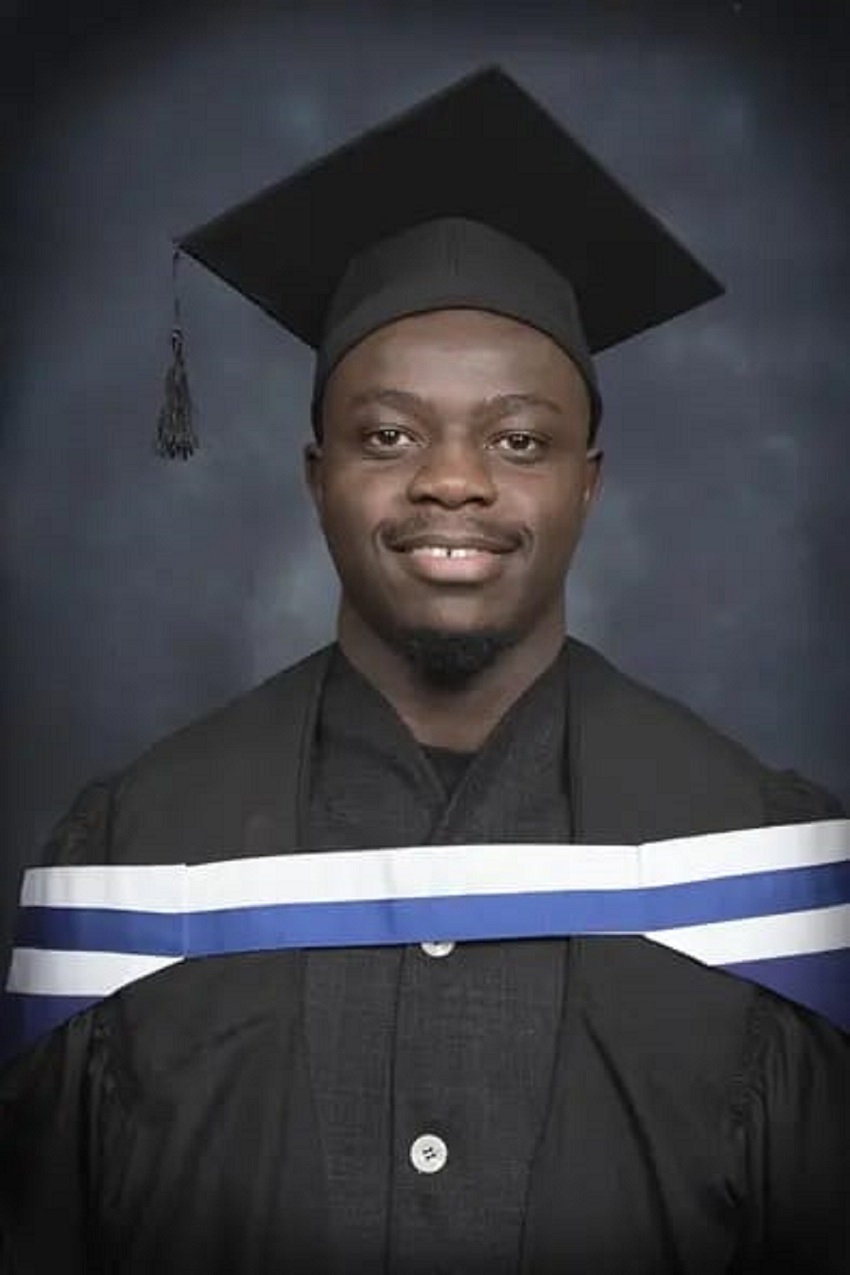 “I’ve always believed that good nursing goes beyond procedures,” he says with conviction. “It’s about empathy, precision, and a hunger to learn — because every patient teaches you something new.”
Born in Kamhlushwa, Mpumalanga, Dlakude grew up in a family that valued education above all else. “Both my parents were teachers,” he reflects. “Even after they passed away, their influence never left me. My family taught me resilience, respect, and the power of learning.”
He completed his schooling at Driekoppies Combined School, achieving excellent matric results that earned him a place at Sefako Makgatho Health Sciences University (SMU) — South Africa’s only dedicated health sciences institution. There, he pursued a Bachelor’s Degree in Nursing and Midwifery (Honours), graduating in 2025.
SMU, he says, became more than a university — it was the environment where his purpose crystallised. “Studying at SMU taught me that nursing isn’t just a job; it’s a calling. Every lecture, every clinical rotation shaped the nurse I am today.”
Now based in the theatre unit at Edenvale Hospital, Dlakude’s days are spent assisting surgeons and ensuring safe, compassionate care before, during, and after operations. “Theatre nursing requires focus and teamwork,” he explains. “You anticipate needs, monitor patients, and support recovery. There’s no room for error — just precision and humanity.”
But Vuyo’s curiosity extends beyond the operating room. During his final year at SMU, he discovered a passion for research, co-authoring a peer-reviewed article titled “Factors Influencing Late Antenatal Booking in Tshwane District: Pregnant Women’s Perceptions” (Afr J Prim Health Care Fam Med, 2025). The paper explored barriers to early maternal healthcare and proposed solutions rooted in better communication and community trust.
His research journey continued when he presented his poster “Improving Midwife-Pregnant Women Communication During Health Education to Enhance Antenatal Care Uptake” at the Sedibeng District Health Research Conference 2025, earning second place out of ten submissions.
“Research is my tool for change,” he asserts. “It’s how I turn questions into solutions — and how I can give voice to the people behind the data.”
Dlakude’s leadership and excellence have not gone unnoticed. Among his accolades are the Exceptional Student Nurse Award (2023 TEN Campaign) and Extraordinary Leader of the SMU Nursing Department (2023). He also served as a DENOSA Student Movement Sports Officer and CUTL Mentor, nurturing future student nurses.
Colleagues describe him as “disciplined with humour” — a balance he believes keeps him grounded. “Discipline drives performance, but compassion keeps it human,” he says. “That’s the heart of nursing.”
Looking ahead, Dlakude aims to specialise in nursing ethics and qualitative research. His ultimate goal? “To improve how nurses are trained, supported, and valued,” he says. “When we elevate nurses, we strengthen the entire healthcare system.”
In his own words, “My journey is only beginning. I’m not just working in healthcare — I’m helping to reimagine it.”
By Tumelo Moila

by Lorato | Nov 20, 2025 | All News, SMU Media, Student Media
The Sefako Makgatho Health Sciences University (SMU) Class of 2005 reunited in Umhlanga, Durban, for an elegant gala dinner that blended celebration, reflection, and a renewed commitment to their alma mater. For many, the evening served as a reminder of the bonds forged during their formative years at the Medical University of Southern Africa (MEDUNSA), now SMU, and of the shared purpose that has guided their professional lives over the past two decades. Alumni travelled from across South Africa to reconnect, share stories, and reaffirm their commitment to the institution that helped shape their careers.
 A highlight of the evening was a stirring address by Mr Japhta Phala, President of the SMU Convocation and Alumni, who urged his classmates to consider the long-term future of the university. He emphasised that SMU’s growth and excellence depend on more than its curriculum and academic staff—it also requires modern, functional infrastructure. “Our university needs new infrastructure. If SMU is to compete globally and offer a world-class learning environment, we as alumni must play an active role in investing in that progress,” he said. His words resonated deeply, not merely as a call for financial contribution, but as a rallying cry for a more engaged and sustained commitment to SMU’s mission.
Mr Phala framed alumni not only as former students, but as active custodians of the university’s legacy. “Alumni are not just former students—we are custodians of SMU’s legacy. Each contribution, big or small, helps build a stronger foundation for future generations of health professionals.” By linking the university’s future to alumni engagement, he underscored that the reunion was more than a nostalgic gathering; it was a strategic step in ensuring SMU’s continued capacity to train healthcare leaders equipped to meet South Africa’s evolving needs.
Delivering the vote of thanks, Prof Lebogang Phahladira, Specialist Psychiatrist and Senior Lecturer at Stellenbosch University, spoke from the heart about the shared journey of the Class of 2005. Born and raised in Limpopo, Prof Phahladira graduated from MEDUNSA with his MBChB in 2005 and has since built a distinguished career in academia and clinical practice. “We are not only marking 20 years since we graduated; we are honouring the resilience, sacrifice, and dedication that carried us from our days at MEDUNSA to where we stand today,” he reflected. His words captured both the individual challenges faced by members of the class and the collective strength gained through mutual support.
 Prof Phahladira also emphasised the unity that underpins the cohort’s achievements. “Our unity remains our greatest strength. This reunion reminds us that we have grown not only as professionals but as a community committed to service,” he said. His address reinforced the importance of maintaining ongoing alumni connections—not simply for nostalgia, but for mentorship, collaboration, and the shared advancement of SMU’s mission.
The keynote address was delivered by Dr Luvuyo Bayeni, Chairperson of the Organising Committee and Chief Director for Human Resources at the National Department of Health. Dr Bayeni’s remarks highlighted the moral responsibilities that accompany a career in health.
“Our work goes beyond clinical skill … it requires a commitment to ethical leadership and the well-being of the people we serve,” he observed. Dr Bayeni praised the Class of 2005 for exemplifying the university’s values throughout their careers.
“You are a class that continues to lead with purpose. Your presence in hospitals, academic institutions, government, and private practice speaks to the excellence that MEDUNSA and SMU instilled in you,” he said, urging alumni to collaborate in addressing national health challenges: “A stronger health system depends on our willingness to work together.”
As the evening drew to a close, the atmosphere shifted to one of camaraderie, celebration, and reflection. Alumni honoured colleagues who had passed on, shared personal and professional milestones, and strengthened long-standing friendships. The night ended with an unmistakable sense of purpose—a collective belief in SMU’s enduring importance and a renewed determination to invest in its future.
Mr Phala’s closing message captured the spirit of the reunion: “SMU’s future is in our hands. When we invest in the institution, we invest in the future of healthcare in South Africa.”
For the Class of 2005, the gathering was not just a celebration of past achievements but a powerful recommitment to what lies ahead, ensuring their legacy continues through new infrastructure, shared purpose, and the unwavering power of alumni to shape the future.
By Dimakatso Modise