by Lorato | Oct 28, 2026 | All News, Alumni, SMU Media, Student Media
Sefako Makgatho Health Sciences University (SMU) PhD candidate Christopher Thapelo Mamaregane has earned recognition for research investigating the potential impact of coal mining on water quality in Limpopo’s Waterberg region, highlighting the university’s contribution to environmental chemistry and public health.
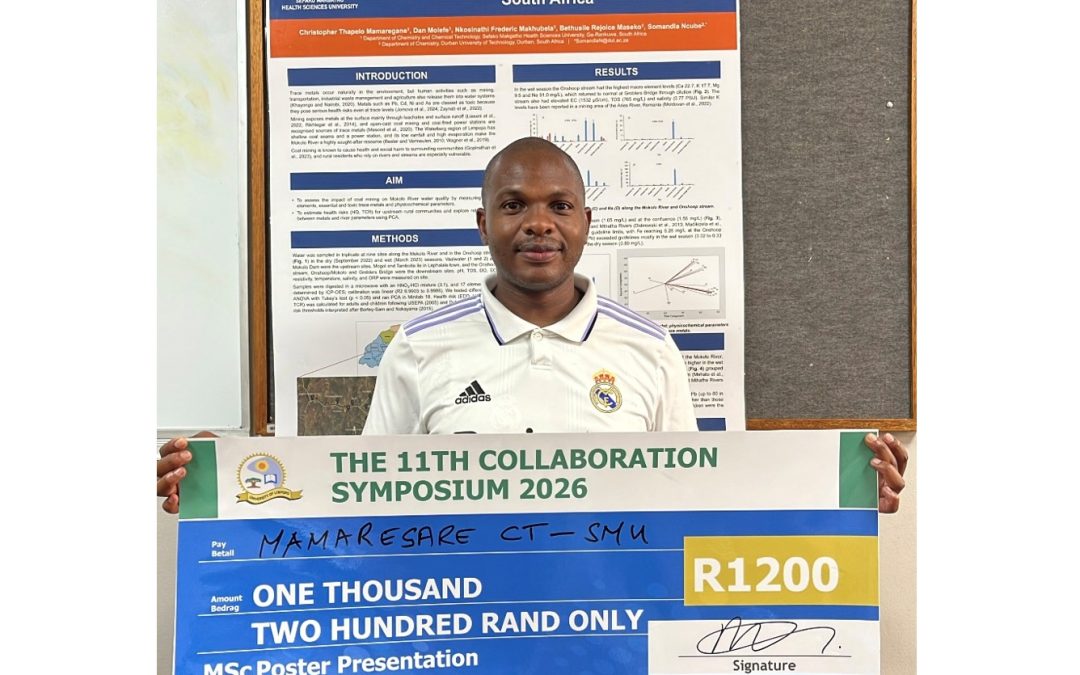
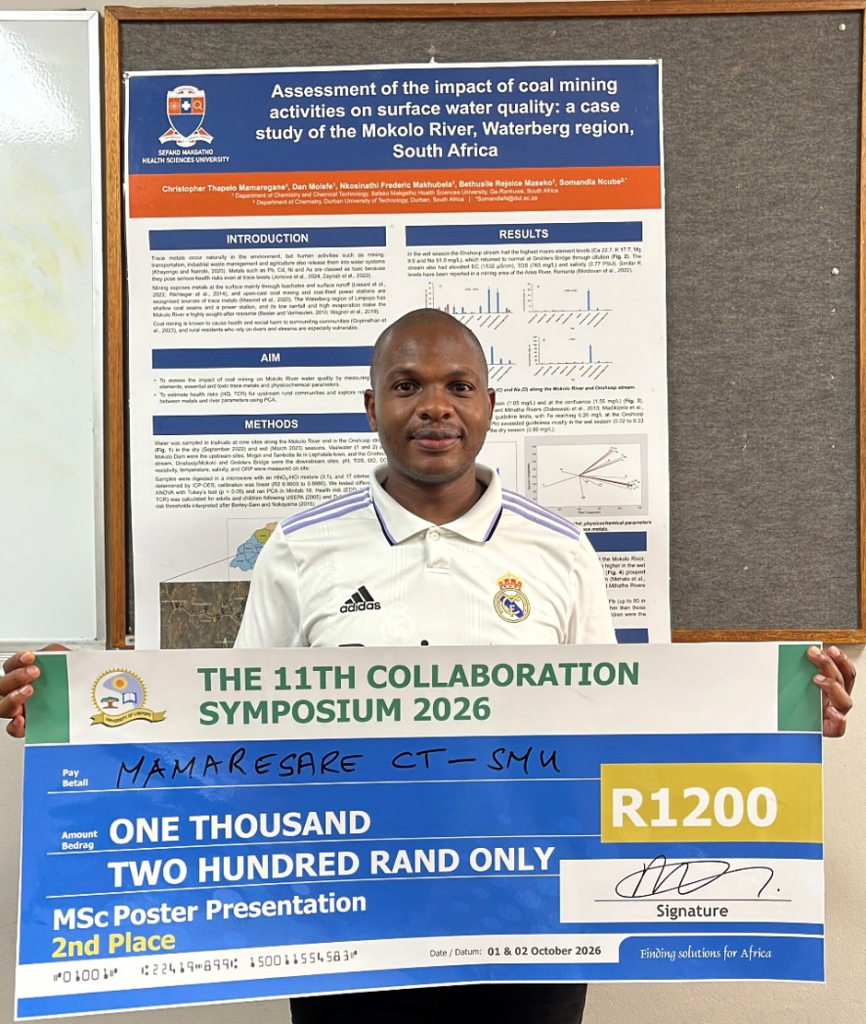 Mamaregane, a doctoral candidate, won 2nd place in the MSc Poster Presentation Award at the 11th Collaboration Symposium, organised by the Head of the Department of Chemistry and Chemical Technology at SMU and hosted by the University of Limpopo. The award recognised his research titled “Assessment of the Impact of Coal Mining Activities on Surface Water Quality: A Case Study of the Mokolo River, Waterberg Region, South Africa. For his efforts, he took home a cheque of R1 200.
The research examines whether coal mining activities contribute trace metals to the Mokolo River and assesses the potential health risks for communities using its water. The study involved sampling during the dry and wet seasons, analysing 17 elements and physicochemical properties, and conducting a human health risk assessment. “Honestly, it came as a shock because the presenters from other institutions were very good,” said Mamaregane. “This work took a lot of fieldwork, laboratory analysis and data interpretation, so seeing it recognised by the symposium was very humbling.”
Motivated by his upbringing in Limpopo, Mamaregane wanted to address a local environmental concern through scientific evidence. He explained that the Waterberg’s limited rainfall and high evaporation make the Mokolo River an important resource for domestic and industrial use, increasing the need to understand potential pollution sources.
The findings showed elevated metal concentrations in the Onshoop stream, which originates from the coalfields, but these declined sharply after the stream joined the Mokolo River. The results suggest that dilution reduces metal concentrations entering the river. At the same time, statistical analysis indicates that natural geological processes and surface runoff may be significant sources of metals in the catchment.
However, the health risk assessment identified concerns for rural communities upstream, particularly children, who were found to be more vulnerable to exposure to certain metals, including arsenic, cobalt, cadmium, chromium and lead. The findings indicate that people should not drink the river water without appropriate treatment.
Mamaregane cautioned against drawing definitive conclusions about mining’s overall impact, noting that the research team could not access the mine’s holding dams or effluent discharge points. Financial constraints also presented challenges, as the study relied on the university’s limited resources without external funding.
Dr Molefe, the former supervisor, said the research demonstrated the quality and potential impact of postgraduate scholarship at SMU. He highlighted its originality, technical excellence, reproducibility and significance to the field of chemistry, adding that recognition at the symposium could strengthen collaboration and raise the university’s research profile nationally and internationally.
The study has also been published in Environmental Research, in a special issue focusing on mining, water and climate. Mamaregane said the next phase would involve continued river monitoring, particularly during the dry season, and collaboration with mining stakeholders to investigate pollution sources, including a lead concentration spike identified at Mogol.
He encouraged fellow postgraduate students to participate in research competitions, stressing the importance of presenting credible findings and acknowledging research limitations. “Clean water is everyone’s concern, and the answer is not always simple,” he said. “Continued monitoring and cooperation between researchers, industry and communities are how we protect it.”
Mamaregane’s achievement reflects SMU’s commitment to excellence in teaching, learning, and innovative research, showing how postgraduate research can generate evidence to inform environmental management, protect public health, and support sustainable water use.
According to the HOD, Prof. Motaung, the symposium is designed to nurture talent, empower, and showcase the capabilities of a generation that was previously disadvantaged. For the first time, the event attracted international delegates, marking a significant milestone in its growth and global recognition. Mamaregane’s win of the poster presentation award reflects the quality of research at SMU and highlights the institution’s commitment to excellence, innovation, and developing emerging researchers.
By Tumelo Moila

by Lorato | Oct 28, 2026 | All News, Alumni, SMU Media, Student Media
Sefako Makgatho Health Sciences University (SMU) is celebrating an important academic milestone after Dr Gomolemo Rakale, a Statistics lecturer, graduated with a PhD in Statistics at the university’s 2026 Spring Graduation Ceremony. His achievement highlights SMU’s commitment to academic excellence, innovative research, and developing expertise that can help address South Africa’s healthcare challenges.
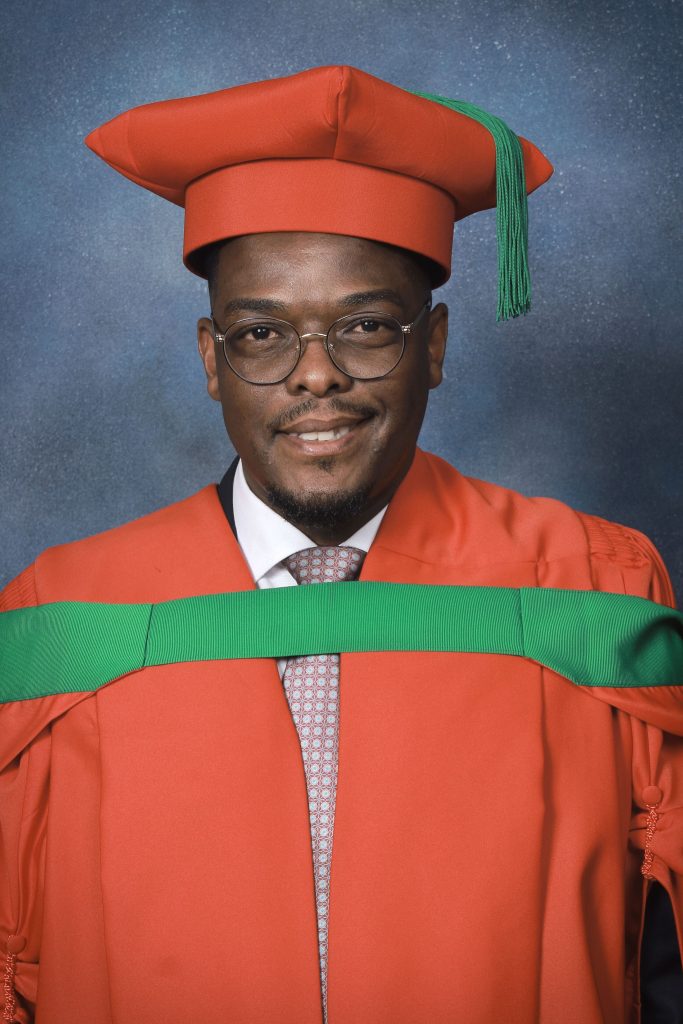 Dr Rakale completed his doctoral studies between January 2022 and September 2026. His research, titled Statistical Modelling of Maternal Mortality Trends and the Coping Strategies within South African Maternal Care Delivery, examines an issue of national importance: maternal mortality and the role of statistical analysis in understanding trends within maternal healthcare delivery.
His qualification builds on an academic journey at SMU, where he also obtained an MSc in Statistics in 2020, following a BSc Honours degree in Statistics in 2016 and a BSc in Mathematical Sciences in 2015, majoring in Statistics and Mathematics.
“Completing my PhD in Statistics represents an important milestone in my academic and professional journey,” Dr Rakale said. “My research focuses on maternal mortality trends and coping strategies within South African maternal care delivery, an area where statistical evidence can contribute to a better understanding of healthcare challenges.”
Dr Rakale has served as a Statistics lecturer at SMU since 2017, teaching undergraduate and postgraduate students and contributing to teaching, research and academic administration. His teaching responsibilities include Sampling Theory, Linear Regression, Descriptive Statistics and Inferential Statistics. He also supports student development through mentoring, tutorial supervision and postgraduate research supervision.
His research record includes publications examining the COVID-19 pandemic’s impact on maternal mortality in South Africa. In 2026, he co-authored research investigating obstetric haemorrhage-related mortality using confidential enquiry into maternal deaths data. He also contributed to a study documenting the pandemic’s impact on maternal mortality and the implications for Sustainable Development Goal 3.1, which seeks to reduce the global maternal mortality ratio.
 These contributions demonstrate the relevance of statistical modelling in examining public health trends and generating evidence to inform discussions about healthcare delivery and maternal health outcomes.
Beyond his academic responsibilities, Dr Rakale contributes to community development by volunteering to teach at the Bethsaida Community Learning Centre in Soshanguve. There, he assists learners preparing to rewrite their matric examinations in Mathematics and Mathematical Literacy. He also provides career guidance and information about bursary opportunities, helping learners explore pathways to further education.
At SMU, he serves as an undergraduate course coordinator and helps coordinate examination timetables in the Department of Statistical Sciences. He also mentors interns, fellows and tutors assigned to the courses he facilitates.
Dr Rakale’s achievement reflects SMU’s broader mission to provide professional education and training while advancing innovative research in support of health and well-being. Through its emphasis on teaching, research, student development and community engagement, the university continues to develop academic expertise that can contribute to South Africa’s scientific knowledge and healthcare priorities.
By Tumelo Moila
by Lorato | Oct 28, 2026 | All News, Alumni, SMU Media, Student Media
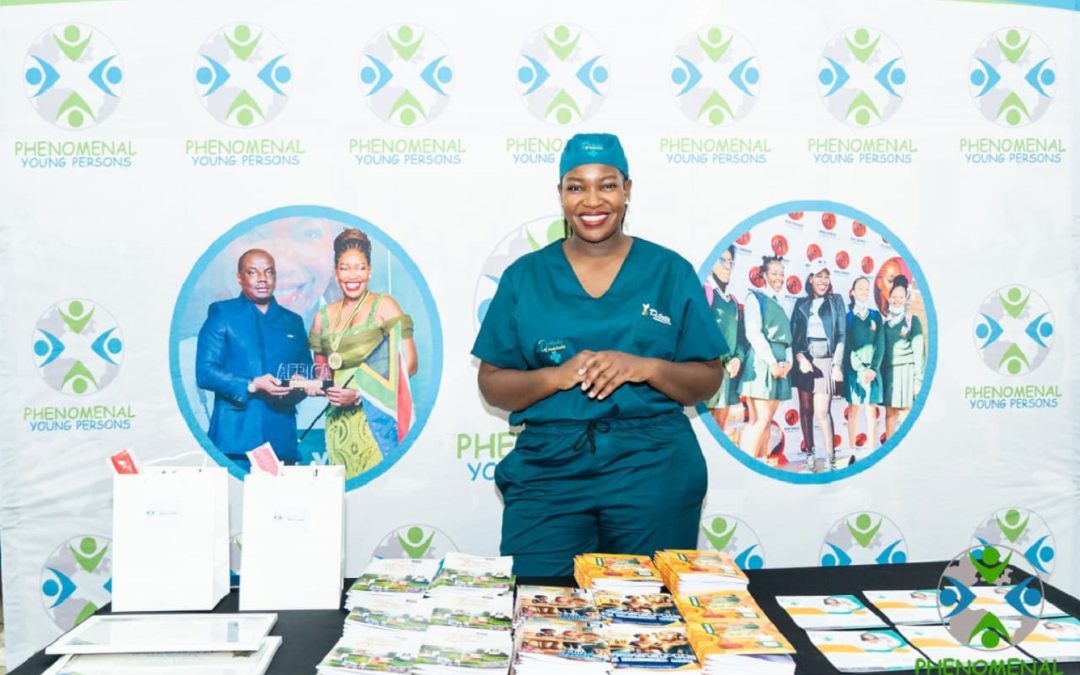
An alumna of Sefako Makgatho Health Sciences University (SMU) has reached more than 3,000 learners, parents and teachers through a week-long community outreach initiative spanning seven schools across Gauteng, North West and Mpumalanga, demonstrating the impact of alumni-led youth empowerment.
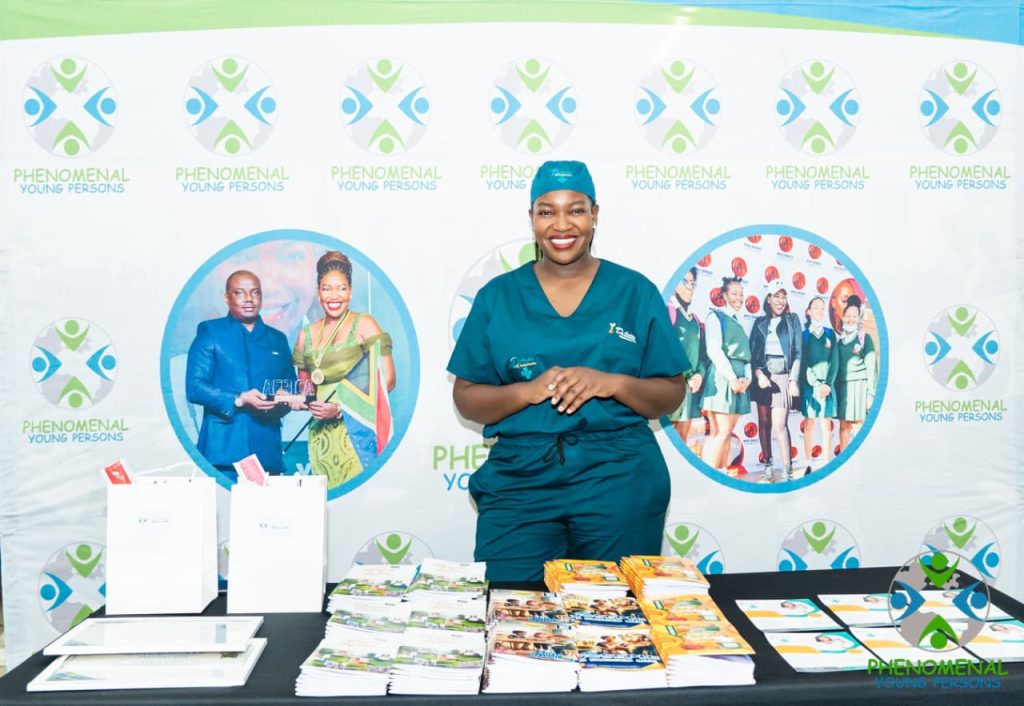 Dr Andile Molokomme, popularly known as Dr Andie, graduated with an MBChB degree from SMU in 2019 and founded Phenomenal Young Persons, a non-profit organisation (NPO) dedicated to youth empowerment, personal development, leadership and entrepreneurship. Founded when she was 17, the organisation has established a global footprint, with a particular focus on disadvantaged schools and township communities.
From 9 to 16 October 2026, Dr Molokomme and her team visited schools to motivate learners, strengthen matriculants ahead of their final examinations and recognise academic achievement. The initiative began at Ntsako Secondary School in Block FF, Soshanguve, where the team witnessed the matric class of 2026 signing their examination pledges. “Today has been nothing short of amazing, witnessing lives being changed and transformed,” said Dr Molokomme.
On the same day, the organisation’s team visited Resolofetse Secondary School and Potchefstroom High School in Potchefstroom, North West, to encourage learners preparing for their final examinations.
The outreach continued on 12 October at Ndzundza Mabhoko Secondary School in Mpumalanga, where the school community was mourning the deaths of two learners, one from natural causes and the other by suicide. The visit allowed matriculants to receive encouragement, emotional and spiritual support during a difficult period. “Thank you for coming to our school for such a time as this. You have been the healing that our hearts yearned for,” said Ntsako Princess, a matriculant at the school.
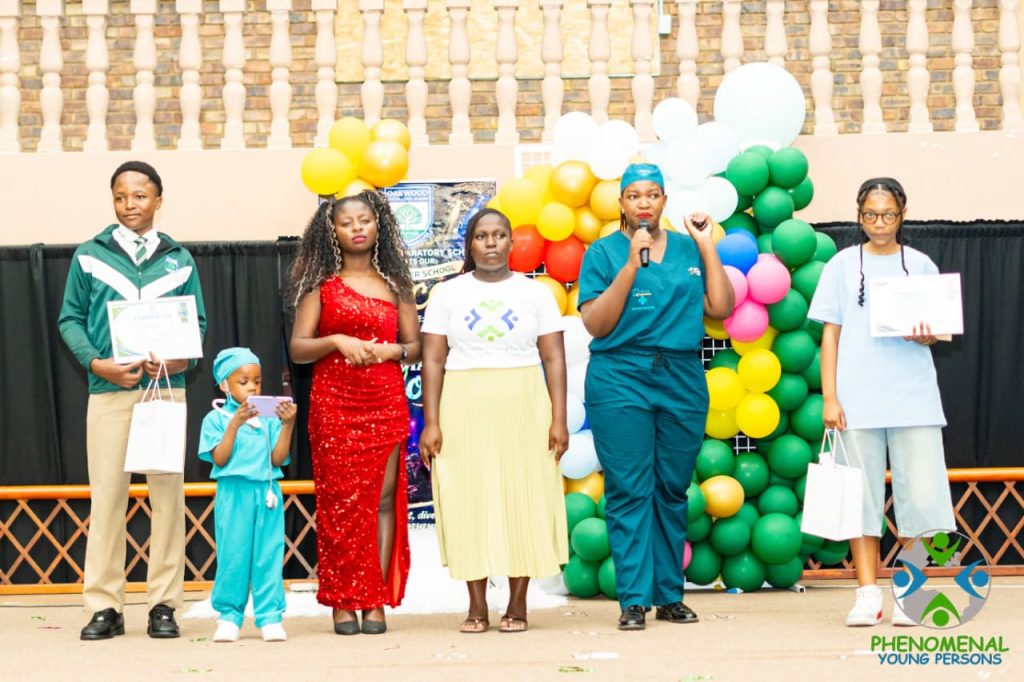 The team subsequently visited Dirang Kanatla Comprehensive School in Khuma and B.A. Seobe Secondary School in North West. Dr Molokomme adopted Dirang Kanatla Comprehensive School in 2021 while completing her second year of medical internship. The 2026 visit marked the sixth consecutive year of supporting learners and celebrating top academic performers. “It has been the norm for us. We try our best not to enter a school empty-handed. We always endeavour to bring, at the very least, goodie bags for the top-achieving learners as well as Certificates of Excellence,” she said.
Dr Molokomme explained that recognising academic achievement encourages learners to work towards better results and builds aspirations for future success. Dirang Kanatla principal, Michael Mochela, said the partnership had positively influenced the school’s annual matric results. The school improved from 62% in 2020 to 93% in 2024 in the matric final pass rate, proving that the school’s partnership with the NPO is very effective and fruitful.
The initiative concluded at Oakwood Preparatory School in Pretoria, where learners received leadership training and career guidance alongside other participating stakeholders.
Reflecting on the week’s impact, Dr Molokomme said the programme had reached more than 3,000 people, including learners, parents and teachers. She invites the SMU community to support the organisation through volunteering, sponsorships and referrals. “One can sponsor a child’s goodie bag from as little as R30 ($2),” she said. Donations can be made through the organisation’s official website, phenomenalyoungpersons.org.
Dr Molokomme’s work reflects the broader contribution of SMU alumni to education and community development beyond the university. Through initiatives that promote academic achievement, leadership and youth empowerment, alumni help strengthen opportunities for young people and support the development of future generations who can contribute to South Africa’s health, education and social well-being.
By Tumelo Moila

by Lorato | Oct 22, 2026 | All News, Alumni, SMU Media, Student Media
The MEDUNSA Class of 1996 celebrated three decades of medical excellence, professional achievement and service to communities at a 30th anniversary medical conference and gala dinner held at Irene Dairy Farm in Centurion on 17 October 2026. The milestone brought together alumni to reflect on their professional journeys, honour distinguished former lecturers and strengthen ties with their alma mater, Sefako Makgatho Health Sciences University (SMU).
 Organised by Dr Hlombe Makuluma on behalf of the class organising committee, the reunion celebrated the enduring legacy of graduates who began their medical careers three decades ago and have since contributed to healthcare, medical education, research and leadership in South Africa and beyond.
A highlight of the celebrations was the tribute paid to two retired professors, Prof Z. Mtshali, a general surgeon, and Prof R. Golele, an orthopaedic surgeon. The two distinguished academics were recognised for their contributions to medical education, clinical practice and the development of generations of healthcare professionals. Their recognition underscored the lasting influence of educators whose knowledge, mentorship and commitment helped shape the careers of the Class of 1996.
Addressing alumni during the daytime conference, representatives of the university, Mr. Benedict Masenamela, Senior Officer: Alumni Relations, encouraged graduates to maintain meaningful relationships with their alma mater and contribute to its continued development. Alumni were urged to look beyond commemorative gatherings and embrace opportunities to support teaching, research, community engagement and student development.
The message emphasised that alumni relations should be an ongoing partnership through which experienced professionals share their expertise, mentor emerging healthcare practitioners, establish professional networks and create opportunities for future generations of health professionals.
Dr Solly Motlanthe, President of the SMU Alumni Association, highlighted the history of the association and its role in sustaining connections between graduates and the university. He emphasised the importance of alumni unity, encouraging graduates to work together in strengthening their collective voice and supporting the institution that contributed to their professional development.
The Alumni Association provides a platform for graduates to remain connected, build relationships across professional fields and contribute to the university’s broader objectives. The anniversary gathering demonstrated the value of such networks in preserving institutional identity while creating opportunities for collaboration and shared growth.
 The gala dinner’s keynote address was delivered by Prof Risenga Frank Chauke, Dean of the School of Medicine at SMU, who reflected on the significance of the class reaching its 30-year milestone. He described the anniversary as an opportunity to consider the journey from graduation to professional maturity and the responsibilities that accompany decades of service.
Prof Chauke noted that thirty years represents the completion of a generation and the beginning of another chapter. Graduates who entered the profession in 1996 have since developed into experienced clinicians, specialists, academics, researchers, public servants and leaders, many of whom have helped train and guide younger healthcare professionals.
Drawing on biblical references, he explained that the age of thirty is associated with maturity, readiness and public service. He highlighted the examples of Joseph, David and Jesus, using these accounts to illustrate that thirty should not be viewed as an endpoint but as a stage at which preparation gives way to greater responsibility and service.
His address reinforced the importance of using professional experience to benefit others, particularly through mentorship, leadership and continued contributions to healthcare.
Mr Rammoelo Ditsoane of the Government Employees Medical Scheme (GEMS) also addressed the gathering, expressing the organisation’s support for the initiative. His contribution highlighted the value of partnerships that recognise and support initiatives aimed at strengthening professional relationships and celebrating achievements within the healthcare sector.
The anniversary conference and gala dinner served as both a celebration of past achievements and a call to continued service. For the MEDUNSA Class of 1996, the occasion reaffirmed the bonds formed during their training and the shared responsibility to advance healthcare and support the next generation of medical professionals.
As the graduates reflected on three decades of achievement, the reunion reinforced a central message: the relationship between a university and its alumni should continue long after graduation, sustained by collaboration, mentorship and a commitment to improving the lives of the communities they serve.
By Dimakatso Modise
by Lorato | Oct 21, 2026 | All News, Alumni, SMU Media, Student Media
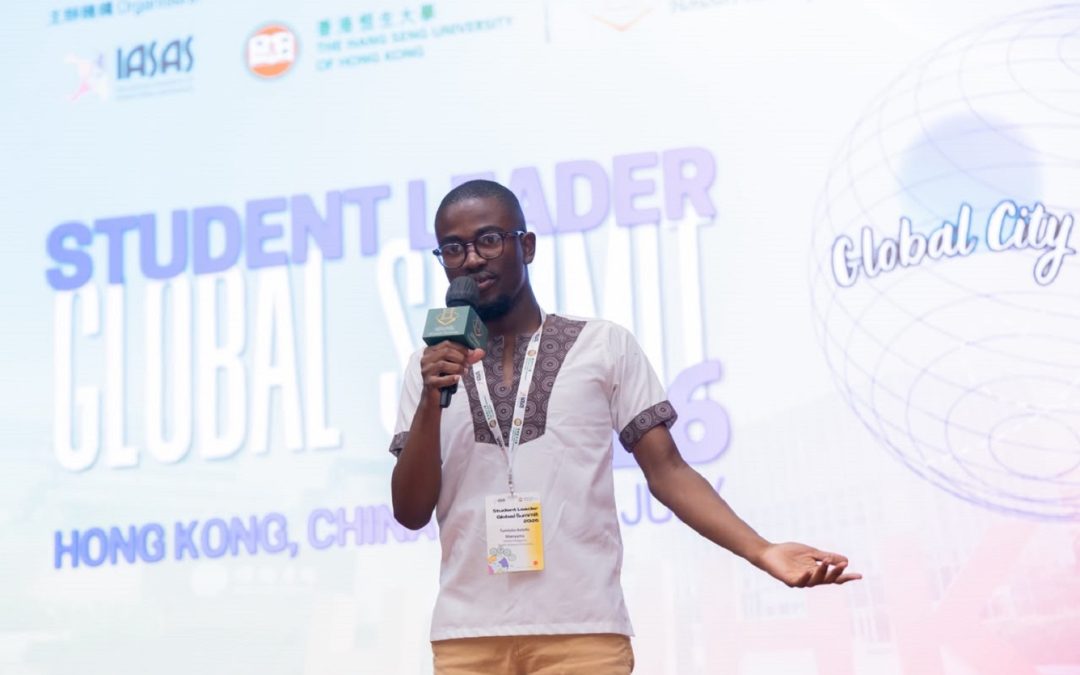
Sefako Makgatho Health Sciences University (SMU) student leader Tumisho Manyama has earned international recognition after receiving the Most Sustainable City Award at the 8th IASAS Student Leader Global Summit 2026 in Hong Kong. The achievement highlights the university’s commitment to developing socially responsible, innovative and globally minded graduates.
Manyama, a medical student and former Secretary of the School of Medicine Student Representative Committee for 2025/2026, was among only 35 student leaders from around the world selected to attend the summit at Hang Seng University of Hong Kong. Held under the theme “Global City, Local Soul: Student Leadership for Sustainable, Inclusive, and Resilient Communities”, the four-day gathering brought together student leaders, academics and university representatives to exchange ideas on leadership, sustainability, governance and community development.
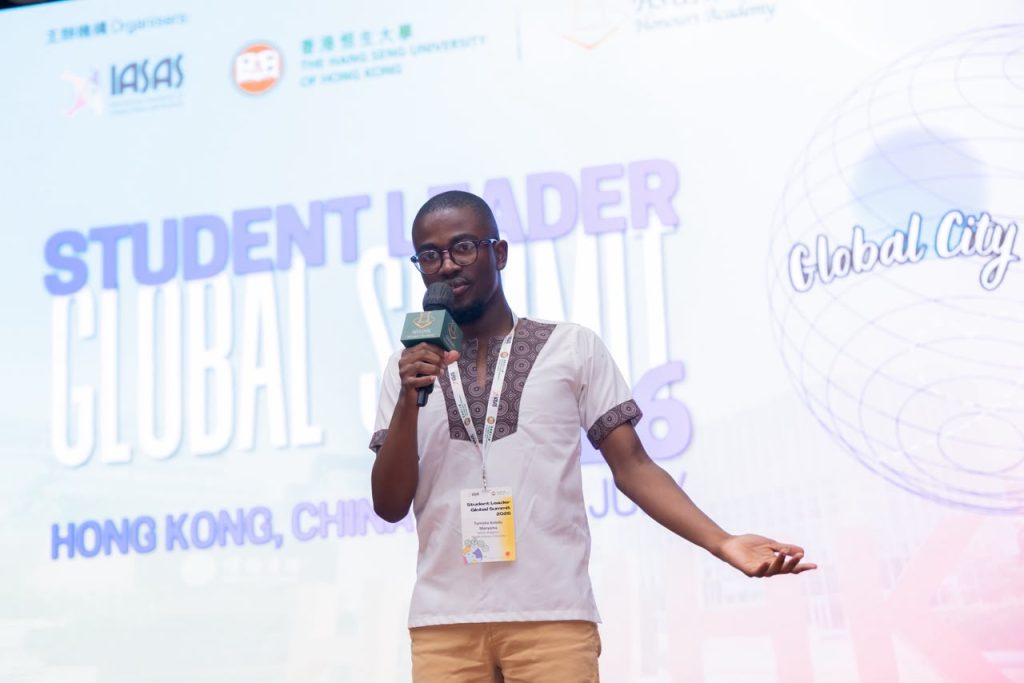
The award-winning achievement came through an international team project in which he collaborated with fellow participants to design a sustainable city. The project challenged participants to combine perspectives and develop solutions that address the needs of diverse communities.
Reflecting on the experience, Manyama said the collaboration demonstrated the importance of diversity in developing effective solutions. “The strongest solutions are often built collectively,” he said, adding that the recognition reinforced the belief that “diversity is not a barrier to progress, but one of our greatest strengths”.
Beyond the conference sessions, the summit also provided opportunities for practical community engagement. During a programme in rural Hong Kong, the male student and other participants worked alongside residents and shared sustainable living practices, gaining insight into how leadership can contribute to community development.
The experience strengthened his understanding of leadership as a commitment to service, not simply holding a position. “Leadership is not about being at the front or simply holding a position. Leadership is about serving, listening, empowering and working alongside people,” he said.
The international opportunity was particularly significant following an earlier setback. He had previously been selected to attend the IASAS summit in Ireland but could not travel because of visa challenges. The opportunity to participate in Hong Kong offered a renewed chance to represent SMU and South Africa on an international platform.
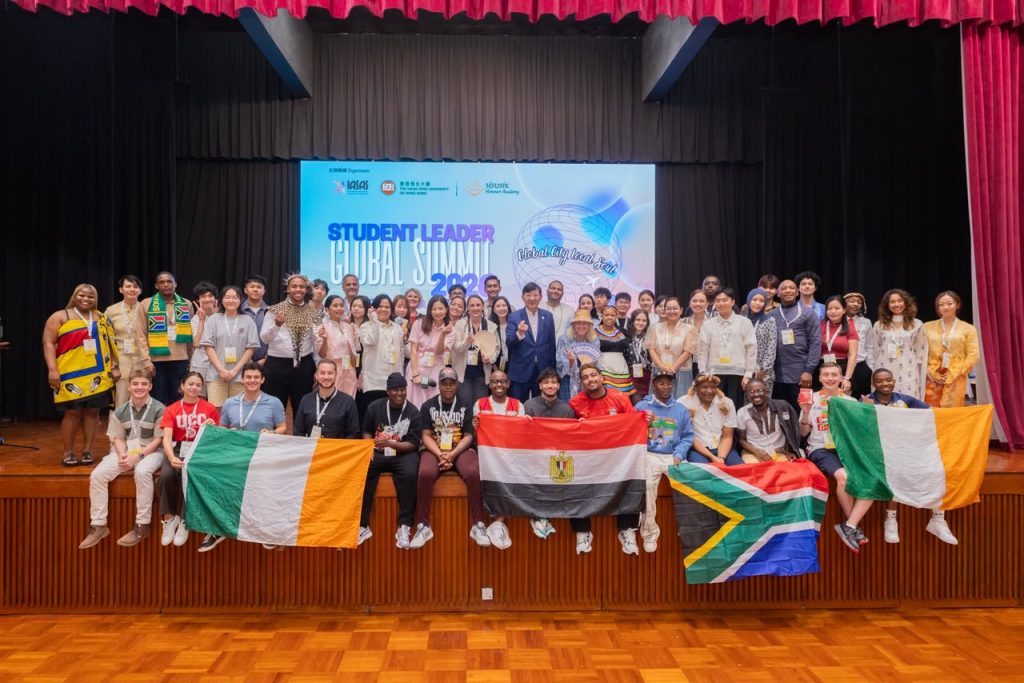 For the male student, the lessons gained from the summit extend beyond student governance into future professional practice and healthcare delivery. “Whether I am serving patients in the future, advocating for students today, or contributing to my community, the foundation remains the same: people, empathy and service,” he said.
He expressed gratitude to SMU, the Directorates of Student Affairs and Internationalisation for supporting the opportunity and investing in student development. The summit also facilitated international friendships, professional connections and exposure to different approaches to leadership and sustainability.
The achievement reflects SMU’s broader commitment to excellence in education, effective leadership, inclusion and community engagement. As a dedicated health sciences university, SMU aims to prepare graduates who can contribute meaningfully to healthcare and society.
By supporting students to participate in international platforms, SMU creates opportunities for knowledge exchange, personal development and collaboration across borders, strengthening its international presence while advancing its mission to transform health services through excellence and innovation.
By Tumelo Moila