by Lorato | Jan 21, 2026 | All News, SMU Media, Student Media
Innovation, leadership, and purpose converge in the work of Khanyisa Faith Mokgolobotho—a postgraduate student at Sefako Makgatho Health Sciences University (SMU) whose vision is reshaping the future of healthcare technology in South Africa. As co-founder of TechMed Connect, a pioneering healthtech startup, she is not just innovating, she’s breaking barriers as a student leader, proving that courage, creativity, and determination can transform both industries and lives.
 Mokgolobotho’s journey into technology and entrepreneurship began with a spark of determination and a passion for addressing real-world healthcare challenges. In 2023, she and her co-founder Rosemary Erawemen joined the competitive I’M IN Women’s Ideation Programme, supported by Telkom, JP Morgan, and the Embassy of Ireland. Their healthtech concept, TechMed Connect, was selected among the top 15 nationally, marking a significant milestone that propelled their startup from an idea to a nationally recognised innovation. “This opportunity was a turning point for us,” she reflects. “It gave TechMed Connect the platform and resources to develop a solution that can truly make a difference in healthcare delivery.”
Since then, TechMed Connect has garnered numerous accolades and funding, including victories at the Enactus MTN Innovation Challenge, the Hult Prize South Africa National Showcase, and various hackathons. The app is currently in the testing and compliance phase, moving closer to real-world implementation. Her role as a visionary and problem-solver has earned her recognition beyond the university, proving that young innovators from SMU can compete on the national stage. “Every achievement is a testament to what is possible when passion meets opportunity,” she says.
Her passion for technology was further ignited by her success at the 2022 CSIR DIRISA Datathon, where she was named Best Female Student Participant. This achievement came with a bursary that fully funded her undergraduate and honours studies, allowing her to focus on mastering artificial intelligence, machine learning, and cloud infrastructure. “My goal is to become a leading AI engineer, developing solutions that can transform healthcare,” Mokgolobotho explains. “SMU has been instrumental in equipping me with the skills and experience I need.”
Her impact is not limited to technology and innovation. She is also a dedicated student leader, having served as the Interim Student Governance Structure Residence Officer in 2023/24. Through this role, she advocated for improved student experiences and demonstrated leadership rooted in empathy and service. “Leadership is not just about titles but about making a tangible impact,” she notes.
As Chairperson of the Geekulcha Student Society at SMU, Mokgolobotho is building a vibrant tech community that aims to position the university as a HealthTech Innovation Hub. Her vision is to foster collaboration between technology and health sciences disciplines, preparing students to drive the future of healthcare innovation. “By bringing students together, we’re building a movement that embraces innovation and drives real change,” she says.
Mokgolobotho’s journey is defined by resilience, faith, and an unwavering commitment to uplift others. “Everything I do is rooted in a desire to build a better future and empower those around me,” she shares. Balancing her honours studies in Computer Science with her work as a Graduate Software Engineer, she exemplifies academic resilience and lifelong learning.
Mokgolobotho is a beacon of possibility, an innovator, a leader, and a young woman whose determination is transforming healthcare and inspiring future generations.
By Dimakatso Modise

by Lorato | Jan 21, 2026 | All News, SMU Media, Student Media
At Sefako Makgatho Health Sciences University (SMU), every young woman in a lab coat or scrubs carries more than textbooks and ambition; she carries legacy in the making. From lecture halls to clinical spaces, young women at SMU are building futures that will shape healthcare across South Africa and the continent. Each has a reason for choosing this path, a role model who inspired her, and a vision for the professional—and the woman—she is becoming.
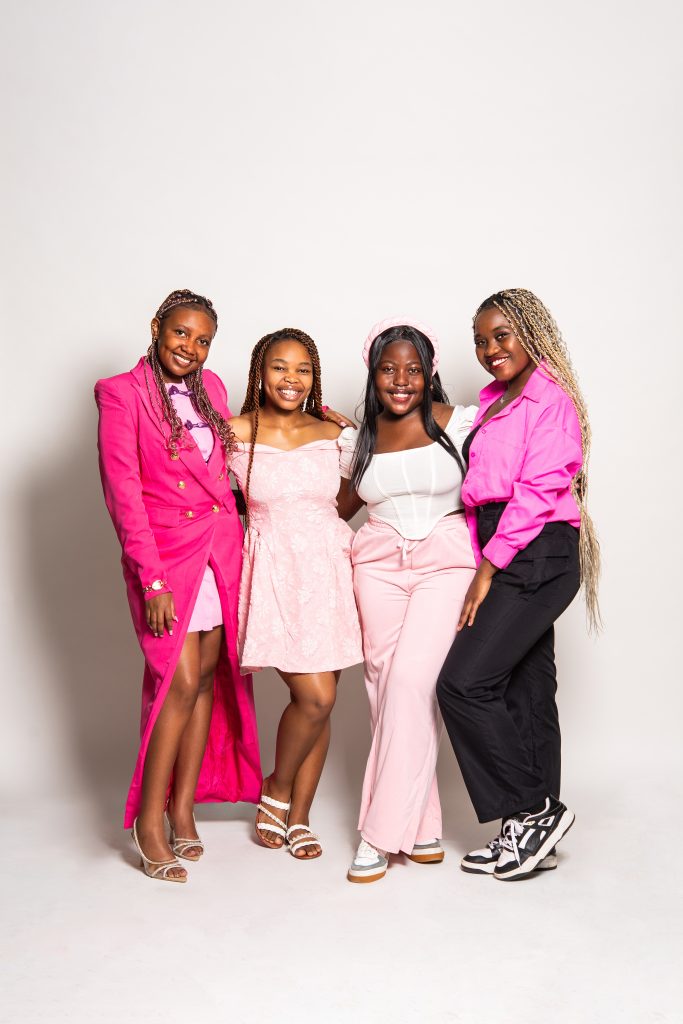 Together, they are more than students. They are future doctors, scientists, and healthcare leaders. Each one: a name worth remembering.
SMU, as South Africa’s leading dedicated health sciences university, is where these women step onto a path of purpose. Here, education is more than lectures; it is a commitment to community, to excellence, and to producing healthcare professionals who will shape the systems of tomorrow.
For Mbali Ndamase, a second-year Bachelor of Science in Speech-Language Pathology and Audiology student, her calling began with the simplest human need: communication. “I’ve seen how communication and hearing disorders can isolate people,” she says. “At SMU, I’m being shaped into a healthcare professional who not only treats but empowers people to reconnect with the world.”
Bonolo Malema, a third-year Bachelor of Medicine and Bachelor of Surgery student, describes her journey into medicine as both a personal mission and a shared responsibility. “Becoming a doctor isn’t about the title—it’s about healing, about making people’s lives better. SMU gives me the skills, but also the sisterhood and the inspiration to believe I can make a difference.”
Bonolo believes SMU’s women are rewriting the future of medicine. “Here, we’re not just learning how to treat illnesses, we’re learning how to lead.”
Tsakane Pearl Nghonyama, a third-year BSc Mathematical Sciences student, is proof that healthcare’s future depends not only on clinicians but also on data scientists. “At SMU, I don’t have to choose between logic and compassion. I’m training to be both a Data Analyst and a Paediatrician. One saves lives now; the other shapes the systems that will save lives tomorrow.”
Their stories and ambitions reflect SMU’s mission to educate and empower African women who will lead health innovation, drive community care, and transform systems that for too long have left women’s voices unheard. “We are part of a sisterhood here,” says Bonolo. “A sisterhood that believes in service, in leadership, and in changing lives.”
At SMU, these young women’s stories begin—but their impact will be felt far beyond its gates. They are not just studying for degrees. They are preparing for legacies built on service, strength, and the unstoppable power of a woman’s voice in African healthcare. Mark their names. Their futures are just beginning.
By Dimakatso Modise

by Lorato | Jan 21, 2026 | All News, SMU Media, Student Media
At just 22 years old, Andile Moloi, a medical student from Tembisa, Gauteng, is already making waves far beyond the classroom. Currently in her fifth year of the Bachelor of Medicine and Bachelor of Surgery (MBChB) programme at Sefako Makgatho Health Sciences University (SMU), Moloi is a rising star in health sciences, youth leadership, and innovation.
 Moloi’s journey began early. At age 10, she was elected Chairperson of Soul Buddyz, a school programme addressing social issues. By 12, she led an anti-drug campaign through the Youth Citizens Action Programme, winning first place in Gauteng and ranking nationally in the top three. “I’ve always believed leadership means serving others,” she reflects.
Her academic excellence in mathematics, science, and technology saw her participate in various Olympiads and lead a carbon dioxide reduction project that placed top ten provincially. Through Nkathuto Edu Propeller, a non-profit promoting STEM and entrepreneurship in disadvantaged communities, Moloi advanced as Academic Officer and became the first Chairperson of its Alumni Community—a network of young innovators.
Moloi’s dedication attracted partnerships with prestigious bodies including the Council for Scientific and Industrial Research (CSIR), National Research Foundation (NRF), and SAASTA, and involvement in United Nations youth science programmes.
Despite a broad scientific interest, Moloi’s heart lies in medicine, particularly surgery and neuroscience. A personal tragedy during her second year, when her father passed away following emergency brain surgery, profoundly shaped her focus. “That moment changed everything,” she says. “It inspired me to pursue medicine with empathy and purpose.”
Moloi’s academic achievements earned her a Gauteng City Region Academy scholarship as one of the top three public school matriculants in the province, enabling her studies at SMU. At university, she tutors chemistry, anatomy, biophysics, and pathology and mentors first-year students. In 2023, she was named one of South Africa’s Top 100 Most Promising students by GradStar and featured in the Mail & Guardian for her leadership.
Professor Risenga Frank Chauke, Dean of SMU’s School of Medicine, praises her as “a rare blend of intellectual brilliance and human compassion.” He adds, “Moloi exemplifies servant leadership, and her commitment suggests a future not only as a medical professional but a job creator who will uplift the economy.”
Beyond academics, Moloi is an innovator. She leads projects developing sustainable alternative charging solutions aligned with the United Nations Sustainable Development Goals. This work earned her selection as a South African delegate to the largest African entrepreneurship and innovation summit, scheduled for May 2025 in Sierra Leone.
Her leadership at SMU is extensive, including roles as Community Outreach Officer for the Surgical Society, Social Media Officer for the Diagnostic Society, Finance Officer for Medics on Motion, and ambassador for the Interprofessional Education and Collaborative Practice (IPECP) programme.
Moloi credits her journey to mentors and supporters, including her late father, mother, teachers, and university leaders. “I represent millions of underrepresented youth who are creative and brilliant but lack opportunities,” she said as keynote speaker at the Youth Indaba on Research Commercialisation and Entrepreneurship. “I spoke about the education gap in science, technology, and health, the challenges women face, and the urgent need for mentorship from an early age.”
As she nears graduation, she is focused on specialising in neurosurgery while continuing to lead innovations that transform healthcare and society.
By Dimakatso Modise
by Lorato | Jan 21, 2026 | All News, SMU Media, Student Media
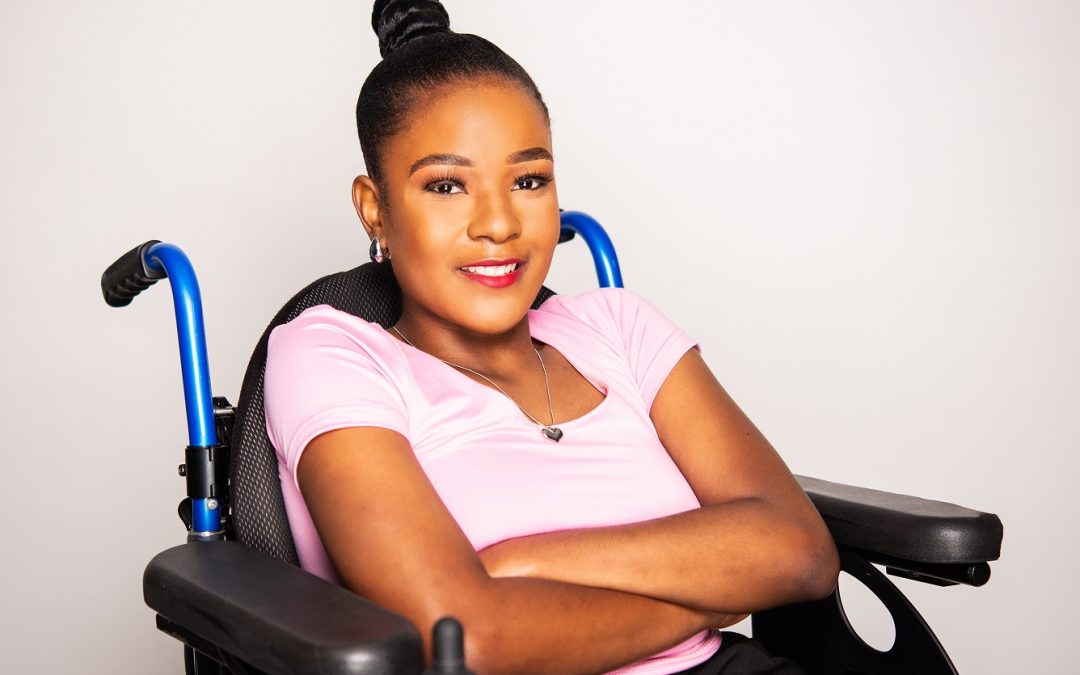
Nontobeko Khoza is redefining what leadership looks like from spaces society too often overlooks. At 19 and as a second-year Bachelor of Audiology student at Sefako Makgatho Health Sciences University (SMU), she is proving that leadership doesn’t require a title; it starts with presence, advocacy, and purpose. Living with a physical disability, Khoza stands as a quiet yet powerful advocate for inclusion, not only within health sciences but across every space where voices like hers have long been absent.
 Her choice to study audiology is more than academic; it’s personal. “In rural areas, people living with hearing loss are often ignored or misunderstood. Many believe it’s witchcraft, or they simply don’t have access to help,” she explains. “I want to be the voice that changes that.” For Khoza, leadership means advocacy. Every step she takes, every classroom she enters, is a statement: she belongs. “My disability isn’t a limitation. It’s my reason to lead. It gives me purpose.”
At SMU, Khoza found more than education; she found a platform. The university’s commitment to inclusivity and transformation has provided her not only with practical tools but also a sense of belonging. A specialised wheelchair and clinical assistant have helped her navigate physical spaces, while her presence within the university community challenges long-standing perceptions of who belongs in healthcare leadership.
Khoza’s message is clear: “Inclusion isn’t about being accommodated. It’s about being counted.” Her leadership voice grew louder when she was invited to share her journey at a university staff conference, an experience that shifted her perspective. “It reminded me that my voice matters, and that there’s power in sharing my journey.” She draws strength from her faith, guided by the verse: “I can do all things through Him who gives me strength” (Philippians 4:13).
Yet her advocacy is grounded not in personal triumph, but in the belief that change must be collective. “I don’t want to be an exception. I want to open the way for others.” As South Africa celebrates Women’s Month, Khoza challenges the nation to widen the lens: “It’s not just about gender equity, it’s about real inclusion. We need to be part of the conversation, not an afterthought.” She adds, “Women with disabilities aren’t just part of the conversation. We deserve to lead it.” Her message to young women like herself is simple but radical: “You are not defined by the limits others place on you. You can lead from wherever you stand.”
With every lecture attended, every conversation started, and every barrier crossed, Khoza is not asking for inclusion; she’s demonstrating it. At SMU, she’s not just learning to heal others; she’s teaching a university and a nation what real inclusion looks like. In the margins where others tried to place her, she is leading the way and she is advocating for change.
By Tumelo Moila

by Lorato | Jan 15, 2026 | All News, SMU Media, Student Media
Mukhethwa Managa never set out to be anyone’s role model. Yet, by choosing to live boldly and unapologetically, she has become just that—a quiet symbol of courage in spaces where difference is often met with silence.
 A double-degree graduate from Sefako Makgatho Health Sciences University (SMU), Managa’s story is not about fitting in. It’s about belonging on her own terms. “Coming out was painful, but necessary,” she recalls. “I wasn’t trying to prove anything. I just wanted to be free.”
Known to many by her stage name Alpha Art, the 27-year-old from Tshidzini village in Venda grew up navigating a world that offered few reflections of herself. As a proud member of the LGBTIQ+ community, she knew early that her identity would challenge expectations. University, however, was where her fight for authenticity took shape.
At SMU, she earned not just academic degrees—a Bachelor of Science in Biochemistry and Physiology, and a professional qualification in Speech-Language Pathology and Audiology, but something far more important: her voice. “At SMU, I found spaces that accepted me and spaces that didn’t,” she says. “But the LGBTQIA+ student organisation changed everything. It showed me that being myself wasn’t something to apologise for.”
Support from peers and mentors gave her the courage to be visible in a community where invisibility often felt safer. From lecture halls to football fields, Managa began to live out loud. Her leadership shows itself in many forms. As a rapper, sketch artist, and soccer player, she pushes past the limits others place on womanhood.
“I’ve learned that womanhood looks different for everyone,” she explains. “Some women are feminine, others masculine. All of us deserve to belong.” For Managa, belonging is not just about visibility, it’s about using visibility as a platform for others.“When people see me walking boldly across campus or on stage as Alpha Art, I want them to know they can be themselves, too. That’s leadership.”
She hopes that SMU and institutions like it will continue expanding spaces where diverse identities of womanhood are celebrated, not merely tolerated. “Institutions need to stop thinking of inclusion as optional. It’s essential to developing real leaders.”
Managa’s journey isn’t framed by awards or titles. Her legacy is quieter but no less powerful: showing others that strength lies in living truthfully. Her advice to those navigating identity in spaces that weren’t built for them? “Live out loud. You don’t need permission to be yourself.”
Today, as a qualified healthcare professional, an artist, and a woman rewriting her own definition of strength, Managa is proof that leadership begins with authenticity. And at SMU, her story and her voice found room to grow.
By Tumelo Moila
by Lorato | Jan 15, 2026 | All News, SMU Media, Student Media
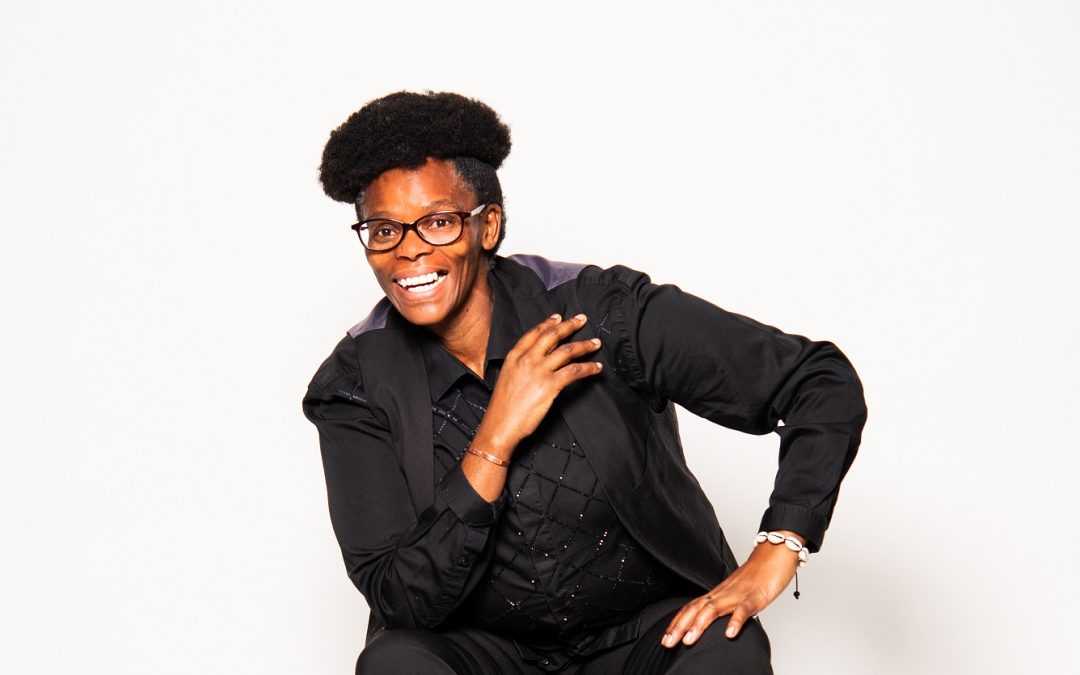
Leadership doesn’t always look like authority; sometimes, it looks like authenticity. For Kelebogile Nonkwelo, living openly as a queer woman living with HIV is more than personal truth; it’s a form of leadership that empowers others to believe in their worth. From her rural childhood in Ngqeleni to her role as Senior Health HIV/AIDS Officer at Sefako Makgatho Health Sciences University (SMU), her journey is one of visibility, compassion, and creating spaces where others no longer have to hide. In her truth, others find courage.
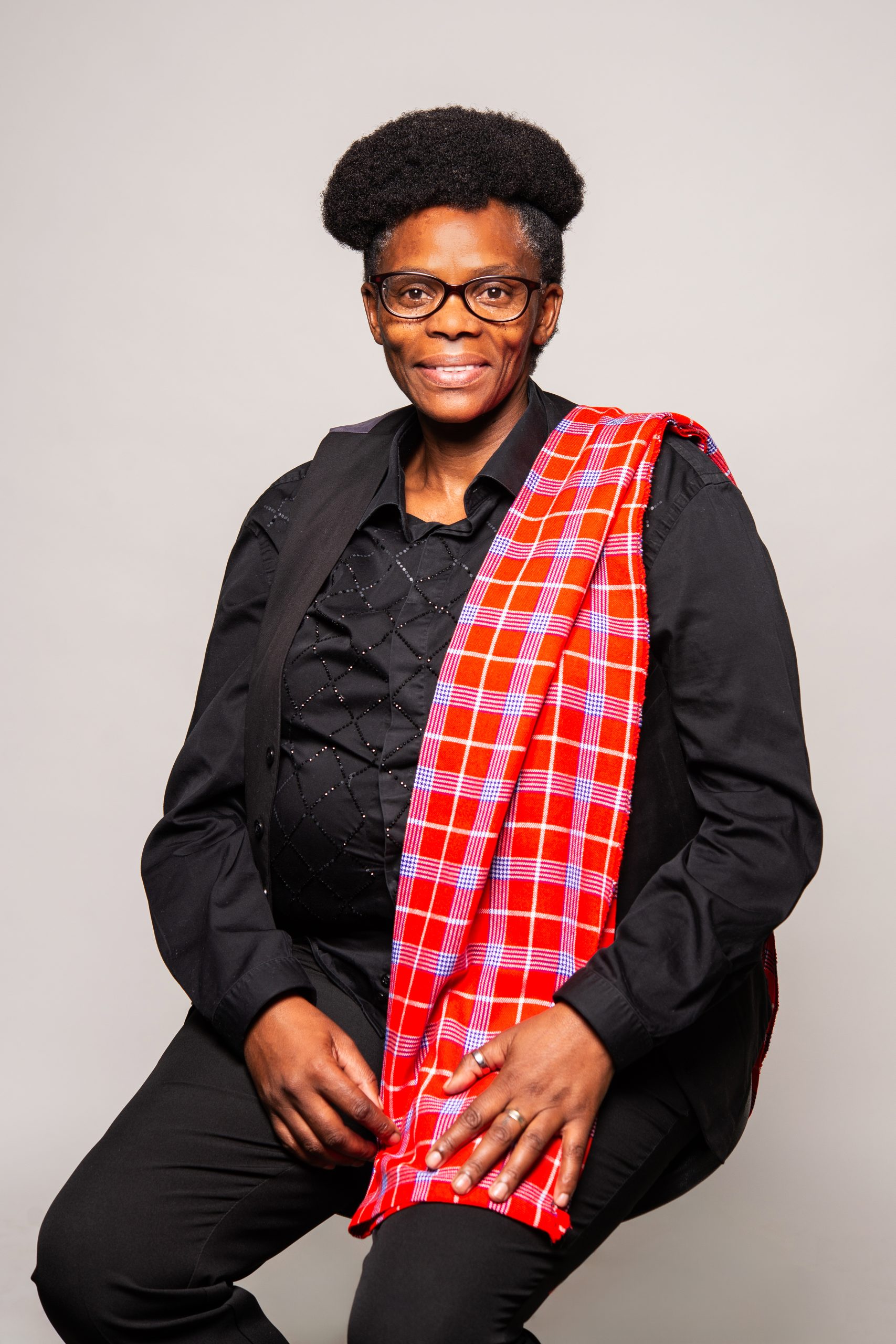 Originally from Ngqeleni in the Nyandeni District of the Eastern Cape, Nonkwelo’s rural upbringing shaped her passion for public health and social justice. “Growing up, I witnessed the devastating effects of HIV/AIDS. Not just the illness, but the silence and shame surrounding it. I knew I had to be part of the change,” she reflects.
Diagnosed with HIV 22 years ago, Nonkwelo draws strength from her journey and channels it into her work. “Living with HIV has taught me empathy. I don’t just see people’s conditions, I see their pain, strength, and stories,” she says. While she occasionally conducts HIV counselling in a colleague’s absence, her primary role focuses on broader health promotion and support, including awareness campaigns, peer educator programmes, and implementation of the Higher-Health mandate.
Her work spans ten key focus areas, ranging from gender-based violence and mental wellness to sexual reproductive health and LGBTQIA+ inclusion. “No two days are the same,” she shares. “But each one reminds me why this work matters.” Nonkwelo’s impact reaches far beyond her formal job description. As a queer woman living with HIV, she openly shares her story to empower others facing similar challenges. “Disclosing my status was one of the hardest things I’ve ever done. But it allowed others to see that healing, growth, and success are still possible,” she says.
Her journey from a rural village to a leadership position at one of South Africa’s premier medical universities is a source of pride. “From where I come from, girls weren’t expected to lead or even dream big. I’m here to say: rural girls have power too.”
Navigating dual marginalisation, both as a queer woman and someone living with HIV, has not been easy. “People judged me for where I came from and what I live with. But I never let that define my worth or derail my mission,” she says. Nonkwelo believes visibility is a powerful form of healing. “Representation matters. When students see someone like them in a leadership role, thriving and unafraid, it permits them to do the same.”
She applauds SMU’s strides toward diversity and inclusion, particularly the work done by the Advocacy and Diversity unit under Student Affairs. However, she urges continuous progress: “Policy must always translate into everyday practice.”
She asserts that SMU is more than a workplace; it’s the platform where she shows up, fully seen, and where her presence tells a story of possibility. Each day, in counselling rooms, awareness campaigns, and quiet conversations, she offers a message that transcends HIV, gender, and identity: “You are not broken. You are whole. You are worthy.” In her truth, others find courage. And in her visibility, they find permission to lead.
By Tumelo Moila