by Lorato | Aug 27, 2025 | Accolades and Achievements, All News, Alumni, SMU Media, Student Media
It began with a vision: to open doors, build bridges and connect South African universities to the world. That vision has now become a reality, as Sefako Makgatho Health Sciences University (SMU) has secured prestigious funding from the German Academic Exchange Service (DAAD) to deliver a transformative internationalisation training programme for higher education institutions across South Africa.
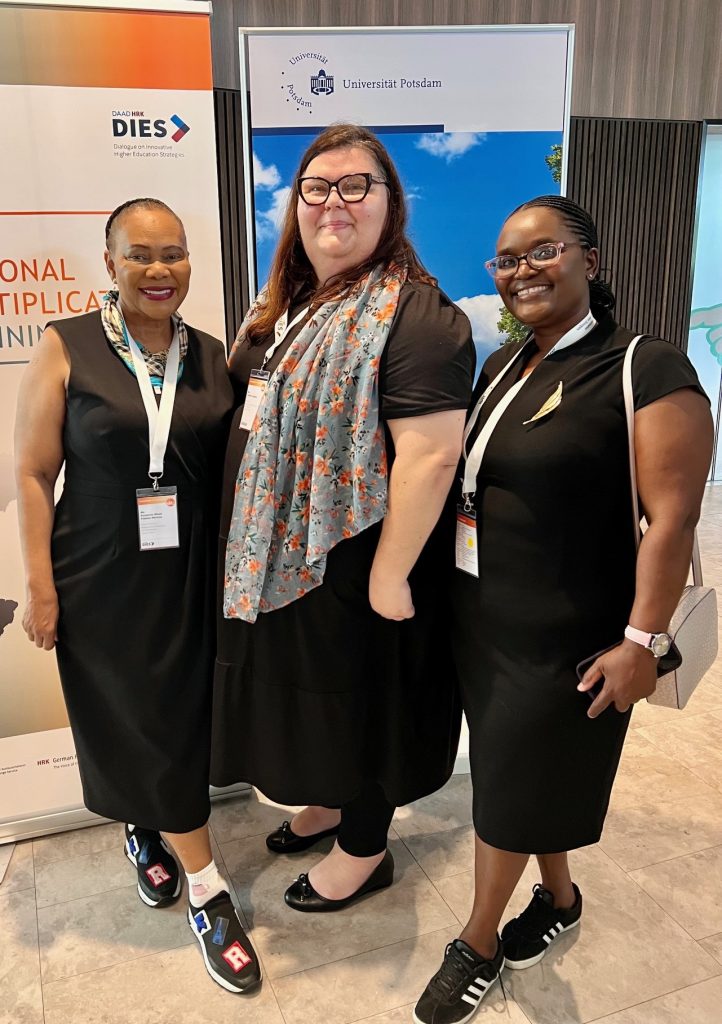 This milestone reflects SMU’s enduring commitment to excellence, integrity, diversity, respect and accountability—the values that guide the University’s growth and global engagement. For a directorate that is only in its third year, the achievement highlights SMU’s ability to make a meaningful impact on the international higher education landscape.
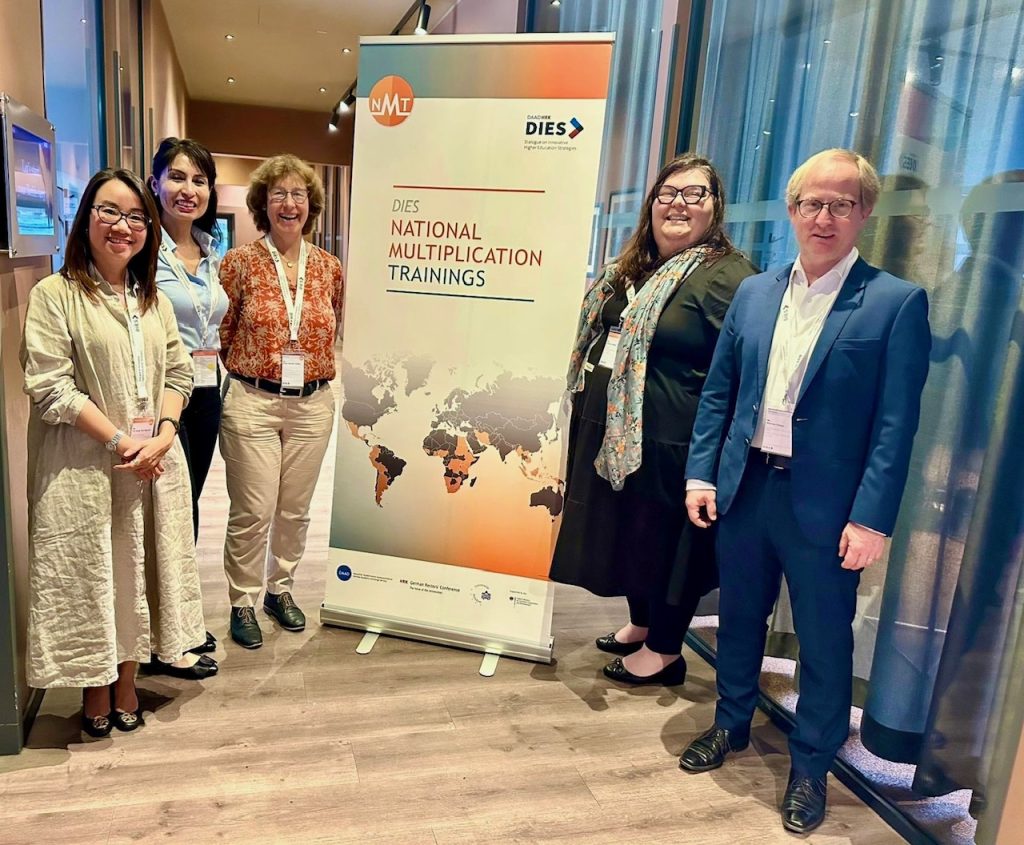
At the heart of this success is Dr Carlien Jooste, Director of Internationalisation at SMU and an alumna of DAAD’s Dialogue on Innovative Higher Education Strategies (DIES) programme. Drawing on her expertise, Dr Jooste collaborated with Dr Mbali Mkhize and Dr Zamaqwabe Sishi from Mangosuthu University of Technology to develop an innovative proposal entitled Building Bridges: Developing Internationalisation Skills for Professional Staff in South African Universities. Their concept impressed adjudicators in the highly competitive National Multiplication Training (NMT) programme, jointly initiated by DAAD and the German Rectors’ Conference (HRK) and funded by the German Federal Ministry for Economic Development and Cooperation (BMZ).
The NMT programme, coordinated by the Centre for Quality Development at the University of Potsdam, enables DIES alumni to deliver capacity-building initiatives in their regions. Applications were received from Africa, Latin America and Southeast Asia. Out of dozens of submissions, only thirteen proposals were approved globally, seven from Africa. The SMU–MUT collaboration proudly emerged as the only South African project selected, highlighting the strength and originality of their approach.
Reflecting on the achievement, Dr Jooste said: “As two Historically Disadvantaged Institutions and a female-led training team, we were ecstatic when we received the news that our proposal had been accepted. This is not just a personal victory, but an important milestone for SMU and a step forward for higher education in South Africa.”
 The training programme, due to open applications in September 2025, will focus on empowering professional staff—the operational backbone of universities—with the knowledge and skills required to advance internationalisation. These staff members, working in areas such as admissions, finance, student affairs, marketing, communications and human resources, play a vital role in implementing a university’s international strategy, yet their impact is often overlooked.
Jooste explained: “Most of the work in International Offices across South Africa is carried out by administrative staff. They keep internationalisation moving, yet many colleagues in other departments do not realise how important they are to this ecosystem. Our goal is to build capacity, foster collaboration and make internationalisation a shared responsibility across the university.”
She added, “As a team from Historically Disadvantaged Institutions, we understand the gaps and challenges that exist. This training aims to address those gaps and promote excellence, diversity, respect and accountability—values that SMU stands for. This initiative is about more than training; it is about creating a culture of integrity and innovation that positions South African universities on the global stage.”
This achievement underscores SMU’s growing role as a leader in shaping internationalisation within higher education. Beyond the funding and recognition, it reflects the University’s determination to embrace innovation, cultivate partnerships and create opportunities that transcend borders. By empowering professional staff, SMU is investing in the people who drive its mission forward, ensuring that internationalisation is understood, valued and embedded across campuses.
From a young directorate to international recognition, SMU is charting a bold course for the future. This milestone demonstrates that vision, collaboration and commitment to core values can transform institutions, empower individuals and position South African universities as global players in higher education.
By Dimakatso Modise

by Lorato | Aug 27, 2025 | All News, SMU Media, Student Media
In the quiet streets of Tzaneen, a small town in Limpopo, a young boy once watched patients wait for hours at clinics with too few doctors. It was here, amidst the struggles of rural healthcare, that Raymond Mabulana discovered his calling. Today, as a fifth-year medical student at Sefako Makgatho Health Sciences University (SMU), Mabulana is transforming that early inspiration into a mission: to improve healthcare access and outcomes for underserved communities.
 Growing up in an area with limited medical services, Mabulana witnessed first-hand the consequences of inadequate healthcare. These experiences shaped both his character and career ambitions, instilling resilience, compassion and a deep sense of responsibility. “From a young age, I knew I wanted to become a doctor—not just to treat illness, but to improve access to quality care for communities like mine,” he recalls.
His journey from public schools in resource-limited settings to SMU is a story of determination and perseverance. SMU’s focus on community-oriented healthcare has provided the ideal environment to nurture his vision. Here, Mabulana has combined academic excellence with practical experience, preparing to make a meaningful difference in society.
Mabulana’s commitment to medicine extends well beyond the classroom. He actively participated in data collection at Dr George Mukhari Academic Hospital for the Femur Study, a global cohort study on femur fracture management. In addition, he co-founded the Diagnostic Society, an internal medicine society aimed at promoting early clinical exposure and fostering interest in internal medicine. As Research Coordinator, he facilitates student involvement in faculty-led research projects, helping his peers develop academic curiosity and the skills required for modern healthcare.
The support he has received has also been instrumental. Receiving a bursary from Gift of the Givers, in partnership with Bonitas, has been both humbling and empowering. “Their support is not just financial—it is a vote of confidence in my potential and the work I aspire to do. It reinforces my determination to complete my studies and become a compassionate, capable medical professional,” he explains. This opportunity has strengthened his commitment to serve others and ensured that the impact of this generosity extends far beyond himself.
Mabulana’s ambitions extend well beyond personal achievement; he is determined to return to rural and underserved communities as a source of inspiration and care. “I want young people from similar backgrounds to know that their dreams are valid and achievable. Through surgery, research and community outreach, I hope to contribute to building a more equitable healthcare system and be part of a generation of doctors who do not merely treat illness but transform lives,” he says.
His journey is a testament to the power of passion, perseverance and community-focused education. It shows how an individual, supported by institutions and organisations that believe in talent, can aspire to make a lasting impact. From the small town of Tzaneen to the halls of SMU, Mabulana is proof that dedication, vision and heart can transform not just one life, but the lives of countless others in communities that need it most.
As he progresses towards his goal of becoming a doctor, researcher and advocate for equitable healthcare, Mabulana exemplifies the potential of young South Africans to drive meaningful change. His story inspires not only his peers at SMU but also a wider audience, demonstrating that access to education, coupled with determination, can empower individuals to overcome challenges and shape the future of healthcare in the country.
By Dimakatso Modise

by Lorato | Aug 27, 2025 | All News, SMU Media, Student Media
Healthcare professionals, academics and policymakers gathered at Sefako Makgatho Health Sciences University (SMU) for the Advanced Airway Management Symposium, a landmark event designed to strengthen life-saving skills in emergency and clinical settings. Jointly hosted by the SMU Skills Centre, Dr George Mukhari Academic Hospital (DGMAH) and Lebone College of Emergency Care (LCOEC), the symposium placed strong emphasis on advanced techniques that can mean the difference between life and death in critical care.
 Formally opening the proceedings, Gauteng MEC for Health and Wellness, Nomantu Nkomo-Ralehoko, hailed the gathering as a breakthrough in collaborative healthcare. She remarked: “Today I was opening the Airway Management Symposium, which, for me, is one of the best symposiums we’ve held since I’ve been in the Department of Health. Because now we’re integrating our work, we can see that we have the nurses, the Emergency Medical Services (EMS) teams and our students who are being empowered with knowledge. What is critical is that SMU and the EMS, through Lebone College, are working closely together. This partnership shows that when we collaborate, we can change the country and the province. We are motivating students today by bringing them together so that even if some are first years, they will end up being like yourselves – senior, skilled professionals serving our citizens.”
The morning programme, held at the SMU Sports Complex, featured a series of specialist presentations. Reuben Ruiters, Director of Emergency Medical Services, set the tone with an overview of the EMS perspective. He was followed by Dr Becky Kgole, who outlined the essentials of basic ventilation – a cornerstone of airway support. Dr Ntebatje Phala then addressed the vital subject of “resuscitation before intubation”, while Cassie van der Walt delivered a lecture on managing one of the most complex scenarios clinicians face in airway emergencies.
 Beyond theory, the symposium strongly emphasised practice. Delegates participated in hands-on sessions in smaller breakaway rooms, where doctors, nurses and paramedics practised advanced techniques under expert supervision. This approach bridged the gap between classroom knowledge and the realities of high-pressure emergencies.
“The symposium was meant to uplift and refresh skills in primary health providers. With so many in attendance, we believe the skills acquired will be transferred to their facilities, thereby expanding reach and strengthening healthcare delivery,” explained Dr Phala.
For many participants, the experience was transformative. Dr Clementine Bjang reflected: “This symposium helped me identify gaps in my practice, particularly in procedures such as cricothyrotomy, which I had not previously been confident to perform. I also learned about video laryngoscopy intubation, a modern technique that improves visualisation and enhances safety. My take-home message is that ‘practice makes permanent’, so it is crucial to refine our skills continuously.”
Students also found immense value in the event. Simamkele Talatala, a third-year SMU medical student, noted: “I gained practical knowledge in managing the upper airway across all age groups and exposure to advanced hospital equipment such as laryngoscopy and bronchoscopy. This strengthened my clinical confidence while also making me reflect on the inequalities faced by under-resourced hospitals.”
By uniting academics, healthcare providers and policymakers, the Advanced Airway Management Symposium proved to be more than a training event – it was a declaration of intent to enhance emergency care and save lives in Gauteng and beyond.
By Tumelo Moila

by Lorato | Aug 27, 2025 | All News, SMU Media, Student Media
Imagine a hall alive with ideas, curiosity and ambition—a place where tomorrow’s scientists and technologists meet today’s industry leaders. This was the atmosphere at the Sefako Makgatho Health Sciences University (SMU) Sports Complex during the 2025 Career Fair, hosted by the School of Science and Technology (SST) in collaboration with the Department of Student Affairs under the theme “Developing and Supporting the Next Generation of Scientists and Technologists.”
 The theme captured the purpose of the event: to equip students with the knowledge, skills and networks needed to succeed in science and technology fields. The Career Fair provided a launchpad for students to explore career pathways, internships and postgraduate opportunities. This year, the fair welcomed a diverse mix of industry players, research institutions and government agencies, including the South African Professional Regulators Association (SARPRA) and Standard Bank, who engaged with students through presentations, interactive stalls and one-on-one discussions.
The event opened with a warm and motivating address by Professor Piet King, Head of the Department of Biology and Environmental Sciences. “Our responsibility is to prepare you not just academically, but for the real-world challenges that await. Explore, ask questions and seize every chance to grow. Today’s theme reminds us that we are here to develop and support the next generation of scientists and technologists,” he said, setting the tone for a day focused on curiosity, exploration and professional growth.
Following this, Professor Liziwe Mugivhisa, Work Integrated Learning (WIL) Champion, shared insights from the WIL office, emphasising the value of experiential learning. “Work-integrated learning bridges the gap between theory and practice. Use this platform to discover where your passion meets purpose. The theme of today is about developing and supporting your potential as the next generation of innovators,” she stated.
 Adding a student voice, Mahlatse Maphiri, Chairperson of the School of Science and Technology Student Representative Council, delivered an inspiring message to peers. “The future of science and technology lies in your hands. Engage with these companies, learn from them, and let your curiosity drive you forward. Today’s Career Fair is designed to develop and support you—the next generation of scientists and technologists,” he affirmed.
Postgraduate students were represented by Siphesihle Mkhwanazi, Chairperson of the SMU Postgraduate Students’ Committee, who encouraged graduates to pursue advanced research and career opportunities. “Even at the postgraduate level, your journey is only beginning. These connections can define your career trajectory. Today’s theme is a reminder that SMU is here to support you every step of the way,” he said.
Students eagerly navigated interactive stalls, explored career pathways and attended workshops focused on CV writing, interview techniques and professional branding. The blend of undergraduate and postgraduate participants created a vibrant environment for networking and mentorship.
For companies such as the South African Professional Regulators Association and Standard Bank, the fair was an opportunity to identify promising talent. They showcased programmes, engaged students at their stalls and highlighted what employers expect from graduates entering the workforce.
The 2025 Career Fair at SMU demonstrated the university’s commitment to developing a workforce that is both academically grounded and professionally prepared. Beyond classroom learning, the event emphasised curiosity, networking and practical experience—aligning perfectly with the theme of developing and supporting the next generation of scientists and technologists.
As students departed the Sports Complex, they carried with them not only brochures and business cards but also a renewed sense of purpose and direction. Events like this illustrate that when academia and industry collaborate, they do more than educate—they inspire, equip and shape the innovators of tomorrow.
By Dimakatso Modise

by Lorato | Aug 27, 2025 | All News, SMU Media, Student Media
Reading is a transformative tool for children and adolescents, enhancing language skills, cognitive development, emotional intelligence, and academic success. In South Africa, where literacy challenges persist—particularly among Grade 4 learners who struggle to read for meaning—targeted interventions are vital. To address this need, Dr Marguerite De Jongh, Senior Lecturer in the Department of Speech-Language Pathology at Sefako Makgatho Health Sciences University (SMU), has implemented a pioneering reading initiative at Dr George Mukhari Academic Hospital (DGMAH).
 Dr De Jongh has dedicated her academic and clinical career to advancing literacy and language development in diverse educational and healthcare contexts. Her qualifications include a PhD in Psychology focused on emergent literacy and ADHD in Grade R learners, B. Logopaedics in Speech Therapy and Audiology, an MPhil in Second Language Studies, and a Certificate in Neuro-Developmental Therapy.
Dr De Jongh has published extensively on early literacy, language stimulation, and inclusive education, including research on reading behaviour in higher education and literacy support for teachers. She has led curriculum development initiatives and facilitated training for professionals and students on literacy facilitation, language enrichment, and reading for pleasure. Her work in the hospital-based literacy initiative reflects a commitment to bridging healthcare and education, ensuring that children and adolescents, regardless of their medical condition, have access to meaningful reading experiences.
“Our goal is to ensure that children continue to grow academically, socially, and emotionally, even while hospitalised,” De Jongh explains. This initiative is rooted in the belief that literacy can serve as both an educational and therapeutic tool.
The initiative targets both young children (ages 5–8) and adolescents, offering age-appropriate materials and structured reading sessions. Through one-on-one or small group interactions, students from SMU engage with patients, guided by De Jongh and a speech-language therapist from DGMAH. The programme focuses on reading for pleasure, language stimulation, emotional engagement, and cognitive development.
“Reading gives children a sense of normalcy and comfort during difficult times,” says De Jongh. “Seeing their faces light up when they connect with a story reminds us why this work matters.”
Hospital-based reading interventions are particularly significant in South Africa, where PIRLS 2021 revealed that 81% of Grade 4 learners cannot read for meaning. By integrating literacy into healthcare settings, the initiative provides a unique opportunity to reach children outside traditional school environments. “Each session presents an opportunity to nurture both academic development and emotional well-being,” says De Jongh.
Speech-Language Pathology and Audiology students from SMU receive comprehensive training in reading facilitation, auditory perception strategies, language stimulation, and techniques to encourage reading for pleasure. Weekly sessions in orthopaedic and oncology paediatric wards are carefully structured to accommodate patients’ medical needs while maximising engagement. Optional enhancements, such as themed reading months, “Book of the Week” displays, and small rewards like certificates, further motivate participation.
“Many of the adolescents ask questions, discuss the stories, and even request books in their home languages,” says De Jongh. “It’s rewarding to see how engaged they become and how it builds their confidence.”
Collaboration with hospital staff, teachers, caregivers, and parents ensures a holistic approach, reinforcing the value of literacy as both an educational and therapeutic tool. Early feedback indicates that patients respond positively, with visible enthusiasm and active participation.
The hospital-based reading initiative at DGMAH exemplifies the power of integrating education and healthcare. “This programme is more than reading—it’s about resilience, inclusion, and lifelong learning,” says De Jongh. By promoting literacy as a tool for emotional support, cognitive development, and academic continuity, the initiative demonstrates how reading can positively impact young patients. As the pilot expands, this model offers a promising blueprint for scaling hospital-based literacy interventions nationwide, ensuring that all children, regardless of circumstance, have access to meaningful reading experiences.
By Tumelo Moila

by Lorato | Aug 27, 2025 | All News, Alumni, SMU Media, Student Media
Growing up in the rural town of Lephalale, Limpopo, Lucas Matabologa’s childhood was filled with football matches that only ended at sunset. He recalls being the “water-boy” whenever a teammate got injured, instinctively offering water as the only “medicine” available. What seemed like a simple childhood routine planted the early seeds of a lifelong passion for sport and rehabilitation.
 That passion crystallised years later when, while watching a television soap opera, Matabologa saw a character who had suffered a stroke recover through physiotherapy. “That was my light bulb moment,” he recalls. “I realised the impact physiotherapy could have on people’s lives, and I vowed it would be my career.”
His determination carried him to Sefako Makgatho Health Sciences University (SMU), where he graduated with a BSc in Physiotherapy in 2020. His hard work was recognised with the Best in Neurology Award in his final year, a milestone he describes as one of his proudest achievements. “It felt like I had taken the first step towards becoming the kind of physiotherapist I dreamt of when I saw that soapie character,” he reflects.
Matabologa’s interest in neurological rehabilitation is deeply personal, shaped by witnessing family members struggle with the aftermath of strokes. At the same time, his love of sport has driven him towards sports physiotherapy. Today, he is fortunate to work in both areas through Stepmed Physiotherapy in Nelspruit, where he continues to refine his skills. Among his most memorable cases is a patient who survived a severe brain injury and, through dedicated rehabilitation, progressed from intensive care to running marathons.
Central to Matabologa’s practice is his belief that “exercise is medicine”. He ensures that every patient under his care engages in evidence-based exercise, not just as a treatment, but also as a preventive strategy against injury and disease. “All my patients know that when they see me, they are about to exercise,” he jokes.
 In 2021, during his community service year, he launched the “Healthy Body, Healthy Mind” exercise programme to help Pretoria West Hospital staff stay active during the COVID-19 pandemic. The initiative boosted morale, improved physical well-being and reduced absenteeism. It was later recognised as a finalist in the CPSI Innovation Awards (2022), further motivating Matabologa to continue promoting health innovation.
More recently, Matabologa has ventured into the world of adaptive sports, joining Wheelchair Basketball South Africa (WBSA) in early 2024. He calls it his “new baby”, drawn by the chance to expose patients to the sport and promote opportunities for people living with disabilities. Representing South Africa at international wheelchair basketball tournaments, including the first-ever 3X3 Wheelchair Basketball World Championship at Sun City, has been a career highlight. “It was a proud moment,” he says. “Sport has a unique power to unite people across countries and being part of that was unforgettable.”
Looking ahead, Matabologa envisions establishing a wheelchair basketball league in Mpumalanga while pursuing a master’s degree in neurology. He also hopes to influence national policy on exercise and health promotion, advocating for lifestyle-based prevention to ease the burden on South Africa’s healthcare system.
To young aspiring physiotherapists, his advice is simple yet profound: “Work hard, be patient with yourself, and never stop trying until doors open. Small steps can lead to big changes.”
By Tumelo Moila