by Lorato | Oct 21, 2025 | All News, SMU Media, Student Media
At a time when South Africa’s health system continues to demand capable, compassionate, and visionary professionals, Sefako Makgatho Health Sciences University (SMU) is once again leading from the front. Through its Convocation, the university is rallying alumni, partners, and the broader corporate community to reinvest in the next generation of health-sciences leaders.
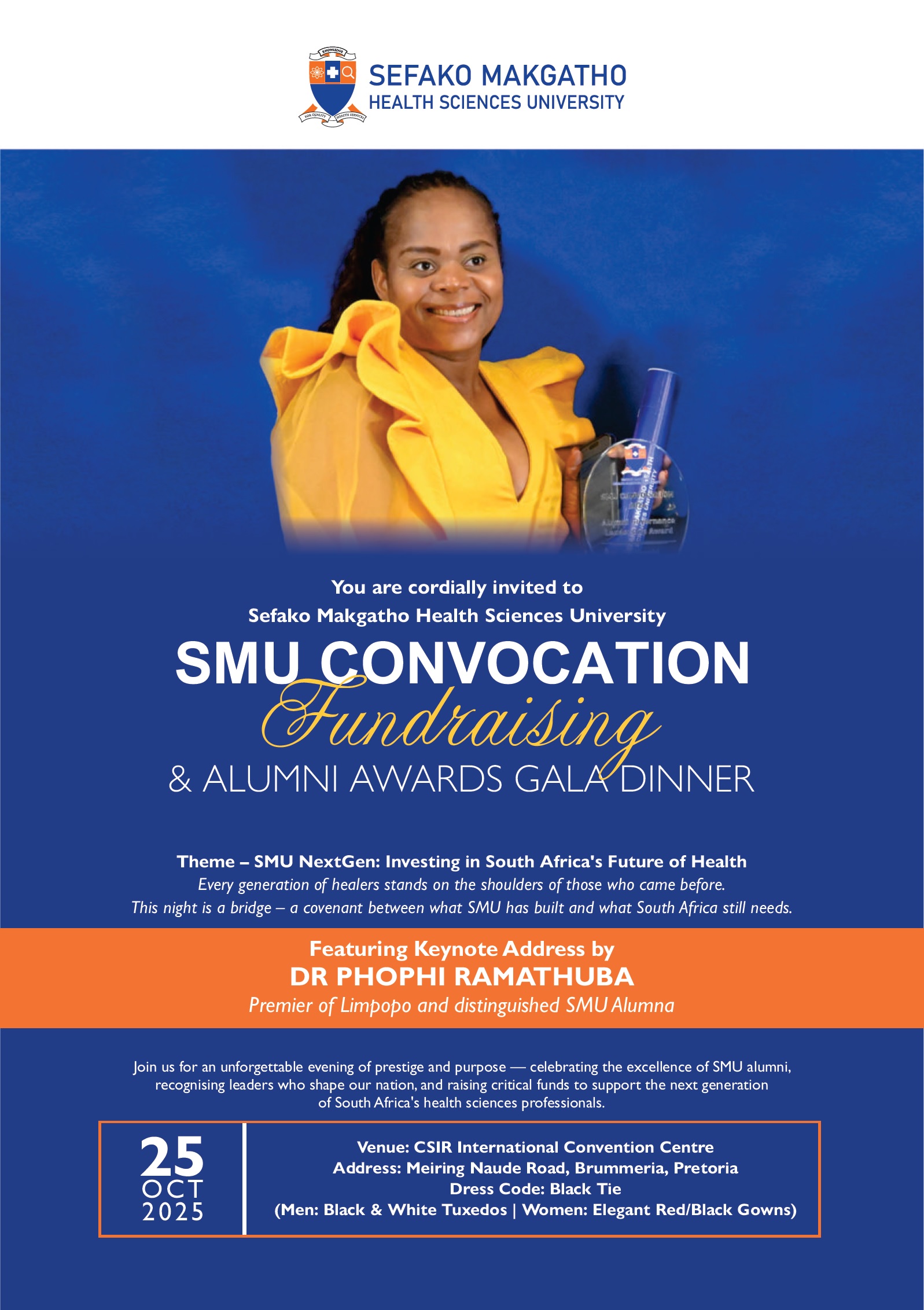
 This initiative will culminate in a prestigious evening of celebration and purpose — the SMU Convocation Fundraising & Alumni Awards Gala Dinner, to be held on 25 October 2025, under the theme “SMU NextGen: Investing in South Africa’s Future of Health Sciences.”
The gala will bring together distinguished alumni, corporate partners, government leaders, and philanthropists in an atmosphere of elegance and generosity, while raising critical funds to support financially constrained students in the health-sciences disciplines.
A vision born of convocation leadership
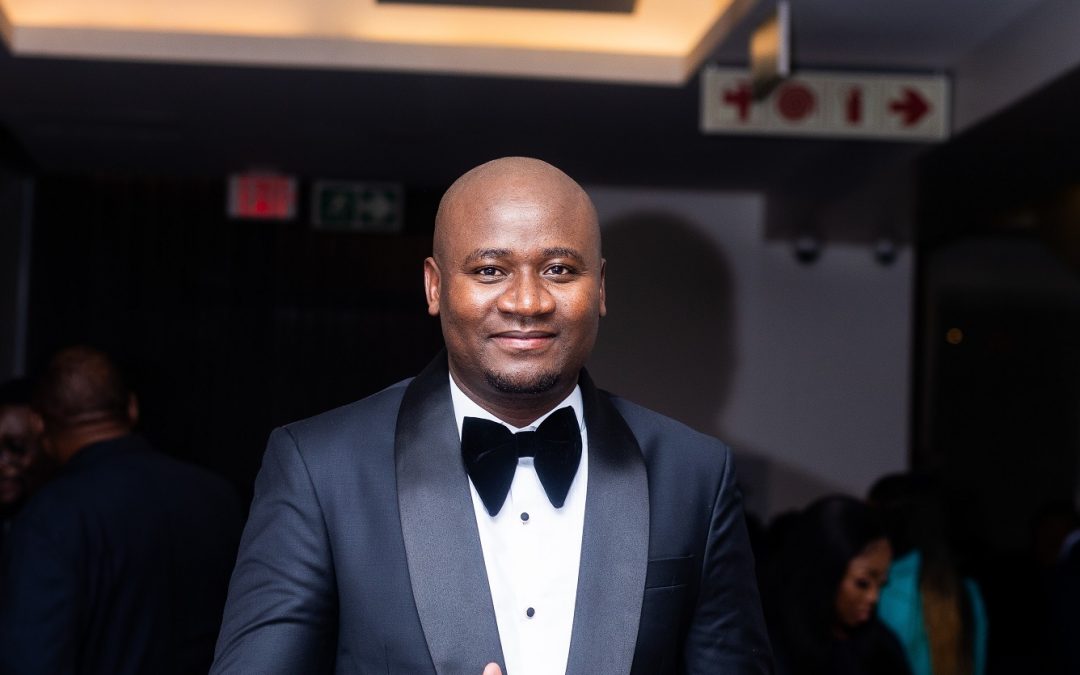
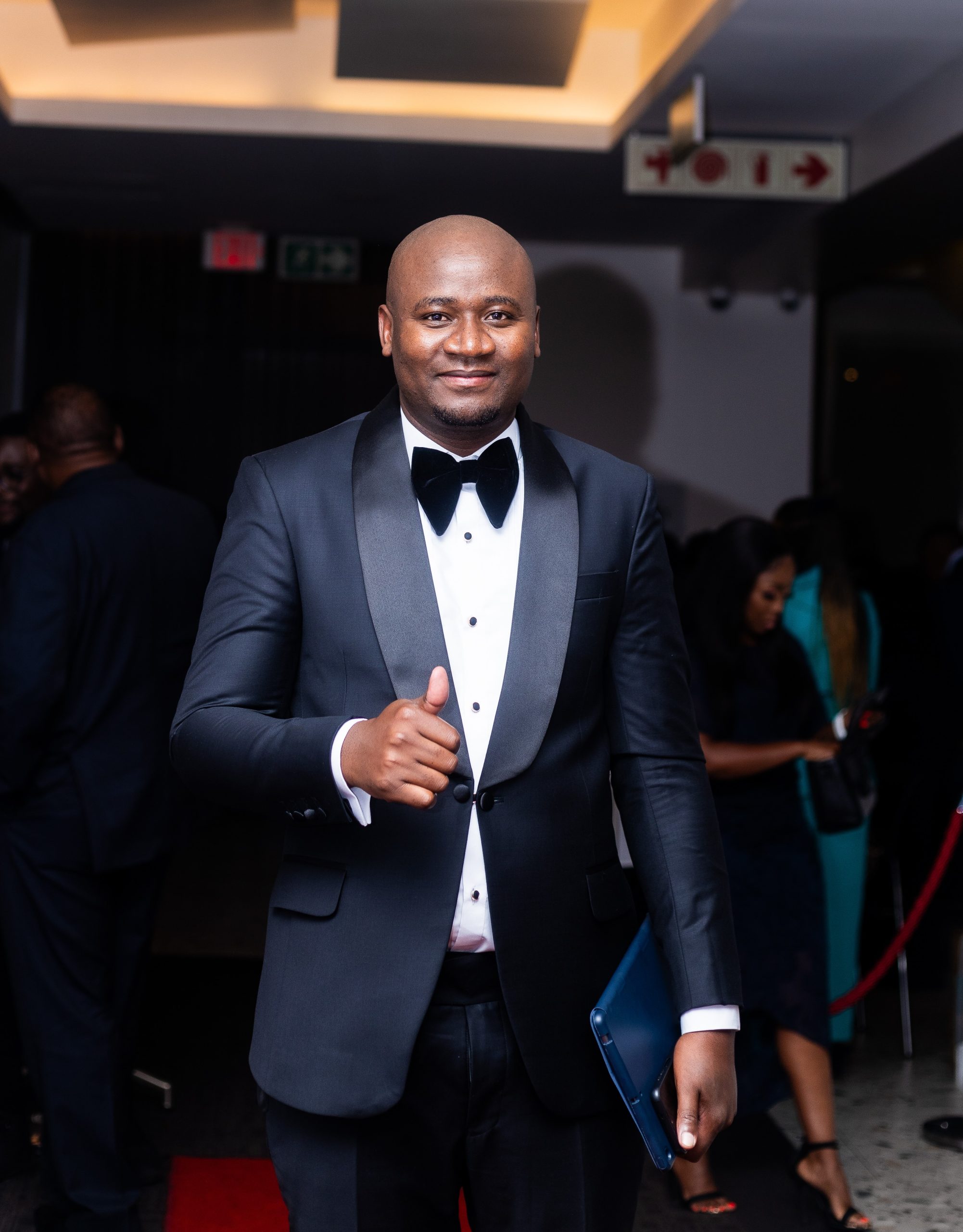
For Japhta Phala, President of the SMU Convocation, the gala represents far more than a single fundraising event but a powerful act of collective responsibility. “The Convocation was inspired to initiate this fundraising gala because we understand that education remains the most enduring investment in South Africa’s future,” says Phala. “As alumni, we are products of a system that once gave us a chance to realise our dreams and now it is our turn to extend that opportunity to those who come after us.”
Under Phala’s leadership, the Convocation Executive Committee has prioritised rebuilding the bridge between SMU and its alumni network, not only through nostalgic reconnection but through tangible, transformative contribution. The gala is envisioned as an annual anchor event to institutionalise alumni giving and affirm SMU’s standing as a national asset in health sciences education.
Phala emphasises that the event also serves as a symbolic bridge between SMU’s proud legacy and South Africa’s urgent need for more skilled health sciences professionals.
 “We hope this initiative will make a measurable difference in the lives of our students — students who are talented, committed, and eager to serve,” he explains. “Beyond financial relief, this is about restoring dignity and hope. It’s about ensuring that a gifted student from a rural or township background doesn’t abandon their dream simply because they can’t afford to continue studying.”
He adds that the gala reflects the broader spirit of SMU itself; a university founded to democratise access to health-sciences education and to transform the health landscape of South Africa.
Alumni and partners: The lifeblood of progress
Phala believes the success of SMU’s mission depends on a collective ecosystem of support where alumni and partners play an active, enduring role.
“Our alumni and partners are vital architects of the university’s future,” he notes. “Their involvement, whether through mentorship, research collaboration, or financial contribution is what keeps the SMU flame burning. They embody the university’s values in the workplace and in society, and their investment today will shape the calibre of healthcare professionals our country produces tomorrow.”
The Convocation Executive Committee echoes this sentiment, calling on alumni from across generations to see themselves not as former students, but as lifelong ambassadors and investors in the institution’s continued excellence.
Beyond the fundraising appeal, the gala will honour outstanding alumni who have demonstrated exceptional leadership in medicine, governance, innovation, and social impact. Through initiatives like this, SMU is positioning itself not only as a centre of academic excellence but also as a hub for national health transformation, driven by its own graduates.
Phala concludes: “The future of SMU — and indeed South Africa’s health sciences system will be written by those who understand that legacy is not what we inherit, but what we build for others to inherit. This gala is our collective commitment to that principle.”
Event: SMU Convocation Fundraising & Alumni Awards Gala Dinner
Theme: SMU NextGen – Investing in South Africa’s Future of Health Sciences
Date: 25 October 2025
Dress Code: Black Tie (Men – Black & White Tuxedos | Women – Elegant Red Gowns)
For Sponsorships/Donations More Information: letsai.mashishi@smu.ac.za
By Tshimangadzo Mphaphuli
by Lorato | Oct 16, 2025 | All News, SMU Media, Student Media
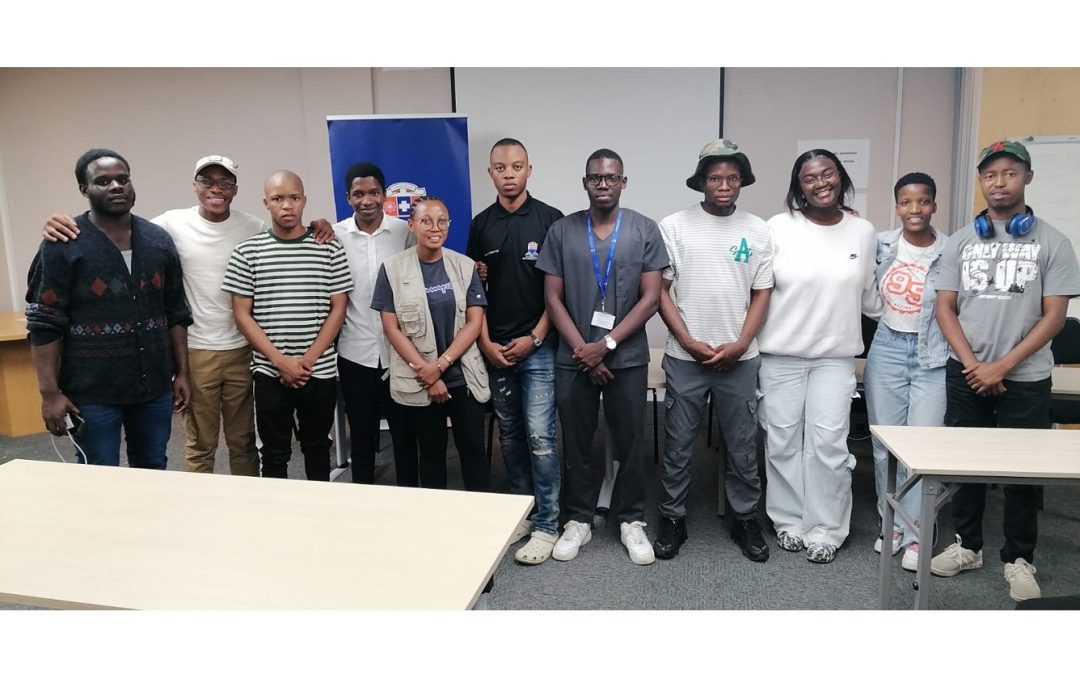
Sefako Makgatho Health Sciences University (SMU) proudly announces the successful conclusion of the 2025 Student Representative Council (SRC) elections and the constitution of a new cohort of student leaders for the 2025/2026 term.
The elections, held on 18 September 2025, reflected the University’s commitment to democratic values and participatory governance. Following the voting process, all objections were addressed through proper channels, ensuring transparency and fairness. The final results were officially published on 6 October 2025, and the new SRC was formally constituted on 7 October 2025.
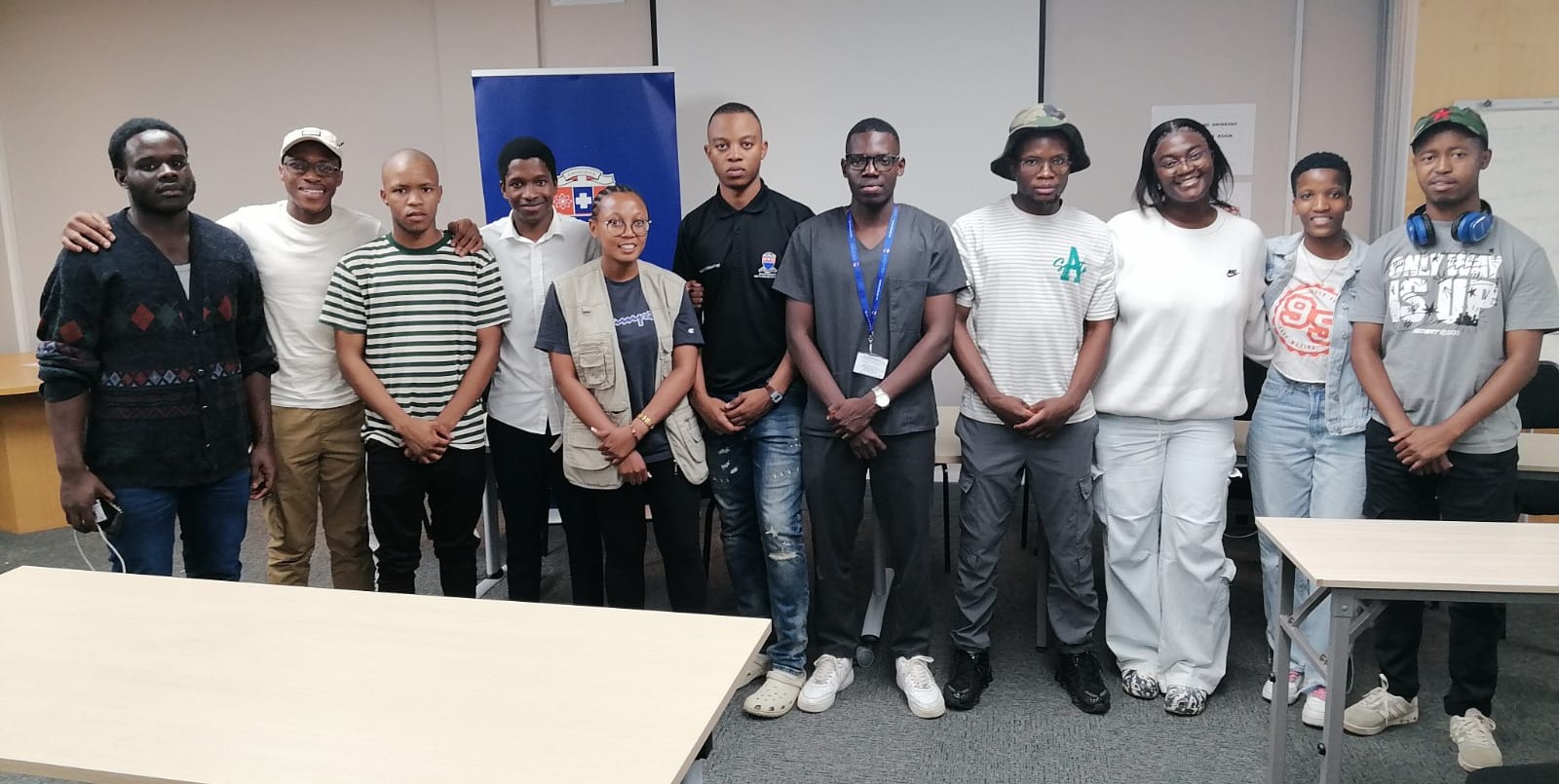 Tulani Nkuntse, Director of Student Affairs, congratulated the newly elected council and thanked students for their active participation. “We wish the new SRC well in their term and look forward to their meaningful contribution towards improving the student experience at SMU. They carry the trust and confidence of their peers,” he said.
The SRC serves as a vital governance structure, linking students and University management. The newly elected council is expected to strengthen student representation, enhance communication, and promote initiatives that advance academic excellence, leadership, and community engagement.
The 2025/2026 SRC comprises:
| Name and Surname |
Position |
| Mthokozisi Dlamini |
President General |
| Precious Mogoru |
Deputy President |
| Thato Mongake |
Secretary General |
| Mpiliso Zwane |
Deputy Secretary General |
| Tshepiso Tenacious Mashiloane |
Treasurer General |
| Teboho Edward Mathobisa |
Residence & Safety Officer |
| Siphesihle Mkhwanazi |
Sport and Recreation Officer |
| Vacant |
Projects & Campaigns Officer |
| Rirhandzu Maluleke |
Postgraduate Students’ Officer |
| Morata Mokgadi |
Culture and Religion Officer |
| Ace Junior Netshipale |
School of Dentistry |
| France Baloyi |
School of Health Care Sciences |
| Vumbhoni Mahlaule |
School of Medicine |
| Lesedi Diketane |
School of Pharmacy |
| Caswell Xaba |
School of Science and Technology |
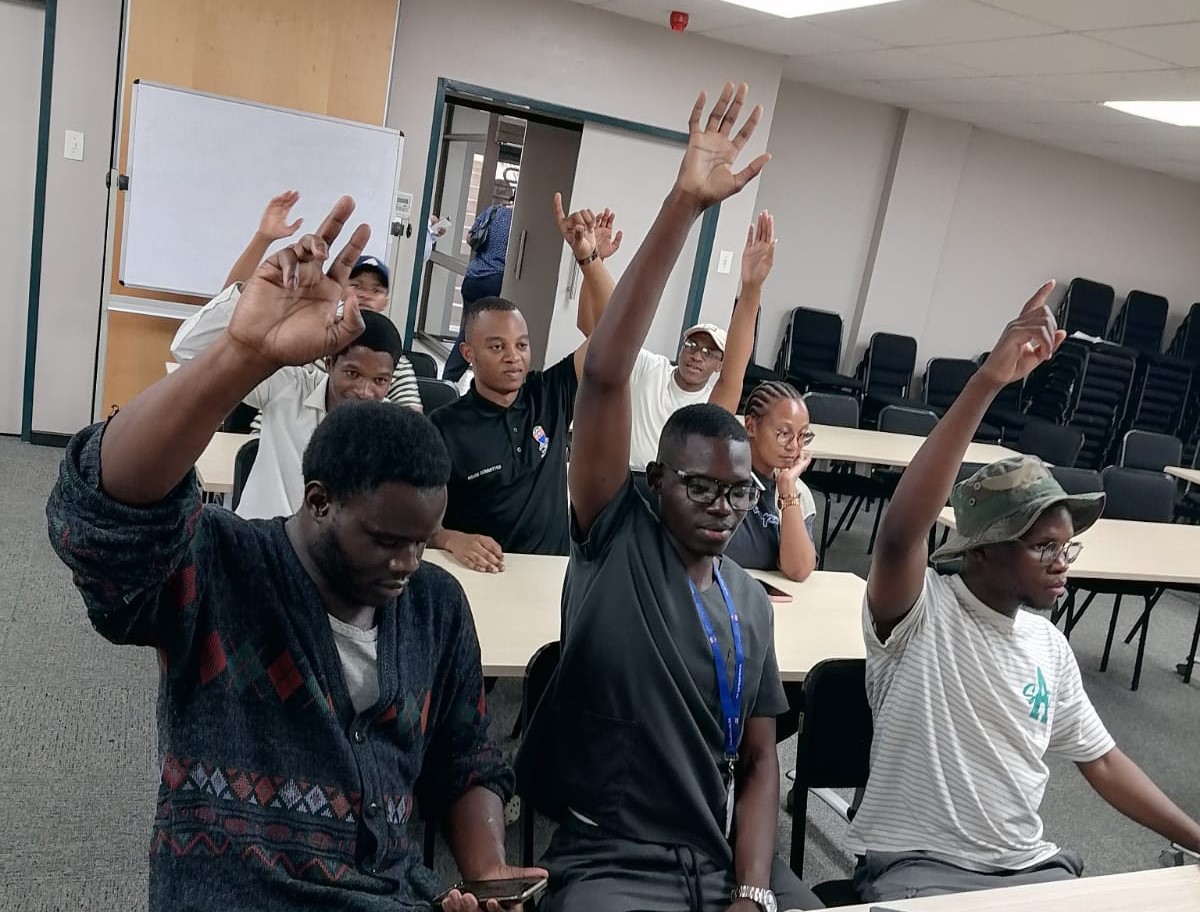 Nkuntse emphasised that the SRC must embody teamwork, accountability, and servant leadership. “Leadership at SMU is not only about representation but also about stewardship — driving initiatives that improve student life and promote academic success,” he said.
This year’s elections marked a significant milestone with a voter turnout of 63.67%, more than double previous years. “Such engagement reflects students’ growing awareness of the importance of participation in governance and their commitment to building a stronger, inclusive student community,” Nkuntse added.
The new council assumes office as the University continues to prioritise student development, wellness, and engagement. In the coming months, the SRC will collaborate with the Department of Student Affairs on programmes aimed at improving residence life, promoting student wellness, expanding recreational opportunities, and supporting entrepreneurship and innovation.
SMU remains committed to nurturing student leadership and empowering young leaders to make a lasting impact within and beyond the University. “We look forward to seeing this council continue the legacy of strong student leadership and contribute to a vibrant, engaged, and inclusive campus environment,” concluded Nkuntse.
By Dimakatso Modise

by Lorato | Oct 9, 2025 | All News, SMU Media, Student Media
Sefako Makgatho Health Sciences University (SMU) marked World Anatomy Day with a powerful reminder of why practical anatomy remains the cornerstone of medical education. The event, themed “With Anatomy through Our eyes”, brought together students, staff, and creative minds to celebrate the discipline that bridges science, art, and humanity.
 Professor Risenga Chauke, Dean of the School of Medicine, opened the event with an engaging analogy: “View the human body like a building,” he told the audience. “Anatomy is the structure—the walls and beams—while physiology is how it works—the lights and the Wi-Fi.” Drawing from his experience as a cardiothoracic surgeon, Prof Chauke stressed that no simulation can replace the real human body in training. “Theatre and simulation are not the same,” he said. “In surgery, even a small error can have life-threatening consequences. Only through real dissection can we truly understand the body.”
Chauke commended the Department of Anatomy for providing students with hands-on experience and reminded them that working with human bodies is both a privilege and a responsibility. “We study the dead to save the living,” he said—a sentiment that would echo throughout the day’s presentations and creative works.
 Second-year MBChB student Khanya Chirwa expanded on the Dean’s message by sharing her personal journey through the MIBS module—covering anatomy, physiology, microbiology, and pharmacology. Initially “intimidated” by the subject, she soon discovered that anatomy formed the “foundation for clinical practice and diagnosis.” Chirwa illustrated this by explaining how understanding lymph node locations is vital for identifying swelling during physical examinations. “Anatomy is not just about memorising parts,” she said. “It teaches us where to touch, what to feel, and what lies beneath.”
For Chirwa, dissecting a real body was the turning point: “Moving from the textbook to the dissection hall revealed the true meaning of anatomy. Without this knowledge, even interpreting an X-ray or administering an injection becomes risky.”
The day also celebrated anatomy as an art form. Students expressed their reflections through poetry and visual art, blending science with creativity.
 Adelade Mathebula’s poem “I am a Living Soul” explored the human body as a masterpiece of interconnected systems— “beautiful in my complexity,” she wrote. Meanwhile, Tshifhiwa John Khabana’s “We Study the Dead to Save the Living” captured the solemn courage of anatomy students facing the dissection hall. His words— “Anatomy is a beautiful art that demands strong will, dedication, and patience”—resonated deeply with the audience.
An accompanying art exhibition transformed anatomy into visual poetry. Works ranged from Miya Jade Robson’s Memento Ossium (pencil) to Shantele Mafatle’s clay sculpture Art of a Kidney. The top prize went to Laurika Prinsloo for The Creator’s Hand, with Mafatle also earning the “People’s Choice” award.
In a session dedicated to academic success, students, including Chirwa, Charlize Degenaar, Sandy Hadebe, and Lehlogonolo Mathete, shared study tips on planning, visualisation, and using digital tools. Degenaar took first place for her practical strategies, highlighting that effective learning in anatomy is as much about mindset as method.
Closing the event, Professor Robert Ndou presented awards across all categories, commending the students’ passion and artistry. From scalpel to sculpture, every contribution affirmed the day’s unifying message: anatomy is not merely studied—it is lived, felt, and honoured.
By Tumelo Moila
by Lorato | Oct 9, 2025 | All News, SMU Media, Student Media
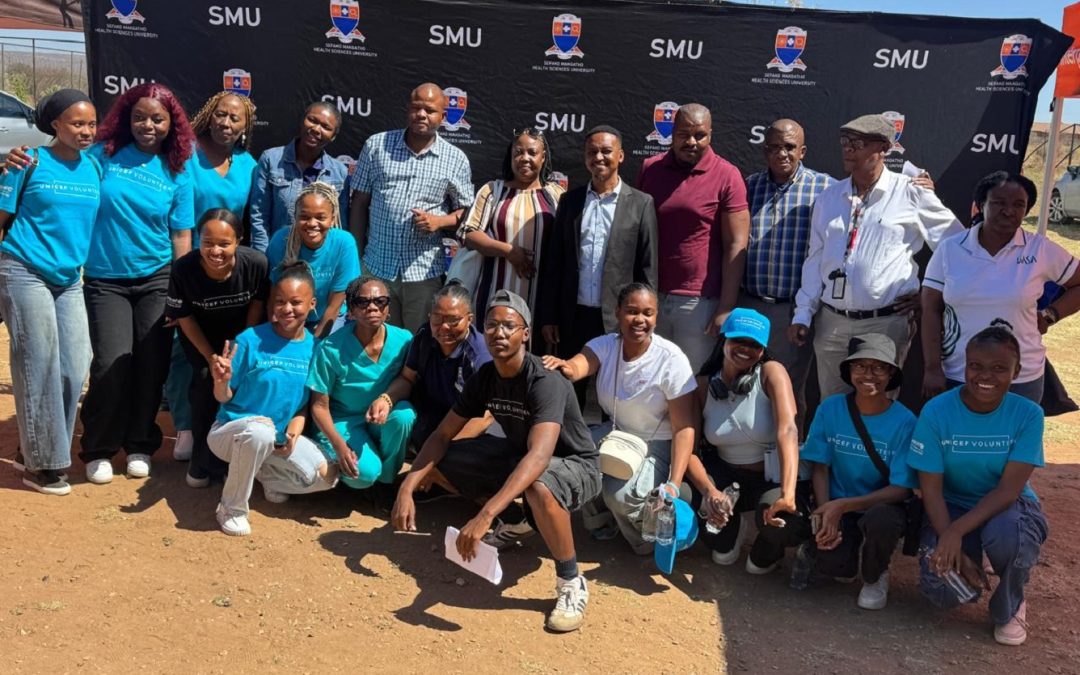
Sefako Makgatho Health Sciences University (SMU) has once again demonstrated the power of interprofessional collaboration by partnering with Diphetogo Senior Secondary School in Winterveldt, north of Tshwane. This ongoing Interprofessional Community Engagement (CE) partnership blended environmental action, health promotion, literacy development, and youth empowerment.
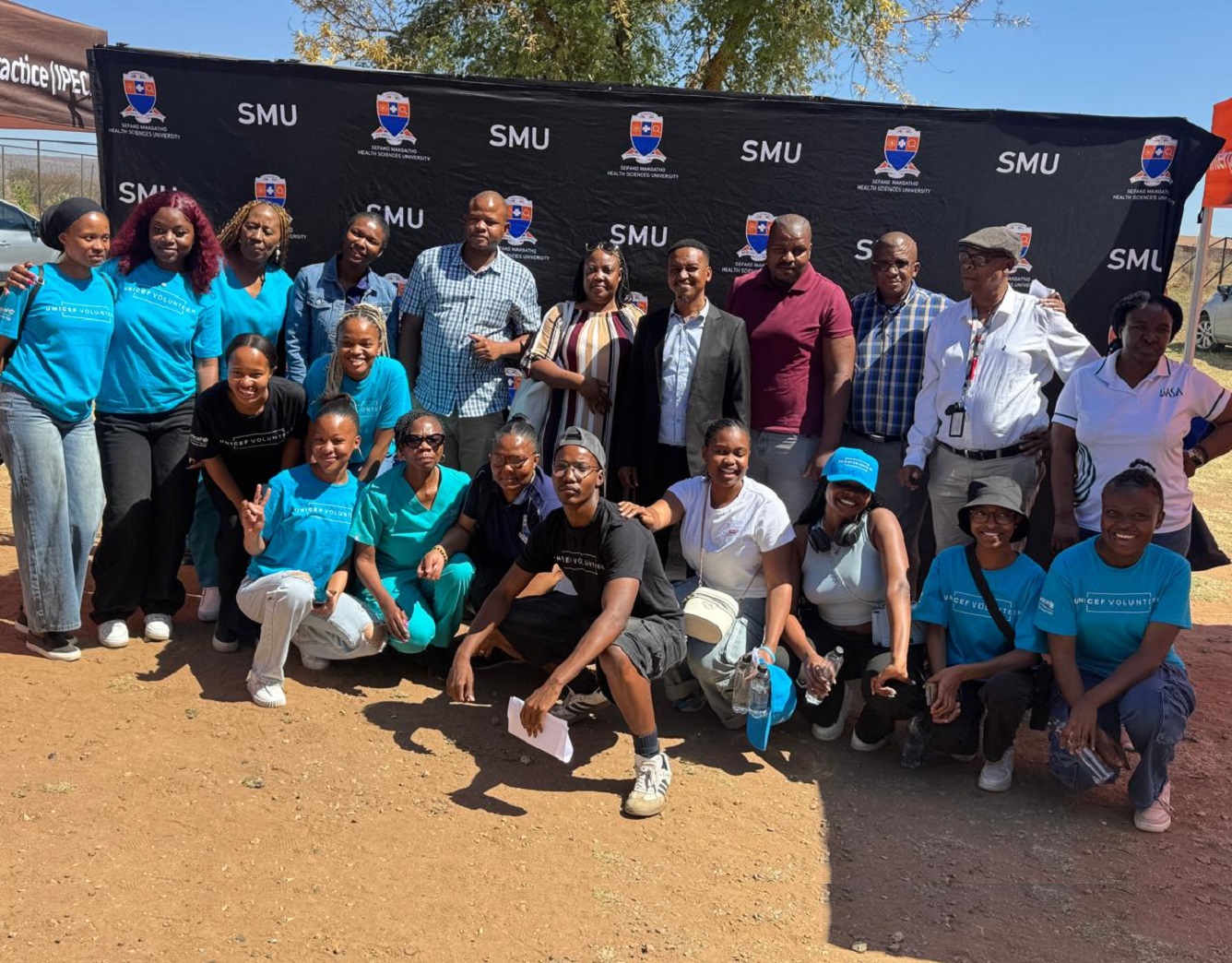 This was no ceremonial visit — it is a working partnership. Teams from SMU’s Departments of Biology and Environmental Sciences, Occupational Health and Safety, Academic Literacy, Library and Information Services, Physiotherapy, Built Environment (Horticulture), and the Interprofessional Education and Collaborative Practice (IPECP) Unit came together with one goal: to deliver practical, lasting impact.
“This engagement was about turning promises into action,” said the school representative, Sipho Nkopane, in his opening remarks. “SMU has shown that collaboration can strengthen our learners’ education and wellbeing in ways that go beyond the classroom.”
The initiative built on the first SMU–Diphetogo collaboration and honoured commitments made during the initial engagement, while equipping learners with practical skills in health, environmental stewardship, and literacy. At its heart, it sought to strengthen the school–university partnership through shared responsibility.
Led by SMU’s horticulturist Mpho Mmako, learners and staff planted ten indigenous trees under the theme Friendship, Health, and Agroforestry. Trees such as Celtis africana and Combretum erythrophyllum now line the school grounds, alongside demonstrations of bottled-water irrigation techniques. “We wanted learners to see that even small innovations can save water and protect our natural environment,” said Mmako.
The Biology and Environmental Sciences team conducted hands-on workshops in waste management, recycling, and composting. “It wasn’t about theory. We wanted learners to leave knowing exactly what to do at home and at school — from managing waste responsibly to composting and recycling,” explained Atlegang Leeuw, a third-year Environmental Sciences student.
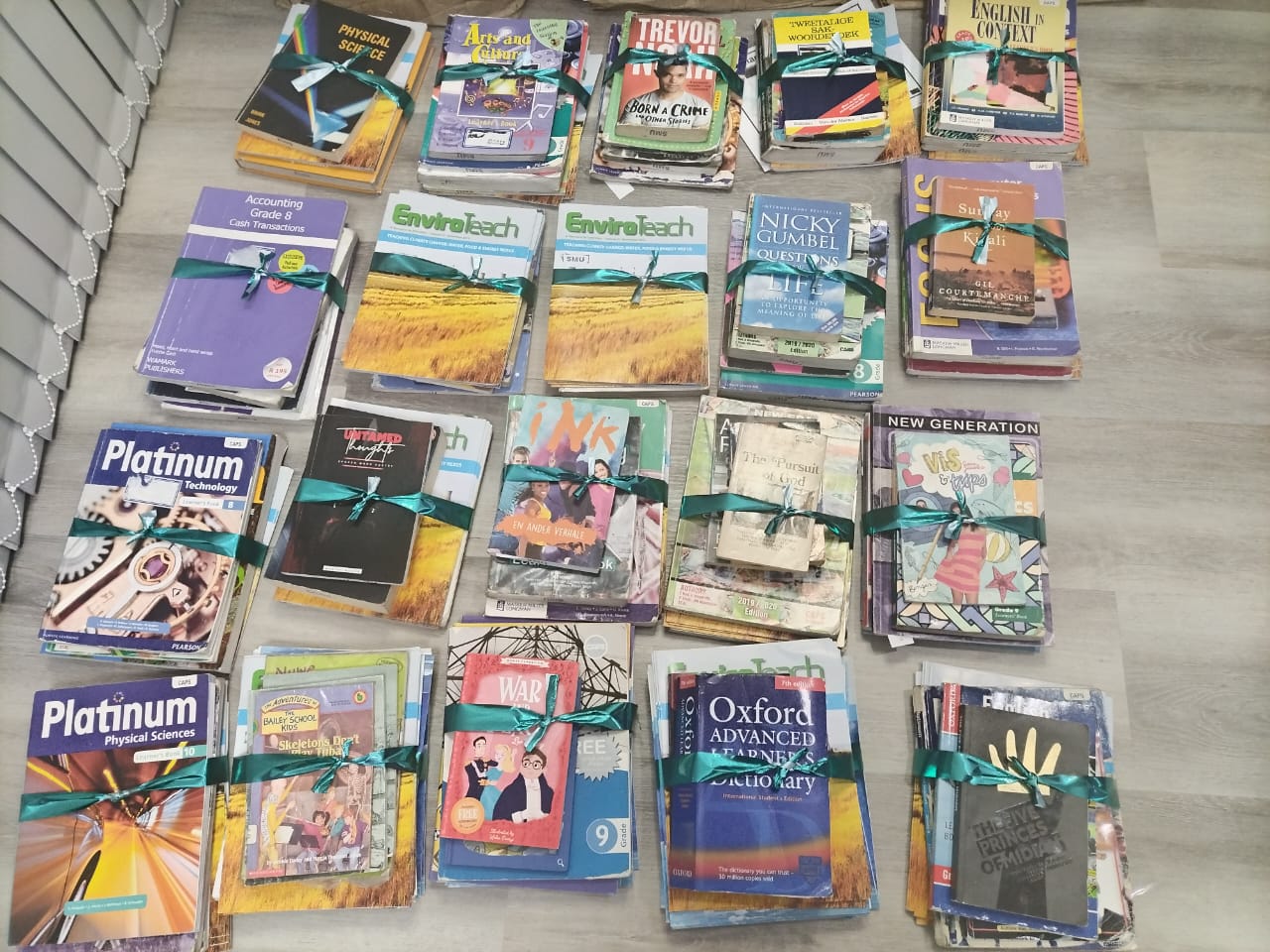 Literacy was another key focus. The Library and Information Services team launched the school’s library with books donated through a successful book drive and newly purchased titles. Learners read aloud, took part in language activities, and shared stories with their peers. The Academic Literacy Unit reinforced the message with the Setswana proverb “Lekau le sa eteng, le nyala kgaitsadi-a-lona” — meaning he who never travels ends up marrying his cousin. “Reading takes you places you might never reach physically. It broadens horizons and inoculates the mind against ignorance,” said Mmakgoshi Reetseng, Senior Librarian and event liaison officer.
Health and wellness were highlighted by the Physiotherapy Department, whose activities aligned with World Physiotherapy Month’s theme of Healthy Ageing and Physical Activity. Learners received skipping ropes and three new drum sets for the school’s majorette project. “Movement is medicine,” said Ntombenkosi Sobantu, a physiotherapy lecturer, before joining learners in group exercises and drum-led choreography that filled the schoolyard with energy and laughter.
Behind the scenes, the IPECP Unit coordinated logistics, transport, gazebos, and refreshments. They also recognised learners who showed courage by reading aloud before their peers. “Our role is to make collaboration possible,” said Thokozile Kgongwana, IPECP Coordinator. “When departments come together like this, the impact is multiplied.”
By the end of the day, learners had acquired new skills in environmental care, celebrated the opening of their library, and embraced physical activity with renewed enthusiasm. The partnership left behind more than trees, books, and equipment — it strengthened the bond between the school and the university.
“This was not a once-off outreach,” said Sobantu. “It is proof that universities can step outside lecture halls to change lives.” As learners danced to South African music, drums beating in rhythm with their new confidence, the message was unmistakable: collaboration works.
The Diphetogo Senior Secondary School management and board members witnessed first-hand how academic excellence, community partnership, and practical action can cultivate knowledge, health, and environmental awareness — together.
By Tumelo Moila
by Lorato | Oct 2, 2025 | All News, SMU Media, Student Media
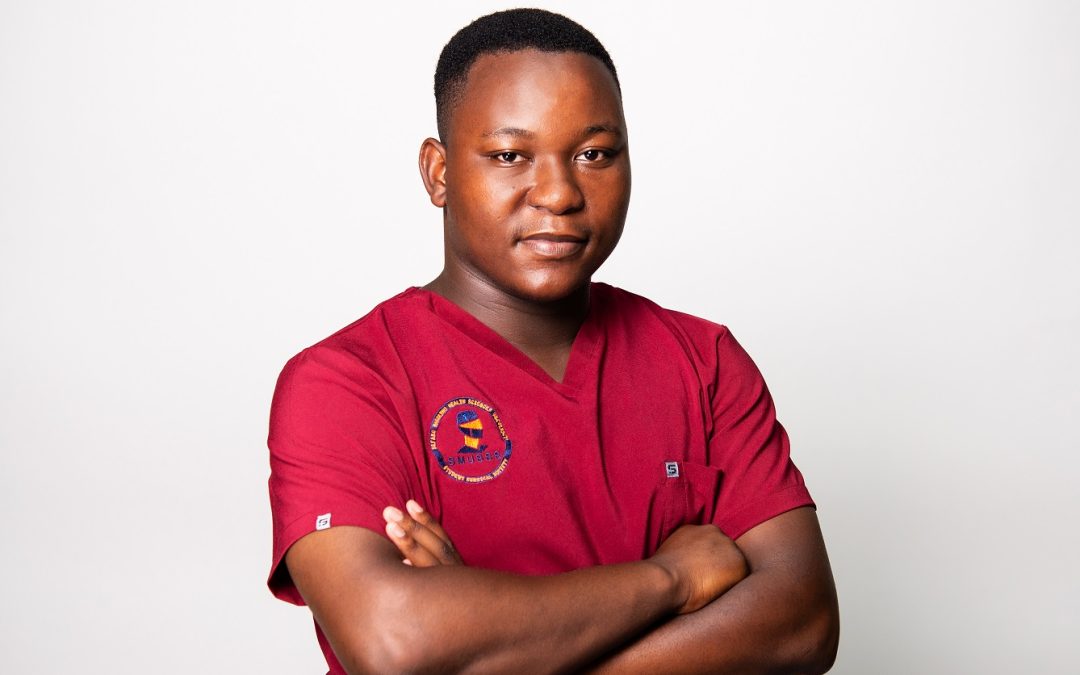
At 22, Albert Sebulela’s journey reads like a story of resilience shaped by faith, discipline, and an unrelenting belief in education. Born in Manoke, a small village in Burgersfort, Limpopo, Sebulela grew up where opportunity was scarce and ambition often faded into survival. Many of his peers, he recalls, ended up unemployed or working informally after matric. But Sebulela chose another path. Raised by his grandmother in a Christian household while his parents worked away from home, he found early strength in her prayers and in the guidance of his teachers. Together with close friends, he spent long hours in study groups and Saturday classes, determined to prove that a boy from Manoke could become the first doctor in his family.
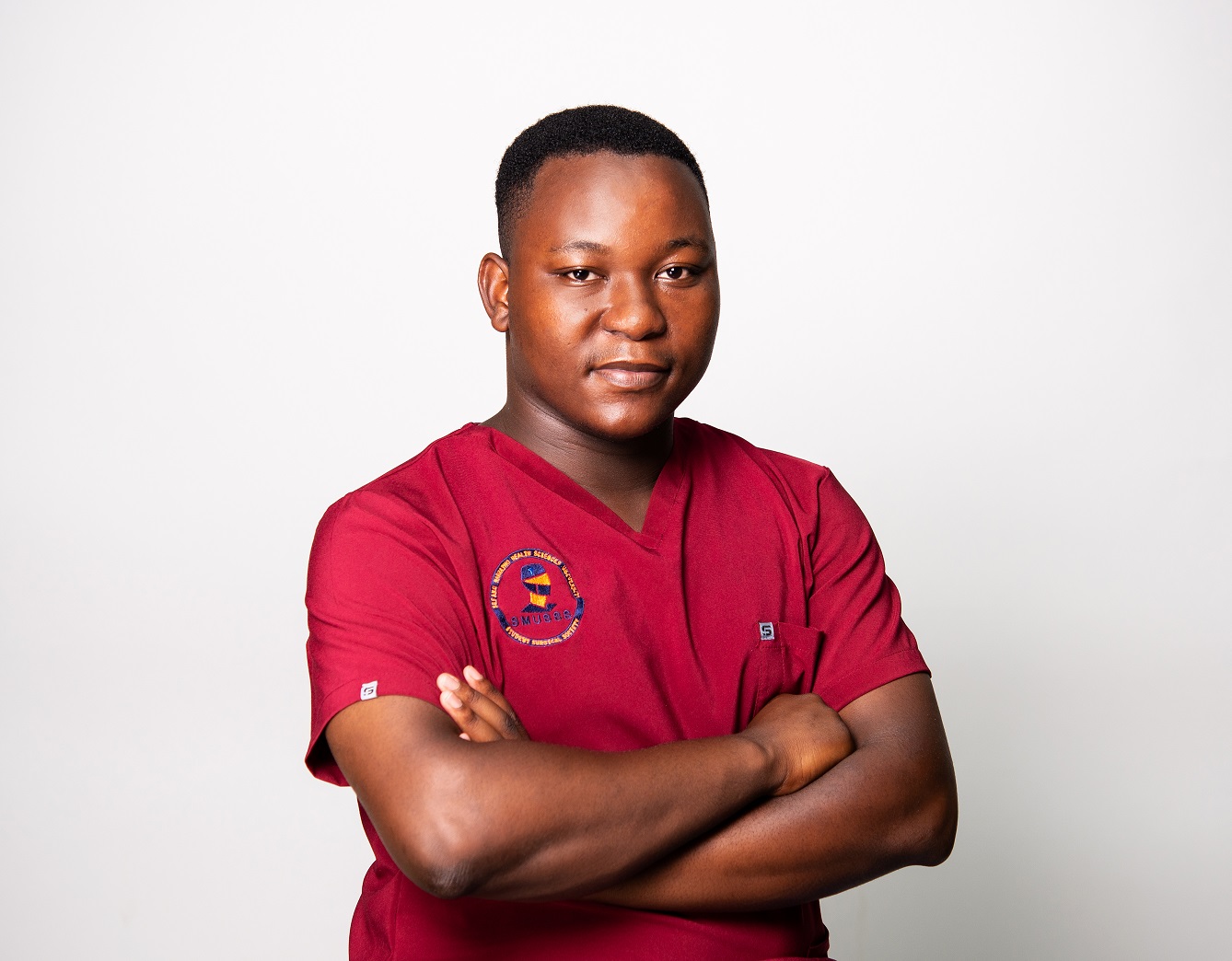 When he arrived at Sefako Makgatho Health Sciences University in 2022, it was to begin the MBChB Extended Programme. The seven-year journey ahead was daunting, but he accepted the challenge with clarity of purpose. “I reminded myself why I was here,” he says. “To serve my community and to show others that education is a way out.”
That clarity fuelled him through his studies and into student leadership. In 2024, he entered the SMUSSS Literature Review Competition with a paper on diabetic foot sepsis—a subject that carried personal weight, as his father suffers from diabetes. What began as a learning exercise turned into victory, with Albert taking first place. More than the award, it was the discovery of research as a tool to break cycles of disease that marked a turning point. Today, as Research and Academic Officer of SMUSSS, he works to create opportunities for undergraduates to contribute to research, convinced that inquiry must become a defining feature of SMU’s medical training.
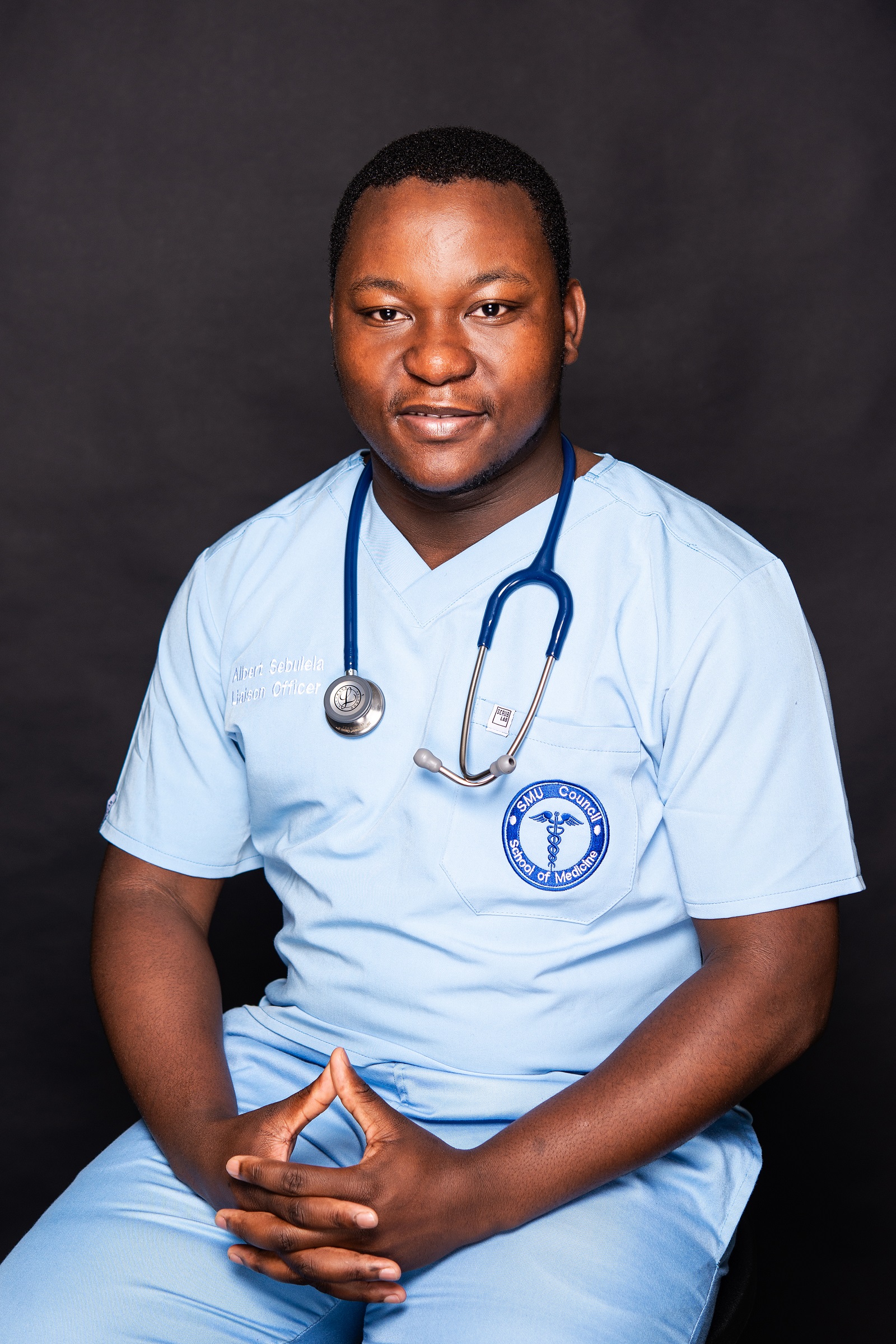 Alongside his academic achievements, Sebulela has become a fixture in student leadership. His list of roles is long: Deputy Secretary of the Diagnostic Society, Treasurer of the South African Medical Students’ Union (SMU branch), Manager of the SMU Rugby Male Team, Chairperson of Residence 5B, and Secondary Liaison Officer for the School of Medicine. He also served as a CUTL mentor and Vice Secretary of the Green Campus Initiative. To outsiders, the workload might appear overwhelming, but Sebulela insists that discipline and prayer keep him steady. “My degree is my priority, but leadership builds the character to sustain it,” he explains.
Every step of his journey is anchored by family values. His father’s constant reminder—serve selflessly and do good even when no one is watching—guides how he approaches service, while his grandmother’s prayers, he says, are the foundation of his resilience. Faith remains his compass, with verses such as Jeremiah 1:5 and Joshua 1:8–9 shaping his confidence and resolve.
Looking to the future, Sebulela dreams of becoming a cardiothoracic surgeon. Inspired by figures like Professor Risenga Chauke, Dean of the SMU School of Medicine, he hopes to leave the kind of impact that his mentors have had on both patients and students.
For young people from under-resourced backgrounds, his message is unwavering: believe in yourself, create opportunities where none exist, and serve others selflessly. His story, still in its early chapters, is proof that resilience and vision can transform adversity into triumph.
By Tumelo Moila