by Lorato | Nov 20, 2025 | All News, SMU Media, Student Media
In a decisive move to tackle the escalating global threat of antimicrobial resistance (AMR), Sefako Makgatho Health Sciences University (SMU) and Dr George Mukhari Academic Hospital (DGMAH) hosted a high-impact Antimicrobial Stewardship (AMS) Symposium on Monday, 17 November 2025. The event forms part of global, World Antimicrobial Resistance Awareness Week (WAAW), observed annually from 18–24 November under the theme: “Act Now: Protect Our Present, Secure Our Future.”
 AMR occurs when bacteria, viruses, fungi, and parasites no longer respond to standard treatments, rendering common infections increasingly difficult to manage. The consequences extend far beyond clinical settings, threatening food systems, animal health, and the environment. WAAW seeks to raise awareness, strengthen best practice, and mobilise urgent One Health collaboration to curb the spread of drug-resistant pathogens.
The symposium brought together pharmacists, medical practitioners, microbiologists, nurses, and other professionals committed to improving antimicrobial use across the healthcare system. Speakers delivered focused presentations on key stewardship challenges and emerging solutions. Highlights included:
- Global Point Prevalence Survey findings in Outpatient departments, presented by SMU/DGMAH clinical pharmacists Lindiwe Mnukwa, Ama Annor, Tsholofelo Makgale, Pinky Ntuli, and Nombuyiselo Shokane.
- Microbiology susceptibility trends for 2025, presented by Dr Grace Ntlemo, Pathologist / Microbiologist,
- Infection Prevention and Control (IPC) – AMS contributions by Matron Millicent Boshoga, IPC – Assistant Manager Nursing, DGMAH.
- Evidence-based guidance on Ceftazidime–Avibactam provided from Pfizer Pharmaceuticals by Silindokuhle Davidson (Medical Science Liaison Hospital Business Unit).
- Targeted treatment strategies for Clostridoides difficile, presented by Clinical Pharmacist, Tsholofelo Makgale, SMU/DGMAH.
- Resistance patterns in adult intensive care units by Dr Khunou, ICU Medical doctor/ Consultant, DGMAH.
- Infectious disease case studies led by Dr Thandekile Manzini, Infectious Disease Specialist (SMU/DGMAH) & Dr Ntsizi, Internal Medicine medical doctor (SMU/DGMAH) and Fumani Baloyi, Medical student (SMU)
- Updates on Gauteng’s Provincial antimicrobial guidelines delivered by Professor Andries Gous, Clinical Pharmacy Department/AMS Chairperson, SMU/
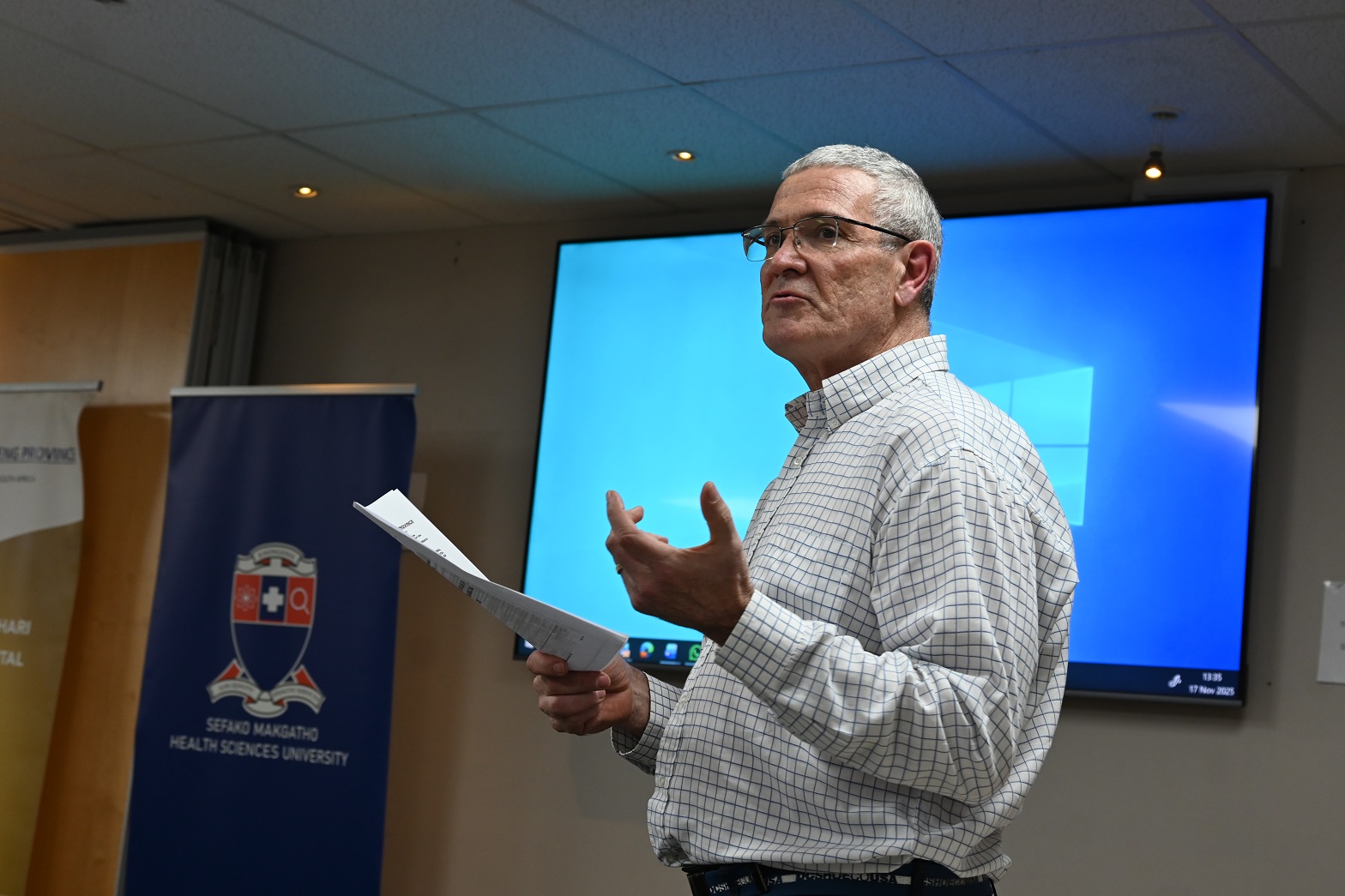 The event was organised by Professor Andries Gous, Chairperson of the DGMAH AMS Committee, in collaboration with the hospital’s Clinical Pharmacy team, SMU’s Department of Clinical Pharmacy, and Pfizer Pharmaceuticals. Attendees were also provided with campaign materials and patient information leaflets to extend stewardship advocacy beyond the symposium.
Its timing could not have been more relevant. “On clinical rounds, I see how challenging some infections have become to treat. The session on hand hygiene was a real eye-opener—sanitisers are our first line of defence against dangerous pathogens. This symposium has been incredibly informative, and I’m eager to put these lessons into practice every day,” said Emmanuella Owusu, a Master of Pharmacy in Clinical Pharmacy student at SMU.
Professor Gous underscored the urgency: “AMR is not a distant challenge—it is happening now. Every stakeholder, from healthcare providers to environmental managers, has a role to play. Immediate, coordinated action is essential to protect our present and secure our future.”
Alongside the symposium, the Gauteng Department of Health has issued two significant circulars guiding antimicrobial governance. The first, concerning Ceftazidime-Avibactam, formally notifies stakeholders of updates related to the medicine.
The second circular provides detailed directions on the Provincial Antimicrobial Therapeutic Guideline. It instructs pharmacy departments to select antimicrobial options aligned with stock availability, emphasising that the guideline supports—rather than replaces—clinical judgement. Healthcare workers are encouraged to consult infectious disease specialists, microbiologists, or clinical pathologists before making recommendations. Approved in November 2024 and June 2025, the guideline was implemented by institutional committees, supported by provincial stewardship structures.
Together, the symposium and newly issued circulars demonstrate a clear provincial commitment to strengthening antimicrobial stewardship. Gauteng’s health sector is intensifying surveillance, expanding education, and driving coordinated action to safeguard life-saving medicines and protect future generations.
By Tumelo Moila
by Lorato | Nov 6, 2025 | All News, SMU Media, Student Media
Sefako Makgatho Health Sciences University (SMU) continues to produce graduates who excel on global stages — and this time, it’s Physiotherapy alumnus Kenny Darrel Mziyako, who is part of the South Africa U-17 national team’s medical staff at the 2025 FIFA U-17 World Cup, taking place in Qatar from 3 to 27 November 2025.
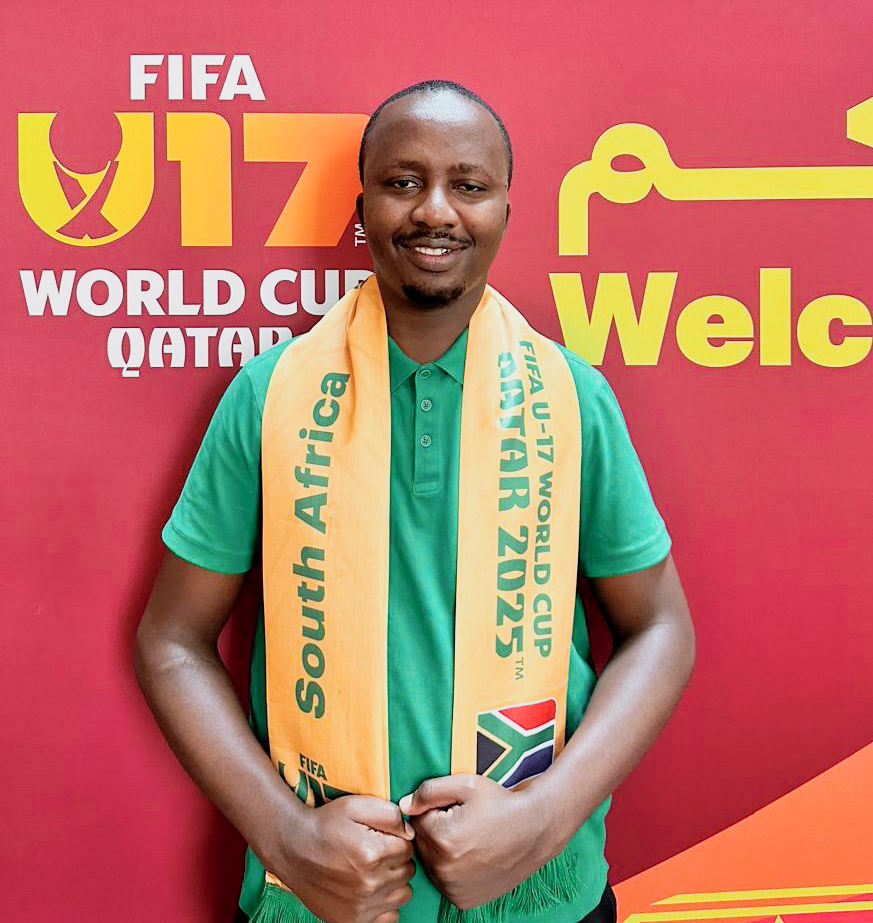 The 2025 edition marks a historic moment for the tournament as the 20th FIFA U-17 World Cup, and the first to adopt an annual format with 48 participating teams, a significant expansion from the traditional 24. It also ushers in a new era for youth football, as Qatar will host the competition for five consecutive years (2025–2029). With Germany entering as the defending champions, the stage is set for a highly competitive and globally celebrated event.
For Mziyako, being part of the Amajimbos’ medical team is both a professional milestone and a personal dream come true. “Football has always been my passion,” he reflects. “To serve my country in a world-class tournament like the FIFA U-17 World Cup is an honour. I’m grateful for the foundation SMU gave me — both academically and professionally.”
Born and raised in Luphisi Village near Mbombela, Mpumalanga, Mziyako’s journey has been defined by dedication, perseverance, and an unwavering love for sports medicine. He completed his BSc in Physiotherapy at SMU in 2019, where his interest in sports and rehabilitation began to flourish. He later obtained the FIFA Diploma in Sports Medicine in 2021, a qualification that has strengthened his expertise in managing sports-related injuries and athlete recovery. Currently, he is pursuing an MSc in Physiotherapy (Sports and Rehabilitation) at his alma mater, SMU.
His early career was marked by volunteer experiences with top football teams, including Mamelodi Sundowns Academy and the SMU soccer team during the USSA Games in 2018 and 2019, where he served as Coordinator of the Sports Rehabilitation Unit. After completing his community service at Witbank Hospital in 2020, he secured a permanent post as a Grade 1 Physiotherapist at Ermelo Hospital in 2021.
His daily work includes designing treatment plans, conducting rehabilitation exercises, and monitoring patient recovery — all while mentoring younger physiotherapists and serving as a NEHAWU shop steward.
Beyond hospital work, Mziyako has also collaborated with the Mpumalanga Department of Culture, Sports and Recreation, accompanying provincial teams to the National School Sports Championships and providing injury screening and rehabilitation services to local football clubs in promotional leagues. His growing profile in sports physiotherapy earned him national recognition, leading to his selection as physiotherapist for the COSAFA U-17 Tournament (2024) and AFCON U-17 (2025) — experiences that paved the way for his upcoming FIFA World Cup role.
With a blend of technical skill, teamwork, leadership, and a passion for athlete wellbeing, Mziyako embodies the excellence and community spirit that SMU stands for. As the Amajimbos prepare to face the world’s best young footballers, his presence on the medical bench will not only support South Africa’s quest for success but also showcase the calibre of SMU graduates making a global impact.
“Physiotherapy is not just about healing bodies,” Mziyako concludes. “It’s about helping athletes perform at their best — physically, mentally, and emotionally. I’m proud to carry the SMU flag to Qatar.”
By Tumelo Moila

by Lorato | Oct 30, 2025 | All News, SMU Media, Student Media
Elegance met purpose at the CSIR International Convention Centre in Pretoria as Sefako Makgatho Health Sciences University (SMU) alumni, industry leaders, and partners gathered for the Convocation Fundraising and Alumni Awards Gala Dinner. Themed “Investing in South Africa’s Future of Health Sciences,” the evening celebrated leadership, honoured excellence, and strengthened support for the next generation of healthcare professionals.
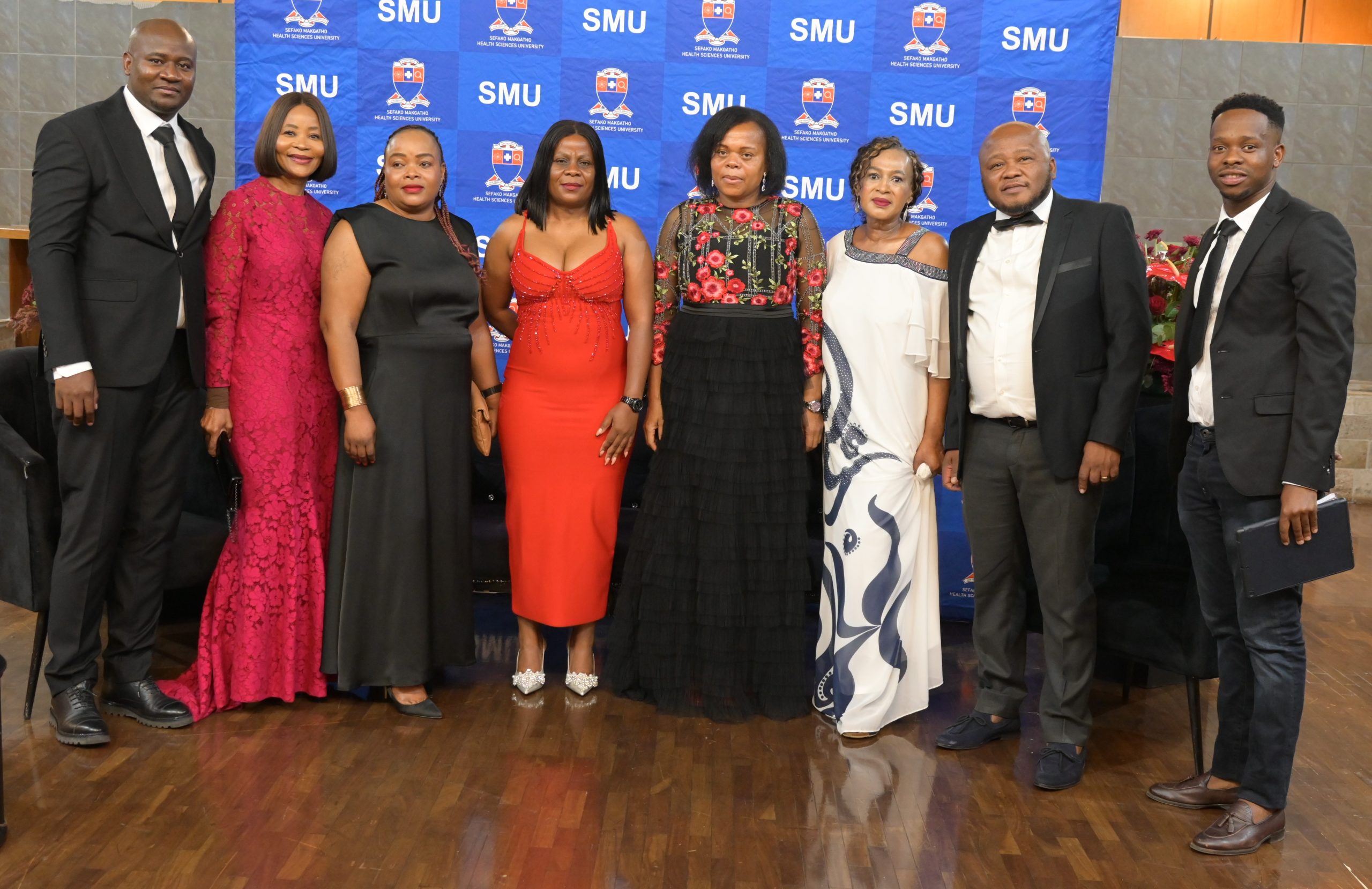 The event opened with an inspiring address from the President of Convocation, Japhta Phala, who urged alumni to champion transformative giving. “Each of us carries a piece of SMU’s legacy,” he said. “Tonight is not just about celebrating our achievements — it’s about taking collective responsibility for our students’ future.”
Vice-Chancellor Professor Tandi Matsha-Erasmus echoed this sentiment, emphasising the University’s dual mission of education and empowerment. “At SMU, we do not only educate; we empower,” she declared. “Our vision is to create healthcare professionals who are competent, compassionate, and capable of leading with integrity.” Highlighting the critical challenge of student funding, she stressed the urgency of alumni engagement. “Behind every struggling student is a dream worth saving,” she said. “Investing in our students is investing in the future of healthcare. No capable student should have their journey cut short due to financial hardship.”
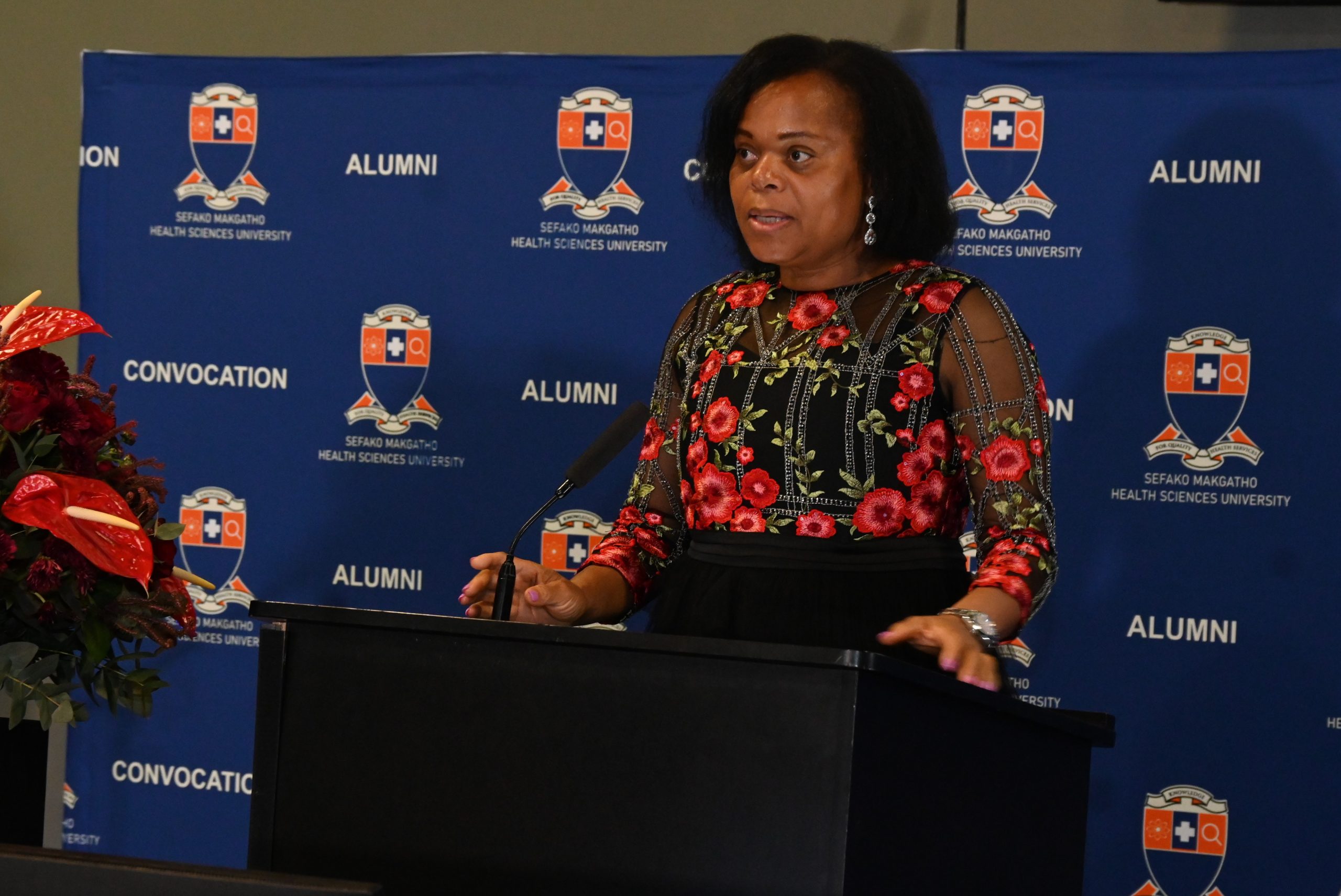 Delivering the keynote address, Limpopo Premier Dr Phophi Ramathuba, a medical doctor and public servant, reinforced SMU’s role in shaping South Africa’s health workforce. “SMU continues to be the heartbeat of health sciences in this country,” she said. “It is here that the seeds of service, compassion, and excellence are planted. The doctors, nurses, pharmacists, and scientists who graduate from SMU are not only skilled — they are change-makers who carry the hope of our nation.” She further called on alumni and stakeholders to rally behind the fundraising initiative, describing it as an investment in both education and equity. “We must ensure that financial barriers never become barriers to healing,” Dr Ramathuba said. “By contributing to this cause, we are not just giving money — we are giving life, dignity, and opportunity.”
Supportive remarks from SMU Chancellor Dr Penny Moumakwa and Council Chair Nontlaza Sizani reinforced alumni unity and stewardship in advancing the University’s mission.
The Gala also featured a red-carpet ‘Legacy Walk’, symbolising SMU’s enduring tradition of excellence, and honoured alumni who have made remarkable contributions to medicine, science, and public service. Beyond glamour, the evening carried a clear purpose: to fund academically deserving yet financially challenged students. Many aspiring healthcare professionals face financial hurdles that threaten to derail their dreams. Through this Convocation-led initiative, SMU continues to bridge the gap between potential and opportunity.
“This Gala is not just a dinner,” Prof Matsha-Erasmus reminded guests. “It is a declaration of hope. Every contribution tonight will echo through hospital wards, research labs, and communities that need care the most.”
Alumni Awards Recipients:
- Young Alumnus Award: Mr Emmanuel Kiyonga and Dr Realeboga Sebitso.
This award recognises young alumni (≤40 years) who have demonstrated proven excellence in their field or career, serving as role models for current and future students.
- Alumni Governance and Leadership Award: Dr Mpho Phalatse, Ms Maria Rambauli, Dr Nomzamo Tutu, Ms Takalani Maumela, Ms Rhulani Thembi Siweya, Dr Lucas Khetani Ndhlovu, Dr Katlego Mothudi and Dr Mangaliso Mahlaba. This award honours alumni who have made exemplary contributions to society, demonstrating ethical leadership and good governance.
- Alumni Academic, Research and Innovation Award: Prof Mojakgomo Motswaledi, Dr Molefe Matima, Prof Paulinah Monene Khuzwayo and Prof Gregory Thabiso Lebona. This award celebrates alumni who have made significant contributions to research, academia, and innovation in health sciences.
- Order of the Champions of Sefako Makgatho: Prof Paulinah Monene Khuzwayo (Gold), Ms Maria Rambauli (Silver), Prof Gregory Thabiso Lebona (Gold), Dr Jeffrey Mabelebele (Bronze). This award is conferred on alumni or former executives for their immense contributions to SMU’s growth and development, actively promoting its mission.
- Alumni Life-Time Achievement Award: Prof Mike Sathekge. This award recognises alumni who have made outstanding contributions to their field and society over the course of their lifetime.
A total of fifteen trophies, fourteen certificates, and five medals were awarded, including a Life-Time Achievement trophy larger than the rest, with certificates signed by the President of Convocation and the Vice-Chancellor across various categories.
As the evening concluded, one message resonated: SMU’s legacy is not only written in its history but in the lives it transforms, shaping a future where education, leadership, and compassion drive South Africa’s healthcare sector forward.
By Dimakatso Modise
by Lorato | Oct 30, 2025 | All News, SMU Media, Student Media
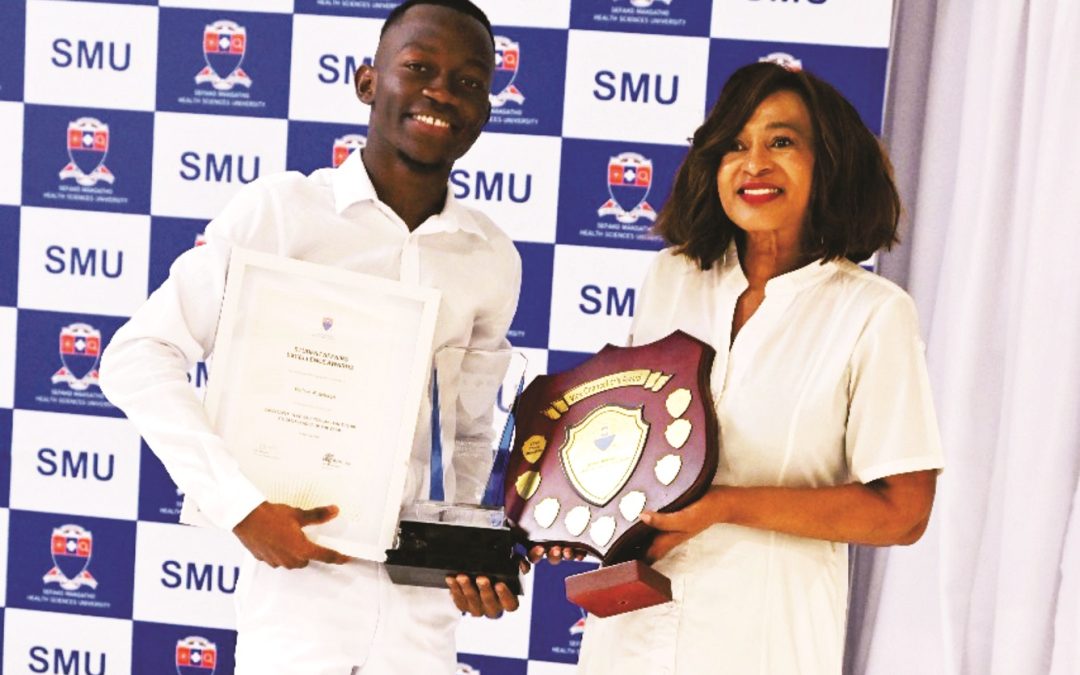
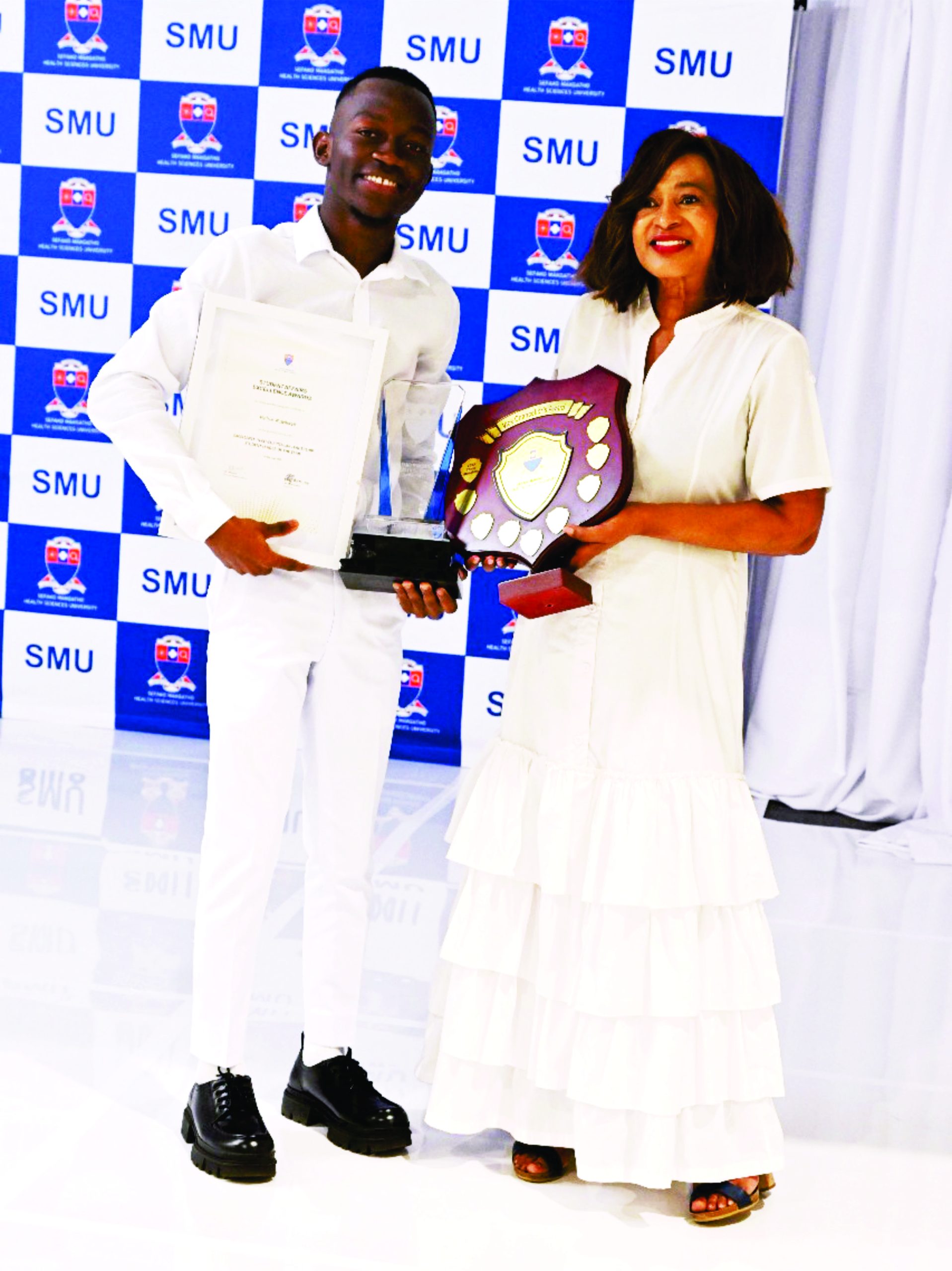
From the rural heart of Tzaneen, Mahlorhi Baloyi has emerged as a visionary leader whose journey embodies resilience, excellence, and global impact. Recently, he received the prestigious Vice Chancellor’s Award at the SMU Student Affairs Excellence Awards, cementing his place in the university’s history.
 Baloyi’s rise is a story of determination and purpose. From modest beginnings, he has become a beacon of inspiration, demonstrating extraordinary leadership in South Africa and beyond. As Secretary of the SMU Rising Stars, he nurtures talented students, shaping the next generation of leaders. His influence stretches internationally, connecting youth through the global network “Connecting Dreams” and participating in the South American Business Forum, promoting cross-continental dialogue, leadership excellence, and sustainable solutions.
This year marks a new chapter in his academic journey: Baloyi is pursuing a Master’s degree with SMU’s School of Pharmacy. Balancing postgraduate studies with demanding leadership roles, he exemplifies commitment to personal growth and the development of others. “Pursuing my Master’s is not just about advancing my knowledge; it’s about equipping myself to make a meaningful impact in healthcare, locally and globally,” he explains.
His leadership transcends borders. Baloyi has represented Africa at global forums, including the Asia International Model United Nations in Thailand, leadership engagements in Buenos Aires, Argentina, and visits to Dubai, United Arab Emirates, turning aspiration into reality. “Each place I have visited has taught me that the world is vast yet connected. My purpose extends far beyond borders,” he reflects.
The Vice Chancellor’s Award recognises not only academic excellence but also outstanding leadership, influence, and commitment to co-curricular development. On receiving the accolade, Baloyi shared heartfelt gratitude: “This honour fills me with tears of joy. I am deeply thankful to everyone who has supported my journey, especially my parents, who have witnessed me rise to fulfil my potential.”
Key contributors to his success include:
- Dean of the School of Pharmacy, Professor Patrick Demana, inspired him to aim higher.
- Dean of the School of Medicine, Prof. Chauke Risenga, highlighting the importance of safeguarding reputation.
- Group Senior Executive, Strategic Trade at Aspen Pharma Group, Dr Stavros Nicolaou, reminding him that knowledge must translate into action.
Baloyi’s philosophy is simple yet powerful: “Leadership is not about recognition; it is about impact, service, and the courage to lift others as you climb.” Humility guides him, echoing Bishop Benjamin Dube’s wisdom: “If you humble yourself, he will lift you up.”
With top honours at every stage of his education and now pursuing a Master’s in Pharmacy, Baloyi is more than a high achiever. He is a transformative leader whose vision, determination, and purpose inspire those around him. “I am not merely making history; I am shaping the future,” he declares, embodying the spirit of a true trailblazer.
Baloyi’s journey is a testament to what vision, perseverance, and service can achieve. It demonstrates that leadership and influence are not measured by titles but by the lasting impact one has on others.
By Dimakatso Modise
by Lorato | Oct 24, 2025 | Media Statements, statements
PRESS STATEMENT
FOR IMMEDIATE RELEASE
24 October 2025
GA-RANKUWA, PRETORIA—The spotlight will fall on Sefako Makgatho Health Sciences University (SMU) this weekend as its Convocation hosts a Fundraising and Alumni Awards Gala Dinner.
The gala, taking place on Saturday, 25 October 2025, will feature a keynote address by the Premier of Limpopo, Dr Phophi Ramathuba, an SMU alumna whose life’s work exemplifies the transformative power of health-sciences education. The event will also be attended by the MEC for Health in Limpopo, Dieketseng Masesi Mashego, distinguished alumni, corporate partners, government leaders, and philanthropists.
Under the theme “SMU NextGen: Investing in South Africa’s Future of Health Sciences,” the black-tie gala will raise funds to support academically gifted but financially vulnerable students pursuing degrees in health sciences fields. The Convocation’s leadership envisions the evening as both a celebration of excellence and a call to action, urging alumni and partners to become part of a sustainable investment model for student support.
Since the launch of the Convocation’s fundraising drive, 17 students have received full-tuition sponsorships, while more than 40 others were financially unblocked to continue their studies. Building on this success, the Convocation aims to establish an Alumni Development Fund to strengthen SMU’s third-stream income and attract investment projects to the university.
According to the SMU Convocation President Japhta Phala, the initiative is a moral duty shared by all who benefited from SMU’s mission to democratise health sciences education. “We were all given a chance once,” he says. “Now it is our turn to extend that chance to those who come after us. This is about ensuring that talent is never lost to poverty but redirected toward healing and rebuilding our nation.”
Beyond the fundraising effort, the evening will include the Alumni Awards Ceremony, celebrating distinguished graduates who have contributed to medicine, innovation, and social transformation across South Africa and the world.
For event details or donations, please contact: Letsai Mashishi | Email: letsai.mashishi@smu.ac.za | Cell: 083 415 7722
For media enquiries, please contact: Tshimagadzo Mphaphuli | Email: tshimangadzo.mphaphuli@smu.ac.za | Cell: 081 015 4790
PRESS STATEMENT_LIMPOPO PREMIER, DR PHOPHI RAMATHUBA, HEADLINES SMU CONVOCATION FUNDRAISING GALA TO CHAMPION NEXT GENERATION OF HEALTH SCIENCES LEADERS
File size: 508.88 KB
Created: 24-10-2025
Updated: 24-10-2025
Hits: 167