
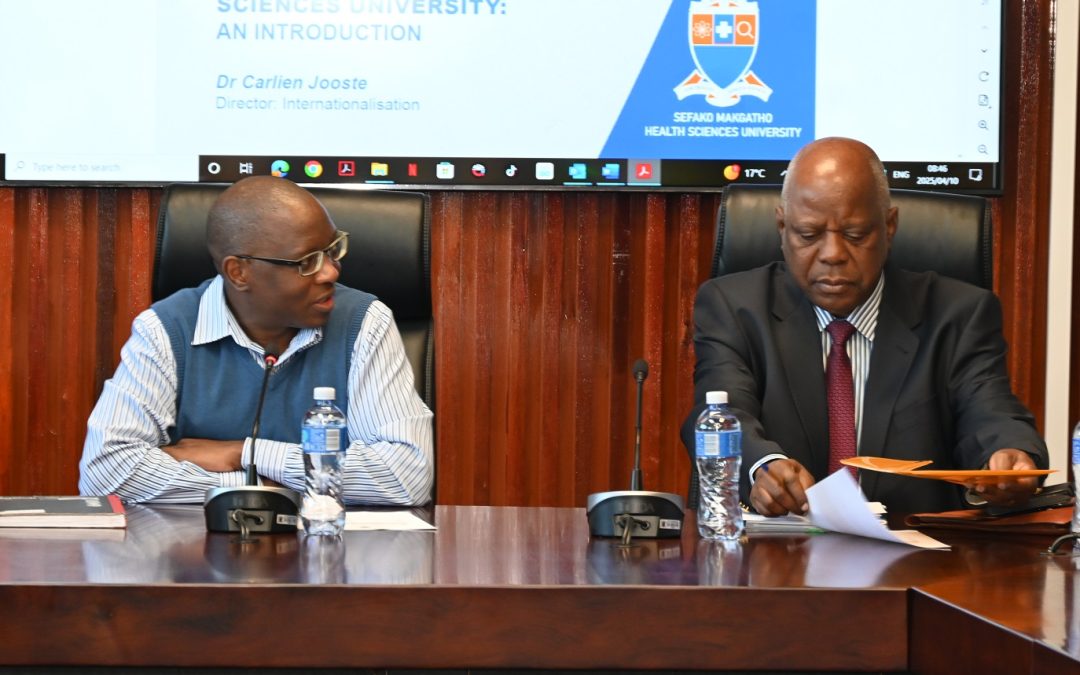
SMU welcomes UniTiva University delegation for benchmarking visit
Sefako Makgatho Health Sciences University (SMU) recently welcomed a delegation from Mozambique’s Universidade Wutivi (UniTiva), led by its Chancellor, Professor Domingos Tivane, for a high-level benchmarking visit. The visit focused on exploring best practices across SMU’s flagship academic programmes in medicine, pharmacy, hospital management, nursing and midwifery, and clinical psychology.
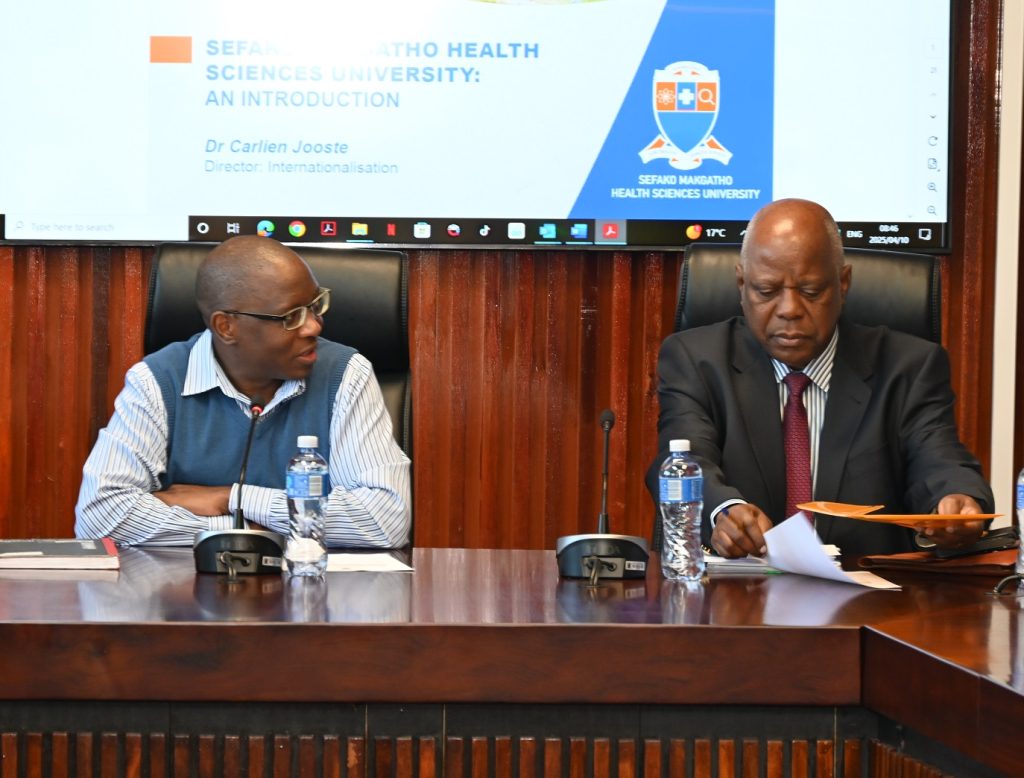 The day commenced with a warm welcome from Dr Jeffrey Mabelebele, Acting Deputy Vice-Chancellor: Teaching, Learning and Community Engagement, who emphasised the spirit of collaboration between the two institutions. “We are honoured to host Professor Tivane and the UniTiva delegation. This is an opportunity not only to showcase our strengths but also to learn from one another and build sustainable academic partnerships,” said Mabelebele.
Dr Carlien Jooste, Director of Internationalisation, provided an overview of SMU’s institutional footprint and introduced the South African Policy Framework for the Internationalisation of Higher Education as the basis for the visit. Professor Tivane responded by reaffirming the purpose of the engagement.
“We are here to learn, to be inspired, and to build bridges between our institutions,” he said. “UniTiva is looking to enhance its own health sciences training, specifically Medicine, which will commence in July 2025, and SMU, with its track record of academic excellence, is the ideal institution to benchmark against.”
An insightful overview of the School of Medicine’s curriculum and operations was delivered by Gerda Botha and Professor Honey Mabuza, followed by a session on best practices per year level in the Bachelor of Medicine and Bachelor of Surgery (MBChB) programme. Notable contributors included Dr Edwin Seleka (MBChB I) and Professor Robert Ndou (MBChB II), with further input from Professor Honey Mabuza on undergraduate research and Thokozile Kgongwane on Interprofessional Education and Collaborative Practice (IPECP).
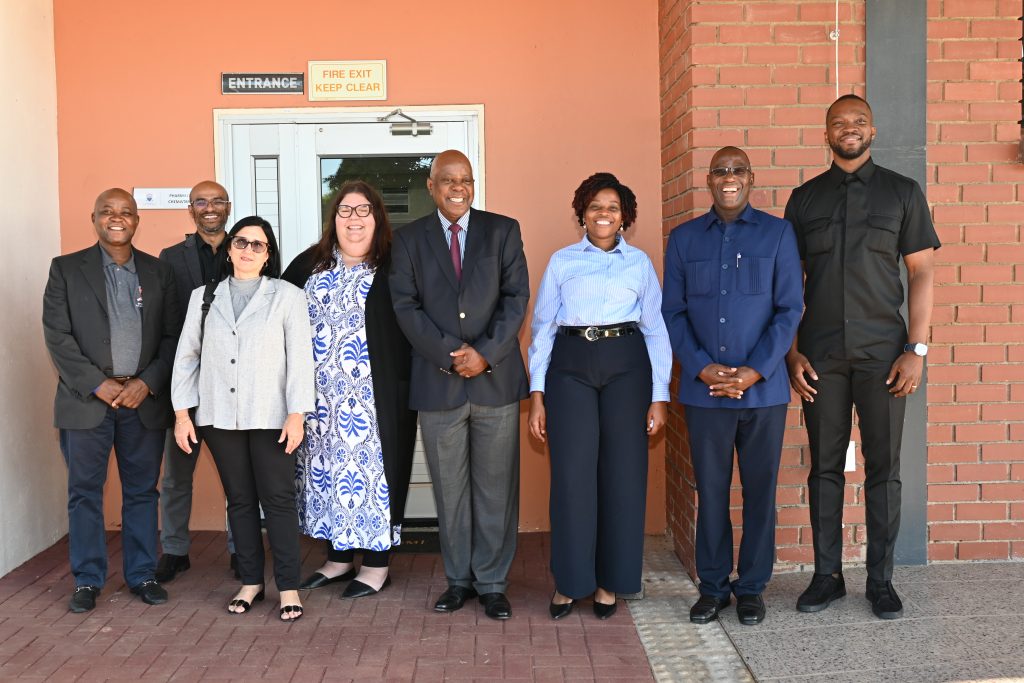 “Our fourth-year students are publishing in accredited academic journals, which speaks to the quality and impact of our undergraduate research training,” noted Mabuza. Professor Lesiba Baloyi was joined by colleagues Prof Mokoena Maepa and Maryke Pierce to discuss the University’s clinical psychology programme and their African-focused approach in SMU’s highly competitive postgraduate clinical psychology programme.
Thokozile Kgongwane, along with Skills Centre Director, Dr Lesego Phiri, then led the delegation on a hands-on tour of the SMU Skills Centre, offering a glimpse into simulation-based teaching and the university’s commitment to experiential learning.
The afternoon sessions focused on Nursing and Midwifery, Hospital Management and Pharmacy, where Dr Madan Poka outlined innovative teaching methods, student support, and community engagement initiatives.
“This visit is not just about showing what we do, but how we do it—our pedagogy, our partnerships, and our passion,” Dr Poka, Acting Dean of Pharmacy, observed.
Professor Sogo Matlala, Dr Andile Mokoena-De Beer, and Kgomotso Mabasa presented best practices in nursing, midwifery and hospital management. These included competency-based education aligned with the South African Nursing Council’s R174 regulations, incorporating rigorous objective structured clinical examinations (OSCEs), a 50% pass mark threshold, and 2,120 supervised clinical hours across key disciplines—closely aligned with international standards set by the United Kingdom’s Nursing and Midwifery Council (NMC) and European Union (EU) directives.
SMU’s unique IPECP programmes are redefining healthcare education through interprofessional collaboration, shared values, and ethical practice. The programme aligns with global frameworks from the World Health Organization (WHO) and the International Council of Nurses while maintaining a strong local impact.
“Our IPECP model improves patient outcomes, reduces duplication of resources, and supports our graduates to thrive in multidisciplinary teams,” noted Kgongwane.
Dr Jooste stressed that any Memorandum of Understanding (MoU) developed must be “intentional, mutually beneficial, and active.” A lively discussion on the potential MoU followed, setting the tone for future collaborations and an invitation for SMU delegates to visit UniTiva.
The day concluded with a tour of the School of Pharmacy laboratories and reflections on SMU’s continuous quality improvement efforts. These include quarterly academic review meetings, internal and external moderation processes, peer reviews, and student feedback loops that inform module planning and redesign.
SMU’s commitment to innovation was also on full display, from hybrid and flipped-classroom models to the integration of 3D-printed anatomical structures and dispensing software in Pharmacy education. The institution’s research-integrated curriculum prepares students for evidence-based practice, lifelong learning, and global competitiveness.
“We pride ourselves on excellence, innovation, and relevance. This benchmarking visit confirms that we are on the right track in shaping Africa’s next generation of healthcare professionals,” concluded Jooste.
SMU continues to set the pace in health sciences education across the continent, with international visits such as this reaffirming its role as a beacon of health care sciences academic excellence and societal impact.
By Tumelo Moila
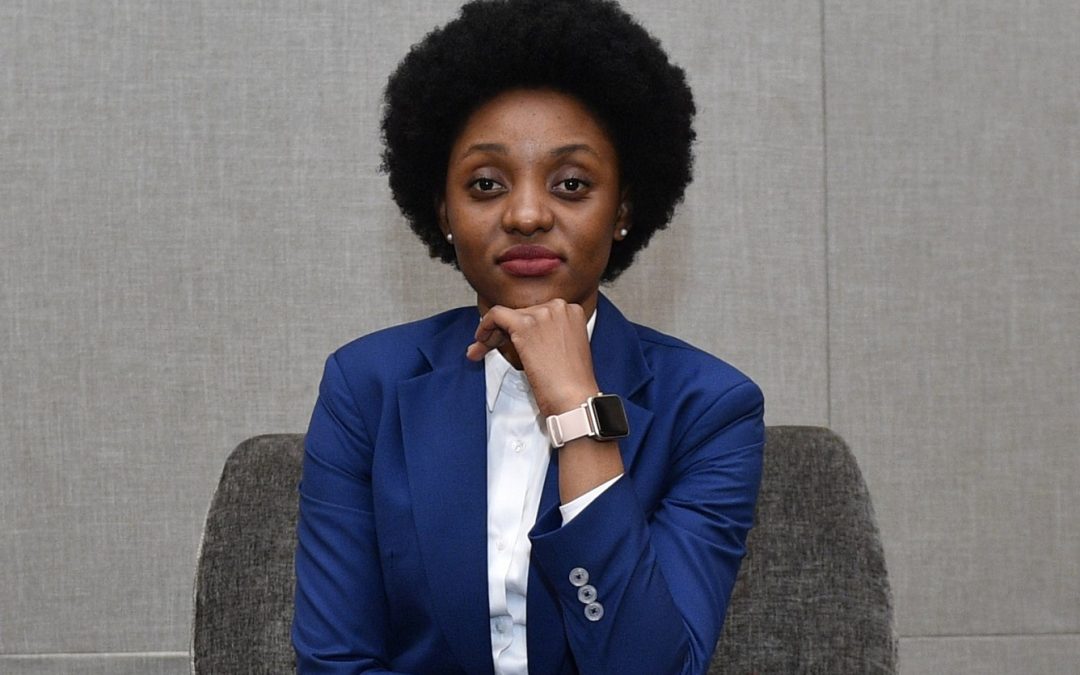
Pitch, Purpose, and Perseverance: From Mohlahlereng to Banyana Banyana
From the quiet village of Mohlahlereng in Tzaneen to the roaring stadiums of international football, Dr Nthabiseng Maesela’s journey is a compelling testament to purpose, perseverance and passion. An alumna of Sefako Makgatho Health Sciences University (SMU) and the doctor for South Africa’s women’s national football team, Banyana Banyana, Maesela is not only a practising Sports Physician but also a trailblazer for young women entering the world of sports medicine.
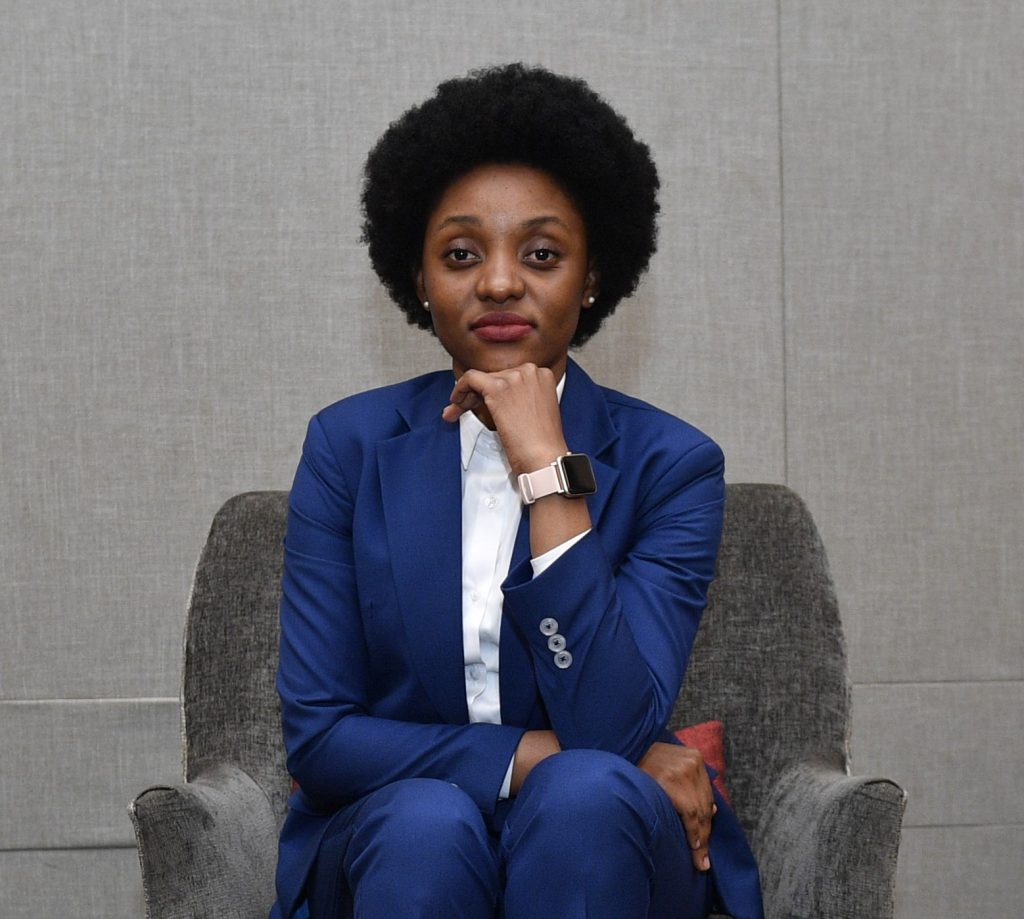 Born in Mohlahlereng and raised in Burgersfort before relocating to Lephalale and eventually Polokwane, Maesela’s path to medicine was inspired from an early age. “My journey into medicine was your typical ‘what do you want to be when you grow up?’ story – and the answer was always ‘a doctor’,” she says. Motivated by her father’s constant affirmation— “You’re going to be a doctor, akir?”—and the allure of saving lives as portrayed on television, she enrolled at the University of Limpopo’s Medunsa Campus in 2012, calling it “the beginning of everything”.
While medical school is notoriously demanding, Maesela credits her success to her deep faith and involvement in campus ministry. “I was strengthened by my faith and my participation in Believer’s Loveworld (BLW). It was more than just a ministry—it became a place of worship, mentorship, and lifelong friendships,” she reflects.
Initially unsure of her specialisation, it was during her internship that Maesela discovered sports medicine, far from the confines of hospital corridors. “I met a sports physician on the athletics field and began volunteering at local events. I eventually worked with organisations like the Limpopo Academy of Sports. I was captivated. I had found my calling in a space I never expected,” she shares.
Her career reached a defining moment in 2023 when she received a call-up to support Banyana Banyana in their preparations for the FIFA Women’s World Cup. “I was in absolute disbelief,” she admits. “That quickly turned into appreciation and a sense of responsibility. I knew I had to give my best—not just as a doctor, but as a contributing member of the team.”
Working with elite athletes brought new challenges. “High-performance athletes are generally healthy, but they are prone to injuries, and their care revolves around recovery, performance optimisation, and adherence to anti-doping rules,” she explains. “You can’t prescribe medication as you would with regular patients—timing and substance content are crucial.”
 From addressing knee and ankle sprains to tackling female-specific health concerns such as menstrual cycles, relative energy deficiencies, and ACL vulnerabilities, Maesela highlights the importance of holistic care. “Our team includes physiotherapists, biokineticists, sports scientists and psychologists. Everyone brings their expertise—it’s a collaborative effort to support the athlete’s performance and wellbeing,” she says.
She vividly recalls the emotional high of the 2023 FIFA Women’s World Cup: “When Banyana Banyana reached the Round of 16, making history as the first South African team—male or female—to get that far, it was overwhelming. To know I played even a small part in that success was incredibly humbling.”
Despite her achievements, Maesela remains focused on community impact. “I’m fortunate to have entered the field at a time when young black women are welcomed and encouraged. But there’s still a gap. We need more visibility, more representation. Seeing someone like you in the field makes all the difference.”
Looking to the future, her ambitions are grounded in her home province. “While I don’t plan to stay on as a full-time team doctor, I’m dedicated to my private practice and providing medical support at tournaments and events. I also hope to establish a high-performance centre in Limpopo for semi-professional and professional athletes.”
She concludes with heartfelt encouragement: “It’s not about where you start, but where you’re willing to go. SMU gave me the foundation I needed, and now I’m building from there. Let’s keep supporting our ladies—they’re not just hardworking, they’re history-makers.”
By Tumelo Moila
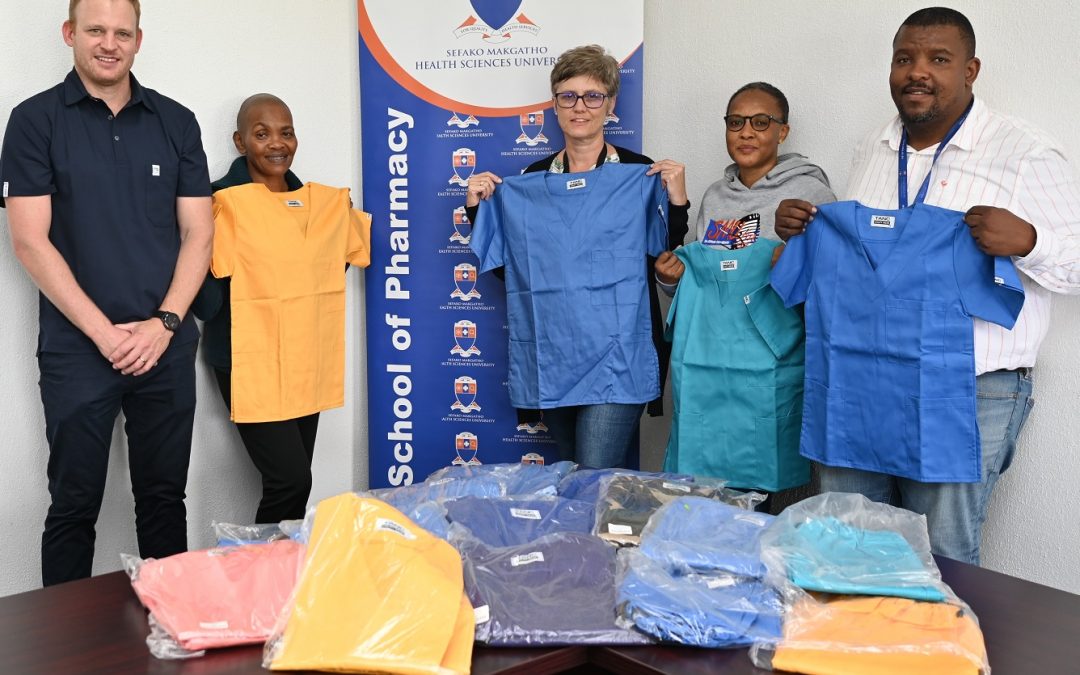
Corporate kindness in action: TANC Scrubs donates medical wear to SMU
In a commendable act of corporate social responsibility, TANC Scrubs recently made a meaningful contribution to the advancement of healthcare education in South Africa. The company donated 120 sets of medical scrubs, valued at R30,000, to Sefako Makgatho Health Sciences University (SMU), demonstrating a strong commitment to supporting the future of the country’s healthcare professionals.
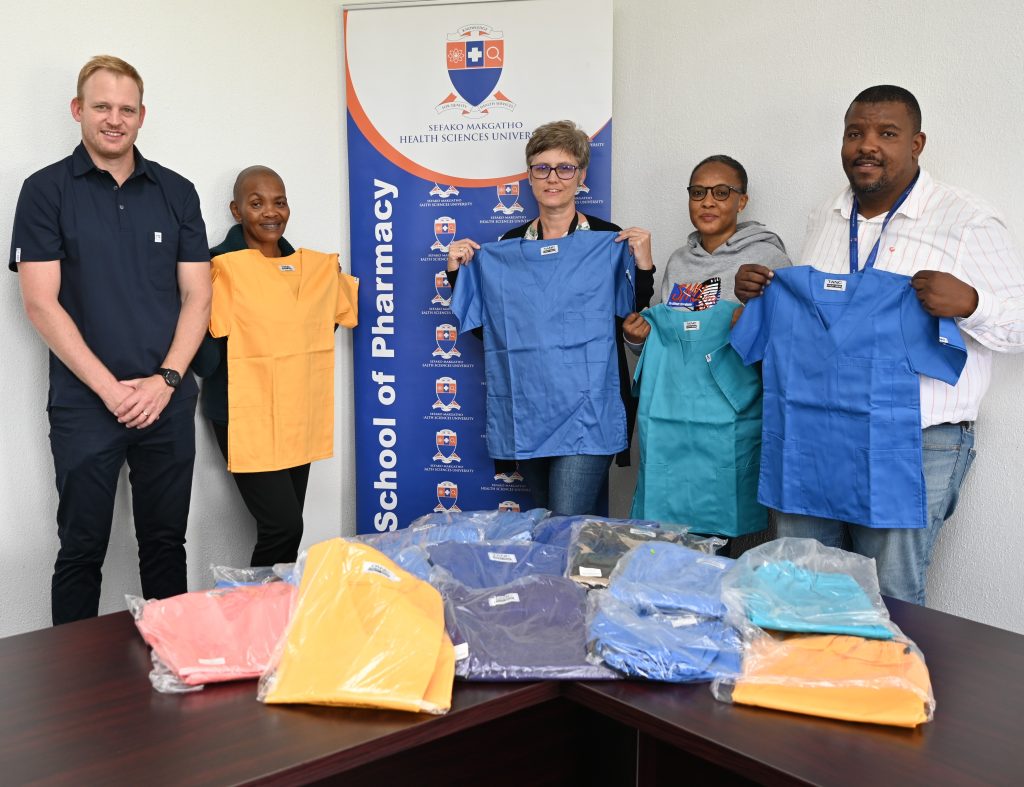 The donation is aimed at students in the School of Medicine, the School of Pharmacy, and the School of Oral Health who are in financial need. These essential uniforms are more than just attire, they represent a step towards educational equity and professional readiness. By easing financial constraints, this initiative enables students to fully concentrate on their clinical training and academic performance, laying a strong foundation for excellence in healthcare delivery.
Craige Dixon, Head of Group Marketing at TANC Scrubs, shares his thoughts on the collaboration: “It’s truly our pleasure to support the students at SMU, and we are proud to play a role in shaping the future of healthcare in South Africa. We are honoured by the university’s appreciation and excited about the possibilities of future collaboration.”
This generous contribution aligns with SMU’s vision of “Transforming health services through excellence in teaching, research and community engagement” and reflects its core values of excellence, integrity, respect, compassion, and accountability. Through this partnership, TANC Scrubs has not only supported individual students but has also contributed to narrowing the resource gap faced by many academic institutions.
The initiative will directly benefit 120 students, equipping them with the practical tools necessary for clinical learning. It is a tangible reinforcement of SMU’s mission to develop socially accountable and competent healthcare professionals who are responsive to the health needs of the nation.
Legodi Mashiane, from the Office of Institutional Advancement at SMU, expresses sincere appreciation for the donation: “The Office of Institutional Advancement at SMU would like to warmly thank the TANC group for their incredibly thoughtful donation of scrubs to students in the School of Medicine, School of Health Care Sciences, and School of Pharmacy.
For many of our students, the path to becoming a healthcare professional comes with financial hurdles, and this donation helps lift some of that weight. TANC’s generosity ensures that our students walk into their clinical environments with confidence, pride, and a strong sense of belonging.
This act of kindness reminds us that our journey is not one we walk alone. It’s support like this that builds hope, inspires excellence, and strengthens the SMU community.”
This donation by TANC Scrubs is a powerful example of how shared values and collaborative action can lead to meaningful change. As SMU continues to live its mission and uphold its values, partnerships like these will be instrumental in building a healthcare system that is inclusive, compassionate, and responsive to the needs of all South Africans.
By Dimakatso Modise
SMU’s young innovators driving Africa’s health breakthroughs
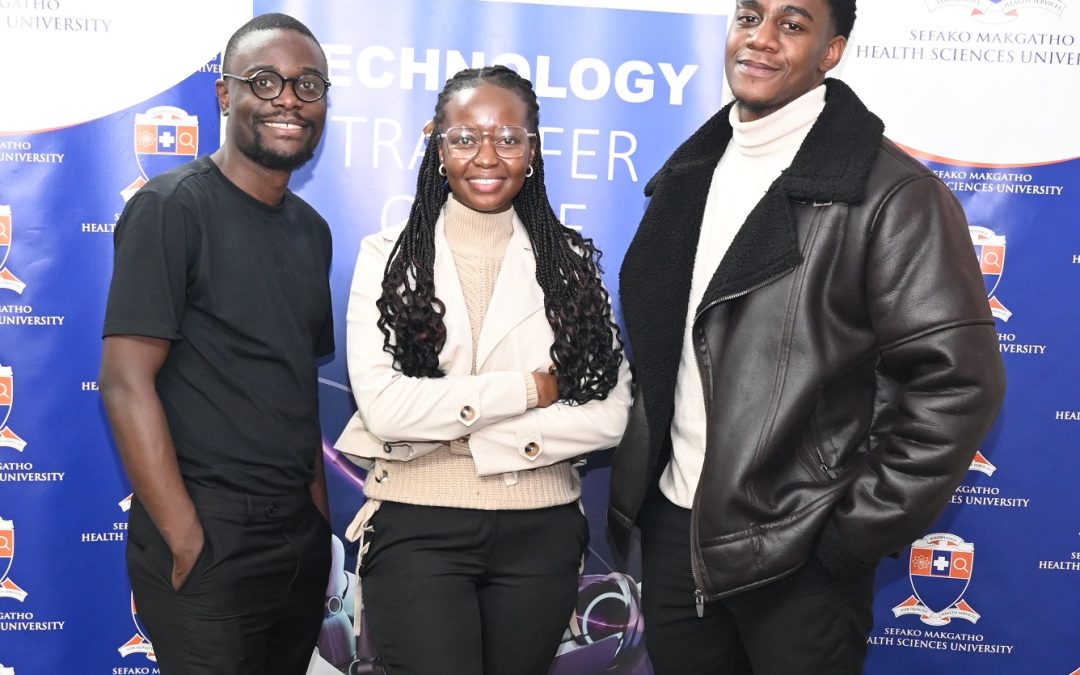
At Sefako Makgatho Health Sciences University (SMU), a new wave of innovation is sweeping across the institution. Guided by the university’s core values of excellence, inclusivity, and social responsibility, three rising stars are emerging from the university’s ranks. Supported by the SMU Technology Transfer Office (TTO), they are not just advancing research; they are united in their mission to improve lives and transform healthcare, both in Africa and globally.
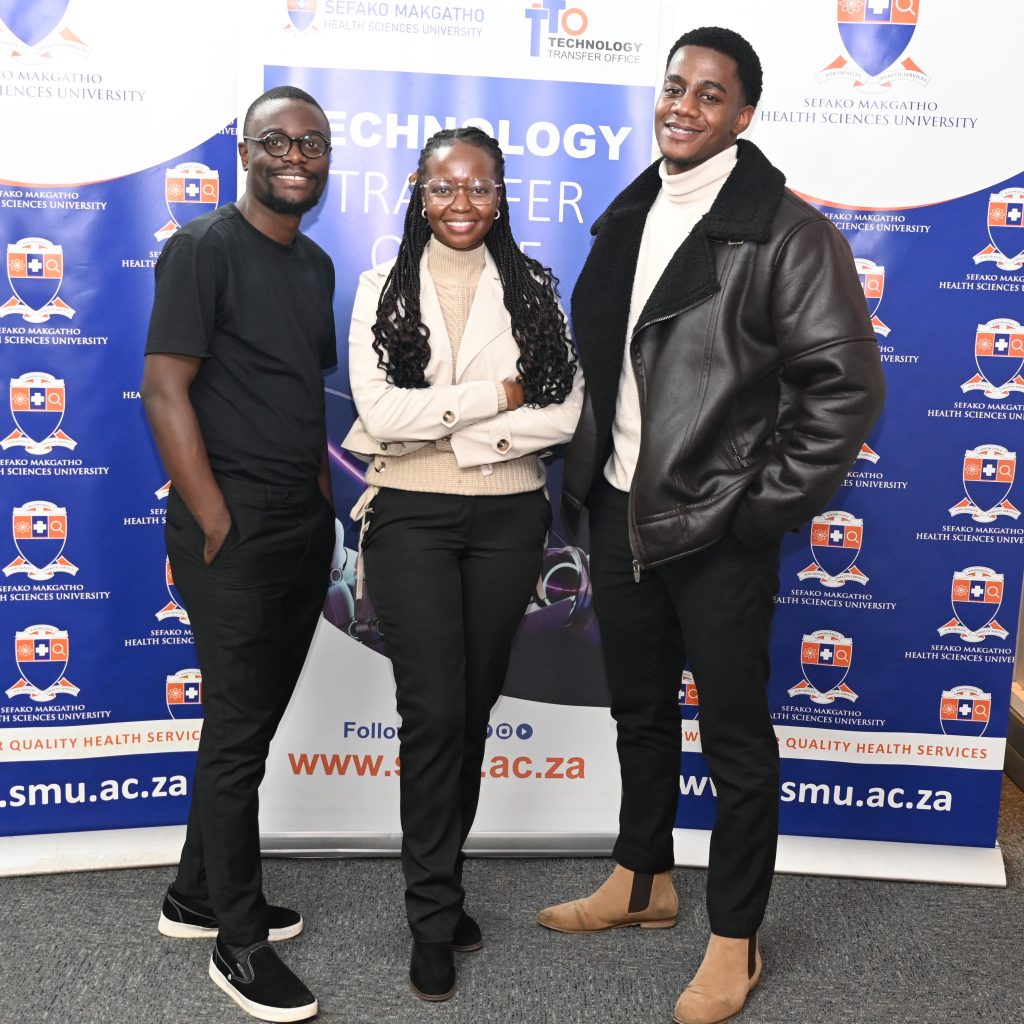 These young innovators, Emmanuel Kiyonga, Thabo Lesiba Lekgoathi, and Nondumiso Nkosi, embody SMU’s commitment to fostering excellence and collaboration in health sciences while simultaneously honouring the institution’s values of inclusivity and social impact. Each of them has made a significant contribution to their field, and their discoveries have the potential to change the course of healthcare in ways that align with the university’s broader goals.
28-year-old Ugandan Pharmacist Emmanuel Kiyonga’s breakthrough drug, Raloxifene Hydrochloride Solvate-Hydrate, is already being hailed as a game-changer in breast cancer treatment for postmenopausal women. His work, which focuses on providing a less invasive and more targeted alternative to existing treatments such as chemotherapy and hormone therapy, underscores SMU’s commitment to social responsibility, especially when it comes to addressing pressing global health challenges.
Kiyonga’s journey, which began with a desire to save lives, has already earned him considerable recognition, including R100,000 in prize money and the prestigious title of Studentpreneur 2024 at the Entrepreneurship Development in Higher Education (EDHE) Intervarsity programme. “Kiyonga’s work is a perfect example of how SMU’s values of excellence and social responsibility come together to create impactful innovations,” says Mohlatlego Sebola, who oversees the operationalisation of the TTO at SMU. “His research not only advances science but also addresses a significant gap in women’s healthcare.”
Kiyonga’s work reflects the ethos of SMU: a commitment to producing transformative research that serves society. “Through the support of the TTO, I’ve been able to bring my idea to life,” Kiyonga explains. “I’m proud to contribute to breast cancer treatment, knowing that it could help women live healthier lives.”
PhD candidate Thabo Lesiba Lekgoathi is a prime example of SMU’s emphasis on the fusion of indigenous knowledge and modern scientific innovation. Lekgoathi’s research centres on a medicinal plant, Schinus molle, which has been used in rural communities to treat respiratory ailments. His work, which led to the identification of geranylgeranyl acetate as a powerful inhibitor of SARS-CoV-2, is a testament to the university’s values of inclusivity and innovation.
Lekgoathi’s research, conducted under the mentorship of Dr Vuyisile Thibane and Professor Stanley Gololo from the Department of Biochemistry and Biotechnology, represents SMU’s focus on socially responsible research that not only draws from local knowledge but also has the potential to address global challenges like the COVID-19 pandemic. By blending traditional medicine with modern scientific methods, Lekgoathi is pushing boundaries in the fight against respiratory diseases and viral infections. His work exemplifies SMU’s belief that inclusivity in research leads to richer, more diverse scientific contributions.
“This innovation is about honouring traditional knowledge while moving science forward,” Lekgoathi says. “It’s about making a real difference, and the support I’ve received from SMU has been invaluable.”
Master’s student Nondumiso Nkosi has developed a diagnostic assay for Hepatitis B, aiming to address the significant gaps in testing accessibility, particularly in resource-limited settings. Nkosi’s diagnostic tool, developed in collaboration with Nagoya City University Hospital in Japan, perfectly aligns with SMU’s values of inclusivity and social responsibility. By providing a solution that is tailored to the unique healthcare challenges faced in Africa, Nkosi’s innovation reflects a strong commitment to improving public health in underserved communities.
Nkosi’s research focuses on creating diagnostic solutions that are not only affordable but also accessible, ensuring that individuals in remote or under-resourced areas can receive early detection and treatment for Hepatitis B. “The partnership with Nagoya City University Hospital was crucial in helping me develop a diagnostic tool that is suited to African healthcare needs,” Nkosi explains. “This innovation is about making a lasting impact where it’s needed most.”
Nkosi’s work represents SMU’s core value of social responsibility, demonstrating how innovation can drive positive change. “At SMU, we are encouraged to think about the greater good,” she adds. “This has been a driving force in my work.”
What unites Kiyonga, Lekgoathi, and Nkosi is not just their individual brilliance, but the sense of community and collaboration fostered by SMU. The support of the Technology Transfer Office (TTO), the mentorship they receive, and the university’s focus on interdisciplinary, inclusive research have been critical to their success.
Under the guidance of the TTO, these students are not only advancing their academic work but also positioning themselves to become leaders in the global healthcare and scientific landscapes. Their shared passion for innovation, social impact, and inclusivity reflects SMU’s mission to nurture talent that makes a difference in the world.
As Sebola puts it: “These three individuals embody the spirit of SMU. They are driven by excellence, committed to social responsibility, and united in their goal to improve the health and well-being of others. We are incredibly proud to support their journeys and look forward to seeing how their work continues to evolve.”
As these rising stars continue to make strides in their respective fields, they remain deeply rooted in the values that SMU stands for—excellence, inclusivity, and social responsibility. Their innovative research is not only changing the future of healthcare but also reinforcing SMU’s position as a leader in higher education that champions transformative, impact-driven research.
The work of Kiyonga, Lekgoathi, and Nkosi serves as a powerful reminder that, at SMU, the future of healthcare and science is bright, and it is united in its pursuit of a better, more inclusive world.
By Dimakatso Modise