by Lorato | May 13, 2025 | Accolades and Achievements, All News, SMU Media, Student Media
Sefako Makgatho Health Sciences University (SMU) continues to solidify its reputation as a leader in health sciences research, with its NRF-rated researchers playing a crucial role in shaping the institution’s academic landscape. Among them is Dr Bwalya Angel Witika, a Senior Lecturer and NRF-rated researcher in Pharmaceutical Sciences, whose work in nanomedicine and drug delivery systems is making significant strides.
 Witika, a Pharmacist by profession, has an extensive background in drug design, development, and delivery. With over 47 ISI-accredited publications, three book chapters, and an editorial role, his contributions to the field of pharmaceutical sciences are substantial. “My research focuses on developing advanced drug delivery systems, nanomedicines, and functional biomaterials for treating infectious, hereditary, and lifestyle diseases,” he explains.
His interest in pharmaceutical research was sparked by the urgent need for innovative healthcare solutions in Africa. Coming from an academic family, with his father a professor of chemical and mining engineering, he was introduced to the importance of scientific research at an early age. This exposure, coupled with his fascination with molecular medicine, led him to specialise in nanomedicine and drug delivery.
Witika’s research journey began at Rhodes University, where he earned his Master’s and PhD in Pharmaceutics. “One of my biggest challenges was navigating resource limitations and securing collaborations,” he recalls. However, strategic networking and perseverance helped him overcome these hurdles.
Since joining SMU in 2021, Witika has been at the forefront of pioneering nanomedicine research at the university. “The leadership at SMU has been instrumental in my success, providing access to cutting-edge research equipment and fostering a collaborative environment,” he says. His contributions have not gone unnoticed—he recently received the Best Emerging Researcher Award and a prestigious NRF Y2 rating.
Witika’s award-winning research centres on innovative drug delivery systems, including nano drug design and functional biomaterials. One of his most notable achievements is the development of SMU’s first-ever product patent aimed at improving breast cancer and osteoporosis treatment. “Our research enhances treatment efficacy while minimising side effects, ensuring better patient compliance,” he explains.
Beyond academia, Witika’s work is geared towards real-world application. “Our technologies are designed to be affordable and adaptable, particularly for underserved communities,” he notes. Although his research has yet to be translated into practical healthcare solutions, it is progressing towards implementation, with support from industry partners.
Witika’s research is highly collaborative, involving partnerships with institutions across five countries. “I have secured grants with collaborators from Northern Ireland, France, and Brazil while maintaining strong ties with local universities,” he says. His work in interdisciplinary research, particularly in nanomedicines and biomaterials, benefits from collaborations with chemists, biologists, and engineers.
Looking ahead, he envisions his research evolving towards personalised medicine and artificial intelligence-driven drug delivery. “I recently secured funding to collaborate with a world-leading researcher in microneedle technology in Northern Ireland, which will open new research avenues,” he reveals. His team is also embarking on an ambitious project for HIV prevention in women, which could revolutionise long-term, cost-effective prevention methods.
For aspiring researchers, Witika emphasises the importance of persistence and collaboration. “Building a strong network of mentors and maintaining adaptability are key to success,” he advises. He also highlights the role of funding in advancing research and calls for greater institutional support for emerging researchers.
As SMU continues to drive excellence in health sciences research, Witika’s work illustrates the university’s commitment to innovation. “I am dedicated to pushing the boundaries of pharmaceutical sciences and mentoring the next generation of researchers,” he concludes.
By Tumelo Moila
by Lorato | May 13, 2025 | All News, SMU Media, Student Media
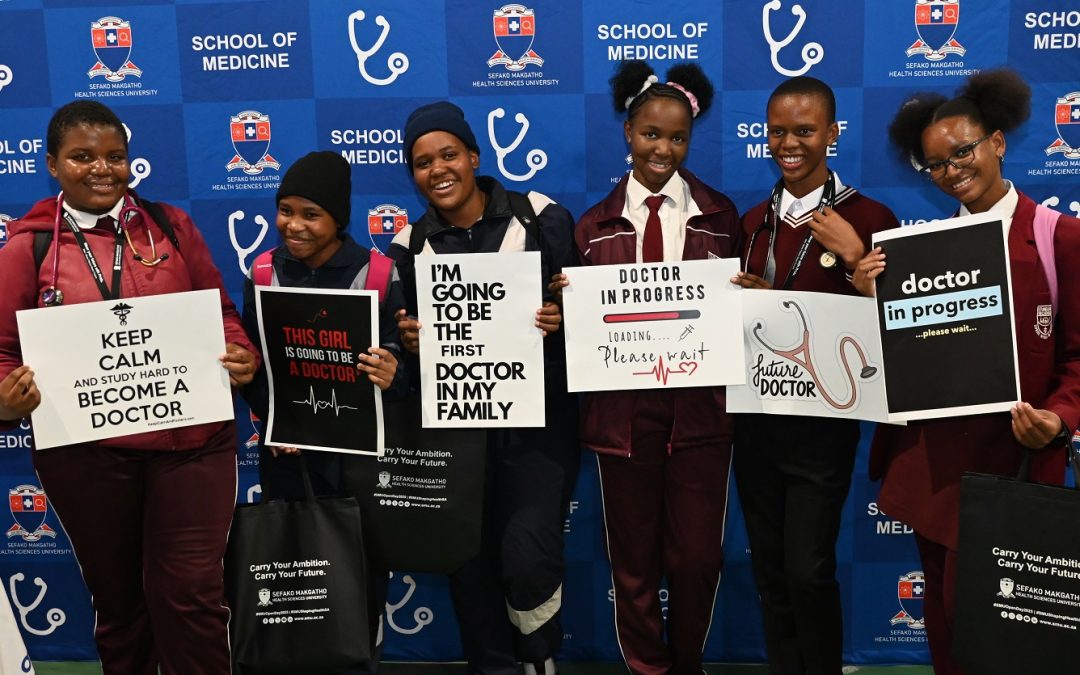
Sefako Makgatho Health Sciences University (SMU) was abuzz with excitement and learning as it welcomed approximately 6,000 learners, parents, and educators to its highly anticipated 2025 Open Day. The event provided an immersive and informative experience for aspiring health sciences professionals.
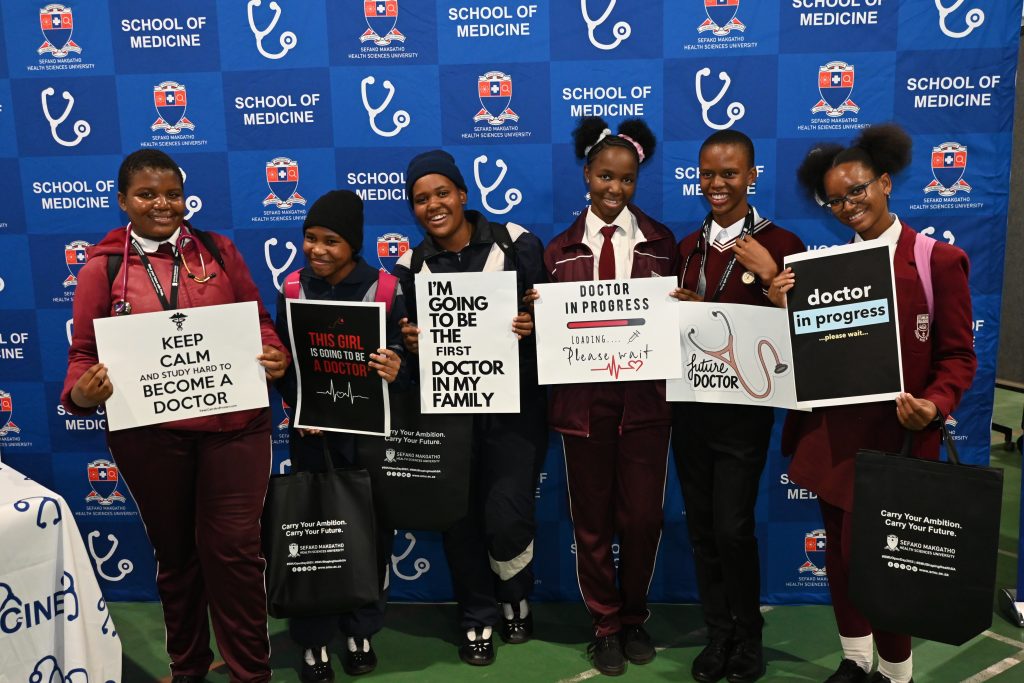 Hosted on the university’s campus the day served as a valuable platform for learners specialising in mathematics, physical sciences and life sciences—particularly those in Grades 10, 11 and 12—to explore academic offerings across SMU’s five schools: Dentistry, Health Care Sciences, Medicine, Pharmacy, and Science and Technology. Attendees engaged directly with academic staff, current students, and alumni while experiencing the university’s state-of-the-art facilities first-hand.
The programme featured interactive exhibitions, live demonstrations, guided campus tours, and individual consultations. Among the most popular exhibits was the Emergency Medical Care Unit from the School of Medicine, where staff conducted realistic trauma simulations, including CPR and spinal immobilisation techniques, captivating both learners and educators.
The School of Dentistry welcomed guests to the SMU Oral Health Centre, where students receive clinical training. Meanwhile, the School of Pharmacy introduced prospective students to its problem-based learning approach. This educational method enables students to collaboratively tackle real-world health issues, encouraging critical thinking, teamwork and self-directed learning, and promoting a deeper understanding beyond rote memorisation.
“I’ve always wanted to be a medical practitioner, but today made it feel real,” said Ashley Ngwenyama, a Grade 11 learner from Hazyview Comprehensive School in Mpumalanga. “The staff and students were so welcoming and explained everything in a way I could understand. I can’t wait to reach Grade 12 and apply.”
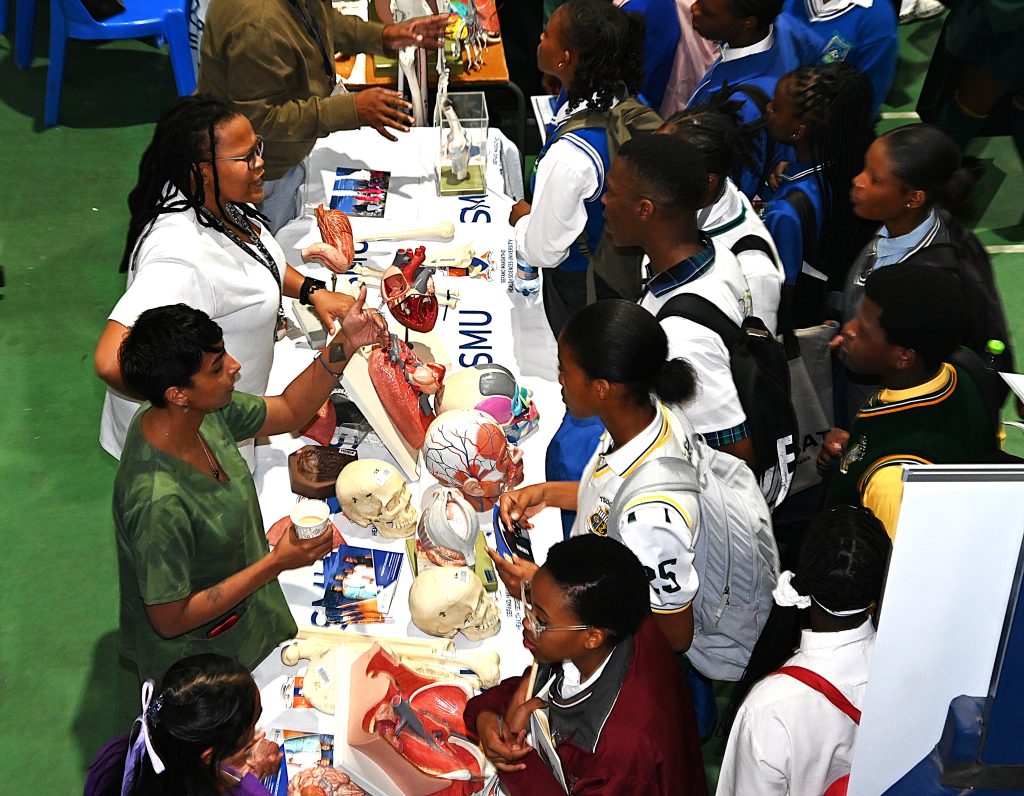 The Department of Occupational Therapy, under the School of Health Care Sciences, drew large crowds with its interactive displays on rehabilitation, human movement, and disability support. These exhibits encouraged learners to consider diverse and impactful careers within the healthcare sector beyond the more traditional roles.
Academic staff, including lecturers and postgraduate students, were available throughout the day to provide detailed information on admission requirements, application processes, financial aid, and the extensive student support services offered at SMU. Visitors also toured the university’s cutting-edge laboratories, simulation centres, and the Oral Health Centre, which forms a vital part of students’ clinical education.
“We focus on both academic excellence and the development of compassionate, community-conscious professionals,” said Winnie Marishane, Manager: Branding and Marketing at SMU. “Open Day is about helping learners visualise their place in this ecosystem.”
Dedicated information sessions for learners, parents and educators covered essential topics such as NSFAS funding, student accommodation, campus safety, and mental health and wellness support—reinforcing SMU’s commitment to holistic student wellbeing.
“As an alumnus and educator, I appreciated the transparency and detail around student life and academic support,” noted Tiisetso Phooko, an SMU alumnus and Life Orientation educator at Machepelele Secondary School in Limpopo. “It’s reassuring to know that our learners will be in good hands.”
SMU’s student brand ambassadors played a crucial role in the day’s success, sharing their personal journeys and offering peer-to-peer advice to aspiring applicants. “I was once in their shoes, unsure about where to go or what to study,” shared Trevor Bvuma, a final-year Master of Science (Biology) student and ambassador. “Today, I am part of a university that values both excellence and Ubuntu. That’s the spirit we’re passing on.”
The School of Science and Technology also captivated learners with hands-on scientific demonstrations, sparking curiosity about careers in applied sciences and research. As the day drew to a close, learners departed with university prospectuses, application guidelines, and—most importantly—a renewed clarity and enthusiasm for their future paths.
With applications for the 2026 academic year now open—and closing on Thursday, 31 July 2025 for undergraduate programmes and the MSc in Clinical Psychology, and on Friday, 29 August 2025 for postgraduate programmes—SMU’s Open Day 2025 not only attracted an impressive turnout but also successfully inspired the next generation of South African health sciences professionals.
By Tumelo Moila