by Lorato | Jul 9, 2025 | All News, SMU Media, Student Media
At Sefako Makgatho Health Sciences University (SMU), excellence in healthcare education is more than an aspiration — it is a lived reality shaped by dedication, clinical training, and community impact. Few embody this ethos more powerfully than Kagiso Hellen Kgasi, a 29-year-old trailblazer from Jericho village near Brits in the North West Province. Graduating cum laude in the Bachelor of Nursing and Midwifery, she became the first in her family to achieve such a milestone — a generational breakthrough for both her household and community.
 Kgasi’s path into healthcare began in 2014 when she joined the prestigious Nelson Mandela Fidel Castro Medical Programme, studying medicine abroad for three years. Although her original goal was to complete her medical degree, her growing passion for direct patient care led her to pivot toward nursing, a field she now describes as her true calling. “Nursing resonated with me on a personal level,” she explains. “It gave me a practical, immediate way to care for and advocate for people when they need it most.”
Her academic journey was marked by determination, curiosity, and an enduring love for learning. “I didn’t follow a rigid study schedule,” she says. “I studied whenever I could — often spending around 70% of my time learning. I genuinely enjoy it.”
While her academic commitment was unwavering, Kgasi faced considerable obstacles. Financial difficulties and long days that combined lectures with overnight clinicals tested her physical and emotional resilience. “There were moments when I wanted to give up,” she admits. “But I remembered my purpose, leaned on my faith, and pushed forward.”
A defining moment in her journey came in June 2023 during a clinical placement, when she delivered a healthy infant for the first time. “The joy on the mother’s face, knowing I played a part in that safe delivery, confirmed I was exactly where I was meant to be.”
 Kgasi attributes much of her growth to SMU’s high academic standards and the support she received from both lecturers and peers. “At times, I thought the expectations were too high — but I now understand that they helped me rise above what I thought was possible,” she says. “Each year, I had someone around me — a friend or peer — who pushed me to do better.”
Now completing her community service at a primary healthcare facility, Anna Legoale Clinic, Rustenburg, North West, with a focus on midwifery, Kagiso is particularly passionate about maternal and child health. She plans to pursue postgraduate studies, aiming for an NQF Level 10 qualification with hopes of becoming a lecturer or professor in the next decade. “I dream of shaping future nurses and influencing healthcare education. I’m also fascinated by the role artificial intelligence could play in improving patient care — from triage systems to smarter appointment scheduling,” she adds.
Her graduation was not just a personal milestone, but a moment of communal pride. “My family was thrilled. For them, it meant more than just a degree — it was a symbol of what’s possible, even from a small village like Jericho.”
To aspiring nurses, Kgasi offers grounded advice: “This journey isn’t easy. But when things get tough, go back to your ‘why’. That’s what carried me through the hard times.”
Anchored by her faith — “I can do all things through Christ who strengthens me” — Kgasi continues to serve, inspire, and lead with humility and vision.
Her story is not only a personal triumph but a reflection of SMU’s mission: to cultivate skilled, compassionate healthcare professionals who rise to meet the needs of the nation. In Kgasi, SMU has helped shape not just a nurse but a future leader in South African healthcare.
By Tumelo Moila

by Lorato | Jul 9, 2025 | All News, SMU Media, Student Media
At Sefako Makgatho Health Sciences University (SMU), leadership is more than a title — it is a lived experience. The university has emerged not only as a centre of academic excellence but also as a launchpad for socially conscious, action-driven leaders. Among the standout examples is Atlegang Leeuw, a third-year Environmental Sciences student from Ga-Rankuwa, Pretoria, whose dynamic leadership is making a tangible impact on campus and beyond. “When I arrived at SMU, I came with more than just books and a timetable,” says the 20-year-old. “I wanted to build something that would last beyond my graduation — something rooted in service and purpose.”
 Since enrolling, Leeuw has held several key leadership roles: Chairperson of the Green Campus Initiative (GCI), Treasurer of United Nations Children’s Fund (UNICEF) SMU, Chairperson of the Interprofessional Collaborative Programme (IPECP), peer educator at Khulanathi EduHub, peer counsellor at Residence 5A, and member of the university’s rugby team. Through these platforms, he has fostered a culture of innovation, accountability, and environmental consciousness among his peers. “Leadership is not about status,” he reflects. “It’s about presence — being there, showing up, and creating spaces that uplift others.”
A defining chapter of his journey has been the revitalisation of the Green Campus Initiative. Once a modest awareness campaign, GCI now promotes sustainability across campus — from water conservation in residences to responsible food disposal. “We call ourselves future health professionals, yet sometimes fail to respect our shared environment. That contradiction motivated me to act,” he says.
Inspired by insights from the Association of College and University Housing Officers-International South African Chapter (ACUHO-I-SAC) student housing conference, Leeuw helped expand GCI’s influence in 2024. Under his leadership, it formed partnerships with the Wildlife and Environmental Society of South Africa (WESSA), Miss Earth SA, UNICEF, and student groups from other universities. One of its most visible accomplishments is the SMU Garden — a collaborative project with the Built Environment Department to create a sustainable vegetable garden on campus.
“It’s more than just growing food — it symbolises that meaningful change can start with students, right where we are,” he explains.
Leeuw credits much of the work’s success to his long-time classmate and friend, Tshepo Ntlemeza. “Tshepo’s always been a steady hand — someone who kept things going when challenges felt overwhelming.”
 Together, they led initiatives like the Tembisa Clean-Up, where volunteers collected over 600 bags of waste. They also took part in national biodiversity campaigns, including invasive species removals on International Biodiversity Day.
His leadership extends into health advocacy. As Treasurer of UNICEF SMU, Leeuw has championed campaigns around mental health, children’s rights, and climate justice. In May 2024, he represented SMU at the United Nations Youth Consultation, where young South Africans addressed national challenges such as education, unemployment, and sustainable development.
“That experience made me realise the importance of what we do at SMU. We’re not just students — we’re part of a much larger dialogue shaping the future.”
Another of his achievements lies in the IPECP, where he pushed for the inclusion of Environmental Sciences students in interprofessional learning, a space previously reserved for clinical disciplines. This shift enabled cross-disciplinary collaboration, preparing students to tackle real-world problems at the intersection of science, health, and society.
Yet, for Leeuw, it’s the small victories that mean the most. “When someone tells me they started composting in their res because of GCI, that’s when I know we’re truly changing lives.”
Looking forward, he is developing an eco-friendly cooler box made from recycled pineapple peels — a low-cost, sustainable solution to help students and rural communities safely store medicine in high temperatures.
His long-term aspiration is to work with the United Nations or government departments focused on youth empowerment. But for now, his heart remains with Ga-Rankuwa and SMU — the community and institution that shaped him. “SMU gave me a platform, a voice, and the belief that I can lead change. As long as I’m here, I’ll keep doing exactly that.”
Leeuw is a shining example of the calibre of student leaders SMU continues to cultivate — individuals equipped not just with knowledge, but with vision, resilience, and a commitment to serve.
By Dimakatso Modise

by Lorato | Jul 2, 2025 | All News, SMU Media, Student Media
Academic excellence is not merely the attainment of high marks—it is the embodiment of curiosity, resilience, and a relentless pursuit of knowledge. At Sefako Makgatho Health Sciences University (SMU), this ideal lies at the heart of its mission to nurture future leaders in health sciences. It is within this context that the university proudly celebrates Dr Kiara Ramjas, a shining example of intellectual brilliance and compassionate service, who has been awarded the prestigious Dean’s Award for Outstanding Achievement in the School of Medicine.
 Graduating summa cum laude from the Bachelor of Medicine and Bachelor of Surgery (MBChB) programme, Ramjas represents the pinnacle of academic and personal excellence. Honoured during the 2025 autumn graduation ceremony, her achievement is a testament not only to her scholastic aptitude but also to her unwavering commitment to humanity. At just 24 years old, the Centurion-born graduate has already carved a legacy—one defined by purpose, perseverance, and a deep-rooted passion for healing.
Now a first-year intern at Tygerberg Hospital in the Western Cape, Ramjas reflects on the path that led her to this milestone. “It’s been an exciting yet challenging first few months, but my time at SMU truly prepared me for the obstacles I now face as an intern,” she shares.
Born in Laudium and raised in Centurion, Kiara grew up in a home where empathy was a way of life. Her father’s work in healthcare, her mother’s advocacy for persons with disabilities, and her close relationship with her sister, who has Down syndrome, instilled in her a strong sense of service from a young age.
“A career in medicine seemed like a destined choice,” she says. “I’ve always been driven by a desire to make a tangible difference in people’s lives.”
That calling crystallised in high school when she volunteered at a local clinic. The experience of caring for patients in a holistic and respectful manner convinced her that medicine was not just a profession, but her purpose.
Choosing SMU for her studies was no accident. “The MBChB programme’s emphasis on community-based learning and its supportive environment aligned perfectly with my values,” she notes. One of her standout academic experiences was with Professor Gregory Lebona, whose humility and passion for teaching anatomy inspired her deeply. “He taught us that success is rooted in hard work and kindness, regardless of your achievements.”
 Achieving summa cum laude—the highest academic distinction—was no small feat. Ramjas credits her success to a disciplined study routine, peer collaboration, and the unwavering support of her family. “I prioritised consistency—daily reviews, concise notes, past papers, and scheduled breaks. It was about studying smart, not just hard.”
Outside the lecture halls, Ramjas remained actively engaged in community service, particularly through her work with Down Syndrome South Africa. This reinforced her dedication to inclusivity and public health. “It helped me grow not just as a medical student, but as a person.”
One moment that left a lasting impact on her was caring for a young liver cancer patient. “She reminded me that patients remember how you made them feel. That encounter taught me that kindness is the true currency of medicine.”
Her family, friends, and fellow students formed the foundation of her support system. “At university, we built a culture of helping one another. We believed that success is sweeter when shared.”
Looking ahead, Ramjas has her sights set on paediatrics, with long-term aspirations of joining Doctors Without Borders. “Children are the legacy we leave behind. Being a paediatrician means safeguarding the health of future generations. That’s a privilege I want to earn.”
Receiving the Dean’s Award and summa cum laude honours came as a surprise on graduation day. “I was overwhelmed with gratitude. It was a powerful reminder that 18 years of hard work, from primary school to medical school, had finally come full circle.”
As she steps confidently into her role as a doctor, Ramjas remains grounded in her core values—empathy, excellence, and service. “I hope to be remembered as someone who combined academic rigour with compassion and used every opportunity to uplift others.”
In a world that urgently needs healthcare professionals who lead with empathy and integrity, Ramjas exemplifies the calibre of graduates SMU strives to cultivate.
By Tumelo Moila
by Lorato | Jul 2, 2025 | All News, SMU Media, Student Media
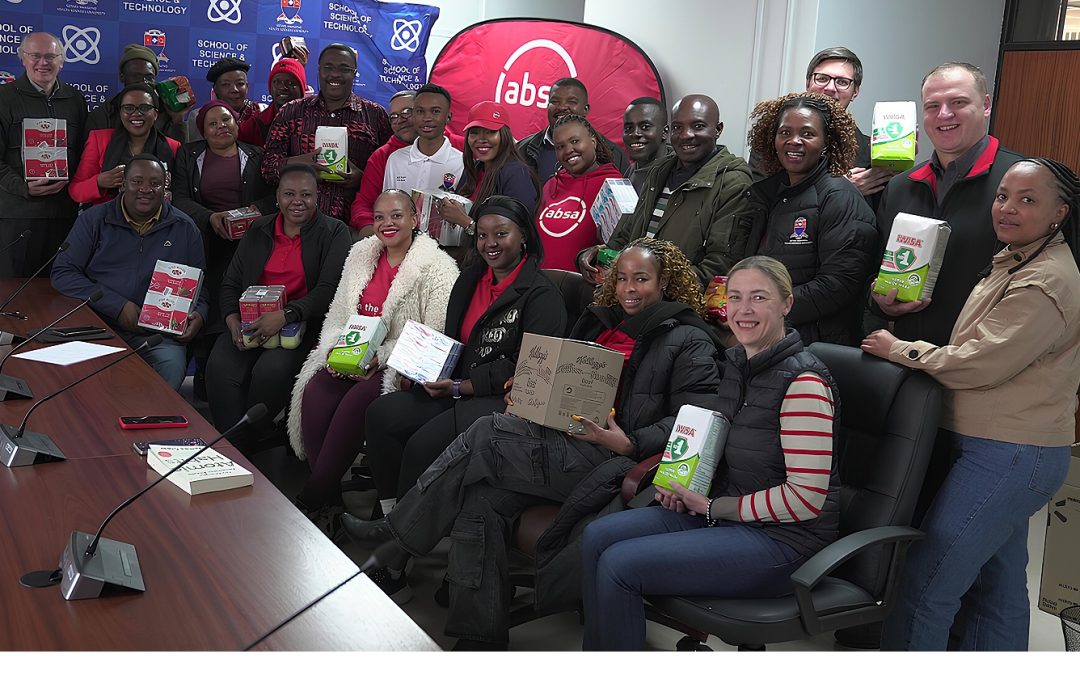
The School of Science and Technology (SST) at Sefako Makgatho Health Sciences University (SMU) recently held a meaningful donation handover event in collaboration with ABSA Bank, as part of its impactful ‘Force for Good’ initiative. The event showcased the powerful outcomes that can emerge from partnerships between higher education institutions and socially conscious corporates, united in their mission to support vulnerable student communities.
 At the heart of the event was the handover of grocery parcels valued at R20,000, generously donated by ABSA. These essential supplies were distributed to SST students experiencing financial distress due to delayed National Student Financial Aid Scheme (NSFAS) disbursements—delays which have placed many students’ academic progress under threat. ABSA’s contribution offered timely relief and served as a clear demonstration of the bank’s enduring commitment to youth empowerment and social inclusion.
Representing ABSA at the event, Kgomotso Madisa highlighted the importance of ensuring that students’ basic needs are met: “When students don’t have to worry about their next meal, they can focus on building their future. We’re proud to stand with SMU-SST in ensuring that no student is left behind.” This message underscored how access to essential resources directly influences academic focus and personal growth.
The initiative originated in 2023 as a student-led vision, championed by Bongisizwe Sibeko, then Chairperson of the SST Student Representative Council (SRC). Deeply moved by the challenges faced by his peers, Sibeko drafted a proposal to address the financial pressures that risked excluding vulnerable students from their studies. His commitment was guided and strengthened by Professor Maggie Aphane, Head of the Department of Mathematics and Applied Mathematics, whose strategic insight and compassion helped formalise the proposal and anchor it within the university’s academic structures.
 The campaign gained institutional momentum through the leadership of Professor Larry Obi, Dean of SST, and Dr Esmey Moema, SST Operations Manager. Their support transformed the student-driven idea into a formal appeal that resonated deeply with ABSA. Thanks to the efforts of Madisa and her team, the bank responded swiftly and empathetically, mobilising support when students needed it most.
Reflecting on the impact of the initiative, Dr Moema remarked: “The ‘Force for Good’ initiative has reminded us that partnerships grounded in shared humanity can change lives. We are deeply grateful to ABSA for their timely and generous contribution. Their support has brought dignity, hope, and motivation to students during a very challenging time.”
Her words captured not only the material benefits of the donation but also the emotional and psychological uplift it brought to the student body.
This collaboration is a vivid example of ABSA’s core values: care, collaboration, and purposeful action. It also highlights the indispensable role that student leadership and academic mentorship play in catalysing social change. The partnership between SST and ABSA sets a precedent for future community-focused engagements, emphasising the need to address students’ fundamental needs as a cornerstone of academic success and well-being.
More than a one-time gesture, the initiative has cultivated a spirit of resilience, empathy, and institutional responsiveness at SMU. It is a powerful case study in how student-led advocacy, supported by engaged educators and forward-thinking corporates, can produce lasting, meaningful change in the higher education landscape.
As SMU continues to centre student wellbeing in its mission, partnerships like this illustrate the importance of working collectively to overcome challenges faced by learners. In doing so, institutions and their partners ensure that every student is equipped not only to succeed but to thrive.
In conclusion, the ‘Force for Good’ collaboration between ABSA and SMU’s SST is more than an act of charity—it is a bold affirmation of what is possible when compassion, leadership, and strategic partnership converge to empower the next generation of South African scholars, leaders, and change-makers.
By Dimakatso Modise
by Lorato | Jun 25, 2025 | All News, Alumni, SMU Media, Student Media
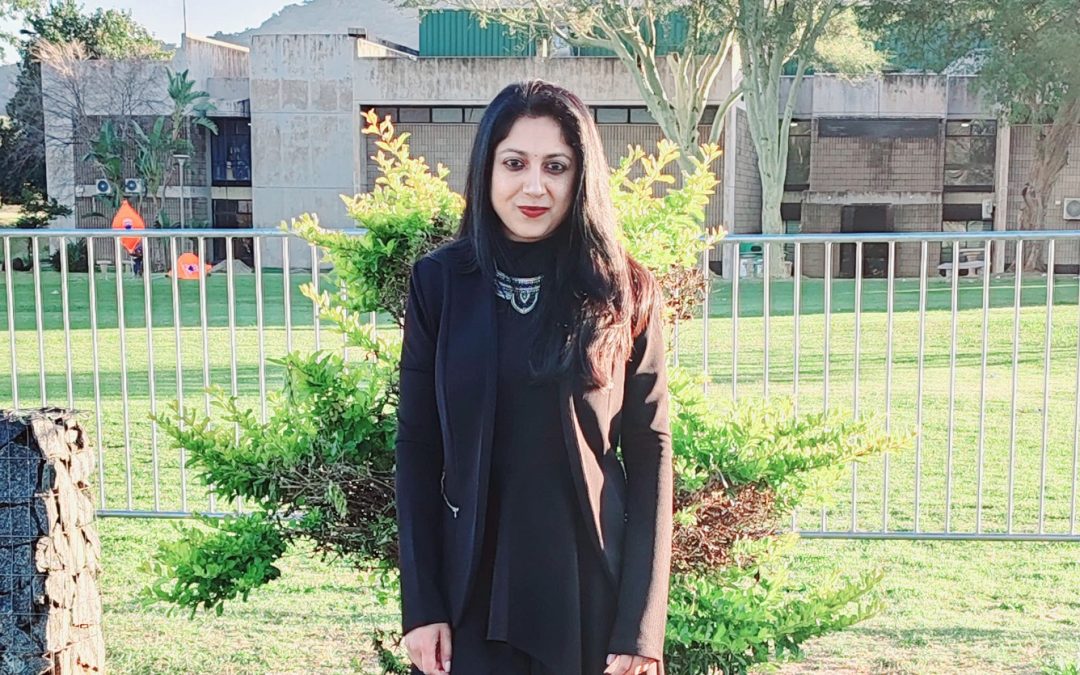
In a proud moment for Sefako Makgatho Health Sciences University (SMU), Dr Karmishtha Maharaj was conferred with a PhD in Pharmacy during the university’s recent autumn graduation ceremony. Her achievement is not only a personal milestone but a significant contribution to advancing pharmacovigilance within the private healthcare sector, particularly in the context of HIV treatment in South Africa.
 Now 39 years old, Dr Maharaj is currently based at Ampath Laboratories in Centurion, where she serves as a Pharmacogenomics Specialist. Her professional journey with Ampath spans over 13 years, beginning in 2011 as a Phlebotomy Facilitator. Originally from Newcastle in KwaZulu-Natal, Maharaj’s career has been deeply shaped by her upbringing in a close-knit family and an enduring desire to bridge patient care and pharmaceutical science.
“My interest in medicine began early,” she reflects. “From weekends volunteering at a private hospital to shadowing my uncle at his pharmacy, I was always drawn to helping others. I first trained as a nurse and later transitioned into pharmacy, blending the clinical and pharmaceutical sides of patient care.”
Maharaj’s doctoral research, conducted through SMU’s School of Pharmacy, focused on the use of routine laboratory tests as early indicators of adverse drug reactions (ADRs) in patients on Highly Active Antiretroviral Therapy (HAART). Her study, conducted at a major private HIV treatment practice in Pretoria, sought to address a critical gap in South Africa’s pharmacovigilance data, particularly within the under-researched private healthcare sector.
She strongly believes laboratory-based monitoring should become a standard in ADR surveillance. “It enables early detection of toxicity before symptoms appear, allowing timely interventions. This approach not only improves patient safety and adherence but fills major gaps in traditional pharmacovigilance, especially when managing complex cases involving multiple medications.”
Despite the private sector being relatively well-equipped, with access to electronic health records and accredited laboratories, Maharaj points out that systemic challenges remain. “There’s no coordinated pharmacovigilance framework in private care. Proactive monitoring is still underutilised, and pharmacogenomics testing is limited due to cost and lack of awareness.”
Her study reviewed 267 patient files from a private HIV clinic in Pretoria. Elevated creatinine and liver enzymes served as early warning signs of renal and hepatic toxicity. She observed that patients on concomitant medications had heightened risks, and that ART changes were most commonly associated with drugs like efavirenz and lopinavir.
“My research offers valuable insights that can contribute to national health policy,” she says. “It provides a model for integrating lab data into national pharmacovigilance frameworks, updating HIV treatment guidelines, and improving surveillance beyond clinician reporting.”
She is also eager to expand the research to public health settings and rural areas. “We need to ensure the research represents the broader HIV population. Exploring regional differences and building scalable, risk-based models could strengthen provincial and national responses to HIV care.”
Looking ahead, Maharaj envisions several research paths, including prospective studies, cost-effectiveness analysis of lab-based surveillance, and the feasibility of implementing pharmacogenomic testing and therapeutic drug monitoring locally.
She also hopes to see her findings incorporated into national medical training and treatment guidelines. “Empowering healthcare providers with these tools through education would support a more predictive, personalised approach to care.”
Completing a PhD while working full-time was no small feat. “It required planning, discipline, and self-care. My support system—family, mentors, friends—was essential. There were moments of doubt and setbacks, but also incredible breakthroughs that reminded me why this work matters.”
Now that she has earned her PhD, Maharaj plans to continue blending academic research with public engagement. “I want to raise awareness around drug safety and help integrate personalised medicine into routine care.”
She hopes her legacy is one of improved patient safety and inspired future researchers. “For young women from underrepresented backgrounds, I say: believe in your potential. Your voice matters, and your journey can change lives.”
Summing up her journey, Maharaj shares, “The rewarding challenge of pioneering new paths. As Elizabeth Blackwell said, ‘It is not easy to be a pioneer – but oh, it is fascinating!’”
By Tumelo Moila