
by Lorato | Jun 25, 2025 | All News, Alumni, SMU Media, Student Media
At just 25, Clement Mphethi is helping redefine what is possible for young South Africans who dare to dream beyond their circumstances. Graduating summa cum laude with a Bachelor of Science Honours in Physics from Sefako Makgatho Health Sciences University (SMU), Mphethi’s journey is one of resilience, intellect, and inspiration — a testament to the power of education to rewrite history.
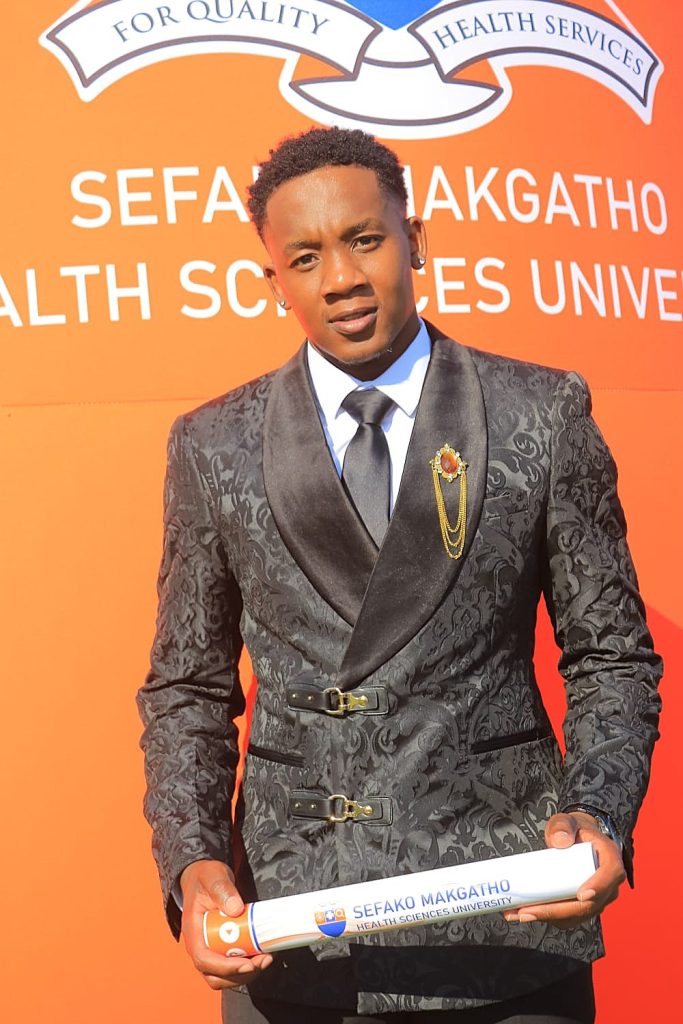 Originally from Burgersfort, Limpopo, Mphethi is the first in his family to attend university. “This achievement carries emotional weight,” he says. “It’s a tribute to the struggles of those who came before me and a reminder that determination can break generational barriers.”
Mphethi’s fascination with Physics started early. “Physics has always fascinated me. It’s the pursuit of truth, the language of the universe,” he explains. But his motivation was deeply personal. “My parents, despite their intelligence, never had the opportunity to study further. I pursued this degree for them and for everyone who never had the chance.”
Graduating with top honours was not merely a personal milestone — it was a deeply meaningful accomplishment born of sacrifice, discipline and vision. “In trying to understand the universe, I came to understand my own mind — its limits, potential, and ability to grow through adversity and purpose,” he reflects.
Now self-employed as a freelance data scientist, Mphethi applies machine learning, data analysis and statistical modelling to solve real-world problems for clients across industries. His interest in data science stems from the interdisciplinary nature of modern physics. “I studied programming languages like Python, SQL, JavaScript and tools like Power BI and Excel outside of my academic studies, driven by an interest in how they can be applied alongside physics to address real-world problems.”
During his Honours year, Mphethi delved into Quantum Physics and Statistical Mechanics, two fields that reshaped his worldview. “Quantum forced me to rethink everything. It showed me that uncertainty isn’t weakness, but part of nature. Statistical Mechanics helped me understand how order arises from chaos.”
His research focused on dye-sensitised solar cells (DSSCs), exploring how different electrolyte deposition techniques impact performance and sustainability. “Using a solar simulator, I discovered that doctor-blading achieved the highest efficiency,” he notes. “The experience taught me the importance of precision, persistence, and thinking about the environmental impact of our work.”
The journey was not without challenges. “Inconsistent results, mental fatigue, and deadlines were constant obstacles,” he recalls. “But support from my supervisors and my classmate Lebogang Motau, who also graduated summa cum laude, kept me going. That shared journey meant everything.”
Mentorship was another pillar of his success. Professor Enoch Sithole, his supervisor, left a lasting impression. “He was more than a lecturer. He challenged us because he believed in us. He taught that discipline is a form of care.”
Beyond academics, Mphethi stepped into leadership as class representative. “I learnt how to represent others, communicate effectively, and lead with empathy,” he shares.
Looking to the future, he is focused on quantum technologies and renewable energy. “Quantum computing and green tech are urgent and full of potential. That’s where I want to contribute. Physics helps us confront global challenges like climate change. It teaches us to ask the right questions.” Mphethi is also passionate about science communication. “Physics isn’t just equations. It’s about improving lives. We need to tell that story more clearly.”
His advice to aspiring students is clear: “Stay disciplined, manage your time, and don’t fear failure. Growth comes through struggle.”
As he continues his journey in research and applied science, Mphethi’s story stands as a beacon for a new generation. “I carry not just ambition, but the hopes of a family who never had these chances. My journey proves that with purpose and perseverance, even the toughest obstacles can be overcome.”
From the quiet hills of Limpopo to the dynamic frontiers of quantum physics, Mphethi is not just rewriting his own story — he’s helping rewrite South Africa’s scientific future.
By Tumelo Moila
by Lorato | Jun 25, 2025 | All News, SMU Media, Student Media
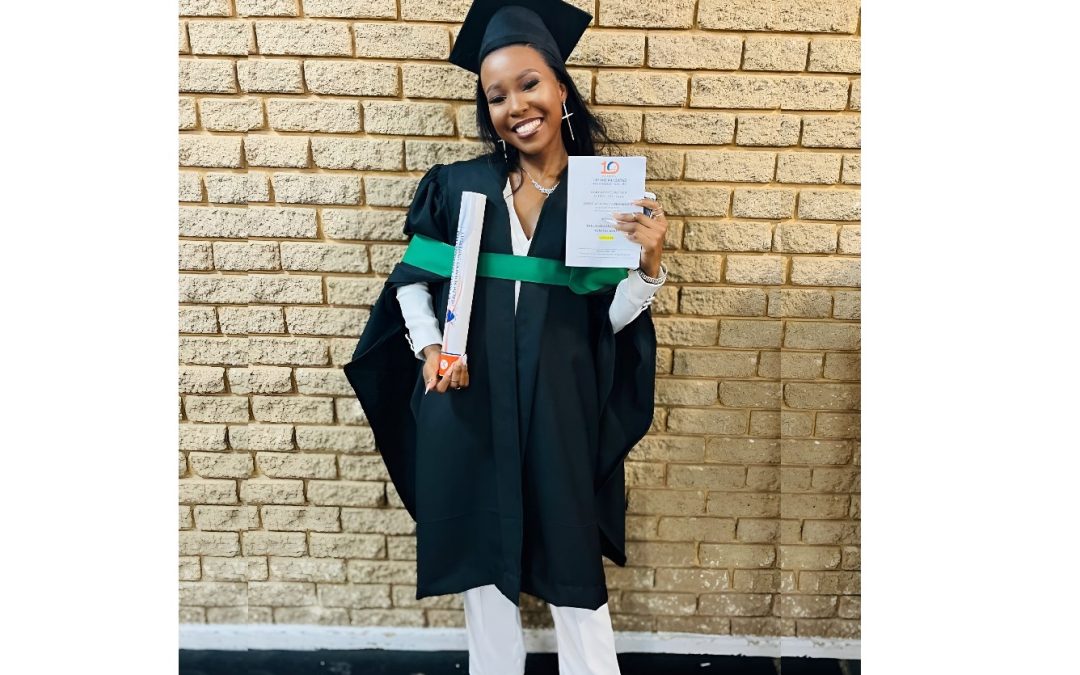
From the rural heart of Muhlava village in Tzaneen to the academic forefront of Sefako Makgatho Health Sciences University (SMU), Thami Nomathamsanqa Nomithandazo Bonga is a living testament to resilience, purpose, and the transformative power of education. Armed with determination and a passion for numbers, she has broken through socio-economic barriers, emerging not only as a top-performing student but also as a role model for young women across South Africa. Her story is one of quiet strength, family legacy, and the unshakable belief that no dream is too distant when pursued with conviction.
 Born into a family defined by resilience, Bonga’s journey is rooted in both faith and academic excellence. Her names—meaning ‘luck’ and ‘prayers’—reflect her mother’s heartfelt hopes following a series of miscarriages. Raised primarily by her grandmother and aunts in Limpopo while her mother worked in Gauteng, Bonga credits the women in her life for instilling values of discipline, humility, and deep respect. “My names are a daily reminder of the blessings I carry and the strength I must embody,” Bonga shared. “They inspire me to persevere, no matter the challenges.”
Bonga’s academic path led her to pursue a Bachelor of Science (BSc) in Mathematical Sciences at SMU—a decision influenced by her natural affinity for numbers and scientific exploration. Though the field is rigorous, she says her experience at the university has been both intellectually and personally transformative. “SMU has been more than just a place of learning—it has become a community where I’ve grown as a leader and a mentor,” she explained.
In 2024, Bonga embraced a new role: supporting fellow students through their academic journeys. She describes this responsibility as both demanding and deeply fulfilling. But her journey has not been without obstacles. Early on, she struggled with distractions, particularly from social media platforms like TikTok. “I had to develop better time-management skills and build disciplined study habits,” she admitted. That commitment paid off: she eventually achieved a remarkable 95% in one of her most challenging modules.
For Bonga, the university’s saying, ‘Sefako Makgatho Health Sciences University—I BELONG’, resonates deeply. “Leaving home was tough, but the friendships and support I found at SMU gave me a true sense of belonging,” she said. Mental health was another hurdle. She recalls grappling with episodes of depression, but credits open and honest conversations with family and friends for helping her through. “Speaking openly about my struggles made all the difference,” she said.
Her achievements have made a lasting impact, particularly within her own family. She is proud to be the first woman in her household to graduate in a scientific field, a milestone she describes as deeply meaningful. Beyond her personal success, she hopes to inspire other young women from her community to believe in their potential. “I want to show that no matter where you come from, success is possible,” she affirmed.
Now specialising in Statistics, Bonga is fascinated by its wide-ranging applications, especially in health and finance. She hopes to build a career as a data analyst and remains open to new opportunities. Looking ahead, she aspires to further her studies—possibly abroad—to deepen her expertise.
Reflecting on her journey, Bonga shared a message for others facing similar challenges:
“Believe in yourself, work hard, and never lose sight of your goals. SMU gave me the tools to succeed—I hope others will seize that same opportunity.” Bonga’s story is one of determination, faith, and transformation—qualities that embody the spirit of SMU and inspire future generations to break barriers and reach for their dreams.
By Dimakatso Modise
by Lorato | Jun 25, 2025 | Accolades and Achievements, All News, SMU Media, Student Media
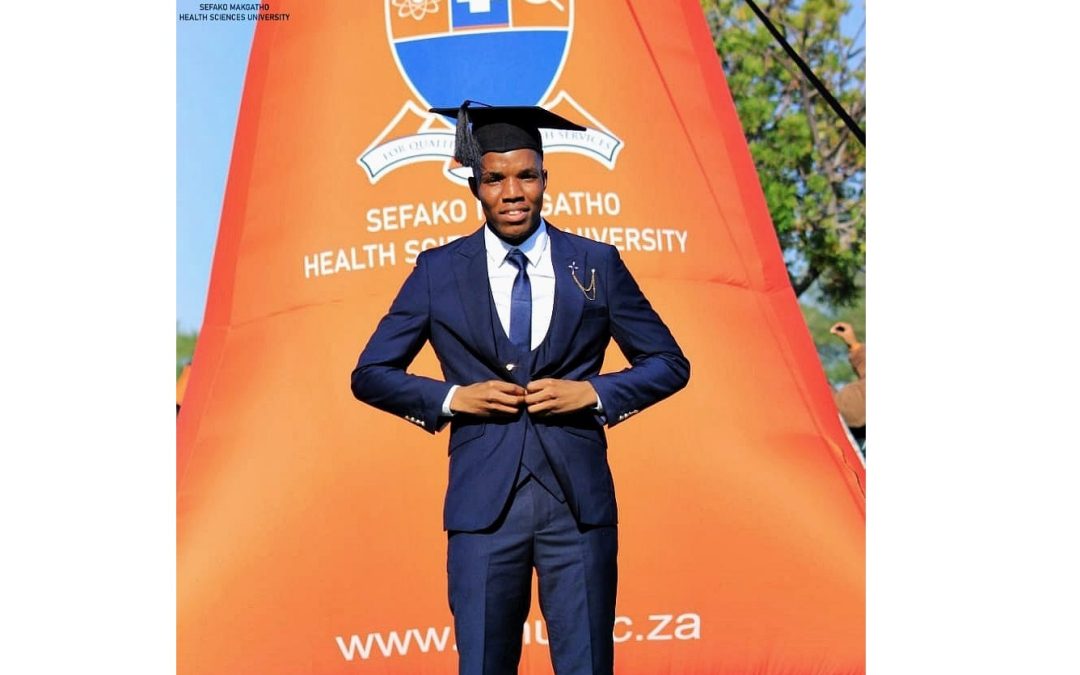
At just 22 years old, Hermy Mantjiu is proving that hard work, curiosity, and resilience are a powerful combination. Hailing from Kalkspruit Ga-Maraba in Limpopo, Hermy recently graduated summa cum laude with a Bachelor of Science Honours in Statistics from Sefako Makgatho Health Sciences University (SMU). His remarkable academic journey reflects not only his brilliance but also his commitment to using mathematics to solve real-world problems.
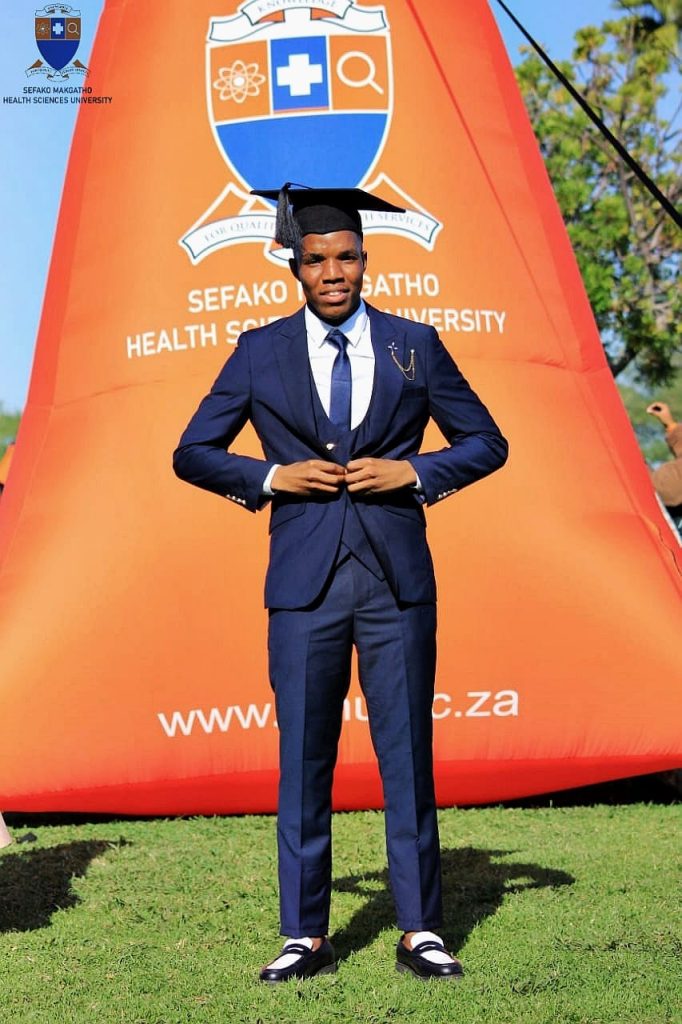 Now an honours student working for the Department of Statistical Science, Mantjiu reflects proudly on his academic success. “It hasn’t always been easy,” he says, “but I’ve worked hard, stayed disciplined, and grown not just academically, but also personally. My achievements reflect my dedication and love for learning, especially in challenging subjects like mathematics and statistics.”
Inspired by Mason Cooley’s quote, “Procrastination makes easy things hard, hard things harder,” Mantjiu’s disciplined approach has guided him through the rigours of Mathematical Science — a field he describes as intellectually stimulating and deeply rewarding.
“I love how maths challenges me to think differently. It’s like solving a puzzle — sometimes frustrating, but incredibly satisfying when everything finally clicks,” he explains. Unlike traditional mathematics, which focuses largely on theory, Mathematical Science merges pure and applied maths with statistics, computing, and modelling. “That’s what makes it so versatile and relevant in today’s data-driven world,” he adds.
His programme covered a wide range of areas, including abstract algebra, applied mathematics, and statistics. While he admits that abstract algebra was particularly challenging, he grew to appreciate its elegance and structure. On the other hand, mathematics and statistics stood out as favourites, especially when applied to real-world scenarios.
Mantjiu’s Honours project, “Correlates of Reading Literacy Among Participants Aged 15–30: A Case Study of Four Provinces in South Africa”, demonstrated how statistics can directly inform decision-making in areas such as health, finance, and technology. “It showed me how statistics can directly support decision-making in health, finance, and technology,” he says.
His work wasn’t confined to theoretical exercises. Mantjiu became proficient in RStudio, Stata, and MATLAB, using them to simulate complex systems, solve differential equations, and analyse datasets. “These computational tools made our work more efficient and accurate,” he says. “We even solved differential equations using numerical methods like Euler and Runge-Kutta.”
Mantjiu’s passion for problem-solving extends into interdisciplinary fields such as data science and public health. He believes mathematical modelling plays a crucial role in addressing global issues like climate change, pandemics, and inequality. “Statistical inference, for example, helps us make informed decisions based on uncertain information — from clinical trials to financial forecasting,” he explains.
His success was not a solo journey. “My mentors and the students I tutored had a huge impact on my growth,” he shares. “Teaching others deepened my own understanding and kept me motivated.” Collaborative projects also helped him build communication and teamwork skills — attributes he believes are essential in both academia and industry.
Now pursuing an Honours degree in Statistics, Mantjiu has set his sights on a data-driven career in research, analytics, or education. “Eventually, I’d love to pursue a Master’s in biostatistics or data science. I want to work where research meets impact — especially in health or finance.”
When asked what advice he has for future students, his answer is clear: “Be ready to think hard, fail forward, and stay curious. Mathematical Science isn’t just about numbers; it’s about thinking clearly, solving problems, and making a difference.”
Mantjiu’s journey is a shining example of what South African youth can achieve with the right mindset, support, and sense of purpose. As he looks to the future, he carries with him not just academic accolades but a vision for how mathematical science can unlock real change in the world.
By Tumelo Moila

by Lorato | Jun 20, 2025 | All News
Sefako Makgatho Health Sciences University (SMU) has made a landmark entry into the 2025 Times Higher Education (THE) Impact Rankings, which were released in 18 June 2025, marking a major turning point in its global profile as a health sciences institution committed to sustainable development and social impact.
 For the first time, SMU participated in the global THE Impact Rankings, which assess how universities contribute to the United Nations Sustainable Development Goals (SDGs). SMU was ranked in the 1001–1500 global band out of 2,318 institutions worldwide, with a commendable overall score of 56.4. This places SMU 10th among 13 ranked South African universities.
“Our debut in the global sustainability rankings is a strategic signal of intent,” says Benjamin Ntshabele, Institutional Researcher. “It shows that SMU is not only a national asset but an emerging global contributor to health, education and social transformation.”
Delivering impact in health and education
SMU entered four SDG categories aligned with its academic mission and institutional strengths:
- SDG 3: Good Health and Well-being
- SDG 4: Quality Education
- SDG 8: Decent Work and Economic Growth
- SDG 17: Partnerships for the Goals
The university’s strongest performance was in SDG 3 and SDG 4, where it ranked in the 301–400 band globally — a competitive position that reflects the institution’s growing relevance on the world stage. In fact, SMU’s scores in both categories were above the global 75th percentile, confirming that SMU is delivering measurable impact in training healthcare professionals and improving educational access.
Standout metrics include:
- A 96.6% score in the number of students graduating in health professions (SDG 3)
- An 82.1% score for first-generation student participation (SDG 4)
- A 96.1% score in the proportion of students taking work placements (SDG 8)
While SMU’s performance in SDG 3 and 4 underscores its core strengths, results in SDG 8 (38.4%) and SDG 17 (51.0%) reveal areas for growth, particularly in economic research, sustainable employment practices, and SDG reporting.
To address these, SMU is taking deliberate steps to strengthen:
- Investment in workforce development and research outputs
- Integration of SDG themes into the curriculum
- Strategic partnerships that advance global development goals
- Institutional transparency in sustainability metrics
“Our next frontier is to broaden our SDG participation and deepen our institutional systems around impact reporting and global collaboration,” Ntshabele adds.
A university on the rise
SMU’s participation in the 2025 THE Impact Rankings is more than symbolic. It’s a bold affirmation of its growing stature as a university that is not only academically focused but socially accountable.
As the global higher education sector increasingly values real-world impact, SMU is laying the foundation to become a leading African health sciences university with a global conscience.
“This is just the beginning. The rankings validate our contribution to national development, and we are ready to take our place among globally impactful universities,” Ntshabele concludes.

by Lorato | Jun 13, 2025 | All News, SMU Media, Student Media
Youth Day Special Feature – Honouring student leadership as a driving force in national transformation
As South Africa commemorates Youth Day—a moment to honour the courage, vision and activism of generations past—Sefako Makgatho Health Sciences University (SMU) celebrates the contributions of its student leaders to shaping a more just and responsive higher education landscape.
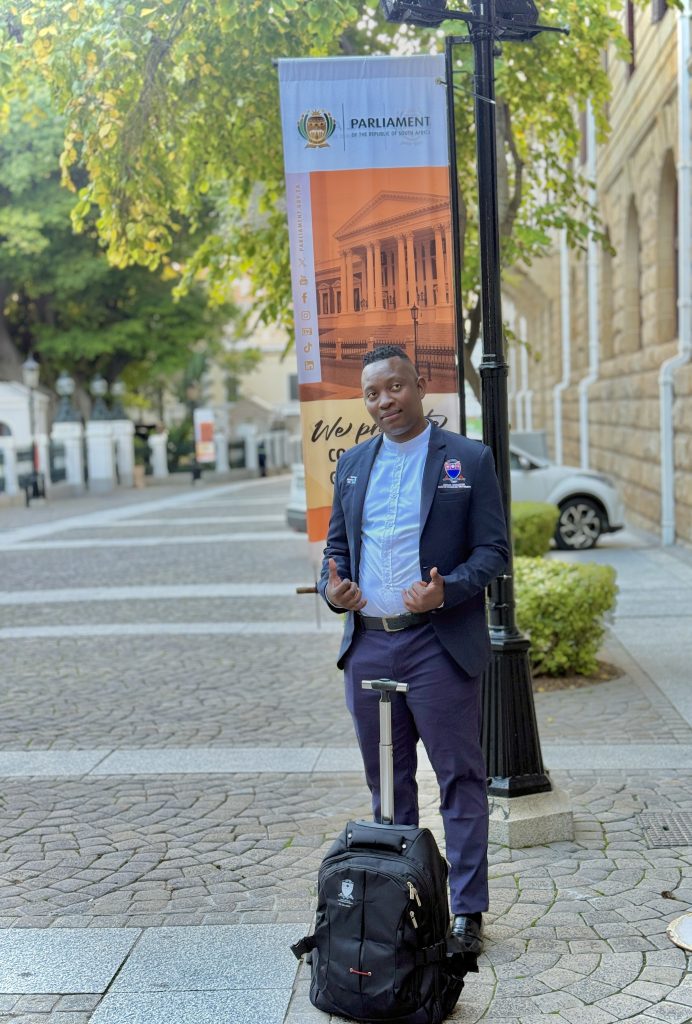 Earlier this month, two Student Representative Council (SRC) leaders from SMU stepped onto a national platform to represent the student voice in a high-level discussion on the future of the post-school education and training system. Katlego Peter Moshanyane, President of the SRC, and Fhulufhelo Ntsieni, Secretary-General, participated in a briefing to the Parliamentary Portfolio Committee on Higher Education and Training, where they reflected on the systemic challenges facing today’s students, particularly those pursuing qualifications in the health sciences.
Their participation comes at a pivotal moment in the national discourse, as South Africa continues to shape higher education models that respond to the country’s socio-economic and developmental needs. In particular, growing attention has been placed on the accessibility and sustainability of the National Student Financial Aid Scheme (NSFAS) and the ongoing crisis of graduate unemployment, even in critical sectors like healthcare.
During the session, the SRC leaders identified several areas they believe require urgent attention, including:
- Timely disbursement of student financial aid and improved NSFAS processes to reduce academic disruptions;
- Equitable access to support resources for students from disadvantaged backgrounds; and
- Clear employment pathways for health sciences graduates, many of whom face delayed absorption into the public health system despite national need.
“We saw this platform as an opportunity not just to raise challenges but to be part of building solutions for current and future students,” says Moshanyane. “As a health sciences university, SMU must be central to conversations about national development, and students must be active participants in that journey.”
Their participation was not only welcomed by peers at SMU but also recognised across the higher education sector as an example of visionary student leadership rooted in public service.
Following their appearance in Parliament, the SRC leaders say they are more determined than ever to advance a student-centred vision for change, one that prioritises access, equity, and opportunities beyond graduation.
“This experience has strengthened our resolve to lead with purpose. We are not just raising concerns; we are also working to connect students to opportunities and partnerships that can drive long-term change,” adds Ntsieni.
In their response to the ongoing crisis of delayed employment among health sciences graduates, the SMU SRC leaders called for a coordinated approach between government, universities, and industry.
“Government must prioritise funding and filling vacant posts, streamline internship placements, and improve workforce planning. Universities must align curricula with real-world healthcare demands and strengthen practical, work-ready training. At the same time, the private health sector should step in with graduate programmes and internships that help bridge the transition from education to employment,” Moshanyane states.
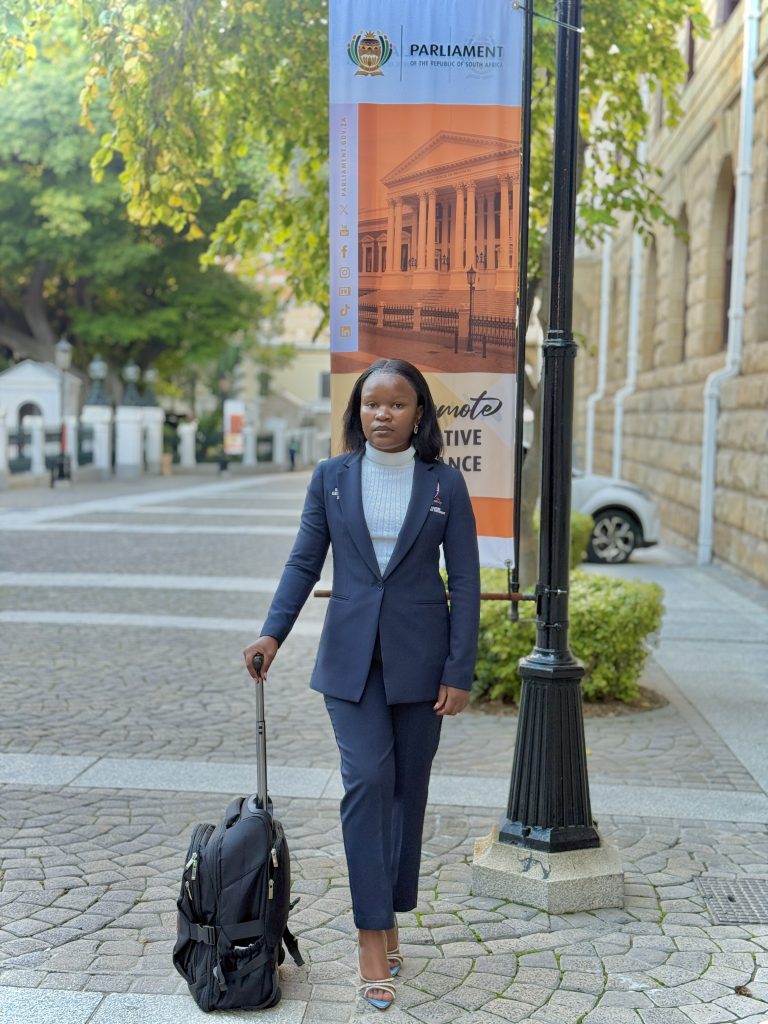 Following their appearance in Parliament, the SRC leaders say they are more determined than ever to advance a student-centred vision for change—one that prioritises access, equity, and opportunities beyond graduation.
On the matter of donor and external partner engagement, the SRC leaders underscored the importance of investment in both infrastructure and financial aid. “If donors were to support SMU, we would prioritise infrastructure development and direct financial support such as bursaries and sponsorships. Many students are on the verge of financial exclusion, and that remains a major barrier to academic success,” Ntsieni notes.
They also propose practical reforms to the NSFAS model, calling for a more flexible, responsive system: “Our institution, working with the Department of Higher Education, could explore the establishment of emergency relief funds or bridging allowances to support students awaiting NSFAS disbursements. NSFAS should also disburse funds according to university-specific calendars to avoid delays. Additionally, we recommend NSFAS help desks on campus with trained personnel to assist students more efficiently.”
SMU recognises the value of student voices in shaping both institutional transformation and national dialogue. As the university continues to evolve, the leadership demonstrated by its SRC reflects the calibre of graduates it seeks to cultivate: thoughtful, engaged, and committed to meaningful public impact.