by Lorato | Feb 19, 2025 | All News, Alumni, SMU Media, Student Media
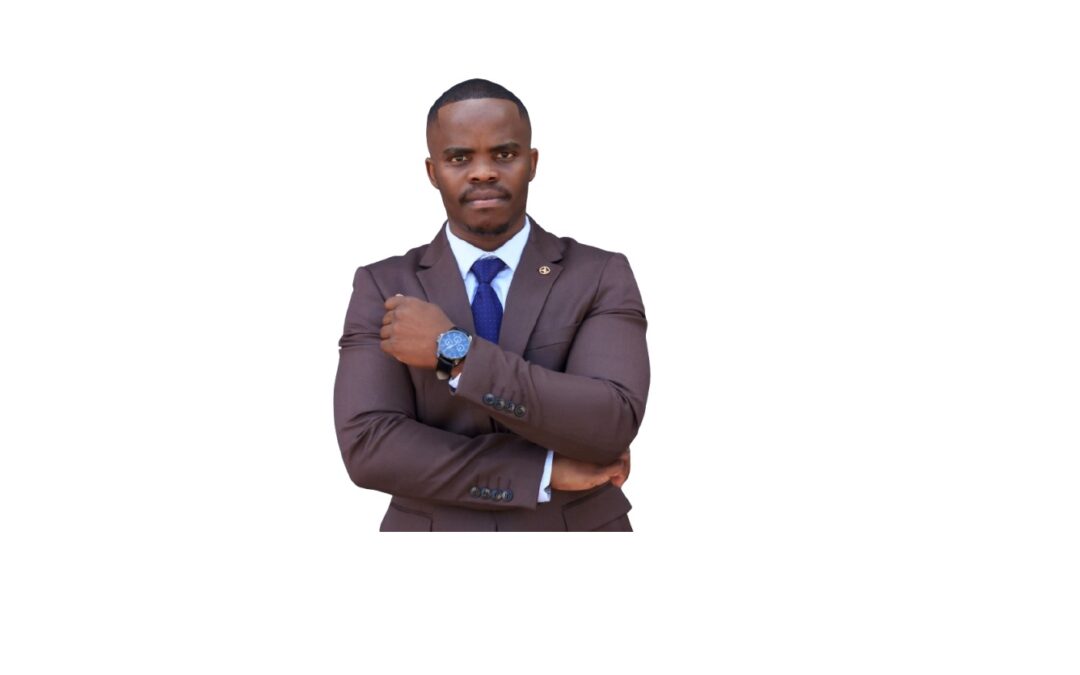
Sefako Makgatho Health Sciences University (SMU) has long been recognised as a hub for academic excellence and innovation. However, beyond its reputation for rigorous academic programmes and cutting-edge research, SMU plays a vital role in shaping the leaders of tomorrow. Through its commitment to leadership development, SMU equips students with the skills, knowledge, and experiences necessary to drive positive change in society. One notable example of SMU’s success in cultivating leaders is Jerry Thoka, whose remarkable journey is a testament to the university’s transformative power.
 From the rural village of Zebediela in Limpopo to the corridors of corporate governance and actuarial science, 28-year-old Thoka’s journey is one of resilience, faith, and a steadfast commitment to creating societal impact. Raised in a modest household by a truck driver father and a mother working on a poultry farm, he was no stranger to financial hardship. However, instead of being weighed down by his circumstances, he was driven by an unwavering desire to rise above them.
“Growing up in a financially constrained household was never easy, but it gave me the motivation to work harder,” he reflects. “I knew that education was my gateway to changing my circumstances.”
His exceptional aptitude for mathematics and science earned him top student honours at Makhutjisha Senior Secondary School, setting the foundation for his academic pursuits. Thoka began his higher education at Sefako Makgatho Health Sciences University (SMU), where he pursued a Bachelor of Science in Mathematical Sciences, specialising in Applied Mathematics and Computer Science. Recognising his passion for actuarial science, he later enrolled at the University of the Free State (UFS) to further his studies in the field. His time at UFS was marked by rigorous academic challenges, earning multiple actuarial exemptions and establishing his credibility within the Actuarial Society of South Africa (ASSA).
“Actuarial science is more than just numbers; it’s about using data to solve real-world problems and manage risks,” he explains. “This field has the power to influence financial security, social policies, and economic structures.”
Thoka’s expertise led him to Munich Reinsurance of Africa, where he currently works as an Actuarial Analyst. In his role, he engages in financial modelling and risk reserving, helping companies maintain stability in the face of uncertainty. His work underscores the critical role actuarial science plays in safeguarding financial security and mitigating economic risks.
Beyond his technical expertise, he has distinguished himself as a formidable leader in governance and policy advocacy. His leadership journey began at SMU, where he served as a mentor and later as Chairperson of the Residence Committee. His passion for student advocacy propelled him into the Student Representative Council (SRC), where he championed postgraduate funding and research opportunities.
In 2021, Thoka took on a more prominent leadership role as President General of the Institutional SRC at UFS, making history as an influential voice in university governance. As a member of the Senate and Institutional Forum, he actively contributed to shaping institutional policies, advocating for student welfare, and addressing systemic challenges in higher education.
“Leadership, to me, is about service and impact,” he asserts. “It’s about using one’s knowledge and position to create opportunities for others and drive meaningful change.” His governance work extended beyond university borders when he engaged with the South African Union of Students (SAUS) on policy development. In November 2024, he was elected as a Member of the UFS Council, where he continues to influence strategic decision-making.
“My election into the UFS Council disrupts the norm and introduces critical technical skills into governance. Having led two competitive institutions, I bring a unique student-centred perspective to the Council.” Thoka’s leadership was put to the test during the COVID-19 pandemic, where he played a pivotal role in reintegration policies, ensuring academic continuity while prioritising safety. He was also instrumental in the university’s adoption of a workers’ insourcing policy, benefiting both students and staff.
A devout Christian, he attributes much of his leadership philosophy to his faith. He believes in the principles of servant leadership, as exemplified in Matthew 23:11 (KJV): “But he that is greatest among you shall be your servant.” “Faith has kept me committed to genuine societal development, ensuring that my leadership remains rooted in integrity,” he states. “Greatness is attainable by anyone willing to serve.”
Thoka’s dedication to community upliftment extends beyond his personal achievements. He envisions a future where young professionals merge technical expertise with social responsibility. To this end, he co-founded the Chamber of Executive Youth (COEY), an initiative aimed at mentoring and equipping young professionals with critical skills while fostering leadership capabilities.
“Many skilled professionals limit their contributions to their fields, depriving society of their impact. COEY will recruit and persuade masters of scarce industries to engage in societal development and governance,” he explains. “We need to build a generation of young executives who are not only technically skilled but also socially conscious.”
His advocacy in higher education governance also centres on inclusivity and equity. As a member of the UFS Council, Jerry supports policies that ensure diverse student populations have access to quality education and resources. He emphasises the importance of scholarships, community partnerships, and outreach efforts to uplift underrepresented groups.
Thoka’s story is one of relentless ambition and purpose-driven leadership. “My aspiration is to leave behind a legacy of inspiration—a testament to the endless possibilities available to those who dare to dream. I want individuals to see, through my journey, that one’s background does not determine their ultimate success,” he concludes.
By Tumelo Moila

by Lorato | Feb 19, 2025 | All News, Alumni, SMU Media, Student Media
Sefako Makgatho Health Sciences University (SMU) continues to produce not only top-tier medical professionals but also changemakers who are redefining healthcare in South Africa. Among its most inspiring alumni are Dr Innocent and Dr Dikeledi Chauke, two medical pioneers whose journey from SMU classrooms to private practice exemplifies the university’s commitment to developing healthcare leaders.

More than just a love story, their success underscores SMU’s role in shaping resilient, highly skilled professionals equipped to lead in the demanding medical field. Their impact extends beyond the consulting room, as they actively contribute to South Africa’s healthcare system, proving that SMU graduates are at the forefront of addressing the country’s medical challenges.
SMU has long been recognised as an institution that nurtures both academic and professional success. For the Chaukes, it was at SMU that they built the foundation of their careers—gaining not only the theoretical knowledge required for medical excellence but also the practical skills, resilience, and leadership qualities necessary to thrive in South Africa’s evolving healthcare landscape.
Their journey began within the university’s corridors, balancing the pressures of medical school while developing a shared vision for the future. “Medicine was always more than just a degree—it was our calling. SMU equipped us with the tools we needed to serve communities in need and build a future where quality healthcare is accessible,” says Dr Innocent Chauke.
The couple’s academic journey was rigorous, marked by long hours of study and clinical rotations, but SMU provided them with an environment that fostered both personal and professional growth. “We were held to high standards, expected to think critically and to be ready for real-world medical challenges. Those experiences prepared us for everything that followed,” adds Dr Dikeledi Chauke.
Serving communities, changing lives
After graduating, the Chaukes embarked on careers that placed them at the heart of community healthcare. Their medical internships and community service years saw them stationed in rural hospitals, where they encountered first-hand the realities of South Africa’s healthcare system.
“Our time in community hospitals was eye-opening. It highlighted the disparities in healthcare access and deepened our commitment to patient-centred medicine,” Dr Dikeledi reflects. The lessons learned during this time influenced their decision to open a private practice in Mamelodi East, where they now provide essential medical services to underserved communities.
From general consultations and chronic disease management to minor surgical procedures, their practice embodies the principles instilled at SMU—a commitment to service, excellence in medical care, and an unwavering focus on patient well-being.
However, their journey has not been without challenges. A recent armed robbery at their practice was a stark reminder of the risks associated with healthcare entrepreneurship. “Despite setbacks, we remain committed to our vision. The need for accessible private healthcare is too great for us to back down,” says Innocent.
The Chaukes are not content with simply running a private practice—they are working towards a larger vision. Their goal is to expand their operations into a network of technologically advanced medical centres that will bring affordable, high-quality healthcare to more South Africans.
“Our long-term vision is to merge technology with medicine, ensuring that even those in underserved areas have access to the best possible care,” explains Dikeledi. This ambitious plan aligns with SMU’s ethos of producing medical professionals who not only succeed in their fields but also innovate and lead systemic change.
Their success is a testament that SMU alumni are not just entering the workforce—they are shaping industries, solving real-world problems, and driving progress in healthcare.
The Chaukes’ story is one of dedication, resilience, and visionary leadership. It is also highlights SMU’s unwavering commitment to developing professionals who are equipped to make a difference. As the university continues to cultivate top medical minds, it cements its status as a premier institution for health sciences education in Africa.
At SMU, students are not just taught—they are empowered to lead. And as the Chaukes continue to grow their impact in the medical field, they stand as a shining example of the calibre of professionals SMU produces—leaders who are not only skilled in medicine but driven by a purpose greater than themselves.
By Tumelo Moila

by Lorato | Feb 13, 2025 | All News, SMU Media, Student Media
Sefako Makgatho Health Sciences University (SMU) is at the forefront of a revolutionary shift in medical education, equipping future healthcare professionals with the skills needed to navigate an increasingly complex and evolving healthcare landscape. Through its Practice of Medicine (POME) curriculum, the university has embraced Inquiry-Based Learning and Teaching (IBLT)—a dynamic educational model that fosters critical thinking, clinical reasoning, and self-directed learning. This progressive approach sets SMU apart as a leader in medical pedagogy, ensuring that its graduates are not only competent but also innovative and ethically grounded professionals.
 Inquiry-based learning: Redefining medical training
SMU’s adoption of IBLT moves away from traditional passive learning models, instead empowering students to take an active role in their education. This method, rooted in the philosophies of John Dewey and Jerome Bruner, encourages problem-solving and analytical thinking from the very first year. Gerda Botha, a medical education expert, emphasises that the success of IBLT hinges on facilitators guiding students rather than merely transferring knowledge, thereby fostering a culture of independent inquiry.
This model progressively shifts students from structured, guided learning to open, self-directed research, ensuring they develop the ability to critically evaluate information and adapt to real-world clinical settings. By the time students reach their third year, they are formulating well-structured research proposals, securing ethics clearance, and producing work suitable for publication—a testament to the curriculum’s emphasis on research excellence. Many SMU students have already had their research published in renowned journals such as the South African Family Practice and the Undergraduate Research in Health Journal.
At SMU, Evidence-Based Medicine (EBM) is seamlessly woven into the curriculum, equipping students with the skills needed to critique and apply medical research in clinical settings. Dr Kamelia Nashed and Dr Christian Saidiya, who oversee the integration of research methodologies, highlight how students progress from learning basic epidemiology and study design in their first year to applying EBM principles to real-world patient scenarios by their final years.
 According to Nashed, by the second year, students gain a sophisticated understanding of research methodologies, hierarchy of evidence, and proposal development. By the time they transition into their third year, they are expected to independently critically appraise research articles and apply their findings to clinical decision-making—a skillset that will define them as competent and research-savvy medical professionals.
SMU understands that competent medical practice is as much about ethical integrity as it is about clinical skill. Led by Professor Adegoke Adefolalu and Dr Nokufa Mnguni, the university’s ethics curriculum runs as a “golden thread” throughout the entire medical programme. From the first year, students engage with theoretical principles of medical ethics, later applying them in real-world clinical settings such as HIV patient care and service-learning initiatives.
Mnguni highlights how early exposure to real patients and multidisciplinary healthcare teams enhances students’ ethical reasoning, communication skills, and empathy. By embedding ethics into every stage of training, SMU ensures that its graduates uphold the highest moral standards in their medical practice.
Interdisciplinary collaboration: Training holistic healthcare professionals
Recognising the need for collaborative healthcare delivery, SMU places a strong emphasis on Interprofessional Education and Collaborative Practice (IPECP). Dr Nomsa Mogosetsi and Dr Suzan Nnanile Nyalunga highlight how the first-year medical module introduces students to various medical disciplines, fostering an appreciation for the interconnected nature of healthcare professions.
Through interactive workshops, role-plays, and problem-solving exercises, students engage in discussions around diversity, inclusivity, and healthcare disparities. This immersive learning approach encourages future doctors to understand the social determinants of health and develop cultural competence—an essential skill in South Africa’s diverse healthcare landscape.
SMU ensures that clinical reasoning is at the core of medical training. Dr Angelina Ulzen, an expert in this domain, describes clinical reasoning as the logical thread that ties together all teaching modules, guiding students towards sound diagnosis and management decisions.
By the third year, students are actively contributing to clinical discussions and diagnostic problem-solving, applying their knowledge of anatomy, physiology, and pathology in real-world healthcare settings. This approach bridges the gap between theory and practice, ensuring that SMU graduates emerge as competent and confident healthcare practitioners.
SMU recognises the importance of One Health, a multidisciplinary approach that connects human, animal, and environmental health. Introduced in the second year and expanded in the third year, this concept encourages students to consider the global impact of climate change, zoonotic diseases, and food security.
Adefolalu notes that by the end of their third year, students present their understanding of One Health concepts in peer-assisted learning sessions, where they propose solutions to pressing public health challenges. These collaborative projects refine students’ problem-solving skills, equipping them with the competence to address future health crises.
SMU’s vision for the future of medical education
The integration of Inquiry-Based Learning, ethical training, and interdisciplinary collaboration into the POME curriculum at SMU is reshaping the landscape of medical education. By fostering critical thinking, research excellence, and hands-on clinical reasoning, the university is ensuring that its graduates are not only skilled practitioners but also leaders in the field of healthcare innovation.
While the effectiveness of IBLT has been widely studied in high-income countries, there is limited research on its impact in Low- and Middle-Income Countries (LMICs), particularly in Sub-Saharan Africa. Given its fully mapped undergraduate health professions curriculum, SMU is uniquely positioned to lead global research efforts on the application of IBLT in LMICs.
By embedding research, ethics, and interdisciplinary training at the core of its medical programme, SMU is not only preparing students to meet the healthcare challenges of today but is also equipping them to shape the future of medicine in Africa and beyond.
By Tumelo Moila
by Lorato | Feb 12, 2025 | All News, SMU Media, Student Media
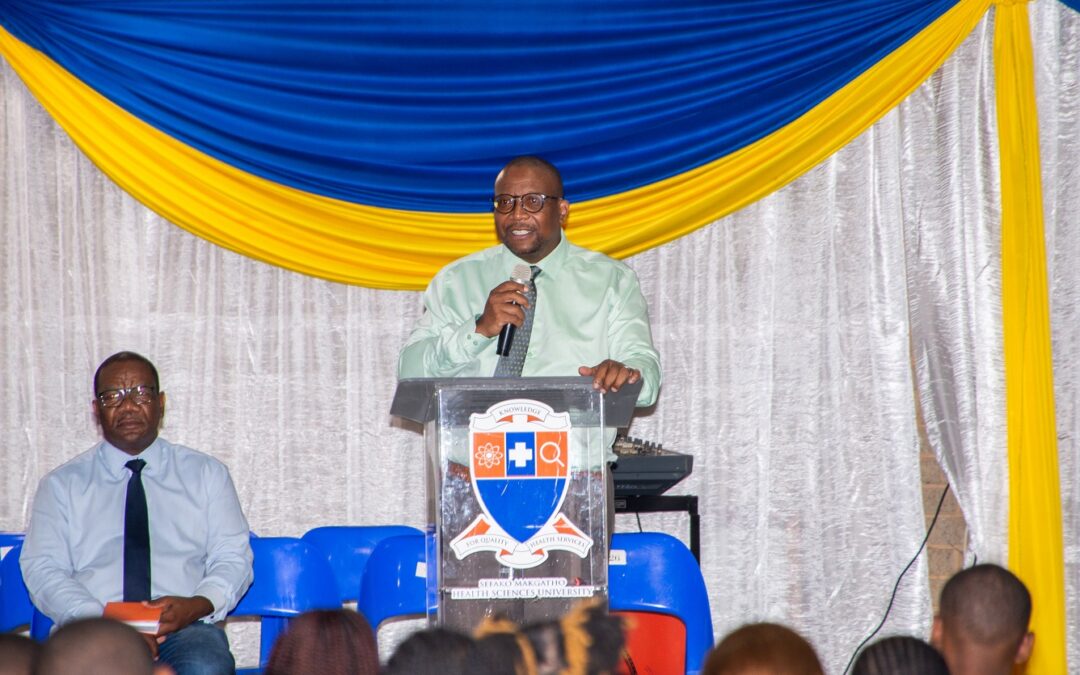
Sefako Makgatho Health Sciences University (SMU) reaffirmed its commitment to shaping future healthcare professionals by hosting a comprehensive orientation event for first-year students in the School of Medicine on 10 February 2025. The event provided an in-depth introduction to university life, academic expectations, and the wealth of support services available to ensure student success.
 As a leading institution in health sciences, SMU continues to prioritise student development, professional readiness, and academic excellence. The orientation event played a crucial role in equipping new students with the knowledge and resources they need to navigate their medical education journey with confidence.
Student support services: A strong foundation for success
Newcomers to the MBChB, Radiography (B.Rad), and Emergency Medical Care (EMC) programmes were introduced to a variety of academic and psychosocial support services aimed at enhancing their student experience. The Centre for University Teaching and Learning (CUTL) was highlighted as a key support structure, offering mentorship, academic advising, and e-learning assistance to ensure students receive the necessary guidance throughout their studies. Recognising the importance of mental health, SMU has also appointed a clinical psychologist to provide students with professional mental wellness support, while Campus Health Services ensures their general healthcare needs are met.
To assist with academic concerns, students were encouraged to visit the Student Centre in the Clinical Pathology Building and consult their academic facilitators, who are available to provide guidance on coursework and university expectations. Senior students also shared insights on adjusting to university life, offering advice on navigating peer pressure, managing study schedules, and handling the academic rigour of a health sciences degree.
Expert advice and motivation for new students
MBChB Academic Project Leader, Botha Gerder, emphasised the importance of active student engagement and urged students to stay informed about key academic dates, institutional regulations, and available support services. 2025 Guardian Lecturer Mabatho Thulo further encouraged students to remain focused on their academic goals while maintaining a balanced lifestyle, reinforcing the importance of remembering their purpose in joining SMU’s School of Medicine.
 Head of Faculty, Professor Honey Mabuza, delivered an inspiring keynote address, offering four essential tips for student success. He advised students to collaborate with their peers to enhance learning experiences and build strong support networks. He encouraged them to embrace vulnerability, seek assistance when faced with challenges, and attach themselves to senior student mentors who can provide valuable guidance. Lastly, he stressed the importance of addressing difficulties head-on, cautioning against withdrawing or avoiding problems.
Mabuza also outlined SMU’s commitment to ensuring students receive career placement support that aligns with the Health Professions Council of South Africa (HPCSA) regulations. Through structured training platforms, students are exposed to practical learning environments that equip them with the necessary skills and experience to transition into professional practice.
The orientation also provided an opportunity for students in the Emergency Medical Care (EMC) programme to gain a deeper understanding of the practical and physical demands of their chosen field. Programme Coordinator, Wisdom Ndhlovu, explained that the EMC programme is built on three foundational aspects: theoretical knowledge, practical application, and simulation-based training. He highlighted the importance of physical fitness, particularly swimming skills, which are required for certain emergency response situations and can pose a challenge for some students.
Adding to the discussion on student support services, Dr Joshua Maliavusa from CUTL introduced a suite of academic support initiatives designed to assist vulnerable students. He explained that mentorship programmes, student tutorship, e-learning support, and student tracking and monitoring systems are in place to help students stay on track with their studies. Additionally, the academic advising programme ensures that students receive timely guidance to navigate their coursework effectively. Maliavusa reassured students that these support structures exist to help them overcome challenges and excel academically.
A bright future at SMU
 Closing the event, Matimu Chauke, Chairperson of the School of Medicine, encouraged students to believe in themselves, take their academic journey step by step, and embrace the challenges of medical school. He reminded them that medicine is a demanding yet rewarding career and that success is possible with the right support system, curiosity, and determination.
The SMU School of Medicine Orientation was a resounding success, equipping first-year students with valuable guidance, motivation, and institutional support. With SMU’s exceptional academic programmes, expert faculty, and strong student support services, SMU students are now well-prepared to embark on a transformative educational journey that will position them as future leaders in healthcare.
By Khanyi Nkosi and Musa Msibi

by Lorato | Feb 3, 2025 | All News, SMU Media, Student Media
Sefako Makgatho Health Sciences University (SMU) continues to nurture future leaders in healthcare, and Motheo Mmola is a shining example of this legacy. Raised in Diepsloot, she grew up in an environment that championed education and perseverance—values that shaped her path into the field of oral health. Determined to make a tangible impact in underserved communities, she set her sights on a career that would bridge the gap in oral health awareness and accessibility.
 Enrolling at SMU proved to be a transformative experience. The university provided her with a solid foundation in both the theoretical and practical aspects of oral healthcare, offering hands-on experience through community outreach programmes. Surrounded by experienced lecturers and a supportive academic environment, Mmola thrived—turning challenges into stepping stones toward excellence.
“The university provided a solid foundation in both theoretical and practical aspects of oral health care,” Mmola explains. Throughout her studies, she worked alongside experienced lecturers and gained invaluable hands-on experience through community outreach programmes. Though the workload was demanding, her dedication to the field kept her motivated.
Her passion for oral health and community service was recognised when she was awarded Best Student in Dental Public Health. “This award is not just a personal achievement but a call to continue advocating for better oral health awareness in South Africa,” she says. The recognition reaffirmed her commitment to her studies and the field of public health dentistry.
Receiving the Van Schaik’s Dental Award was another milestone in Mmola’s academic journey. “This award symbolises my perseverance and commitment to excellence in oral health,” she notes. Professionally, it opens new doors and strengthens her credibility as a dedicated oral health professional. It fuels her ambition to continue excelling and making a meaningful contribution to the industry.
Like many students, Mmola faced intense academic pressure, procrastination, and moments of self-doubt. “The rigorous nature of the course required resilience and commitment,” she admits. She successfully balanced theoretical learning with practical application by mastering time management and focusing on her long-term goals. Her ability to adapt and remain disciplined played a significant role in her success.
 Winning these awards has reinforced Mmola’s passion for public health dentistry. She now envisions a future where she can contribute to oral health advocacy, policy improvements, and increased accessibility to dental care. “I want to be at the forefront of improving oral health standards in South Africa,” she says. Whether in private practice, community initiatives, or further studies, she aims to be a key player in shaping the future of oral health care.
To those considering a career in oral health or other health fields, Mmola offers invaluable advice: “Stay committed, work hard, and embrace continuous learning. Oral health is a growing field with vast opportunities, and perseverance is key.” She encourages students to seek mentorship, participate in community outreach programmes, and never underestimate the significance of their studies.
Mmola’s ultimate goal is to use her knowledge and achievements to inspire others and contribute to the broader field of dental health in South Africa. She plans to engage in initiatives that promote oral health awareness, particularly in rural and underserved communities. “Through education, outreach programmes, and potential research, I hope to drive positive change and make quality dental care more accessible,” she says.
As she steps into the next phase of her career, Mmola remains committed to advancing oral health advocacy and policy reforms in South Africa. Her accolades, including the Best Student in Dental Public Health award and the Van Schaik’s Dental Award, are not just personal milestones but symbols of her unwavering dedication to the field.
With SMU as the launchpad for her success, Mmola envisions a future where quality dental care is accessible to all, particularly in underserved communities. Whether through private practice, community initiatives, or further studies, she is determined to be a driving force in shaping the future of oral healthcare. “With passion, perseverance, and a commitment to service, I hope to inspire others and create lasting change,” she affirms.
By Dimakatso Modise