by Lorato | Apr 1, 2025 | All News, SMU Media, Student Media
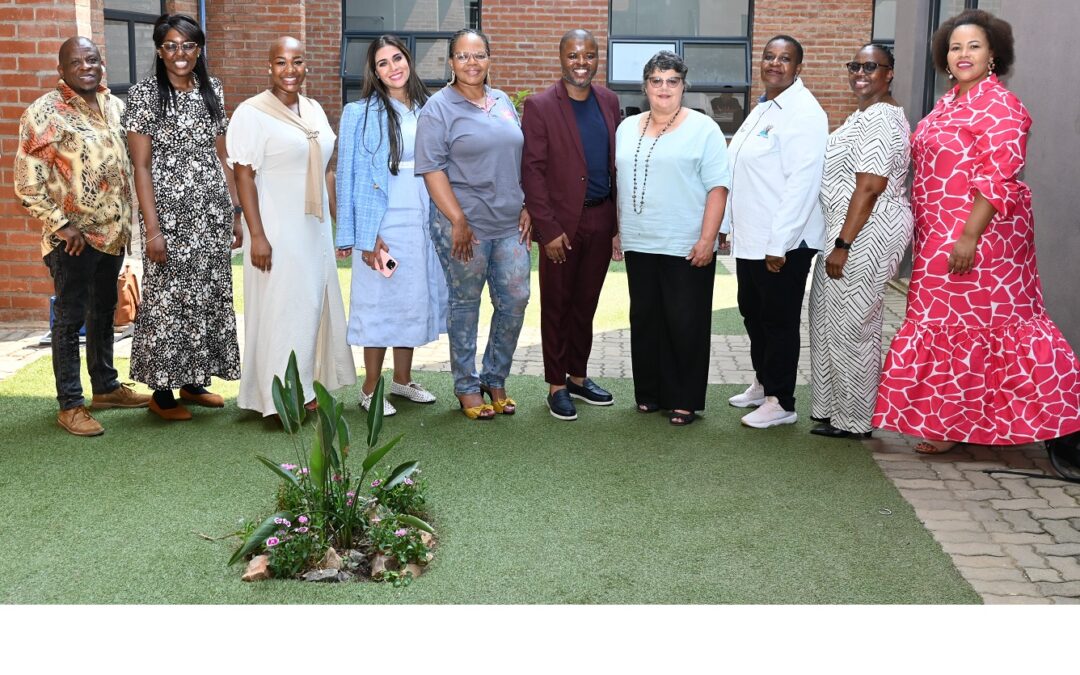
The Higher Education Disability Services Association (HEDSA) recently hosted its Gauteng Region Roadshow at Sefako Makgatho Health Sciences University (SMU). HEDSA, a recognised advocacy and rights-based non-profit organisation, represents disability services in Higher Education Institutions (HEIs) across South Africa. Endorsed by the Department of Higher Education and Training (DHET) and recognised as a community of practice by Universities South Africa (USAf), HEDSA strives to ensure inclusive and equal learning opportunities for students with disabilities.
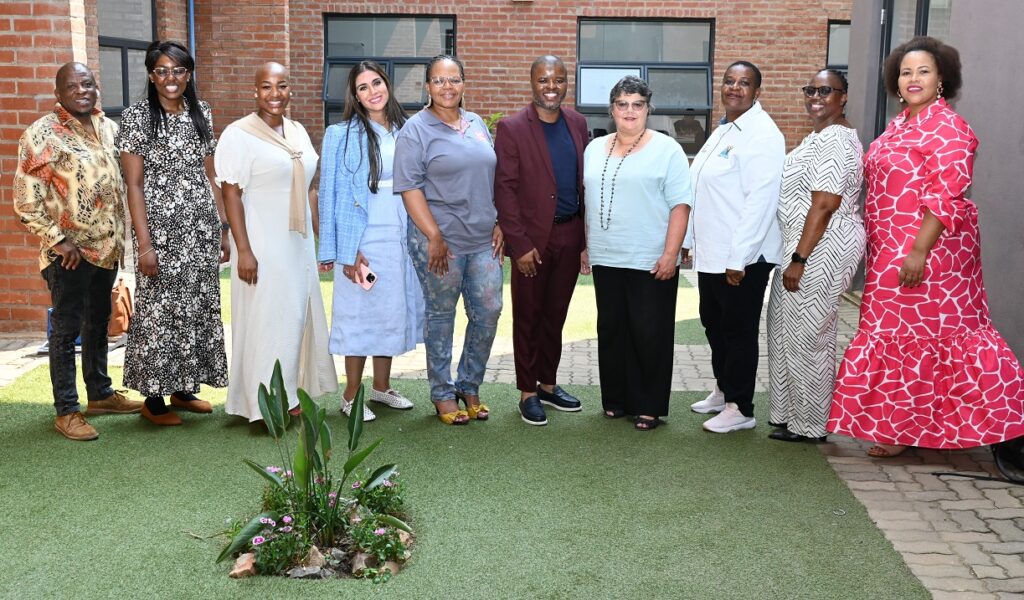 The programme was directed by Ivy Morulane, Chairperson of the Higher and Further Education Disability Services Association (HEDSA), Gauteng Region and commenced with a warm welcome from Themba Khumalo, SMU’s Deputy Director of Student Affairs. Khumalo expressed the institution’s commitment to inclusivity and support for students with disabilities, aligning with SMU’s core values of social accountability, integrity, and excellence.
Dr Nosiphiwo Delubom, HEDSA Chairperson from Nelson Mandela University, outlined the purpose of the roadshow. She emphasised that the executive team of HEDSA aims to gain first-hand experience of the challenges faced by students with disabilities. “Students with disabilities have the same right to learn as anyone else. It is our responsibility to ensure that institutions create enabling environments where these students can thrive,” she said.
Dr Delubom reiterated HEDSA’s readiness to support HEIs in establishing and strengthening disability offices to address challenges effectively. The roadshow provided a platform for universities within the association to share their experiences, best practices, and common obstacles. The most prevalent concerns raised were budget constraints and limited capacity, which hindered efforts to provide adequate support services.
HEDSA operates closely with USAf’s Transformation Strategy Group and provides strategic guidance on disability matters. “HEDSA is more than just an advocacy body; we serve as thought leaders and provide input on national legislation and policies to ensure inclusivity,” Delubom noted.
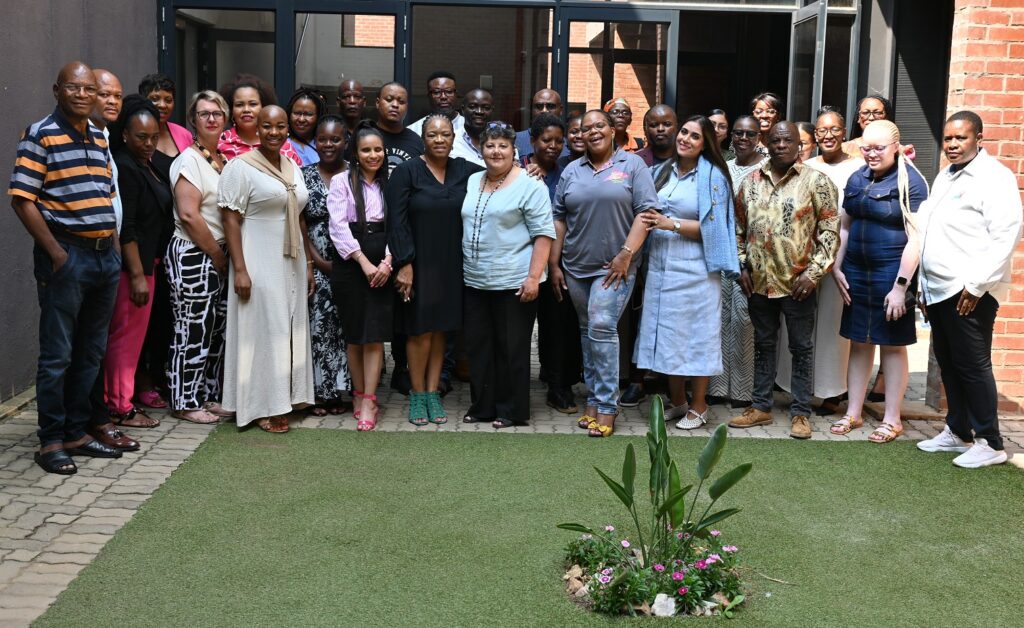 A key highlight of the event was the discussion on how HEIs can collaborate to improve disability services. Many institutions shared innovative solutions, such as partnerships with external stakeholders and the implementation of assistive technologies. SMU reaffirmed its commitment to fostering a supportive learning environment, with Khumalo stating: “Our goal at SMU is to create an institution that is truly inclusive, where every student, regardless of ability, has the resources and support to succeed.”
Additionally, colleagues were informed about the purpose and structure of disability units, including their placement within institutions, organisational charts, and available services. The National Chairperson emphasised that these units play a vital role in facilitating the integration of students with disabilities, providing support, ensuring the implementation of reasonable accommodations, and advising institutions on universal design principles. The positioning of these units varies across institutions; some fall under the Transformation Office, Student Affairs, or Student Counselling, while in colleges, they are positioned under Student Support Services.
Another crucial aspect discussed was the role of disability units in advocating for reasonable accommodations to ensure students with disabilities receive the necessary support in their academic journey. The integration of universal design in institutional policies and infrastructure was emphasised as a key factor in creating an inclusive learning environment. Delegates were also reminded that disability services must extend beyond academics to include access to social, recreational, and professional development opportunities.
The event underscored the importance of ensuring HEIs actively commit to disability inclusion. SMU and other institutions were urged to continuously assess their policies and support mechanisms to align with best practices in student support and universal design. HEDSA reinforced its role in providing guidance, expertise, and advocacy for these improvements.
The roadshow, hosted at SMU’s Pharmacy Department, concluded with a call for stronger partnerships and continued dialogue among HEIs to address challenges faced by students with disabilities. Through platforms like these, HEDSA continues to champion the rights of students with disabilities, ensuring that higher education in South Africa becomes truly accessible to all.
SMU’s commitment to excellence, caring, and social responsiveness was evident throughout the event. The university remains dedicated to working alongside organisations like HEDSA to break barriers and promote inclusivity, ensuring that all students receive equal opportunities to succeed in their academic pursuits.
By Dimakatso Modise

by Lorato | Feb 21, 2023 | All News, SMU Media, Student Media
The Motsepe Foundation invited 26 SRC members of public universities in SA to one of their initiatives called, Universities in Dialogue on 16 February 2023. The purpose of the session was to engage SRCs on how they can work together to find solutions to student challenges.
The conversation centred around four key questions which formed the basis of the engagements. These questions were:
- What are the challenges facing the students?
- What are the challenges faced by SRCs?
- How could private partnerships better support the Higher Education sector?
- How do you see the various stakeholders collaborating for the betterment of the higher education sector?
Some of the challenges raised by the students in attendance included:
- Lack of funding for Postgraduate students
- Student accommodation
- Food security
- Youth unemployment
- Student allowances not realistic to the material conditions.
- Lack of support for disabled students, and;
- Lack of sanitary towels.
The following are some of the proposed solutions:
- Centralisation of funding from various funders.
- Policy development to regulate funding opportunities.
- The creation of a feeding scheme in higher education for students so that the allowances can be directed to some of the urgent students’ needs.
SMU Director of Student Affairs, Mr. Tulani Nkuntse indicated that this was such an important day for student leaders as the Foundation donated 30 million Rands as a contribution to helping SRCs to fight challenges faced by students.
In her speech, Dr Motsepe urged the student leaders present, to take the money and approach other possible donors to challenge them to either match or exceed what the Foundation had donated.
“For SMU, this means so much as we have serious problems with outstanding student debt that prohibits them to continue their studies. We have a cohort of our students that go hungry on a daily basis because they have no means to support themselves; there are realities of the ECP students who are no longer funded by NSFAS and the list goes on, said Nkuntse”.
Nkuntse further indicated that the generous and kind contribution by the Motsepe Foundation will be channelled towards assisting SMU students in the best way possible. “We would like to call upon other people to join hands with us and assist us to support our students through these kinds of donations. Our SRC has constantly reiterated their commitment to raising funds to assist needy students and we fully support them as such contribution will assist with the ongoing efforts by the university to raise funds and support its student population”, he concluded.
The gratitude expressed by students for these donations was heart-warming and illustrated a deep commitment and passion young people have towards provision of solutions to the problems in the higher education sector.
SMU is grateful to the Motsepe Foundation and look forward to many more donors coming on board to help us fight challenges faced by the students.
SMU SRC receives 1.3 million from the Motsepe Foundation
File size: 897.67 KB
Created: 21-02-2023
Updated: 21-02-2023
Hits: 310

by Lorato | Oct 11, 2022 | All News, SMU Media, Student Media
Director General of the Department of Higher Education and Training Dr Nkosinathi Sishi paid a courtesy visit to the Sefako Makgatho Health Sciences University on 04 October 2022 at the invitation of the Vice-Chancellor Prof Peter Mbati. The Vice-Chancellor used the occasion to provide a general update on SMU and this gave the DG a sense of the current status of the University, existing challenges and its future plans as espoused in the 2021-2025 Strategic Plan which is being imple-mented. Accompanying the D was the DDG University Education Dr. Marcia Socikwa.
The Vice-Chancellor took the DG on a tour of the Campus visiting the SMU MECRU unit, the proposed African Bioimaging Centre, the premium 2,000 beds student accommodation facility and the upgraded Pharmacy Building.
SMU through the MECRU unit is currently conducting a Vaccination trial study sponsored by Sinovac/Numolux Group. The primary objective of the study is to evaluate the efficacy of two doses of CoronaVac® against confirmed symptomatic COVID-19 cases in children and adolescents aged 6 months to 17 years. The pilot study was launched in September 2021 and has successfully enrolled a total number of 370 participants as per the given target to the site. Other studies currently underway at MECRU include the following:
- CoVPN 3008 COVID 19 Vaccine (Mordena)
- VPM 1002 (Tuberculosis vaccine)
- SHERPA – SISONKE (J&J Vaccine), for booster shot of HCW with Mordena vaccine
Moreover, the proposed African Centre for Bioimaging will house the state-of-the-art High Resolution Transmission Electron Microscope (HRTEM) that has been purchased through joint funding from the Department of Science & Innovation, National Research Foundation, Department of Higher Education and Training and SMU. The HRTEM has capabilities for elemental micro-analysis, tomography and cryo-imaging which will allow the university to obtain high resolution images to amongst others, support research in the health sciences such as in nanomedicine and nanotoxicology.
Dr. Sishi expressed his appreciation on the work done so far by SMU and said the path the University has taken will lead to the realization of the vision driven by Prof Mbati. He was particularly impressed with efforts to improve research and development as well as progress made around the academic project in general. “We now have a broader picture of where you want to go as a University. My advice is that if you wish to move faster, find the right partners to work with, including international partners. I also want to give you our sincere affirmation that the department will support you”, said the DG.
Prof Mbati explained that SMU is on a new trajectory in line with its 2021-2025 strategic plan and that the academic project and the financial sustainability of the University are key priorities. He further elucidated that plans are underway to implement the approved new Business Model which will among other things allow for the commercialization of the SMU land which will in turn enable SMU to bring the much needed third stream income. The VC assured the DG that the University will account fully for every cent received.
Newsflash - DHET Director General Dr Nkosinathi Sishi impressed by outstanding progress made at Sefako Makgatho Health Sciences University during his visit
File size: 3.88 MB
Created: 11-10-2022
Updated: 11-10-2022
Hits: 336
by Lorato | Oct 5, 2022 | Media Statements, statements
Media Statement
Date: 05 October 2022
For Immediate Release
Director General of the Department of Higher Education and Training Dr Nkosinathi Sishi paid a courtesy visit to the Sefako Makgatho Health Sciences University on 04 October 2022 at the invitation of the Vice-Chancellor Prof Peter Mbati. The Vice-Chancellor used the occasion to provide a general update on SMU and this gave the DG a sense of the current status of the University, existing challenges and its future plans as espoused in the 2021- 2025 Strategic Plan which is being implemented. Accompanying the DG was the DDG University Education Dr. Marcia Socikwa.
The Vice-Chancellor took the DG on a tour of the Campus visiting the SMU MECRU unit, the proposed African Bioimaging Centre, the premium 2,000 beds student accommodation facility and the upgraded
Pharmacy Building.
SMU through the MECRU unit is currently conducting a Vaccination trial study sponsored by Sinovac/Numolux Group. The primary objective of the study is to evaluate the efficacy of two doses of CoronaVac® against confirmed symptomatic COVID-19 cases in children and adolescents aged 6 months to 17 years. The pilot study was launched in September 2021 and has successfully enrolled a total number of 370 participants as per the given target to the site. Other studies currently underway at MECRU include the following:
- CoVPN 3008 COVID 19 Vaccine (Mordena)
- VPM 1002 (Tuberculosis vaccine)
- SHERPA – SISONKE (J&J Vaccine), for booster shot of HCW with Mordena vaccine.
Moreover, the proposed African Centre for Bioimaging will house the state-of-the-art High Resolution Transmission Electron Microscope (HRTEM) that has been purchased through joint funding from the Department of Science & Innovation, National Research Foundation,
Department of Higher Education and Training and SMU. The HRTEM has capabilities for elemental microanalysis, tomography and cryo-imaging which will allow the university to obtain high resolution images to amongst others, support research in the health sciences such as in nanomedicine and nanotoxicology.
Dr. Sishi expressed his appreciation on the work done so far by SMU and said the path the University has taken will lead to the realization of the vision driven by Prof Mbati. He was particularly impressed with efforts to improve research and development as well as progress made around the academic project in general. “We now have a broader picture of where you want to go as a University. My advice is that if you wish to move faster, find the right partners to work with, including international partners. I also want to give you our sincere affirmation that the department will support you”, said the DG.
Prof Mbati explained that SMU is on a new trajectory in line with its 2021-2025 strategic plan and that the academic project and the financial sustainability of the University are key priorities. He further elucidated that plans are underway to implement the approved new Business Model which will among other things allow for the commercialization of the SMU land which will in turn enable SMU to bring the much needed third stream income. The VC assured the DG that the University will account fully for every cent received.
Issued by Communication and Marketing
For more details, please contact Phaladi Seakgwe, Acting Director: Communication and Marketing at
phaladi.seakgwe@smu.ac.za
Cell: 0790751673
Media statement DHET DG visit to SMU fnl
File size: 467.28 KB
Created: 05-10-2022
Updated: 05-10-2022
Hits: 324
by Lorato | Jun 7, 2022 | All News, SMU Media
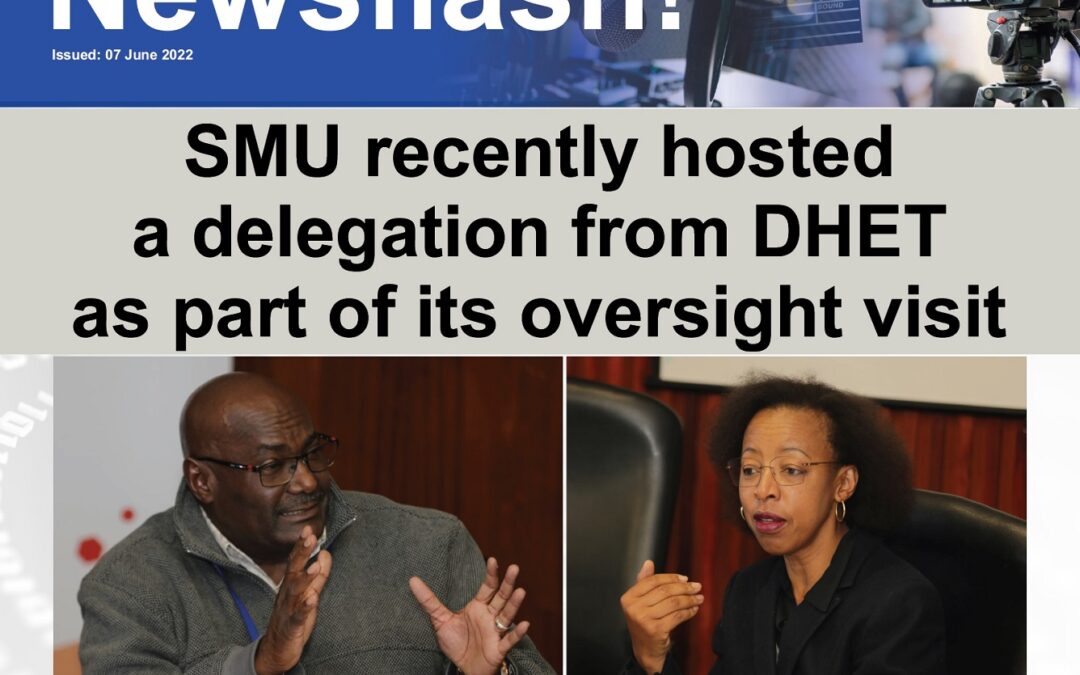
Vice-Chancellor Prof Peter Mbati recently hosted a delegation from the department of higher education and training who were on an oversight visit. Led by the Deputy Director General for University Education Dr Marcia Socikwa, the delegation came to engage with the university and see progress on projects funded by the department through the Sibusiso Bengu Development Programme.
In his welcoming address to the delegation in the presence of SMU management and officials, the Vice-Chancellor said the support SMU gets from the department in particular the Sibusiso Bengu grant has assisted a lot in a range of areas. He further told the delegation that SMU has completed a restructuring programme of Senior and Executive team to ensure alignment with the new strategic plan and to allow the University to deliver on its core mandate to increase efficiency in the system.
“We also very recently had a meeting of the senior management committee with a focus on the centrality of the academic project because many times one of the challenges we face in higher education and for various reasons is that we start to drift away from why we are created as higher education institutions and our focus and energy gets invested elsewhere”, said Prof Mbati.
He further mentioned that the University went through a culture survey and many processes to reconfirm from many stakeholders of the university from Council, labour, management, staff and students about the values SMU must embrace as a university to refocus and rededicate itself to what must be done.
“There is still a lot that has to be done at SMU and the funding we receive through the Sibusiso Bengu programme and the support from the department will help us deliver projects on time”, said the VC.
“We have a new business model to allow us to be financially sustainable over a period of time. We currently also get a special dispensation grant from the department to allow us to meet our obligations as a university. The new business model sets out projects that we need to embark on including increasing our student numbers, developing new programmes, expanding on the third stream income”, continued Prof Mbati.
The DDG Dr Socikwa in response said, “I must say that when one contrasts the universities this side with the urban centred ones, you are saddened, you immediately realize the need for extensive investment”. She also said the department wants to see excellence in our institutions and remember them for the legacies created. “We really need to reimagine how we want to be and I am happy that SMU has started with a new business model, we also need to acknowledge the vast sums of money directed at SMU. The university was allocated R144 million and managed to spent 120 million. Funding was made to support 11 projects at SMU and the department would like to look at and speak about them”, said the DDG.
She further mentioned that the delegation came to appreciate the challenges but also the opportunities and to engage vigorously as required so that by the time they left, they should be in a position to confident about the objectives of these investments and are able to support the University’s initiatives with the requisite enthusiasm and energy.
“We also need to understand what is required to turn around the fate of SMU. Since the inception of the development programme SMU received over 150 million and as a department we would like to see progress on the approved projects and are uncompromising on that. It is no secret that SMU is among the universities that have been able to deliver on their projects”, said Dr Socikwa. The department praised SMU for submitting its annual report way before time and called on other institutions to emulate SMU.
The Director for Development Grants at SMU Mr Theo Bhengu took the delegation through a presentation that detailed the projects that have been completed, those underway and proposed future projects. He reported that in the first cycle (2016/17-2020/21), the HDI-DG significantly contributed to achieving SMU strategic goals as a new institution after the demerger from the University of Limpopo (UL), through the following projects:
- Re-engineering of business processes
- Review of governance systems
- Document management system
- High Resolution Transmission Electron Microscope (HRTEM)
- Occupational Health and Safety (OHS) Audit
- Bulk Contribution to the City of Tshwane
- Establishment or increasing capacity of strategic departments, i.e. Institutional Planning, Development (Advancement & Internationalisation), Grants Management and Infrastructure Planning and Development
He further said that SMU has made proposals for funding under the Sibusiso Bengu programme on 18 new projects that are in line with the strategic objectives of the institution across all areas.
After robust discussions, Mr Alfred Makgatho from DHET gave a brief report on the proposed projects and also mentioned that there is support for the proposed projects pending approval from the Minister. However, he advised that there were several other projects that SMU will have to revisit as they could not be supported in their current form. The department placed emphasis on the future sustainability of the institution so that the University is able to fund its other programmes.
The CFO Mr Eminos Manyawi expressed the University’s appreciation to DHET for the continuous support and committed to furnish the department with all necessary documents and reports. He further pleaded for further funding to finance planned projects. During the tour of campus, the delegation was taken through the premium 2000 beds facility which is at an advanced stage towards completion, the bulk water project currently under way, the electron microscope unit and other projects.
The visitors were later taken on a campus tour to see amongst others, the premium 2000 beds student accommodation facility financed by the department, the facility for relocation of the Electron Microscope Unit that is being renovated. Once completed, the facility will ensure stability of the new High Resolution Transmission Electron Microscope(HRTEM). They were also shown the bulk water project currently underway around campus.
The purpose of the Sibusiso Bhengu Development Programme is to decisively redress the inequalities that have impacted the development and sustainability of the HDIs and to contribute to their further development as strong universities, in a diversified system, which are socially embedded and responsive, are highly regarded and valued, including by the communities from which their students are drawn, and which produce both graduates and new knowledge that can make a contribution to socio-economic development in local, national, regional and international contexts.
Newsflash DHET Visit
File size: 3.91 MB
Created: 07-06-2022
Updated: 07-06-2022
Hits: 275