
by Lorato | Sep 23, 2025 | All News, SMU Media, Student Media
Dr Ntsieni Teresia Dzhugudzha is not only a lecturer and researcher—she is a barrier breaker. Her academic journey tells a story of resilience, purpose, and groundbreaking research in occupational therapy that is already shaping the future of inclusive education and employment in South Africa.
 In 2025, she completed her PhD at the University of Pretoria, producing a conceptual framework designed to help learners with mild intellectual disability (MID) transition from school into meaningful work. The framework, created for use by occupational therapists, teachers, and employers, promotes strength-based, individualised approaches to employability and advocates for equitable opportunities in the labour market.
Her doctoral journey, which began in 2019, was not without challenges. She faced delayed site access, employers reluctant to participate, and personal health setbacks that cost her nearly a year. Yet she persevered with determination. “I recognise that success for women in academia often comes with considerable obstacles,” she reflects. “But I learned patience, resilience, and problem-solving along the way.”
Her decision to pursue this research stemmed from concern about the limited employment opportunities available to learners with intellectual disabilities. In South Africa, many young people leave Learners with Special Educational Needs (LSEN) schools between the ages of 18 and 21, only to face unemployment at home. Determined to change this reality, she set out to design practical, inclusive solutions that could transform how society prepares these learners for the workplace.
Her academic promise showed early. Born in the rural village of Mashamba Mukondeni in Venda, she excelled in mathematics at Tshikhuthula Secondary School. After matriculating, she entered MEDUNSA (now SMU) with hopes of studying Medicine through the BSc (Special) programme. When she was not admitted into Medicine, she chose Occupational Therapy, a path that revealed itself as her true calling. Between 2003 and 2006, she completed her Bachelor of Occupational Therapy with merit awards and soon after entered clinical practice. For nearly a decade, she worked across health facilities, earning recognition such as the Best Allied Health Professional Award at Odi District Hospital in 2014.
Alongside her practice, she pursued further studies and, in 2015, completed a master’s in public health at SMU under the mentorship of Professor Simphiwe Madiba. This experience cemented her passion for research. Her transition into academia began naturally while working at Weskoppies Hospital, where she supervised occupational therapy students from both SMU and the University of Pretoria. Discovering her love for teaching, she joined SMU’s Department of Occupational Therapy in 2017 as a Lecturer. Since then, she has taught across undergraduate levels, supervised postgraduate research, contributed to committees on community engagement and research, and served as an external examiner for universities across the country.
Balancing her academic and personal life has been one of her proudest achievements. A wife and mother of three daughters, she completed her master’s degree while pregnant with twins and working full-time. Her ability to balance teaching, research, and family responsibilities speaks to her determination. In 2025, she published two journal articles from her PhD and presented her findings at national conferences, extending her influence into scholarly and policy spaces.
She credits SMU for providing crucial support during her doctoral journey, including funding, study leave, writing retreats, and research grants. “The institution created the environment I needed to thrive,” she says with gratitude. Looking ahead, she envisions her PhD as the foundation for greater societal impact. She aspires to influence policy, mentor future occupational therapists, and advocate tirelessly for inclusive employment practices.
Her message to aspiring SMU students is inspiring: “A PhD is achievable, but it requires discipline, patience, and resilience. Write consistently, even a paragraph a day. The journey is about growth and impact, not just the qualification.”
For Dzhugudzha, completing her PhD represents more than the culmination of years of effort. It marks the beginning of a broader mission: breaking barriers, transforming lives, and paving the way for inclusive opportunities in education and employment.
By Dimakatso Modise

by Lorato | Aug 27, 2025 | All News, SMU Media, Student Media
In the quiet streets of Tzaneen, a small town in Limpopo, a young boy once watched patients wait for hours at clinics with too few doctors. It was here, amidst the struggles of rural healthcare, that Raymond Mabulana discovered his calling. Today, as a fifth-year medical student at Sefako Makgatho Health Sciences University (SMU), Mabulana is transforming that early inspiration into a mission: to improve healthcare access and outcomes for underserved communities.
 Growing up in an area with limited medical services, Mabulana witnessed first-hand the consequences of inadequate healthcare. These experiences shaped both his character and career ambitions, instilling resilience, compassion and a deep sense of responsibility. “From a young age, I knew I wanted to become a doctor—not just to treat illness, but to improve access to quality care for communities like mine,” he recalls.
His journey from public schools in resource-limited settings to SMU is a story of determination and perseverance. SMU’s focus on community-oriented healthcare has provided the ideal environment to nurture his vision. Here, Mabulana has combined academic excellence with practical experience, preparing to make a meaningful difference in society.
Mabulana’s commitment to medicine extends well beyond the classroom. He actively participated in data collection at Dr George Mukhari Academic Hospital for the Femur Study, a global cohort study on femur fracture management. In addition, he co-founded the Diagnostic Society, an internal medicine society aimed at promoting early clinical exposure and fostering interest in internal medicine. As Research Coordinator, he facilitates student involvement in faculty-led research projects, helping his peers develop academic curiosity and the skills required for modern healthcare.
The support he has received has also been instrumental. Receiving a bursary from Gift of the Givers, in partnership with Bonitas, has been both humbling and empowering. “Their support is not just financial—it is a vote of confidence in my potential and the work I aspire to do. It reinforces my determination to complete my studies and become a compassionate, capable medical professional,” he explains. This opportunity has strengthened his commitment to serve others and ensured that the impact of this generosity extends far beyond himself.
Mabulana’s ambitions extend well beyond personal achievement; he is determined to return to rural and underserved communities as a source of inspiration and care. “I want young people from similar backgrounds to know that their dreams are valid and achievable. Through surgery, research and community outreach, I hope to contribute to building a more equitable healthcare system and be part of a generation of doctors who do not merely treat illness but transform lives,” he says.
His journey is a testament to the power of passion, perseverance and community-focused education. It shows how an individual, supported by institutions and organisations that believe in talent, can aspire to make a lasting impact. From the small town of Tzaneen to the halls of SMU, Mabulana is proof that dedication, vision and heart can transform not just one life, but the lives of countless others in communities that need it most.
As he progresses towards his goal of becoming a doctor, researcher and advocate for equitable healthcare, Mabulana exemplifies the potential of young South Africans to drive meaningful change. His story inspires not only his peers at SMU but also a wider audience, demonstrating that access to education, coupled with determination, can empower individuals to overcome challenges and shape the future of healthcare in the country.
By Dimakatso Modise

by Lorato | Aug 27, 2025 | All News, Alumni, SMU Media, Student Media
Growing up in the rural town of Lephalale, Limpopo, Lucas Matabologa’s childhood was filled with football matches that only ended at sunset. He recalls being the “water-boy” whenever a teammate got injured, instinctively offering water as the only “medicine” available. What seemed like a simple childhood routine planted the early seeds of a lifelong passion for sport and rehabilitation.
 That passion crystallised years later when, while watching a television soap opera, Matabologa saw a character who had suffered a stroke recover through physiotherapy. “That was my light bulb moment,” he recalls. “I realised the impact physiotherapy could have on people’s lives, and I vowed it would be my career.”
His determination carried him to Sefako Makgatho Health Sciences University (SMU), where he graduated with a BSc in Physiotherapy in 2020. His hard work was recognised with the Best in Neurology Award in his final year, a milestone he describes as one of his proudest achievements. “It felt like I had taken the first step towards becoming the kind of physiotherapist I dreamt of when I saw that soapie character,” he reflects.
Matabologa’s interest in neurological rehabilitation is deeply personal, shaped by witnessing family members struggle with the aftermath of strokes. At the same time, his love of sport has driven him towards sports physiotherapy. Today, he is fortunate to work in both areas through Stepmed Physiotherapy in Nelspruit, where he continues to refine his skills. Among his most memorable cases is a patient who survived a severe brain injury and, through dedicated rehabilitation, progressed from intensive care to running marathons.
Central to Matabologa’s practice is his belief that “exercise is medicine”. He ensures that every patient under his care engages in evidence-based exercise, not just as a treatment, but also as a preventive strategy against injury and disease. “All my patients know that when they see me, they are about to exercise,” he jokes.
 In 2021, during his community service year, he launched the “Healthy Body, Healthy Mind” exercise programme to help Pretoria West Hospital staff stay active during the COVID-19 pandemic. The initiative boosted morale, improved physical well-being and reduced absenteeism. It was later recognised as a finalist in the CPSI Innovation Awards (2022), further motivating Matabologa to continue promoting health innovation.
More recently, Matabologa has ventured into the world of adaptive sports, joining Wheelchair Basketball South Africa (WBSA) in early 2024. He calls it his “new baby”, drawn by the chance to expose patients to the sport and promote opportunities for people living with disabilities. Representing South Africa at international wheelchair basketball tournaments, including the first-ever 3X3 Wheelchair Basketball World Championship at Sun City, has been a career highlight. “It was a proud moment,” he says. “Sport has a unique power to unite people across countries and being part of that was unforgettable.”
Looking ahead, Matabologa envisions establishing a wheelchair basketball league in Mpumalanga while pursuing a master’s degree in neurology. He also hopes to influence national policy on exercise and health promotion, advocating for lifestyle-based prevention to ease the burden on South Africa’s healthcare system.
To young aspiring physiotherapists, his advice is simple yet profound: “Work hard, be patient with yourself, and never stop trying until doors open. Small steps can lead to big changes.”
By Tumelo Moila

by Lorato | Aug 20, 2025 | All News, SMU Media, Student Media
Raised in the rural heart of Giyani, Limpopo, Amukelani Chauke’s path to becoming a fifth-year medical student at Sefako Makgatho Health Sciences University (SMU) is a story of resilience, vision, and a deep commitment to community. His early years, spent with his grandmother in humble surroundings, taught him discipline, gratitude, and the value of essentials over excess. Later, living with his parents, he witnessed how small businesses could sustain families and create opportunities — lessons that would shape his dual passion for medicine and entrepreneurship.
 Central to Chauke’s journey is the African principle of Ubuntu — “I am because we are.” He applies it in both personal and professional settings, fostering empathy, collaboration, and solutions shaped with community voices at the forefront. His “community-centred approach” ensures that projects are sustainable and inclusive, driven by local needs and resources.
The decision to study medicine came from observing the healthcare gaps in rural areas alongside the potential for positive change. “Medicine isn’t just about diagnosing and treating,” he says. “It’s about prevention, education, and working with other sectors to address the root causes of illness.” His interest in Internal Medicine has strengthened his ability to think holistically, connecting complex details to improve patient outcomes.
Chauke balances demanding studies with leadership and innovation by focusing on initiatives that align with his long-term mission. In Entrepreneurship Development in Higher Education (EDHE), he promotes student entrepreneurship by linking ideas, mentors, and resources. As Partnerships and Sponsorships Lead in Enactus, he secures funding and collaborations to grow impact-driven projects. Representing SMU at the Technological Higher Education Network South Africa (THENSA) entrepreneurship workshop, where he won the Highest Growth Business Innovation Award, reinforced the power of innovative thinking and cross-institutional collaboration.
He has also embraced international learning opportunities, joining incubator, accelerator, and innovation lab programmes under Mashauri and Guilford College. Being the only SMU medical student in his cohort, he offered unique health insights while absorbing fresh perspectives from peers in diverse fields. Achieving a Top 10 Cum Laude ranking among 700 students nationwide is, for him, a testament to curiosity, discipline, effective time management, and a good support system from Family, friends, supervisors and mentors.
One of his signature projects — a hydroponics farming initiative — aims to tackle food insecurity and water scarcity in agricultural regions like Giyani. The experience underscored the importance of community engagement and inter-professional collaboration in healthcare, linking nutrition, environment, and economic sustainability. Working with the Agricultural Research Council (ARC) further expanded his view of innovation, demonstrating that resourcefulness can transform even unconventional materials into effective food production systems.
Chauke’s leadership extends to medical societies, where he serves as Treasurer of SMU’s Diagnostic Society. Early sponsorship successes, such as with TANC Scrubs, came from aligning mutual goals and presenting strong value propositions.
Looking ahead to 2030, he envisions himself as a clinician and community leader integrating healthcare with education, entrepreneurship, and sustainable development, aligning with the UN Sustainable Development Goals. If he could launch a project tomorrow, it would combine primary healthcare with agricultural entrepreneurship — empowering communities to cultivate health and livelihoods simultaneously.
From rural beginnings to shaping the future of healthcare innovation, Chauke is living proof that vision, curiosity, and collaboration can turn humble roots into a far-reaching legacy.
By Tumelo Moila
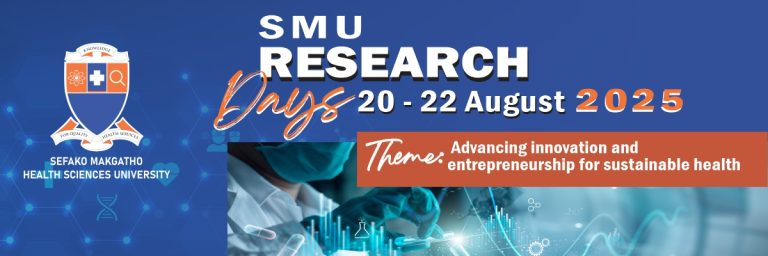
by Kegorapetse | Aug 18, 2025
