by Lorato | Jul 9, 2025 | All News, SMU Media, Student Media
At Sefako Makgatho Health Sciences University (SMU), leadership is more than a title — it is a lived experience. The university has emerged not only as a centre of academic excellence but also as a launchpad for socially conscious, action-driven leaders. Among the standout examples is Atlegang Leeuw, a third-year Environmental Sciences student from Ga-Rankuwa, Pretoria, whose dynamic leadership is making a tangible impact on campus and beyond. “When I arrived at SMU, I came with more than just books and a timetable,” says the 20-year-old. “I wanted to build something that would last beyond my graduation — something rooted in service and purpose.”
 Since enrolling, Leeuw has held several key leadership roles: Chairperson of the Green Campus Initiative (GCI), Treasurer of United Nations Children’s Fund (UNICEF) SMU, Chairperson of the Interprofessional Collaborative Programme (IPECP), peer educator at Khulanathi EduHub, peer counsellor at Residence 5A, and member of the university’s rugby team. Through these platforms, he has fostered a culture of innovation, accountability, and environmental consciousness among his peers. “Leadership is not about status,” he reflects. “It’s about presence — being there, showing up, and creating spaces that uplift others.”
A defining chapter of his journey has been the revitalisation of the Green Campus Initiative. Once a modest awareness campaign, GCI now promotes sustainability across campus — from water conservation in residences to responsible food disposal. “We call ourselves future health professionals, yet sometimes fail to respect our shared environment. That contradiction motivated me to act,” he says.
Inspired by insights from the Association of College and University Housing Officers-International South African Chapter (ACUHO-I-SAC) student housing conference, Leeuw helped expand GCI’s influence in 2024. Under his leadership, it formed partnerships with the Wildlife and Environmental Society of South Africa (WESSA), Miss Earth SA, UNICEF, and student groups from other universities. One of its most visible accomplishments is the SMU Garden — a collaborative project with the Built Environment Department to create a sustainable vegetable garden on campus.
“It’s more than just growing food — it symbolises that meaningful change can start with students, right where we are,” he explains.
Leeuw credits much of the work’s success to his long-time classmate and friend, Tshepo Ntlemeza. “Tshepo’s always been a steady hand — someone who kept things going when challenges felt overwhelming.”
 Together, they led initiatives like the Tembisa Clean-Up, where volunteers collected over 600 bags of waste. They also took part in national biodiversity campaigns, including invasive species removals on International Biodiversity Day.
His leadership extends into health advocacy. As Treasurer of UNICEF SMU, Leeuw has championed campaigns around mental health, children’s rights, and climate justice. In May 2024, he represented SMU at the United Nations Youth Consultation, where young South Africans addressed national challenges such as education, unemployment, and sustainable development.
“That experience made me realise the importance of what we do at SMU. We’re not just students — we’re part of a much larger dialogue shaping the future.”
Another of his achievements lies in the IPECP, where he pushed for the inclusion of Environmental Sciences students in interprofessional learning, a space previously reserved for clinical disciplines. This shift enabled cross-disciplinary collaboration, preparing students to tackle real-world problems at the intersection of science, health, and society.
Yet, for Leeuw, it’s the small victories that mean the most. “When someone tells me they started composting in their res because of GCI, that’s when I know we’re truly changing lives.”
Looking forward, he is developing an eco-friendly cooler box made from recycled pineapple peels — a low-cost, sustainable solution to help students and rural communities safely store medicine in high temperatures.
His long-term aspiration is to work with the United Nations or government departments focused on youth empowerment. But for now, his heart remains with Ga-Rankuwa and SMU — the community and institution that shaped him. “SMU gave me a platform, a voice, and the belief that I can lead change. As long as I’m here, I’ll keep doing exactly that.”
Leeuw is a shining example of the calibre of student leaders SMU continues to cultivate — individuals equipped not just with knowledge, but with vision, resilience, and a commitment to serve.
By Dimakatso Modise

by Lorato | Jul 4, 2025 | All News, SMU Media, Student Media
In a powerful celebration of academic achievement, international solidarity, and health system transformation, Sefako Makgatho Health Sciences University (SMU) proudly hosted the 2025 Nelson Mandela/Fidel Castro and South African Military Health Service Medical Graduation Ceremony on Friday, 4 July.
 The momentous event honoured more than 70 newly qualified South African doctors who completed their studies in Cuba through the Nelson Mandela Fidel Castro (NMFC) medical training programme, before returning to South Africa to complete their integration and final clinical training. This cohort represents the latest contribution to the growing legacy of the NMFC programme — a partnership that has, over the past 29 years, produced more than 3,000 doctors, many of whom serve in under-resourced and rural areas across the country.
The university’s sports complex was transformed into a vibrant stage for celebration, attended by graduates’ families, government officials, health professionals, and academic representatives from both South Africa and Cuba. The ceremony opened with the singing of Gaudeamus Igitur, followed by the national anthems of Cuba and South Africa — a symbolic gesture recognising the enduring diplomatic and educational ties between the two nations.
Presiding over the formal proceedings was Professor Heidi Soca González, Acting Chancellor of the Universities of Medical Sciences in the Republic of Cuba. She formally constituted the congregation and led a moment of silence in tribute to former presidents Nelson Mandela and Fidel Castro, whose shared vision of equality and health justice gave rise to this landmark collaboration.
 In her welcome address, SMU Vice-Chancellor Professor Tandi Matsha-Erasmus reaffirmed the institution’s commitment to supporting the integration of NMFC graduates. “Today, we are honoured to host the graduation ceremony of the Nelson Mandela Fidel Castro Medical Programme. At SMU, we take pride in serving as one of the key academic institutions facilitating the reintegration of returning graduates into the South African healthcare system. Today’s ceremony reaffirms our role as a university that is responsive, transformative, and mission-driven,” she said. “SMU continues to advance the national imperative of health equity by preparing graduates who are both clinically competent and socially conscious.”
 Delivering the keynote address, Deputy Minister of Health Dr Joe Phaahla commended the Mandela-Castro Programme for its contribution to addressing the healthcare skills gap in South Africa. “It is a profound honour and privilege for me to stand before you on this significant occasion — the graduation ceremony of our 53 Nelson Mandela Fidel Castro medical training programme graduates, along with 23 members of the South African Military Health Service trained by Cuban medical schools to serve the people of South Africa,” he said. “As graduates, you represent a unique embodiment of excellence, having been trained in a country that has become a second home to many of you, shaped by a healthcare philosophy rooted in primary health care, community, and human dignity.”
One of the most solemn moments of the ceremony was the administration of the oath of the graduates in Medicine, led by Professor Risenga Chauke, Acting Dean of SMU’s School of Medicine. The oath underscored the graduates’ ethical obligations to serve with integrity, respect patients’ rights, and uphold the values of equality and confidentiality.
The highlight of the day — the conferral of medical degrees — was conducted by Professor González, as each graduate crossed the stage to thunderous applause. Many of the new doctors are the first in their families to achieve such a milestone, reflecting the transformational power of education and opportunity.
In recognition of academic excellence, Professor Pindile Mntla presented the prestigious Professor Juan José Ceballos Arrieta Award to top-performing graduates Dr Rosina Momo Mohlala and Dr Sibusisiwe Roselyn Nncube, who exemplified leadership and scholarly excellence throughout their training.
Delivering a heartfelt message on behalf of the graduating class, Dr Tumelo Nicholas Lengoabala said: “To our parents, this achievement is not only ours — it is yours as well. This degree is not merely a certificate; it is a testament to endurance, a symbol of hope, and a celebration of triumph.”
Messages of commendation were also shared by international and military leadership. Dr Fidela Mariana Reyes Obediente, Director General of Medical Teaching from Cuba’s Ministry of Public Health, and Major General Mphikeleli Simelane, Chief Director of Military Health Force Preparation, praised the graduates for their resilience, discipline, and dedication to public service.
As the final notes of Gaudeamus Igitur echoed through the complex, the graduates left not only with degrees in hand but with a calling to serve with honour and to uphold a legacy of solidarity, dignity, and healthcare for all.
by Lorato | Jun 25, 2025 | All News, Alumni, SMU Media, Student Media
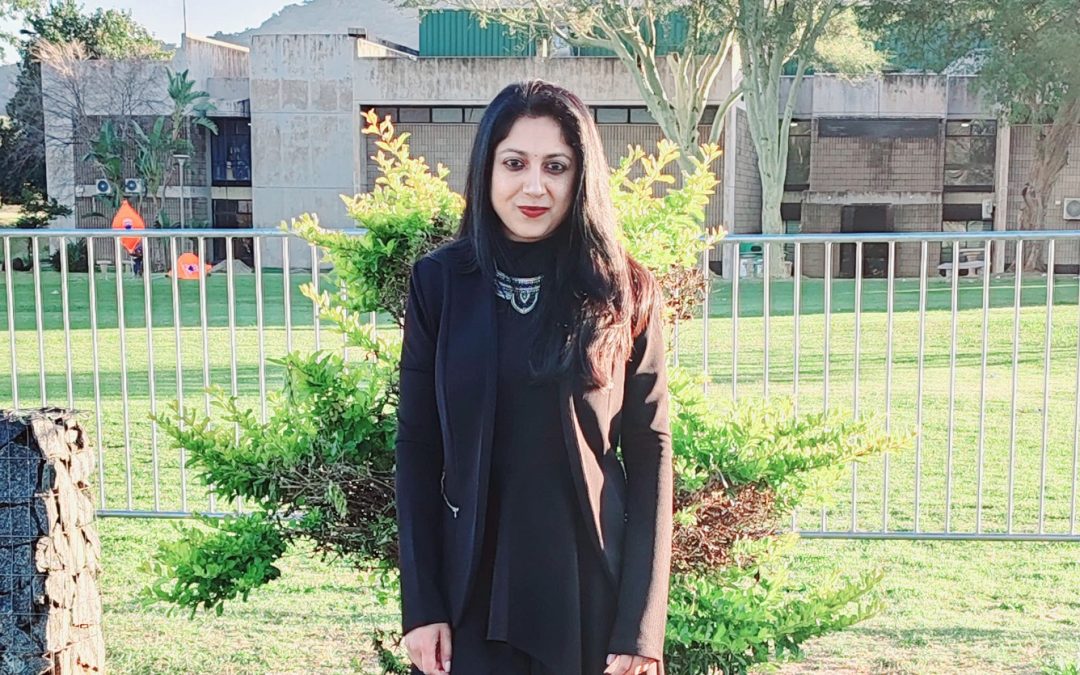
In a proud moment for Sefako Makgatho Health Sciences University (SMU), Dr Karmishtha Maharaj was conferred with a PhD in Pharmacy during the university’s recent autumn graduation ceremony. Her achievement is not only a personal milestone but a significant contribution to advancing pharmacovigilance within the private healthcare sector, particularly in the context of HIV treatment in South Africa.
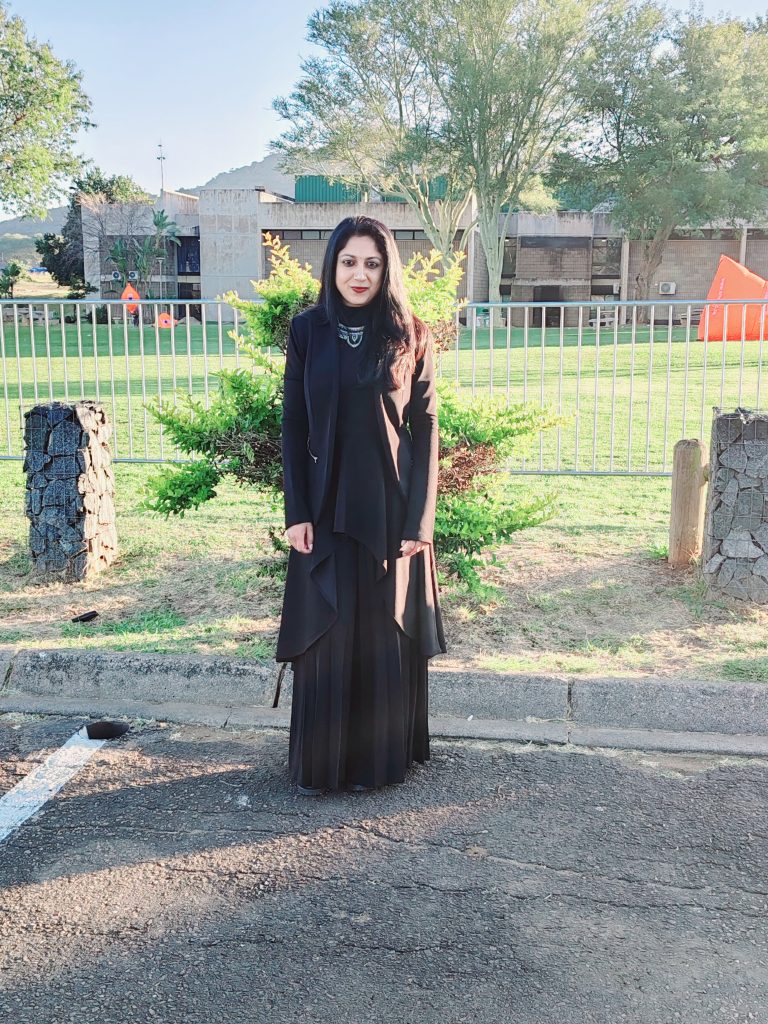 Now 39 years old, Dr Maharaj is currently based at Ampath Laboratories in Centurion, where she serves as a Pharmacogenomics Specialist. Her professional journey with Ampath spans over 13 years, beginning in 2011 as a Phlebotomy Facilitator. Originally from Newcastle in KwaZulu-Natal, Maharaj’s career has been deeply shaped by her upbringing in a close-knit family and an enduring desire to bridge patient care and pharmaceutical science.
“My interest in medicine began early,” she reflects. “From weekends volunteering at a private hospital to shadowing my uncle at his pharmacy, I was always drawn to helping others. I first trained as a nurse and later transitioned into pharmacy, blending the clinical and pharmaceutical sides of patient care.”
Maharaj’s doctoral research, conducted through SMU’s School of Pharmacy, focused on the use of routine laboratory tests as early indicators of adverse drug reactions (ADRs) in patients on Highly Active Antiretroviral Therapy (HAART). Her study, conducted at a major private HIV treatment practice in Pretoria, sought to address a critical gap in South Africa’s pharmacovigilance data, particularly within the under-researched private healthcare sector.
She strongly believes laboratory-based monitoring should become a standard in ADR surveillance. “It enables early detection of toxicity before symptoms appear, allowing timely interventions. This approach not only improves patient safety and adherence but fills major gaps in traditional pharmacovigilance, especially when managing complex cases involving multiple medications.”
Despite the private sector being relatively well-equipped, with access to electronic health records and accredited laboratories, Maharaj points out that systemic challenges remain. “There’s no coordinated pharmacovigilance framework in private care. Proactive monitoring is still underutilised, and pharmacogenomics testing is limited due to cost and lack of awareness.”
Her study reviewed 267 patient files from a private HIV clinic in Pretoria. Elevated creatinine and liver enzymes served as early warning signs of renal and hepatic toxicity. She observed that patients on concomitant medications had heightened risks, and that ART changes were most commonly associated with drugs like efavirenz and lopinavir.
“My research offers valuable insights that can contribute to national health policy,” she says. “It provides a model for integrating lab data into national pharmacovigilance frameworks, updating HIV treatment guidelines, and improving surveillance beyond clinician reporting.”
She is also eager to expand the research to public health settings and rural areas. “We need to ensure the research represents the broader HIV population. Exploring regional differences and building scalable, risk-based models could strengthen provincial and national responses to HIV care.”
Looking ahead, Maharaj envisions several research paths, including prospective studies, cost-effectiveness analysis of lab-based surveillance, and the feasibility of implementing pharmacogenomic testing and therapeutic drug monitoring locally.
She also hopes to see her findings incorporated into national medical training and treatment guidelines. “Empowering healthcare providers with these tools through education would support a more predictive, personalised approach to care.”
Completing a PhD while working full-time was no small feat. “It required planning, discipline, and self-care. My support system—family, mentors, friends—was essential. There were moments of doubt and setbacks, but also incredible breakthroughs that reminded me why this work matters.”
Now that she has earned her PhD, Maharaj plans to continue blending academic research with public engagement. “I want to raise awareness around drug safety and help integrate personalised medicine into routine care.”
She hopes her legacy is one of improved patient safety and inspired future researchers. “For young women from underrepresented backgrounds, I say: believe in your potential. Your voice matters, and your journey can change lives.”
Summing up her journey, Maharaj shares, “The rewarding challenge of pioneering new paths. As Elizabeth Blackwell said, ‘It is not easy to be a pioneer – but oh, it is fascinating!’”
By Tumelo Moila

by Lorato | May 13, 2025 | All News, SMU Media, Student Media
As graduation season unfolds at Sefako Makgatho Health Sciences University (SMU), alumna Dr Talente Biyela reflects on her studies, four earned degrees, and an already impactful career. From the rural heart of Esikhawini Nsimbini Reserve, KwaZulu-Natal, to the halls of academia and the wards of Dr George Mukhari Academic Hospital, Biyela’s journey has been marked by determination, passion, and an unwavering commitment to public service.
 Raised by a “resilient single mother,” Biyela is one of six siblings who defied the odds. “I’ve always been curious,” she shares. “My love for problem-solving and analysis first led me to mathematics, and later to medicine.”
Her academic achievements are remarkable. She holds a BSc in Mathematics and Chemistry, a BSc Honours in Mathematics, a BSc Honours in Applied Mathematics, and an MBChB. In 2016, while pursuing her Honours degree in Applied Mathematics, she was selected among the top 30 students nationwide for a prestigious Joint Institute for Nuclear Research (JINR) scholarship in Russia. “Presenting neutron activation for life sciences in Russia was an invaluable experience,” she recalls. “Russia is incredibly rich in nuclear research.”
Transitioning from mathematics to medicine, however, was not without challenges. “It was tough moving into medicine,” she admitts. “I was used to numbers and analysis, but the theoretical focus of the first three years of the MBChB required new study methods.” At the same time, she taught Mathematics to Grades 11 and 12 at Seageng Secondary School in Soshanguve.
Beyond academics, Biyela is passionate about education and sport. After discovering SMU lacked a women’s football team, she founded the SMU Ladies’ Football Team. “Football was my escape,” she explains. “Starting the team wasn’t just about sport—it was about creating an outlet for students to decompress and build social cohesion.”
Her leadership extended beyond the pitch. Serving three terms in the Student Representative Council (SRC), she also sat on the university council, institutional forum, exclusions committee, and chaired several student organisations. “Leadership gave me insight into policy and governance,” she reflects. “It deepened my desire to transform a health system currently on its knees.”
Determined to uplift others, she established the Bokamoso Science Centre to bridge the gap between secondary and tertiary science education for learners from disadvantaged backgrounds. “Many students arrive at university never having been inside a lab,” she laments. “We needed to change that.”
As a doctor, Biyela finds fulfilment in patient care. “Nothing beats a patient telling you how much you’ve helped them,” she shares. Yet, she acknowledges the challenges of a hierarchical medical environment. “Managing different personalities in patient care can be difficult.”
Her role as a COVID-19 compliance officer was especially formative. “Working during the pandemic forced rapid adaptation,” she explains. “I was responsible for data collection, analysis, and strategy implementation. It reinforced my belief in health education and prevention.”
Biyela is outspoken about South Africa’s healthcare inequities. “Our healthcare system is in shambles,” she asserts. “It continuously fails black, poor people who cannot afford private care. Funding models must change, and wasteful expenditure must be addressed.”
Looking ahead, she plans to pursue a Master’s in Public Health. “My background in maths and research will be invaluable for data analysis and policy development,” she notes. “I want to remain in the public sector, where I can make the most impact. I dream of a health system that doesn’t discriminate based on skin colour or income.”
Despite her many roles, Biyela remains grounded. “I value time deeply,” she says. “If I give you my time, I’ve given you the most precious part of me. My culture and spirituality keep me anchored.”
Her message to young people considering career shifts is clear: “The sky is the limit. There’s nothing unattainable. Cross over with pride—every degree shapes you into a better person.”
As she continues blazing trails in medicine, policy, and advocacy, Biyela hopes to leave a legacy of service. “I want to be remembered as someone whose life was dedicated to making others’ lives better,” she says. “Someone whose allegiance was always with black, poor people.”
For Biyela, success is not merely personal—it’s about building a healthier, more equitable South Africa for generations to come.
By Tumelo Moila
by Lorato | May 13, 2025
Science and Technology Latest Research Output: 2024 Home » Search Results for "sustainable energy in south africa" ACCREDITED JOURNALS Qurban, M, Khaliq, A, Saqib, M & Abdeljawad, T 2024, ‘Stability, bifurcation, and control: Modeling...