
by Lorato | Aug 13, 2025 | All News, SMU Media, Student Media
At just 22 years old, Priscilla Odoom is already a shining example of what passion, discipline, and the right environment can achieve. Graduating cum laude with a Bachelor of Science in Mathematical Science from Sefako Makgatho Health Sciences University (SMU), majoring in Statistics, she embodies the University’s values of excellence, integrity, and social responsibility.
 “I am originally from Ghana,” she begins, her voice steady and confident. “My decision to pursue a Bachelor of Science at SMU was driven by my deep passion for problem-solving and my desire to apply mathematics and statistics to real-world challenges. SMU’s academic reputation, coupled with its commitment to producing graduates who can impact society, made it the ideal place for my studies.”
Her journey was not without its challenges, but SMU’s supportive environment gave her the tools to thrive. “During my second year, after consistently earning high marks in challenging modules such as Applied Mathematics and Statistics, I realised that my work ethic and determination could push me towards graduating cum laude,” she says.
A disciplined routine became the backbone of her success. “A typical day started with early morning lectures, followed by library study sessions. I would often spend afternoons in group discussions or tutoring other students, which reinforced my understanding. Evenings were reserved for assignments, research, and reviewing lecture notes.”
Applied Mathematics initially tested her resilience. “It was challenging due to its abstract concepts, but I formed study groups, sought clarification from lecturers, and practised problem sets extensively,” she recalls. Her guiding mantra was: “Success is the sum of small efforts repeated day in and day out.”
True to SMU’s emphasis on community engagement, Odoom made her mark beyond academics. “I engaged in tutoring programmes within the University, contributing to academic excellence in my community. I was also a deputy secretary in Res2A House Committee and served as a class representative from my second year until I finished my degree,” she says. These roles strengthened her leadership, teamwork, and sense of responsibility — qualities SMU nurtures in all its graduates.
She credits her success to a strong support system. “My family provided emotional support, motivation, and celebrated every milestone with me,” she says warmly. “My lecturers in the Statistics and Mathematics departments inspired me with their dedication. Their mentorship and encouragement were instrumental in my growth.”
Resilience was key in overcoming moments of self-doubt and burnout. “Whenever I felt overwhelmed, I reminded myself of my long-term goals, took short breaks, and sought encouragement from family and friends.”
Her love for statistics grew deeper each year. “Statistics bridges theory and application — it allows us to turn data into meaningful insights. Over time, my interest evolved into a passion for using statistical methods in decision-making, particularly in business and social development contexts,” she explains.
Looking to the future, Odoom says: “I am currently entering the workforce to gain practical experience, with plans to pursue postgraduate studies in statistics or data analytics. My long-term goal is to become a leading data analyst or statistician, working on impactful projects and mentoring future professionals in the field.”
Her advice to aspiring students is clear and rooted in SMU’s value of excellence: “Stay disciplined, seek help when needed, and remember that consistency is more powerful than last-minute effort.”
For her, success is more than an academic title. “It’s achieving personal growth, making a positive impact on others, and living in alignment with your values,” she reflects. With her achievements, humility, and determination, Odoom stands as a proud ambassador of SMU — a young woman who is not just graduating with honours, but carrying forward the University’s mission to make a meaningful difference in society.
“I am deeply grateful to the SMU community for providing a nurturing environment, and to my family, friends, and mentors for their unwavering support. This achievement is as much theirs as it is mine,” she concludes with a smile that says her journey is only just beginning.
By Dimakatso Modise

by Lorato | Aug 7, 2025 | All News, SMU Media, Student Media
In a significant affirmation of his ongoing dedication to public health governance, Dev Mamabolo, Projects Coordinator in the Technology Transfer Office at Sefako Makgatho Health Sciences University (SMU), has been reappointed to the board of Bertha Gxowa Hospital. He will serve in this capacity until March 2028.
 Speaking after the announcement, Mamabolo expressed both gratitude and enthusiasm for the opportunity to continue contributing. “There were over 5,000 applicants considered, so to be reappointed is not only an honour but also incredibly reassuring,” he said. “It’s exciting to be given another opportunity to serve the people of Gauteng with integrity.”
This marks Mamabolo’s second term on the hospital board, having initially joined in 2023 through a nomination process. His reappointment is intended to ensure continuity and enhance the value brought to the institution. At SMU, his work focuses on driving innovation and research commercialisation — expertise he is keen to apply in the public healthcare space. “Personally, this is a confidence booster. Professionally, it reaffirms that my contributions are recognised by both the hospital and the Gauteng Department of Health & Wellness,” Mamabolo added.
His vision for the upcoming term is to embed innovation within the hospital’s service delivery model. “Digital health technologies such as telemedicine, mobile health applications, and data analytics can significantly enhance care, disease surveillance, and encourage healthy behaviours. Innovation must be part of the boardroom agenda,” he asserted.
Mamabolo acknowledges the demands of balancing his board duties with his role at SMU. “Strategic time management, prioritisation, and a clear understanding of the board’s role are key to succeeding in both spaces,” he said.
He also addressed some of the pressing challenges facing public hospitals, particularly the strain caused by undocumented foreign nationals seeking care.
“While Section 27(1) of the Constitution ensures everyone’s right to access healthcare, we must consider sustainable solutions. As board members, we advise the MEC and can recommend policy directions, such as requiring medical insurance for visitors, similar to international practice.”
Mamabolo sees immense value in strengthening collaboration between academic institutions like SMU and public hospitals. “These partnerships can improve research, education, and the implementation of public health initiatives. SMU’s strength in health sciences should directly support the operational needs of healthcare facilities.”
He has outlined several outcomes he hopes to achieve during his term: improved financial systems, the integration of technology, stronger community engagement, and increased collaboration with industry partners.
On the importance of community involvement, he emphasised: “Community participation enhances accountability and responsiveness. Hospitals must actively involve residents to understand barriers to care and work towards inclusive solutions.”
Looking to the future, Mamabolo believes this role positions him to make broader contributions to healthcare governance. “It provides a front-row seat to the realities of our public health system and an opportunity to shape policy beyond the university context.”
To professionals aspiring to serve in similar roles, his message is clear and encouraging: “The public health sector needs your voice. Your insights can help shape a more equitable and effective healthcare system. Together, we can build a healthier society.”
By Tumelo Moila
by Lorato | Aug 7, 2025 | All News, SMU Media, Student Media
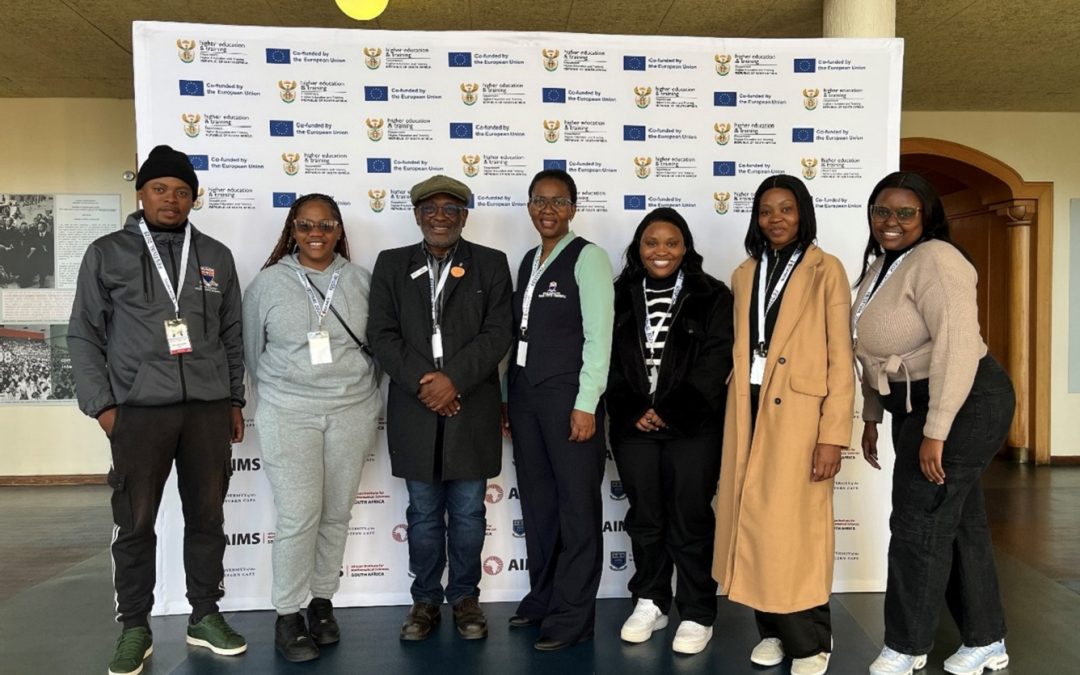
Outstanding staff members and postgraduate students from the Department of Mathematics and Applied Mathematics at Sefako Makgatho Health Sciences University (SMU) – Prof Maggie Aphane, Kelebogile Medupe, Matlhatsi Ngwepe, Koketso Malebana, Sindiswa Mnguni, Tumiso Kekana, Lesego Masilela, and Princess Shiba – proudly represented the university at the inaugural MegaMaths Festival held recently at the University of the Western Cape (UWC).
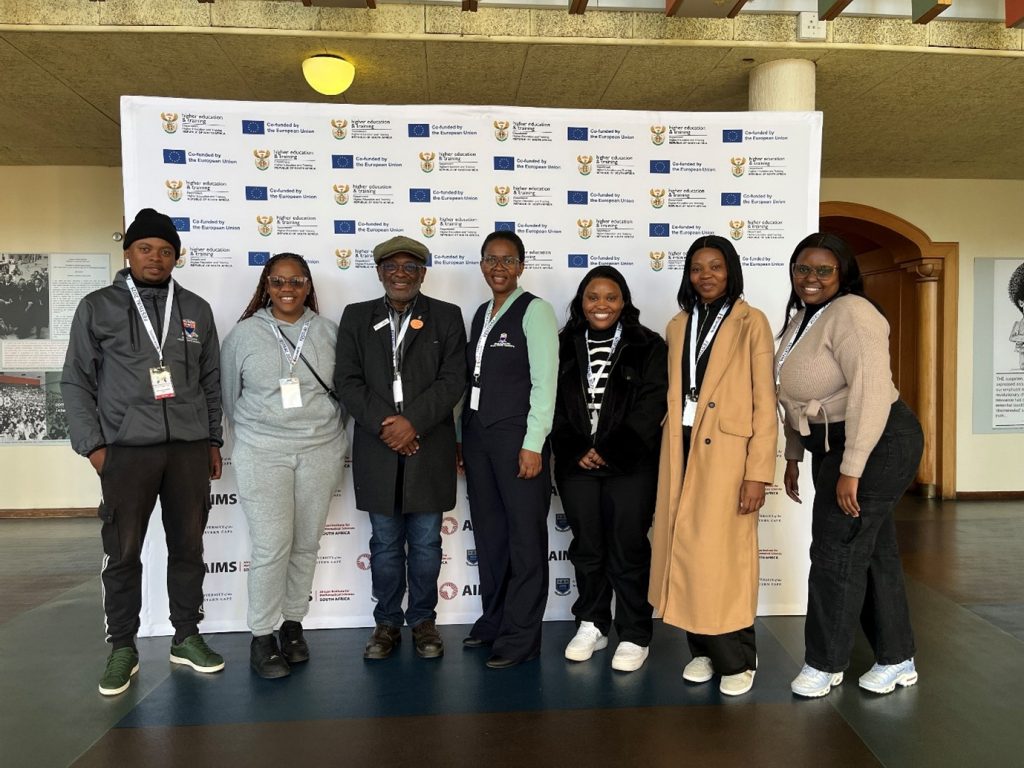 Hosted by the Department of Higher Education and Training (DHET) in partnership with UWC and the African Institute for Mathematical Sciences (AIMS South Africa), the festival was themed “Mathematics: Our 13th National Language” and aimed to strengthen mathematics teaching, learning, and research across the educational ecosystem — from schools to universities and industry.
“It was an honour to be selected. I felt both excitement and responsibility,” said Ngwepe, lecturer. “We showcased the passion, creativity, and commitment of our department while connecting with like-minded individuals from across the country.”
The event opened with a gala dinner and a warm welcome from the UWC Vice-Chancellor, setting the tone for what would be a transformative week of learning and collaboration. “From meaningful discussions to dancing and music — it reminded us that there is joy and life even in mathematics,” reflected Ngwepe.
Key sessions focused on practical and inclusive approaches to teaching mathematics. “A keynote speaker demonstrated how simple tools like blank paper can help students visualise concepts like parallel and perpendicular lines. It reminded us that maths must be taught beyond words — through experience and application,” said Malebane, an MSc student.
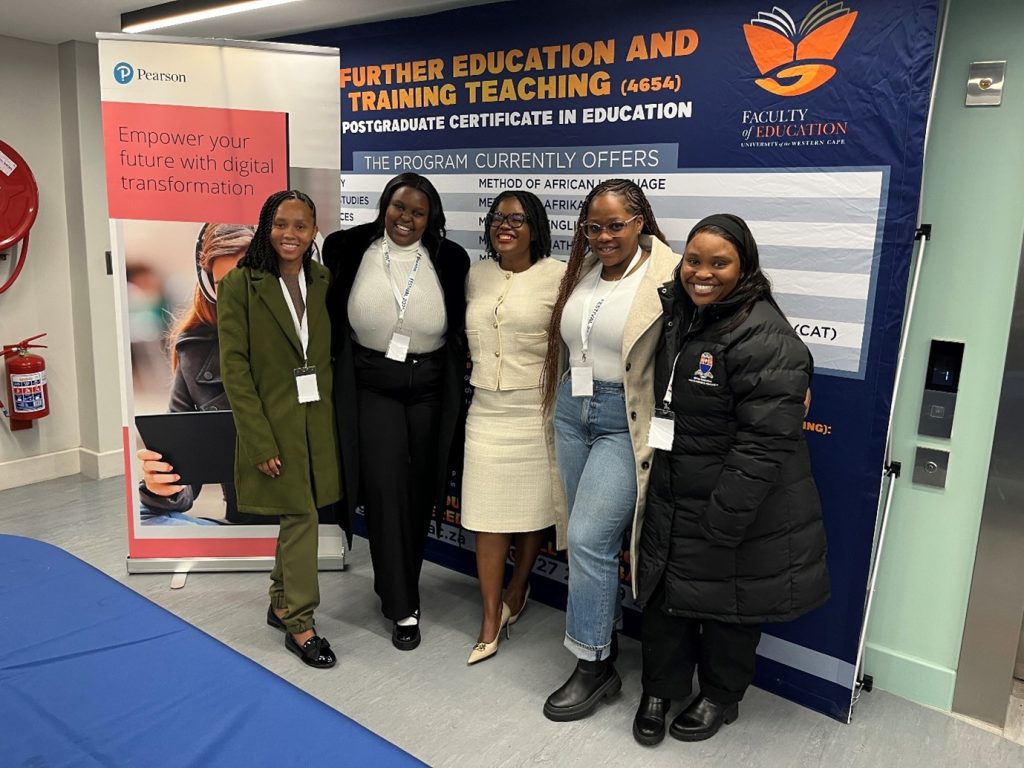 The festival also highlighted how mathematics research intersects with real-world issues. Topics such as graph theory, topology, inclusive education, and digital tools in learning were explored. Lecturer, Kekana, whose research focuses on complex-valued topological indices, found the graph theory discussions especially meaningful. “They not only validated my work but also opened possibilities for future collaborations,” he said.
As women in a male-dominated field, Medupe and Ngwepe both emphasised how empowering the festival was. “Events like these break stereotypes and reaffirm that women have a critical role to play in the mathematical sciences,” Ngwepe shared.
Another powerful highlight was the focus on African mathematical heritage — including indigenous counting systems, beadwork, and cultural patterns — as tools for more relevant and inclusive mathematics teaching. “It was a reminder that maths is not foreign to African communities; it has always been part of our way of understanding the world,” said Malebane.
While networking mainly involved educators and students, the SMU team connected with organisations such as Capitec Foundation, Vodacom Foundation, and Zenex Foundation, opening doors for outreach and mentorship initiatives that bridge school and university-level mathematics.
Reflecting on the experience, Shiba concluded: “Mathematics is for everyone. It’s a tool for empowerment, and we need to make it accessible, engaging, and culturally relevant.”
The team plans to present their insights to colleagues at SMU and continue building partnerships that support curriculum transformation, learner support, and community-based outreach. “This is just the beginning,” they agreed. “We’re excited to help shape the future of mathematics in South Africa — one student, one breakthrough at a time.”
By Tumelo Moila

by Lorato | Jul 31, 2025 | All News, SMU Media, Student Adverts
Three postgraduate students in Mathematics and Applied Mathematics from Sefako Makgatho Health Sciences University (SMU)—Sanele Mlotshwa, Zakhele Magagula and Siphelele Mbangutha—recently took part in the 17th Annual Workshop on Computational Mathematics and Modelling (WOCCOM2025), held at the University of KwaZulu-Natal (UKZN), Pietermaritzburg Campus.
 Hosted by the Mathematics Discipline within UKZN’s School of Mathematics, Statistics and Computer Science, the workshop convened academics, researchers, and students from across Southern Africa. Delegates hailed from countries including South Africa, Zimbabwe, Botswana, and Eswatini. The workshop focused on applying numerical methods, differential equations, and computational tools to solve real-world challenges in medicine, science, and economics.
Since its inception in 2008, WOCCOM has developed into a leading regional platform for postgraduate academic development, equipping early-career researchers with key skills in applied mathematics and computational science.
Among the workshop’s highlights were keynote and tutorial sessions presented by leading scholars. Professor Sandile Motsa delivered an insightful keynote address titled “Block Hybrid Methods for Systems of Nonlinear BVPs: AI Approach”, showcasing the transformative role of artificial intelligence in solving complex mathematical problems. Dr Vusi Magagula led a compelling tutorial on “Mathematical Modelling of Infectious Diseases”, demonstrating how compartmental models—such as Susceptible-Infected-Recovered (SIR) and Susceptible-Exposed-Infected-Recovered (SEIR)—are used to analyse and predict the spread of disease. Dr Zodwa Makukula chaired one of the plenary sessions, facilitating robust academic discourse and inclusive engagement.
 The SMU trio participated in intensive hands-on training sessions focused on numerical accuracy, convergence, and computational efficiency—key foundations of modern numerical analysis. On the second day, they were tasked with solving real-world modelling challenges, promoting teamwork, critical thinking, and the practical application of concepts.
Zakhele made a notable contribution during the workshop’s mini-conference segment. His presentation, “On the Effectiveness of Quarantine as a Measure to Control the Spread of COVID-19 in South Africa: A Mathematical Modelling Perspective”, examined the role of quarantine through the lens of differential equations. His talk attracted interest and valuable feedback from attendees, further strengthening the impact and scope of his research.
Reflecting on the experience, the students described WOCCOM2025 as a transformative academic milestone. “It was more than just a workshop—it was an incubator for ideas, skills, and future collaborations,” said Mbangutha. The trio also established valuable academic connections with peers from UKZN, the University of Eswatini (UNESWA), the University of Johannesburg (UJ), and other institutions—laying the groundwork for future research collaboration.
“The workshop helped us appreciate mathematics as a universal language—one that bridges medicine, economics, and computer science,” remarked Mlotshwa.
Their participation was made possible through the support of the SMU Department of Mathematics and Applied Mathematics, and longstanding WOCCOM sponsors such as the Hanno Rund Fund and the Centre of Excellence in Mathematical and Statistical Sciences (CoE-MaSS).
All three students intend to integrate the knowledge and skills acquired at WOCCOM2025 into their respective doctoral research. “The experience reaffirmed the power of modelling to shape public policy and health outcomes,” Zakhele concluded.
Their message to future SMU students? “Believe in your ability to contribute meaningfully through mathematics. Attend, engage, and let your curiosity guide you.”
By Tumelo Moila
by Lorato | Jul 29, 2025
Sefako Makgatho University Animal Research Ethics Committee (SMUAREC) Home » Search Results for "69 University" About Sefako Makgatho University Animal Research Ethics Committee (SMUAREC) The Sefako Makgatho University Animal Research Ethics Committee...