by Lorato | Feb 25, 2026 | All News, SMU Media, Student Media
In a moment defined by ambition and possibility, Sefako Makgatho Health Sciences University (SMU) placed its students at the centre of a significant international engagement, welcoming a distinguished French mathematics delegation to campus. The meeting was not a ceremonial exchange, but a dynamic platform where postgraduate students and academics interacted directly with global research leaders. For many students present, the discussions signalled more than collaboration; they represented access to international research networks, joint supervision, academic mobility, and new postgraduate pathways capable of reshaping their scholarly futures.
 The delegation represented the Centre National de la Recherche Scientifique (CNRS), specifically CNRS Mathematics, and engaged in discussions connected to the International Mathematical Sciences Academy (IMSA). These engagements form part of broader strategic collaborations between CNRS and the University of the Witwatersrand (Wits University), aimed at strengthening global research integration through a proposed International Research Laboratory.
Professor Sophie Niang-Dabo, nominated by CNRS Mathematics to serve as Co-Director of the envisaged International Research Laboratory, outlined the scope of opportunity embedded in the proposal. She explained that establishing a CNRS–IMSA International Research Laboratory would create a sustained research ecosystem. For students, this would translate into international co-supervision, doctoral mobility between France and South Africa, structured research exchanges, and participation in collaborative scientific programmes.
She further emphasised inclusivity. Partnerships of this scale, she noted, must widen participation in global research spaces and include institutions that play transformative roles within their national contexts.
Celine Montbellier, International Programme Manager at CNRS Mathematics, elaborated on the structural benefits of the model. The Centre National de la Recherche Scientifique, she explained, establishes International Research Laboratories to ensure long-term collaboration rather than short-term academic visits. Through this framework, postgraduate students may access joint doctoral supervision, research residencies in France, international seminars, and collaborative publications—mechanisms that directly strengthen academic progression.
 At SMU, the delegation was welcomed by Professor Sechene Stanley Gololo, Deputy Dean of the School of Science and Technology, who positioned the engagement within the University’s developmental mission. As a historically disadvantaged institution, he stressed, SMU must be deliberate in leveraging every opportunity presented to it.
Professor Gololo indicated that the University intends to explore and utilise all opportunities introduced by the delegation and, hopefully, exhaust them fully, as they hold immense value for a previously disadvantaged university such as SMU. He underscored that the students present at the meeting were not observers, but primary beneficiaries. Access to international research laboratories, mobility programmes, and joint supervision, he said, has the potential to significantly expand their academic horizons and contribute to equity and advancement.
Providing strategic context, Professor Emeritus Loyiso G. Nongxa, Chairperson of the Interim IMSA Strategy and Steering Committee, reflected on the evolution of the initiative. Over the past eighteen months, sustained engagements with colleagues at the Centre National de la Recherche Scientifique Mathematics have shaped the proposal. Securing mathematical sciences as a pillar of the Wits University–Centre National de la Recherche Scientifique International Research Centre was a deliberate move, and the proposed International Research Laboratory extends that vision through a formal, long-term collaborative structure.
Professor Nongxa highlighted the broader national significance of IMSA, established to broaden the work of the Centre of Excellence for Mathematical and Statistical Sciences and the National Graduate Academy for Mathematical and Statistical Sciences. The creation of the International Research Laboratory, he noted, would elevate South Africa’s global standing in mathematical sciences while strengthening postgraduate development across participating institutions, including SMU.
The programme at SMU was directed by Professor Maggie Aphane, Head of the Department of Mathematics and Applied Mathematics, who linked the collaboration to the University’s health sciences focus. She observed that SMU’s strength lies in the intersection of mathematical theory and health applications, including biostatistics, epidemiological modelling, computational mathematics, and data science.
Throughout the engagement, students posed questions about doctoral mobility, research exchanges, and publication opportunities. The dialogue affirmed that the proposed International Research Laboratory is not abstract diplomacy, but a practical framework with direct implications for student growth.
The formal proposal for the Centre National de la Recherche Scientifique–International Mathematical Sciences Academy International Research Laboratory is scheduled for submission by 31 March 2026. While hosted by Wits University, its collaborative architecture is designed to include institutions such as SMU.
By Dimakatso Modise
by Lorato | Jan 30, 2026 | Accolades and Achievements, All News, Alumni, SMU Media, Student Media
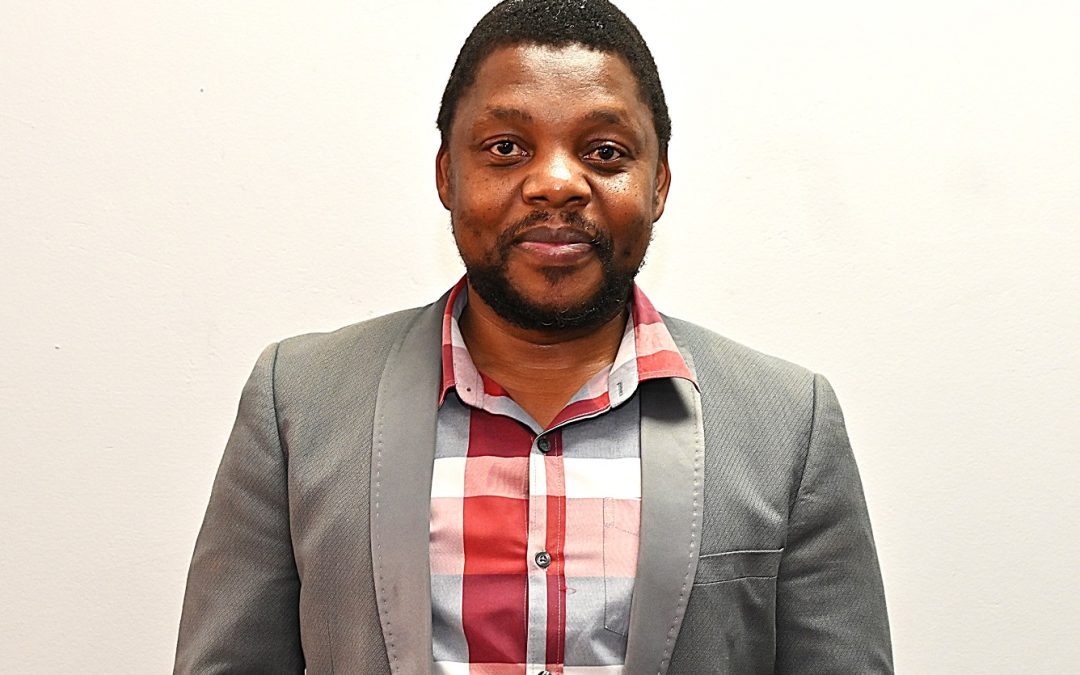
Sefako Makgatho Health Sciences University (SMU) continues to strengthen its research footprint on the global stage, as two of its distinguished chemistry professors—Professor Tshwafo Motaung and Professor Phumlani Mdluli—take the helm as Guest Editors of a Hot Topic Collection in Springer Nature’s Discover Applied Sciences. The newly launched Collection, Chemistry: Sustainable Materials and Circular Economy: Innovations in Biomass, Water Treatment, and Renewable Energy, is now open for submissions until 31 August 2026.
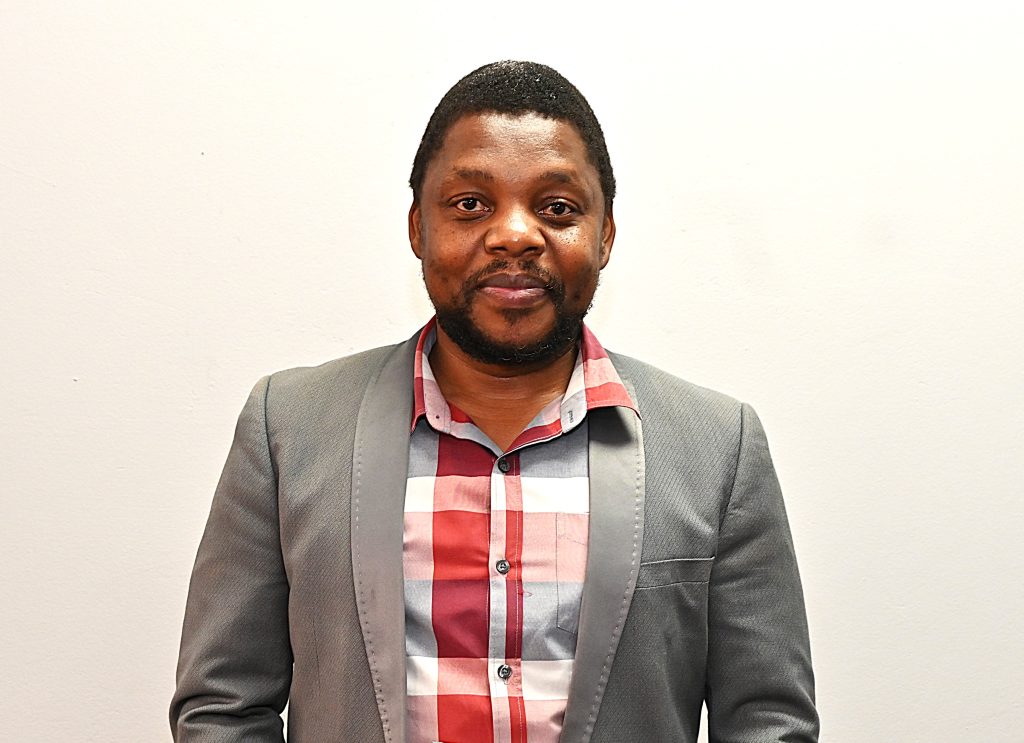 Both professors bring deep expertise and bold research visions to a platform read by hundreds of thousands of researchers worldwide. Their leadership elevates SMU’s profile while guiding a global discussion on how applied chemistry can deliver real environmental solutions.
Professor Motaung, an expert in organic polymer chemistry, nanocomposites, and waste-stream innovation, emphasised the urgency of the work ahead. “We cannot afford slow science in a fast-changing world,” he said. “Our goal is simple: convert knowledge into innovations that make a measurable difference to people, industries, and the environment.” Known for his commitment to translating scientific and indigenous knowledge into high-impact solutions, he believes Africa has a critical role to play in global sustainability efforts.
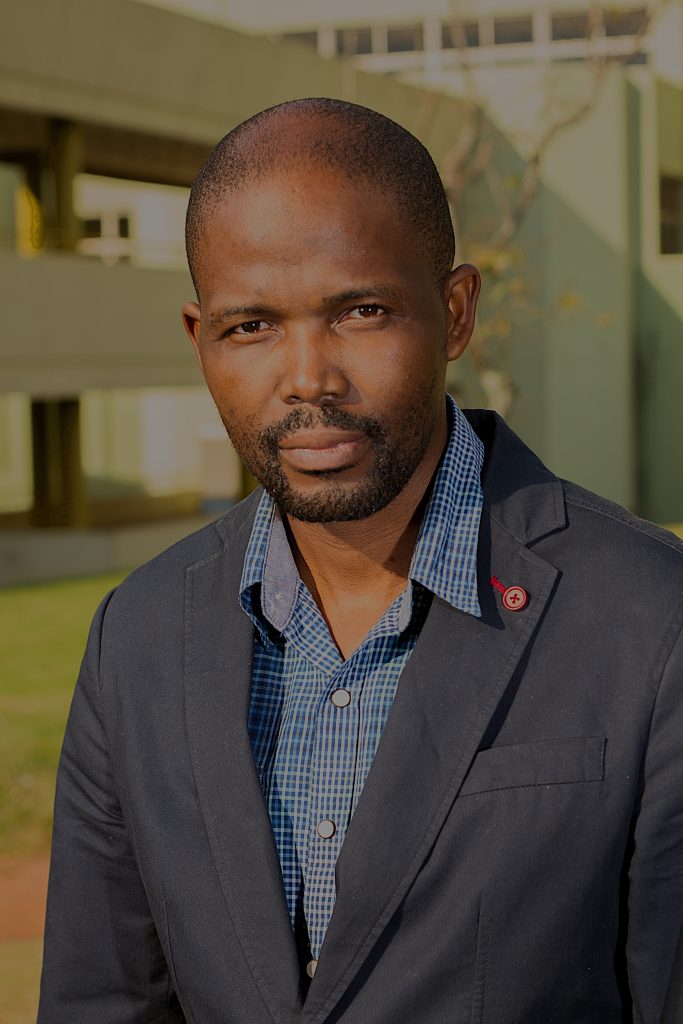 Professor Mdluli, whose research focuses on nanomaterials for diagnostics, water treatment, and renewable energy, highlighted the Collection’s emphasis on practical relevance. “This isn’t just about publishing research—it’s about accelerating technologies that can be deployed in real communities,” he explained. “Chemistry has the power to reshape how we use resources, recover waste, and build a circular economy.” He added that integrating molecular modelling into applied research will help scientists design smarter, more efficient materials.
Springer Nature has welcomed the collaboration, noting the important stewardship role played by editors. Yidan Xu, Managing Editor at Discover Applied Sciences, said: “Editors are the guardians of quality. We rely on experts like Professors Tshwafo and Mdluli to uphold rigorous standards and guide impactful research to publication. Their leadership strengthens the trust our authors and readers place in us.”
The Hot Topic Collection arrives at a crucial moment. As nations face mounting pressure from climate change, water scarcity, and energy demand, applied chemistry offers a pathway to scalable, science-driven solutions. The Collection spotlights innovations in biomass utilisation, pollutant degradation, polymer and composite development, catalytic materials, and pilot-scale demonstrations that bridge laboratory discoveries with industry and community application.
By emphasising translational value, the Collection seeks to inspire work that delivers real-world impact. It also contributes to several United Nations Sustainable Development Goals, including SDG 6 (Clean Water and Sanitation), SDG 7 (Affordable and Clean Energy) and SDG 9 (Industry, Innovation and Infrastructure).
Discover Applied Sciences—a multidisciplinary open-access journal with more than 4.9 million downloads in 2024—offers rapid processing, with a median submission-to-decision time of just 14 days. Researchers contributing to the Collection will benefit from high visibility and a global readership.
As Motaung concluded, “This is more than a scholarly Collection—it’s a call to action for chemists worldwide.”
By Tumelo Moila

by Lorato | Oct 30, 2025 | Accolades and Achievements, All News, Alumni, SMU Media, Student Adverts
A brilliant young scholar from Sefako Makgatho Health Sciences University (SMU), Tumiso Matsobane Kekana, is redefining the intersection of Mathematics and Material Science through his pioneering research in Chemical Graph Theory (CGT). His work, which investigates the structural and mechanical properties of complex molecular compounds such as dendrimers and graphene, has attracted both national and international recognition for its scientific precision and potential applications in nanotechnology and materials engineering.
 Born on 22 July 1997, Kekana recently graduated cum laude with a Master of Science in Mathematics from SMU. His dissertation, “Computational Analysis of Complex Dendrimer and Graphene Structures via Neighbourhood Multiple Degree-based Topological Indices and M-Polynomials,” advances the mathematical modelling of molecular structures and their behaviours under various conditions.
“Mathematics is not just about numbers—it’s about revealing the patterns that govern our universe,” he explains. “Through Chemical Graph Theory, we can predict the properties of materials before they even exist in a lab. That’s the power of mathematical innovation.”
At the core of Kekana’s study lies the use of Topological Indices (TIs)—numerical descriptors that model molecular structures as graphs. His research introduces neighbourhood multiple degree-based TIs, offering more accurate predictions of graphene’s mechanical properties, such as Young’s Modulus, Poisson’s Ratio, and Shear Modulus. His results confirm the predictive strength of these mathematical tools, marking a step forward in computational chemistry.
Beyond research, Kekana is a full-time lecturer in SMU’s Department of Mathematics and Applied Mathematics, where he teaches Advanced Calculus and Linear Algebra and mentors young mathematicians. Through his involvement in the department’s Community Engagement Committee, he helps organise mathematics competitions and outreach programmes for high school learners, nurturing future problem-solvers.
“Relevance beats cleverness every time,” he reflects. “If our teaching and research don’t connect to real-world challenges, then we’ve missed the purpose of science.”
 Kekana’s contributions have been recognised through peer-reviewed publications in international journals such as Frontiers in Applied Mathematics and Statistics and Discrete Mathematics, Algorithms and Applications. His recent paper, co-authored with Dr Kazeem Aremu and Professor Maggie Aphane, presents a new method for computing topological descriptors of graphene using Neighbourhood Multiple M-Polynomials—a breakthrough simplifying complex molecular analysis.
Kekana’s success story began on the dusty streets of Ivory Park. After matriculating from Thuto Ke Maatla Comprehensive School in 2015 with results that initially barred university admission, he spent two years upgrading his marks at Tembisa High ABET School. In 2018, he was finally accepted to study Mathematics at SMU—a dream fuelled by his mentor, Godfrey Tshehla (PhD candidate in Financial Mathematics at Wits), whose passion for mathematics inspired him deeply.
Although he failed his Honours year in 2021, his supervisor, Dr Aremu, refused to let him quit. “He reminded me of my ‘why’,” Kekana recalls. Repeating the programme in 2022, he graduated with distinction.
Yet another obstacle emerged after his Honours degree: university debt barred him from accommodation and registration. Forced back to his two-room shack in Ivory Park, he began his Master’s degree under severe hardship—no electricity, no proper study space, and constant financial strain. To survive, he sold achaar and relied on Hands of Compassion, the SMU feeding scheme. Drawn by the difficult environment, he briefly turned to gambling (dice), even becoming a “knox man” as a means of survival. Despite these challenges, he completed his MSc degree cum laude in record time and published two Q2-ranked journal papers.
Now a PhD student, full-time researcher, and lecturer, Kekana’s journey embodies resilience, passion, and purpose. “Where you start doesn’t define where you can go,” he says. “With perseverance, even dust can give birth to diamonds.”
By Tumelo Moila

by Lorato | Sep 26, 2025
Masters and Doctoral Programmes in Public Health Home » Search Results for "Bachelor of Health Science in Oral Health" Health Care Sciences Undergraduate Admission Requirements Health Care Sciences Academic Programs Health Care Sciences Undergraduate...

by Lorato | Aug 20, 2025 | Accolades and Achievements, All News, SMU Media, Student Media
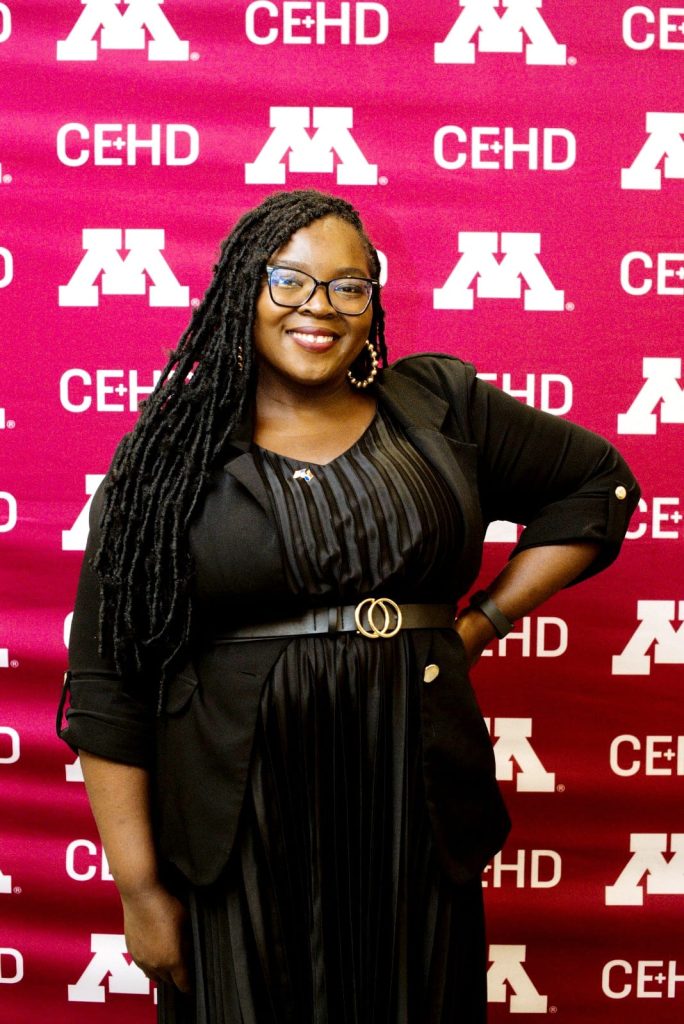
Sefako Makgatho Health Sciences University (SMU) is celebrating the achievement of Kalaba Nkonde—Lecturer in the Department of Pharmacy Practice, Academic Instructor for the Dispensing Short Course for Healthcare Professionals, and PhD candidate—who has been selected as a 2025 Mandela Washington Fellow.
 The Mandela Washington Fellowship, part of the United States’ Young African Leaders Initiative (YALI), is one of the most competitive leadership programmes on the continent. Chosen from more than 58,000 applicants across Sub-Saharan Africa, Nkonde joins an elite cohort of approximately 620 Fellows recognised as some of the best and brightest young leaders in agriculture, business, civil society, education, energy, healthcare, technology, trade, and security.
Recalling the moment she learnt of her selection, Nkonde says, “I initially ignored the notification, but when I finally opened the email, I screamed. It felt like time stopped—a surreal moment of disbelief, immense gratitude, and excitement. It reminded me that purpose, preparation, and passion can align in powerful ways.”
Her application reflected her extensive work at the intersection of pharmacy, public policy, and public health advocacy, with a particular focus on equitable access to medicines and health literacy. “I positioned my application around systemic thinking—linking pharmacy education to patient-centred care and policy reform. What set it apart was its multidimensional nature: academic achievements, leadership roles, volunteerism, and community initiatives,” she explains.
Nkonde attended a six-week Leadership Institute at the University of Minnesota – Twin Cities, in the U.S. under the Public Management track. Across 26 U.S. institutions in 21 states, Fellows engage in leadership training, academic study, networking, and weekly community service. For Nkonde, the most transformative experiences came from connecting with other African changemakers and U.S. leaders. Influential figures included her project coach, Dr Olihe Okoro, and leadership scholar Dr Artika Tyner, whose session on inclusive leadership reshaped her understanding of leadership as service.
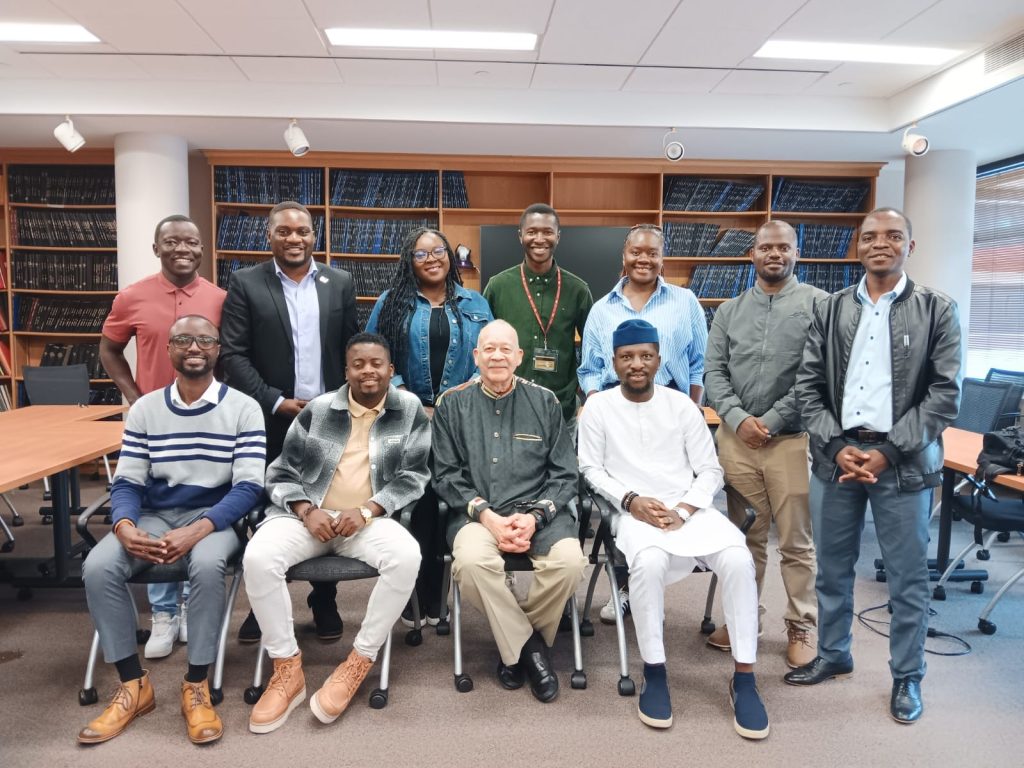
The academic director and staff were instrumental in ensuring the fellows made the most of the experience incorporating networking sessions and providing spaces for collaboration. “Dr Ashley Watson and team always mentioned my name in rooms I never would have imagined myself in. They ushered me in the best possible directions and set me up for leadership success.” Nkonde recalls.
A core focus of Nkonde’s work is literacy-centred health education. “In South Africa’s diverse linguistic and socioeconomic context, health literacy can mean the difference between access and exclusion,” she says. Currently, she is piloting a literacy initiative in SMU’s School of Pharmacy, inspired by her Fellowship experiences, with plans to expand it to improve patient outcomes and student success.
Looking ahead, Nkonde intends to integrate global best practices into SMU’s pharmacy curriculum, foster policy literacy, and create more opportunities for student leadership and international collaboration. “Equity in healthcare is not just a technical issue—it is a leadership challenge,” she emphasises.
Her advice to aspiring changemakers is clear: “Start where you are, with what you have, and lead with integrity. Don’t wait for permission to be bold—be the bridge where none exists.”
The Mandela Washington Fellowship is a programme of the U.S. Department of State, funded by the U.S. Government and administered by the International Research & Exchanges Board (IREX).
By Tumelo Moila