
Scholarships
Scholarships Home » Search Results for "" (Page...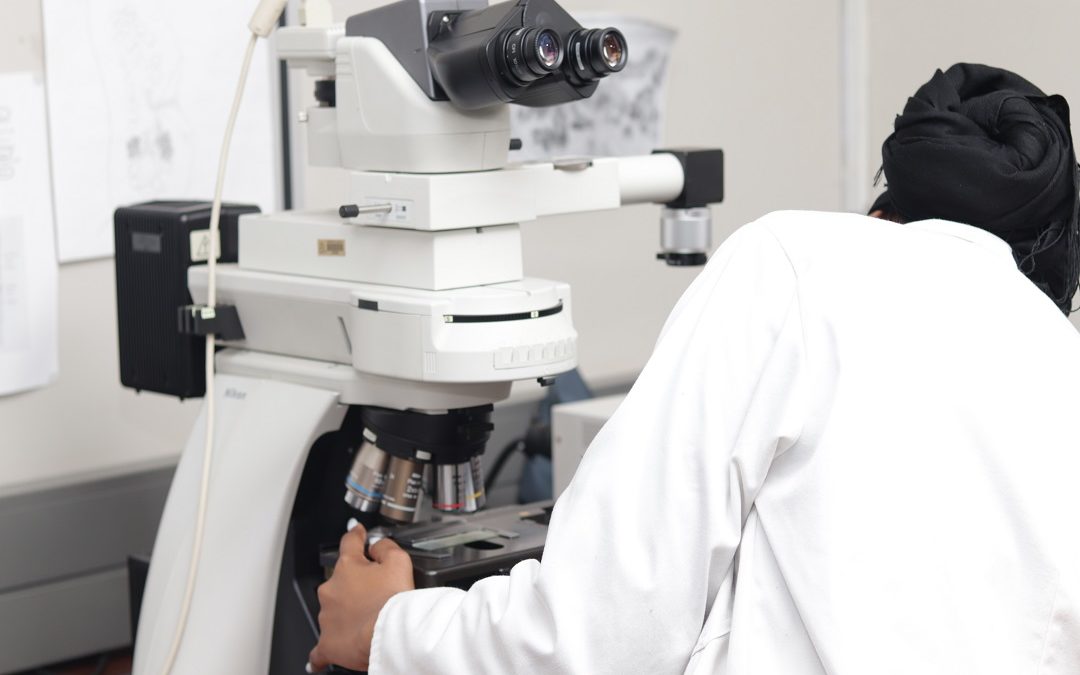
Universities SA appeal to the Corporate Sector and Private Donors to continue to support Students through Bursaries and Scholarships
On 16 March 2018, USAf announced that there is a growing concern across the university sector that companies and individual donors who traditionally offered students and universities funding for bursaries are no longer doing so. It is believed that this change has come into being on the basis of the rollout of what is commonly spoken about as free higher education. This is deeply worrying and may potentially wound the futures of many students who have found their way into one of our 26 public universities and who do not qualify for the new student funding system.
SMU scientist investigates bacterial disease triggers
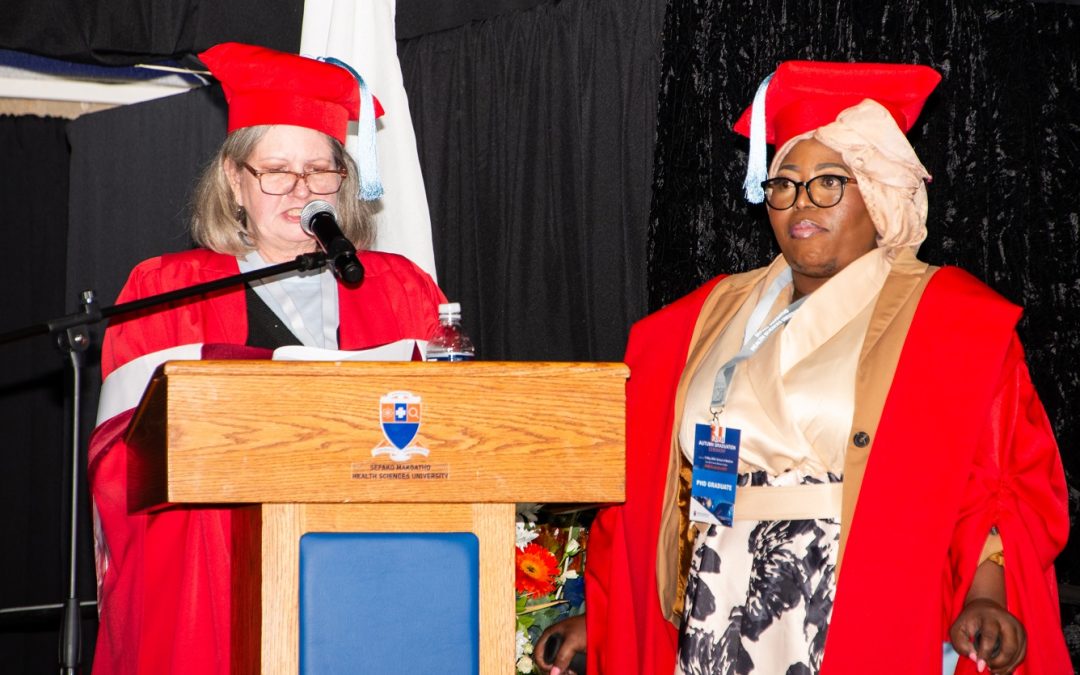
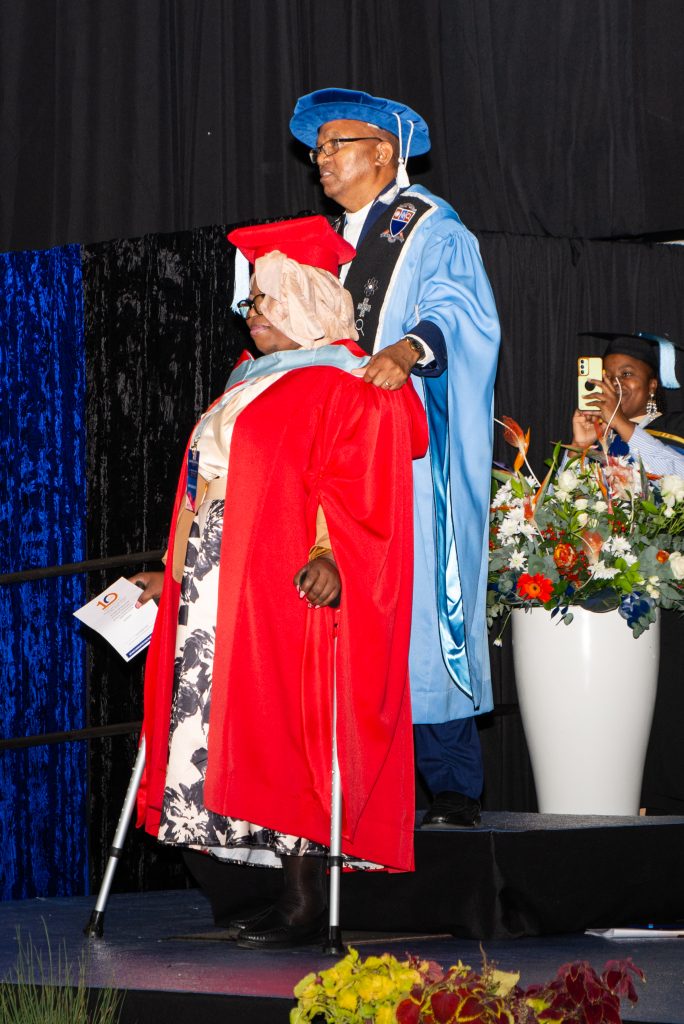
Sefako Makgatho Health Sciences University continues to strengthen its contribution to healthcare research and innovation following the graduation of Matete Olga Kgasha during the School of Medicine Autumn Graduation Ceremony 2026, where her groundbreaking research shed new light on the genetic and bacterial factors driving rheumatic heart disease in South Africa.
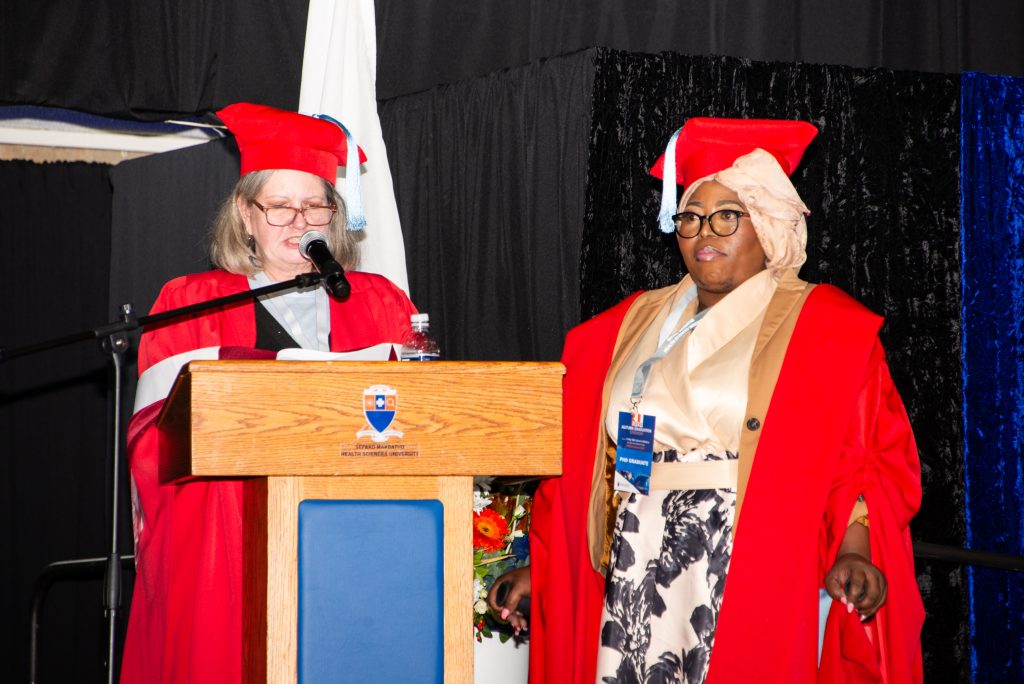 Kgasha graduated with a Doctor of Philosophy in Medical Microbiology after completing a pioneering study titled An epidemiological and genomic description of Group A Streptococcus strains and HLA Class II profiles in patients presenting with pharyngitis, acute rheumatic fever and rheumatic heart disease in Limpopo Province, South Africa. Her work explored the complex relationship between bacterial infections and human genetics in the development of acute rheumatic fever (ARF) and rheumatic heart disease (RHD), conditions that continue to affect vulnerable communities across the developing world.
The research focused on Group A Streptococcus (GAS), a bacterium commonly associated with throat infections that can trigger severe immune-mediated complications if left untreated. Rheumatic heart disease remains a major public health concern in South Africa, particularly among children and young adults in underserved communities.
Using advanced genomic and molecular techniques, Dr Kgasha identified extensive genetic diversity among circulating GAS strains while also uncovering important Human Leukocyte Antigen (HLA) Class II associations linked to increased susceptibility to ARF and RHD.
Speaking about the significance of the findings, Dr Kgasha said the research could play an important role in shaping future prevention and treatment strategies.
“This study provides critical information that may support future vaccine development, strengthen antimicrobial surveillance and improve prevention strategies for rheumatic heart disease in vulnerable communities,” she said.
She explained that understanding both bacterial strains and host genetic factors could help advance more personalised healthcare interventions in South Africa.
“Our findings highlight the importance of integrating molecular epidemiology, antimicrobial resistance monitoring and host genetic profiling into disease prevention programmes,” said Dr Kgasha. “The ultimate goal is to reduce the burden of preventable diseases affecting children and young adults.”
 The study also produced important findings relating to antimicrobial resistance. Although all GAS isolates remained susceptible to penicillin, some showed minimum inhibitory concentrations approaching resistance thresholds. Resistance to erythromycin and clindamycin was additionally identified, reinforcing growing global concerns around antimicrobial resistance and the need for continuous monitoring.
Importantly, the research revealed that less than 50% of the identified emm types were represented in the current 30-valent GAS vaccine under development, suggesting that vaccine coverage may be limited in Limpopo Province and highlighting the need for region-specific surveillance and vaccine strategies. Thanks to the grants received from DHET-UCDG, NRF Thuthuka and SAMRC with HFSP collaboration.
Beyond her doctoral achievement, Dr Kgasha currently serves as a lecturer and postgraduate laboratory manager in Medical Microbiology at SMU, where she is also the AFROStrep coordinator. Her work spans teaching, postgraduate supervision and infectious disease research, with a particular focus on antimicrobial resistance, infection prevention and control.
Over the years, she has contributed extensively to the scientific community through peer-reviewed publications, conference presentations and postgraduate student supervision. Her work has earned recognition both locally and internationally, including scholarships to present her research in Cape Town and Lausanne.
Reflecting on her academic journey, Dr Kgasha described the PhD as a milestone shaped by perseverance and collaboration. “Living with disability doesn’t mean unable but means finding purpose in the unforeseen boundaries. Obtaining this PhD represents years of dedication, resilience and collaboration,” she said. “I hope my work will contribute meaningfully to improving healthcare outcomes and inspire young scientists, particularly women in science, to pursue impactful research.”
As a dedicated health sciences institution, SMU continues to position itself at the forefront of research excellence, innovation and transformative healthcare education. Dr Kgasha’s achievement not only advances scientific understanding of rheumatic heart disease but also reflects the university’s enduring commitment to producing impactful research that addresses some of Africa’s most pressing health challenges.
By Tumelo Moila

SMU inspires learners through Pi Day
Sefako Makgatho Health Sciences University (SMU) brought mathematics to life for learners at Diphetogo Secondary School in Klipgat, North West, during its Pi Day celebration on 13 March 2025. The event, which engaged Grades 10 to 12, showcased the power of mathematics in education, careers, and everyday problem-solving, while inspiring learners to pursue opportunities in health sciences and technology.
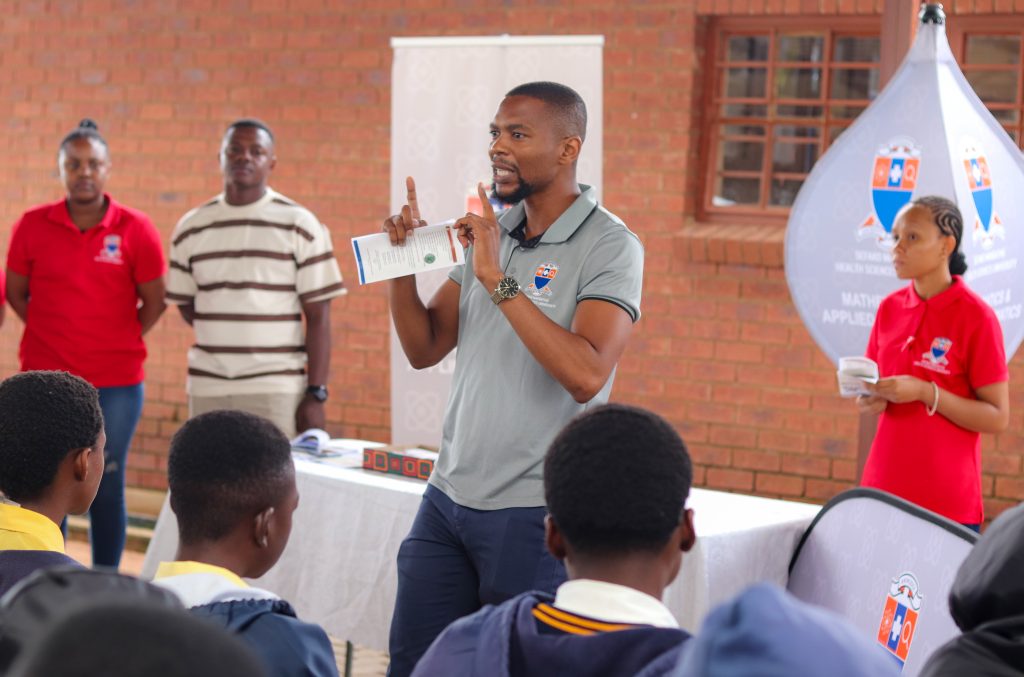 Pi Day, observed globally on 14 March, honours the mathematical constant π (approximately 3.14159…). At Diphetogo, SMU staff turned the abstract number into an interactive experience, highlighting its relevance beyond the classroom.
The day was led by SMU’s Department of Mathematics and Applied Mathematics, including lecturers Matlhatsi Ngwepe, Professer Ndlovu, Lehlogonolo Mokaba, Kelebogile Medupe, junior lecturer Mbangutha Sphelele, and tutor Tumelo Mkhatshwa. Together, they blended learning with interactive experiences that made mathematics both fun and practical.
Professer Ndlovu opened the session with an explanation of Pi’s history and importance. “Pi Day is more than just a number,” he said. “It connects mathematics to real life, from calculating circumferences to understanding patterns in science and nature. Celebrating it encourages learners to see math as a tool, not a hurdle.”
Kelebogile Medupe and Tumelo Mkhatshwa presented pathways to higher education. “Many learners are unsure where to start their university journey,” said Medupe. “We want to show that mathematics is a gateway to careers in research, health sciences, and technology. Planning opens doors.”
Matlhatsi Ngwepe offered practical guidance on bursaries. “Access to bursaries can transform a learner’s future,” she explained. “Mathematics can be your ticket to scholarships based on talent, merit, or need. The earlier you apply, the better your chances.”
 Sphelele Mbangutha motivated learners to embrace perseverance. “Be selfish with your dreams,” he encouraged. “Work hard today so that tomorrow you can create the life you imagine. Mathematics and science are tools to solve real-world problems and innovate for our communities.”
The celebration concluded with a mathematics riddle challenge, testing logic and problem-solving skills. Winners received SMU branded golf shirts and gifts distributed by Mokaba. “Events like these plant seeds of curiosity,” Mokaba said. “Today’s learners are tomorrow’s scientists, engineers, and mathematicians. We aim to show them that math can open a world of possibilities.”
The Pi Day event exemplifies SMU’s vision of transforming health services through excellence and innovation. By combining interactive learning, motivational talks, and practical guidance, the university continues to support education in local communities and nurture the next generation of professionals.
Ndlovu reflected, “Our goal is simple: inspire, equip, and empower. Learners leave with knowledge, confidence, and an understanding that mathematics is essential for their future success. That’s how we create impact.”
Through outreach initiatives like Pi Day, SMU reinforces its dedication to academic excellence, student-centred learning, and community engagement. By demonstrating that education is both accessible and exciting, the university encourages learners to dream big, embrace STEM, and explore the opportunities that mathematics and health sciences can provide.
By Dimakatso Modise