by Kegorapetse | Jul 18, 2019 | SMU Media
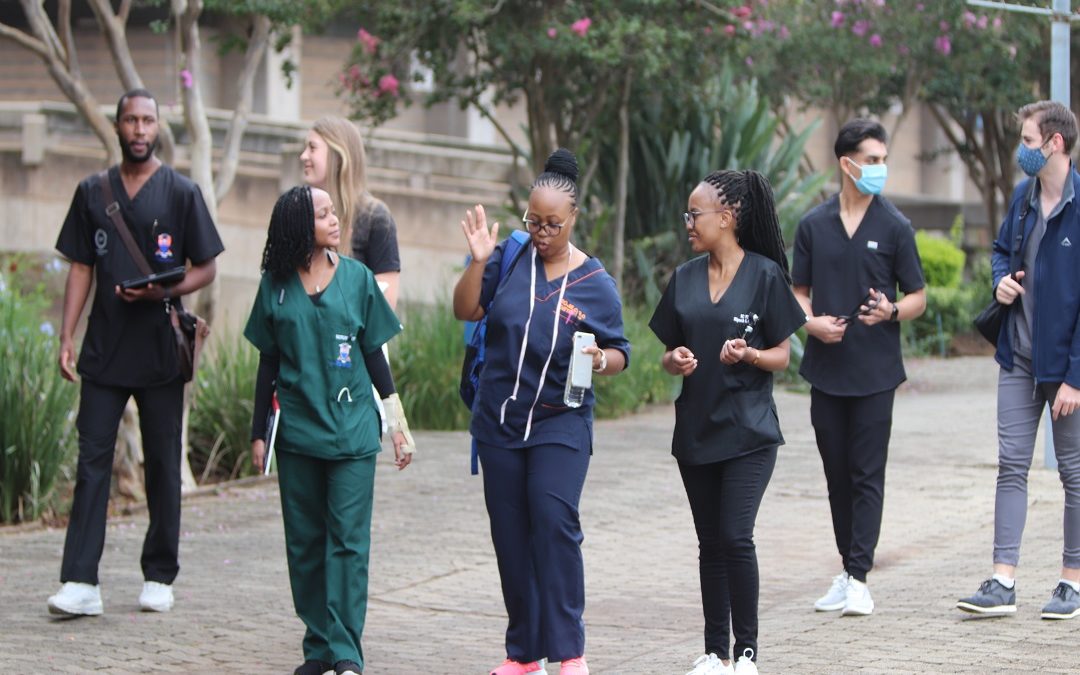
The highlight of the recent five-day Gender Based Violence (GBV) workshop involving SMU and the University of Nottingham (UoN) was the show case event that was held at the Sheraton Hotel; and provided a much valued platform for sharing of experiences, insights and best practice among stakeholders who serve as first line contacts for the victims of sexual or family violence, on a daily basis, in the country and also elsewhere.
This critical mass of anti GBV activists who attended, included health professionals from SMU, University of Nottingham (UoN) in the United Kingdom (UK), University of Pretoria (UP), Adelaide Tambo School of Nursing (TUT), Gauteng Health Department, researchers, psychologists, social workers, lawyers, prosecutors, South African Police Services Family Unit, forensic service centre managers, doctors, nurses, department of basic education and the deputy minister in the Presidency: Women, Youth and People with Disabilities.
Speaking at this event, Prof Hlengiwe Mkhize, complemented Dr Moreoagae Randa, the SMU Nursing Science Department lecturer and also the prime mover, behind the event. Prof Mkhize said that the strategic event provided participants with an opportunity to connect, and the networks that Dr Randa had established with UoN will not only infuse international experiences, but it will also go a long way to reinforce the research component behind the GBV activism and also ensure that the initiative becomes sustainable.
Dr Gill Langmack, representing the UoN, outlined how they use digital resources such as story boards to enable the victims of GBV to tell their stories to assist them in their healing process, in a meaningful way. The story boards take different shapes, such as anonymous letters, pictures, paintings, etc, which are pasted on a huge paper board. These story boards are available on the website of the UoN and are accessible to an international audience.
“Based on the discussions and inputs made at the show event, a way forward towards addressing the scourge of GBV is beginning to emerge giving us renewed vigour to move forward”, Dr Randa said. The following recommendations were tabled and adopted by the workshop:
- The department of basic education needs to explore ways and means to integrate GBV in the life orientation subject to raise the consciousness of learners about this scourge.
- GBV convicted offenders who have served their imprisonment sentences, must be put through a well outlined rehabilitation programme to enable them to integrate into the community and not to reoffend.
- Prominent personalities such as sports men and women, musicians etc. should be featured in anti- GBV campaigns to win hearts and minds to the anti-GBV cause.
- Health care professionals, who are the first line contacts for the victims of GBV need to undergo victim sensitivity courses and also be trained to be able to identify cases of GBV, even if the victims do not disclose experiences of GBV.
- Community involvement should be strengthened, men and boys to be active participants and promoters of change to get rid of GBV.
by Kegorapetse | Jul 16, 2019 | SMU Media
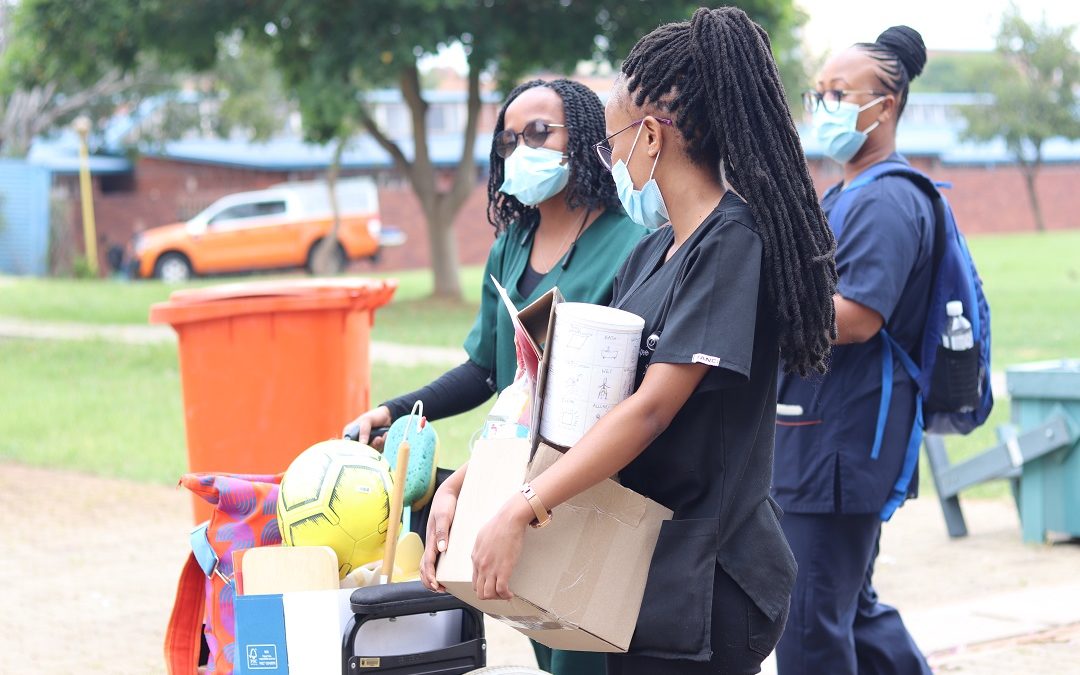
The Department of Public Health (DPH)’s face-to-face contact is integral to teaching and learning, where students and academics debate on current public health issues, during the annual winter and summer school programme. Compulsory classroom teaching takes place during the programme, which is two weeks on-campus blocks at the beginning of each semester for the Master of Public Health programme, one week on campus block for the Post Graduate Diploma in Public Health, and face-to-face seminars for the doctoral programs.
During the summer and winter school face-to-face blocks, students are introduced to:
- The online teaching platform through laboratory sessions.
- The discipline of public health.
- Semester courses.
- Laboratory sessions for biostatistics and epidemiology.
- Lab sessions for qualitative and quantitative data analysis.
- Introduction to research methods.
The DPH has successfully achieved to prepare public health professionals to, critically assess and resolve the public health problems facing Africa through its online courses. “The online approach has enabled the Department to produce the highest number of MPH graduates compared to other MPH programmes in South Africa. It is also the only programme in the country that offers the doctor of public health (DrPH) degree. In the May 2019 graduation ceremony, the Department graduated 26 Postgraduate Diplomas in Public Health, 61 Masters of Public Health, and 3 Doctor of Public Health graduates,’’ said Prof Mathildah Mokgatle, acting HoD: Public Health.
Since its establishment, the DPH has become a platform for research and training, offering doctorate and masters education focusing on areas such as Social and Behavioural Health Sciences, Epidemiology, Occupational and Environmental Health Sciences, Biostatistics, and Health Systems Management and Policy. The academic programs range from postgraduate diploma to a doctorate in public health. Currently, four programmes are running:
- Postgraduate Diploma in Public Health (PGDGPH).
- Master of Public Health (MPH).
- Doctor of Philosophy in Public Health (PhD).
- Doctor of Public Health (DrPH).
The DPH continues to offer all its programmes and courses online to accommodate working health professionals in the SADC region. Besides South Africa, professionals are from Botswana, Cameroon, the Democratic Republic of Congo, Eritrea, Ghana, Kenya, Lesotho, Malawi, Mozambique, Namibia, Nigeria, Swaziland, Uganda, Zambia, and Zimbabwe.
The unique way of offering courses online allows students to study at their own pace, in their own homes and countries, and thus enable professionals from various disciplines to find solutions for public health problems in Africa and apply them in their communities. “Online teaching forms a significant aspect of the programme (80%), is based on the principle of continuous learning, and places heavy emphasis on student interactions with the course facilitators and fellow classmates.,” said Prof Mathildah Mokgatle.
by Kegorapetse | Jul 10, 2019 | SMU Media
In June 2018, there were a number of allegations of corruption and maladministration raised in relation to the implementation of the University’s infrastructure projects. In order to get to the bottom of these allegations, Council resolved, at its meeting held in June 2018 to conduct an independent and in-depth forensic investigation with a view to testing the veracity or otherwise of these allegations. To that end, the University appointed Sizwe Ntsaluba Godobo (SNG) Grant Thornton to conduct a forensic investigation into these matters.
For more details please download Scanned-from-a-Xerox-Multifunction-Printer
by Kegorapetse | Jun 26, 2019 | SMU Media
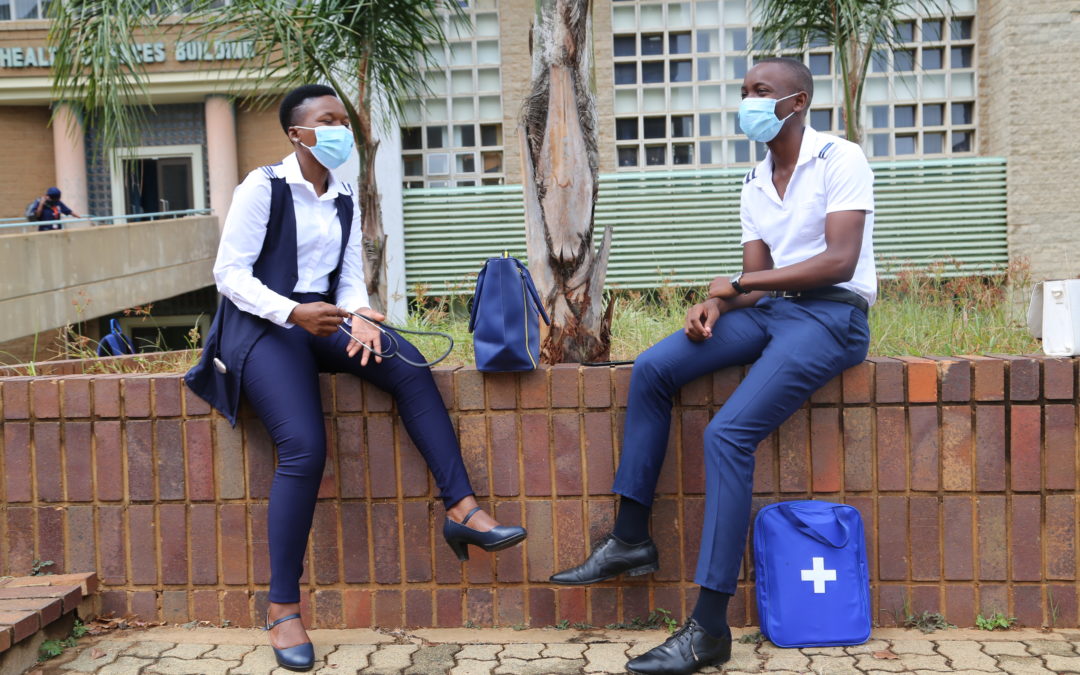
SMU Students, Mr. Thulani Motha and Ms. Rendani Tshilambwana were recently elected as President and Media & Communication Officers, of South African Pharmaceutical Students Federation (SAPSF) Presidential Committee, respectively. The two SMU students, along with other members of the committee have a mandate of uniting all pharmacy students in South Africa through provision of leadership, addressing the student’s needs and improving their standing and recognition within the health care fraternity.
Motha is a Master of Pharmacy Student specialising in Public Health Pharmacy & Management, while Tshilambwana is a third year student in Pharmacy. Their plans for the federation to serve their constituency. As the incoming president, Motha said he would prioritise addressing the challenges faced by the graduates when seeking internship and community service placement. “Collectively with other members of the committee, I will strive for placement of graduates into the industry. Currently we have a challenge of graduates unable to get internship placement. That issue will be addressed quickly with all relevant stakeholders to have a mutual understanding when it comes to solutions,” said Motha.
As the incumbent of the Media and Communication portfolio, Ms. Tshilambwana envisions taking the federation’s communication division to greater heights. “Under my leadership, the media and communication division will engage pharmacy students on various health care topics that will enhance our knowledge”, she said.
By Tumelo Moila
by Kegorapetse | Jun 18, 2019 | SMU Media
Mr. Sebastian Grimm a fifth year student from the Medical University of Vienna in Austria arrived in South Africa to do an elective at the Sefako Makgatho Health Sciences University. His elective was spread over three months, with his first month spent in Psychiatry, the second and third months in Paediatrics, as well as Anaesthesiology in that order.
In these three months spent in the country, he came into contact and worked with psychiatric patients at the Weskoppies Psychiatric Hospital where he got acquainted to bipolar, schizophrenia and depression cases.
While based at the Paediatric ward at the Dr. George Mukhari Academic Hospital where his focus was now on children presenting with Tuberculosis (TB) and HIV, working with other students, Mr. Grimm was able to amongst other things prepare briefing notes to doctors. Furthermore, the student was also exposed to young patients with heart conditions.
Remarking on his whole experience he said, “the whole elective programme was awesome. It was very interesting to observe how operations are carried out in South Africa. The doctors are well trained to deal with all kinds of emergencies. They do not let inadequate facilites discourage them. They always know how to make up for such inadequacies. They are well rounded and resourceful professionals”, emphasized Grimm.
Grimm said that he was very grateful for the opportunity afforded him to have professional interactions with the patients who confided in him about their health issues. As he prepared to leave, he thanked the staff and students of SMU who were very warm and helpful to him, as a foreign student. The perceptions he had that South Africa is unsafe have been debunked and that is the message he will spread in his country Germany.

by Kegorapetse | Jun 7, 2019 | SMU Media
The 2019 graduation ceremonies of the SMU stood out as one of the most celebrated highlights in the university’s five year history due to the high number of students who obtained their degrees cum laude and overcoming of the odds.
A record of 30 students ascended the stage and were awarded their degrees with distinctions. The students were from the School of Science and Technology, the School of Medicine and the School of Pharmacy. The glory was not only savored by those who obtained outstanding marks in their studies, but also by those who persevered and overcame serious physical and psychological challenges, in their studies.
Ms. Tsholofelo Mtshweni, who was born with bilateral mild to profound Sensory-Neural Hearing Loss (SNHL) was one such student. She registered for a Bachelor of Speech, Language, Audiology, Pathology (BSLAP), in 2013. In her third year, she was diagnosed with SNHL. Suffering from SNHL, she experiences problems with the translation of theoretical knowledge into practice because the hearing loss worsened to an extent of affecting her speech recognition abilities. She, subsequently, lost her ability to pronounce some sounds and words properly.
Unable to pronounce some sounds and words properly as a BSLPA student was not going to augur well for her because the profession deals with hearing impairment, language, speech and articulation disorders. So, the lecturers intervened and convinced her and her parents to discontinue BSLAP studies and register afresh for Bachelor of Pharmacy (B.Pharm). Her heart was broken as she had to start all over again. With the love of her family, the mentorship of Ms. Lindi Zikalala, her lecturer and support of friends, she persisted and completed her B.Pharm degree in 2019.
The other graduate who experienced psychological challenges was Dr Sandile Ndlovu. Having completed a Bachelor of Science (BSc) in record time, he registered at SMU for Bachelor of Medicine and Bachelor of Surgery (MBChB), in 2001. In the course of his MBChB studies, he suffered from a depressive illness and consequently discontinued his studies. Having spent some time on treatment, he obtained a medical clearance which was a mandatory requirement for him to be readmitted to continue with his studies. He was ably mentored by Prof. Pindile Mntla, Head of the Department of Cardiology and Ms. Angie Malope, the Academic Coordinator, who was his social and emotional mentor. Ndlovu completed his studies and graduated in 2019.
Dr. Ananias Kgopa, a Lecturer in the Department of Biochemistry, established a Tissue-Culture and Molecular Biology Laboratory for Honours, Masters and PhD students, at SMU. Dr. Kgopa built the laboratory anew as the university did not have one. The Laboratory focuses on Cancer and Diabetes research, using tissue culture to explore the impact of traditional medicine on the management of Diabetes and Cancer.