by Lorato | Jan 11, 2026 | Accolades and Achievements, All News, Alumni, SMU Media, Student Media
In a field where women remain underrepresented, Dr Dineo Tsabedze is charting her own course and building new pathways for others. Recently appointed as Academic and Clinical Head of the Department of Nuclear Medicine at Sefako Makgatho Health Sciences University (SMU) and Dr George Mukhari Academic Hospital (DGMAH), Tsabedze embodies a new era of leadership: one that merges cutting-edge science with inclusive, community-centred healthcare.
 A nuclear medicine specialist and accomplished academic, Tsabedze’s ascent reflects more than personal success. Her work signals a shift in South African healthcare leadership, where women are not just participating but defining the future of advanced medicine. From global collaborations to local outreach, she is expanding access to specialised diagnostics and championing a healthcare system where excellence and equity are not mutually exclusive.
Her journey is marked by a series of recent milestones that reinforce her growing influence in medicine. In 2024, she was admitted as a Fellow of the European Society of Cardiology (ESC), a prestigious international recognition that affirms her contributions to cardiovascular medicine. “It’s a humbling honour,” says Tsabedze. “It reflects years of dedication to cardiovascular research.”
She also serves as President of the Female Academic Leaders Fellowship Alumnae Association, an organisation committed to developing a strong pipeline of female academic leaders across South Africa. “Academic leadership must reflect the diversity of our society,” she says. “We need more women at the decision-making table in higher education.”
In addition to her leadership roles, Tsabedze was recently awarded a competitive fellowship to collaborate with the University of Oxford. This opportunity allows her to contribute to international research while also enhancing the profile of South African scholarship. “The Oxford collaboration is more than academic. It is about exchanging knowledge, building networks and raising the standard of care at home,” she notes.
Her academic record speaks volumes. With 29 peer-reviewed publications and 280 citations, Tsabedze has made notable contributions to nuclear medicine and cardiovascular research. Her work is frequently presented at international conferences, positioning her as a respected voice in global scientific circles.
Tsabedze’s impact extends well beyond academia. She is currently leading two community-based initiatives aimed at expanding access to nuclear medicine diagnostics and treatment in underserved areas. “Too often, advanced technologies are reserved for the privileged,” she remarks. “These projects aim to reverse that by bringing quality care to the marginalised.”
At SMU and DGMAH, where her leadership bridges academic excellence and clinical service, Tsabedze is positioning nuclear medicine as a driver of innovation and accessibility. Under her guidance, the department is embracing precision medicine and exploring the use of artificial intelligence in diagnostic imaging. “The future of nuclear medicine lies in personalisation and innovation,” she explains. Yet her vision extends beyond technology. Whether mentoring young women, leading international research, or transforming care models, her focus remains constant: opening doors for others. “I have mentors who opened doors for me. Now it’s my turn to do the same for others.”
For Tsabedze, leadership is not defined by position; it’s measured by impact, and in her leadership, both SMU and South African healthcare are finding new possibilities.
By Tumelo Moila
by Lorato | Jan 8, 2026 | All News, Alumni, SMU Media, Student Media
With a grass cutter in hand and a heart full of purpose, Margaret Kedibone Chiloane is helping shape the gardens and the spirit of Sefako Makgatho Health Sciences University (SMU). As a Machine Operator in the Garden Services unit, she is part of a vital yet often overlooked workforce keeping the university clean, green, and welcoming. Her story is one of transformation; from contract worker to permanent staff, from limited recognition to pride and visibility, and it reflects the quiet strength of women thriving in roles once reserved for men.
 Chiloane has been part of the SMU family since 2016, when the university insourced its gardening services from a private company. “Before SMU, I was working on contract,” she says. “Becoming a permanent employee changed my life. It gave me stability and hope.”
Her daily tasks may seem routine; cutting grass, blowing leaves —but to her, every detail matters. “It might seem small, but every corner of this campus counts,” she says. Among her favourite spots is the university’s main entrance. “When people drive in and see a beautiful, clean space, it gives them a good impression. That makes me happy.” Chiloane’s passion for her work is clear: “I love gardening,” she says simply. “Gone are the days when certain jobs were just for men. I believe I belong here.”
Though the job comes with physical demands, especially in larger areas of the campus, she says teamwork keeps them going. “Some parts really need more manpower, but we help each other,” she adds. As a woman working with machinery in a male-dominated field, Chiloane often receives surprised but positive reactions. “Students tell us they didn’t expect to see women doing this kind of work. They say, ‘Well done, ladies,’ and it makes me proud,” she says with a smile.
Women’s Month carries personal significance for her, both as a single mother and as a woman balancing home and work responsibilities. “It’s a time to reflect on my strength and how far I’ve come. I celebrate myself through my independence,” she says.
Looking back over her time at SMU, she takes pride in the transformation of the campus gardens. “They’ve changed so much for the better,” she says. “And management supports us; they check on us and value our input.” Importantly, Chiloane feels her work is seen. “People notice. Even students compliment the gardens. That motivates me.”
To other women in service roles, she offers this message: “Don’t be afraid of hard work. There’s dignity in what we do. We help the university grow, just like we help the plants grow.” For Chiloane, SMU is more than a workplace; it’s a place that gave her a voice, a skill, and a sense of belonging. “It’s a place where my hands do the talking,” she says proudly.
Through her hands, SMU’s gardens bloom. But hers is not a solitary story. It is the story of every woman who picks up a spade, starts a machine, and works the land with pride; quietly nurturing the university’s beauty, one day at a time.
By Tumelo Moila

by Lorato | Jan 8, 2026 | All News, Alumni, SMU Media, Student Media
Rhendani Mashila’s leadership journey defies convention. A Chartered Accountant [CA(SA)] who built her career in auditing and governance, she now leads transformation in higher education, not through policy or advocacy, but through finance itself.
 As the Head of Financial Aid at Sefako Makgatho Health Sciences University (SMU), Mashila represents a new generation of women who are using their expertise to break down structural barriers and redefine access. In an industry where financial leadership has long been male-dominated, her role signals both personal achievement and institutional progress. At SMU, she is part of a growing cohort of women stepping into executive roles that shape the university’s future.
Her professional grounding was shaped at the Office of the Auditor-General of South Africa, where she completed her articles and rose to become Audit Manager and Technical Manager. That experience, focused on accountability, governance, and public sector ethics, continues to shape her leadership.
“My time at the Auditor-General’s office shaped my understanding of finance as a powerful tool for public good,” she reflects. “It taught me that robust controls, ethical systems, and a commitment to transformation can truly improve people’s lives.” She adds, “That foundation, coupled with my passion for helping others, inspired me to pursue a career where finance serves a greater social purpose.”
For Mashila, finance is no longer a back-office operation. It’s a strategic instrument that can widen access, remove barriers, and empower students from marginalised communities. At SMU, her mandate is clear: build student-centred financial systems that are accountable, efficient, and transformative. Financial aid should do more than pay tuition fees,” Mashila says. “It must inspire hope, restore dignity, and create equal opportunities for students to thrive.”
Her vision centres on four key priorities: strengthening internal systems and controls for transparency and efficiency; digitising the student financial aid experience; expanding partnerships with funders; and developing a data-driven model to inform equitable, sustainable funding decisions. But for Mashila, the real goal is human: ensuring that no student is excluded from higher education because of financial barriers.
“Academic success starts long before a student steps into a lecture hall,” she notes. “Financial security is foundational.” Her appointment also speaks to the transformation of leadership spaces. In a profession where black women remain underrepresented, Mashila’s presence is both symbolic and practical, proof that women can and should lead in financial governance roles traditionally closed to them. “Women don’t need permission to lead in financial spaces,” she says. “We step forward, we deliver, and we change systems.”
At SMU, finance leadership is no longer solely the domain of systems and spreadsheets. Under Mashila’s guidance, it is becoming a catalyst for student success and institutional transformation. Her work affirms a simple but profound truth: access to education is not a side issue; it is the mission, and at SMU, a woman is leading the way.
By Tumelo Moila

by Lorato | Jan 8, 2026 | All News, Alumni, SMU Media, Student Media
Every current that flows and every light that glows at Sefako Makgatho Health Sciences University (SMU) bears the signature of Nomsa Mngomezulu. As an Assistant Electrician in the university’s Department of Built Environment, she maintains electrical systems and shapes perceptions of where women belong in technical work.
 Her journey is both practical and profound: from general worker to electrical specialist, Mngomezulu’s story is powered by determination, skill, and a refusal to be limited by traditional gender roles. “I’ve been working as an electrician for nine years,” she says. “In 2019, I decided to formalise my skills by studying Electrical Engineering. I earned my National N3 certificate and submitted it to HR, and now here I am.”
Today, Mngomezulu is the force behind much of what keeps SMU functional. Her tasks range from repairing pump stations and classroom lighting to upgrading distribution boards and fault-finding across the campus. Her work is largely unseen, but the campus depends on it. “Most of our work happens behind the scenes,” she explains. “It’s not glamorous; it’s dusty, it’s in ceilings and underground ducts. But it keeps the university running.”
Her technical journey was supported by mentorship from Willie Chabangu, a seasoned electrician at SMU. “He taught me how to fix pump stations and upgrade distribution boards. I learnt so much from him. Today, I can confidently say I’m a professional.”
For Mngomezulu, professionalism includes a rigorous approach to safety. She follows strict lockout/tagout procedures and adheres to the National Electrical Code. “Safety is everything, especially where people rely on the systems we maintain.” Yet for all its technical complexity, her work has always been more than wires and circuits. “This place allows me to grow, to learn, and to contribute. People may not see us, but they feel our impact every day.”
Her progression from trainee to technical professional reflects both her commitment to learning and the structured mentorship she received at SMU. She credits experienced colleagues with shaping her practical skills, but it is her own drive and precision that have earned her professional respect in a traditionally male-dominated team.
Attention to detail and an uncompromising approach to safety define Mngomezulu’s work. Every task, from repairing pump stations to managing high-voltage systems, is performed with strict adherence to safety protocols. She understands that the campus community relies on the systems she maintains and takes personal responsibility for ensuring they function safely and reliably.
As SMU modernises its infrastructure and technical systems, Mngomezulu is committed to growing alongside it. Her ambitions include mastering new technologies and further expanding her qualifications. Her message to young women is as direct as her approach to fault-finding: “Don’t let old ideas tell you where you belong. Women can lead anywhere—even in the circuits.”
By Tumelo Moila

by Lorato | Jan 8, 2026 | All News, Alumni, SMU Media, Student Media
Mathematics is a field where black women remain rare. Professor Maggie Aphane is rewriting that narrative. As Head of the Department of Mathematics and Applied Mathematics at Sefako Makgatho Health Sciences University (SMU), Aphane is transforming mathematics from a gatekeeper discipline into a platform for inclusion, leadership, and innovation. Recently appointed to the National Graduate Academy for Mathematical and Statistical Sciences (NGA-MaSS), she is shaping the future of mathematics both inside SMU and across South Africa.
 Aphane holds a BSc, Honours, MSc, and PhD in Mathematics (Topology) from the University of South Africa (UNISA), where she became the first South African woman and only the second woman overall to earn a PhD in Mathematics from the institution. “I’ve often been the only black female present at international conferences,” she reflects. “That has only strengthened my resolve to break barriers and inspire others.”
Her fascination with mathematics began early, drawn by its logical precision and power to explain the world. Specialising in general topology, Aphane’s research supports fields such as data science, network analysis, and medical imaging. She also works in fixed point theory and graph theory, contributing to models used in drug development and disease transmission.
As Head of Department, she is actively reshaping the academic culture at SMU. “One of my central goals is to increase the representation of women in mathematics,” she explained. “Diversity is not just a value, it’s essential to innovation.” Under her leadership, the department introduced a graph theory module to help students analyse real-world public health data. This forms part of a broader effort to encourage interdisciplinary collaboration with fields such as pharmacology and public health.
Previously known mainly for teaching, the department has transformed into a leading research hub. “We’ve gone from zero publications to being SMU’s highest publishing department,” she notes with pride. Despite the challenges of working in a male-dominated field, she credits her achievements to the mentorship of Professor Seithuti Moshokoa and the support of her family. “You need people who remind you of your goals when things get tough,” she says.
For this reason, mentorship lies at the core of her academic legacy. She has created safe, inclusive spaces for young women in science, offering scholarships, internships, and research opportunities. Her recent participation in the Megamaths Conference, alongside six female postgraduate students, reflects her hands-on and empowering approach.
Under her leadership, the department has raised over R15 million to support emerging researchers and tutors, produced its first PhD graduates, and seen a steady rise in postgraduate enrolments. She also secured the department’s first nGAP lecturer and welcomed two postdoctoral fellows, further strengthening its research profile.
At SMU, where mathematics now fuels both research output and interdisciplinary innovation, Aphane is building more than a department; she is building a legacy. “I hope to be remembered as someone who opened doors and built lasting foundations,” she says. “That would be my greatest legacy.” For South African mathematics, and for every young woman following in her footsteps, Professor Maggie Aphane is ensuring that legacy is already taking shape.
By Tumelo Moila
by Lorato | Jan 8, 2026 | All News, SMU Media, Student Media
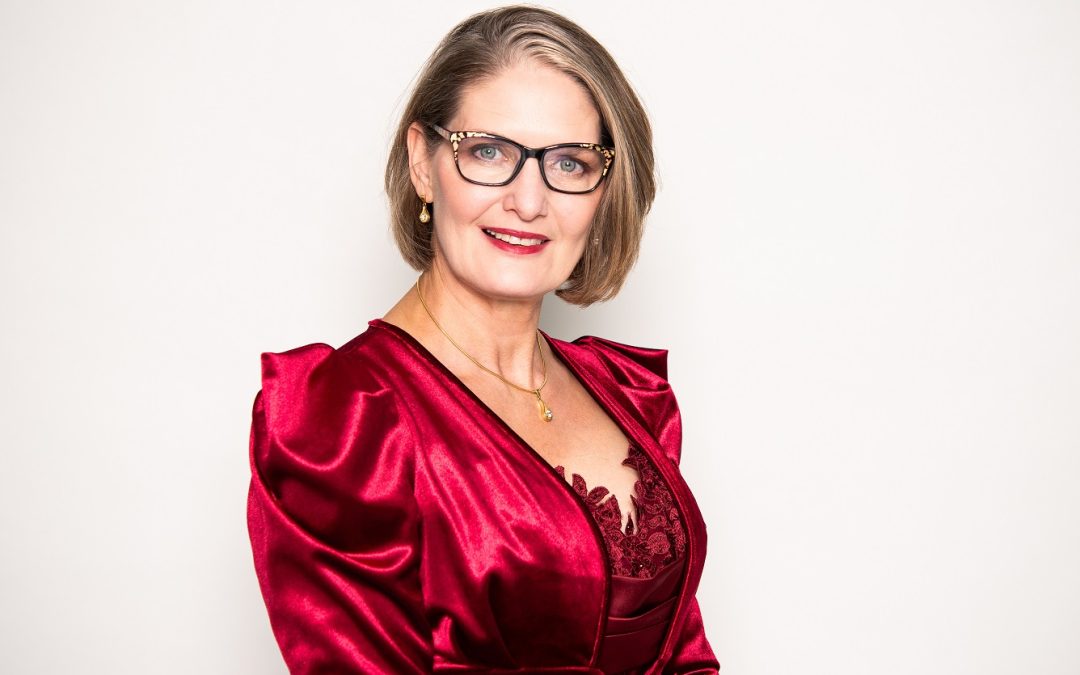
Professor Hyla Kluyts is spearheading one of the most ambitious health equity initiatives in South Africa. As Head of the Department of Anaesthesiology and Critical Care at Sefako Makgatho Health Sciences University (SMU) and Dr George Mukhari Academic Hospital, she recently launched the Bophelo Unit for Equity, Intelligence and Learning—a pioneering platform focused on embedding data into decision-making to improve perioperative care across under-resourced settings. Bophelo, meaning “life” or “health”, captures the unit’s mission to turn clinical data into system-level intelligence that can drive equitable outcomes.
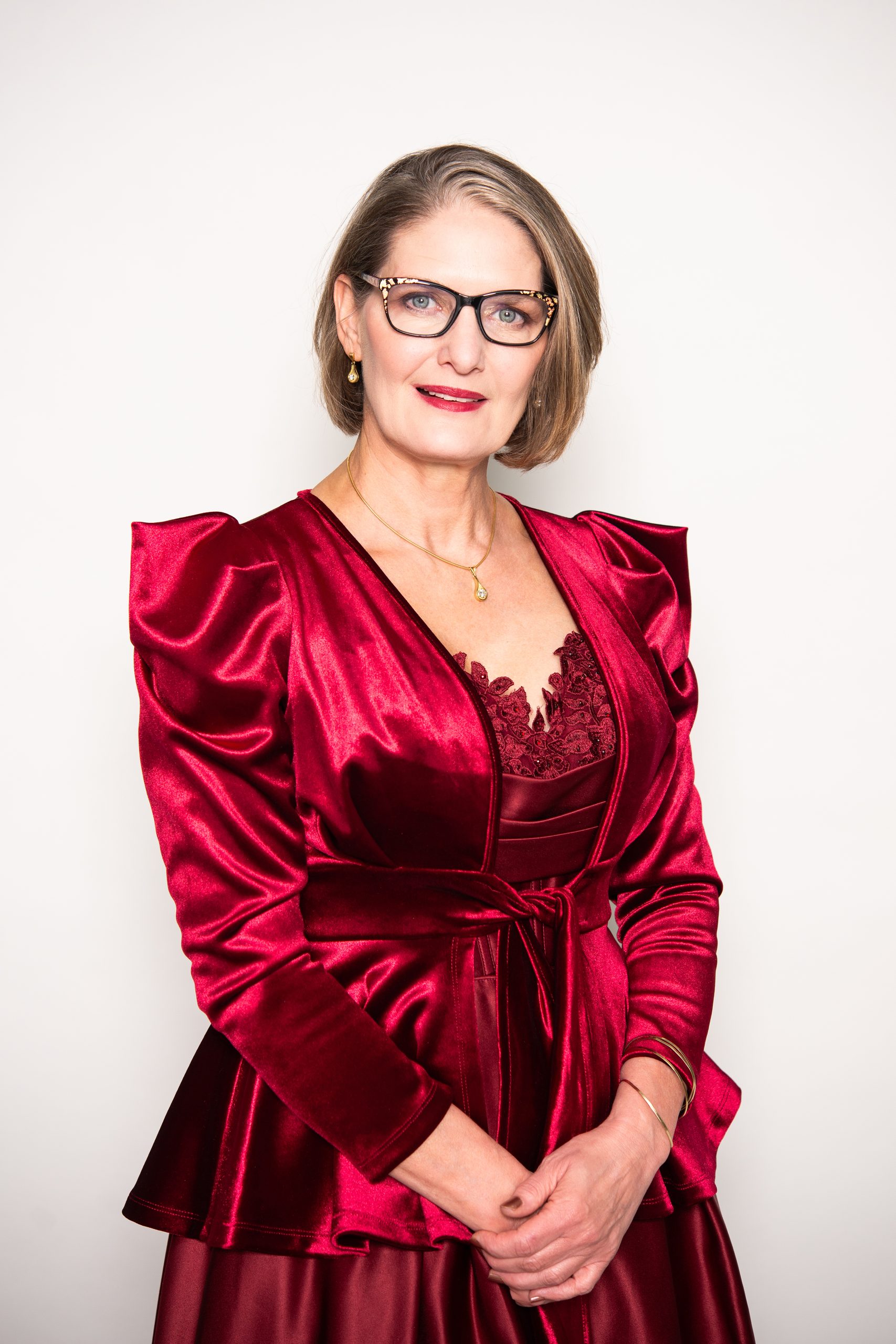 In her leadership role at SMU, Kluyts embodies the university’s mission to cultivate healthcare professionals who lead national conversations and innovations in health equity and systems transformation.
She is widely recognised for her leadership in anaesthesiology and for reshaping how surgical care is understood, delivered, and measured on the African continent. She is also the founder and Executive Director of Safe Surgery South Africa (SSSA), a non-profit company and public benefit organisation advancing the use of perioperative health data. In collaboration with the African Perioperative Research Group (APORG), she is creating a new research ecosystem that centres African voices and local evidence.
“Health equity cannot exist without data equity,” says Kluyts. “I’ve seen too many preventable deaths simply because no one was tracking outcomes.”
Appointed as South Africa’s first full Professor in Anaesthesiology—and the first woman to reach this milestone—Kluyts’s career has consistently broken new ground. Yet, she describes the achievement as “a lonely journey”, one that came after years of unrecognised effort. “If my experience helps clear the path for others, then it has been worthwhile. I hope to help build a culture where we celebrate each other’s success sincerely and loudly.”
Her early clinical career included leading the development of the intensive care unit at Kalafong Hospital, deepening her commitment to patient-centred systems. Her move into academia followed a deeply personal loss—she returned to the field with renewed clarity after losing twins to HELLP syndrome at the age of 38. “That grief brought me back with a sharper sense of purpose,” she says. Today, she balances her professional commitments with her role as a mother to two daughters, candidly noting, “Some days, patience as a parent is harder than perseverance as a professional.”
Kluyts’s leadership philosophy is grounded in presence, empathy and accountability. In high-pressure environments with limited resources, she believes that showing up—and truly listening—matters. “Trainees must learn, but they must also be protected. The system may be flawed, but people should never feel alone in it.”
Her doctoral research focused on clinical risk prediction in surgical patients, reinforcing her belief that data-driven systems can improve both care and outcomes. She is a consultant to the Clinical Services Unit of CareConnectHIE, South Africa’s first non-profit Health Information Exchange, and serves on the World Federation of Societies of Anaesthesiologists’ Safety and Quality of Practice Committee.
For young women, particularly from underrepresented backgrounds, Kluyts offers a firm message: “You belong in every room. Don’t wait for permission. Step in—and stay.” Her vision for South Africa’s healthcare future is clear: “A system that is just, intelligent and humane—where excellence and equity are not mutually exclusive but deeply intertwined.”
By Dimakatso Modise