by Lorato | Apr 9, 2025 | All News, SMU Media, Student Media
As the world navigates the challenges of the Fourth Industrial Revolution (4IR), Sefako Makgatho Health Sciences University (SMU) is at the forefront of harnessing innovation to revolutionise healthcare. As a leading institution in health sciences education and research, SMU is dedicated to translating discoveries into practical solutions that address complex health challenges in South Africa and beyond. Through 4IR technologies, SMU aims to enhance healthcare technology, facilitate technology transfer, and improve health outcomes.
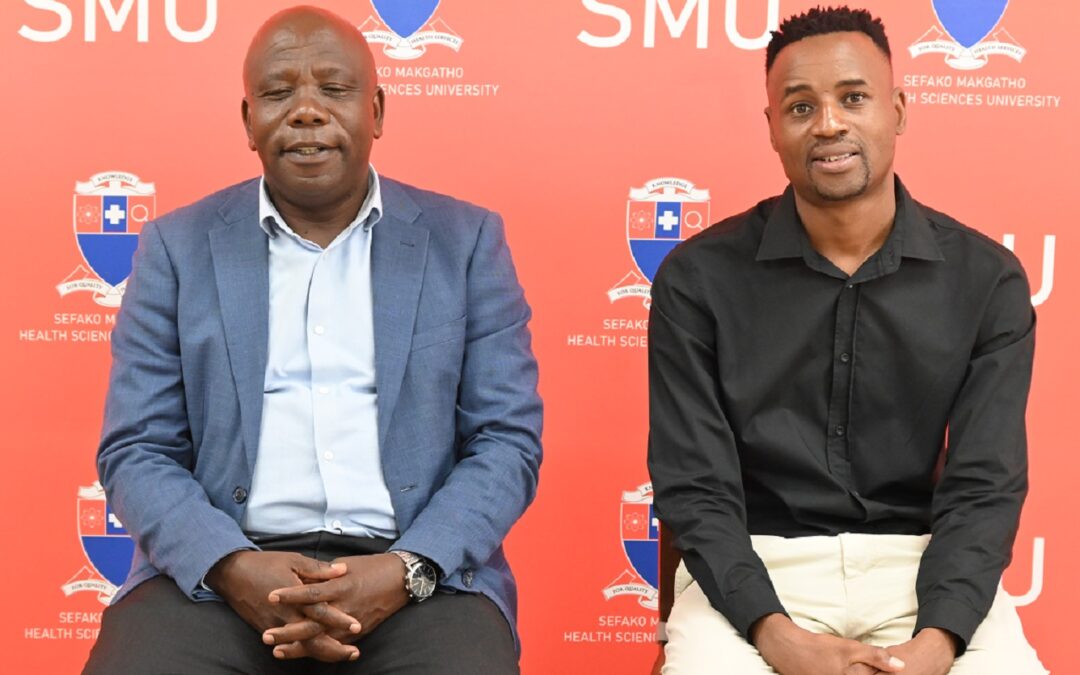
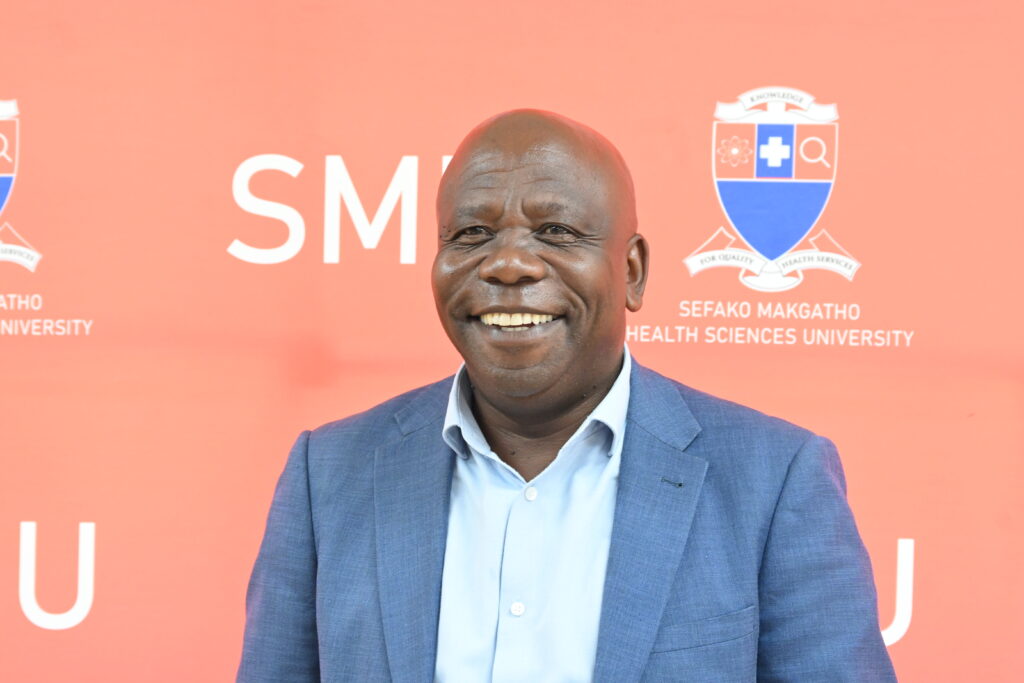 At the heart of this mission is SMU’s Technology Transfer Office (TTO), established in July 2022, to support staff and students in identifying and protecting intellectual property emanating from their research projects with the ultimate goal of commercialising such innovations. “The TTO was launched to synergise academic research and commercial application,” explains Mohlatlego Sebola, Acting Manager of the TTO. “Our primary role is to facilitate identification and protection of intellectual property through either patents, copyrights, trademarks, and trade secrets and ensuring innovations with potential economic or social application reach the market.”
The TTO aligns with SMU’s broader vision of advancing health sciences research and innovation. “Our work supports SMU’s Strategic Objective 2: Research and Innovation, by identifying, protecting, and commercialising discoveries,” says Sebola.
In its initial years, the TTO faced challenges, including a slow uptake. However, through awareness campaigns and sustained engagement, it has seen an increase in inquiries and invention disclosures. Collaboration has been instrumental in this growth. The TTO partners with SMU’s schools and external stakeholders, engaging in platforms such as the Tshwane Innovation Ecosystem, Gauteng Innovation Forum, and the World Intellectual Property Organization (WIPO)-supported Southern African Development Community (SADC) TTO Mentorship Programme. Recognition of these efforts came in 2024 when the TTO received the prestigious “Southern African Research and Innovation Management Association (SARIMA) Excellent Award on Organisational Growth in Innovation Management” at the Annual Conference in Mozambique.
 The process of securing IP begins with an invention disclosure form, triggering a Pre-Due Diligence process that includes novelty searches and market analysis. If an innovation is deemed patentable, the TTO liaise with one of the patent firms that is part of the university’s panel of law firms to file the necessary paperwork with the Companies and Intellectual Property Commission (CIPC) to protect the innovation. “Protecting intellectual property before publication is essential,” Sebola emphasises. “Researchers are often reluctant to start with protection, thinking this may hinder publication, but in reality, securing IP strengthens credibility and enhances the impact of the publication.”
Beyond protection, the TTO also plays a critical role in securing funding. It collaborates with the Technology Innovation Agency (TIA), assisting researchers in applying for the Seed Fund to develop their innovations further. “We help researchers refine their projects, ensuring they are market-ready and appealing to potential investors,” Sebola adds.
Among the TTO’s notable successes in 2024 are three patents, including one from the School of Pharmacy for Raloxifene Hydrochloride Hydrate Solvate, a compound with promising applications in treating postmenopausal osteoporosis and breast cancer. Another significant patent from the School of Medicine is a rapid Hepatitis B core-related antigen (HBcrAg) diagnostic assay, which could revolutionise hepatitis B diagnosis, particularly for occult hepatitis B virus (HBV) cases that current tests fail to detect.
Looking ahead, the TTO aims to strengthen its support for researchers and students, building capacity for innovation and commercialisation. Encouraging early engagement, Sebola urged researchers and students to consider how their work can address socio-economic challenges. “Innovations with real-world applications are more likely to succeed commercially.” The TTO maintains an open-door policy, welcoming inquiries and brainstorming sessions without requiring appointments. “Innovative ideas can emerge at any time,” Sebola says.
Researchers and students are encouraged to visit the TTO at the Clinical Pathology Building (S520) to explore pathways for transforming their research into impactful innovations.
As SMU continues to push the boundaries of health sciences education and research, it is clear that the institution is poised to make a lasting impact on healthcare in South Africa and beyond.
By Tumelo Moila

by Lorato | Apr 9, 2025 | All News, SMU Media, Student Media
Sefako Makgatho Health Sciences University (SMU) recently celebrated a momentous occasion as 25 Bachelor of Medicine and Bachelor of Surgery (MBChB) graduates took the Hippocratic Oath on Wednesday, 26 March 2025, marking their transition from students to medical professionals. This significant event underscored their commitment to ethical practice, patient care, and upholding the values of the medical profession. With this milestone, SMU reaffirms its status as a leading institution in medical education, consistently producing graduates who are not only skilled but also dedicated to serving their communities with compassion and professionalism. As they begin their careers, these new doctors carry forward the high standards set by SMU in their pursuit of excellence in healthcare.
 The ceremony, attended by staff members from the School of Medicine, family, and friends, was filled with pride and anticipation as the graduates pledged to serve with integrity, competence, and compassion. They vowed to practise medicine without bias or discrimination, ensuring the well-being of their future patients remains their highest priority. The event underscored the responsibility that comes with being a healthcare professional and the expectations placed upon them as they step into the medical field.
Professor Risenga Chauke, Acting Dean of the School of Medicine, delivered an inspiring address, urging the new doctors to embrace their responsibilities with diligence and integrity.
“You are now transitioning from a position of dependency to a position of responsibility and accountability. Remember, you waited six years to step into the final position of accountability. You have now transitioned from being dependent on your lecturers to taking responsibility for making decisions. If you fail with integrity, you will surely rise again,” he stated.
The ceremony was an emotional moment for many, including Dr Mohau Phiti, a former Miss Mamelodi Sundowns North West Princess for 2019/2020, who expressed her overwhelming joy and gratitude.
“This experience is exhilarating; it is a moment of pure joy, and I am beyond grateful to the highest. I was determined to reach this point in my journey. Thank you so much, SMU—you will forever hold a special place in my heart. And to everyone who has supported me along the way, a thousand thank you,” said Dr Mohau Phitishe.
 The event also recognised the achievements of Dr Blessing Langa, who not only completed his medical degree but also successfully launched the Foreign Lands Clothing Brand while at SMU. Reflecting on his journey, he shared how he managed to balance academic responsibilities with entrepreneurship.
“It feels absolutely amazing. These are the two titles I have earned from SMU—I obtained a degree, and I also managed to establish a business. From an entrepreneurial perspective, I would say I am doing quite well. The key to balancing everything was time management. I advise others to manage your time wisely, and you will always stay ahead,” he shared.
The Hippocratic Oath-Taking Ceremony served as both a moment of celebration and a solemn reminder of the immense responsibility these young doctors now bear. Their training has prepared them for the challenges ahead, and they step into the medical profession equipped with knowledge, skill, and ethical principles.
As these newly qualified doctors step into their professional roles, they do so with the assurance of a strong foundation built at SMU, where academic excellence, ethical practice, and compassion are paramount. The university’s continued commitment to producing competent and empathetic healthcare professionals ensures that these graduates are well-equipped to make a positive impact in the healthcare sector. With the values of dedication, professionalism, and patient care deeply ingrained in their training, these young doctors are set to uphold the legacy of excellence that SMU has long been known for, bringing about meaningful change in the communities they serve.
By Tumelo Moila

by Lorato | Apr 9, 2025 | All News, SMU Media, Student Media
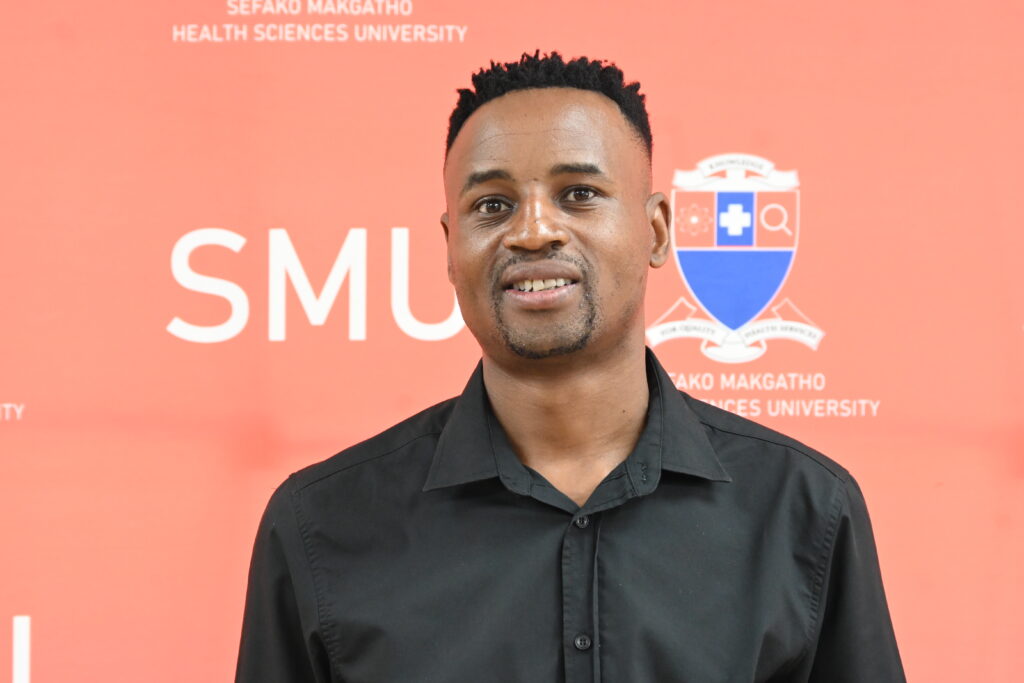
Sefako Makgatho Health Sciences University (SMU) alumnus Thabo Sekwati has become a key figure in South African football, serving as a Physiotherapist for the national team, Bafana Bafana. His journey from an aspiring student to a professional working at the highest levels of the sport is one of dedication, passion, and perseverance.
 Sekwati, a Sports Physiotherapist, hails from the village of Mamone, Maroteng section, in the Sekhukhune district, Limpopo. He matriculated in 2006 from Tenyane Secondary School before enrolling at the University of Limpopo (Medunsa Campus) in 2007 for a BSc degree. In 2009, he pursued a BSc in Physiotherapy, later obtaining an MSc in Physiotherapy in 2019. Currently, he is a PhD student at SMU, focusing on developing a physiotherapy fatigue management protocol for footballers.
His education at SMU provided him with a strong foundation. “The education I received at SMU played a crucial role in shaping my career by equipping me with the essential knowledge, skills, and experience needed for the sports industry,” he says.
Sekwati’s journey to the national team was not an overnight success. He started with South Africa’s under-17 male team in 2018, having been on SAFA’s database since 2016. “I attended recommended courses such as the FIFA Online Football Medicine Diploma while balancing other responsibilities. My first call-up came in 2018 while I was in Cape Town for a rugby tournament. Dr Thulani Ngwenya, SAFA’s Chief Medical Officer, informed me that I had to report for the under-17 camp in Gauteng,” he recalls.
 From 2018 to 2021, he worked with the under-17 and under-20 teams before being promoted to Bafana Bafana under Coach Hugo Broos. “I was excited but also nervous. The pressure is immense at the senior national level, as you are dealing with high-profile players and intense scrutiny. But once you understand that anatomy and physiology remain the same regardless of the level, everything falls into place,” he explains.
The demands of international football present unique challenges. “At the senior level, you are surrounded by cameras, sponsors, and expectant fans. Compared to working with junior players, where the focus is more on growth-related injuries, the senior team demands peak physical performance,” he notes.
Despite these challenges, Sekwati credits his smooth transition to the guidance of veteran physiotherapist Gift Ndlovu. “He played a major role in ensuring that I adapted easily to the high demands of the job,” he acknowledges.
Sekwati plays a crucial role in ensuring player fitness and recovery. “Our day starts early with a meeting with the team doctor and head chef to review meal plans. We then hold a clinic session for player assessments and treatments before presenting injury reports to the coach,” he explains.
Common injuries among players include contusions, sprains, strains, and fractures. “Our rehabilitation strategy involves pain management, injury assessment, and a gradual return to play. Medical clearance is essential before allowing a player back on the pitch,” he states.
 One of Sekwati’s toughest moments was during the Africa Cup of Nations (AFCON), managing multiple injuries at once. “Players want to play, but sometimes their bodies do not cooperate. Managing their emotional and psychological well-being is crucial,” he shares.
Sekwati believes South Africa has made significant strides in sports physiotherapy but still has room for improvement. “We need to invest in motion capture systems to analyse player movements, as well as cryogenic chambers and saunas for faster recovery,” he suggests.
Reflecting on his time with Bafana Bafana, Sekwati says: “Singing the national anthem at AFCON’s opening game was a surreal moment. That was when I realised we were not just representing ourselves, but the hopes of 63 million South Africans.”
Looking ahead, he envisions opening a sports recovery centre and contributing to research in sports physiotherapy. His advice to aspiring physiotherapists is simple: “Invest in continuous learning, stay updated with the latest treatment modalities, and believe in yourself.”
As for his role with the national team, he concludes: “The sky is the limit—you just have to spread your wings. I will forever be grateful for this opportunity to serve my country.”
By Tumelo Moila
by Lorato | Apr 9, 2025 | Accolades and Achievements, All News, SMU Media, Student Media
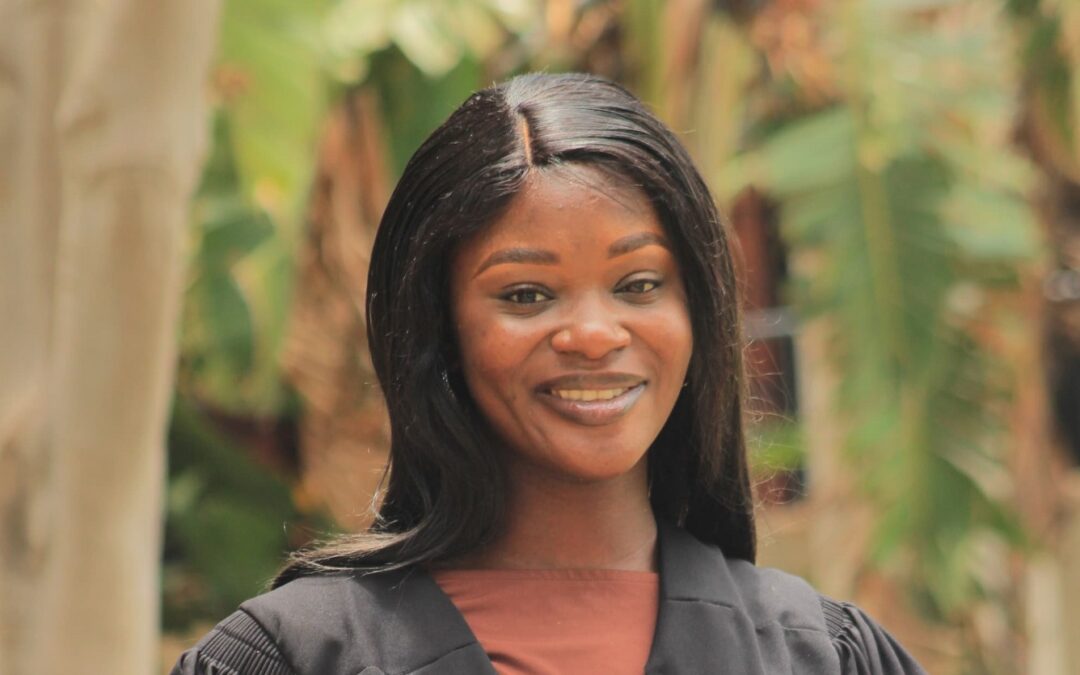
Sanyu Kiyonga, a distinguished pharmacy graduate from Sefako Makgatho Health Sciences University (SMU), has been recognised for her outstanding academic performance, securing the Academic Excellence Award for Best Portfolio in Hospital Pharmacy Practice-Based Learning with an impressive 81% mark during the School of Pharmacy Oath Taking Ceremony 2024. This prestigious achievement underscores her dedication to the field of pharmacy and her commitment to improving healthcare services.
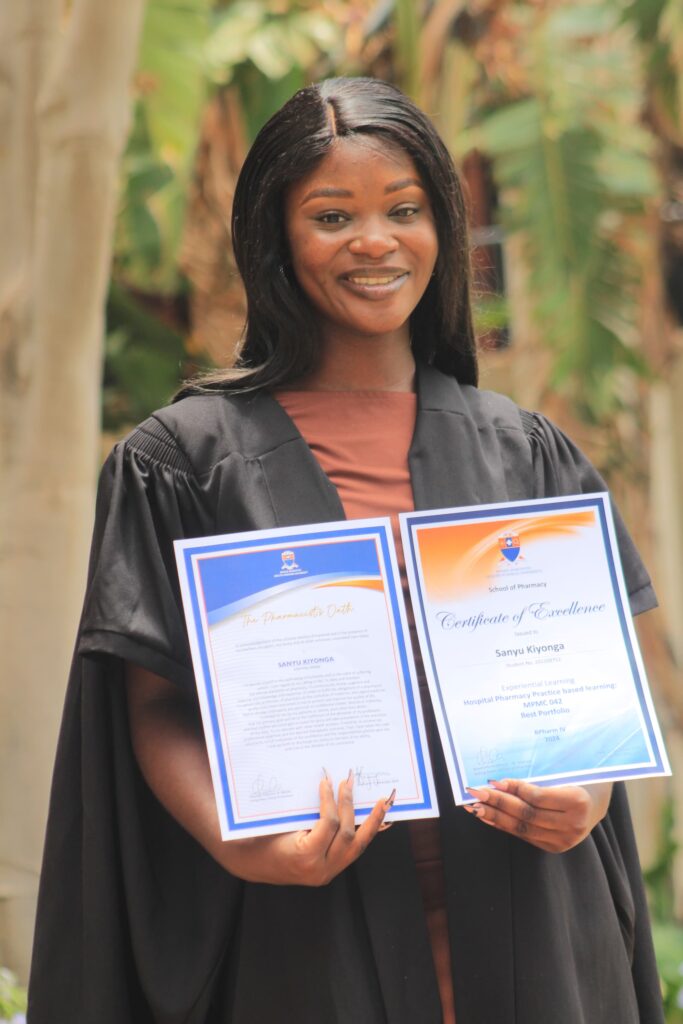 Kiyonga, who pursued her studies at SMU from 2021 to 2024, has demonstrated an unwavering passion for pharmacy, driven by her profound desire to treat patients and contribute to the advancement of medical care. Having grown up in Uganda, where healthcare infrastructure faces considerable challenges, she developed a deep-seated resolve to make a tangible impact in the field. Her experiential learning journey in hospital pharmacy has solidified her expertise and positioned her as a rising leader in pharmaceutical care.
Reflecting on her achievement, Kiyonga expressed gratitude for the opportunity to refine her skills in a hospital setting. “This recognition is not just a personal milestone but a testament to the support I have received from my lecturers, mentors, and peers at SMU. I am deeply passionate about making a difference in patient care, and this award motivates me to keep striving for excellence,” she says.
The Best Portfolio award highlights Kiyonga’s ability to integrate academic knowledge with practical application, a crucial skill in the evolving landscape of healthcare. Her work in hospital pharmacy practice-based learning involved medication management, patient counselling, and collaborative healthcare interventions, all of which are essential in optimising treatment outcomes.
Kiyonga credits her success to the mentorship she received from her lecturer, Jackson Mahlaba, as well as guidance from the hospital manager and other professionals in the field. “I actively sought feedback and dedicated time to refine my portfolio, which ultimately contributed to this achievement,” she notes.
A crucial component of Kiyonga’s education was her experiential learning in hospital pharmacy, which provided her with hands-on experience in inventory management, patient counselling, and teamwork. This exposure reinforced her understanding of pharmacists’ vital role in patient care. “One of the most impactful experiences for me was working alongside other healthcare professionals who were willing to assist and teach me,” she says. “It taught me the importance of patient-centred care and effective communication, both of which are essential skills in pharmacy.”
Success is rarely achieved alone, and Kiyonga acknowledges the unwavering support she received from her family, friends, and academic mentors. She emphasises that time management and seeking help were crucial in overcoming obstacles throughout her academic journey. “Having a strong support system kept me motivated, especially during challenging times,” she says. “I learned the importance of balancing academics with personal well-being and seeking guidance whenever I needed it.”
The culmination of her pharmacy studies was marked by the symbolic oath-taking ceremony, a defining moment in Kiyonga’s journey. “Taking the oath was incredibly significant, as it reaffirmed my commitment to ethical practice and the well-being of my patients,” she shared.
Looking ahead, Kiyonga aspires to contribute meaningfully to the pharmacy profession by leveraging her knowledge and skills to improve patient outcomes. “My goal is to expand my expertise and become a trusted healthcare professional, positively impacting patients’ lives,” she says.
“I am grateful for the support I have received from the School of Pharmacy and SMU. This journey has reinforced my commitment to patient care and professional growth,” she concludes.
By Tumelo Moila

by Lorato | Apr 9, 2025 | All News, SMU Media, Student Media
Against a backdrop of rapid change in global healthcare and research, Sefako Makgatho Health Sciences University (SMU) stands as a dynamic force, driving transformative innovations across the health sciences. SMU’s brightest minds are not only shaping the future of medicine and research—they are creating tangible, life-changing impact through groundbreaking initiatives and strategic partnerships.
 One shining example of SMU’s transformative vision is the Oral Health Centre, which is revolutionising dental care for thousands. Serving an astonishing 10,500 patients monthly, the centre has become the heart of South African healthcare, setting new standards in dental treatment and community well-being. By combining advanced clinical techniques with compassionate care, the centre demonstrates how SMU is directly impacting patient outcomes and raising the bar for oral health services across the nation.
In parallel, SMU is breaking new ground through international collaborations that enhance student success and global research. Recently, the university has welcomed international funders into its fold, strengthening vital partnerships that open up unprecedented opportunities for student development. These alliances not only provide critical financial backing but also integrate global best practices into the academic environment, ensuring that students gain a competitive edge in an increasingly interconnected world. The infusion of international expertise and resources is transforming SMU’s educational landscape, empowering the next generation of healthcare professionals to innovate and excel on a global stage.
Further amplifying its impact, SMU’s Medical Education, Clinical Research and Utilisation (MECRU) unit is at the forefront of advancing clinical research and community health. Through MECRU, SMU is spearheading projects that address pressing public health challenges, from improving treatment protocols to pioneering preventative care strategies. The work carried out by MECRU exemplifies how focused, research-driven initiatives can translate into real-world benefits, directly contributing to the improvement of community health outcomes and the overall resilience of the healthcare system.
In an era defined by collaboration, SMU has also joined forces with leading universities across the country to revolutionise health research in South Africa. The strategic collaborations harness the collective expertise of the nation’s top institutions to tackle some of the most complex healthcare issues of our time. By pooling resources, sharing cutting-edge technologies, and fostering interdisciplinary dialogue, these partnerships are catalysing breakthroughs that have the potential to reshape public health policies and clinical practices on a national—and indeed global—scale.
SMU’s success, however, is not solely the result of its state-of-the-art research facilities or its strategic partnerships; it is also built on a foundation of visionary leadership and an unwavering commitment to excellence. Academics and administrators work in unison to create an environment where innovation thrives and every challenge is met with a solution-oriented mindset. Whether it is through reimagining educational programmes, spearheading community outreach, or driving advanced research, SMU’s staff exemplify the university’s core ethos: transforming challenges into opportunities for impact.
The stories emerging from SMU prove the institution’s pioneering spirit. They echo a unified message: that excellence in education and research is not just about intellectual prowess but about real-world application and community benefit. With every innovative project and every strategic partnership, SMU reaffirms its role as a catalyst for positive change, one that not only shapes the future of health and science but also uplifts the communities it serves.
In celebrating these transformative achievements, SMU stands tall as a pioneer in global health and science. Its visionary approach, bolstered by robust research, strategic international partnerships, and a deep commitment to community well-being, continues to set new benchmarks in the field. As SMU’s brightest minds forge ahead, the future of healthcare and research looks not only promising but profoundly transformative.
By Tshimangadzo Mphaphuli

by Lorato | Apr 1, 2025 | All News, SMU Media, Student Media
Showcasing its commitment to international engagement and student support, Sefako Makgatho Health Sciences University (SMU) participated in a recent International Student Symposium hosted by the Vaal University of Technology Student Representative Council. The event, held under the theme “Celebrating the Human Rights of International Student Communities in South Africa,” commemorated Human Rights Day (21 March 2025) and examined the policies and regulations that govern the movement and enrollment of international students in the country.
 SMU boasts a vibrant international cohort, with students from across Africa who contribute a wealth of cultural insights, innovative ideas, and diverse perspectives to campus life. However, international students often face complex governmental and institutional policies that can hinder a smooth experience abroad. The symposium addressed these challenges by reviewing South African higher education and government regulations that shape international students’ access to universities.
By reflecting on such policies and legislation, the symposium emphasised the importance of protecting the human rights of students wishing to pursue academic opportunities beyond their home countries. As SMU’s Director of Internationalisation, Dr Carlien Jooste, explains: “It is important for the SMU Internationalisation Directorate to facilitate and support such engagement, as it further establishes SMU’s international student footprint but also allows our international students to engage with other international students, learn from their experiences, and give a voice to their needs while studying in South Africa.”
 SMU’s International Student Organisation (ISO) delegates, Samuel Olajide (Nigeria) and Sobahle Simelane (Kingdom of Eswatini), proudly represented SMU during the two-day event. Discussions ranged from the impact of the South African Migration Act and university regulations to the significance of participation and feedback from the international student community in shaping inclusive policy reform. Commenting on the symposium’s impact, Olajide highlights the value of unity among international students: “The key takeaway for me was the importance of international students being organised and unified at a national level. By presenting a collective voice, we can more effectively address challenges that may be insurmountable for individuals to tackle alone.”
Simelane echoed these sentiments, emphasising the need to harness collective power in overcoming challenges stemming from nationality-based constraints: “The symposium was very eye-opening. It made me realise that, as international students, we are at a disadvantage due to our nationality, but we have the power to pave our way to our desired future.
Beyond the formal discussions, participants visited the Sharpeville Memorial Garden in remembrance of the Sharpeville Massacre, tying the event’s focus on human rights to a landmark moment in South African history. The visit served as a poignant reminder of the importance of continued advocacy for equity and inclusivity in higher education.
SMU’s proactive engagement in this symposium demonstrates the university’s commitment to supporting its international student community, fostering cross-cultural exchange, and shaping policy discussions that enhance the overall student experience. Through forging strong connections and amplifying diverse voices, SMU is truly cementing its place as a leader in international collaboration and higher education excellence.
