by Lorato | Mar 26, 2025 | All News, SMU Media, Student Media
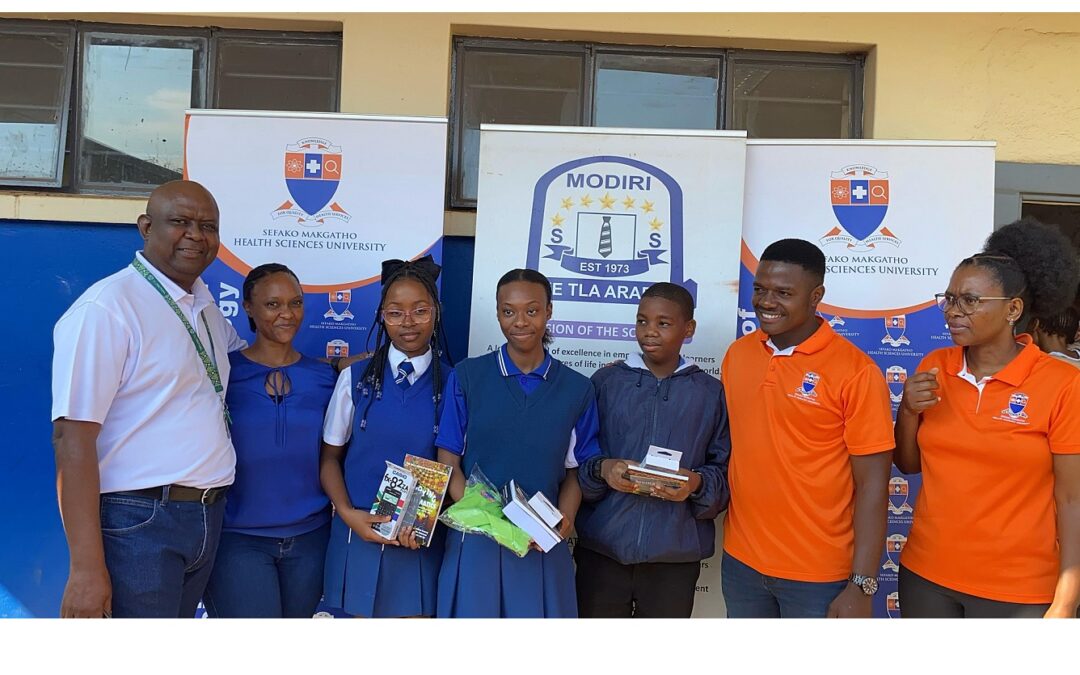
March 14th, globally recognised as Pi Day, is an annual celebration dedicated to the mathematical constant π (pi ≈ 3.14159…). The occasion provides an opportunity for learners, educators, and mathematics enthusiasts to appreciate the significance of this irrational number in various disciplines. This year, Pi Day 2025 was marked with great enthusiasm at Sefako Makgatho Health Sciences University (SMU), bringing together high school learners, university educators, and professionals in mathematics and applied mathematics.
 Professor Ndlovu, a dedicated mathematics lecturer at SMU, expressed his excitement for Pi Day, emphasising its importance beyond the numerical value of π. “Pi Day is more than just a date on the calendar; it’s a celebration of the beauty, depth, and elegance of mathematics. This year, we celebrated with learners from P.H. Moraka, N.H. Tsheune, Modiri, and Bethsaida high schools in Tshwane. Our goal was to educate them about the history of Pi, introduce them to careers in mathematics and applied mathematics, and provide guidance on Admission Point Score (APS) requirements for pursuing a Bachelor of Science (BSc) in Mathematics.”
While Pi is commonly associated with circles, its applications extend into physics, engineering, and computer science. Pi Day serves as a valuable opportunity to explore these applications and appreciate the number’s infinite and non-repeating nature. “Pi appears in engineering, physics, technology, and even nature,” Ndlovu explained. “Understanding its applications helps students see the real-world relevance of mathematics.”
Among the many Pi Day activities, problem-solving sessions remain a favourite for both learners and teachers. Educators use interactive games, real-world applications, and fun challenges to make learning mathematics engaging. These activities help demystify complex concepts, fostering an appreciation for mathematics beyond the classroom.
According to Ndlovu, one of the biggest misconceptions learners have about Pi is that it is “just a number with no use.” However, by demonstrating its significance in real-world applications such as architecture, space exploration, and digital technology, learners gain a newfound appreciation for this mathematical constant.
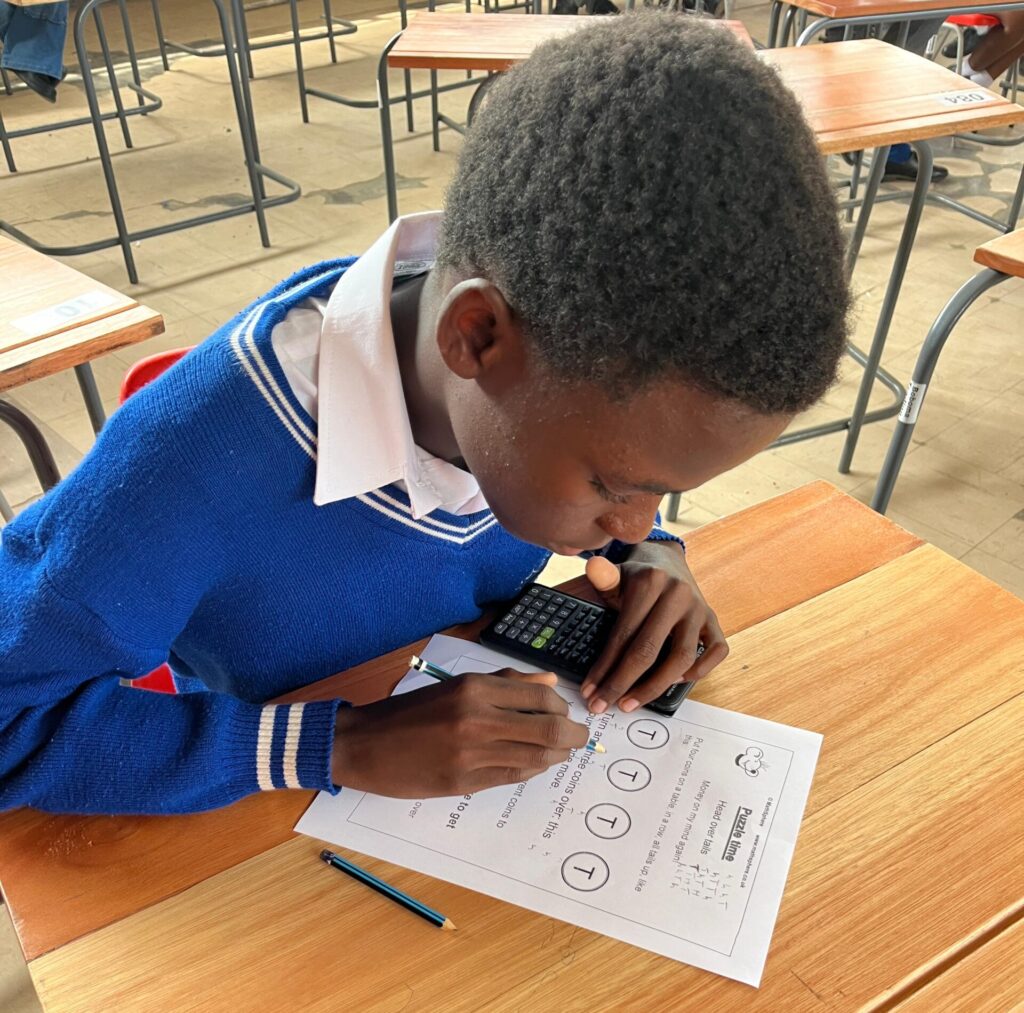 Pi Day provides a platform to inspire young minds and encourage them to explore mathematics as a career. The Mathematics and Applied Mathematics Department at SMU believes that such events foster curiosity and enthusiasm among students. Professor Maggie Aphane, Head of the Department, highlighted the importance of celebrating Pi Day: “It provides an opportunity for students and staff to engage with mathematical concepts in a fun and interactive way. It also serves as a platform to promote mathematics and inspire future mathematicians.”
The Mathematics and Applied Mathematics Department at SMU works closely with local schools to promote mathematical literacy. Through Pi Day events, workshops, and competitions, they engage learners in meaningful ways. They also collaborate with local businesses and organisations to foster community involvement in mathematics education.
The event was organised in collaboration with the South African Mathematics Foundation (SAMF) and the Department of Science and Innovation (DSI). SAMF, as the custodian of the Mathematics Olympiad, relies on institutions like SMU to assist in conducting primary, secondary, and tertiary mathematics competitions. DSI sponsors these activities, ensuring learners gain exposure to mathematics beyond the school syllabus.
A total of 50 staff and postgraduate students from SMU participated in the celebration. Patrick Rasehwete, a representative of SAMF, shared his experience: “Our mandate was to engage with DSI to secure funding, ensuring the event’s success.” DSI sponsored the prizes and refreshments for learners and officials through their agency, the South African Agency for Science and Technology Advancement (SAASTA). Additionally, CASIO collaborated with SAMF to sponsor 15 scientific calculators for the day.”
The success of Pi Day 2025 has set the stage for future collaborations between SMU, SAMF, and DSI. Plans are already underway to expand the participation of more secondary schools in mathematics olympiad competitions and to celebrate other mathematics-related days, such as Euler Day, Pythagorean Theorem Day, Square Root Day, and Palindrome Day.
As Pi Day continues to grow in popularity, it serves as a reminder that mathematics is not just about numbers and equations—it is a universal language that connects us all. Professor Aphane concluded: “Mathematics is everywhere. Events like Pi Day help students see its significance and encourage them to pursue their passions with confidence.”
By Tumelo Moila

by Lorato | Mar 24, 2025 | All News, SMU Media, Student Media
The Sefako Makgatho Health Sciences University (SMU) community came together in a profoundly moving and dignified memorial service to honour the life and enduring legacy of its late Chancellor, Tito Titus Mboweni. Held at the university’s Sports Complex on 19 March 2025, the event brought together dignitaries, students, faculty, and members of the broader SMU community in a heartfelt tribute to a leader whose vision and influence transcended academia.
 In her opening and welcome address, Acting Vice-Chancellor Professor Tandi Matsha-Erasmus reflected on Mboweni’s profound impact on SMU and the nation at large. “Tonight, we gather to honour the legacy of a leader whose unwavering commitment to academic excellence and public service continues to guide us,” she said.
She further emphasised how Mboweni’s passion for knowledge and innovation remains woven into the university’s core mission. “Our commitment at SMU is clear: we build on the foundation laid by Mboweni by nurturing innovation, excellence, and community service. His legacy remains our guiding light.”
 Delivering the keynote address, Dr Matthews Phosa, a respected political leader and activist, paid tribute to Mboweni’s exceptional leadership in governance and economic transformation. He recounted his pivotal role as Minister of Labour and Governor of the Reserve Bank, highlighting his contributions to shaping South Africa’s economic policies.
“Tito was not just a leader; he was a force of nature. His dedication to economic growth, fiscal discipline, and the empowerment of young professionals reshaped South Africa’s financial landscape,” said Phosa. He also acknowledged Mboweni’s dedication to education, crediting him with ensuring that SMU remained a beacon of excellence in health sciences. The evening was marked by heartfelt messages from various university structures, each underscoring Mboweni’s transformative influence.
Japhta Phala, President of the SMU Convocation, reflected on his personal relationship with Mboweni and their deep conversations about the state of education in South Africa. He shared how he had convinced Mboweni to accept the role of Chancellor.
“When I approached him about the nomination, he hesitated. But after numerous discussions about the importance of leadership in higher education, he embraced the role with his characteristic passion and vision,” Phala recalled.
Katlego Moshanyane, President of the SMU Student Representative Council (SRC), spoke about how Mboweni’s leadership left an indelible mark on students. “As students, we looked up to him, not just as a leader, but as an inspiration. His unwavering belief in education as a tool for transformation challenges us to strive for excellence, to lead with integrity, and to use knowledge to drive societal change,” Moshanyane said.
Representing the Mboweni family, Dr Martin Mboweni expressed deep gratitude for the tributes and outpouring of love shown to their beloved relative. “As a family, we are humbled by this remarkable tribute. Tito’s passion for education, his relentless drive for progress, and his commitment to the future of this country will continue to inspire generations,” he said. He extended heartfelt appreciation to SMU for honouring Mboweni’s memory and reaffirmed the family’s support for the university’s mission.
The service was marked by profoundly moving moments that captured the essence of Mboweni’s legacy. A tribute video showcased his remarkable journey, from humble beginnings to his towering presence in leadership and academia. A stirring poetry recital added to the emotional weight of the evening, while the SMU Choir delivered a heartfelt performance that resonated with every attendee.
One of the most poignant moments of the evening was the presentation of the SMU flag to the Mboweni family, a symbolic gesture of the university’s eternal gratitude for his leadership and service.
As the ceremony drew to a close, the hall stood in solemn unity as the South African National Anthem was sung, an emblem of hope, resilience, and the shared commitment to continue Mboweni’s vision.
Through this memorial, SMU reaffirmed its commitment to upholding the values that Mboweni championed excellence, innovation, service, and integrity. His legacy will continue to shape the university and inspire future generations to lead with wisdom, courage, and purpose.
By Dimakatso Modise

by Lorato | Mar 12, 2025 | All News, SMU Media, Student Media
Sefako Makgatho Health Sciences University (SMU) hosted a prestigious Awarding Ceremony for its Student Buddies Programme, honouring the dedication and hard work of students who have played a vital role in supporting their peers. The event, held on campus, was led by the esteemed Master of Ceremonies, Sibusisiwe Komane.
 The ceremony commenced with a warm welcome from the Deputy Director of Student Affairs, Themba Khumalo, who commended the Student Buddies for their unwavering commitment to fostering academic and social success among their peers. The Student Buddies Programme has become an integral part of the university community, ensuring that first-time entering students transition smoothly into university life and thrive academically and socially.
“The highest level of care is when you give yourself for the benefit of others. Keep on serving others as part of your self-fulfilment. The certificate, when you look at it, may seem insignificant, but its true value lies in the service you provide,” said Khumalo. Student Affairs Director Tulani Nkuntse, addressing the attendees, outlined the purpose of the event, emphasising the crucial role of the Student Buddies Programme in student support and mentorship.
“We celebrate the individuals who have given their time and effort to uplift others. The programme is not just about guiding first-year students but about cultivating leadership, responsibility, and a culture of care within our institution. From the depths of our hearts, we are indebted to the service you provided during the Orientation Programme 2025. We hope you will continue to get involved in many other opportunities. The success of the Orientation was due to your selfless service,” he said.
 The event featured inspiring words from Bonolo Malema, a dedicated Student Buddy, who highlighted the impact of the programme on the university community. “Being a Student Buddy is more than just a role; it is a responsibility that requires patience, empathy, and dedication. The relationships we build here extend beyond university life, shaping us into better leaders and professionals. I thoroughly enjoyed the entire organising experience. Thank you for always putting your fellow students first,” Malema remarked.
Another Student Buddy, Loago Lelaka, also shared his experience, reflecting on the personal growth that comes with mentorship. “I am truly grateful for the opportunity to be a Student Buddy. It has been an honour and a privilege to serve in this role. My experience has been phenomenal, and I will forever cherish being a part of this programme. It has taught me the importance of teamwork and selflessness. Knowing that I have contributed to someone’s academic success and emotional well-being is deeply rewarding,” he said.
A key highlight of the ceremony was the awarding of certificates to the Student Buddies, presented by Dr Vuyokazi Soga, Operations Manager for the School of Health Care Sciences, and Eunice Modiba, Chief Organiser of SMU Orientation Programme 2025. The certificates served as a token of appreciation for the hard work and dedication shown by the students throughout the academic year.
“Your contributions to this programme are invaluable, and we sincerely thank you for your efforts in making SMU a supportive and nurturing environment for all students,” Modiba stated while distributing the certificates.
Concluding the event, Khumalo delivered a heartfelt vote of thanks, acknowledging the efforts of everyone who made the programme a success. “This initiative would not be possible without the dedication of the Student Buddies, the support of the university management, and the participation of students who benefit from the programme. Let us continue working together to build a strong and supportive student community,” he said.
 Being a student buddy during SMU’s First-Time Entering Students Orientation Programme is a rewarding experience that benefits the buddy, new students, and the university. Student buddies develop leadership, communication, and networking skills while gaining confidence and professional experience that enhances their CVs. They also foster a sense of community. For new students, buddies provide essential guidance, easing their transition to university life, offering academic and social support, and introducing them to campus resources. SMU benefits from improved student retention, a more inclusive campus culture, and increased student engagement, making the programme a win-win for everyone involved.
The ceremony ended on a celebratory note, with attendees reflecting on the importance of mentorship and student support in higher education. The Student Buddies Programme remains a testament to SMU’s commitment to student success and holistic development.
By Tumelo Moila

by Lorato | Mar 12, 2025 | All News, SMU Media, Student Media
Sefako Makgatho Health Sciences University (SMU) is rewriting the narrative in South Africa’s dental care arena. With unwavering determination, SMU’s Department of Community Dentistry is spearheading an outreach revolution that not only transforms oral healthcare but also uplifts underserved communities.
 In an era where social transformation is paramount, SMU’s innovative Service Learning Programme is a beacon of hope. Fourth-year Bachelor of Dental Surgery, Bachelor of Oral Hygiene, and Bachelor of Dental Theory students have embarked on impactful missions, travelling to places such as Inkululeko Day Care, Salvokop Community Centre, and the Mercy Dental Clinic in Winterveld. Their efforts focus on delivering essential dental treatments—from preventative care and restorations to minor oral surgeries—all aimed at reducing the scourge of oral disease and promoting better hygiene.
The programme, generously sponsored by Haloen, sees students dedicating their time four days a week, attending to roughly 240 patients every month. This hands-on initiative is not just about clinical practice; it is a rigorous academic and civic training ground where theory meets tangible community service. Prior to their placements, students undergo an intensive two-week block that immerses them in the ethos of “Look, Listen and Learn”, equipping them with the tools to engage meaningfully with the communities they serve.
Fourth-year Bachelor of Dental Surgery student, Uzwothe Mudau, recounted her first day at Mercy Dental Clinic as a transformative experience. “On the 11th of February, I had the privilege of managing a day at the clinic. It was eye-opening to see how many patients had never even experienced dental care before,” she explains, underscoring the vital role the programme plays in bridging gaps in awareness and access.
 Lecturer and Dentist Dr Regan Lesolang emphasises the critical need for such outreach. “Many patients suffer from advanced dental decay and periodontal disease. By offering essential services and referring complex cases to the SMU Dental Hospital, we are making a real difference,” he states. Meanwhile, Specialist Dr Nokukhanya Makwakwa highlights the programme’s dual focus on education and empathy, especially in alleviating dental anxiety among children through non-pharmacological management and comprehensive oral health talks.
Despite challenges—ranging from resource constraints and intermittent utilities to equipment maintenance—the Department of Community Dentistry remains resolute. Their pioneering approach not only improves access to quality oral healthcare but also instils in students a profound sense of civic responsibility and critical thinking, seamlessly linking academic theory with practical impact.
SMU’s commitment to excellence in teaching, research, and community service continues to shine. By relentlessly pushing boundaries, the Department of Community Dentistry is not merely serving communities—it is transforming lives, one smile at a time.
By Khanyi Nkosi

by Lorato | Mar 12, 2025 | All News, SMU Media, Student Media
Sefako Makgatho Health Sciences University (SMU) reaffirms its commitment to academic excellence and community engagement. By celebrating achievements and inspiring the next generation, the Department of Human Nutrition & Dietetics at SMU continues to shape the future of healthcare professionals in South Africa.
 The Department of Human Nutrition & Dietetics at SMU held its 2025 annual awards ceremony to recognise students who have demonstrated outstanding academic and community engagement achievements during the 2024 academic year, under the theme: “Honouring Excellence, Inspiring the Future,” the event celebrated student success while encouraging incoming first-year students to follow in the footsteps of those who excelled before them.
The department has been actively involved in various initiatives throughout the past year, fostering academic excellence and community development. Notably, staff and students participated in a campus gardening project aimed at ensuring food security for students. Additionally, the department collaborated with the School of Health Care Sciences to host a mental health discussion for staff, highlighting the importance of well-being in the workplace. To enhance academic quality, all departmental modules were evaluated by students and peers, providing critical feedback for continuous improvement.
Faculty members lead by example through a commitment to professional growth, regularly attending teaching and learning workshops to stay updated with best practices. They also emphasise real-world exposure by integrating students into community work from their second year, equipping them with awareness of social challenges affecting healthcare. Looking ahead, problem-based learning (PBL) training will be implemented from the first year of study in 2025, further enriching the learning experience.
The awards recognised top-performing students across all academic levels. First-year student Fency Kekana emerged as a standout performer, credited for her consistent study habits and active class participation. “I focus on consistency over intensity, studying daily and planning my week with a to-do list,” she shares.
 Second-year students faced challenges, particularly in service modules, but received support from the Centre for University Teaching and Learning (CUTL) through tutoring and additional guidance. Despite these hurdles, students excelled, with Tshepiso Makitla receiving the Best Overall Second-Year Student Award. Encouraging her peers, she says: “Believe in yourself, prioritise your studies, and work in study groups.”
Third-year student Nicole Novela received the Best Overall Third-Year Student Award, recognising her dedication and discipline. “This award is a testament to my commitment, and it motivates me to continue striving for excellence,” she says. Unlike the first and second-year awards, the third-year category included a Community Engagement Award, reinforcing SMU’s strategic focus on societal impact.
Guest speaker Matome Chilwane, Chairperson of the newly established Association for Dietetics in SMU (ADSMU), inspired students to take ownership of their academic and professional journeys. “Excellence is not a one-time achievement but a habit. Keep pushing beyond your limits and remember you represent this department, this university, and the future of dietetics in South Africa,” he emphasised.
Chilwane also encouraged students to engage with professionals in the field, urging them to shadow registered dietitians and seek mentorship opportunities. “By joining ADSMU, you help shape the future of our field, create opportunities, and ensure dietetics students have a strong voice,” he added.
Beyond academics, the department recognises the value of social engagement, highlighting that university life is not solely about grades. Participation in student groups, networking, and social events contributes to a well-rounded university experience.
Notably, the academic performance of third-year students has significantly improved over the past four years. Previously, it was challenging to find students achieving over 75% in a module, but today, many compete for awards with distinction marks. This improvement is attributed to faculty members’ dedication to continuous learning and professional development through workshops and training.
The Community Engagement Award is particularly valuable for students’ future career prospects, setting them apart in the competitive job market. The department ensures that even students who did not receive an award understand that hard work is always rewarded, whether through formal recognition or personal academic growth.
The department continues to foster a culture of excellence, celebrating student achievements not only at the annual awards ceremony but also at the final-year oath-taking event. At this prestigious gathering, top-performing students per module and the overall best student across all four years are recognised. Sponsors are invited to present prizes, reinforcing the message that dedication and perseverance yield tangible rewards.
By Tumelo Moila

by Lorato | Mar 12, 2025 | Accolades and Achievements, All News, SMU Media, Student Media
The National Research Foundation (NRF) rating system plays a crucial role in building a globally competitive science system in South Africa. It serves as a valuable benchmark, assessing researchers’ quality and impact through international peer reviews. This system encourages researchers at Sefako Makgatho Health Sciences University (SMU) to publish high-quality outputs in esteemed journals, fostering academic excellence.
 Dr Hammed Abass, a distinguished researcher in Mathematics and Applied Mathematics at SMU, has been awarded the prestigious Y2 rating by the NRF, marking a significant milestone in his academic career. This recognition underscores his potential to establish himself as a leading researcher, as acknowledged by national and international reviewers.
Reflecting on this achievement, Abass expressed gratitude for the honour and the opportunities it presents for future research. “This rating reflects years of dedication and perseverance to research excellence. It validates the effort I have put into advancing my knowledge and contributing to the field of mathematics,” he says. “Knowing that my work is recognised at a national level encourages me to pursue new ideas and projects.”
The Y2 rating, awarded to young researchers under 40 who have held a doctorate for less than five years, serves as an indicator of research excellence and potential. Abass noted that this recognition would enhance his credibility and provide opportunities for funding, collaboration, and participation in prestigious academic events.
Abass’ journey in Mathematics and Applied Mathematics has been shaped by an enduring passion for solving real-world problems. Significant milestones, including numerous high-impact journal publications, conference presentations, and leadership roles in academic and research communities have marked his academic trajectory.
Among his notable achievements is his recognition as one of the top authors by scholarly output in Africa. “Publishing in reputable journals has strengthened my visibility and allowed me to contribute to the growing body of knowledge in my field,” he remarks.
His participation in international conferences has facilitated invaluable networking opportunities, leading to fruitful collaborations and innovative research directions. “Engaging with researchers globally has expanded my perspectives and introduced me to new methodologies,” he adds.
Abass’ research focuses on fixed point theory, optimisation problems, and operations research. His work extends beyond theoretical contributions, influencing fields such as medical imaging, supply chain management, and logistics planning.
“My goal is to bridge theoretical advancements with practical applications,” he explains. “For instance, fixed point theory has crucial applications in pharmacokinetics, neural dynamics, and psychological modelling.”
He emphasised the importance of interdisciplinary collaboration in enhancing the impact of mathematical research. “Working with health scientists, engineers, and data analysts has allowed me to apply mathematical models to real-world challenges,” he notes. His research has contributed to areas such as medical image reconstruction and signal processing.
Receiving the Y2 rating is expected to significantly impact Abass’ career trajectory, providing him with enhanced visibility and opportunities for collaboration. “This recognition positions me for leadership roles in research projects and academic committees,” he says.
With plans to collaborate on interdisciplinary projects, publish high-quality research, and mentor aspiring mathematicians, Abass is committed to furthering mathematical research in South Africa and beyond. “I aim to create workshops and seminars that inspire young researchers and contribute to the mathematical community.”
Despite his success, Abass acknowledged the challenges he has faced, including securing research funding and balancing teaching, research, and administrative responsibilities. However, his persistence and strategic approach have helped him navigate these obstacles. “The ability to persevere and learn from setbacks has been crucial in my journey,” he shared.
Looking ahead, Abass envisions a bright future for Mathematics and Applied Mathematics in South Africa, particularly in health sciences. “By embracing interdisciplinary collaboration and leveraging advancements in data science, we can address complex public health challenges and improve outcomes,” he asserts.
He encourages young researchers to remain enthusiastic, build strong academic foundations, and actively seek mentorship. “Engaging with the academic community, publishing regularly, and embracing collaboration are essential steps to achieving success in research,” he advises.
He also highlights the role of institutions like SMU in supporting researchers. “Providing funding, fostering interdisciplinary collaborations, and establishing mentorship programmes can help researchers achieve international recognition,” he says.
Abass extended his gratitude to those who have played a pivotal role in his journey, including his PhD supervisor, Professor Tosin Mewomo, and colleagues from the University of KwaZulu-Natal and SMU. “Their guidance and support have been instrumental in my growth as a researcher,” he acknowledges.
Finally, he expressed appreciation to his family and host, Prof Maggie Aphane, Head of the Department of Mathematics and Applied Mathematics at SMU, for their unwavering encouragement. “This achievement would not have been possible without their support. Together, the sky is just the beginning,” he concludes.
With his Y2 NRF rating as a stepping stone, Abass is poised to make even greater strides in mathematical research, inspiring the next generation of scholars and contributing to impactful advancements in academia and industry.
By Tumelo Moila