by Lorato | Jan 20, 2025 | All News, SMU Media, Student Media
Sefako Makgatho Health Sciences University (SMU) continues to showcase the calibre of its students on the global academic stage, with students like Refilwe Motswiane setting the bar high in the field of health sciences. A testament to the university’s commitment to excellence, Motswiane’s remarkable journey from a rural town in Mpumalanga to a prestigious fellowship at the International Centre for Genetic Engineering and Biotechnology (ICGEB) in Trieste, Italy, is a powerful reminder of the world-class research talent nurtured at SMU. As a passionate MSc Medical Microbiology student, her achievements not only reflect her own dedication but also highlight the extraordinary potential of SMU students to make a significant impact on global health challenges.
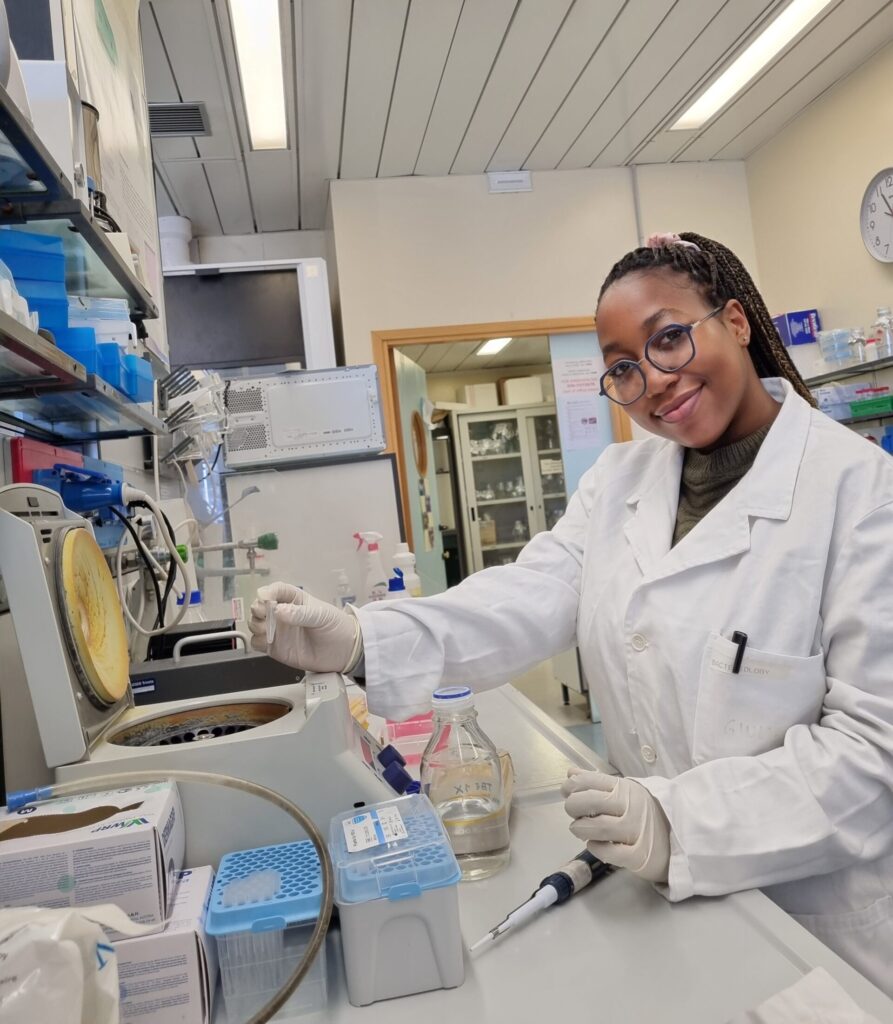 Motswiane’s interest in medical microbiology blossomed during her undergraduate studies at SMU. “I initially thought microbiology was just about identifying bacteria and viruses,” she says. “But as I progressed, I realised its real-world impact, especially in combating infectious diseases and antimicrobial resistance.”
Her current research tackles one of the biggest challenges in global health: antimicrobial resistance. Specifically, Motswiane is investigating the antibacterial properties of plants native to South Africa and analysing the genome of Acinetobacter baumannii. This pathogen, often resistant to multiple antibiotics, poses a significant threat in healthcare settings. “Understanding its genome can uncover new strategies to fight its resistance,” she explains.
The six-month fellowship at ICGEB is providing her with the opportunity to expand her skills in genomic techniques, bioinformatics, and microbiology research. She is also collaborating with experts from different countries, gaining exposure to diverse perspectives in tackling global health issues. “It’s incredible to be in a space where I can learn so much from other researchers and see how science is applied in different contexts,” she shares.
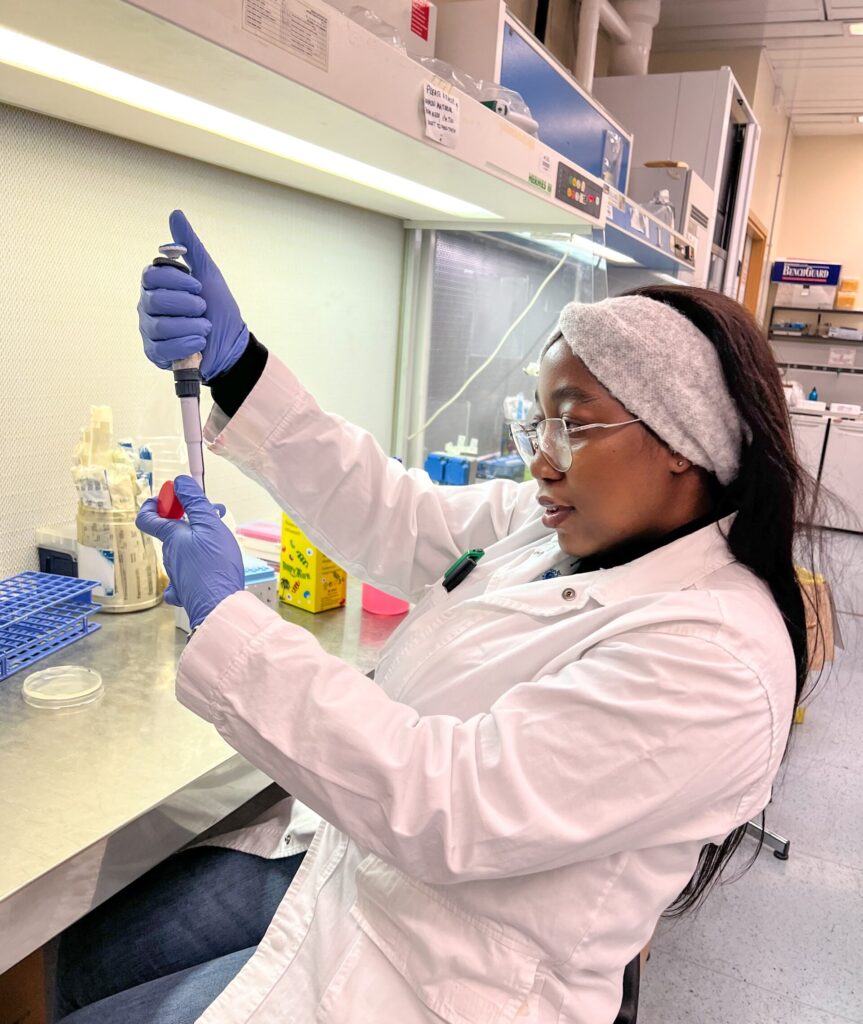 Motswiane attributes much of her success to her time at SMU and the mentorship of Dr Andrew Musyoki. “Musyoki has been more than a supervisor; he has been a guide and an inspiration,” she says. “He encourages us to think critically and not just focus on the results but on the process of discovery.”
Beyond the laboratory, she finds time to immerse herself in Italian culture. “Living in Italy has been an adjustment but also a beautiful experience. The people are warm, and the food is amazing,” she says with a smile. She has embraced the local way of life, balancing rigorous academic work with moments of cultural exploration.
Despite her achievements, Motswiane remains deeply connected to her roots in Mpumalanga. “I carry the lessons and resilience from my upbringing with me. They remind me why I’m on this path, to contribute meaningfully to science and to inspire others from similar backgrounds,” she reflects.
To aspiring scientists and students, she offers this advice: “Opportunities don’t always come easy, but persistence and hard work pay off. Be proactive in seeking them and remain open to learning every step of the way.”
Motswiane’s journey from Standerton to Trieste underscores the global competitiveness of SMU students in the health sciences field. Through her groundbreaking research and determination, she embodies the university’s mission to cultivate highly skilled professionals who are poised to contribute meaningfully to the global academic and health landscape. As SMU continues to produce exceptional scholars like Motswiane, it strengthens its reputation as a leader in health sciences education, empowering students to tackle pressing global health issues and lead the way in scientific innovation.
By Dimakatso Modise

by Lorato | Jan 14, 2025 | All News, SMU Media, Student Media
Frans Teffo has been a vital part of Sefako Makgatho Health Sciences University (SMU) for over thirty years. He has dedicated his career to supporting students with financial challenges. As part of the Finance Department under Student Debtors, he has consistently exceeded his official duties to assist students during stressful times.
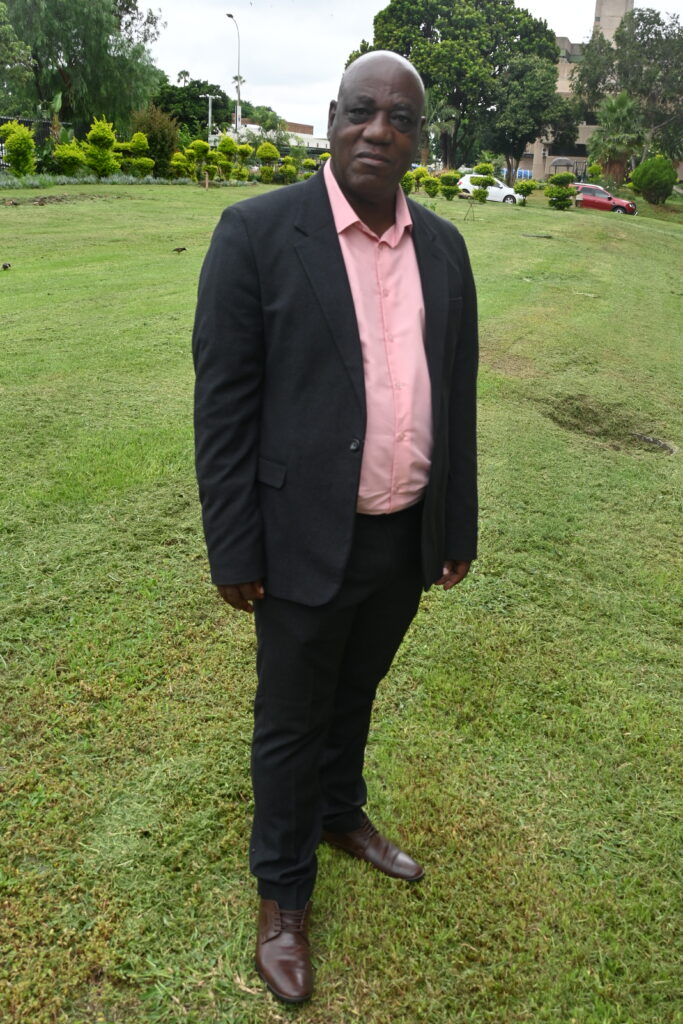
Frans Teffo
Teffo’s role involves administering student fee accounts, issuing statements, and ensuring the collection of outstanding fees. However, it is his compassionate approach to these responsibilities that sets him apart.
Located in Ga-Rankuwa, Pretoria, SMU is one of South Africa’s leading institutions dedicated to health sciences education. Named after the South African political leader and educationist Sefako Makgatho, the university prides itself on producing skilled professionals in fields such as medicine, nursing, oral health, pharmacy, public health, and sciences.
The institution has a rich history, originating as the Medical University of Southern Africa (MEDUNSA). Over time, it evolved into a dynamic and inclusive university, offering top-quality education and training to students from across the country and beyond.
Raised in Ga-Mashashane, Limpopo, in a family of modest means led by a single parent, Teffo understands the struggles of financial hardship. His upbringing shaped his empathy and determination to assist students, especially those navigating the pressures of university life.
“Helping students achieve their goals is what drives me. I enjoy seeing them succeed, no matter the challenges,” Teffo says. His efforts often extend beyond his official duties, offering students advice on financial aid options such as NSFAS and helping them find solutions during registration and other critical periods.
Bongumusa Nkamana, a student who has completed his BSc in Physical Mineral Sciences and is currently pursuing a Master’s degree in Chemistry, recalls how Teffo guided him during a frustrating registration process. “He helped me with patience and a smile. His humour and kindness made all the difference. Frans is a father to us all,” Nkamana says.
Teffo attributes much of his ability to assist students to the collaborative spirit within the finance department. “The unity among colleagues makes it much easier to help students. I encourage everyone to work together so students feel supported and at home,” he explains.
As an institution, SMU is committed to fostering excellence in teaching, learning, research, and community engagement. It offers a wide range of undergraduate and postgraduate programmes aimed at addressing the critical skills shortages in the health sector.
With state-of-the-art facilities and a strong emphasis on experiential learning, SMU equips its students with the knowledge and skills to make a meaningful impact in their communities. The university also places significant focus on addressing South Africa’s healthcare challenges, making it a vital contributor to the nation’s wellbeing.
Over his 33 years at SMU, Teffo has witnessed countless students overcome financial hurdles and graduate, achieving what once seemed impossible. For him, these moments are the ultimate reward, a testament to the importance of kindness and understanding.
In a world where financial constraints often hinder access to education, Teffo remains a beacon of hope and a reminder that dedication and humanity can make a profound difference. His legacy at SMU will continue to inspire colleagues and students for years.
By Dimakatso Modise
by Lorato | Jan 5, 2025 | All News, SMU Media, Student Media
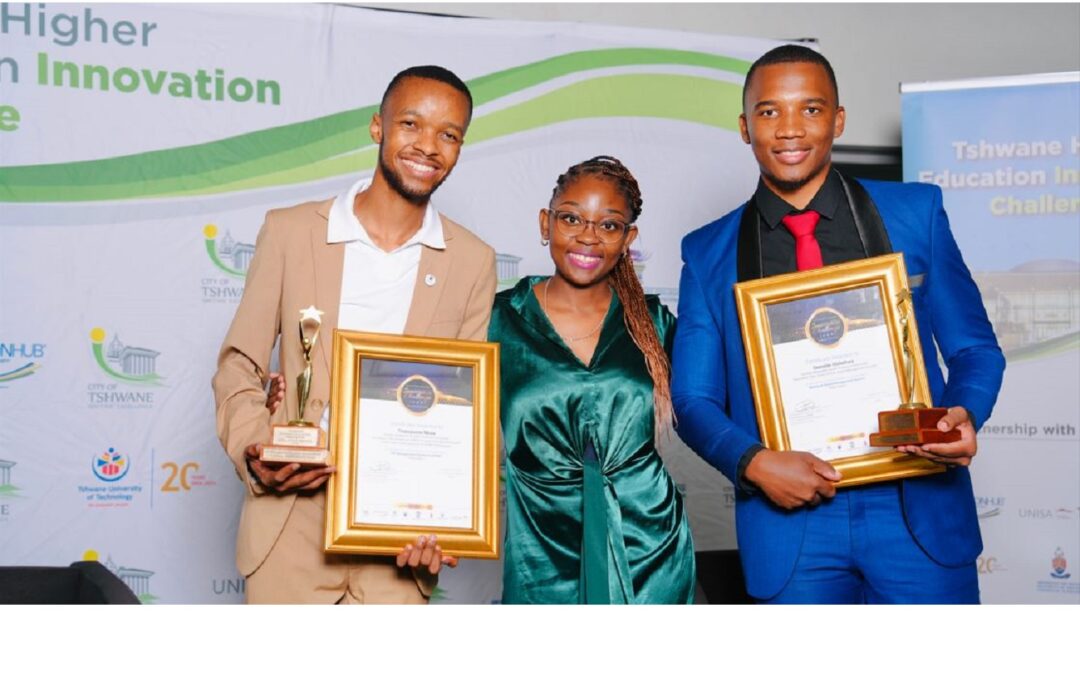
Two exceptional students from Sefako Makgatho Health Sciences University (SMU) have demonstrated their innovative prowess by excelling in the prestigious Tshwane Higher Education Innovation Challenge finals. Thatayaone Nkwe, an MSc student in Computer Science and Information Technology (CSIT), and Oreneile Hlalethwa, a BSc Mathematical Sciences student, both from the School of Science and Technology, were selected after a rigorous process to represent SMU.

SMU students excel in Tshwane Higher Education Innovation Challenge
Nkwe claimed first place in Challenge Three with his groundbreaking Human Resource Management System, designed to monitor the progress and effectiveness of participants in the Expanded Public Works Programme (EPWP). Hlalethwa earned third place in Challenge Two with his innovative Electronic Burial Management System, which has offline capabilities and enables cemetery officials to operate using wireless connectivity.
“This was the first time that we entered this challenge, and for us to even make it into the top nine, let alone secure these positions, is a testament to the incredible talent at SMU,” says Naledi Mathole, SMU’s Entrepreneurship Development in Higher Education (EDHE) Coordinator. “I’m beyond elated to be part of programs that advance our students and showcase their talents. The City of Tshwane Mayor, Councillor Dr Nasiphi Moya, has shown keen interest in the projects, and there’s potential for these prototypes to be piloted in the city upon approval. This strengthens our partnership with the city and bodes well for 2025.”
The Tshwane Higher Education Innovation Challenge, a collaboration between the City of Tshwane and the Innovation Hub, aims to encourage novel solutions to improve municipal services, protect public assets, and explore new revenue streams. The competition revolved around three key challenges: a multi-service municipal digital booking system, an electronic burial management system, and a human resource management system for EPWP participants.
Winners reflect on their journey
Nkwe expresses his gratitude for the opportunity, reflecting on the transformative experience. “I have always been passionate about using technology to solve real-world problems,” he shares. “Winning first place is a humbling moment, and I’m excited to refine my system with input from stakeholders. This system can enhance transparency, efficiency, and accountability within the EPWP.”
He highlighted the most challenging aspect of his project—ensuring functionality in areas with limited connectivity. “Incorporating local storage that syncs when online was a technical hurdle, but creating a robust and scalable solution was worth it,” he says. Nkwe credits SMU with equipping him with the foundation to merge his love for innovation with impactful solutions.
Hlalethwa, meanwhile, describes the experience as “inspiring and emotional.” His Electronic Burial Management System addresses critical gaps, such as the lack of real-time burial statistics and efficient tracking of graveyard plots. “This project aligns perfectly with my passion for solving complex problems using technology. It was emotional to see my efforts recognised,” he says.
Hlalethwa’s project integrates cutting-edge features such as real-time data visualisation, local and cloud storage, and robust management tools for city officials. He noted that his journey was not without challenges. “Being an Extended Curriculum Programme (ECP2) student, I had to self-teach many advanced concepts and frameworks to bring my vision to life. It was a demanding yet rewarding process.”
Impact and future aspirations
Both students are eager to see their projects make a tangible impact. Nkwe envisions his system revolutionising public service delivery, while Hlalethwa sees his solution as enhancing cemetery operations with transparency and efficiency. Both expressed their excitement about collaborating with the Innovation Hub and the City of Tshwane.
Mathole emphasised the importance of initiatives like the Tshwane Innovation Challenge in nurturing talent and solving societal challenges. “These programs empower students, foster innovation, and address pressing issues. We hope to see more participation and support for such initiatives.”
As SMU celebrates this remarkable achievement, the student’s success is a powerful reminder of the university’s commitment to excellence in innovation and practical learning. Both Nkwe and Hlalethwa are determined to continue their journeys as trailblazers, shaping the future of technology for societal good. Read more:
*By Tumelo Moila
by Lorato | Jan 5, 2025 | Accolades and Achievements, All News, SMU Media, Student Media
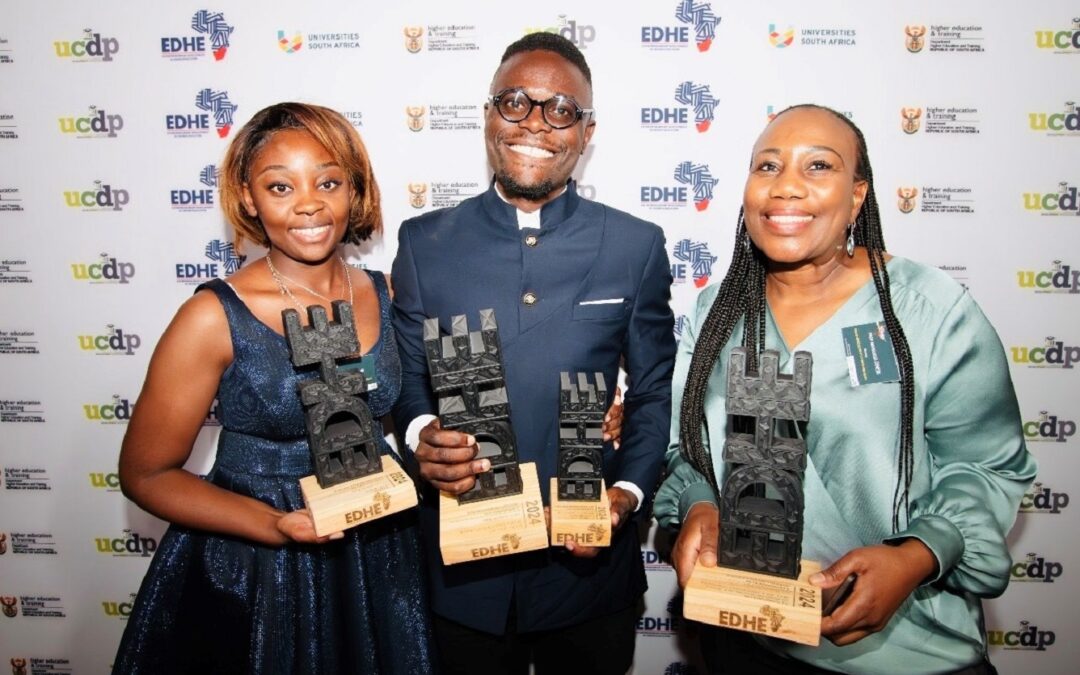
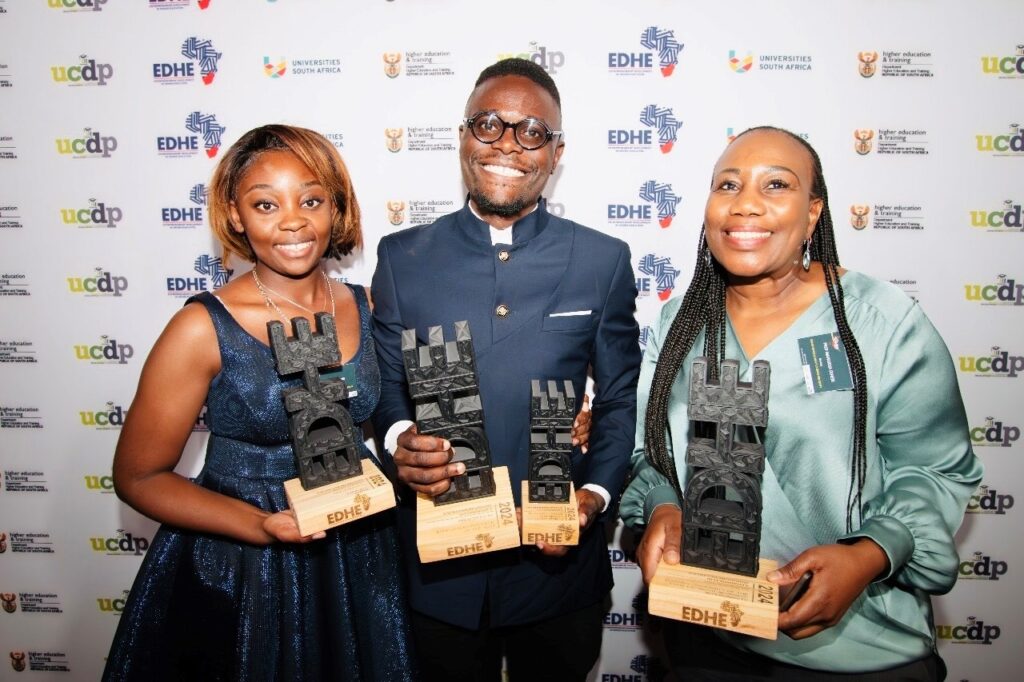
Sefako Makgatho Health Sciences University (SMU) has achieved a groundbreaking milestone, emerging as a beacon of innovation and entrepreneurship at the 2024 Entrepreneurship Development in Higher Education (EDHE) Awards. With an exceptional haul of four prestigious awards, SMU solidified its reputation as a leader in cultivating entrepreneurial talent and innovation in the South African higher education sector.
SMU crowned Entrepreneurial University of the Year at 2024 EDHE Awards
These accolades highlight SMU’s unwavering commitment to building an entrepreneurial ecosystem that empowers students and staff to transform innovative ideas into impactful solutions, significantly contributing to South Africa’s economic development.
At the forefront of these achievements, SMU was named “Entrepreneurial University of the Year”, a prestigious institutional honour. Additionally, Professor Tandi Matsha-Erasmus, Deputy Vice-Chancellor (Academic and Research), was celebrated as EDHE DVC of the Year, recognising her pivotal role in advancing entrepreneurship, technology, and innovation within the university. These accomplishments align seamlessly with SMU’s strategic objectives to cultivate a robust technology, innovation, and entrepreneurship ecosystem.
The university’s approach is anchored by several key initiatives: the Technology Transfer Office, which facilitates the identification, protection, and commercialisation of intellectual property; the Centre for Entrepreneurship Rapid Incubators, which supports business incubation, nurturing potential entrepreneurs, hosting new venture competitions, and fostering mentor networks and industry collaborations; and SMU Enterprise and Innovation Centre which bridges the gap between academic innovation and community-focused solutions.
Professor Mapaseka Seheri, Director for Research and Innovation, emphasised that these initiatives collectively enhance SMU’s ability to address societal challenges while driving economic transformation and growth.
Adding to the celebration, student entrepreneur Emmanuel Mukisa Kiyonga received dual honours as Best Research-Based Business and Overall Student Entrepreneur of the Year. These achievements underscore the effectiveness of SMU’s efforts to integrate entrepreneurial learning into its academic framework. Under the mentorship of Dr Bwalya Witika and Dr Madan Poka, Kiyonga has developed innovative, research-driven solutions with significant societal and economic impact.
Further highlighting the university’s collective excellence, Naledi Mathole, Coordinator for the EDHE Programme, Student Women Entrepreneurship Empowerment Programme (SWEEP), and Economic Activation Office (EAO), earned special recognition for her instrumental role in advancing entrepreneurship at SMU. This historic victory cements SMU’s position as a trailblazer in entrepreneurial education and inspires its community to continue driving innovation and economic growth on a national scale. “This year’s awards represent a historic moment for SMU,” remarks an overjoyed Mathole. “Each award reflects the collaborative dedication of our students, staff, and leadership to build an entrepreneurial ecosystem that fosters innovation and economic responsiveness.”
Matsha-Erasmus emphasised the broader significance of the achievement. “This accomplishment is about more than trophies—it’s about creating opportunities for our students to make meaningful contributions to society and the economy.” The EDHE Awards recognise and celebrate the entrepreneurial talents of students from South Africa’s 26 public universities, offering a platform to showcase ideas and ventures to investors, mentors, and industry leaders.
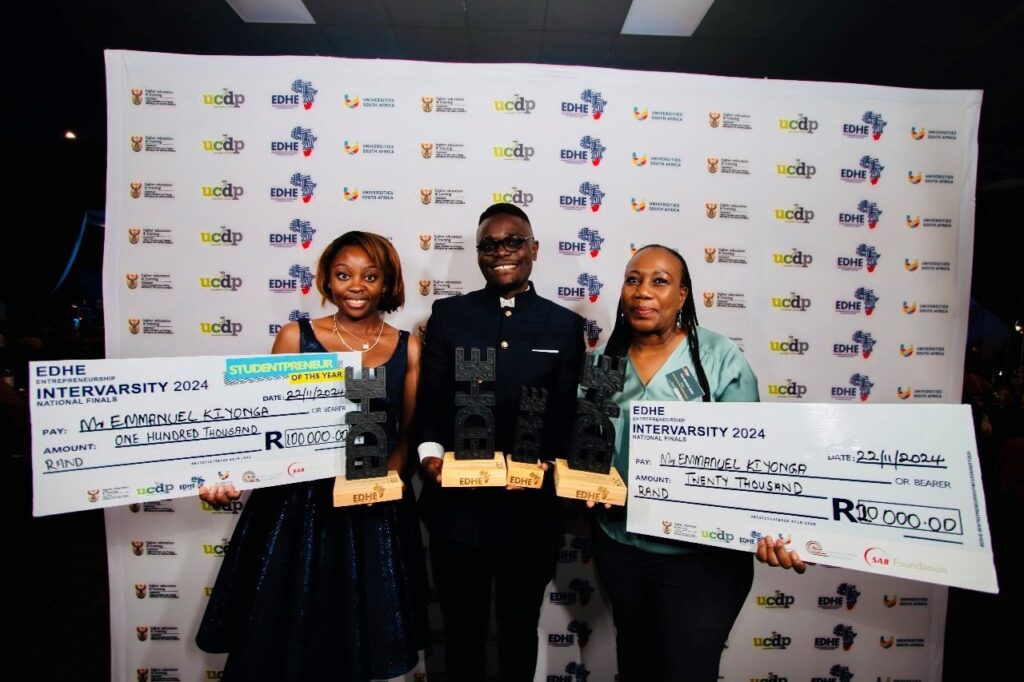 The announcement of SMU’s resounding success sparked celebrations across the campus. Students, staff, and alumni expressed immense pride in the university’s strides in entrepreneurship development.
“The energy was incredible; it felt like a victory for everyone,” says Mathole. “This achievement shows that SMU is truly stepping up as an innovation and entrepreneurship development leader.” She adds: “We stood among giants, yet we proved that our innovation, passion, and dedication to entrepreneurship could compete at the highest levels.”
SMU’s success at the EDHE Awards is underpinned by its comprehensive entrepreneurship initiatives, which foster innovation and prepare students to excel in the business world:
- The Centre for Entrepreneurship, which organises flagship programs such as the Hult Prize, Wadhwani Programme, and Mashauri Programme.
- The Economic Activation Office (EAO) is an epicentre connecting entrepreneurship-related entities and activities, including coordinating EDHE initiatives.
- ENACTUS SMU and competitive events like the Tshwane Innovation Challenge and hackathons.
- Technology Transfer Office (TTO), which won the SARIMA Regional Excellence Award 2024 for Organisational Growth in Innovation Management. This regional award recognises administrative support put in place for the identification and protection of intellectual property and commercialisation efforts
These programmes provide students with opportunities to address real-world challenges, develop entrepreneurial skills, and turn their ideas into impactful ventures.
As a health sciences university, SMU faced the challenge of integrating entrepreneurship into its institutional identity. However, this focus has become a unique strength, enabling SMU to carve a distinctive niche in South Africa’s higher education sector.
“Our focus is on equipping students with tools to be problem solvers and economic contributors,” says Mathole. “Entrepreneurship is not just about starting businesses; it’s about cultivating innovation, resilience, and creativity in all aspects of life.”
Leadership has played a pivotal role in overcoming these challenges. Initiatives like the Economic Activation Office, the integration of entrepreneurship into curricula, and the creation of Communities of Practice (CoPs) have been instrumental in fostering a vibrant entrepreneurial ecosystem at SMU.
Looking ahead, SMU plans to expand its entrepreneurial initiatives, forge stronger partnerships with industry and academia, and deepen its commitment to fostering innovation.
“This recognition is just the beginning. We aim to remain at the forefront of entrepreneurship development in higher education,” explains Mathole.
The 2024 EDHE Awards mark a transformative chapter in SMU’s journey. With entrepreneurship and innovation now integral to its identity, the university is poised to lead South Africa’s higher education sector into an era of economic growth and social impact.
*By Tumelo Moila
by Lorato | Dec 13, 2024 | All News, SMU Media, Student Media
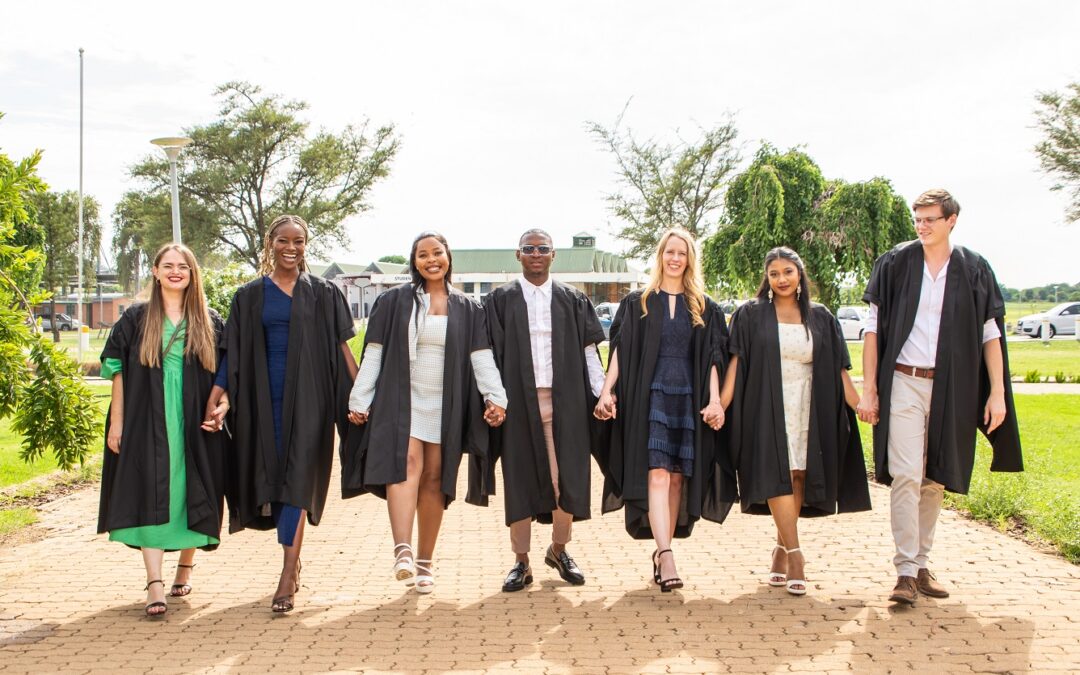
Sefako Makgatho Health Sciences University (SMU) recently hosted a series of momentous events that celebrated not only the achievements of its graduates but also the institution’s legacy of academic excellence and leadership in healthcare. On 11 December 2024, the School of Pharmacy, School of Health Care Sciences, and School of Dentistry held their Oath-Taking Ceremonies, followed by the School of Medicine’s ceremony on 12 December 2024. These events, held during SMU’s 10th anniversary celebrations, marked a significant milestone in the lives of the graduates and the university’s journey of excellence.
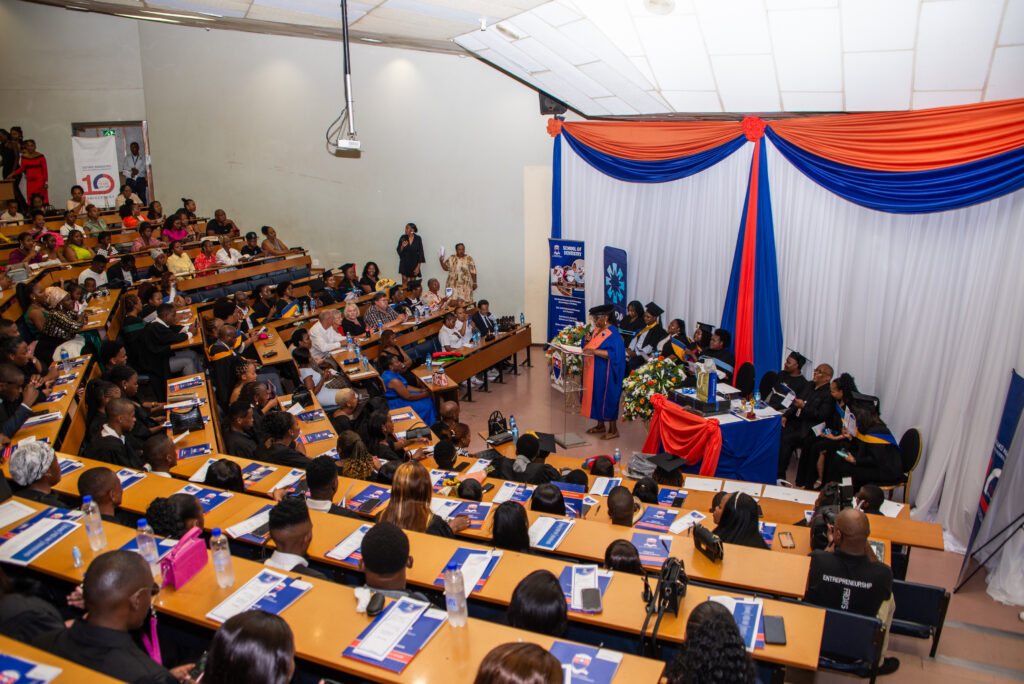 Over the past decade, SMU has cemented its position as a leader in health sciences education, producing exceptional healthcare professionals equipped with the knowledge, skills, and ethical grounding necessary to transform healthcare locally and globally. These ceremonies are more than rites of passage; they symbolise the graduates’ commitment to uphold SMU’s core values of integrity, professionalism, and compassion.
The Oath-Taking Ceremonies also served as an opportunity to honour the remarkable achievements of SMU’s top-performing students. Numerous awards were presented, recognising students who had excelled academically and demonstrated outstanding dedication to their fields of study.
A highlight was the recognition of students who passed their final year with cum laude, a testament to their hard work and academic excellence. The prestigious Bongani Mayosi Prize was also awarded to exemplary students, celebrating their contributions and commitment to the healthcare field. These events showcased an impressive array of top achievers awards, underlining SMU’s commitment to fostering excellence and inspiring the next generation of healthcare professionals.
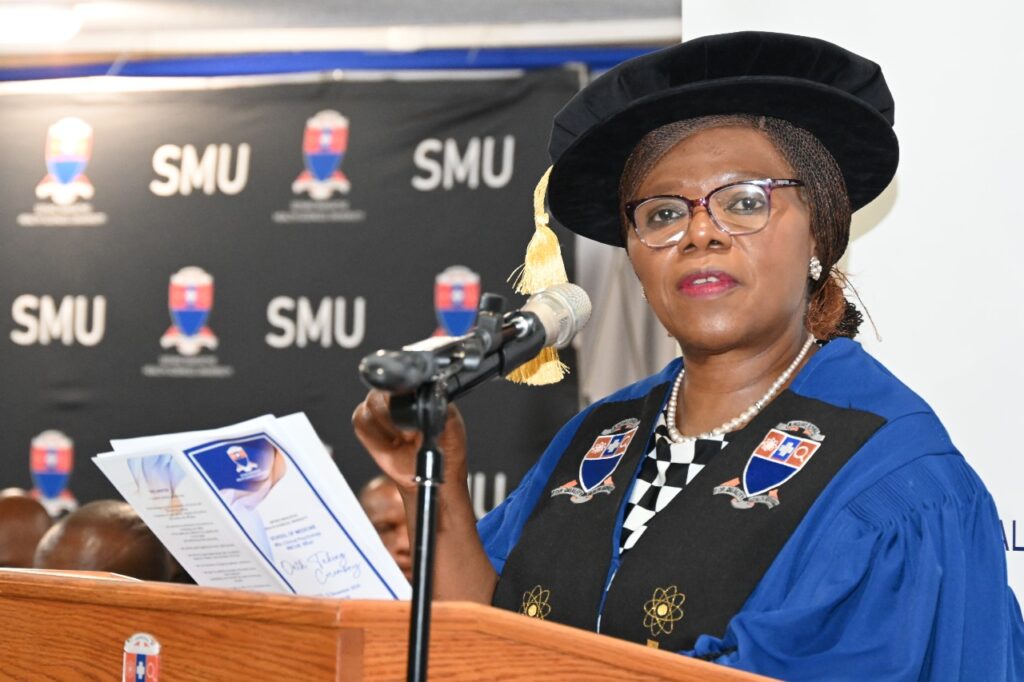
Professor Thuli Madonsela
Professor Thuli Madonsela delivered the keynote address during the School of Medicine’s Oath-Taking Ceremony on 12 December 2024. Her profound words left an indelible mark on the graduates and attendees, as she encouraged them to embody ethical leadership and resilience in their professional journeys.
“Champions do not see falling as a failure,” she reminded the graduates, highlighting the importance of perseverance in the face of challenges. She further urged them to: “Let ethical leadership be the way, always lead ethically and inspire others to do the same.” In a particularly poignant moment, she addressed the future doctors directly: “Walk together on this path, but when integrity demands it, be prepared to walk alone.” Her address underscored the importance of leading with purpose, empathy, and a steadfast dedication to improving lives through healthcare.
Professor Vanessa Moodley, Acting Deputy Dean, reflected on the significance of the events: “We extend our sincere gratitude to Professor Thuli Madonsela for being our distinguished guest speaker. Her valuable insights and wisdom have inspired our students and the SMU community.”
The Oath-Taking Ceremonies represent a critical juncture in the lives of SMU graduates, who pledged to uphold the highest standards of healthcare and ethical practice. These solemn oaths are a testament to SMU’s mission to shape skilled, compassionate, and ethically grounded healthcare professionals.
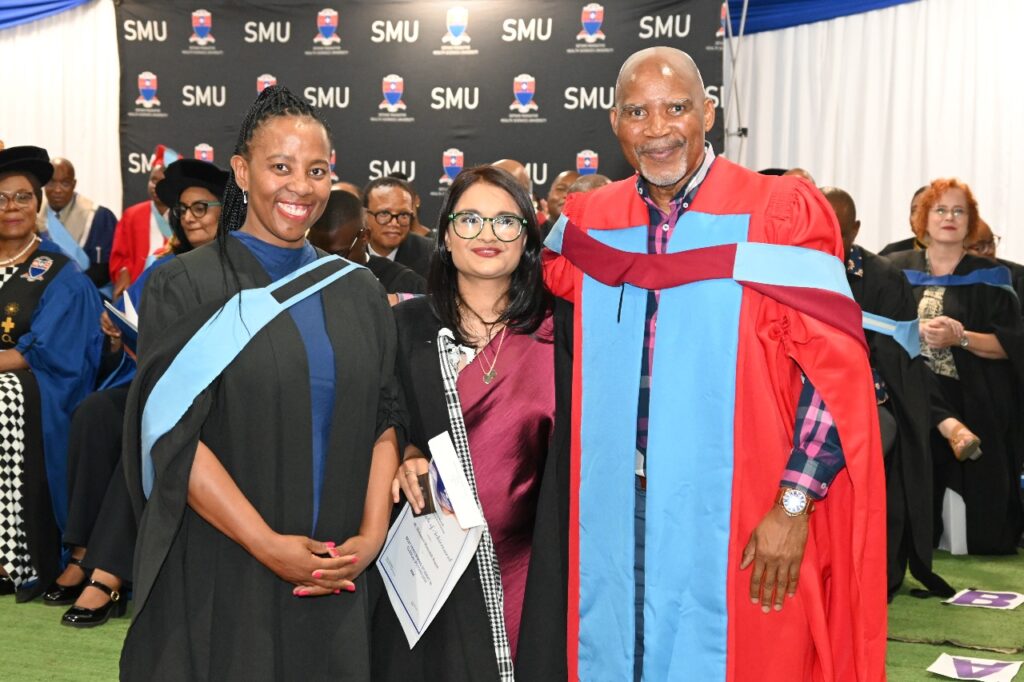 During the ceremonies, Mohamed Masoodah Begum was recognised as the Best Performing Student in Clinical Psychology, exemplifying the academic excellence that SMU nurtures. Her achievement and many others celebrated during the ceremonies reflect the university’s commitment to fostering talent and preparing students to excel in their fields.
As SMU celebrates its 10th anniversary, these events serve as a powerful reminder of its journey and achievements. Over the past decade, the university has stood as a beacon of innovation and excellence in healthcare education, producing leaders who are shaping healthcare systems worldwide. The graduating class of 2024 now join the distinguished ranks of SMU alumni, ready to make meaningful contributions to communities across South Africa and beyond. Their achievements are a testament to the university’s quality education and mentorship, which prepare students to meet the ever-evolving healthcare sector challenges with confidence, expertise, and empathy.
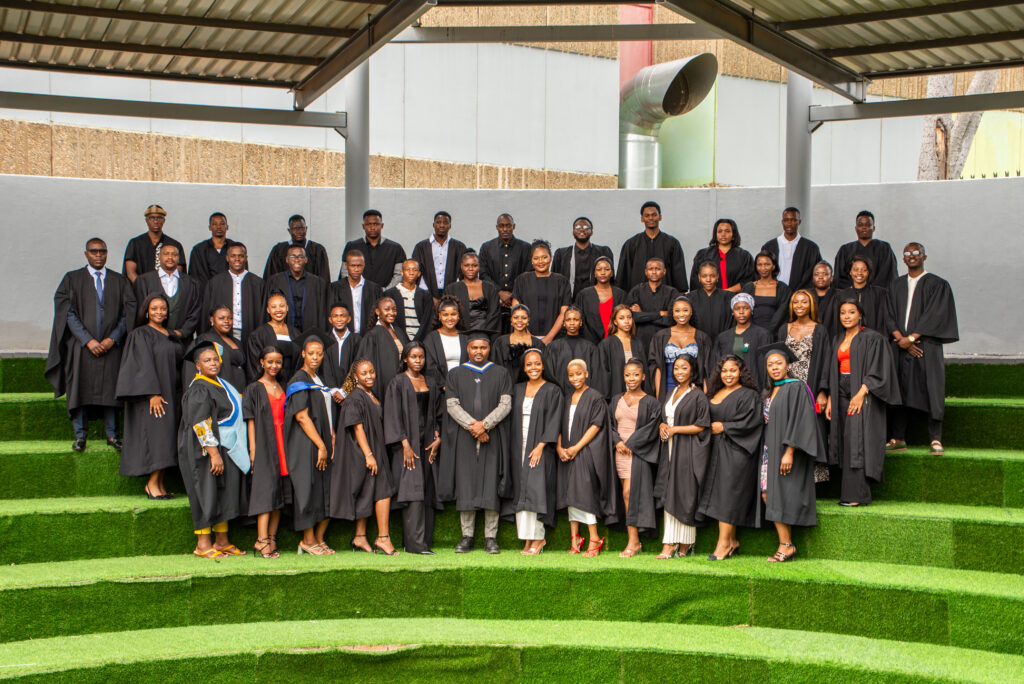 SMU celebrates the graduating class of 2024, whose dedication and hard work have brought them to this pivotal moment. As they step forward into their professional journeys, they carry with them the knowledge and skills acquired at SMU and the values that define this prestigious institution.
By Dimakatso Modise

by Lorato | Dec 13, 2024 | All News, SMU Media, Student Media
In an era that celebrates narrow specialisation, Sefako Makgatho Health Sciences University (SMU) takes immense pride in its alumni who embody versatility and excellence across multiple disciplines. One such alumnus is Vukosi “VJ” Mashele, whose journey from the rural Bonn village outside Tzaneen to international acclaim in media, physics, and life coaching exemplifies SMU’s commitment to nurturing well-rounded leaders who address South Africa’s pressing challenges with innovation and purpose.

Vukosi “VJ” Mashele
Born into a family of educators, Mashele grew up in an environment that instilled intellectual curiosity and empathy. “My mother, a passionate advocate for therapy, taught me the value of open communication and emotional intelligence. My father, a respected community leader, instilled in me the importance of leadership and service,” he reflects. These foundations would later shape a career as diverse as it is impactful.
Drawn to the structured elegance of physics and statistics, Mashele earned his Bachelor of Science degree at SMU. Reflecting on his time at the university, he notes, “Physics taught me dynamic problem-solving, while statistics honed my analytical skills. SMU provided me with a robust academic foundation that transcends traditional boundaries.” This multidisciplinary approach, championed by SMU, laid the groundwork for his ventures into media, academia, and mental health advocacy.
It was at SMU FM, the university’s radio station, that Vukosi discovered his passion for broadcasting. Encouraged by SMU’s Public Relations Officer, Tumelo Moila, he auditioned and began a journey that would connect him to millions of listeners. “SMU FM was where I first realised the power of media to educate and connect communities,” he recalls. His ability to simplify complex concepts for rural audiences has since become a hallmark of his broadcasting style.
Guided by empathy and a desire to make a difference, he pursued certifications in Life Coaching and Neuro-Linguistic Programming (NLP). He conducts grief counselling, personal development masterclasses, and mental health initiatives through his organisation. His work has earned him accolades, including the title of Best Motivational Speaker at the South African Social Media Awards (SASMA) in 2022 and recognition for leading the Best Coaching-Anchored Organisation at the Africa Coaching & Consulting Awards in 2023.
A physicist bridging academic and global platforms
Beyond his achievements in mental health and media, Mashele remains a dedicated physicist, serving on the board of the South African Institute of Physics (SAIP). He actively champions the role of physics in education, research, and innovation, highlighting SMU’s emphasis on producing graduates who contribute to critical national and global conversations.
In 2024, he hosted the African Energy Week, facilitating discussions on eradicating energy poverty across the continent. Reflecting on this milestone, he shares, “Standing on such a global stage affirmed my belief in the power of multidimensional education, much of which I attribute to SMU’s holistic approach to learning.”
From winning a Mail & Guardian 200 Young South Africans award to starring in acclaimed South African productions like The Queen, Mashele’s achievements are a testament to his multidimensional talents. Yet, he remains grounded, focusing on impact over accolades.
“My analytical background enhances my creativity,” he says. “Whether I’m developing radio segments, leading conferences, or innovating my men’s grooming brand, I approach each endeavour with the versatility SMU encouraged in me.”
His advice to young professionals is simple yet profound: “Embrace your uniqueness. Your multidimensionality is your strength, not a weakness. Trust your inner voice—it will always guide you towards fulfilling your potential.”
As a proud alumnus, Mashele embodies SMU’s mission to produce leaders who address South Africa’s most pressing challenges. The university remains committed to nurturing trailblazers like Mashele, who redefine boundaries and leave an indelible mark on the world.
*By Tumelo Moila