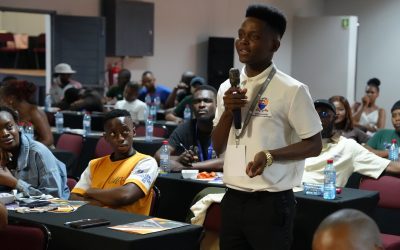
Sefako Makgatho Health Sciences University (SMU) reaffirmed its commitment to advancing transformative education when the Centre for University Teaching and Learning (CUTL) recently hosted its Teaching and Learning Symposium. Under the theme “Transforming Health Sciences Education: Towards Contextually Relevant and Future-Ready Curricula,” the symposium brought together academic staff, clinicians, and teaching and learning practitioners to reflect critically on the future of health sciences education.
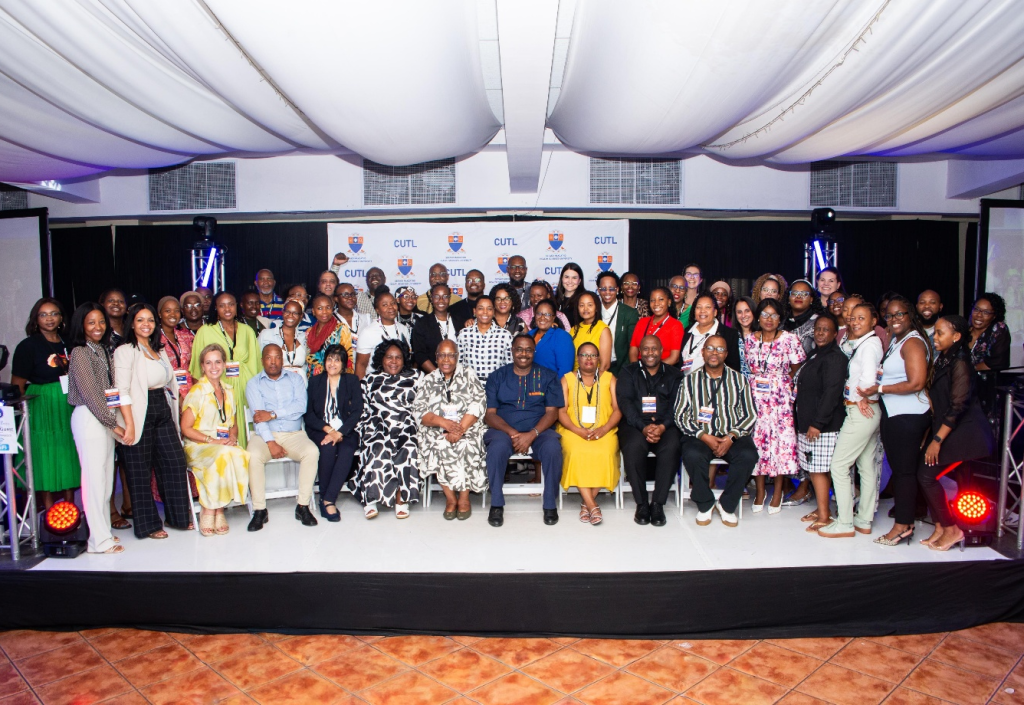 The event formed part of SMU’s broader institutional agenda to strengthen curriculum transformation, inclusive pedagogy, and Health Professions Education (HPE). It also underscored the university’s strategic mission of producing graduates who are not only clinically competent but also socially responsive and ethically grounded.
Delivering the opening address, Vice-Chancellor Professor Tandi Masha Erasmus set a decisive tone for the discussions, stating: “We are not merely revising curricula; we are reimagining the very purpose of health sciences education in a rapidly evolving world. Our graduates must be both clinically competent and socially responsive.”
Her remarks were echoed through strong institutional participation, with senior leadership including the Deputy Vice-Chancellor for Academic and Community Engagement, deans from various schools, and the Deputy Director of Student Affairs in attendance. Their collective presence signalled a unified commitment to academic excellence and educational reform.
The pre-symposium programme featured two intensive capacity-building workshops aimed at strengthening institutional capability in curriculum design and digital pedagogy. The first session focused on Council on Higher Education (CHE) Higher Education Practice Standards (HEPS), with Siyabulela Sabata facilitating discussions on quality assurance and curriculum reform. He noted: “Transformation is not an event—it is a disciplined, continuous engagement with standards that demand both rigour and creativity.”
 The second workshop explored digital teaching and learning innovations, particularly the effective use of Ithute, SMU’s digital learning platform. Facilitated by Dr Tabisa Mayisela from the University of Cape Town’s Centre for Innovation in Learning and Teaching, the session emphasised intentional design in online education. She remarked: “Digital pedagogy is not about replacing the lecturer; it is about amplifying meaningful learning experiences through intentional design.”
These preparatory sessions laid a strong foundation for the main symposium held recently, which featured keynote presentations, research papers, and a panel discussion. The hybrid format attracted approximately 66–90 in-person delegates daily, alongside 45–55 online participants, reflecting growing engagement with flexible academic platforms.
Across the programme, presenters highlighted emerging approaches in problem-based learning, interprofessional education, student wellbeing, ethical considerations in artificial intelligence, and the strengthening of clinical reasoning. Collectively, these themes reflected a shared institutional drive to produce graduates capable of navigating complex healthcare environments with competence and compassion.
A key highlight of the symposium was the keynote address by Professor Flavia Senkubuge, Dean of the Faculty of Health Sciences at the University of Pretoria. She challenged institutions to rethink inherited pedagogies, stating: “We must move beyond inherited pedagogies and build curricula that speak directly to our context, our communities, and our health system realities.” She further emphasised the importance of adaptability in modern healthcare training: “A future-ready graduate can navigate complexity with empathy, evidence, and ethical clarity.”
The panel discussion that followed expanded on these ideas through an Ubuntu-informed lens, emphasising relational and humanising pedagogies. Speakers stressed that health sciences education must remain grounded in community engagement, compassion, and collaborative knowledge production.
In conclusion, the symposium reinforced that curriculum transformation is an ongoing institutional responsibility requiring sustained collaboration, critical reflection, and innovation. As repeatedly emphasised during the event, “curriculum transformation is not the responsibility of one unit or one faculty, but a collective institutional commitment.”
The discussions further aligned with SMU’s vision of transforming health services through excellence and innovation, and its mission of delivering high-quality education and research that responds to societal needs. The university’s institutional values—particularly accountability, excellence, integrity, student-centredness, and Ubuntu—were evident throughout the engagements, shaping both discourse and direction.
Ultimately, the symposium reaffirmed SMU’s role in shaping future-ready health professionals equipped to respond to both local and global health challenges. It also highlighted the importance of strategic communication and institutional advancement in strengthening the university’s brand, ensuring that its achievements in teaching and learning continue to be recognised nationally and internationally.
By Dimakatso Modise