Nomusa Sikhakhane, a PhD candidate at Sefako Makgatho Health Sciences University (SMU), is placing South African cancer research on the global stage after receiving the prestigious American Association for Cancer Research (AACR) Amgen Global Scholars-in-Training Award (GSITA). The honour recognises emerging leaders in oncology and supports early-career researchers across Africa through international collaboration and capacity development.
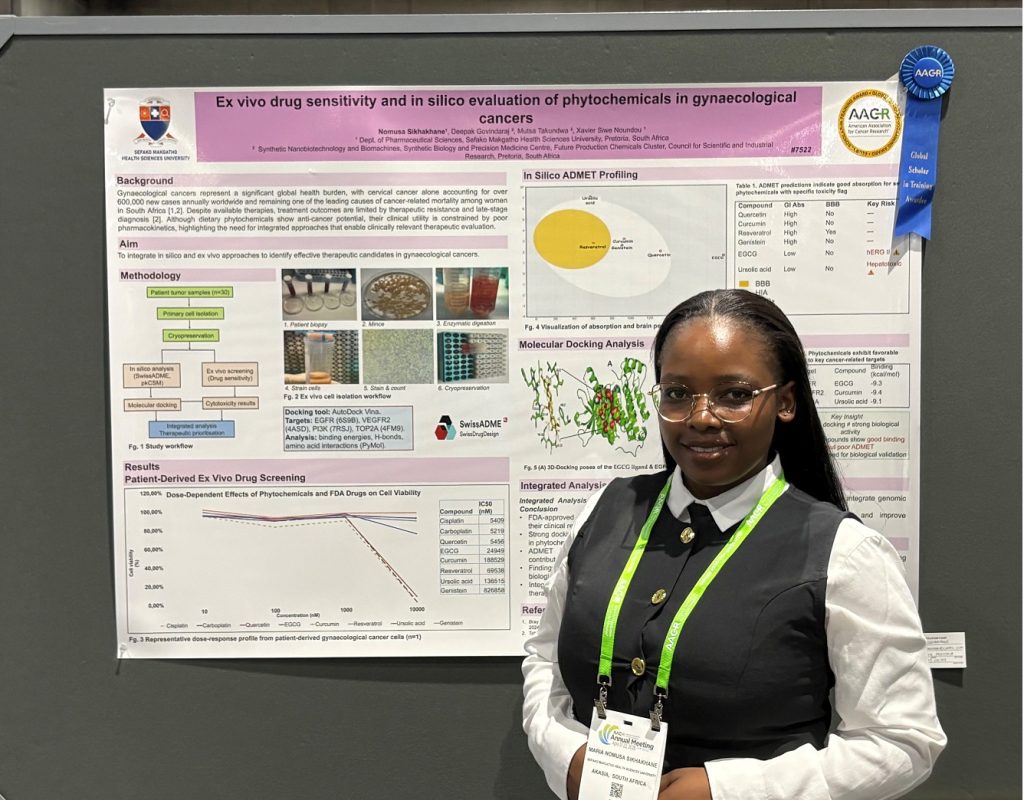
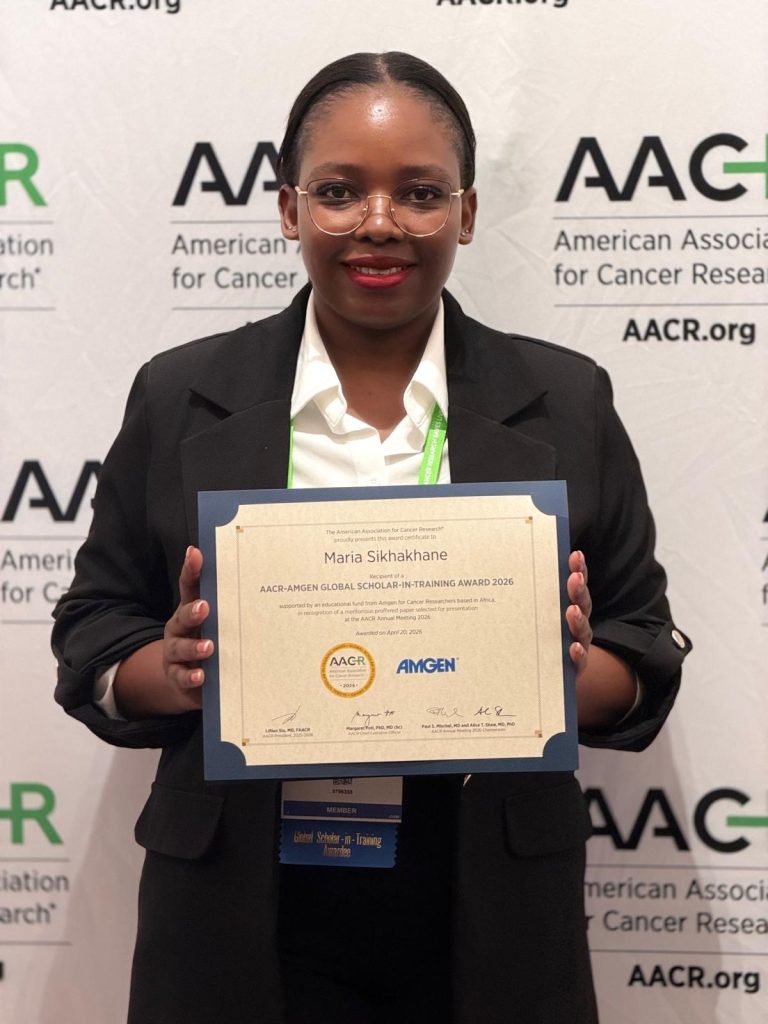 Sikhakhane was one of only five researchers selected globally for the 2026 GSITA cohort, and the sole recipient from South Africa. The award enabled her to present her research at the AACR Annual Meeting in San Diego, United States, a major international gathering that attracts approximately 22,000 cancer researchers each year. Reflecting on the experience, she said, “Presenting my work on such a global platform was both humbling and empowering. It affirmed the importance of research rooted in our local context but contributing to global scientific advancement.”
Her research focuses on ex vivo drug sensitivity testing in primary cells derived from South African gynaecological cancer patients. This work contributes to precision oncology by identifying treatments that are more effective for specific patient populations. “Our goal is to move towards more personalised cancer treatment strategies that reflect the biological diversity of our population,” she explained. “Too often, African patients are underrepresented in global datasets, which limits the relevance of treatment approaches.”
As part of the GSITA programme, Sikhakhane participated in a scholar visit to the UC San Diego Moores Cancer Centre, where she engaged with leading researchers and explored how scientific discoveries are translated into patient care. She also visited Amgen in Thousand Oaks, gaining insight into the full drug development pipeline. “Seeing the journey from discovery to manufacturing gave me a deeper appreciation of how multidisciplinary collaboration drives innovation in healthcare,” she noted.
 Beyond the immediate experience, the GSITA programme offers continued engagement, including participation in the African Organisation for Research and Training in Cancer International Conference in 2027. This ongoing support aims to strengthen leadership development and foster regional collaboration among African researchers. Sikhakhane emphasised the importance of such initiatives, stating, “Sustained investment in African researchers is critical if we are to address the continent’s unique cancer burden effectively.”
In addition to her doctoral studies, Sikhakhane serves as a laboratory technician and part-time lecturer at SMU, where she teaches across multiple pharmaceutical science disciplines and supervises student research. Her academic journey includes qualifications in biotechnology from the Vaal University of Technology, reflecting a strong foundation in both research and applied science.
She also highlighted the broader significance of global engagement for local researchers. “I strongly encourage emerging scientists to affiliate with international organisations such as the AACR,” she said. “These platforms not only expand collaboration opportunities but also amplify the visibility of African research.”
Sikhakhane’s achievement underscores SMU’s growing role in advancing impactful, globally relevant health research. Through its commitment to excellence in teaching, learning, and innovation, the university continues to develop scientists who are not only contributing to knowledge production but also shaping the future of healthcare in South Africa and beyond.
By Tumelo Moila