by Lorato | Aug 26, 2026 | Accolades and Achievements, All News, Alumni, SMU Media, Student Media
Nondumiso Nkosi, a PhD candidate and Junior Lecturer in Medical Virology at Sefako Makgatho Health Sciences University (SMU), has been awarded a 2026 South African Women in Science Awards (SAWiSA) Doctoral Fellowship, recognising her contribution to infectious disease diagnostics and innovation.
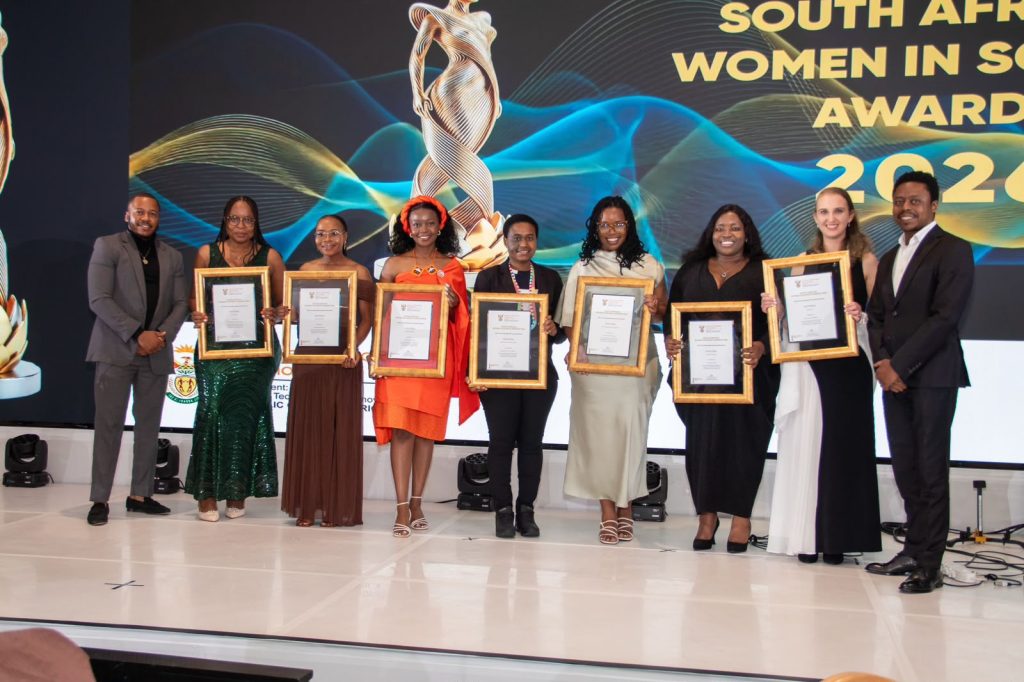
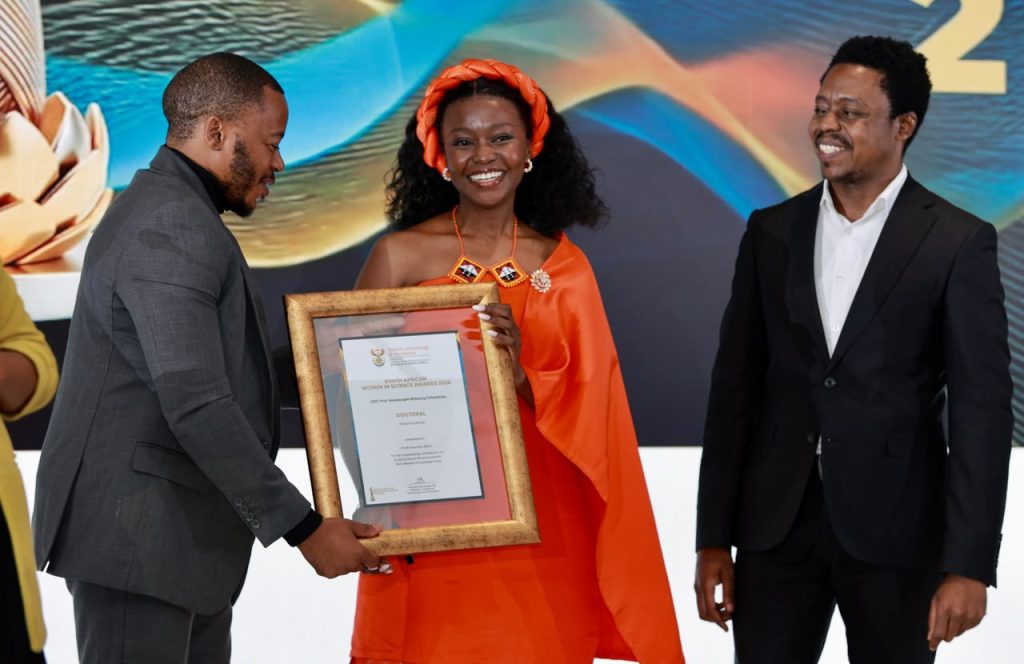 Nkosi is among seven emerging and established women researchers recognised through the Professor Keolebogile Shirley Motaung Fellowships for research addressing critical social, economic, environmental and scientific challenges facing South Africa. The awards, celebrated annually during Women’s Month, recognise excellence in science, technology and innovation (ST&I) and aim to inspire more women and girls to pursue careers in these fields.
The fellowships, renamed in honour of the late Professor Shirley Keolebogile Motaung, one of South Africa’s distinguished black women scientists and academics, support young women pursuing master’s and doctoral degrees. The awards recognise academic excellence and research potential while promoting innovation and mentorship.
At SMU, Nkosi’s research focuses on viral hepatitis and HIV, with particular attention to hepatitis B virus diagnostics and the detection of occult hepatitis B infection. She is optimising and validating HepaSure Diagnostics, a novel assay designed to enable rapid, decentralised and cost-effective disease detection, particularly in resource-limited settings.
Her work seeks to address limitations in existing hepatitis B screening approaches while improving access to inclusive diagnostic technologies. Nkosi believes the research could contribute to earlier disease detection, reduce healthcare inequalities and strengthen locally developed biotechnology solutions. She is also a patent holder for the diagnostic assay and has received several innovation and scientific awards.
Reflecting on the fellowship, Nkosi described the recognition as more than a personal achievement. “This accolade does not just belong to me. It belongs to every community, mentor, and family member who paved the path for me to step into the light.”
 She credited her family, particularly her mother, for providing the encouragement and resilience that shaped her scientific journey. “They invested their unwavering faith in me when all I had was an ambitious dream,” Nkosi said, describing her family as her “very first research funders”.
The fellowship adds to a series of achievements for Nkosi in 2026, following recognition through the CIPC IP Youth Award: Women Shaping IP, the Innovation Hub’s GAP Medical Awards and the Early-Stage Enactus South Africa National Exposition. She said these achievements were built on years of perseverance and lessons from setbacks.
Nkosi also acknowledged the contributions of the SMU community, including the Department of Virology, the Economic Activation Office (EAO), the Research and Innovation Office, the Technology Transfer Office, supervisors, mentors, and colleagues.
Her message to aspiring scientists is centred on perseverance, learning and confidence. “Your background does not define your limits. Your resilience matters. Your voice matters. Never be afraid to take up space in science.”
For SMU, Nkosi’s achievement reflects the university’s commitment to excellence, innovation and research that contributes to health and well-being. Her work demonstrates the institution’s broader role in developing scientific solutions with the potential to move beyond the laboratory and make a meaningful difference in communities.
By Tumelo Moila

by Lorato | Aug 20, 2026 | Accolades and Achievements, All News, Alumni, SMU Media, Student Media
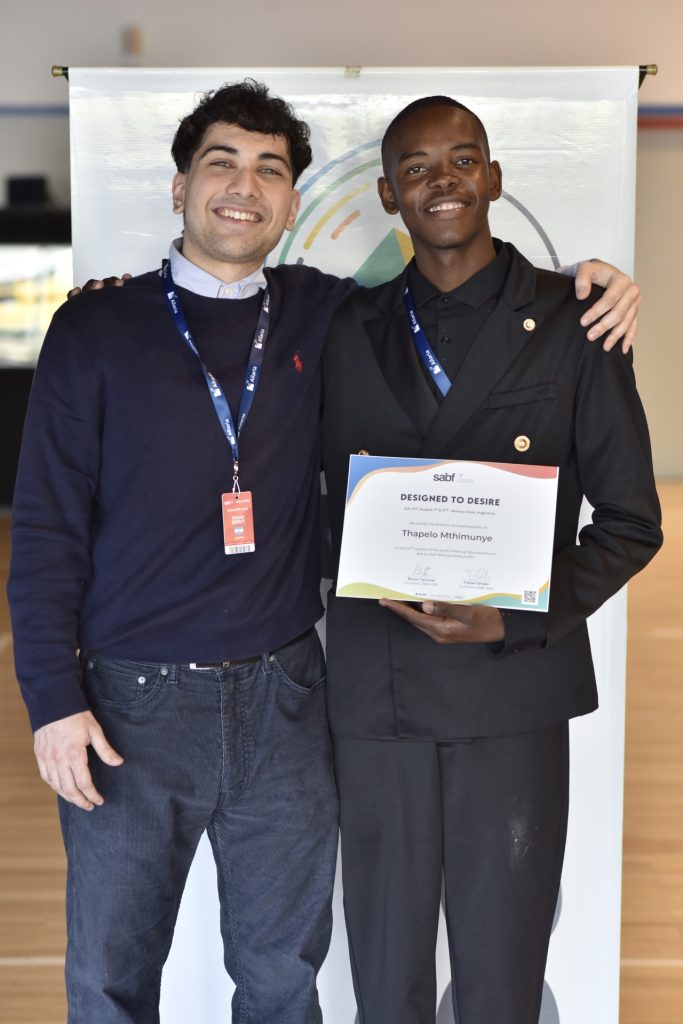
Sefako Makgatho Health Sciences University (SMU) medical student Thapelo Mthimunye represented the university and South Africa at the prestigious 22nd South American Business Forum (SABF), held recently in Buenos Aires, Argentina.
 A fourth-year Bachelor of Medicine and Bachelor of Surgery (MBChB) student, Mthimunye was selected as one of only 100 delegates from around the world following a competitive selection process that assessed academic excellence, leadership potential, extracurricular achievements and commitment to social impact.
Hosted annually by students of the Instituto Tecnológico de Buenos Aires (ITBA), SABF brings together young leaders, entrepreneurs, academics, innovators and students to engage with contemporary global challenges. This year’s forum, themed “Designed to Desire”, explored how design, innovation, technology, business and leadership can shape human behaviour and society.
For Mthimunye, the forum provided an opportunity to bring a South African and healthcare perspective to an international platform while engaging with delegates from diverse disciplines and backgrounds. “As a medical student, my interest in attending the forum extended beyond healthcare. I recognised that many of today’s global challenges require collaboration across multiple disciplines,” Mthimunye said.
The trip was also a personal milestone, marking his first international journey. Travelling from Johannesburg via Dubai and Rio de Janeiro, he described the experience as both exciting and transformative. His arrival in Buenos Aires exposed him to a different cultural and linguistic environment, where Spanish meant he had to rely on translation apps and other communication methods.
At SABF, Mthimunye participated in keynote sessions, workshops, student presentations, debates and collaborative discussions on innovation, entrepreneurship, artificial intelligence (AI), sustainability, leadership and the future of society.
 The programme challenged delegates to examine how innovation and technology can be applied responsibly to address human needs. Among the discussions was Sintoniza, a prototype that enables deaf people to experience music by converting musical notes into tactile vibrations, demonstrating how human-centred innovation can address barriers experienced by communities.
Mthimunye also participated in a debate on whether patents and copyrights should be prohibited for work primarily produced with AI assistance. He argued for continued intellectual property protection while recognising AI as a tool that can support human creativity, emphasising the need for appropriate legal and ethical frameworks.
The experience reinforced his view that complex challenges, particularly in healthcare, require collaboration across disciplines. “The conference demonstrated that healthcare professionals must work alongside experts from different sectors to develop innovative and sustainable solutions,” he said.
The forum also enabled Mthimunye to establish connections with young leaders from countries including Tanzania, Ghana, the United Kingdom, Singapore, Brazil, Argentina, Chile, Peru, Russia and the United States of America. “Participating in discussions, asking questions, contributing to debates, and sharing my perspectives with delegates from around the world gave me confidence that students from SMU and South Africa can contribute meaningfully to global conversations,” he said.
Mthimunye plans to share his experience with fellow students through report-back sessions, encourage innovation and critical thinking, promote awareness of international opportunities and explore potential collaborative projects through his international network. “Many students possess the potential to compete internationally but may hesitate due to self-doubt or lack of awareness. I hope that sharing my experience will inspire others to believe in themselves and pursue similar opportunities,” he said.
His participation demonstrates SMU’s commitment to student development and internationalisation. Mthimunye expressed appreciation to the Office of Internationalisation, led by Dr Carlien Jootse, and the Student Affairs Department for their support.
His achievement underscores SMU’s role in preparing future healthcare professionals to engage confidently beyond the clinical environment and contribute South African perspectives to global conversations on innovation, leadership and sustainable solutions.
By Dimakatso Modise

by Lorato | Aug 20, 2026 | Accolades and Achievements, All News, Alumni, SMU Media, Student Media
Sefako Makgatho Health Sciences University (SMU) is strengthening its international partnerships through academic engagements that translate institutional agreements into practical opportunities for teaching, research, professional development and community engagement.
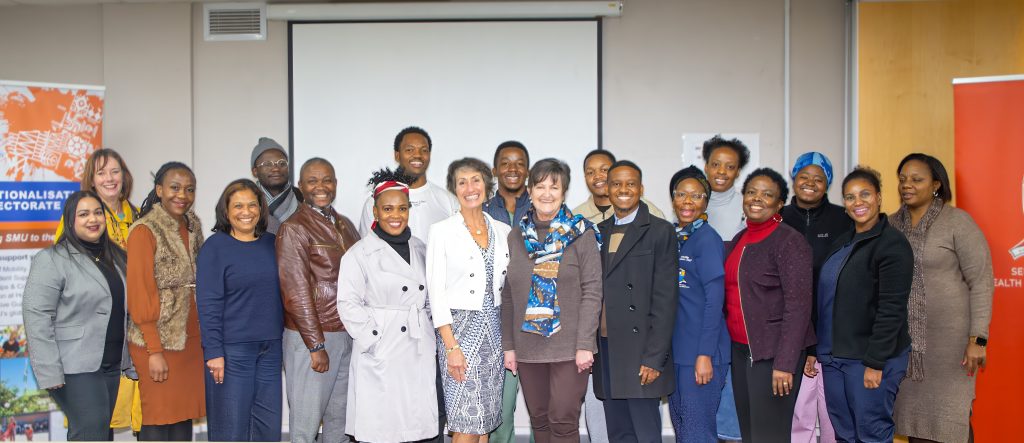 Recently, SMU’s Internationalisation Directorate welcomed Professor Mary Lou Galantino from Stockton University in the United States for her second visit to the university. The engagement formed part of ongoing efforts to operationalise the Memorandum of Understanding (MOU) signed between SMU and Stockton University earlier this year.
Prof Galantino is a Distinguished Professor of Physical Therapy at Stockton University, where she coordinates an interdisciplinary Integrative Health Minor. She is also a Specialist Fulbright Award recipient whose research focuses on mitigating disability associated with HIV and cancer through collaborative research. She is a visiting professor at the University of the Witwatersrand and has contributed extensively to her field, with more than 100 publications and over 250 professional presentations to interdisciplinary audiences.
Her visit to SMU comprised a dual-focus programme involving the Interprofessional Education and Collaborative Practice (IPECP) Unit, its coordinators and student champions, and the Department of Physiotherapy.
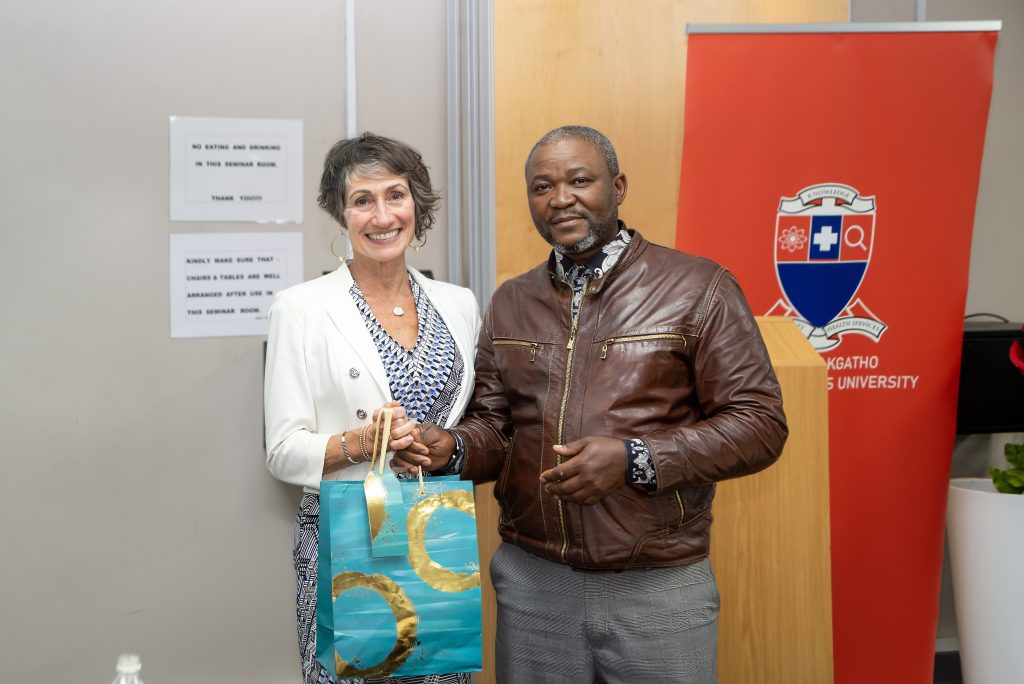 The engagement with the IPECP Unit provided an opportunity for robust discussions on interprofessional education and collaborative practice. Participants exchanged perspectives and explored opportunities to strengthen interdisciplinary approaches to health sciences education and professional practice.
Prof Galantino also engaged with the Department of Physiotherapy, where she delivered a presentation on physiotherapy, service learning and community engagement. The presentation stimulated discussions on the role of community physiotherapy and the importance of preparing health professionals to respond effectively to healthcare needs beyond traditional clinical environments.
The discussions also addressed the ongoing re-curriculation of the Physiotherapy programme, including opportunities to strengthen postgraduate education. One area explored was the potential development of a coursework Doctor of Physiotherapy programme in South Africa.
Reflecting on the engagements, Prof Galantino said the discussions provided a strong foundation for continued collaboration. “We had robust discussions at every level, and I am happy to assist as we advance further together with our MOU and plans articulated at our engagements,” she said.
The visit also demonstrated the value of the university-wide MOU between SMU and Stockton University. The agreement provides for joint educational, training and research activities; the exchange of scholars for lectures, visits and knowledge sharing; participation in conferences, symposia and seminars; the exchange of information in areas of mutual interest; and the exchange of faculty, research personnel, and undergraduate and postgraduate students for study and research.
Discussions towards the MOU began during Prof Galantino’s first visit to SMU last year. Following the initial engagement, the Internationalisation Directors of both institutions continued discussions, culminating in the signing of the agreement earlier this year.
Dr Carlien Jooste, Director: Internationalisation at SMU, emphasised that university-wide agreements should create opportunities for collaboration across different academic areas. “Activities like this allow for MOUs to become operational and a living document on a campus. As a university-wide MOU, we look forward to assisting other staff in engaging with Stockton University,” said Dr Jooste.
The partnership provides Schools and Departments with opportunities to identify areas of mutual interest and develop collaborative initiatives with Stockton University. This approach ensures that internationalisation is embedded across the university rather than being limited to a single academic discipline.
Prof Galantino’s second visit represents an important step in strengthening the partnership and creating opportunities for knowledge exchange and collaboration in physiotherapy, interprofessional education, cultural exchange, research and community engagement.
As SMU expands its international footprint, partnerships such as this demonstrate the university’s commitment to building mutually beneficial relationships that support academic excellence, innovation, and the advancement of health sciences education and practice.
By Dimakatso Modise

by Lorato | Aug 20, 2026 | Accolades and Achievements, All News, Alumni, SMU Media, Student Media
Mathematics is more than formulas, calculations and finding the correct answer. It is a discipline that demands curiosity, logical reasoning, persistence and the confidence to approach unfamiliar problems. These qualities are at the heart of the Siyanqoba Mathematics Olympiad Training Programme, implemented through a strategic collaboration between Sefako Makgatho Health Sciences University (SMU) and the South African Mathematics Foundation (SAMF).
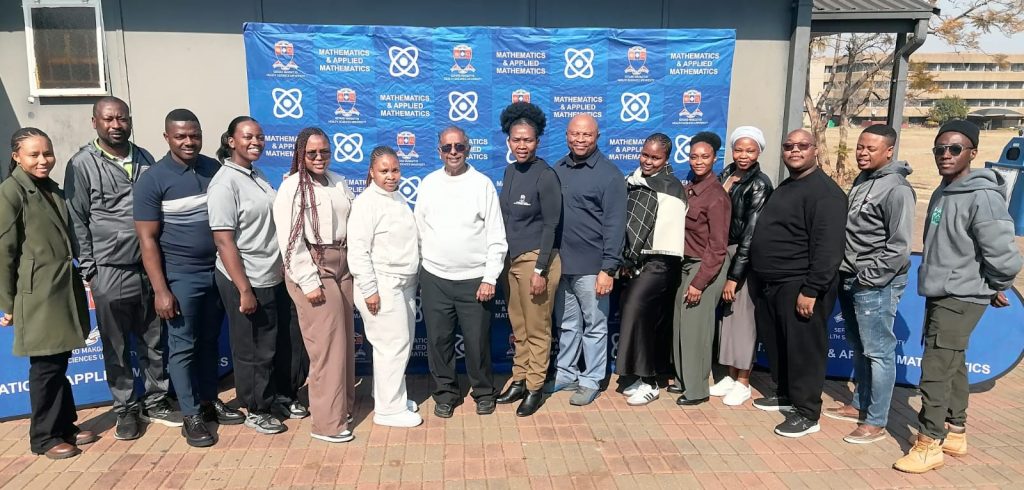 The programme is designed for high school learners who demonstrate aptitude and enthusiasm for mathematics, with a strong emphasis on mathematical problem-solving rather than the routine questions that often dominate the school curriculum. It exposes learners to mathematical concepts and enrichment material beyond the prescribed curriculum while seeking to strengthen South Africa’s competitiveness in mathematics.
According to Patrick Rasehwete, Engagement and Project Manager at SAMF, the programme seeks to address an important gap in mathematics education. “The Siyanqoba Mathematics Olympiad Training Programme is an outreach programme for high school students throughout the country who show particular ability and interest in mathematics. The programme concentrates on developing mathematical problem-solving skills, unlike in regular school curricula where the focus is more on solving routine-type questions,” said Rasehwete.
He explained that the programme places considerable emphasis on conceptual understanding rather than memorisation. “The emphasis is on the understanding of mathematical concepts rather than pure memorisation of formulae. It furthermore covers enrichment material which is not in the school curriculum and aims to improve our competitiveness internationally,” he said.
 The Siyanqoba Centre at SMU is initially supporting Grade 8 to Grade 10 learners from participating secondary schools, including Kgatoentle Secondary Leap Mathematics and Science School and Modiri High School. The learners were selected after completing a selection assessment, while the schools’ longstanding collaboration with SMU was an important consideration in establishing the programme.
For Nthati Innocentia Xaba, an MSc Mathematics student, the training provides an opportunity to engage with mathematics beyond conventional classroom approaches. Her perspective highlights the importance of creating opportunities for mathematics students and educators to engage with problem-solving approaches that encourage deeper mathematical thinking and build confidence.
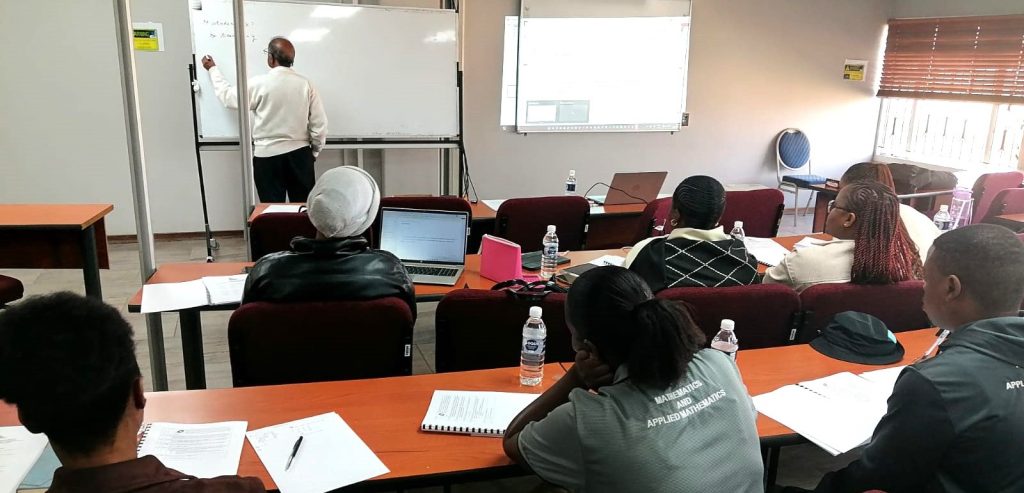
The two-day training programme held at SMU primarily focused on preparing educators, coaches and tutors who will work with the selected learners. Rather than concentrating exclusively on mathematical content, the training equips facilitators with strategies to help learners navigate complex and unfamiliar problems. “The two-day training is an essential orientation programme for facilitators, namely coaches, tutors and teachers who will be providing lessons to the identified learners,” Rasehwete said. “The training will provide facilitators with various strategies to use when dealing with learners.”
Participants engaged in problem-solving activities designed to deepen their understanding of mathematical reasoning and the processes involved in tackling challenging questions. Mathematical thinking, mathematical modelling, and the control of the problem-solving process were among the areas explored during the training.
The programme was facilitated by Emeritus Professor Poobhalan Pillay, appointed by SAMF as Academic Coordinator of the Siyanqoba Mathematics Olympiad Programme. Pillay brings extensive experience in mathematics education, having lectured for 40 years at the former University of Durban-Westville and the University of KwaZulu-Natal.
The programme also responds to structural challenges affecting mathematics education in South Africa. “Learners do not have enough resources to deal with problem-solving strategies, and teachers are victims of their own previous education and are likely to continue to teach the way they were taught, by focussing on routine problems unless a way is found to interrupt this self-perpetuating cycle,” Rasehwete said.
For SMU, the initiative represents a significant extension of its community engagement mandate. It provides the university with an opportunity to contribute to mathematics education while supporting schools and educators in surrounding communities.
By Dimakatso Modise

by Lorato | Aug 12, 2026 | Accolades and Achievements, All News, Alumni, SMU Media, Student Media
Sefako Makgatho Health Sciences University (SMU) is celebrating a major innovation milestone after HepaSure Diagnostics, a student-led healthcare enterprise founded by Nondumiso Nkosi, was crowned the Enactus South Africa Early-Stage Competition Champion. The victory secures South Africa’s representation at the Enactus World Cup 2026 in São Paulo, Brazil, where the innovation will be showcased before a global audience of students, investors and business leaders.
 Founded by Nkosi, a medical scientist and student in the Department of Virology at SMU, HepaSure Diagnostics is developing an affordable, rapid and inclusive diagnostic solution for hepatitis B, with a particular focus on detecting occult hepatitis B infections—cases that often remain undetected by conventional screening methods. The innovation aims to improve early diagnosis, particularly in resource-constrained healthcare settings, while supporting global efforts to eliminate viral hepatitis.
The achievement reflects SMU’s commitment to transforming healthcare through research, innovation and entrepreneurship while empowering students to develop practical solutions to pressing public health challenges. “This achievement demonstrates what is possible when scientific research is combined with entrepreneurial thinking,” said Nondumiso Nkosi, founder of HepaSure Diagnostics. “Our goal has always been to ensure that people, particularly those in underserved communities, have access to accurate and affordable hepatitis B diagnostics. Representing South Africa at the Enactus World Cup is an incredible opportunity to showcase an innovation that has the potential to improve health outcomes both locally and globally.”
The victory marks the culmination of a journey that began when HepaSure Diagnostics joined the Enactus SMU programme as one of its student enterprises. Under the guidance of Enactus SMU Coordinator Naledi Mathole and the leadership of Enactus SMU President Nomsa Phoswa, the enterprise received structured entrepreneurial development, mentorship and coaching to strengthen its business model, sharpen its value proposition and enhance its investment readiness.
Following months of preparation, HepaSure Diagnostics earned a place among the Top Seven Early-Stage enterprises selected to compete at the Enactus South Africa National Exposition, held on 22 July 2026 at the Focus Rooms in Sandton. Sponsored by Harmony and other partners, the exposition brought together student entrepreneurs from more than 23 universities across South Africa, each presenting innovative business solutions designed to address critical social, economic and environmental challenges.
On 23 July 2026, HepaSure Diagnostics was announced as the National Early-Stage Champion, securing the opportunity to represent South Africa at the Enactus World Cup 2026 in Brazil.
 “This success is a testament to the dedication, resilience and excellence demonstrated by our students,” said Mathole, Enactus SMU Coordinator. “At SMU, we are committed to creating an environment where innovation thrives and where students are equipped with the entrepreneurial skills needed to translate research into sustainable solutions that improve lives.”
Nomsa Phoswa, President of Enactus SMU, said the achievement reflects the strength of collaborative leadership and student innovation. “We are immensely proud of Nondumiso and the HepaSure Diagnostics team,” said Phoswa. “Their success highlights the impact of student entrepreneurship at SMU and reinforces our belief that young innovators can develop scalable solutions to some of society’s most complex healthcare challenges.”
Enactus South Africa forms part of the global Enactus network, an international non-profit organisation that empowers university students to create sustainable enterprises that address social, economic and environmental challenges through entrepreneurial action. By connecting students with business mentors and industry leaders, the organisation equips young entrepreneurs to transform innovative ideas into impactful businesses.
As HepaSure Diagnostics prepares to compete on the world stage in São Paulo, the achievement reinforces Sefako Makgatho Health Sciences University’s vision of transforming health services through excellence and innovation. It also demonstrates the University’s growing contribution to scientific research, entrepreneurship and the development of future healthcare leaders whose innovations have the potential to improve lives in South Africa and beyond.
By Tumelo Moila

by Lorato | Aug 12, 2026 | Accolades and Achievements, All News, Alumni, SMU Media, Student Media
Sefako Makgatho Health Sciences University (SMU) continues to strengthen its contribution to advancing maternal healthcare through research that promotes compassionate, evidence-based clinical practice. A study by Dr Ntsoaki Margaret Tshabalala, a Nursing Science lecturer at SMU, has resulted in the development of comprehensive guidelines designed to improve holistic perinatal care during intimate examinations, placing women’s dignity, emotional wellbeing and informed consent at the centre of maternity care.
 Intimate examinations, including assessments of the breasts, abdomen and vagina during pregnancy, labour, postnatal care and gynaecological screening, are an essential component of midwifery practice. However, they can also be a source of anxiety, fear and embarrassment, particularly for first-time mothers or women with previous traumatic experiences. Dr Tshabalala’s research highlights the importance of recognising not only the physical aspects of care, but also the psychological, emotional, social and spiritual needs of women throughout the perinatal period.
“The findings show that holistic perinatal care must extend beyond clinical competence,” said Dr Tshabalala. “Midwives should provide respectful communication, obtain informed consent and offer psychosocial support throughout intimate examinations to ensure women feel safe, valued and respected.”
The guidelines were developed through a rigorous four-phase research process that included an integrative literature review, semi-structured telephone interviews with postnatal women, a nominal group technique involving midwives and specialists, and a Delphi study with maternal and neonatal experts from South Africa and abroad. This comprehensive methodology ensured that the recommendations reflected both scientific evidence and the lived experiences of women receiving maternity care.
 The study produced eight key guidelines to strengthen holistic perinatal care. These include improving professional communication during intimate examinations, adhering to ethical and legal standards, creating supportive physical environments, strengthening staff training and competency, recognising individual patient needs, enhancing the quality of intimate care practices, providing social and psychological support, and ensuring management commitment to holistic care delivery. Together, these recommendations provide a practical framework for improving the quality and consistency of maternity care in clinical settings.
Dr Tshabalala believes these guidelines have the potential to improve trust between healthcare professionals and patients while reducing the emotional distress often associated with intimate examinations. “Providing compassionate, person-centred care is fundamental to improving women’s experiences during pregnancy and childbirth. When healthcare professionals communicate with empathy and respect, they foster confidence and contribute to better maternal outcomes,” she said.
The research forms part of Dr Tshabalala’s doctoral study, titled Development of guidelines for holistic perinatal care during intimate examinations, completed at the University of Pretoria. Her academic and professional background in midwifery, nursing education and maternal healthcare has positioned her as an advocate for improving perinatal care through research, education and clinical practice.
By translating research into practical guidance for healthcare professionals, SMU continues to demonstrate its commitment to transforming health services through excellence and innovation. The university’s emphasis on research that addresses real-world healthcare challenges reinforces its role in developing evidence-based solutions that improve patient care and advance the health and wellbeing of communities across South Africa and beyond.
By Tumelo Moila