by Lorato | Aug 20, 2026 | Accolades and Achievements, All News, Alumni, SMU Media, Student Media
Mathematics is more than formulas, calculations and finding the correct answer. It is a discipline that demands curiosity, logical reasoning, persistence and the confidence to approach unfamiliar problems. These qualities are at the heart of the Siyanqoba Mathematics Olympiad Training Programme, implemented through a strategic collaboration between Sefako Makgatho Health Sciences University (SMU) and the South African Mathematics Foundation (SAMF).
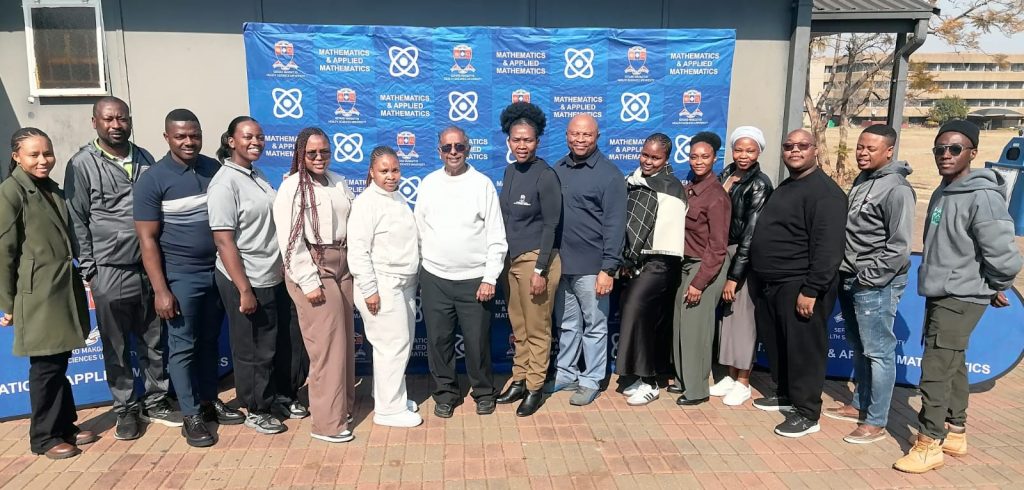 The programme is designed for high school learners who demonstrate aptitude and enthusiasm for mathematics, with a strong emphasis on mathematical problem-solving rather than the routine questions that often dominate the school curriculum. It exposes learners to mathematical concepts and enrichment material beyond the prescribed curriculum while seeking to strengthen South Africa’s competitiveness in mathematics.
According to Patrick Rasehwete, Engagement and Project Manager at SAMF, the programme seeks to address an important gap in mathematics education. “The Siyanqoba Mathematics Olympiad Training Programme is an outreach programme for high school students throughout the country who show particular ability and interest in mathematics. The programme concentrates on developing mathematical problem-solving skills, unlike in regular school curricula where the focus is more on solving routine-type questions,” said Rasehwete.
He explained that the programme places considerable emphasis on conceptual understanding rather than memorisation. “The emphasis is on the understanding of mathematical concepts rather than pure memorisation of formulae. It furthermore covers enrichment material which is not in the school curriculum and aims to improve our competitiveness internationally,” he said.
 The Siyanqoba Centre at SMU is initially supporting Grade 8 to Grade 10 learners from participating secondary schools, including Kgatoentle Secondary Leap Mathematics and Science School and Modiri High School. The learners were selected after completing a selection assessment, while the schools’ longstanding collaboration with SMU was an important consideration in establishing the programme.
For Nthati Innocentia Xaba, an MSc Mathematics student, the training provides an opportunity to engage with mathematics beyond conventional classroom approaches. Her perspective highlights the importance of creating opportunities for mathematics students and educators to engage with problem-solving approaches that encourage deeper mathematical thinking and build confidence.
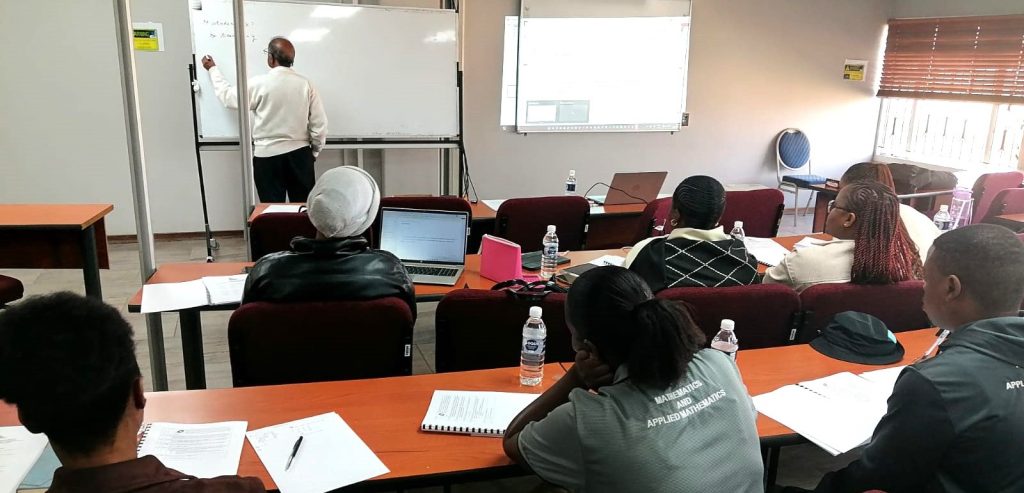
The two-day training programme held at SMU primarily focused on preparing educators, coaches and tutors who will work with the selected learners. Rather than concentrating exclusively on mathematical content, the training equips facilitators with strategies to help learners navigate complex and unfamiliar problems. “The two-day training is an essential orientation programme for facilitators, namely coaches, tutors and teachers who will be providing lessons to the identified learners,” Rasehwete said. “The training will provide facilitators with various strategies to use when dealing with learners.”
Participants engaged in problem-solving activities designed to deepen their understanding of mathematical reasoning and the processes involved in tackling challenging questions. Mathematical thinking, mathematical modelling, and the control of the problem-solving process were among the areas explored during the training.
The programme was facilitated by Emeritus Professor Poobhalan Pillay, appointed by SAMF as Academic Coordinator of the Siyanqoba Mathematics Olympiad Programme. Pillay brings extensive experience in mathematics education, having lectured for 40 years at the former University of Durban-Westville and the University of KwaZulu-Natal.
The programme also responds to structural challenges affecting mathematics education in South Africa. “Learners do not have enough resources to deal with problem-solving strategies, and teachers are victims of their own previous education and are likely to continue to teach the way they were taught, by focussing on routine problems unless a way is found to interrupt this self-perpetuating cycle,” Rasehwete said.
For SMU, the initiative represents a significant extension of its community engagement mandate. It provides the university with an opportunity to contribute to mathematics education while supporting schools and educators in surrounding communities.
By Dimakatso Modise
by Lorato | Aug 20, 2026 | All News, Alumni, SMU Media, Student Media
Sefako Makgatho Health Sciences University (SMU) nursing students have taken breastfeeding awareness into the community, using practical health education to promote informed support for mothers and babies.
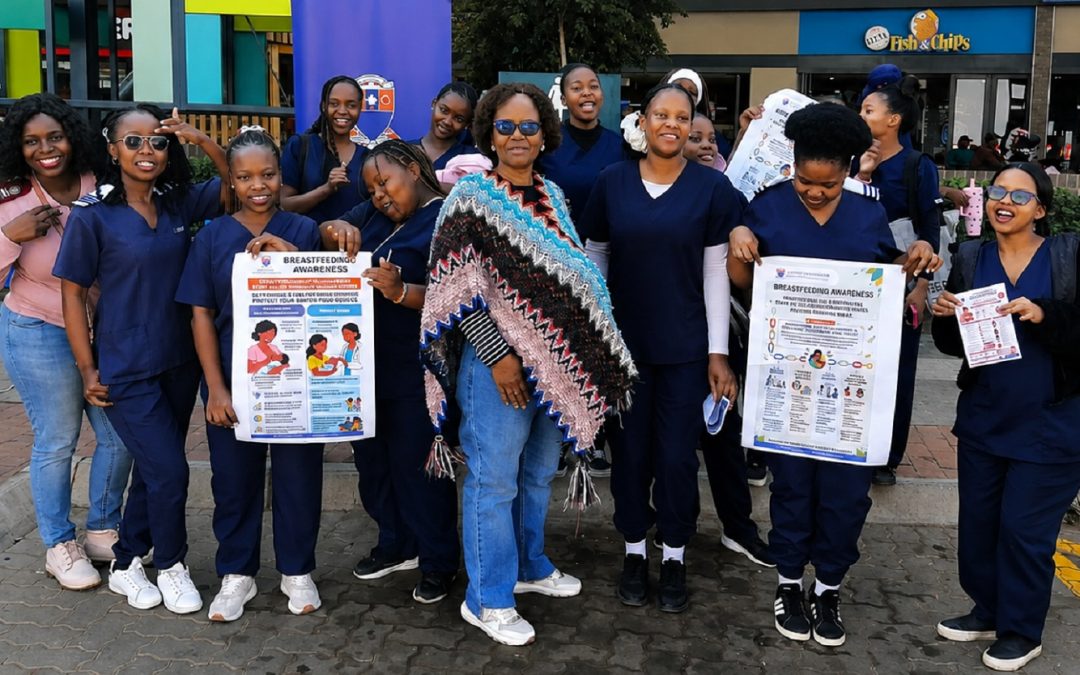
 The initiative formed part of a Breastfeeding Day Celebration held at Hebron Mall during World Breastfeeding Week. Under the theme, “Breastfeeding for a Sustainable Start in Life: Strengthen What Works”, the event brought together nursing students, academic staff and community members to promote breastfeeding, provide counselling and address common misconceptions.
World Breastfeeding Week, supported globally by the World Health Organisation and UNICEF and endorsed by South Africa’s National Department of Health, highlights the importance of breastfeeding and the need for supportive environments that enable mothers to breastfeed.
The SMU programme opened with a welcome and overview by Mpho Kgoele, a Lecturer in Midwifery, who emphasised the need for accurate information and support. “Creating awareness is important because mothers, partners and families need access to accurate information and appropriate support when it comes to breastfeeding,” Kgoele said.
Information stalls provided community members with opportunities to interact directly with nursing students, seek advice and receive breastfeeding counselling. The engagement allowed students to apply their academic knowledge in a real-world setting while responding to public questions and concerns.
Interactive activities formed an important part of the programme. Bachelor of Nursing and Midwifery (BNAM) third- and fourth-year students presented a partner-support drama skit illustrating the role families can play in supporting breastfeeding mothers.
 The students also facilitated a myth-busting quiz designed to help participants distinguish between common misconceptions and accurate breastfeeding information.
Maite Seabi, a BNAM third-year student, said the community engagement provided an opportunity for students to connect their classroom learning with practical health education. “Engaging directly with community members showed us the importance of communicating health information in a way that people can understand and relate to,” Seabi said.
The event also highlighted the importance of recognising breastfeeding as a shared responsibility. Partners, grandparents, siblings and other family members can help create an environment that supports mothers and babies.
Rudzingana Andani, a BNAM fourth-year student who participated in the myth-busting quiz, said interactive activities made it easier to communicate important health messages. “The myth-busting quiz allowed us to address common misconceptions while encouraging community members to participate and ask questions,” Andani said.
Dr Mashudu Tulelo, Lecturer in the Department of Nursing, welcomed the students’ active involvement and commended their commitment to community health education. “Our students demonstrated that their knowledge and skills can make a meaningful contribution beyond the classroom,” Tulelo said. “Community engagement gives them an opportunity to serve the public while developing as future healthcare professionals.”
The initiative reflected SMU’s institutional values, including Ubuntu, student-centredness, excellence, respect, integrity and accountability. By taking learning beyond the classroom, the programme demonstrated how community engagement can contribute to public health education while strengthening students’ professional development.
The celebration also reinforced the importance of breast milk as a source of nourishment and protection for babies, while emphasising that mothers should have access to support from their families, communities and healthcare professionals.
Through initiatives such as the Breastfeeding Day Celebration, SMU continues to integrate academic learning with community service and health promotion. The Department of Nursing’s participation in World Breastfeeding Week reinforced a central message: “supporting breastfeeding is everyone’s responsibility”, with families, communities and healthcare professionals all having a role in helping mothers and babies achieve a healthy start in life.
By Dimakatso Modise

by Lorato | Aug 20, 2026 | All News, Alumni, SMU Media, Student Media
Sefako Makgatho Health Sciences University (SMU) has appointed Busisiwe Mbanjwa as Manager: Gender-Based Violence (GBV) in the Human Capital and Transformation department, strengthening the university’s efforts to prevent and respond to gender-based violence across its community.
 Mbanjwa’s permanent appointment took effect on 1 August 2026, following more than two years in an acting capacity in the university’s GBV Office. She joined SMU in May 2020 as a Human Resources Business Partner and has since played an increasingly prominent role in strengthening the institution’s response to GBV.
Reflecting on her appointment, Mbanjwa said the permanent position would allow her to build on work already undertaken while strengthening systems designed to create a safer university environment.
“I am honoured to take on this responsibility permanently and to continue the work of strengthening SMU’s institutional response to gender-based violence. GBV prevention and response require sustained commitment, collaboration and accountability across the university community. My focus will be on ensuring that this work is embedded within the University’s broader institutional strategy, governance systems and transformation agenda.”
Mbanjwa brings more than 14 years of higher education experience, having worked at Nelson Mandela University, Rhodes University, the University of Mpumalanga and SMU. Her professional expertise includes strategic leadership, policy development and implementation, governance, quality assurance, stakeholder engagement, programme facilitation and institutional reporting.
She holds a Master of Business Administration, awarded cum laude, from the University of Johannesburg; a Bachelor of Commerce Honours in Human Resource Management from MANCOSA; and a Bachelor of Technology and a National Diploma in Human Resource Management from Nelson Mandela University.
Since assuming the acting GBV management role in June 2024, Mbanjwa has led initiatives to strengthen the University’s institutional response. These have included implementing the GBV policy framework, strengthening multidisciplinary case management, coordinating prevention and awareness programmes, strengthening institutional reporting, governance and accountability mechanisms, and developing partnerships with students, employees, University leadership and external stakeholders.
Mbanjwa said the University’s approach must focus on strengthening prevention, promoting positive behavioural change and fostering an institutional culture of dignity, respect and accountability, while ensuring effective responses to reported cases.
“Our responsibility is not only to respond appropriately when cases are reported, but also to strengthen prevention, awareness and education. Our interventions must be informed by institutional data, emerging trends and the realities experienced within our University community. We need to ensure that students and employees understand their rights, know where to seek support and have confidence in the systems established to assist them.
 In her new role, she will oversee the development, implementation, monitoring, and continuous improvement of programmes, policies, and interventions addressing GBV, harassment, discrimination, and related misconduct.
Her responsibilities will also include coordinating multidisciplinary case management, providing strategic direction to prevention and advocacy initiatives, strengthening institutional and external partnerships, monitoring the effectiveness and impact of GBV interventions, and ensuring alignment with relevant legislation and national higher education frameworks.
Mbanjwa said collaboration would remain central to the university’s efforts. “Addressing gender-based violence cannot be the responsibility of one office or one individual. It requires meaningful collaboration between students, employees, leadership and external partners. We must continue building a culture in which dignity, respect, safety and accountability are actively upheld.”
Her appointment aligns with SMU’s commitment to creating a safe, inclusive and respectful learning and working environment. The university’s values include accountability, effective leadership, integrity, respect, student-centredness and Ubuntu.
Mbanjwa said these principles provide an important foundation for the university’s GBV prevention and response work. “A safe and inclusive university environment is fundamental to learning, teaching, research and professional development. My priority is therefore to ensure that GBV is addressed not through isolated programmes or one-off interventions, but through a coordinated and sustainable institutional approach. This requires strong governance, accountability, evidence-informed decision-making, effective prevention and response systems, and the active participation of the entire University community. Our work must also ensure that students and employees are treated with dignity and have access to appropriate support and institutional mechanisms when concerns arise.”
Her appointment strengthens the GBV Office’s leadership and supports SMU’s broader commitment to safeguarding the dignity, wellbeing and safety of its students and employees.
As Manager: GBV, Mbanjwa will build on existing initiatives while advancing a coordinated and sustainable institutional approach to GBV, with a continued focus on prevention, effective response, governance, accountability and positive institutional culture.
By Tumelo Moila

by Lorato | Aug 20, 2026 | All News, Alumni, SMU Media
Sefako Makgatho Health Sciences University (SMU) has recently appointed Dorica Lucy Modisakeng as Head: Campus Cleaning in the Student Affairs Department, strengthening the university’s commitment to maintaining a clean, safe and welcoming environment for students, staff and visitors.

Modisakeng brings extensive experience in public service, facilities management and operational administration within government institutions. Her appointment adds significant leadership and operational expertise to an area that plays an important role in supporting the university’s academic and student experience.
She has held leadership positions at the Department of Environmental Affairs and Tourism, the Department of Tourism, and, most recently, the Office of the Chief Justice, where she oversaw facilities management and auxiliary services.
A focus on service excellence, operational efficiency and the development of safe and functional working environments has characterised her professional career. These areas align closely with SMU’s commitment to excellence, efficiency, accountability and student-centredness.
Modisakeng’s academic qualifications include a BAdmin Honours in Public Administration and a Bachelor of Administration from UNISA. She also holds an Advanced Diploma in Real Estate from the University of Johannesburg, a National Diploma in Real Estate from the Cape Peninsula University of Technology, a National Diploma in Public Management from UNISA and a Diploma in Marketing from the Institution of Marketing Management.
In her role, Modisakeng is responsible for planning, developing and implementing campus cleaning programmes and schedules designed to maintain high standards of hygiene, safety and environmental sustainability across SMU.
Her responsibilities include strengthening the implementation of policies and procedures, ensuring compliance with health and safety requirements, managing operational risks and providing leadership and mentorship to cleaning teams.
The position is central to ensuring that the university’s physical environment supports its core academic mission and provides students and employees with a learning, teaching, research, and professional development environment.
Commenting on the appointment, Modisakeng said the role would require a consistent focus on service delivery and the needs of the university community. “A clean and safe campus is an important part of creating an environment in which students and staff can learn, work and thrive. My focus will be on strengthening operational standards, supporting our cleaning teams and ensuring that the university community experiences reliable and professional service.”
She added that effective campus cleaning requires teamwork, accountability and attention to detail. “We must work together to maintain high standards across the university. This means having clear processes, supporting our teams and responding promptly to operational challenges while keeping hygiene, safety and sustainability at the centre of our work.”
The appointment supports SMU’s institutional values, which include accountability, effective leadership, efficiency, excellence, integrity, respect, student-centredness and Ubuntu. The university defines respect as honouring “the dignity of each person” while fostering a diverse, inclusive and safe community.
The role also contributes to SMU’s broader vision of “Transforming health services through excellence and innovation”. While campus cleaning is an operational function, its impact extends to the quality of the environment in which the university delivers professional health sciences education and conducts innovative research.
Through her experience in facilities management and auxiliary services, Modisakeng is strengthening operational coordination and helping maintain a campus environment that reflects SMU’s standards and institutional values.
Her appointment reinforces the university’s commitment to ensuring that its infrastructure and support services effectively complement its academic and student-focused mandate.
As SMU continues to advance its position as a leading health sciences university, maintaining safe, functional and welcoming facilities remains essential to supporting education, research, student development and the preparation of health professionals who contribute to the wellbeing of communities.
By Tumelo Moila.

by Lorato | Aug 12, 2026 | Accolades and Achievements, All News, Alumni, SMU Media, Student Media
Sefako Makgatho Health Sciences University (SMU) is celebrating a major innovation milestone after HepaSure Diagnostics, a student-led healthcare enterprise founded by Nondumiso Nkosi, was crowned the Enactus South Africa Early-Stage Competition Champion. The victory secures South Africa’s representation at the Enactus World Cup 2026 in São Paulo, Brazil, where the innovation will be showcased before a global audience of students, investors and business leaders.
 Founded by Nkosi, a medical scientist and student in the Department of Virology at SMU, HepaSure Diagnostics is developing an affordable, rapid and inclusive diagnostic solution for hepatitis B, with a particular focus on detecting occult hepatitis B infections—cases that often remain undetected by conventional screening methods. The innovation aims to improve early diagnosis, particularly in resource-constrained healthcare settings, while supporting global efforts to eliminate viral hepatitis.
The achievement reflects SMU’s commitment to transforming healthcare through research, innovation and entrepreneurship while empowering students to develop practical solutions to pressing public health challenges. “This achievement demonstrates what is possible when scientific research is combined with entrepreneurial thinking,” said Nondumiso Nkosi, founder of HepaSure Diagnostics. “Our goal has always been to ensure that people, particularly those in underserved communities, have access to accurate and affordable hepatitis B diagnostics. Representing South Africa at the Enactus World Cup is an incredible opportunity to showcase an innovation that has the potential to improve health outcomes both locally and globally.”
The victory marks the culmination of a journey that began when HepaSure Diagnostics joined the Enactus SMU programme as one of its student enterprises. Under the guidance of Enactus SMU Coordinator Naledi Mathole and the leadership of Enactus SMU President Nomsa Phoswa, the enterprise received structured entrepreneurial development, mentorship and coaching to strengthen its business model, sharpen its value proposition and enhance its investment readiness.
Following months of preparation, HepaSure Diagnostics earned a place among the Top Seven Early-Stage enterprises selected to compete at the Enactus South Africa National Exposition, held on 22 July 2026 at the Focus Rooms in Sandton. Sponsored by Harmony and other partners, the exposition brought together student entrepreneurs from more than 23 universities across South Africa, each presenting innovative business solutions designed to address critical social, economic and environmental challenges.
On 23 July 2026, HepaSure Diagnostics was announced as the National Early-Stage Champion, securing the opportunity to represent South Africa at the Enactus World Cup 2026 in Brazil.
 “This success is a testament to the dedication, resilience and excellence demonstrated by our students,” said Mathole, Enactus SMU Coordinator. “At SMU, we are committed to creating an environment where innovation thrives and where students are equipped with the entrepreneurial skills needed to translate research into sustainable solutions that improve lives.”
Nomsa Phoswa, President of Enactus SMU, said the achievement reflects the strength of collaborative leadership and student innovation. “We are immensely proud of Nondumiso and the HepaSure Diagnostics team,” said Phoswa. “Their success highlights the impact of student entrepreneurship at SMU and reinforces our belief that young innovators can develop scalable solutions to some of society’s most complex healthcare challenges.”
Enactus South Africa forms part of the global Enactus network, an international non-profit organisation that empowers university students to create sustainable enterprises that address social, economic and environmental challenges through entrepreneurial action. By connecting students with business mentors and industry leaders, the organisation equips young entrepreneurs to transform innovative ideas into impactful businesses.
As HepaSure Diagnostics prepares to compete on the world stage in São Paulo, the achievement reinforces Sefako Makgatho Health Sciences University’s vision of transforming health services through excellence and innovation. It also demonstrates the University’s growing contribution to scientific research, entrepreneurship and the development of future healthcare leaders whose innovations have the potential to improve lives in South Africa and beyond.
By Tumelo Moila

by Lorato | Aug 12, 2026 | Accolades and Achievements, All News, Alumni, SMU Media, Student Media
Sefako Makgatho Health Sciences University (SMU) continues to strengthen its contribution to advancing maternal healthcare through research that promotes compassionate, evidence-based clinical practice. A study by Dr Ntsoaki Margaret Tshabalala, a Nursing Science lecturer at SMU, has resulted in the development of comprehensive guidelines designed to improve holistic perinatal care during intimate examinations, placing women’s dignity, emotional wellbeing and informed consent at the centre of maternity care.
 Intimate examinations, including assessments of the breasts, abdomen and vagina during pregnancy, labour, postnatal care and gynaecological screening, are an essential component of midwifery practice. However, they can also be a source of anxiety, fear and embarrassment, particularly for first-time mothers or women with previous traumatic experiences. Dr Tshabalala’s research highlights the importance of recognising not only the physical aspects of care, but also the psychological, emotional, social and spiritual needs of women throughout the perinatal period.
“The findings show that holistic perinatal care must extend beyond clinical competence,” said Dr Tshabalala. “Midwives should provide respectful communication, obtain informed consent and offer psychosocial support throughout intimate examinations to ensure women feel safe, valued and respected.”
The guidelines were developed through a rigorous four-phase research process that included an integrative literature review, semi-structured telephone interviews with postnatal women, a nominal group technique involving midwives and specialists, and a Delphi study with maternal and neonatal experts from South Africa and abroad. This comprehensive methodology ensured that the recommendations reflected both scientific evidence and the lived experiences of women receiving maternity care.
 The study produced eight key guidelines to strengthen holistic perinatal care. These include improving professional communication during intimate examinations, adhering to ethical and legal standards, creating supportive physical environments, strengthening staff training and competency, recognising individual patient needs, enhancing the quality of intimate care practices, providing social and psychological support, and ensuring management commitment to holistic care delivery. Together, these recommendations provide a practical framework for improving the quality and consistency of maternity care in clinical settings.
Dr Tshabalala believes these guidelines have the potential to improve trust between healthcare professionals and patients while reducing the emotional distress often associated with intimate examinations. “Providing compassionate, person-centred care is fundamental to improving women’s experiences during pregnancy and childbirth. When healthcare professionals communicate with empathy and respect, they foster confidence and contribute to better maternal outcomes,” she said.
The research forms part of Dr Tshabalala’s doctoral study, titled Development of guidelines for holistic perinatal care during intimate examinations, completed at the University of Pretoria. Her academic and professional background in midwifery, nursing education and maternal healthcare has positioned her as an advocate for improving perinatal care through research, education and clinical practice.
By translating research into practical guidance for healthcare professionals, SMU continues to demonstrate its commitment to transforming health services through excellence and innovation. The university’s emphasis on research that addresses real-world healthcare challenges reinforces its role in developing evidence-based solutions that improve patient care and advance the health and wellbeing of communities across South Africa and beyond.
By Tumelo Moila

by Lorato | Aug 12, 2026 | Accolades and Achievements, All News, Alumni, SMU Media, Student Media
Sefako Makgatho Health Sciences University (SMU) is celebrating a significant academic achievement after Computer Science Academic Coordinator Dr Mosima Masethe completed her Doctor of Philosophy (PhD) in Information Technology, producing research that advances artificial intelligence (AI) for African languages and strengthens digital inclusion across South Africa. This study contributes to South Africa’s multilingualism initiative by supporting efforts to ensure that indigenous languages are represented in education and used as mediums of instruction and communication.
 Awarded by the Durban University of Technology, Dr Masethe’s doctoral research addresses one of the major challenges in natural language processing (NLP): enabling computers to correctly interpret the meaning of ambiguous words in Sesotho sa Leboa (Northern Sotho). The study demonstrates that combining modern AI techniques with language-specific knowledge significantly improves the performance of language technologies, even in low-resource languages with limited digital datasets.
The findings have important implications for the development of machine translation, virtual assistants, educational software, search technologies and digital public services. By improving AI’s understanding of indigenous languages, the research supports greater access to government information, healthcare, education, banking and other essential services in people’s home languages.
Reflecting on the milestone, Dr Masethe described the achievement as both personal and purposeful. “This achievement is not only a personal victory but also a reminder of what is possible through faith, perseverance, mentorship, sacrifice and consistent hard work,” she said.
She added that completing her PhD marks the beginning of a broader mission to expand research and innovation, rather than the end of her academic journey.
Dr Masethe believes the university is well-positioned to strengthen postgraduate education in emerging technologies, particularly where AI can address practical challenges in healthcare and society. “Working at Sefako Makgatho Health Sciences University, I am inspired to contribute to the development of new postgraduate programmes and research pathways in natural language processing, computational linguistics, large language models, generative AI, artificial intelligence and related emerging technologies,” she said.
 Her research also aligns with national priorities by promoting digital transformation, strengthening indigenous knowledge systems and expanding opportunities for historically underrepresented communities. The study demonstrates that effective AI solutions for African languages can be developed without requiring massive datasets, providing a practical framework for future innovation in language technologies.
Beyond the technical contribution, the research has already produced several peer-reviewed journal publications and international conference papers, laying a strong foundation for continued advances in explainable AI, computational linguistics and inclusive digital innovation for African languages.
Dr Masethe expressed gratitude to her family, supervisors, colleagues, mentors, students and friends for their encouragement throughout her academic journey, emphasising that collaboration remains central to future success.
The achievement reflects SMU’s commitment to research excellence, innovation and capacity development in the health sciences and beyond. By supporting pioneering research that applies advanced AI to real-world challenges, the university continues to strengthen its contribution to knowledge generation, digital transformation and equitable access to education, healthcare and information for communities across South Africa.
By Tumelo Moila

by Lorato | Aug 12, 2026 | Accolades and Achievements, All News, Alumni, SMU Media, Student Media
Sefako Makgatho Health Sciences University (SMU) is strengthening reproductive health education through its partnership with the Centre for International Reproductive Health Training at the University of Michigan (CIRHT-UM), equipping future healthcare professionals with the knowledge and clinical skills needed to deliver quality, patient-centred care.
 The partnership was highlighted during the two-day SMU–CIRHT Workshop held recently at the university’s Skills Centre. The workshop brought together academic leaders, clinicians, researchers and healthcare educators to review progress, strengthen institutional collaboration and explore innovative approaches to teaching and learning in sexual and reproductive healthcare.
The collaboration focuses on strengthening health professions education through competency-based training, curriculum development, faculty capacity building, simulation-based learning and research. It aims to ensure that graduates are prepared to provide comprehensive reproductive healthcare, including family planning services, quality counselling and evidence-based clinical care.
Opening the workshop, Dr Mabina Mogale, Project Coordinator of the SMU–CIRHT Project, said the partnership represents a long-term investment in healthcare education and service delivery. “The SMU–CIRHT partnership reflects our shared commitment to developing healthcare professionals who are clinically competent, compassionate and responsive to the needs of the communities they serve. Every improvement we make in education ultimately translates into better patient care and stronger health systems,” said Dr Mogale.
He added that the partnership has enabled academic staff to strengthen teaching methodologies, exchange best practices and introduce innovative learning approaches that better prepare students for clinical practice. “The healthcare landscape continues to evolve, and our responsibility is to ensure that our graduates possess both the scientific knowledge and practical experience needed to provide safe, ethical and evidence-based reproductive healthcare,” he said.
 Country Principal Investigator and UNIVEN’s Deputy Vice-Chancellor of Teaching and Learning, Professor Sebi Lekalakala-Mokgele, highlighted the importance of institutional partnerships in strengthening health professions education across Africa. “Universities have a responsibility to produce graduates who are capable of responding to real-world healthcare challenges. Through the CIRHT partnership, we are strengthening our academic programmes, empowering educators and ensuring that students receive practical training that prepares them to deliver quality healthcare with confidence,” she said.
Prof Lekalakala-Mokgele added that collaboration promotes continuous learning and innovation. “Sharing knowledge, research and expertise allows us to build stronger institutions while improving healthcare outcomes for future generations.”
Country Co-Principal Investigator, SMU’s Vice-Dean: Research in the School of Health Care Sciences and Head of the Department of Public Health, Prof Mathilda Mokgatle, emphasised the need for academic programmes to evolve alongside changes in medicine, technology and patient care. “Healthcare education cannot remain static. Our curricula must evolve alongside advances in medicine, technology and patient care,” she said. “This partnership allows us to strengthen teaching and learning while ensuring that graduates are equipped to provide comprehensive reproductive healthcare that is evidence-based, respectful and patient-centred.”
She also stressed the importance of investing in educators, noting, “When we empower educators with modern teaching approaches and practical training tools, we strengthen the entire healthcare education system.”
Chairperson of the SMU–CIRHT Teaching and Learning Committee, Dr Sylvia Cebekhulu, said practical learning was critical to developing competent healthcare professionals. “Students learn best when theory and practice are integrated. Through simulation-based education, clinical skills laboratories and supervised clinical placements, they gain the confidence and competence required to deliver safe, ethical and compassionate care,” she said.
The workshop examined the three pillars underpinning the partnership: education, service and research. Discussions covered competency-based reproductive health curricula, simulation training, clinical supervision, patient-centred care, counselling, ethical decision-making and collaborative research.
The initiative reinforces SMU’s broader commitment to excellence and socially accountable healthcare education, while strengthening its capacity to produce professionals equipped to address reproductive health challenges and improve healthcare outcomes in South African communities.
By Dimakatso Modise

by Lorato | Aug 12, 2026 | Accolades and Achievements, All News, Alumni, SMU Media, Student Media
Sefako Makgatho Health Sciences University (SMU) is celebrating the promotion of Professor Bettina Chale-Matsau from Senior Lecturer to Associate Professor (Clinical/Diagnostic) in Chemical Pathology, recognising a distinguished career spanning more than three decades of scientific research, clinical practice, academic leadership, and service to healthcare. Her appointment reflects SMU’s commitment to advancing excellence in teaching, research and innovation while strengthening healthcare systems across South Africa and the African continent.
 Professor Chale-Matsau’s professional journey began in environmental and water quality research before she pursued medicine to make a more direct contribution to improving people’s lives. Rather than leaving science behind, she integrated her research expertise with clinical medicine, ultimately specialising in Chemical Pathology. Today, she serves as Head of the Department of Chemical Pathology at SMU and the National Health Laboratory Service (NHLS), where she provides strategic leadership in academic programmes, research, postgraduate training, laboratory quality management and specialist diagnostic services.
Throughout her academic career, Professor Chale-Matsau has remained dedicated to developing future healthcare professionals. In 2024, MBChB VI students recognised her as the Best Lecturer in Chemical Pathology, reflecting her commitment to teaching excellence. She has supervised and co-supervised numerous Master’s and doctoral graduates while continuing to mentor MMed, MSc and PhD candidates, reinforcing her belief that nurturing future researchers is one of the most meaningful contributions an academic can make.
Her research has made significant contributions to endocrinology, laboratory management, inherited metabolic disorders, and laboratory quality improvement. More recently, her work has focused on pathology-based point-of-care diagnostics, an emerging field that aims to make reliable, affordable diagnostic testing more accessible, particularly in rural and resource-limited communities. Through multidisciplinary collaboration, she is working to accelerate innovations that strengthen clinical decision-making and improve patient outcomes across Africa.
Reflecting on her promotion, Professor Chale-Matsau said, “This promotion represents an opportunity to contribute even more meaningfully to research, postgraduate education and healthcare. I hope to inspire young scientists and clinicians to pursue research that addresses the health challenges facing our communities while ensuring that laboratory medicine remains at the centre of evidence-based patient care.”
 Looking ahead, Professor Chale-Matsau aims to establish a nationally recognised programme in pathology diagnostics that advances biomarker discovery, point-of-care technologies, laboratory quality systems and translational research. She envisions strengthening collaborations across disciplines and institutions to position SMU as a leader in developing innovative diagnostic technologies that improve equitable access to healthcare throughout South Africa and beyond.
Her growing national and international profile is reflected in leadership roles within professional bodies, editorial responsibilities for the African Journal of Laboratory Medicine, invited presentations at international conferences and a sustained record of scientific publication and postgraduate supervision. These achievements underscore her commitment to advancing laboratory medicine while fostering excellence among emerging researchers and clinicians.
Professor Chale-Matsau said her promotion carries responsibilities beyond personal achievement. “I see this as an opportunity to strengthen research, mentor future leaders and contribute to healthcare solutions that improve lives. Innovation in pathology diagnostics has the potential to transform healthcare delivery, particularly for underserved communities.” This vision aligns with SMU’s mission of transforming health services through excellence in education, research and innovation, reinforcing the University’s role in producing knowledge that addresses national and continental health priorities.
By Tumelo Moila

by Lorato | Aug 12, 2026 | All News, Alumni, SMU Media, Student Media
Sefako Makgatho Health Sciences University (SMU) hosted some of Gauteng’s most promising student entrepreneurs during the Entrepreneurship Development in Higher Education (EDHE) Absa Entrepreneurship InnoVarsity 2026 Gauteng Regional Round, held recently.
 Co-ordinated by Universities South Africa (USAf) through the EDHE Programme, the regional competition brought together student entrepreneurs from SMU, the University of Johannesburg (UJ), the University of Pretoria (UP), the University of the Witwatersrand (Wits) and Tshwane University of Technology (TUT).
Over two days, participants presented innovative business ideas to a panel of industry experts across five categories: Existing Business – Tech, Existing Business – Social Impact, Existing Business – General, Innovative Industries, and Commercialisation of Academic Research.
Welcoming delegates, participants and guests, SMU Acting Vice-Chancellor and Principal, Professor Dini Mawela, said the university was proud to host a competition that advances innovation and entrepreneurship in higher education. “It has been an honour for SMU to host the Gauteng Regional Round of the EDHE Absa Entrepreneurship InnoVarsity 2026. The level of innovation, creativity and determination demonstrated by the participating students has been truly inspiring,” said Professor Mawela.
She added that universities have an important role to play in preparing graduates to become both employment seekers and creators of economic opportunities. “The future belongs to graduates who are able to create opportunities rather than wait for them,” she said, emphasising the importance of partnerships such as EDHE in strengthening an entrepreneurial culture that promotes innovation, job creation and inclusive economic development.
Acting Manager of the Centre for Entrepreneurship and Economic Activation Officer, Naledi Mathole, praised the quality and potential of the ventures showcased during the competition. “The calibre of innovation showcased over the two days has been exceptional. Every participant demonstrated courage, creativity and resilience by presenting solutions that have the potential to make a meaningful impact in society,” Mathole said.
 The Gauteng regional winners were Kamogelo Selepe of UJ’s ArcaneEdge in Existing Business – Tech; Kabelo Mahlobogwane of UP’s The Marking App in Existing Business – Social Impact; and Katlego Madumo of UJ’s Madiic Design Studios in Existing Business – General.
Samukelisiwe Shongwe of UJ’s Humus African Locator (Pty) Ltd won the Innovative Industries category, while Tumelo Phasha of UJ’s ResistIQ emerged victorious in Commercialisation of Academic Research.
The winners will represent Gauteng at the EDHE Absa Entrepreneurship InnoVarsity 2026 National Finals in November 2026, where they will compete for a share of more than R1.2 million in prizes, as well as national recognition, mentorship opportunities and potential investor support.
Mathole said SMU would continue to create opportunities for student entrepreneurs through mentorship, incubation programmes, and strategic partnerships.
The regional round reinforces SMU’s broader commitment to excellence and innovation, supporting its vision of transforming health services through them while equipping students to contribute meaningfully to economic and social development.
By Dimakatso Modise