by Lorato | Jun 20, 2025 | All News
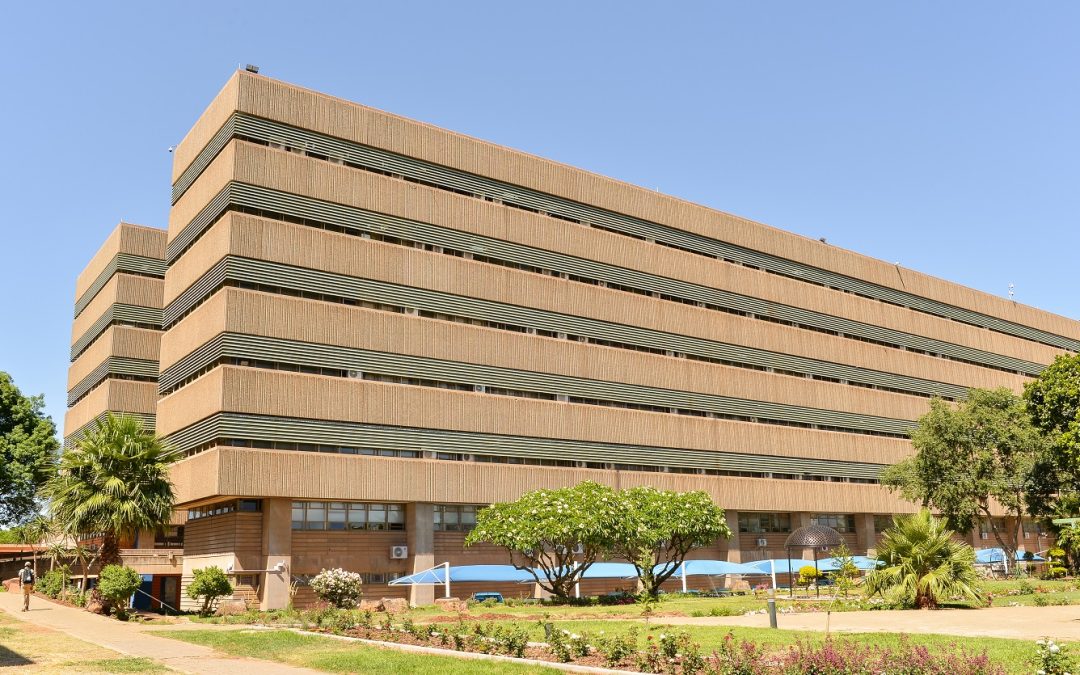
Sefako Makgatho Health Sciences University (SMU) has made a landmark entry into the 2025 Times Higher Education (THE) Impact Rankings, which were released in 18 June 2025, marking a major turning point in its global profile as a health sciences institution committed to sustainable development and social impact.
 For the first time, SMU participated in the global THE Impact Rankings, which assess how universities contribute to the United Nations Sustainable Development Goals (SDGs). SMU was ranked in the 1001–1500 global band out of 2,318 institutions worldwide, with a commendable overall score of 56.4. This places SMU 10th among 13 ranked South African universities.
“Our debut in the global sustainability rankings is a strategic signal of intent,” says Benjamin Ntshabele, Institutional Researcher. “It shows that SMU is not only a national asset but an emerging global contributor to health, education and social transformation.”
Delivering impact in health and education
SMU entered four SDG categories aligned with its academic mission and institutional strengths:
- SDG 3: Good Health and Well-being
- SDG 4: Quality Education
- SDG 8: Decent Work and Economic Growth
- SDG 17: Partnerships for the Goals
The university’s strongest performance was in SDG 3 and SDG 4, where it ranked in the 301–400 band globally — a competitive position that reflects the institution’s growing relevance on the world stage. In fact, SMU’s scores in both categories were above the global 75th percentile, confirming that SMU is delivering measurable impact in training healthcare professionals and improving educational access.
Standout metrics include:
- A 96.6% score in the number of students graduating in health professions (SDG 3)
- An 82.1% score for first-generation student participation (SDG 4)
- A 96.1% score in the proportion of students taking work placements (SDG 8)
While SMU’s performance in SDG 3 and 4 underscores its core strengths, results in SDG 8 (38.4%) and SDG 17 (51.0%) reveal areas for growth, particularly in economic research, sustainable employment practices, and SDG reporting.
To address these, SMU is taking deliberate steps to strengthen:
- Investment in workforce development and research outputs
- Integration of SDG themes into the curriculum
- Strategic partnerships that advance global development goals
- Institutional transparency in sustainability metrics
“Our next frontier is to broaden our SDG participation and deepen our institutional systems around impact reporting and global collaboration,” Ntshabele adds.
A university on the rise
SMU’s participation in the 2025 THE Impact Rankings is more than symbolic. It’s a bold affirmation of its growing stature as a university that is not only academically focused but socially accountable.
As the global higher education sector increasingly values real-world impact, SMU is laying the foundation to become a leading African health sciences university with a global conscience.
“This is just the beginning. The rankings validate our contribution to national development, and we are ready to take our place among globally impactful universities,” Ntshabele concludes.

by Lorato | Jun 17, 2025 | Accolades and Achievements, All News, SMU Media, Student Media
by Lorato | May 13, 2025
Science and Technology Latest Research Output: 2024 Home » Search Results for "sustainable energy in south africa" ACCREDITED JOURNALS Qurban, M, Khaliq, A, Saqib, M & Abdeljawad, T 2024, ‘Stability, bifurcation, and control: Modeling...
by Lorato | Oct 29, 2024 | All News, SMU Media, Student Media
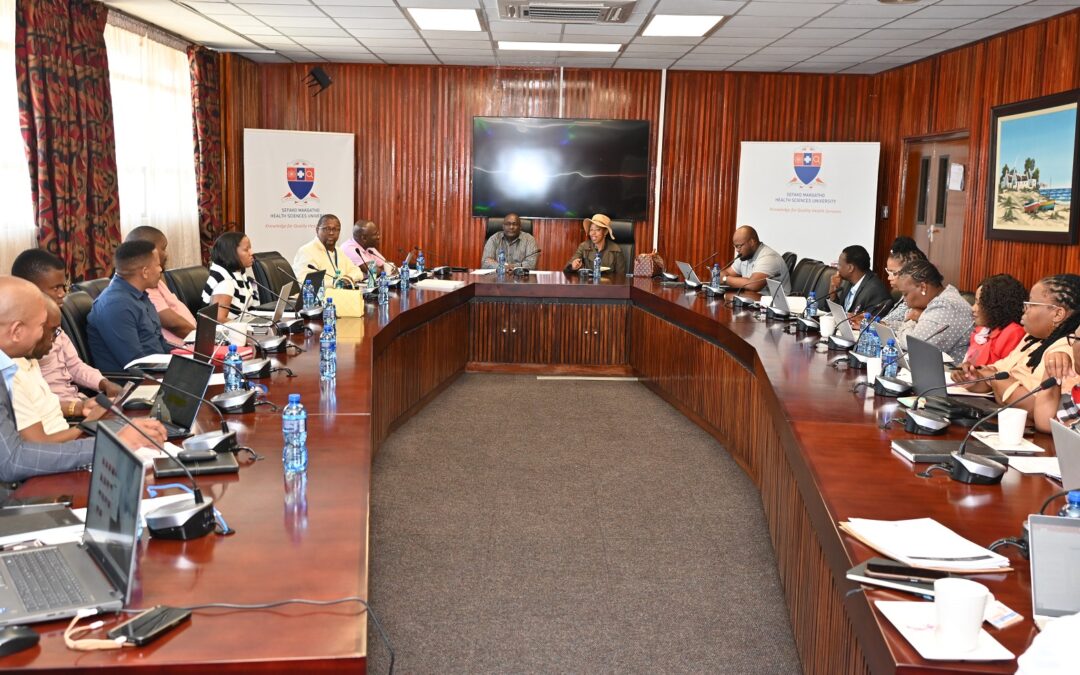
Sefako Makgatho Health Sciences University (SMU) recently welcomed a pivotal earmarked grants oversight visit led by the Department of Higher Education and Training (DHET). This visit signified a key assessment of the progress SMU has achieved with the Clinical Training Grant (CTG) and the Sibusiso Bengu Development Programme (SB-DP), two major initiatives supporting SMU’s mission to develop skilled healthcare professionals and build capacity as a historically disadvantaged institution (HDI).
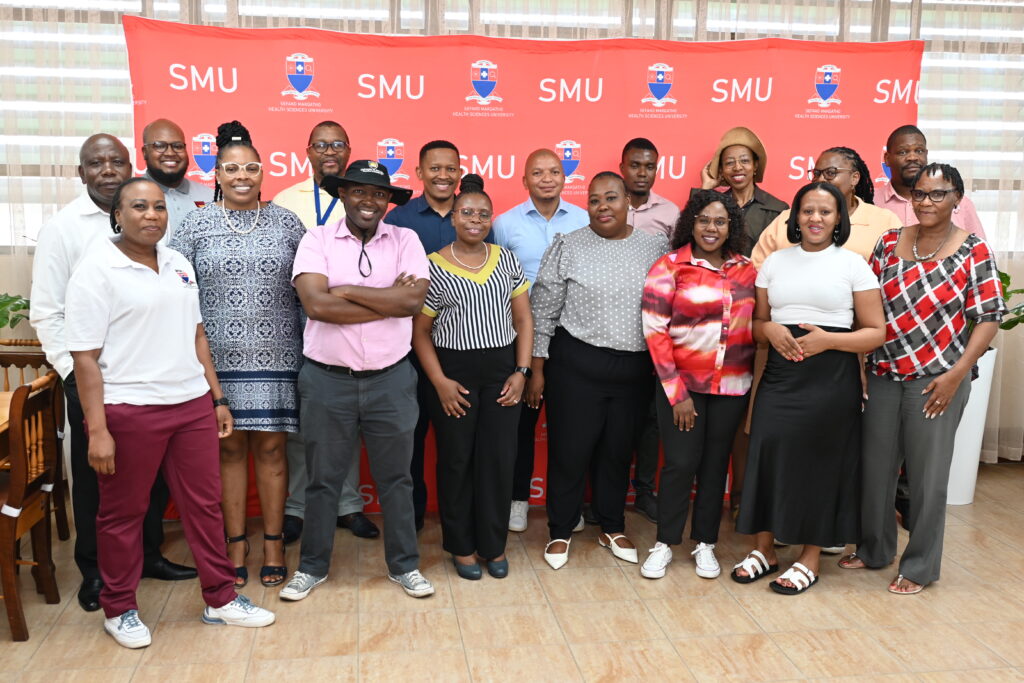 Dr Marcia Socikwa, Deputy Director-General of DHET, spearheaded the delegation, accompanied by SMU’s Vice-Chancellor, Professor Peter Mbati, and senior officials. Their aim was to evaluate the tangible impacts of these targeted grants on SMU’s health sciences education. Socikwa remarked: “The DHET is dedicated to addressing historical inequalities in the higher education sector. By investing in targeted programmes like the CTG and SB-DP, we are empowering institutions such as SMU to enhance their capabilities and produce world-class healthcare professionals.”
Theo Bhengu from the Grants Office presented the achievements and challenges of the CTG and SB-DP. Supported by Professor Mapaseka Seheri, SMU’s Director of Research and Innovation, Bhengu highlighted how the funding has fortified critical training facilities, facilitated the recruitment of clinical staff, and modernised infrastructure. “These grants have been a lifeline for our institution,” Bhengu stated, noting: “While we celebrate our achievements, we acknowledge the hurdles we face, particularly with infrastructure development.”
A highlight of the visit included extensive site inspections, granting DHET officials a first-hand view of the outcomes of CTG and SB-DP funding. The delegation toured several state-of-the-art facilities, including:
- Midwifery Unit: Equipped with advanced mannequins, this facility allows students to gain invaluable experience in maternal and neonatal care.
- Centre for Interprofessional Education and Collaborative Practice (IPECP): Promoting teamwork across various health disciplines, this centre underscores the importance of collaborative patient care.
- 2,000-Bed Student Residence: Addressing the needs of a growing student body, this new residence fosters an environment conducive to academic success and community engagement.
- Centre for Entrepreneurship Rapid Incubator (CfERI): This initiative nurtures student entrepreneurship, aiding them in developing sustainable, innovative projects that benefit SMU and its surrounding communities.
- Pharmaceutical Chemistry Laboratory: Here, students engage in advanced drug research and development, equipping them with the skills necessary for the healthcare industry.
Reflecting on the site tours, Socikwa affirmed: “Our goal is to empower institutions like SMU to provide world-class training to health professionals, achievable through sustained partnerships and strategic investments.”
Following the inspections, DHET and SMU engaged in discussions on fiscal responsibility and resource allocation. Socikwa emphasised the need for financial accountability amid ongoing budgetary constraints. “There is no room for complacency,” she cautioned. “Institutions must demonstrate a commitment to service delivery and effective expenditure, as the funds we allocate are essentially borrowed money.”
Mbati echoed this sentiment, reinforcing SMU’s commitment to transparent financial practices. “At SMU, accountability is paramount,” he asserted. “Every rand we spend must reflect our commitment to integrity and excellence, ensuring our institution’s long-term success and reputation.”
The oversight visit also celebrated SMU’s recent accomplishments, particularly its entry into global academic rankings—a significant milestone for the university. Socikwa praised SMU’s growing presence in the global academic arena, stating: “The strides made here are commendable. However, maintaining this excellence requires an ongoing commitment to research performance and global standing.”
Both DHET and SMU highlighted the necessity of continued collaboration and strategic investment to build on SMU’s successes and address emerging challenges. Mbati concluded: “This oversight visit has illuminated our progress and the challenges ahead in transforming SMU into a leader in health sciences education. Our path forward demands teamwork, transparency, and an unwavering focus on quality. Together, we can position SMU as a benchmark for healthcare training and a pillar of South Africa’s health future.”
The oversight visit reaffirmed DHET and SMU’s shared dedication to cultivating well-trained healthcare professionals and establishing a resilient health sciences education system. Through strategic investment and unwavering accountability, SMU stands poised to continue shaping the future of healthcare education in South Africa.
by Lorato | Aug 14, 2024 | All News, SMU Media
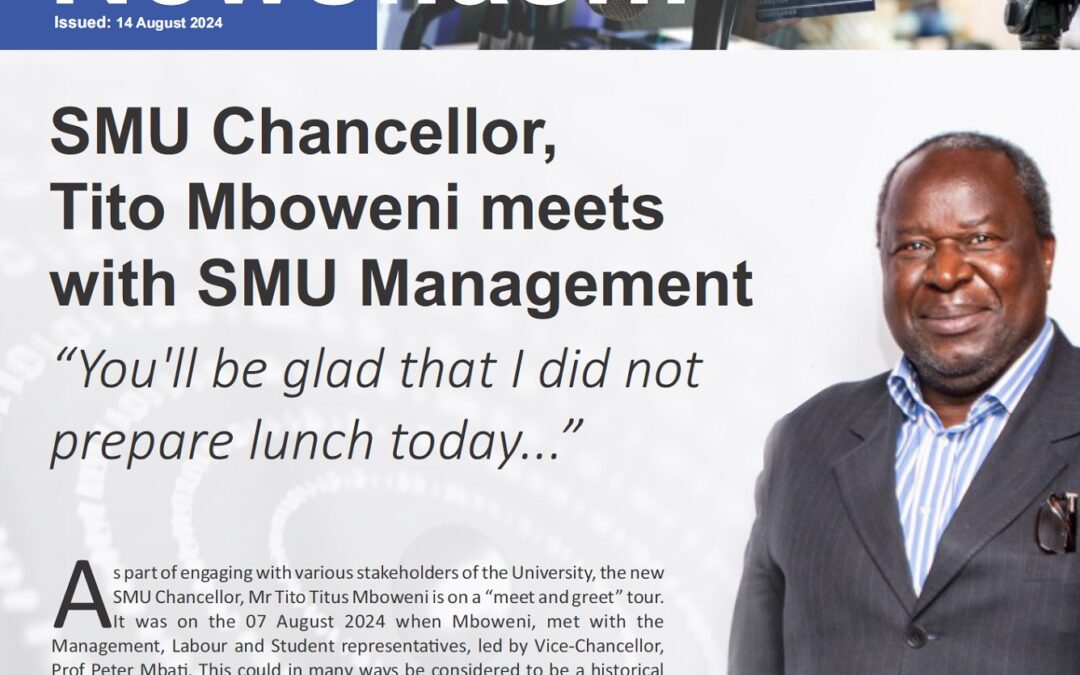
As part of engaging with various stakeholders of the University, the new SMU Chancellor, Mr Tito Titus Mboweni is on a “meet and greet” tour. It was on the 07 August 2024 when Mboweni, met with the Management, Labour and Student representatives, led by Vice-Chancellor, Prof Peter Mbati. This could in many ways be considered to be a historical moment. In the midst of the excitement in the room, as colleagues introduced themselves, in response to a colleague who appreciated the Chancellor’s culinary skills, he said “You’ll be glad that I did not prepare lunch today”, much to the laughter of the members in the room.
The meeting started with a brief reflection, led by Prof. Mbati, on the University’s achievements and future plans with regard to infrastructure, academic development, research and innovation, further reflecting on the organizational culture and the stability on campus. He further indicated the need to introduce new academic programmes and complementary staff to ensure the university’s financial sustainability.
But who is Mr Mboweni?
Mr Mboweni served as Minister of Finance and Minister of Labour. He was Deputy Head of the Department of Economic Policy in the African National Congress (ANC). He also represented the ANC on several domestic and international platforms. Furthermore, he was the eighth Governor of the South African Reserve Bank (SARB). Educationally, Mr Mboweni obtained a Bachelor of Arts (honours equivalent) degree in Economics and Political Science from the National University of Lesotho in 1985. In 1987 he obtained a Master of Arts degree in Development Economics from the University of East Anglia in England.
Currently, he is an International Advisor to Goldman Sachs International and chairman of the following companies: Accelerate Property Fund, Nampak Limited, and SacOil Holdings Limited. He is also a non-executive director at Discovery Limited and a founding partner of Mboweni Brothers Investment Holdings.
As a former Governor of the South African Reserve Bank, Mboweni’s signature is still circulating with some of the bank notes in use to this today – a testament that he is one of the well-known public figures in our country. The meeting underscored the following, amongst others:
- A need to explore the possibility of bringing to fruition the establishment of a fit for purpose hospital, that could catapult the University to greater heights, particularly, in respect of its commitment to expand its clinical training platforms and research. In this regard, it was underscored that the current Dr George Mukhari Academic Hospital is not adequate for the training of a large cohort of health care professionals at undergraduate and post- graduate level.
- The imperative to leverage networks that the Chancellor built over time for the benefit of SMU, including exploring possible international partnerships between SMU and other like-minded institutions, both on the African continent and other parts of the world.
- Unlocking resources from the private sector with a view to supporting the University’s research niche areas and other capital raising projects the University has identified for its built programme.
- Investment in the academic and research infrastructure of the University could not be over-emphasised, including the creation of research chairs in areas where SMU has demonstrated remarkable strength over the years.
As the meeting concluded, it become clear that there is a need for SMU to identify key catalytic projects to ensure a focused approach to academic, infrastructure development, partnerships and resource mobilization to ensure its sustainability. Given the ease and effortlessness with which Mboweni shared his professional experience both in the public and private sector, SMU could not have appointed an excellent Chancellor. His knowledge of the Higher Education sector, and the possible interfaces it might need to deliberately create, was a demonstration of his pragmatic approach to issues. His ability to hold simultaneously in his thought processes that (i) contradictions are an inherent mechanism in the advancement of social change and (ii) the resources that universities need are largely in the hands of private capital, was a masterstroke. It was emphasized that public and private sectors in South Africa must work together, for the greater good of our country.
Newsflash - SMU Chancellor, Tito Mboweni meets with SMU
File size: 2.59 MB
Created: 14-08-2024
Updated: 14-08-2024
Hits: 188

 The unveiling of the 1000-Bed Student Housing Project (Phase 1 of 2000 beds), the Revitalised Library, and the ICT Refresher Project reflects SMU’s bold new era: one driven by academic excellence, ethical leadership, and the dignity of student experience.