
by Lorato | Apr 1, 2026 | Accolades and Achievements, All News, Alumni, SMU Media, Student Media
Sefako Makgatho Health Sciences University (SMU) continues to strengthen its national influence in innovation and economic development, as Naledi Mathole, Coordinator in the Economic Activation Office (EAO), has been nominated as National Chairperson of the EAO Community of Practice, representing all 26 universities’ EAOs in South Africa.
 The nomination places SMU at the centre of a critical national platform focused on advancing innovation and entrepreneurship practices across higher education institutions. It also signals growing recognition of the university’s role in shaping solutions that extend beyond academia into real-world impact.
Mathole described the nomination as both an honour and a responsibility. “This role is about driving collaboration, strengthening innovation ecosystems, and ensuring that universities actively contribute to economic development,” she said. “We cannot afford to work in silos when the challenges we face require collective action and shared solutions.”
Her appointment reflects a clear and confident institutional direction at SMU—one that prioritises impact, relevance, and decisive action. The university’s vision to transform health services through excellence and innovation is increasingly matched by a communication strategy that is direct, purposeful, and results-driven. By refining how it presents its work, SMU is ensuring that its contributions are not only meaningful but also visible and influential.
Mathole’s professional background underscores her suitability for the role. With expertise in enterprise development, innovation translation, and stakeholder engagement. She has played a key role in building innovation pipelines that connect students to real-world applications. Her work focuses on creating environments where ideas move quickly from concept to implementation, addressing one of the most persistent gaps in higher education innovation systems.
Speaking on the urgency of this work, Mathole said, “South Africa does not lack ideas; the priority is to translate those ideas into impactful, scalable solutions. My focus is to help institutions collaborate better and deliver impact where it matters most.” Her approach reflects a shift from theoretical engagement to practical execution, aligning closely with national priorities around economic activation and job creation.
 At SMU, the Economic Activation Office has become a catalyst for student and researcher entrepreneurship, driving initiatives that advance entrepreneurship development within the institution. This includes fostering strategic partnerships, enabling access to funding and support mechanisms, and strengthening a supportive environment for student entrepreneurs to grow and scale their ventures. Mathole’s leadership has been instrumental in positioning SMU as an emerging contributor to a dynamic and collaborative entrepreneurship ecosystem within higher education.
Her nomination also highlights the importance of effective advancement and communication in strengthening institutional visibility and engagement. SMU recognises that strong entrepreneurial outputs must be supported by clear, compelling messaging to mobilise stakeholders and unlock opportunities. “Impact alone is not enough,” Mathole noted. “We must communicate it with clarity and confidence so that it drives collaboration, attracts investment, and expands access to resources, training, and mentorship for student entrepreneurs.”
As National Chairperson, Mathole is expected to lead efforts that strengthen collaboration across universities, align entrepreneurship development practices, and promote the growth of inclusive and sustainable entrepreneurial ecosystems. Her leadership will focus on addressing systemic barriers to student entrepreneurship, enhancing stakeholder engagement, and contributing to policy and strategic initiatives that advance entrepreneurship within higher education institutions.
For SMU, this milestone reinforces its broader mission to contribute meaningfully to education, research, and healthcare transformation. By positioning its talent on national platforms, the university is not only strengthening its brand but also actively advancing innovation and entrepreneurship within South Africa.
By Tumelo Moila
by Lorato | Feb 17, 2026 | Accolades and Achievements, All News, SMU Media, Student Media
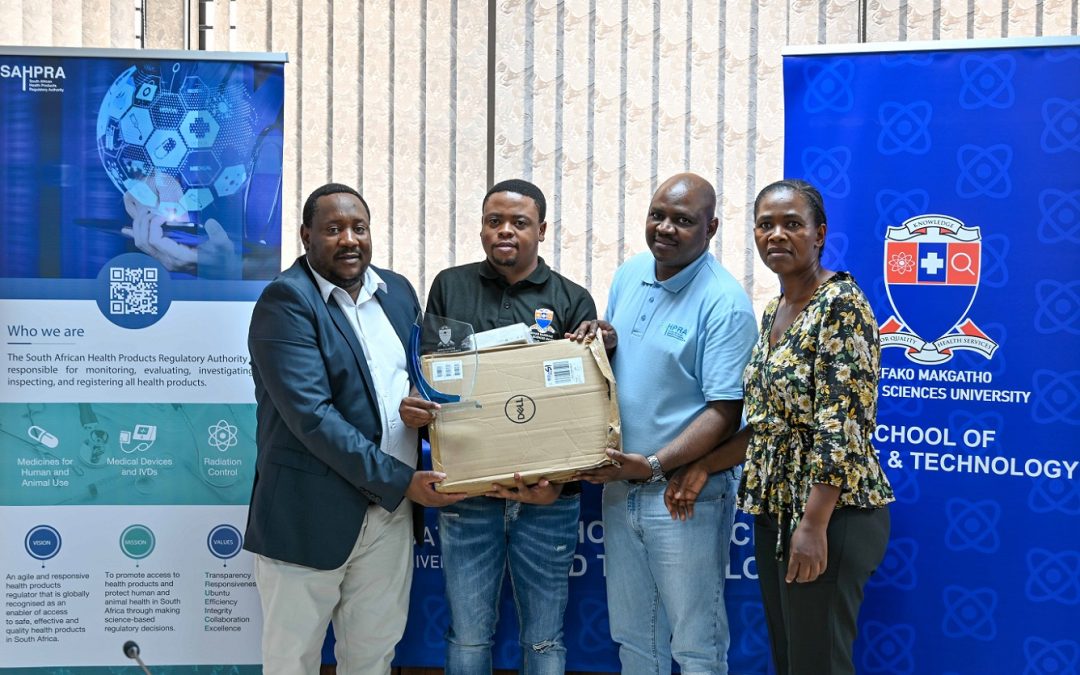
A spirit of celebration and scholarly distinction filled the air as academic excellence took centre stage at a prestigious handover ceremony hosted by the School of Science and Technology at Sefako Makgatho Health Sciences University (SMU). The occasion marked a significant milestone in the University’s enduring partnership with the South African Health Products Regulatory Authority (SAHPRA), underscoring a shared commitment to advancing student success, innovation, and capacity development within the health sciences sector.
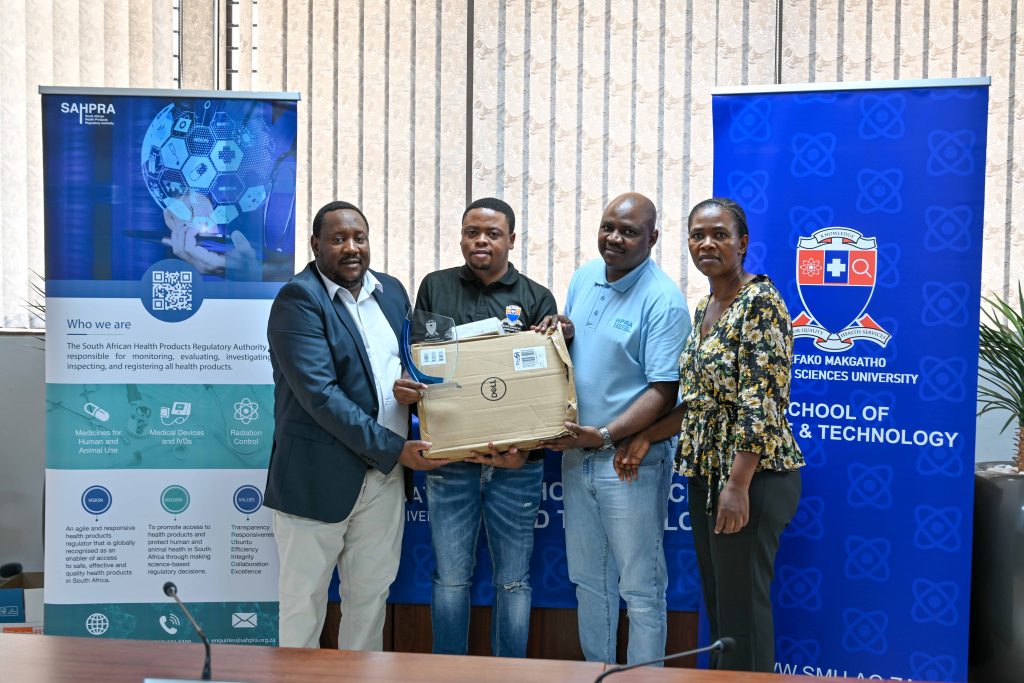 The ceremony formally acknowledged SAHPRA’s generous sponsorship towards the Dean’s Excellence Awards, through which high-performing students were awarded laptops to support their academic and research pursuits. The initiative reflects a strategic alignment between academia and regulatory institutions in cultivating a scientifically competent and ethically grounded workforce.
Professor Sechene Stanley Gololo, Deputy Dean of the School of Science and Technology, expressed profound gratitude for SAHPRA’s contribution and reaffirmed the value of collaborative partnerships. “Compliments of the new season. On behalf of the School of Science and Technology, please accept our sincere appreciation for SAHPRA’s generous sponsorship towards the Dean’s Excellence Awards. Your contribution is both commendable and impactful, as it meaningfully advances our shared commitment to student success, excellence, and capacity development,” he said.
Prof Gololo further highlighted the symbolic and practical importance of the handover ceremony. “To formally acknowledge this support, we deeply value the presence of SAHPRA representatives at the official handover of the laptops to the award recipients. Such engagements reinforce the strategic alignment between academia and regulatory bodies in shaping a responsive and competent scientific workforce,” he added.
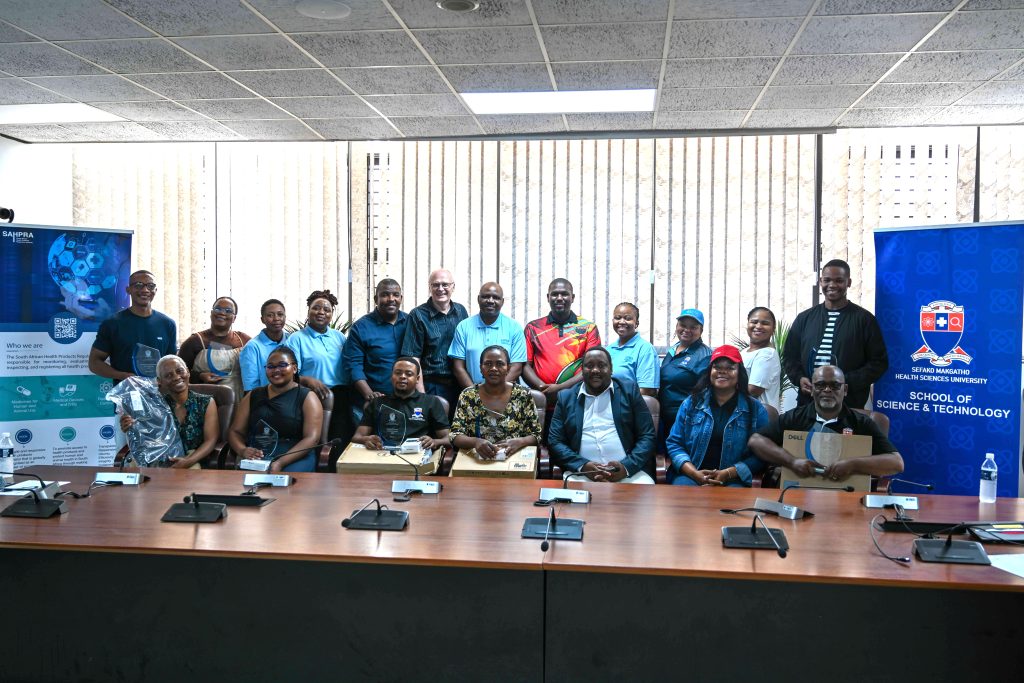 Four outstanding students were recognised during the ceremony for their exemplary academic achievements. Nkosi Lindokuhle, a Bachelor of Science (Extended Curriculum Programme) undergraduate student, was honoured for academic merit and perseverance. Pitse Thulaganyo was celebrated as the Bachelor of Science (Honours) Overall Achiever 2025, while Kekana Tumisho received recognition as Master of Science Overall Achiever 2025. In a remarkable demonstration of research innovation, Lekgoathi Thabo Lesiba was acknowledged as Patent Holder of the Year 2025.
In line with principles of transparency and responsible stewardship, the School confirmed that four laptops were distributed at the ceremony. The remaining laptop will be retained in the Dean’s Office and allocated to a subsequent approved student support initiative, of which SAHPRA will be duly notified.
Zingisa Nodada and Khanyisile Mabuza, SAHPRA Learning and Development Specialists, delivered compelling reflections on the partnership with the University, particularly the School of Science and Technology. They emphasised that their collaboration is anchored in strengthening regulatory science, promoting skills development, and ensuring that graduates are equipped to contribute meaningfully to national health priorities.
The SAHPRA representatives noted that investing in students extends beyond financial sponsorship; it is an investment in the intellectual capital that will sustain and transform the country’s health regulatory landscape. Their remarks reaffirmed SAHPRA’s commitment to long-term academic partnerships that bridge theory and practice while nurturing excellence.
Dr Baratwa Moema, Operations Manager of the School of Science and Technology, also extended heartfelt appreciation to SAHPRA for its sustained support over the years. She acknowledged that the partnership has evolved into a dynamic and mutually beneficial relationship grounded in trust and shared vision. Dr Moema expressed optimism that the collaboration will continue to flourish, opening new avenues for student empowerment and institutional growth.
The handover ceremony thus symbolised more than the presentation of technological tools; it represented a deliberate investment in academic distinction and future innovation. Through strategic collaboration, Sefako Makgatho Health Sciences University (SMU) and SAHPRA are collectively shaping a generation of scientists equipped with the knowledge, skills, and resources required to advance health sciences in South Africa and beyond.
By Dimakatso Modise
by Lorato | Jan 30, 2026 | All News, SMU Media, Student Media
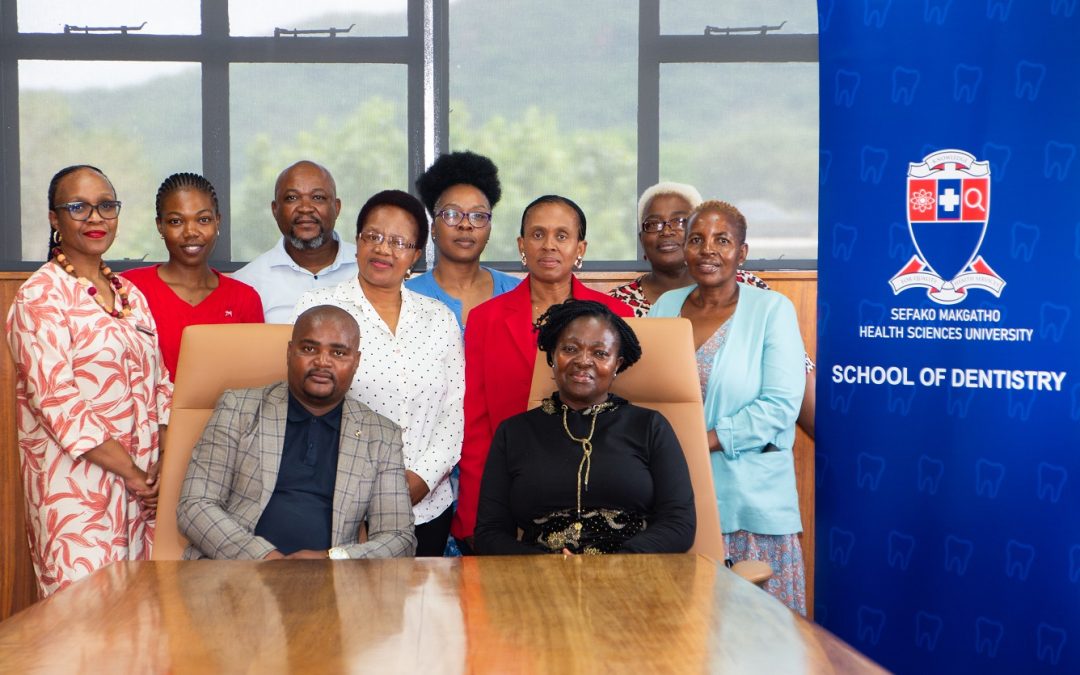
Sefako Makgatho Health Sciences University (SMU) and the University of Eswatini (UNESWA) have taken a decisive step towards strengthening dental education in Southern Africa through a series of reciprocal benchmarking visits designed to sharpen programme delivery, enhance academic collaboration, and build long-term regional partnerships.
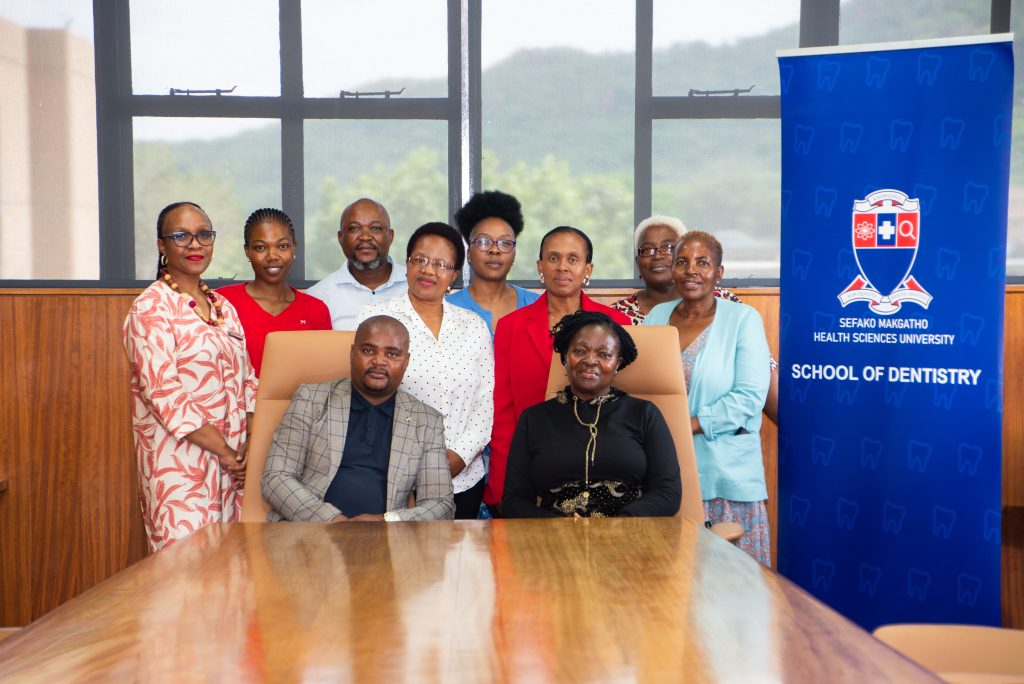 In an era where clarity, relevance, and impact matter more than ever, both institutions approached the exchange with a clear purpose: improve programme quality, accelerate student development, and open meaningful pathways for clinical training and mobility. The visits were structured to deliver immediate value — not abstract intentions — and to lay the groundwork for sustained cooperation.
The collaboration began when SMU’s School of Dentistry supported UNESWA in designing and refining its new dental programme, offering guidance on curriculum development, module outcomes, and the practical competencies required of a modern dental graduate. Earlier this year, an SMU delegation led by Acting Deputy Vice-Chancellor for Academic and Research, Prof Dini Mawela, travelled to Eswatini to review UNESWA’s newly accredited programme.
The visit included an on-site evaluation of facilities, discussions on community-based learning, and detailed engagements on SMU’s clinical training model. Prof Mawela was joined by senior staff members Prof Irene Munzhelele, Dr Sandeepa Singh, Gracia Malaka, Kelebogile Mothupi, and Director of Internationalisation, Dr Carlien Jooste, who each contributed expertise from their respective specialisations.
Their message was clear and direct: regional collaboration is a strategic investment that raises educational standards for all institutions involved.
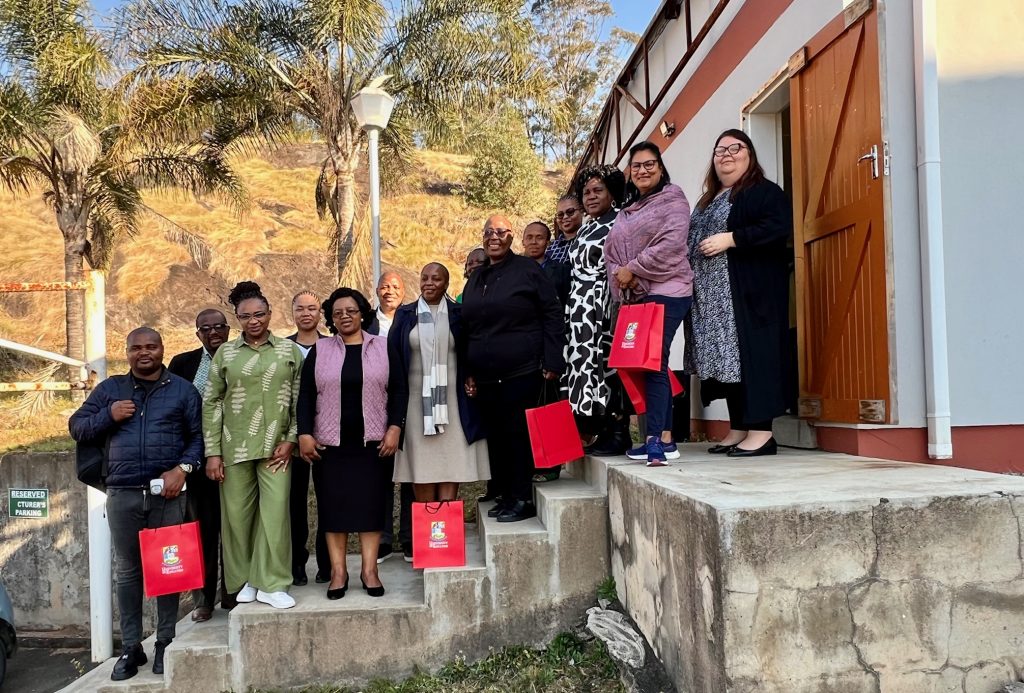 On 2 December 2025, the partnership advanced significantly when a UNESWA delegation undertook a return visit to SMU’s School of Dentistry to deepen discussions and benchmark SMU’s clinical and academic infrastructure. The delegates were welcomed by the Acting Head of Department for Dental Therapy and Oral Hygiene, Gracia Malaka, representing the Acting Dean, Prof Irene Munzhelele.
To ensure the exchange programme is both practical and sustainable, UNESWA’s delegation — led by Prof Tengetile Mathunjwa-Dlamini — outlined three immediate priorities: finalising the recruitment process for participating students, identifying suitable accommodation and infrastructure needs, and strengthening operational plans for long-term collaboration.
Prof Mathunjwa-Dlamini stressed that the visit was not a ceremonial gesture but a call to action: “We are here to formalise our partnership and ensure that our plans translate into real opportunities for our students and staff.”
Malaka reinforced this focus on implementation. He highlighted the regulatory requirements that all participating students must fulfil, including registration with the Health Professions Council of South Africa (HPCSA) and compliance with South Africa’s professional training standards for foreign students — a crucial step in ensuring patient safety, academic credibility, and ethical practice.
The meeting concluded with a guided tour of SMU’s clinical facilities and the state-of-the-art Skills and Simulation Centre, where UNESWA representatives observed SMU’s approach to hands-on training, assessment, and clinical preparedness.
Both universities described the exchange as the beginning of a confident new phase of academic cooperation — one defined by precision, urgency, and a shared commitment to producing highly skilled dental professionals for the region.
by Lorato | Oct 23, 2025 | All News, SMU Media, Student Media
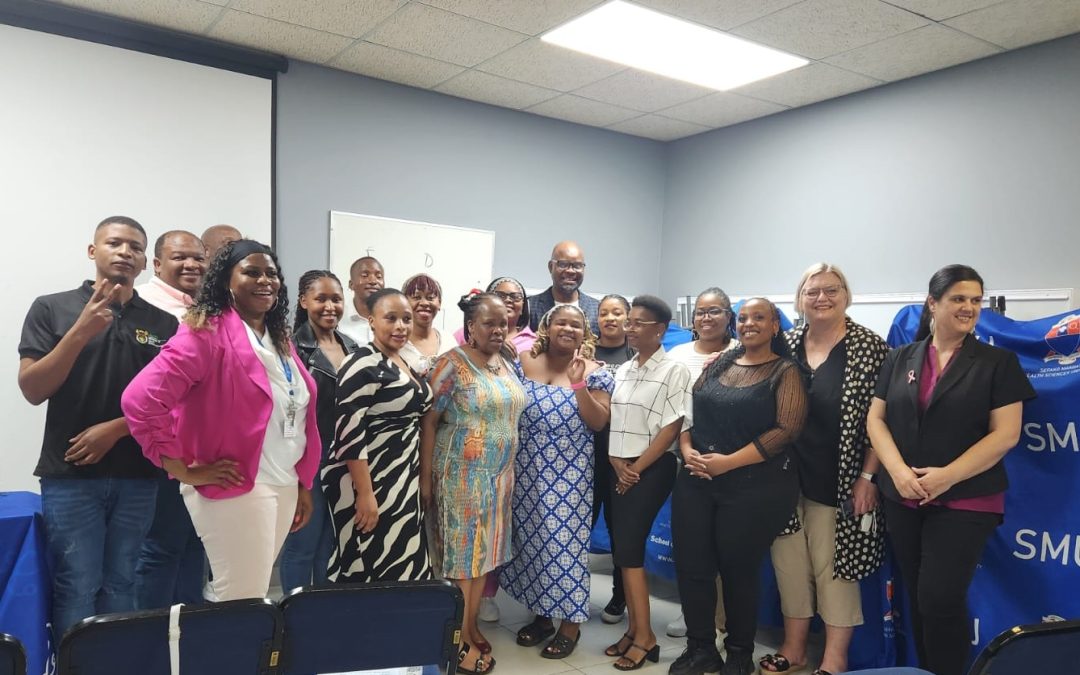
The Radiography Department at Sefako Makgatho Health Sciences University (SMU), in partnership with the University of Pretoria (UP), hosted the second annual Clinical Tutor Workshop, reaffirming a shared commitment to advancing clinical education and professional development in radiography.
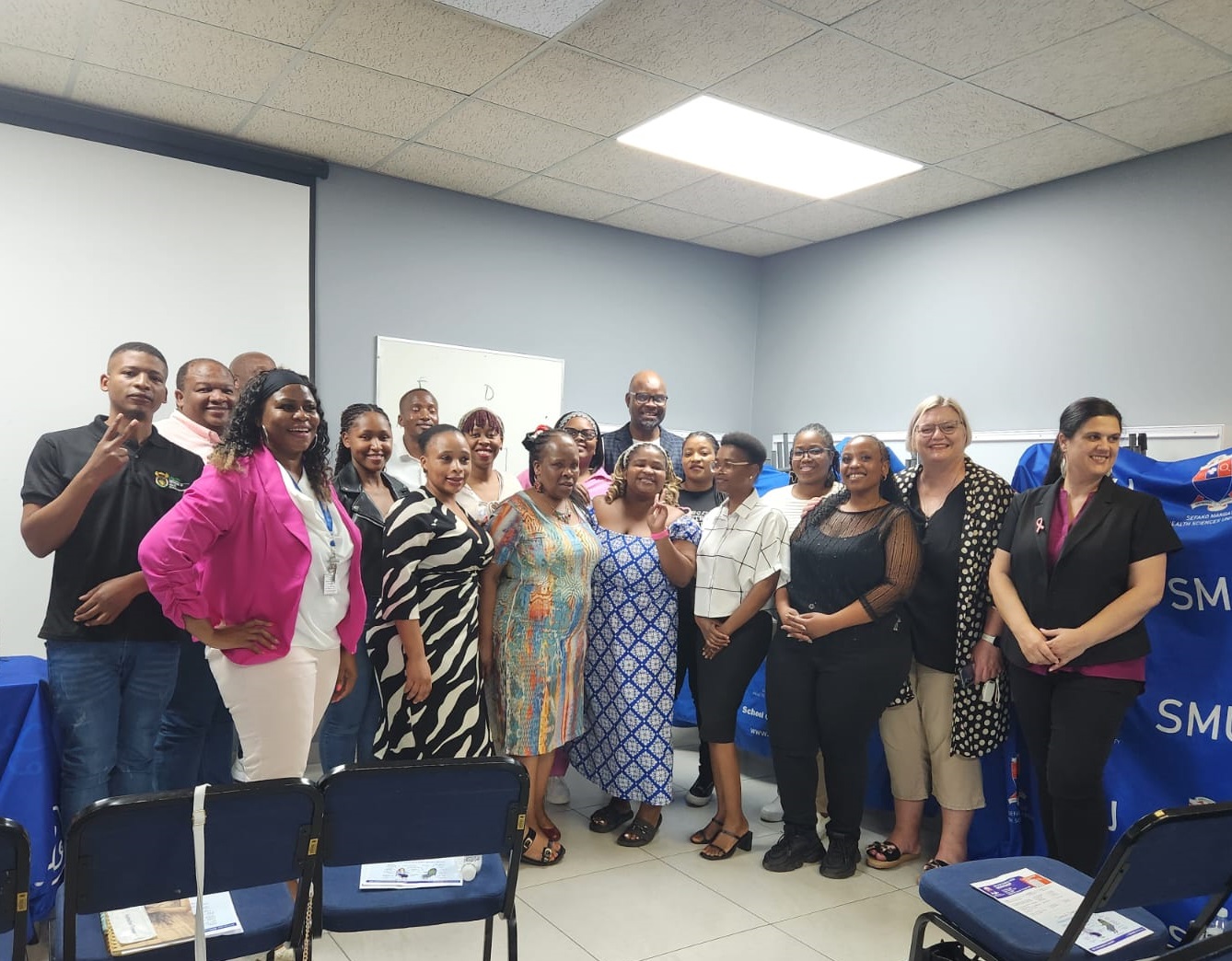 Building on the success of the inaugural workshop held at UP in 2024, this year’s event brought together clinical supervisors and lecturers from both institutions for a day of knowledge exchange, reflection, and collaboration. The initiative aims to empower the educators who serve as the vital link between university classrooms and clinical practice — ensuring that radiography students receive high-quality, hands-on training across a range of healthcare settings.
Clinical tutors and supervisors play an indispensable role in supervising and mentoring students during their clinical placements in both public and private healthcare facilities. The workshop recognised this contribution by providing a platform for professional growth and dialogue. Through presentations, discussions, and peer engagement, participants explored innovative approaches to teaching and assessment that respond to the evolving demands of the radiography profession.
The programme featured presentations by academic staff from SMU and UP on pedagogical strategies, effective assessment practices, advancements in digital radiography, image interpretation and the integration of emerging imaging technologies into clinical teaching. Each session aimed to strengthen the educators’ ability to bridge theoretical knowledge and practical application, particularly as the field continues to evolve with technological innovation.
A highlight of the workshop was an interactive sharing session where clinical supervisors and lecturers shared their lived experiences. Many reflected on the challenges of balancing heavy workloads with teaching responsibilities, limited access to professional development, and the need for stronger institutional support. Despite these obstacles, participants shared innovative practices that have improved student engagement, such as simulation-based learning and peer-assisted supervision.
Lecturer and PhD candidate, Asnath Motsepe from the Radiography Department at SMU, emphasised the importance of such collaborative initiatives. “Workshops like this one create a safe space for clinical tutors, supervisors and lecturers to share their realities and find collective solutions,” she said. “As educators, we must constantly adapt our teaching methods to keep pace with technological advancements in medical imaging while ensuring that our students develop strong ethical and professional foundations.”
Motsepe further underscored the value of investing in tutor development. “Clinical tutors and supervisors are the backbone of radiography education. Their mentorship shapes not only the competence but also the confidence of our future radiographers. Strengthening the capacity of the clinical tutors and supervisors ultimately strengthens the profession as a whole,” she added.
The workshop concluded with a call for ongoing collaboration and structured tutor development. Both SMU and UP representatives stressed the importance of sustained investment in tutor capacity-building as part of broader curriculum transformation efforts. They noted that strengthening the skills and confidence of clinical tutors is essential to ensuring that radiography graduates are both technically competent and compassionate healthcare professionals.
Participants expressed appreciation for the opportunity to network and share insights across institutional boundaries. “The event highlighted the value of a professional community of Radiography educators and reaffirmed the role of collaborative platforms in shaping the future of radiography education in South Africa,” said Mable Kekana, HOD and associate professor at UP.
The Radiography Clinical Tutor Workshop continues to serve as a model for partnership-driven professional development — one that celebrates the dedication of those at the frontline of student clinical training and upholds excellence in healthcare education.
By Tumelo Moila

by Lorato | Oct 14, 2025 | Accolades and Achievements, All News, SMU Media, Student Media
Sefako Makgatho Health Sciences University (SMU) has affirmed its position among the world’s leading higher education institutions in the 2026 Times Higher Education (THE) World University Rankings, marking a defining moment in its transformation into a globally competitive health sciences university.
 Ranked within the 1201–1500 band globally and 11th in South Africa, SMU’s consistent upward trajectory signals a university steadily strengthening its academic reputation, global partnerships, and research impact. The 2026 edition of the rankings evaluated 2 192 universities across 120 countries, making SMU’s continued inclusion an emblem of academic endurance and international relevance in an increasingly competitive higher education landscape.
Building a globally competitive health sciences institution
Under the visionary leadership of its Vice-Chancellor and Principal, Professor Tandi Matsha-Erasmus, SMU has redefined what it means to be a health sciences university in South Africa. Her strategic focus on excellence, collaboration, and global benchmarking has catalysed measurable growth across key performance pillars: Teaching, Research Environment, Industry Engagement, and International Outlook.
This year, SMU achieved a Teaching score of 26.0 and a Research Quality score of 42.7, underscoring both the calibre of its academic environment and the relevance of its research to societal and scientific advancement. Most notably, the university’s International Outlook score rose to 50.0, reflecting its expanding global footprint and sustained partnerships with institutions and research networks worldwide.
Matsha-Erasmus described the performance as “a reflection of a university that is intentional about transformation through scholarship, excellence and impact.” In an environment where rankings increasingly measure global competitiveness, SMU’s growth is not merely statistical; it symbolises transformation through intentional leadership.
The university demonstrated improvement in almost every category assessed by THE. Its overall score rose from 25.2–30.6 in 2025 to 27.3–32.0 in 2026, while Industry Income increased from 18.3 to 19.2, highlighting stronger engagement between academia and industry. The Research Environment score also advanced to 11.1, a nod to investments in research infrastructure, mentorship, and postgraduate support.
These achievements, though measured numerically, tell a broader story of academic ambition and institutional renewal, one grounded in the belief that health sciences education must drive innovation, equity, and impact beyond national borders.
SMU’s Research Quality pillar remains among its strongest. With a score of 42.7, it reflects the university’s commitment to producing impactful, peer-recognised scholarship that addresses Africa’s most pressing health challenges—from infectious diseases to non-communicable conditions that define the continent’s epidemiological landscape.
The university’s strategic partnerships with global research consortia and its emphasis on evidence-based healthcare innovation continue to position it as a crucial node in the global knowledge ecosystem. “Our mission has always been to ensure that research translates into solutions,” says Matsha-Erasmus. “Each publication, partnership and postgraduate graduate must ultimately contribute to healthier, more equitable societies.”
Benjamin Ntshabele, Institutional Researcher, adds: “At its core, SMU is steadily growing and cementing its place as one of the leading health sciences universities both locally and globally. Beyond its continued progress in teaching and learning, with a stronger and more dynamic learning environment, the university’s biggest strength lies in its expanding International Outlook. This growth reflects meaningful progress in collaboration and in staff and student mobility, laying a solid foundation for building a global reputation and boosting research impact.”
Ntshabele further states: “Research Quality remains a key area of strength, with SMU’s publications and citation impact continuing to make a mark. Industry engagement is gaining momentum, showing stronger partnerships and real-world impact. Meanwhile, the Research Environment is showing steady, positive movement — a clear sign of ongoing investment in research capacity and support.”
A rising star among South African universities
SMU’s performance reflects a story of resilience and renewal. Competing alongside research giant universities, SMU’s steady climb demonstrates that institutional excellence is not defined by age or size, but by strategic focus, data-driven management, and the will to lead.
The university continues to outperform its weight in International Outlook, a metric that measures international staff, students, and research collaboration. Its upward movement in this category signals growing recognition of SMU as a partner of choice for global health research and training collaborations.
The 2026 results are both an achievement and a call to action. SMU’s journey towards becoming a premier African health sciences university is accelerating, driven by its mission to produce world-class health sciences professionals and transformative research.
*By Tshimangadzo Mphaphuli