by Lorato | Feb 26, 2026 | Accolades and Achievements, All News, SMU Media, Student Media
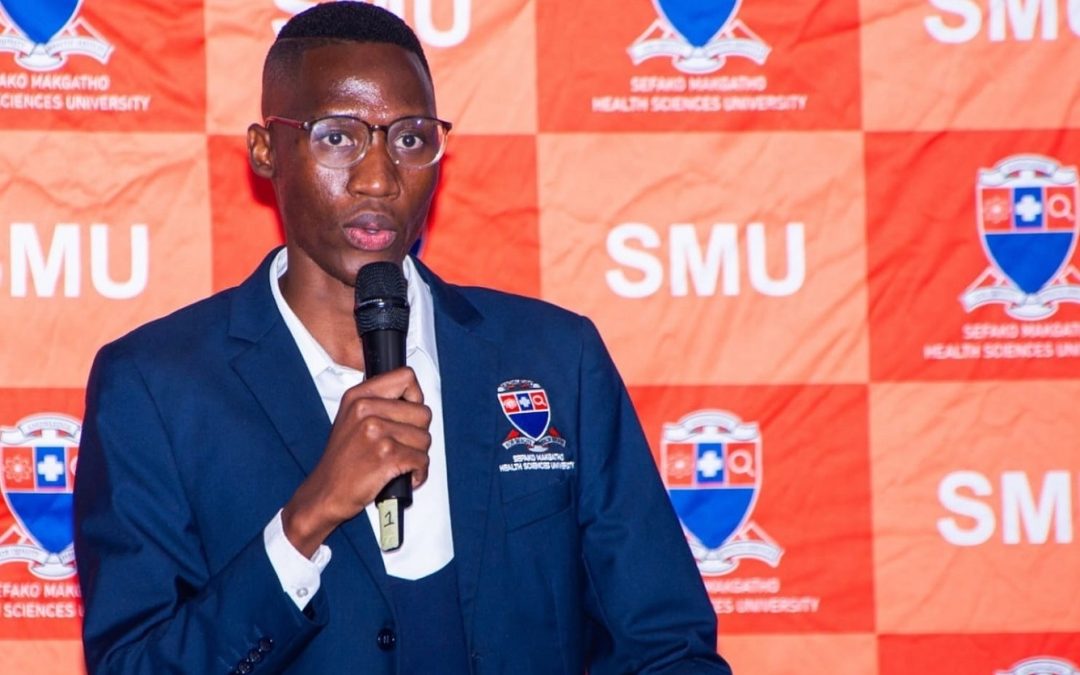
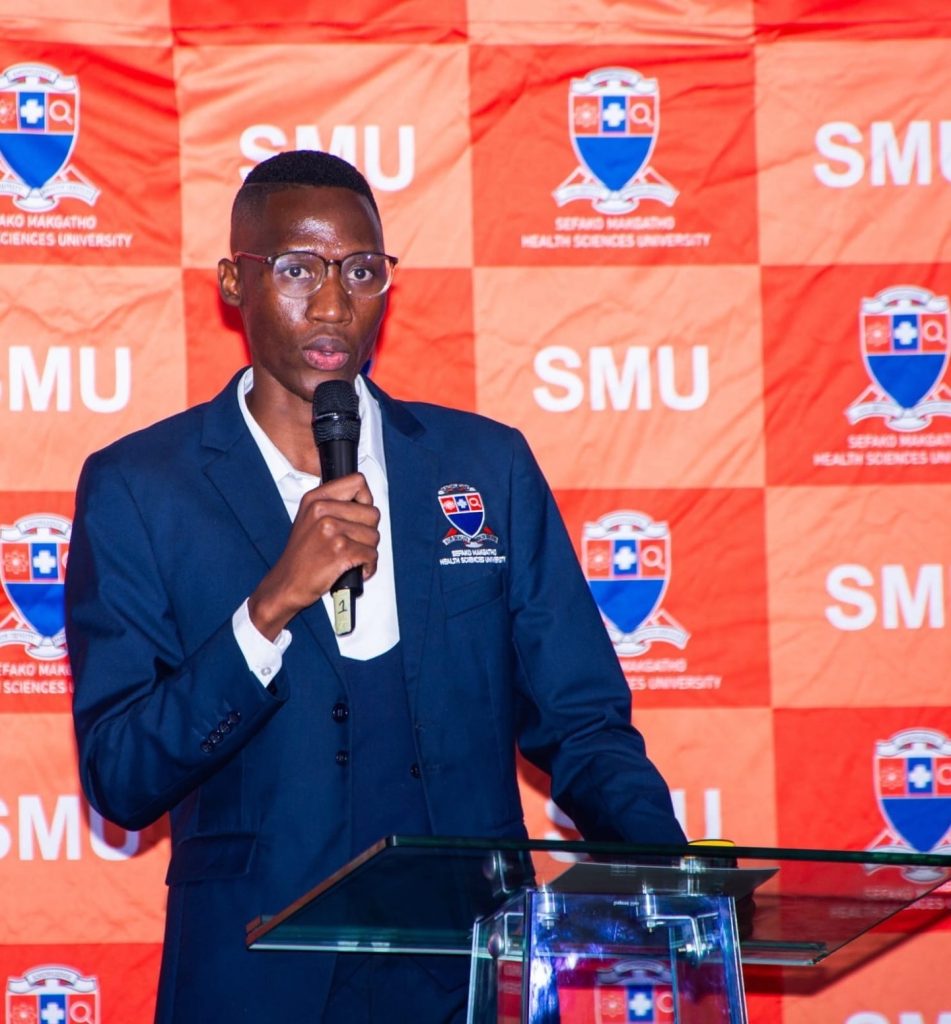
When opportunity knocked, he answered with purpose. Enos Motaka Malatji, a final-year Diagnostic Radiography student in the School of Medicine at Sefako Makgatho Health Sciences University (SMU), has been appointed to the National Council of the Society of Radiographers of South Africa (SORSA) as a National Student Representative. He is the first SMU student to join the organisation — and now among the youngest voices contributing to its national agenda.
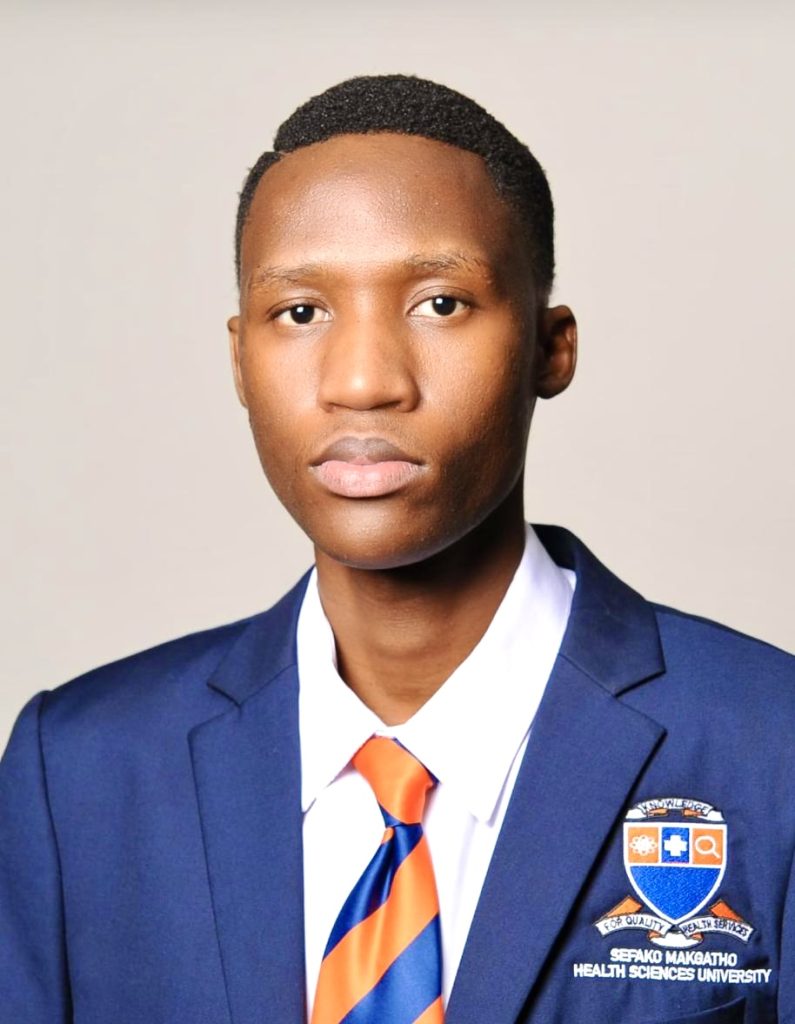 His appointment marks more than a personal milestone. It signals a meaningful step forward in strengthening student representation within one of South Africa’s most influential professional radiography bodies. “I am grateful for the opportunity,” Malatji said. “Serving SORSA began with curiosity, driven by my passion for student wellness. I never pursued a title — I pursued impact.”
That impact gained national momentum in late 2025 when he was invited to Cape Town to present on student participation at a National Council meeting — a defining moment in his advocacy journey. “That was when I understood the seriousness of this journey,” he reflected. “Standing before national leadership and representing students, I realised this responsibility is bigger than me.”
He credits SORSA Gauteng Representative and SMU Radiography lecturer Khomotso Motiang for encouraging him to accept the invitation. “Her support strengthened my advocacy. Sometimes leadership begins when someone sees potential in you before you see it yourself.”
Now, as National Student Representative, Malatji carries a clear mandate: to direct national student affairs within SORSA and ensure that student radiographers are heard where key decisions are made.
His responsibilities include representing student radiographers nationally; serving as the formal student voice at the National Council; contributing to policy discussions on education, clinical training and professional standards; promoting student participation in congresses, symposia and CPD initiatives; communicating Council decisions to students; strengthening student membership; establishing active student chapters across training institutions; and upholding professional and ethical standards.
“There is still significant work ahead to build a strong foundation,” he said. “But through collaboration with students across universities, Provincial Representatives and the National Council, I am confident that we can shape a stronger future together.”
 SORSA, a voluntary non-profit association, represents radiographers across Diagnostic, Nuclear Medicine, Radiotherapy and Ultrasound disciplines. Recognised nationally and affiliated with the International Society of Radiographers and Radiological Technologists, the Society advances professional standards, publishes The South African Radiographer, and provides continuing professional development opportunities.
For students, membership offers tangible benefits, including discounted access to national congresses and CPD events, Continuing Education Units through Directed Reading Programmes, eligibility for education awards, opportunities for conference funding support and complimentary registration to selected symposia.
However, Malatji believes the true value extends beyond these benefits. “To every radiography student who feels unheard: this platform belongs to you,” he said. “Your experiences in clinical training, your academic challenges and your professional aspirations deserve representation at the highest level.”
He speaks not as a student seeking recognition, but as an advocate committed to service. “Student advocacy is not optional,” he concluded. “If we want a stronger profession tomorrow, we must build it deliberately today.”
With his appointment, the message is clear: the next generation of radiographers is not waiting for a seat at the table — they are stepping forward to lead.
By Tumelo Moila
by Lorato | Feb 25, 2026 | All News, SMU Media, Student Media
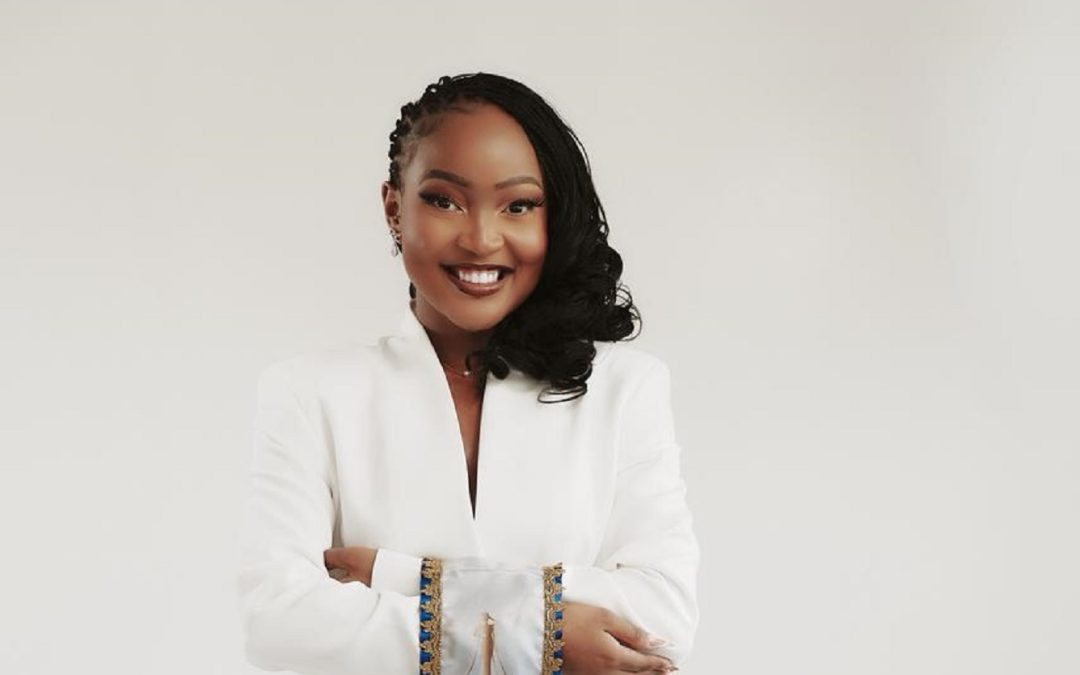
At just 19, Lesedi Motswaledi is rewriting the script on what it means to be young, ambitious and purpose-driven. The third-year medical student from Sefako Makgatho Health Sciences University (SMU) was crowned Miss Teenager South Africa 2025/2026 in December, rising from more than 500 entrants to claim one of the country’s most competitive teen titles.
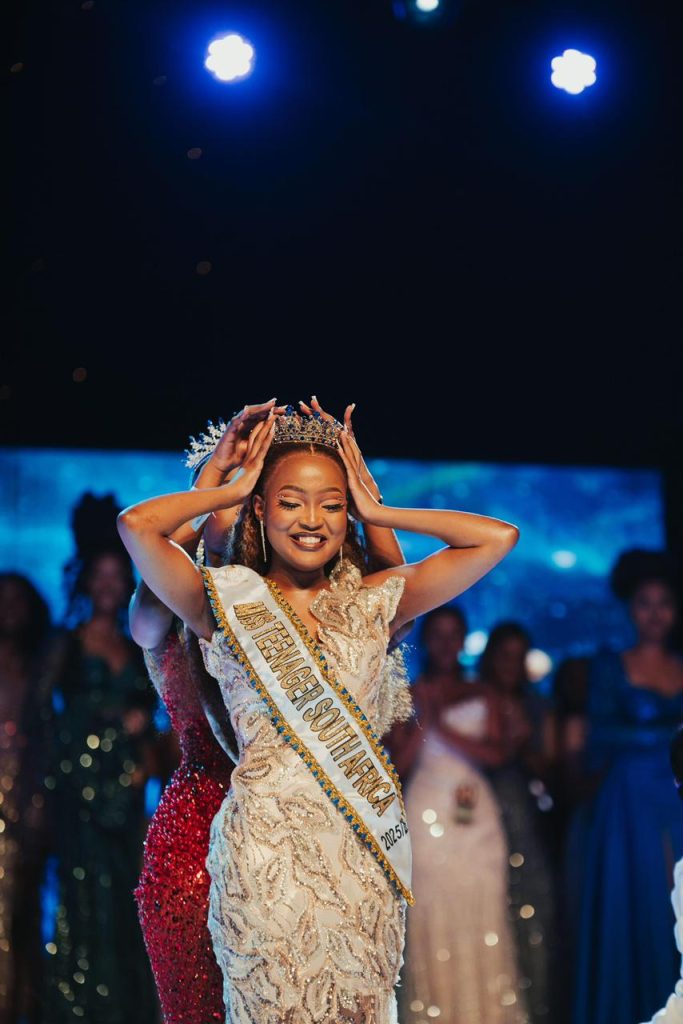 Representing Limpopo, Motswaledi will next carry the South African flag to Miss Teen Model International in Peru in 2026. But for her, the crown is not the headline — impact is. ‘I cannot wait to represent South Africa on the international stage,’ she said. ‘This moment is not mine alone. It belongs to everyone who walked with me, prayed for me, pushed me, and believed in the vision even when it felt bigger than me.’
Raised in Phokwane, Limpopo, Motswaledi balances the rigours of medical training with national pageantry — two demanding worlds she refuses to see as opposites. ‘To me, medicine and pageantry are not so different,’ she said. ‘Both are rooted in service, healing, and creating impact.’
Her campaign stood out for its clarity and conviction. Through her youth mental health initiative, She Carries Light, she advocates for safe spaces, emotional support and body positivity — issues shaped by her own lived experience. ‘My advocacy is rooted in lived experience,’ she said. ‘I know what it feels like to navigate self-doubt while pretending to be fine. I want to be the support I once needed — a reminder that vulnerability is allowed and healing is possible.’
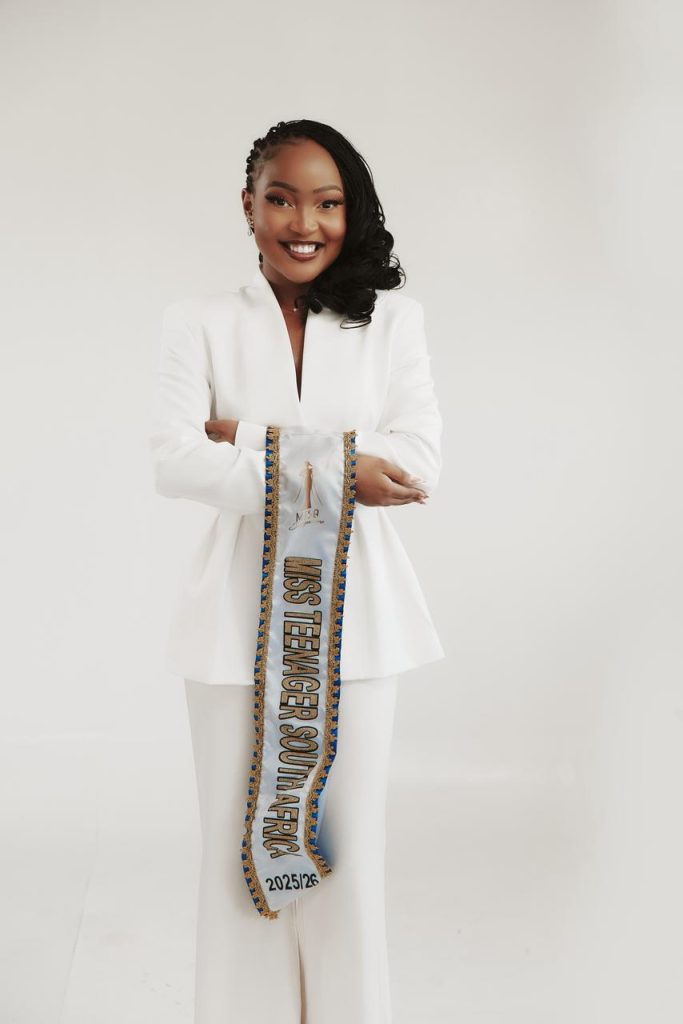 Judges described the 2025 cohort as exceptional, but singled Motswaledi out as ‘a force’. They praised her grace, astuteness and defined vision for youth development, noting that she embodied the MTSA brand through purpose, leadership and compassion. For Motswaledi, leadership is not about age, but accountability. ‘Being 19 has taught me that leadership is less about age and more about intention,’ she said. ‘My age keeps me teachable and grounded. I am walking this journey alongside the youth I serve, not ahead of them.’
When her name was announced on the final night, the celebration quickly gave way to resolve. ‘I expected myself to carry the crown with integrity, purpose and consistency,’ she said. ‘Let the crown amplify my purpose, not define it.’
Balancing medicine and pageantry has required sacrifice. ‘The hardest compromise has been time and rest,’ she admitted. ‘Purpose requires sacrifice, but both paths allow me to serve in meaningful ways.’
As she prepares for Peru, representing ‘Mzansi’ carries weight beyond a sash. ‘It means carrying the resilience and warmth of our people,’ she said. ‘It means placing the dreams of young girls from villages like Phokwane on a global stage.’
Yet her vision extends beyond a single year of reign. ‘I want my legacy measured in impact,’ she said. ‘In the young people who found hope because someone believed in them.’ And if the crown were gone tomorrow? ‘Nothing about my purpose would change,’ she said. ‘The title enhances my light — it does not create it.’
In Lesedi Motswaledi, SMU and South Africa have not only a beauty queen, but a future doctor determined to heal both body and society — boldly, intentionally and without compromise.
By Tumelo Moila
by Lorato | Feb 19, 2026 | All News, SMU Media, Student Media
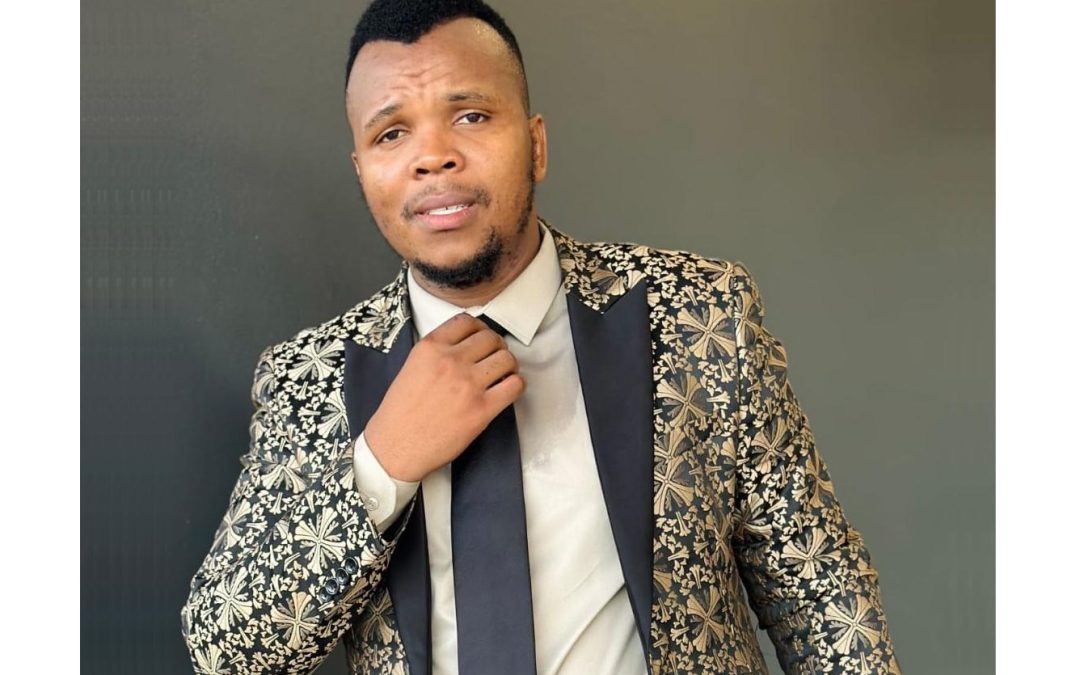
In the quiet town of Mookgophong—known to many as Naboomspruit in Limpopo—a young boy once stood beside two remarkable women selling fried fish and second-hand clothes to survive. Today, that same boy is a respected mathematics educator, entrepreneur, and proud alumnus of Sefako Makgatho Health Sciences University (SMU), transforming the academic trajectories of thousands of learners across South Africa.
 Thapelo Rafapa’s story is one of resilience, redemption, and divine purpose. Raised by his grandmother and her sister, Rafapa grew up witnessing unwavering determination. “My grandmothers were my first example of strength,” he reflects. “They never allowed circumstances to define them. Watching them work tirelessly planted something in me—a refusal to quit.”
Yet adolescence tested that foundation. Like many young boys navigating identity and peer pressure, he drifted into destructive habits—smoking, drinking, and stealing from the very home businesses that sustained his family. His wake-up call came in Grade 10 when he received a zero for a Pure Mathematics assessment. “That zero was more than a mark,” Rafapa says. “It was a mirror. It forced me to confront who I was becoming.”
A pivotal friendship with top-performing learner Jerry Thoka became the turning point. Inspired by Thoka’s discipline, Rafapa recalibrated his focus. By the end of the year, he ranked second in Mathematics. Together, the two friends held extra classes for classmates and committed to late-night study sessions. That same year, Rafapa gave his life to Christ—a decision that grounded his academic and personal transformation.
After matric, financial barriers threatened to derail their ambitions. Though accepted into universities including Wits, registration fees were unaffordable. Determined not to remain idle, they enrolled in an engineering N-course in Witbank, enduring nights sleeping at a police station and long walks to classes—only to discover the college was unregistered. “It felt like everything was collapsing,” Rafapa recalls. “But we refused to surrender.”
Hope arrived three weeks later. SMU—then widely known as Medunsa—offered them places in a BSc programme, but registration required R5 000. In an extraordinary turn of events, strangers stepped in. A doctor from Cape Town sponsored Thoka, while Dr. Mathosa, an SMU graduate from Rafapa’s township, offered to fund his studies. “I still call him my angel in human form,” Rafapa says. “He didn’t just pay fees. He restored my dignity.”
 In 2015, Rafapa registered for a BSc in Mathematical Sciences at SMU, majoring in Mathematics and Applied Mathematics. Although his late uncle had dreamed of him studying Medicine, Rafapa knew his calling lay elsewhere. “At SMU, I wasn’t becoming a doctor,” he says with conviction. “I was becoming what I had always envisioned—a mathematician with purpose.”
University life birthed more than academic success. During his first year, Rafapa started a small prayer group that evolved into a thriving campus ministry. It was there that he met Tshidi, who would later become his wife. “SMU gave me more than a qualification,” Rafapa shares. “It gave me my life partner and a spiritual family.”
The journey was not without struggle. He repeated his third year and worked tirelessly as a tutor to support his unemployed mother. Travelling to learners’ homes after lectures, Rafapa earned income while nurturing what would become his life’s mission—unlocking mathematical potential.
After graduating, Rafapa joined Seriously Addictive Mathematics (S.A.M), a Singapore-originated programme developing foundational skills in young learners. Within a year, he was promoted to Centre Manager. But his vision extended further. In 2019, Rafapa formally registered the School of Mathematics Extra Lessons. By 2020, he had been recruited by Curro Academy in Soshanguve, where he was promoted to Subject Head of Mathematics within six months.
Research revealed a sobering truth: South Africa was the first country to introduce Mathematical Literacy as an alternative due to widespread struggles with Mathematics. For Rafapa, this was a call to action. “Too many dreams die at the hands of Mathematics,” he says. “If we change how we teach and support learners, we change the nation’s future.”
Partnering with Tsietsi Joseph Mojapelo, he co-founded SOMELPSA Tutoring Academy in Pretoria North. The academy expanded rapidly, offering multiple subjects from Grade R to Grade 12. In 2023, a Sandton branch launched under the leadership of Thoka—bringing their journey full circle.
Today, SOMELPSA employs 27 staff members and has impacted thousands of learners nationwide. One former student became the top-performing learner among Curro DBE schools, later graduating in Actuarial Science from UCT and securing a position at Deloitte.
“When my students succeed, it feels like my grandmothers’ prayers are still being answered,” he reflects.
In honour of Dr Nchaupe Pontius Mathosa, Rafapa now sponsors three high school learners, covering uniforms, books, and mentorship. SOMELPSA also provides free extra lessons to learners whose families cannot afford tutoring.
As a proud SMU alumnus, Rafapa carries forward the legacy of compassion and excellence that once carried him. His message to young people is simple yet profound: “If we join hands together, we have it within ourselves to change our nation.”
By Dimakatso Modise
by Lorato | Feb 5, 2026 | All News, SMU Media, Student Media
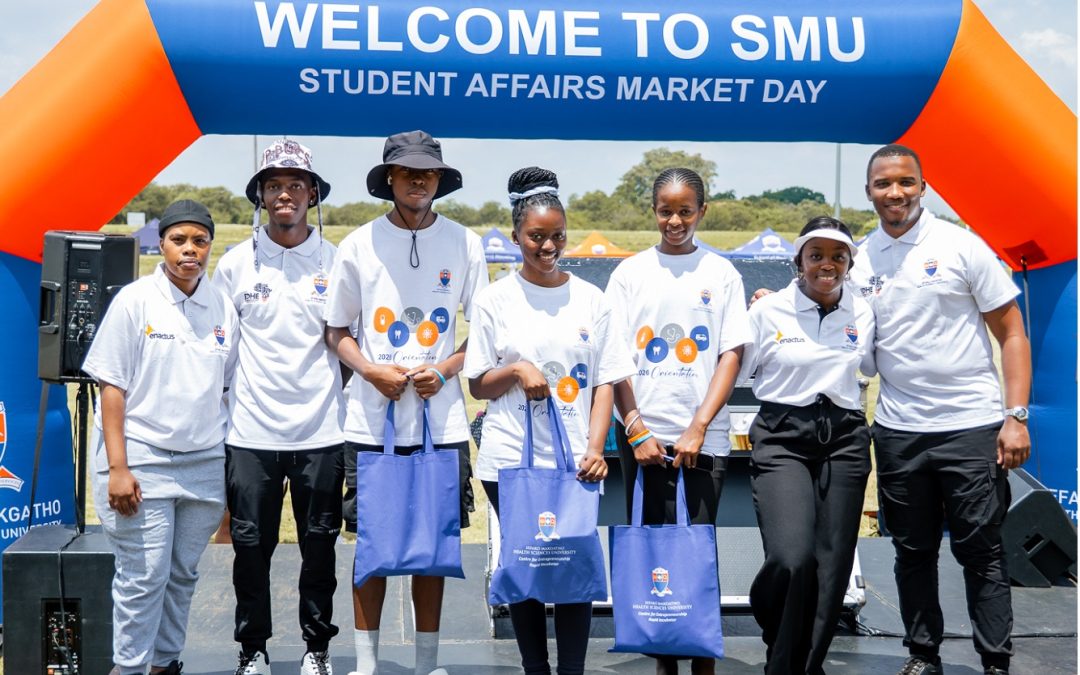
Sefako Makgatho Health Sciences University (SMU) launched its 2026 academic year with a high-energy, purpose-driven Orientation Programme for first-time entering (FTEN) students, signalling not just the start of university life, but the beginning of a demanding and transformative journey in the health sciences.
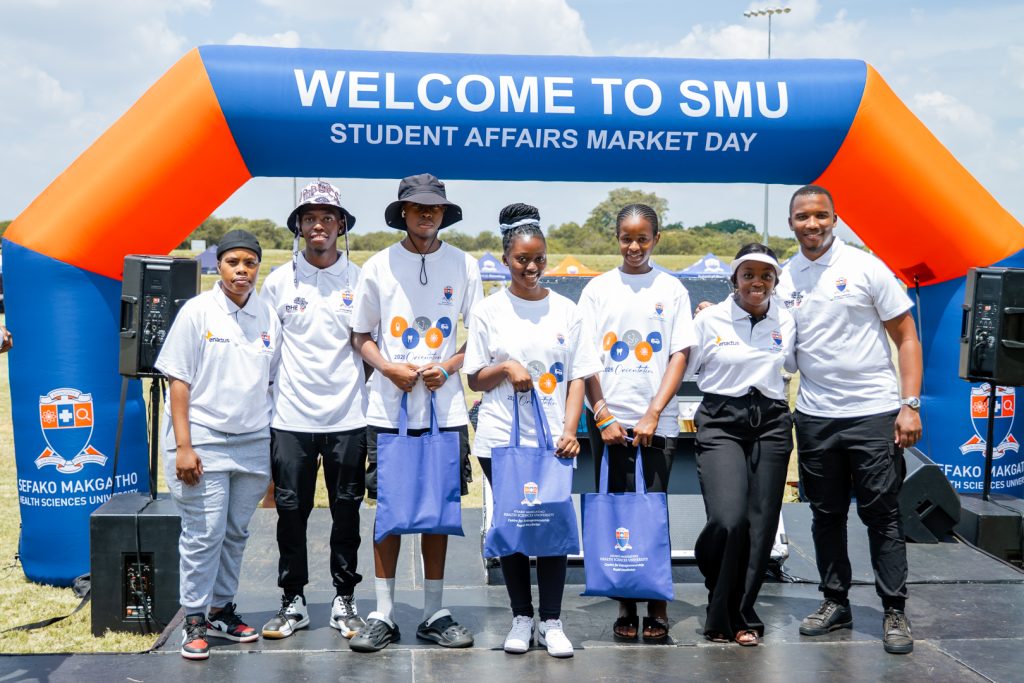 Held over five days, the programme was designed to do one thing exceptionally well: equip new students to succeed. From the moment students arrived on campus, the message was clear — orientation was not optional window dressing, but a strategic foundation for academic focus, belonging and resilience.
Welcoming students, the Vice-Chancellor and Principal, Professor Tandi Matsha-Erasmus, described the moment as both significant and symbolic. “SMU was established with a clear mandate: to educate future health sciences professionals who will serve society with excellence, integrity and compassion,” she said. “By joining this institution, you formally become part of that mission.”
The programme combined institutional clarity with emotional resonance. An academic procession, performances by the SMU Choir, and a candlelight Vision Walk reinforced a shared sense of purpose, while practical sessions tackled the realities of university life head-on.
Orientation activities were structured to address students’ most pressing challenges — understanding academic expectations, accessing support services, navigating campus systems and building social confidence. According to Tulani Nkuntse, Director: Student Affairs, orientation was intentionally designed to remove uncertainty early. “If students know where to go, who to ask and what is expected, they start stronger and stay focused,” he noted.
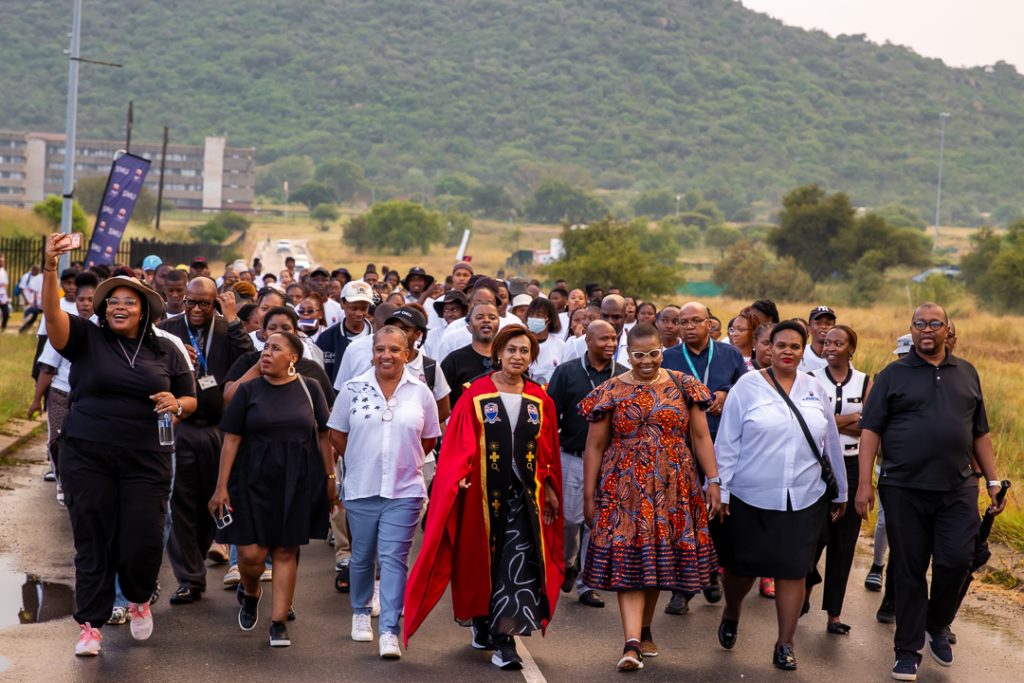 Key programme highlights included residence day, focused on settling in, safety, and community-building; academic welcome, featuring messages from senior leadership and the SRC; vision walk and affirmation ceremony, anchoring personal purpose; school-based orientations, introducing academic cultures and expectations; teaching and learning sessions, covering advising, tutoring, mentoring and e-learning; campus tours and student affairs market, turning information into experience
Student leadership played a central role. SRC President Mthokozisi Dlamini addressed new students directly, reinforcing a message of belonging and earned opportunity. “Your presence here is not by chance,” he said. “You earned it, you deserve it, and you belong here.”
For many students, the impact was immediate. Brendon Ntlatlane Mabuse, a first-year Mathematical Sciences student, reflected on how orientation reshaped his confidence. “Orientation helped us overcome the fear of socialising and learn how to navigate campus independently. It also helped bridge cultural differences and made us feel included.”
Similarly, Buyile Mkhwanazi, a Bachelor of Medicine and Bachelor of Surgery (MBChB) first-year student, highlighted the balance between guidance and motivation. “The programme showed us the level of support the institution provides, while also giving us direction and space to connect.”
The week concluded with campus-wide activities, sport and celebration, including a Super Cup final that drew students together beyond lecture halls and residences. Yet beneath the excitement ran a consistent theme: SMU expects excellence — and provides the structure to achieve it.
As the 2026 cohort steps fully into the academic year, the Orientation Programme served its purpose decisively. It replaced uncertainty with clarity, isolation with community, and anticipation with resolve. This was not just a welcome. It was a statement of intent.
By Tumelo Moila

by Lorato | Jan 21, 2026 | All News, SMU Media, Student Media
At Sefako Makgatho Health Sciences University (SMU), every young woman in a lab coat or scrubs carries more than textbooks and ambition; she carries legacy in the making. From lecture halls to clinical spaces, young women at SMU are building futures that will shape healthcare across South Africa and the continent. Each has a reason for choosing this path, a role model who inspired her, and a vision for the professional—and the woman—she is becoming.
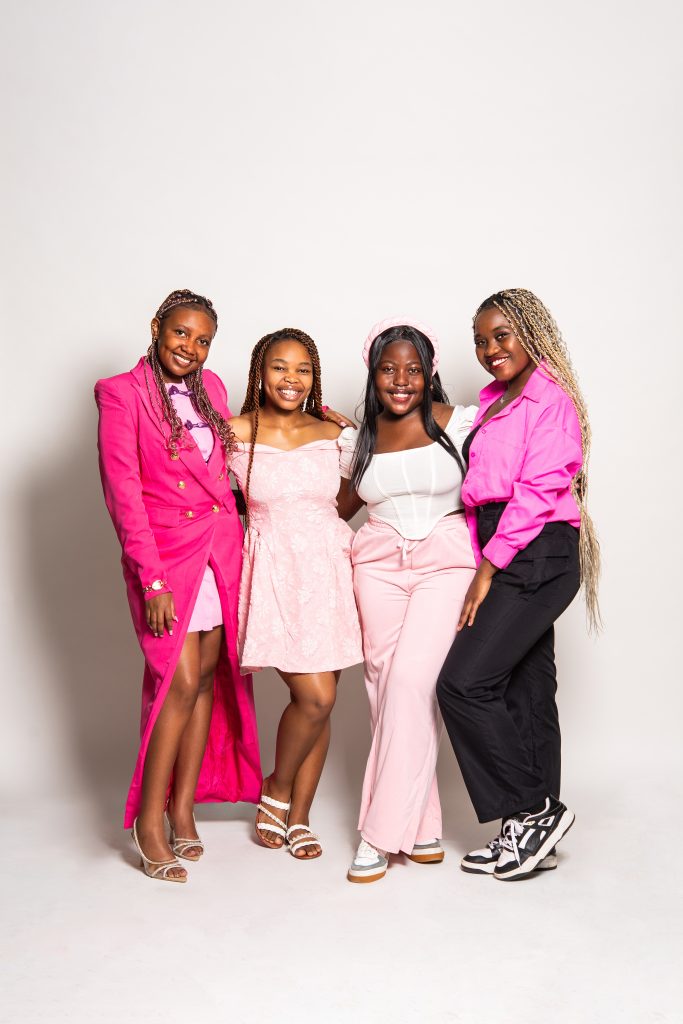 Together, they are more than students. They are future doctors, scientists, and healthcare leaders. Each one: a name worth remembering.
SMU, as South Africa’s leading dedicated health sciences university, is where these women step onto a path of purpose. Here, education is more than lectures; it is a commitment to community, to excellence, and to producing healthcare professionals who will shape the systems of tomorrow.
For Mbali Ndamase, a second-year Bachelor of Science in Speech-Language Pathology and Audiology student, her calling began with the simplest human need: communication. “I’ve seen how communication and hearing disorders can isolate people,” she says. “At SMU, I’m being shaped into a healthcare professional who not only treats but empowers people to reconnect with the world.”
Bonolo Malema, a third-year Bachelor of Medicine and Bachelor of Surgery student, describes her journey into medicine as both a personal mission and a shared responsibility. “Becoming a doctor isn’t about the title—it’s about healing, about making people’s lives better. SMU gives me the skills, but also the sisterhood and the inspiration to believe I can make a difference.”
Bonolo believes SMU’s women are rewriting the future of medicine. “Here, we’re not just learning how to treat illnesses, we’re learning how to lead.”
Tsakane Pearl Nghonyama, a third-year BSc Mathematical Sciences student, is proof that healthcare’s future depends not only on clinicians but also on data scientists. “At SMU, I don’t have to choose between logic and compassion. I’m training to be both a Data Analyst and a Paediatrician. One saves lives now; the other shapes the systems that will save lives tomorrow.”
Their stories and ambitions reflect SMU’s mission to educate and empower African women who will lead health innovation, drive community care, and transform systems that for too long have left women’s voices unheard. “We are part of a sisterhood here,” says Bonolo. “A sisterhood that believes in service, in leadership, and in changing lives.”
At SMU, these young women’s stories begin—but their impact will be felt far beyond its gates. They are not just studying for degrees. They are preparing for legacies built on service, strength, and the unstoppable power of a woman’s voice in African healthcare. Mark their names. Their futures are just beginning.
By Dimakatso Modise