by Lorato | May 29, 2025 | Accolades and Achievements, All News, SMU Media, Student Media
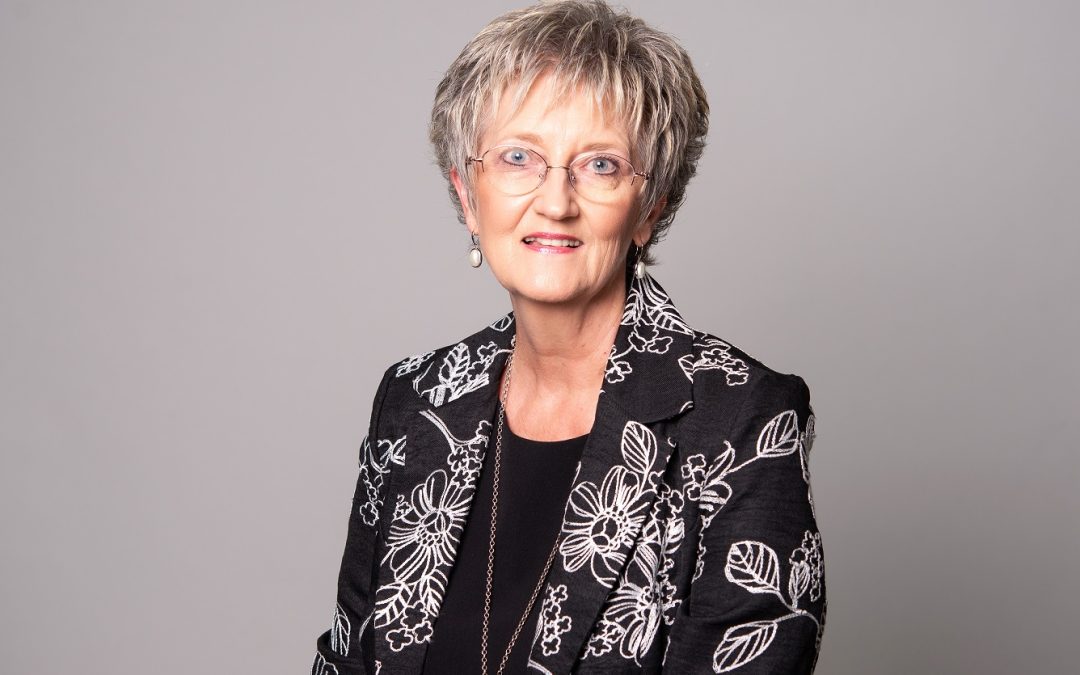
Sefako Makgatho Health Sciences University (SMU) continues to champion excellence and innovation in health sciences, as one of its esteemed academics, Professor Johanna Meyer, is honoured with the 2025 PHILA Lifetime Achievement Award by the Public Health Association of South Africa (PHASA). This distinguished award recognises individuals whose lifelong contributions have left a lasting and meaningful impact on public health in South Africa and beyond.
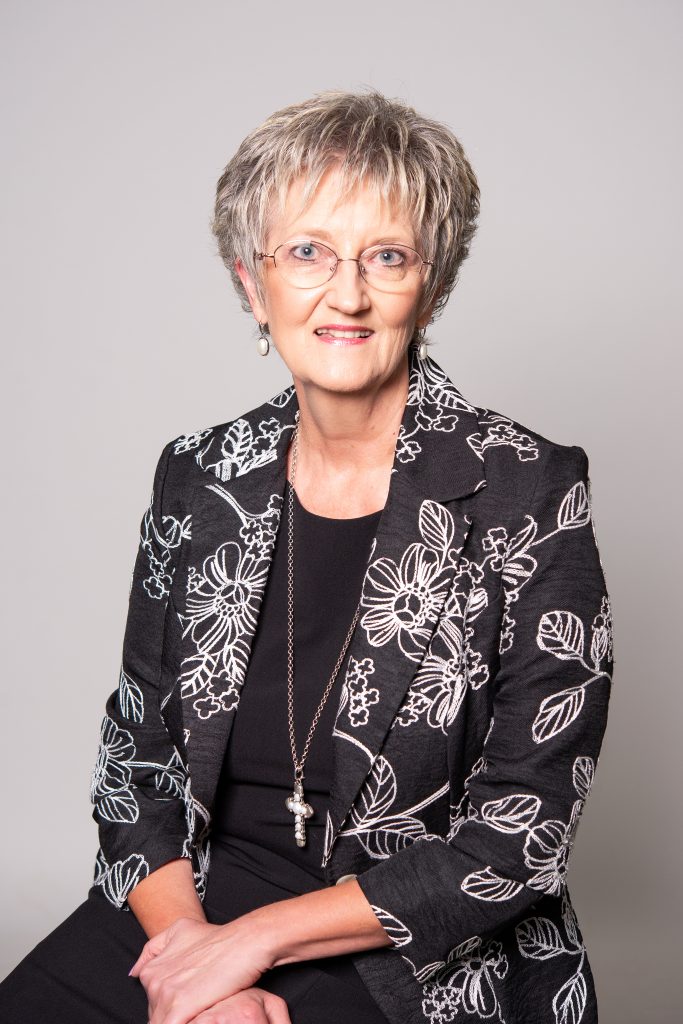 A respected scholar and advocate, Professor Meyer has dedicated decades of her academic and professional life to strengthening public health systems and advancing health equity. Describing the award as “humbling and unexpected,” she joins a select group of visionaries whose work continues to shape healthier futures through research, education, and service. Her recognition is a testament not only to personal dedication but also to SMU’s growing influence in transforming health services across the country.
“I never imagined that, among all the brilliant public health professionals in the country, I would be selected. But this award is not just for me – it reflects the collective effort of many people who have walked this journey with me,” she said.
Her journey is a testament to SMU’s commitment to excellence, reflected in her work on immunisation, pharmacovigilance, antimicrobial stewardship, and health policy advocacy. Over the years, she has played an instrumental role in strengthening public health systems and promoting the rational use of medicines and vaccines.
Professor Meyer’s interest in public health was sparked early in her career, but deepened significantly when she joined the South African Vaccination and Immunisation Centre (SAVIC). Through SAVIC, she found a platform to focus on vaccine safety, training of healthcare workers, and boosting vaccine confidence—particularly in underserved communities.
“Vaccines became the vehicle through which I could pursue my goal of improving public health. I focused on their safety, uptake, and rational use – and on building trust,” she noted.
Her commitment to public service is evident in her leadership roles, both past and present. These include serving on the World Health Organization’s Global Advisory Committee on Vaccine Safety and chairing both the South African Health Products Regulatory Authority (SAHPRA) and the National Immunisation Safety Expert Committee.
Professor Meyer’s work became even more critical during the COVID-19 pandemic. Under her leadership, SAVIC trained healthcare workers across South Africa to implement the national COVID-19 vaccine roll-out. She also led national efforts to monitor vaccine safety and address public concerns—a demonstration of leadership and accountability during a time of global uncertainty.
“I was on radio, TV, and Zoom calls almost every day, helping people understand vaccine safety and countering misinformation,” she recalls.
Her team’s efforts helped establish pharmacovigilance systems that now extend across five African countries.
Professor Meyer is not only a scientist and leader but also a devoted mentor. Her approach reflects SMU’s value of respect, particularly in the way she supports and inspires students and emerging public health professionals.
“Mentoring starts with motivating the heart. I encourage students to focus on public service, even when change is slow. Persistence matters,” she says.
She also advocates for greater academic engagement with government and policy work, especially in a country grappling with systemic challenges in healthcare delivery.
“Policymaking must be guided by scientific evidence. Independent voices are crucial to protect the integrity of our health systems,” she adds.
Professor Meyer continues to be a leading voice in public health, with ongoing work in antimicrobial resistance, community engagement, and vaccine safety. Her unwavering commitment to the greater good—often behind the scenes—epitomises the spirit of service that aligns closely with SMU’s ethos.
Despite global challenges such as misinformation, climate change denial, and anti-science sentiment, Professor Meyer remains optimistic and committed to inspiring future generations.
“There are so many opportunities to make a real difference. You just have to stay committed,” she says.
She often draws strength from the words of anthropologist Margaret Mead: “Never doubt that a small group of thoughtful, committed citizens can change the world; indeed, it is the only thing that ever has.”
SMU is proud to count Professor Meyer among its esteemed academic leaders—a professional whose work is anchored in excellence, integrity, respect, and accountability, and whose legacy will inspire public health champions for generations to come.
By Dimakatso Modise
by Lorato | May 29, 2025 | All News, SMU Media, Student Media
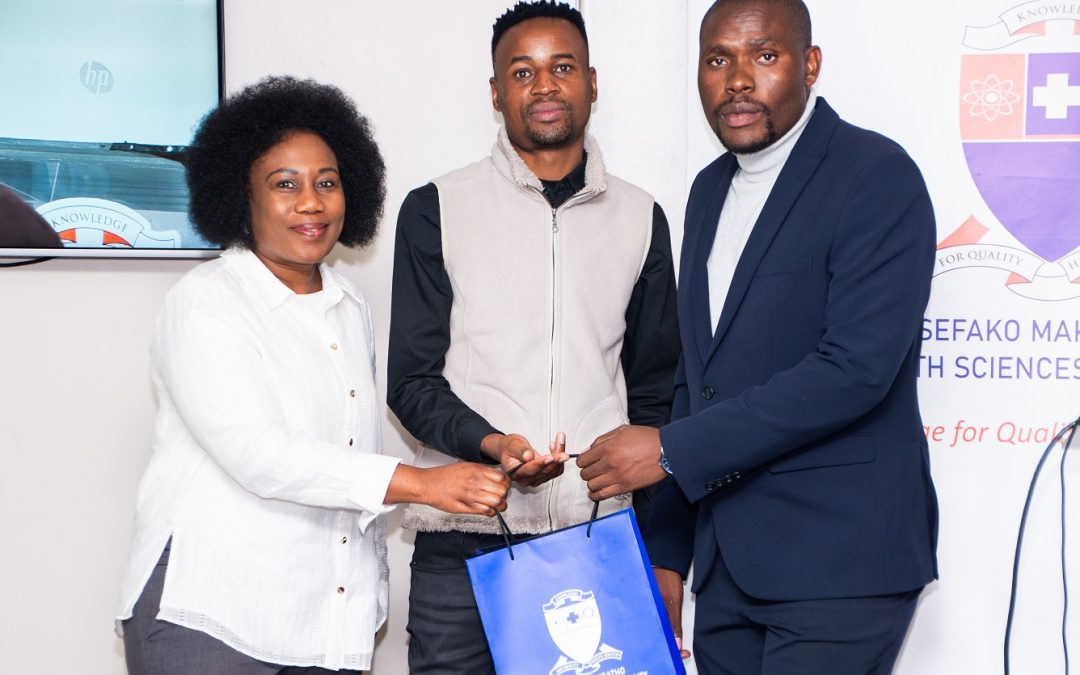
Sefako Makgatho Health Sciences University (SMU) joined the global stage in celebrating World Intellectual Property (IP) Day 2025, embracing this year’s theme, “Intellectual Property and Music – Feel the Beat”, with an inspiring showcase of local talent, innovation, and powerful dialogue.
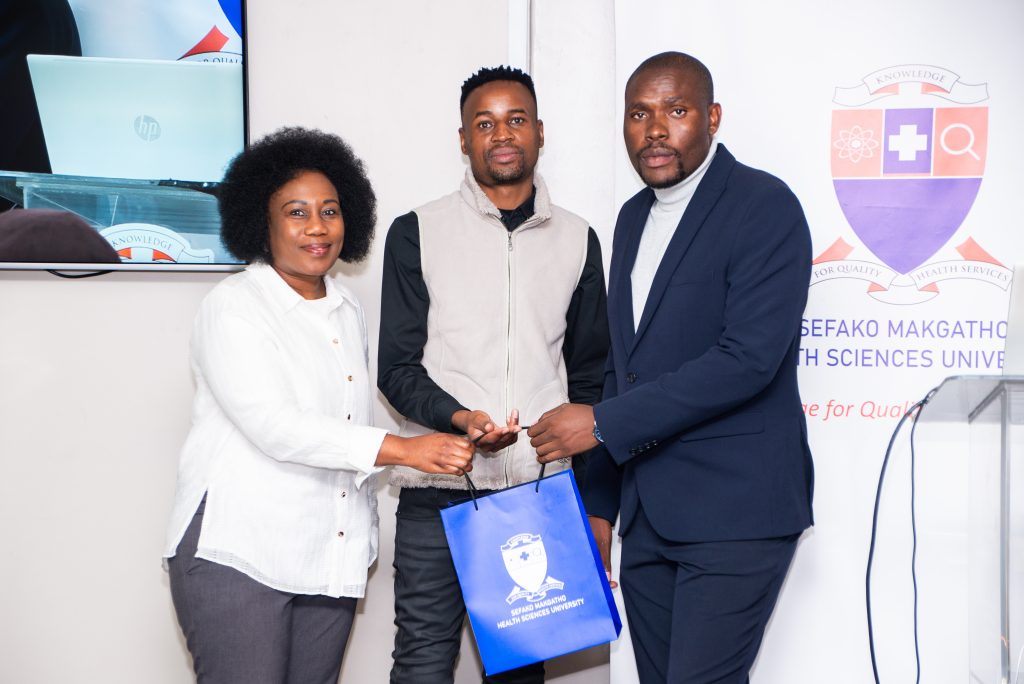 Through its Technology Transfer Office (TTO), in collaboration with the National Intellectual Property Management Office (NIPMO), SMU hosted a vibrant event that highlighted the critical role of IP in the creative economy, particularly in music, and its potential to drive transformation, empowerment, and economic growth. The celebration not only amplified awareness around IP rights but also spotlighted the intersection between artistic expression and scientific ingenuity within the SMU community.
The event brought together inventors, academics, legal experts, students, and other stakeholders in the innovation ecosystem to reflect on the role of intellectual property in stimulating creativity, safeguarding ideas, and contributing to economic development, particularly within the spheres of academia, music, and indigenous knowledge systems.
Delivering the opening address, Professor Mapaseka Seheri, SMU’s Director of Research and Innovation, warmly welcomed delegates and emphasised the transformative power of innovation.
“Innovation makes the world work better,” she said. “At SMU, we believe that fostering a deep understanding of intellectual property among researchers and students empowers them to translate ideas into impact.”
Her remarks set the tone for a morning of education, empowerment, and celebration of local ingenuity. Pontsho Mampuru from the Technology Transfer Office provided a concise overview of the event’s purpose. She highlighted the importance of demystifying intellectual property and encouraging researchers to engage proactively with available systems to protect their work.
“World IP Day is more than just an annual event—it’s an invitation to every creative mind to take ownership of their ideas and protect what they produce,” she noted.
The audience was particularly inspired by Nondumiso Nkosi, a local inventor who developed a diagnostic tool for Hepatitis B. Nkosi shared her journey from idea to implementation, underscoring the crucial support she received from the TTO in securing intellectual property protection for her invention.
“Before this, I didn’t even know what intellectual property was. But the TTO believed in me and walked the journey with me,” she said. “This tool has the potential to close healthcare gaps across communities. IP is not just paperwork—it’s power, it’s protection, and it’s a passport to taking your idea to the world.”
Let’s give Nondumiso Nkosi a big cheer! Nondumiso, your journey from concept to impact is truly inspiring. Developing a diagnostic tool for Hepatitis B is a remarkable achievement, and your partnership with the TTO at SMU highlights the transformative potential of innovation and IP protection. Your work is a beacon of how innovation can improve lives and uplift communities.
Offering a compelling legal perspective, Dr/Adv Ophrey Ntsuxeko Shibambu, a law lecturer at the Tshwane University of Technology (TUT), explored the intersection between intellectual property and music, aligning with this year’s global theme.
“Music is not only entertainment; it is intellectual labour. Every beat, every lyric, every melody deserves legal protection,” he said. “Understanding copyright, licensing, and royalties is essential for creatives to fully benefit from their craft.”
He further encouraged institutions to bridge the gap between artists and legal systems by promoting awareness and strengthening policy support.
Jetane Charsley, Head of NIPMO, delivered an insightful presentation on the legislative frameworks governing IP in South Africa. She focused on how the Intellectual Property Rights from the Publicly Financed Research and Development Act (IPR Act) empowers public institutions to manage and commercialise innovations effectively.
“Every invention coming out of publicly funded research must be protected. That’s our mandate at NIPMO,” said Charsley. “Our role is to ensure that knowledge doesn’t remain locked in academic journals—it must reach society.”
She also provided insights into legislation around traditional knowledge, noting that innovations, particularly in plant-based medicine—must be documented, respected, and protected under national and international IP frameworks.
“We must not leave behind our traditional knowledge holders. IP law is evolving to ensure that communities benefit from what they have always known, cultivated, and passed on,” she said.
Charsley further unpacked key aspects of copyright law, especially relevant to music and the creative arts.
“Copyright is automatic the moment a creative work is fixed in a tangible form. However, registering your work and understanding your rights ensures that you can claim your fair share when it’s used,” she added.
The event concluded with a resounding message: innovation and intellectual property are not only the domain of scientists or lawyers—they belong to everyone. From diagnostics to digital art, music, and traditional medicine, every idea holds value and deserves protection.
As the global community commemorated World Intellectual Property Day, SMU reaffirmed its commitment to building a future in which its researchers, students, and surrounding communities are empowered to innovate boldly and protect wisely.
By Dimakatso Modise
by Lorato | May 29, 2025 | All News, SMU Media
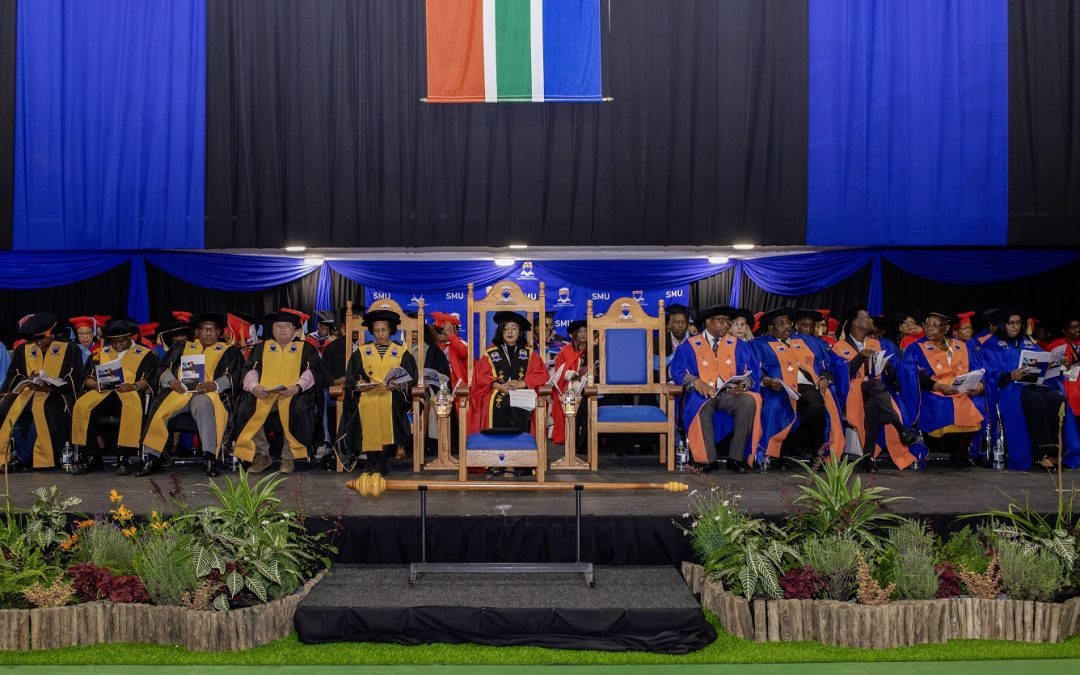
Sefako Makgatho Health Sciences University (SMU) continues to affirm its role as a catalyst for change in South Africa’s health sciences landscape, driven by a bold vision to transform education, research, and community service. This commitment was powerfully reflected during the 2025 Autumn Graduation Ceremonies, held from 21 to 23 May, where the University conferred over 1,200 qualifications across its five academic schools.
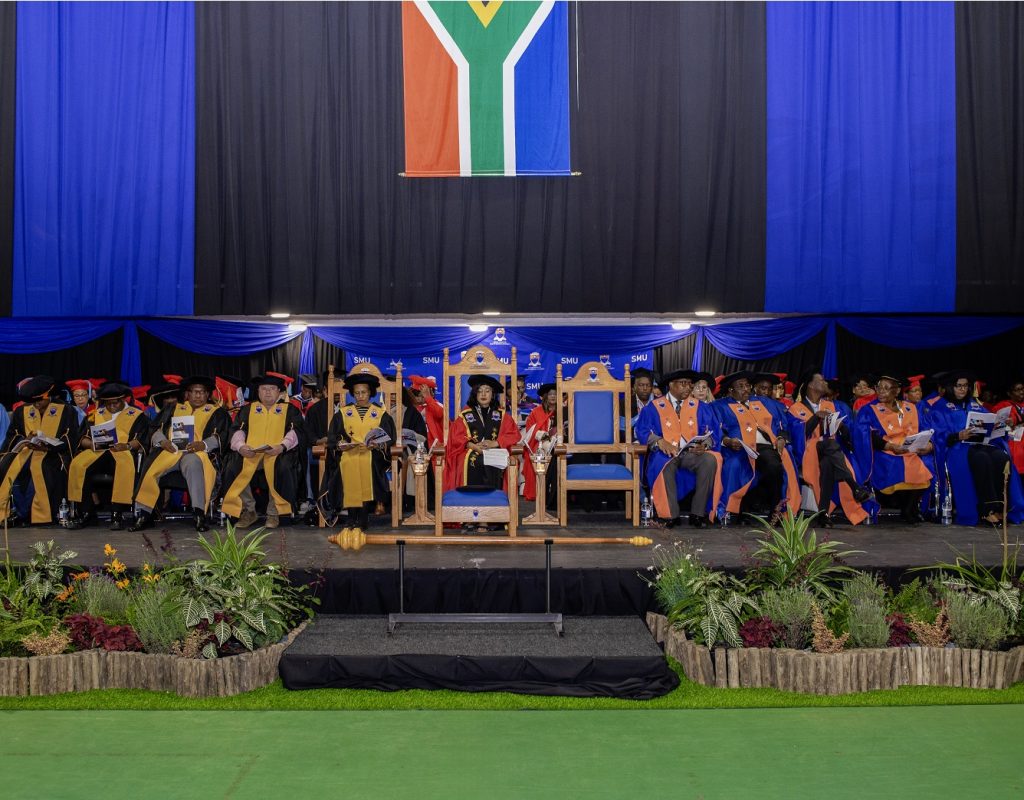 The celebrations not only recognised academic achievement but also marked a historic milestone—the awarding of SMU’s first-ever honorary doctorate, underscoring the University’s steady rise as a hub of innovation, excellence, and national impact in higher education and healthcare development.
“This graduation series is not just a ceremonial rite—it is a powerful affirmation of the University’s mission to train a new generation of leaders, healers, and scientific pioneers,” said Acting Deputy Vice-Chancellor: Academic and Research, Dr Jeffrey Mabelebele. “Our graduates step into the frontlines of health and scientific progress at a time when their skills are most needed.”
A total of 1,294 qualifications were conferred, with 69% being undergraduate degrees and 31% postgraduate qualifications. These included 33 postgraduate diplomas, 196 honours degrees, 162 master’s degrees, and 9 doctoral degrees.
The data further underscored SMU’s commitment to academic excellence and transformation. Women accounted for 65.2% of graduates, with 95 of the 102 cum laude and 27 summa cum laude distinctions awarded to female students.
Racially, 94.3% of the graduates were African, followed by 3.4% White, 1.5% Indian, and 0.8% Coloured graduates. Importantly, 124 of the graduates had entered the institution through the Extended Curriculum Programme (ECP), exemplifying SMU’s efforts in widening access to tertiary education.
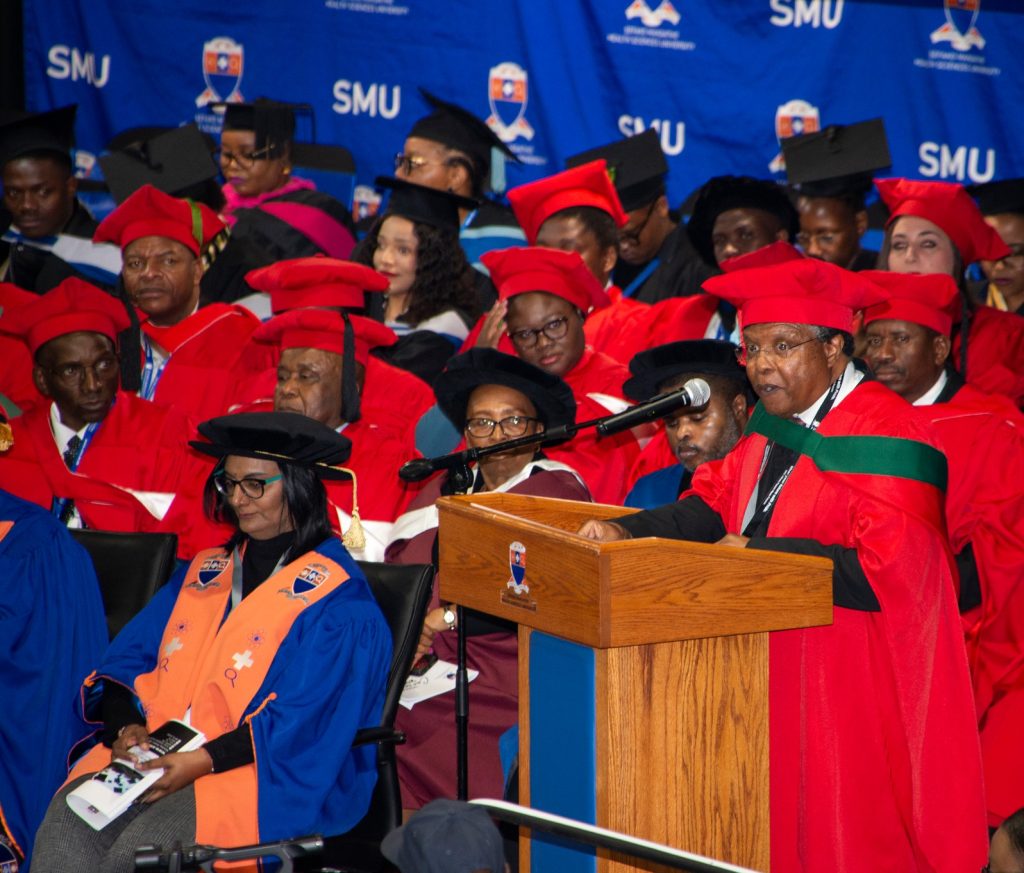 In a historic highlight, SMU conferred its first honorary doctoral degree upon Professor Phuti Esrom Ngoepe, a globally respected physicist renowned for his groundbreaking work in Materials Modelling. The honour recognises his lifetime contributions to the advancement of science and innovation in South Africa and around the world.
In his acceptance speech, Prof Ngoepe reflected on the honour with deep humility and gratitude. “I would like to express my sincerest thanks and appreciation to Sefako Makgatho Health Sciences University for conferring this honour upon me today. I humbly accept this award on behalf of everyone who has worked tirelessly alongside me over the years.”
This is a milestone not only for SMU but for the entire scientific community. Prof Ngoepe’s work has bridged the gap between theoretical science and practical societal benefit. SMU is immensely proud to welcome him into its family.
Prof Ngoepe’s award also underscores SMU’s intention to broaden its academic footprint beyond health sciences and further establish itself as a multidisciplinary hub of excellence.
The graduation ceremonies reflected SMU’s interdisciplinary approach to addressing the country’s complex socio-health challenges:
- School of Medicine: 524 graduates, including 305 undergraduate degrees and 64 master’s degrees.
- School of Dentistry: 96 graduates, including 86 undergraduate degrees.
- School of Health Care Sciences: 240 graduates, including 168 undergraduates and 45 master’s.
- School of Pharmacy: 106 graduates, with qualifications ranging from higher certificates to doctoral degrees.
- School of Science and Technology: 230 graduates, including 204 BSc degrees and 3 doctoral degrees.
A posthumous degree was also conferred during the ceremony in honour of the late BSc Honours in Chemistry graduate, Noko James Pole, whose academic efforts were tragically cut short, serving as a poignant reminder of the resilience and humanity behind the academic journey.
In his concluding remarks, Dr Mabelebele invoked a Ghanaian proverb— “Knowledge is like a baobab tree; one person’s arms can never wrap around it”—to inspire continued learning among graduates.
SMU graduates understand that their qualifications come with a purpose and responsibility—to heal, to innovate, to serve. With a blend of tradition, academic rigour and a vision for inclusive transformation, the 2025 Autumn Graduation affirmed that both the present and future, indeed, belong to SMU.
By Tumelo Moila
by Lorato | May 19, 2025 | Media Statements, statements
PRESS STATEMENT
FOR IMMEDIATE RELEASE
19 May 2025
GA-RANKUWA, PRETORIA –Sefako Makgatho Health Sciences University (SMU) will confer qualifications across its five academic schools during the 2025 Autumn Graduation Ceremonies, scheduled for 21 to 23 May 2025. The ceremonies mark a pivotal moment—not only for graduates, but for the health and science sectors that urgently require their skills, innovation, and leadership.
Graduates from the School of Medicine, School of Dentistry, School of Health Care Sciences, School of Pharmacy, and School of Science and Technology will formally complete their academic journeys and step into fields where their expertise is needed most.
Ceremony dates are as follows:
• 21 May – School of Medicine
• 22 May – School of Dentistry and School of Health Care Sciences
• 23 May – School of Pharmacy and School of Science and Technology
This cohort enters a world facing complex health challenges, scientific disruption, and a growing demand for evidence-based care and innovation. As such, SMU’s graduates are academically qualified, socially conscious, scientifically prepared, and ready to contribute across borders and sectors.
In a moment of solemn reflection, the university will confer a posthumous degree in honour of a student whose life ended before graduation, but whose academic efforts are remembered with pride and dignity.
The graduation on 23 May will also include a historic first: the conferment of an honorary doctoral degree to Professor Phuti Esrom Ngoepe, a renowned scholar in Physics and Materials Modelling. The degree, approved by Council on 3 April 2025, recognises a lifetime of contribution to science and higher education. A separate statement detailing this historic conferment will be released.
SMU remains committed to training professionals who are equipped not just with qualifications but with purpose, courage, and a deep understanding of the communities they serve.
About Sefako Makgatho Health Sciences University
Sefako Makgatho Health Sciences University (SMU) is a specialised South African institution advancing excellence in health sciences education, research, and innovation. Through a strong focus on impact and equity, SMU equips graduates to lead change in healthcare systems and scientific sectors across the continent and beyond.
For media enquiries, please contact Tshimangadzo Mphaphuli, Acting Director: Communications and Marketing at tshimangadzo.mphaphuli@smu.ac.za
Cell: 081 015 4790
SMU GRADUATES STEP INTO THE FRONTLINES OF HEALTH AND SCIENTIFIC PROGRESS_Press Statement
File size: 498.12 KB
Created: 19-05-2025
Updated: 19-05-2025
Hits: 153

by Lorato | May 13, 2025 | All News, SMU Media, Student Media
As graduation season unfolds at Sefako Makgatho Health Sciences University (SMU), alumna Dr Talente Biyela reflects on her studies, four earned degrees, and an already impactful career. From the rural heart of Esikhawini Nsimbini Reserve, KwaZulu-Natal, to the halls of academia and the wards of Dr George Mukhari Academic Hospital, Biyela’s journey has been marked by determination, passion, and an unwavering commitment to public service.
 Raised by a “resilient single mother,” Biyela is one of six siblings who defied the odds. “I’ve always been curious,” she shares. “My love for problem-solving and analysis first led me to mathematics, and later to medicine.”
Her academic achievements are remarkable. She holds a BSc in Mathematics and Chemistry, a BSc Honours in Mathematics, a BSc Honours in Applied Mathematics, and an MBChB. In 2016, while pursuing her Honours degree in Applied Mathematics, she was selected among the top 30 students nationwide for a prestigious Joint Institute for Nuclear Research (JINR) scholarship in Russia. “Presenting neutron activation for life sciences in Russia was an invaluable experience,” she recalls. “Russia is incredibly rich in nuclear research.”
Transitioning from mathematics to medicine, however, was not without challenges. “It was tough moving into medicine,” she admitts. “I was used to numbers and analysis, but the theoretical focus of the first three years of the MBChB required new study methods.” At the same time, she taught Mathematics to Grades 11 and 12 at Seageng Secondary School in Soshanguve.
Beyond academics, Biyela is passionate about education and sport. After discovering SMU lacked a women’s football team, she founded the SMU Ladies’ Football Team. “Football was my escape,” she explains. “Starting the team wasn’t just about sport—it was about creating an outlet for students to decompress and build social cohesion.”
Her leadership extended beyond the pitch. Serving three terms in the Student Representative Council (SRC), she also sat on the university council, institutional forum, exclusions committee, and chaired several student organisations. “Leadership gave me insight into policy and governance,” she reflects. “It deepened my desire to transform a health system currently on its knees.”
Determined to uplift others, she established the Bokamoso Science Centre to bridge the gap between secondary and tertiary science education for learners from disadvantaged backgrounds. “Many students arrive at university never having been inside a lab,” she laments. “We needed to change that.”
As a doctor, Biyela finds fulfilment in patient care. “Nothing beats a patient telling you how much you’ve helped them,” she shares. Yet, she acknowledges the challenges of a hierarchical medical environment. “Managing different personalities in patient care can be difficult.”
Her role as a COVID-19 compliance officer was especially formative. “Working during the pandemic forced rapid adaptation,” she explains. “I was responsible for data collection, analysis, and strategy implementation. It reinforced my belief in health education and prevention.”
Biyela is outspoken about South Africa’s healthcare inequities. “Our healthcare system is in shambles,” she asserts. “It continuously fails black, poor people who cannot afford private care. Funding models must change, and wasteful expenditure must be addressed.”
Looking ahead, she plans to pursue a Master’s in Public Health. “My background in maths and research will be invaluable for data analysis and policy development,” she notes. “I want to remain in the public sector, where I can make the most impact. I dream of a health system that doesn’t discriminate based on skin colour or income.”
Despite her many roles, Biyela remains grounded. “I value time deeply,” she says. “If I give you my time, I’ve given you the most precious part of me. My culture and spirituality keep me anchored.”
Her message to young people considering career shifts is clear: “The sky is the limit. There’s nothing unattainable. Cross over with pride—every degree shapes you into a better person.”
As she continues blazing trails in medicine, policy, and advocacy, Biyela hopes to leave a legacy of service. “I want to be remembered as someone whose life was dedicated to making others’ lives better,” she says. “Someone whose allegiance was always with black, poor people.”
For Biyela, success is not merely personal—it’s about building a healthier, more equitable South Africa for generations to come.
By Tumelo Moila