by Lorato | Apr 9, 2025 | All News, SMU Media, Student Media
Sefako Makgatho Health Sciences University (SMU) recently celebrated a momentous occasion as 25 Bachelor of Medicine and Bachelor of Surgery (MBChB) graduates took the Hippocratic Oath on Wednesday, 26 March 2025, marking their transition from students to medical professionals. This significant event underscored their commitment to ethical practice, patient care, and upholding the values of the medical profession. With this milestone, SMU reaffirms its status as a leading institution in medical education, consistently producing graduates who are not only skilled but also dedicated to serving their communities with compassion and professionalism. As they begin their careers, these new doctors carry forward the high standards set by SMU in their pursuit of excellence in healthcare.
 The ceremony, attended by staff members from the School of Medicine, family, and friends, was filled with pride and anticipation as the graduates pledged to serve with integrity, competence, and compassion. They vowed to practise medicine without bias or discrimination, ensuring the well-being of their future patients remains their highest priority. The event underscored the responsibility that comes with being a healthcare professional and the expectations placed upon them as they step into the medical field.
Professor Risenga Chauke, Acting Dean of the School of Medicine, delivered an inspiring address, urging the new doctors to embrace their responsibilities with diligence and integrity.
“You are now transitioning from a position of dependency to a position of responsibility and accountability. Remember, you waited six years to step into the final position of accountability. You have now transitioned from being dependent on your lecturers to taking responsibility for making decisions. If you fail with integrity, you will surely rise again,” he stated.
The ceremony was an emotional moment for many, including Dr Mohau Phiti, a former Miss Mamelodi Sundowns North West Princess for 2019/2020, who expressed her overwhelming joy and gratitude.
“This experience is exhilarating; it is a moment of pure joy, and I am beyond grateful to the highest. I was determined to reach this point in my journey. Thank you so much, SMU—you will forever hold a special place in my heart. And to everyone who has supported me along the way, a thousand thank you,” said Dr Mohau Phitishe.
 The event also recognised the achievements of Dr Blessing Langa, who not only completed his medical degree but also successfully launched the Foreign Lands Clothing Brand while at SMU. Reflecting on his journey, he shared how he managed to balance academic responsibilities with entrepreneurship.
“It feels absolutely amazing. These are the two titles I have earned from SMU—I obtained a degree, and I also managed to establish a business. From an entrepreneurial perspective, I would say I am doing quite well. The key to balancing everything was time management. I advise others to manage your time wisely, and you will always stay ahead,” he shared.
The Hippocratic Oath-Taking Ceremony served as both a moment of celebration and a solemn reminder of the immense responsibility these young doctors now bear. Their training has prepared them for the challenges ahead, and they step into the medical profession equipped with knowledge, skill, and ethical principles.
As these newly qualified doctors step into their professional roles, they do so with the assurance of a strong foundation built at SMU, where academic excellence, ethical practice, and compassion are paramount. The university’s continued commitment to producing competent and empathetic healthcare professionals ensures that these graduates are well-equipped to make a positive impact in the healthcare sector. With the values of dedication, professionalism, and patient care deeply ingrained in their training, these young doctors are set to uphold the legacy of excellence that SMU has long been known for, bringing about meaningful change in the communities they serve.
By Tumelo Moila

by Lorato | Apr 9, 2025 | All News, SMU Media, Student Media
Sefako Makgatho Health Sciences University (SMU) alumnus Thabo Sekwati has become a key figure in South African football, serving as a Physiotherapist for the national team, Bafana Bafana. His journey from an aspiring student to a professional working at the highest levels of the sport is one of dedication, passion, and perseverance.
 Sekwati, a Sports Physiotherapist, hails from the village of Mamone, Maroteng section, in the Sekhukhune district, Limpopo. He matriculated in 2006 from Tenyane Secondary School before enrolling at the University of Limpopo (Medunsa Campus) in 2007 for a BSc degree. In 2009, he pursued a BSc in Physiotherapy, later obtaining an MSc in Physiotherapy in 2019. Currently, he is a PhD student at SMU, focusing on developing a physiotherapy fatigue management protocol for footballers.
His education at SMU provided him with a strong foundation. “The education I received at SMU played a crucial role in shaping my career by equipping me with the essential knowledge, skills, and experience needed for the sports industry,” he says.
Sekwati’s journey to the national team was not an overnight success. He started with South Africa’s under-17 male team in 2018, having been on SAFA’s database since 2016. “I attended recommended courses such as the FIFA Online Football Medicine Diploma while balancing other responsibilities. My first call-up came in 2018 while I was in Cape Town for a rugby tournament. Dr Thulani Ngwenya, SAFA’s Chief Medical Officer, informed me that I had to report for the under-17 camp in Gauteng,” he recalls.
 From 2018 to 2021, he worked with the under-17 and under-20 teams before being promoted to Bafana Bafana under Coach Hugo Broos. “I was excited but also nervous. The pressure is immense at the senior national level, as you are dealing with high-profile players and intense scrutiny. But once you understand that anatomy and physiology remain the same regardless of the level, everything falls into place,” he explains.
The demands of international football present unique challenges. “At the senior level, you are surrounded by cameras, sponsors, and expectant fans. Compared to working with junior players, where the focus is more on growth-related injuries, the senior team demands peak physical performance,” he notes.
Despite these challenges, Sekwati credits his smooth transition to the guidance of veteran physiotherapist Gift Ndlovu. “He played a major role in ensuring that I adapted easily to the high demands of the job,” he acknowledges.
Sekwati plays a crucial role in ensuring player fitness and recovery. “Our day starts early with a meeting with the team doctor and head chef to review meal plans. We then hold a clinic session for player assessments and treatments before presenting injury reports to the coach,” he explains.
Common injuries among players include contusions, sprains, strains, and fractures. “Our rehabilitation strategy involves pain management, injury assessment, and a gradual return to play. Medical clearance is essential before allowing a player back on the pitch,” he states.
 One of Sekwati’s toughest moments was during the Africa Cup of Nations (AFCON), managing multiple injuries at once. “Players want to play, but sometimes their bodies do not cooperate. Managing their emotional and psychological well-being is crucial,” he shares.
Sekwati believes South Africa has made significant strides in sports physiotherapy but still has room for improvement. “We need to invest in motion capture systems to analyse player movements, as well as cryogenic chambers and saunas for faster recovery,” he suggests.
Reflecting on his time with Bafana Bafana, Sekwati says: “Singing the national anthem at AFCON’s opening game was a surreal moment. That was when I realised we were not just representing ourselves, but the hopes of 63 million South Africans.”
Looking ahead, he envisions opening a sports recovery centre and contributing to research in sports physiotherapy. His advice to aspiring physiotherapists is simple: “Invest in continuous learning, stay updated with the latest treatment modalities, and believe in yourself.”
As for his role with the national team, he concludes: “The sky is the limit—you just have to spread your wings. I will forever be grateful for this opportunity to serve my country.”
By Tumelo Moila

by Lorato | Apr 9, 2025 | All News, SMU Media, Student Media
Against a backdrop of rapid change in global healthcare and research, Sefako Makgatho Health Sciences University (SMU) stands as a dynamic force, driving transformative innovations across the health sciences. SMU’s brightest minds are not only shaping the future of medicine and research—they are creating tangible, life-changing impact through groundbreaking initiatives and strategic partnerships.
 One shining example of SMU’s transformative vision is the Oral Health Centre, which is revolutionising dental care for thousands. Serving an astonishing 10,500 patients monthly, the centre has become the heart of South African healthcare, setting new standards in dental treatment and community well-being. By combining advanced clinical techniques with compassionate care, the centre demonstrates how SMU is directly impacting patient outcomes and raising the bar for oral health services across the nation.
In parallel, SMU is breaking new ground through international collaborations that enhance student success and global research. Recently, the university has welcomed international funders into its fold, strengthening vital partnerships that open up unprecedented opportunities for student development. These alliances not only provide critical financial backing but also integrate global best practices into the academic environment, ensuring that students gain a competitive edge in an increasingly interconnected world. The infusion of international expertise and resources is transforming SMU’s educational landscape, empowering the next generation of healthcare professionals to innovate and excel on a global stage.
Further amplifying its impact, SMU’s Medical Education, Clinical Research and Utilisation (MECRU) unit is at the forefront of advancing clinical research and community health. Through MECRU, SMU is spearheading projects that address pressing public health challenges, from improving treatment protocols to pioneering preventative care strategies. The work carried out by MECRU exemplifies how focused, research-driven initiatives can translate into real-world benefits, directly contributing to the improvement of community health outcomes and the overall resilience of the healthcare system.
In an era defined by collaboration, SMU has also joined forces with leading universities across the country to revolutionise health research in South Africa. The strategic collaborations harness the collective expertise of the nation’s top institutions to tackle some of the most complex healthcare issues of our time. By pooling resources, sharing cutting-edge technologies, and fostering interdisciplinary dialogue, these partnerships are catalysing breakthroughs that have the potential to reshape public health policies and clinical practices on a national—and indeed global—scale.
SMU’s success, however, is not solely the result of its state-of-the-art research facilities or its strategic partnerships; it is also built on a foundation of visionary leadership and an unwavering commitment to excellence. Academics and administrators work in unison to create an environment where innovation thrives and every challenge is met with a solution-oriented mindset. Whether it is through reimagining educational programmes, spearheading community outreach, or driving advanced research, SMU’s staff exemplify the university’s core ethos: transforming challenges into opportunities for impact.
The stories emerging from SMU prove the institution’s pioneering spirit. They echo a unified message: that excellence in education and research is not just about intellectual prowess but about real-world application and community benefit. With every innovative project and every strategic partnership, SMU reaffirms its role as a catalyst for positive change, one that not only shapes the future of health and science but also uplifts the communities it serves.
In celebrating these transformative achievements, SMU stands tall as a pioneer in global health and science. Its visionary approach, bolstered by robust research, strategic international partnerships, and a deep commitment to community well-being, continues to set new benchmarks in the field. As SMU’s brightest minds forge ahead, the future of healthcare and research looks not only promising but profoundly transformative.
By Tshimangadzo Mphaphuli
by Lorato | Apr 1, 2025 | Accolades and Achievements, All News, SMU Media, Student Media
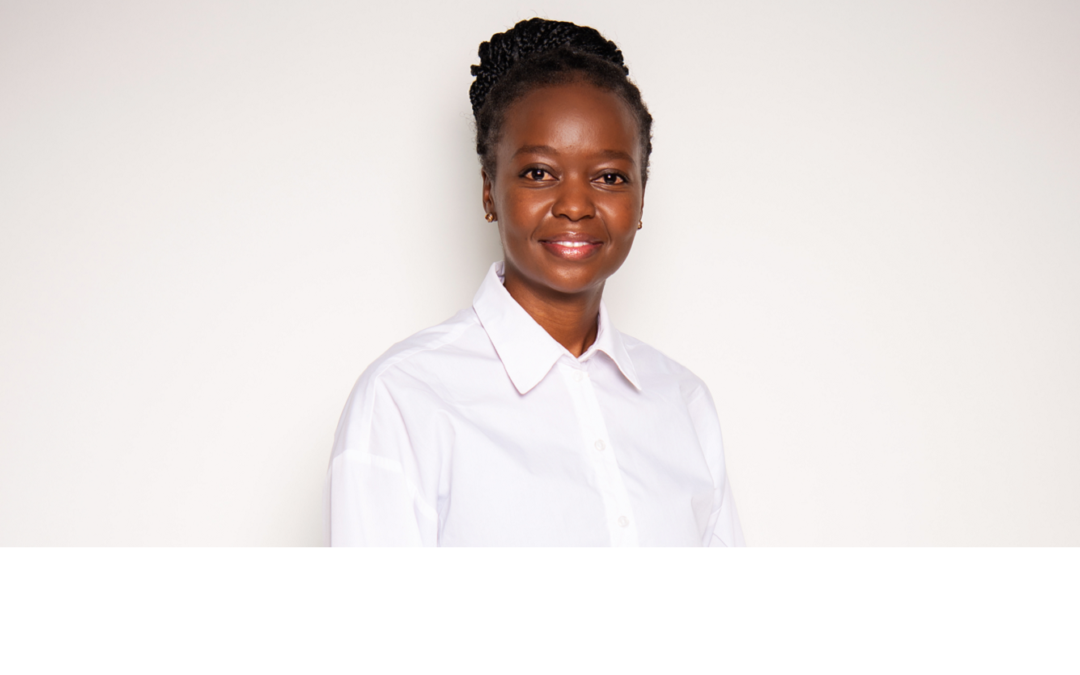
In a groundbreaking achievement, Sefako Makgatho Health Sciences University (SMU) Master’s student Nondumiso Nkosi has developed a pioneering diagnostic assay for Hepatitis B, addressing a critical need in regions where the disease is endemic. This innovation has earned her recognition as a rising star in the intellectual property (IP) landscape.
 Nkosi’s journey into innovation and entrepreneurship began with her attendance at the Bio Africa Convention in 2023, where her project was selected for presentation and won the runner-up award. “This recognition was an eye-opener, making me realise the magnitude and potential impact of my work,” she reflects.
Her diagnostic assay aims to bridge the gap in accessible and efficient Hepatitis B diagnosis, particularly in resource-limited settings. “Current diagnostic methods are often inaccessible or inadequate, making early detection and effective management difficult,” Nkosi explains. My innovation provides a more accessible and efficient solution tailored to the African healthcare landscape.
The collaboration with the Department of Clinical Laboratory Medicine at Nagoya City University Hospital in Japan served as a foundational base for the innovation. “This partnership enabled the development of a diagnostic tool tailored to the unique healthcare challenges in Africa,” Nkosi notes.
With the unwavering support of her supervisor, Dr Omphile Simani, Nkosi’s innovation holds significant potential for the early detection and management of Hepatitis, contributing substantially to public health solutions. “Dr Simani saw the potential in my vision and encouraged me every step of the way,” Nkosi acknowledges.
The SMU Technology Transfer Office (TTO) has been instrumental in supporting Nkosi’s innovation, providing guidance on intellectual property protection and commercialisation. “We are working with Nkosi and Simani to identify potential industry partners to commercialise the assay,” says Mohlatlego Sebola, who is responsible for establishing and operationalising the TTO.
 Nkosi’s achievement is a testament to the university’s commitment to innovation and entrepreneurship. As SMU Acting Vice-Chancellor Professor Tandi Matsha-Erasmus notes: “Our commitment at SMU is clear: we nurture innovation, excellence, and community service. Nkosi’s innovation is a shining example of this commitment.”
The impact of Nkosi’s innovation extends beyond the academic realm. Hepatitis B is a major global health challenge, ranking as the seventh leading cause of death worldwide. Millions of people, particularly in Africa, suffer from chronic HBV infections, leading to severe liver disease, cirrhosis, and hepatocellular carcinoma.
Nkosi’s diagnostic assay has the potential to save countless lives by providing an accessible and efficient diagnostic solution. Her innovation serves as a beacon of hope for those affected by Hepatitis B, and her story is a testament to the power of dedication, innovation, and collaboration in driving positive change.
As Nkosi continues to break barriers in biomedical innovation, she remains committed to her vision of improving public health outcomes. Her pioneering diagnostic assay for Hepatitis B is a groundbreaking achievement that has the potential to revolutionise public health outcomes.
By Dimakatso Modise
by Lorato | Mar 26, 2025 | All News, SMU Media, Student Media
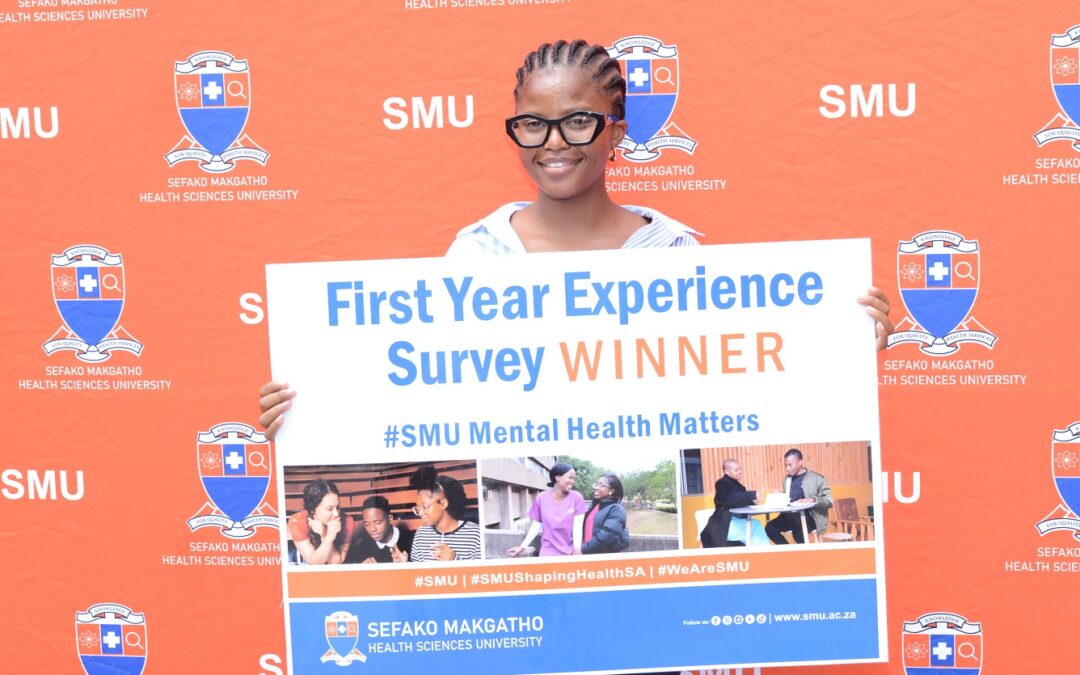
Sefako Makgatho Health Sciences University (SMU) has embarked on an essential initiative to understand the academic and social challenges faced by first-year students. The First-Year Experience (FYE) survey, led by the Psycho-social Unit, provides valuable insights that inform the development of student support structures and foster a more inclusive university environment.
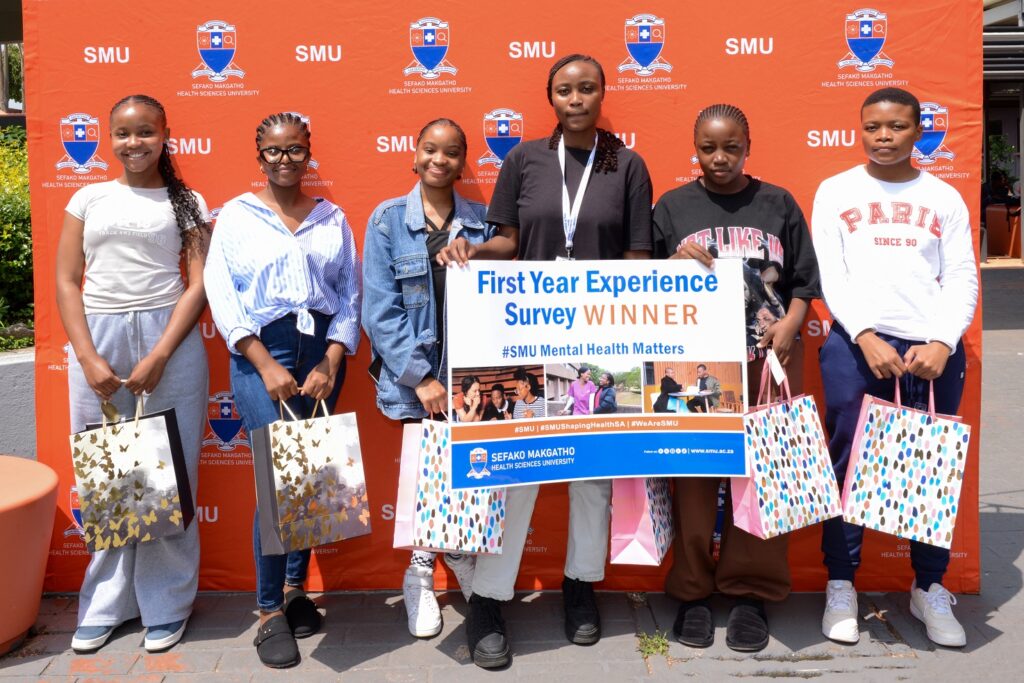 To encourage participation, a lucky draw was held, and the winners were announced live on SMU FM. The selected students, Kgolagano Made from the School of Dentistry, Andile Pitswane from the School of Science and Technology, Kgaugelo Mmoto and Thandeka Xulu from the School of Health Care Sciences, and Mbali Ngwepe from the School of Medicine, were recognised for their engagement. The winning students collected their prizes at a prize-giving ceremony held at SMU.
The FYE survey is designed to capture the experiences of first-year students during orientation and serves as a self-assessment tool for their academic and personal development. The survey explores themes such as resilience and adaptability, communication styles, conflict resolution, psycho-social well-being, academic skills and support, and financial standing. The data collected helps the university identify key areas where intervention and additional support may be needed, ensuring that students receive the necessary resources to thrive in their studies.
One critical aspect of the survey is its role in identifying students who may require financial aid and support. The university, through initiatives like Hands of Compassion run by SMU’s Social Workers, aims to assist students who are struggling financially, ensuring that financial hardships do not become barriers to academic success.
 Dr Matsontso Mathebula, Head of Department SMU Campus Health and Counselling, emphasised the importance of student participation in the survey, stating: “The First-Year Experience (FYE) survey provides valuable insights into the academic and social challenges that first-year students face. By understanding their experiences, we can enhance support structures, improve student engagement, and ultimately contribute to their success.”
Furthermore, Mathebula emphasized the importance of the FYE survey in promoting student well-being, stating: “The FYE survey is a vital tool in our efforts to promote student well-being and success.” By identifying areas where students may need additional support, we can provide targeted interventions and resources to help them thrive.”
The FYE survey underscores SMU’s commitment to its core values of excellence, integrity, professionalism, ubuntu, and social responsibility. These principles guide the university’s efforts to create a nurturing and transformative academic environment for all students.
By fostering an inclusive culture of support, SMU reaffirms its dedication to student success, well-being, and academic excellence. The university continues to encourage all students to actively participate in similar programmes, as their voices and experiences contribute to building a stronger and more responsive institution.
By Dimakatso Modise