by Lorato | Oct 30, 2025 | Accolades and Achievements, All News, Alumni, SMU Media, Student Adverts
A brilliant young scholar from Sefako Makgatho Health Sciences University (SMU), Tumiso Matsobane Kekana, is redefining the intersection of Mathematics and Material Science through his pioneering research in Chemical Graph Theory (CGT). His work, which investigates the structural and mechanical properties of complex molecular compounds such as dendrimers and graphene, has attracted both national and international recognition for its scientific precision and potential applications in nanotechnology and materials engineering.
 Born on 22 July 1997, Kekana recently graduated cum laude with a Master of Science in Mathematics from SMU. His dissertation, “Computational Analysis of Complex Dendrimer and Graphene Structures via Neighbourhood Multiple Degree-based Topological Indices and M-Polynomials,” advances the mathematical modelling of molecular structures and their behaviours under various conditions.
“Mathematics is not just about numbers—it’s about revealing the patterns that govern our universe,” he explains. “Through Chemical Graph Theory, we can predict the properties of materials before they even exist in a lab. That’s the power of mathematical innovation.”
At the core of Kekana’s study lies the use of Topological Indices (TIs)—numerical descriptors that model molecular structures as graphs. His research introduces neighbourhood multiple degree-based TIs, offering more accurate predictions of graphene’s mechanical properties, such as Young’s Modulus, Poisson’s Ratio, and Shear Modulus. His results confirm the predictive strength of these mathematical tools, marking a step forward in computational chemistry.
Beyond research, Kekana is a full-time lecturer in SMU’s Department of Mathematics and Applied Mathematics, where he teaches Advanced Calculus and Linear Algebra and mentors young mathematicians. Through his involvement in the department’s Community Engagement Committee, he helps organise mathematics competitions and outreach programmes for high school learners, nurturing future problem-solvers.
“Relevance beats cleverness every time,” he reflects. “If our teaching and research don’t connect to real-world challenges, then we’ve missed the purpose of science.”
 Kekana’s contributions have been recognised through peer-reviewed publications in international journals such as Frontiers in Applied Mathematics and Statistics and Discrete Mathematics, Algorithms and Applications. His recent paper, co-authored with Dr Kazeem Aremu and Professor Maggie Aphane, presents a new method for computing topological descriptors of graphene using Neighbourhood Multiple M-Polynomials—a breakthrough simplifying complex molecular analysis.
Kekana’s success story began on the dusty streets of Ivory Park. After matriculating from Thuto Ke Maatla Comprehensive School in 2015 with results that initially barred university admission, he spent two years upgrading his marks at Tembisa High ABET School. In 2018, he was finally accepted to study Mathematics at SMU—a dream fuelled by his mentor, Godfrey Tshehla (PhD candidate in Financial Mathematics at Wits), whose passion for mathematics inspired him deeply.
Although he failed his Honours year in 2021, his supervisor, Dr Aremu, refused to let him quit. “He reminded me of my ‘why’,” Kekana recalls. Repeating the programme in 2022, he graduated with distinction.
Yet another obstacle emerged after his Honours degree: university debt barred him from accommodation and registration. Forced back to his two-room shack in Ivory Park, he began his Master’s degree under severe hardship—no electricity, no proper study space, and constant financial strain. To survive, he sold achaar and relied on Hands of Compassion, the SMU feeding scheme. Drawn by the difficult environment, he briefly turned to gambling (dice), even becoming a “knox man” as a means of survival. Despite these challenges, he completed his MSc degree cum laude in record time and published two Q2-ranked journal papers.
Now a PhD student, full-time researcher, and lecturer, Kekana’s journey embodies resilience, passion, and purpose. “Where you start doesn’t define where you can go,” he says. “With perseverance, even dust can give birth to diamonds.”
By Tumelo Moila

by Lorato | Oct 30, 2025 | All News, Alumni, SMU Media, Student Media
In a proud moment for Sefako Makgatho Health Sciences University (SMU), Dr Nana Millicent Duduzile Buthelezi has been awarded a Y2 rating by the National Research Foundation (NRF) — a distinction reserved for promising young researchers under 40 who have held a doctorate for fewer than five years and are recognised for their potential to establish themselves as leading academics within the next five years.
 The NRF rating is one of South Africa’s most rigorous measures of research excellence, based on international peer review and the quality, originality, and impact of a scholar’s research outputs. For Dr Buthelezi, this recognition is more than a personal achievement — it is a validation of years of dedication to sustainable science and a catalyst for future innovation.
“Receiving recognition from the NRF is a significant milestone in my career, symbolising and validating my academic growth,” she said. “It has increased my visibility and credibility within the academic community, opened doors for collaboration, and encouraged me to pursue impactful, innovative projects.”
Buthelezi’s academic journey is exceptional. Holding two PhDs — one in Horticultural Science and another in Botany — she has focused her research on environmental sustainability, green nanotechnology, and postharvest biology. Her work explores eco-friendly agricultural solutions, including nanofertilisers, biostimulants, and nanocomposite coatings that extend the shelf life of fresh produce while reducing environmental damage.
Her passion for sustainable agriculture was sparked by witnessing the effects of environmental degradation, climate change, and food waste. “My research addresses two pressing global challenges — postharvest losses and environmental decline,” she explained. “By developing green technologies, we can improve crop yields, enhance food security, and protect our planet for future generations.”
At SMU, Buthelezi credits her department and mentors for providing a nurturing environment that has allowed her to thrive. “The support from Prof Piet King, our Head of Department, has been instrumental. SMU has fostered a collaborative culture that promotes interdisciplinary research and innovation,” she said.
The NRF Y-rating underscores Buthelezi’s growing influence in the scientific community. Her research not only strengthens SMU’s standing as a research-intensive institution but also contributes directly to South Africa’s broader mission of sustainable development and food security.
Currently, she is leading projects on green nanotechnology in collaboration with the Agricultural Research Council (ARC) and other universities. Her team, which includes MSc and PhD students, is developing environmentally friendly nanomaterials such as zinc oxide, magnesium oxide, and titanium dioxide nanoparticles — innovations that promise to revolutionise modern agriculture.
Beyond her research, Buthelezi is passionate about mentorship. She guides postgraduate students through hands-on training, peer mentorship, and publication in high-impact journals. “The NRF rating has strengthened my commitment to mentoring emerging scholars,” she noted. “Our next generation of scientists must be equipped to think critically, research ethically, and innovate sustainably.”
As for her future, Buthelezi remains ambitious and forward-looking. “This milestone inspires me to push the boundaries of green science further,” she said. “Ultimately, I hope my work leaves a legacy of sustainable agriculture that balances productivity with environmental stewardship.”
With her recognition, Buthelezi joins the growing cohort of SMU researchers placing the university on the map as a leader in health sciences, agricultural innovation, and environmental resilience — a shining example of how world-class research can begin right here at home.
By Tumelo Moila
by Lorato | Oct 24, 2025 | Media Statements, statements
PRESS STATEMENT
FOR IMMEDIATE RELEASE
24 October 2025
GA-RANKUWA, PRETORIA—The spotlight will fall on Sefako Makgatho Health Sciences University (SMU) this weekend as its Convocation hosts a Fundraising and Alumni Awards Gala Dinner.
The gala, taking place on Saturday, 25 October 2025, will feature a keynote address by the Premier of Limpopo, Dr Phophi Ramathuba, an SMU alumna whose life’s work exemplifies the transformative power of health-sciences education. The event will also be attended by the MEC for Health in Limpopo, Dieketseng Masesi Mashego, distinguished alumni, corporate partners, government leaders, and philanthropists.
Under the theme “SMU NextGen: Investing in South Africa’s Future of Health Sciences,” the black-tie gala will raise funds to support academically gifted but financially vulnerable students pursuing degrees in health sciences fields. The Convocation’s leadership envisions the evening as both a celebration of excellence and a call to action, urging alumni and partners to become part of a sustainable investment model for student support.
Since the launch of the Convocation’s fundraising drive, 17 students have received full-tuition sponsorships, while more than 40 others were financially unblocked to continue their studies. Building on this success, the Convocation aims to establish an Alumni Development Fund to strengthen SMU’s third-stream income and attract investment projects to the university.
According to the SMU Convocation President Japhta Phala, the initiative is a moral duty shared by all who benefited from SMU’s mission to democratise health sciences education. “We were all given a chance once,” he says. “Now it is our turn to extend that chance to those who come after us. This is about ensuring that talent is never lost to poverty but redirected toward healing and rebuilding our nation.”
Beyond the fundraising effort, the evening will include the Alumni Awards Ceremony, celebrating distinguished graduates who have contributed to medicine, innovation, and social transformation across South Africa and the world.
For event details or donations, please contact: Letsai Mashishi | Email: letsai.mashishi@smu.ac.za | Cell: 083 415 7722
For media enquiries, please contact: Tshimagadzo Mphaphuli | Email: tshimangadzo.mphaphuli@smu.ac.za | Cell: 081 015 4790
PRESS STATEMENT_LIMPOPO PREMIER, DR PHOPHI RAMATHUBA, HEADLINES SMU CONVOCATION FUNDRAISING GALA TO CHAMPION NEXT GENERATION OF HEALTH SCIENCES LEADERS
File size: 508.88 KB
Created: 24-10-2025
Updated: 24-10-2025
Hits: 34
by Lorato | Oct 23, 2025 | All News, SMU Media, Student Media
The future of science and innovation begins in the classroom — and this year, that future shone brightly as Sefako Makgatho Health Sciences University (SMU) launched its transformative Mathematics, Sciences & Technology (MST) Awards programme. More than an academic initiative, the MST Awards are a bold signal of SMU’s mission to ignite excellence, inspire ambition, and reimagine university recruitment in communities rich with talent but historically overlooked.
 In a powerful collaboration with the Limpopo Department of Education – Mopani East District and the Gauteng Tshwane West District Department of Education, SMU has taken its message of hope and opportunity directly into schools, not just to celebrate top achievers, but to reposition the university as a home for Africa’s next generation of scientists, innovators, and health professionals.
The MST Awards recognise excellence in Mathematics, Physical Sciences, and Life Sciences — foundational subjects for careers in STEM and health sciences. Yet the programme is more than a celebration of academic success. It is an intentional act of transformation, reaching into classrooms to affirm young learners that they are seen, they are capable, and they belong at institutions of higher learning.
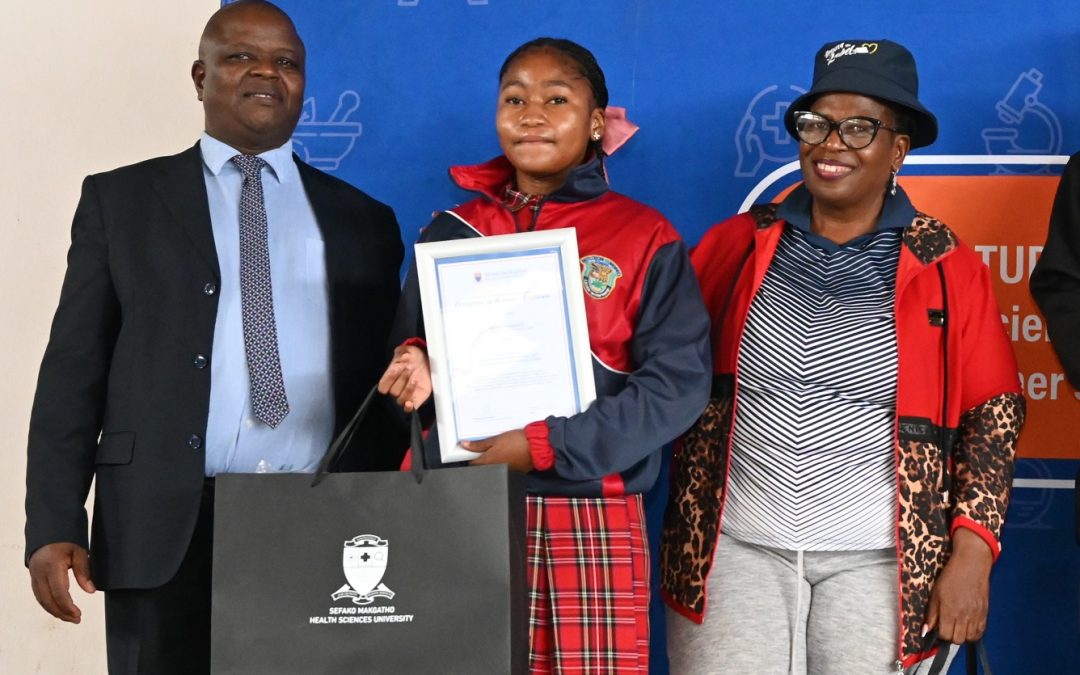
The first MST Awards ceremony was held at Sekgosese High School in Limpopo’s Mopani East District, where learners, teachers, and officials gathered in celebration of schools whose academic outcomes have defied the odds. Among the schools honoured were Sekgosese Secondary School and Motloboni Combined School, whose learners continue to rise despite systemic challenges.
 Building on this success, the programme moved to Gauteng, where Kgatoentle Secondary School hosted the second leg of the MST Awards, in collaboration with the Tshwane West District. Here, IR Lesolang and Reitumetse Secondary School were among the recognised institutions for excellence in science education.
These celebrations were not just about honouring individual learners — they were about elevating entire school communities, encouraging educators, and creating a space where academic ambition is nurtured, not marginalised.
A forward-thinking vision for student recruitment
SMU’s role in this programme is both strategic and deeply rooted in its transformative vision. For learners, the awards are a visible reminder that their dreams of becoming health sciences professionals are within reach. For teachers, it is an affirmation of their role as nation-builders. For the broader community, it is a declaration that no learner should be left behind because of geography, circumstance, or a lack of exposure.
“The MST Awards are not merely about recognising achievement, they are also about disrupting outdated models of university recruitment and rewriting the narrative of who gets to access quality higher education,” said Tshimangadzo Mphaphuli, a strategic communications leader at SMU.
Together with Ntsheu Collins Mangena, the visionary behind SMU’s progressive student recruitment strategy, Mphaphuli has been instrumental in repositioning the university as a destination of choice for top-performing STEM learners, especially those from communities historically excluded from such opportunities.
 “These awards are a deliberate, strategic investment,” Mphaphuli continues. “They affirm to high-achieving learners that SMU doesn’t just welcome them, we see them, believe in them, and are ready to walk with them all the way to graduation. This is not traditional recruitment. This is nation-building through academic transformation.”
The MST Awards are part of a broader recruitment strategy championed by Mangena, a forward-thinking student recruitment leader who is shifting the paradigm of university engagement.
“At SMU, we are not waiting for talent to find us; we are going out to find it, especially in places where it has been historically ignored or underestimated,” said Mangena. “This programme is about recognising brilliance where it exists, not just where it is expected. We are targeting the cream of the crop, yes — but also building bridges for the next generation of learners who, with the right support, will become South Africa’s future health science leaders, researchers, and innovators.”
Mangena’s vision is grounded in a belief that academic excellence should not be a privilege of proximity, but a reality for all learners with potential from township classrooms to rural school halls.
Impacting lives, shaping futures
Grade 12 learner Phomolo Rambau, an award recipient from Sekgosese High School, expressed gratitude and a renewed sense of direction. “I am very happy and grateful for this recognition. It motivates me to study even harder and to pursue my dream of studying health sciences at SMU,” she said with pride.
Through this initiative, SMU is strengthening its ties with schools and education districts, while redefining what it means to recruit — not just students, but potential, purpose, and promise.
Beyond the trophies and certificates lies a deeper message: that every learner has the power to lead, to innovate, and to contribute meaningfully to South Africa’s future. By walking into school halls and shaking the hands of tomorrow’s leaders today, SMU is living out its commitment to be a university not just of academic excellence but of transformation, access, and impact.
By Dimakatso Modise
by Lorato | Oct 23, 2025 | All News, SMU Media, Student Media
The Pharmacy Building at Sefako Makgatho Health Sciences University (SMU) was alive with innovation and energy as researchers, scholars, and postgraduate students from across South Africa convened for the South African Medical Research Council (SAMRC) Regional Research Capacity Development (RCD) Conference on 20–21 October 2025.
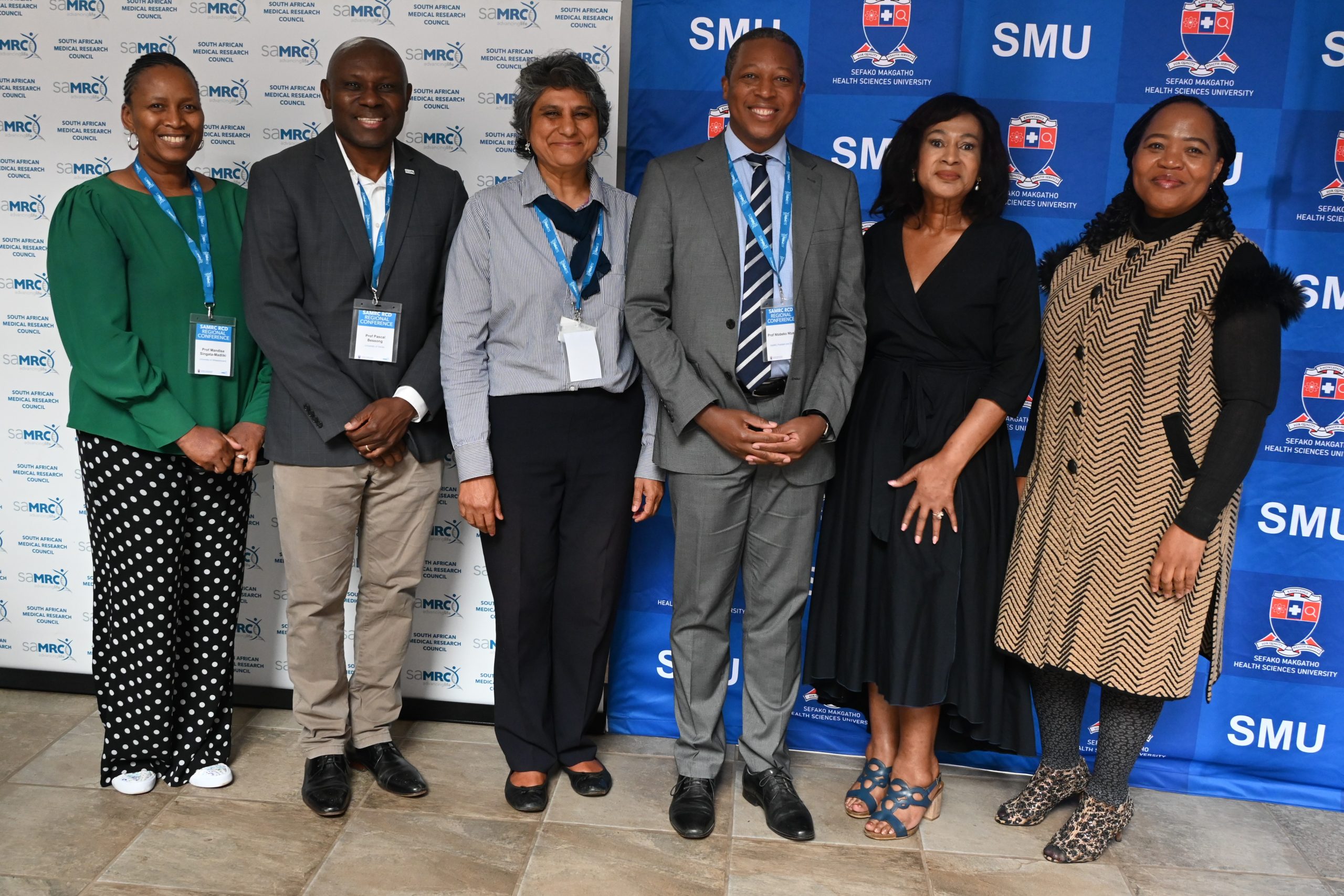 Hosted in partnership with SMU’s Research and Innovation Directorate, the two-day conference provided a vibrant platform for collaboration, learning, and the exchange of groundbreaking ideas. With over 40 oral and poster presentations, as well as keynote addresses from leading scientists, the event reinforced South Africa’s growing research excellence.
Welcoming delegates, Vice-Chancellor Professor Tandi Matsha-Erasmus commended the SAMRC for its commitment to nurturing young researchers. “At SMU, we are intentional about fostering a research culture that addresses national health priorities. This conference aligns with our vision to develop globally competitive scientists who make a real impact,” she said.
Opening the proceedings, Director: Gender and Health Research Unit at SAMRC, Professor Nwabisa Shai, chaired the first session, followed by Dr Abeda Dawood, Division Manager of the SAMRC’s RCD Division, who praised the power of collaboration. “This gathering reflects what can be achieved when institutions unite to build capacity and strengthen research ecosystems. The RCD programme transforms potential into impact,” she noted.
Delivering the first keynote, Professor Ntobeko Ntusi, President and CEO of the SAMRC, reaffirmed the Council’s mission to foster scientific excellence. “Our strength lies in collaboration, innovation, and the ability to nurture the next generation of scientists,” he said. “Health research must not only generate data—it must drive policy, improve healthcare, and change lives.”
Next, Dr Thandi Mgwebi, Group Executive for Business Advancement at the NRF, spoke on “Partnerships for Impact,” stressing that no single institution can tackle complex societal challenges alone. “Partnerships allow us to leverage strengths, share resources, and accelerate innovation that benefits all,” she said.
 Professor Pascal Bessong, Director of the SAMRC-UNIVEN Antimicrobial Resistance and Global Health Research Unit, followed with a powerful reminder that adversity often fuels innovation. “Scarcity should inspire creativity,” he urged.
A highlight of day one came from Will Rohde of Quantahub² (USA), who discussed “Transforming Health Research with AI.” “AI is not replacing scientists—it’s expanding their potential,” he said. “Data-driven insights can accelerate discovery and improve patient outcomes faster than ever.”
Day two maintained strong momentum, featuring an RCD Executive Line Address by Dr Michelle Mulder and keynote talks from Professor Keolebogile Motaung of Nelson Mandela University and Professor Johan Louw, Director of CATIR. Reflecting on her journey, Prof Motaung encouraged young researchers: “Innovation begins with a question. The more you ask, the more you learn.”
SMU academics, including Professor Hyla Kluyts and Professor Nqobile Mkolo, showcased pioneering studies on perioperative care and plant-based inhibitors against SARS-CoV-2. Their work reflected SMU’s growing influence in translational and applied health research.
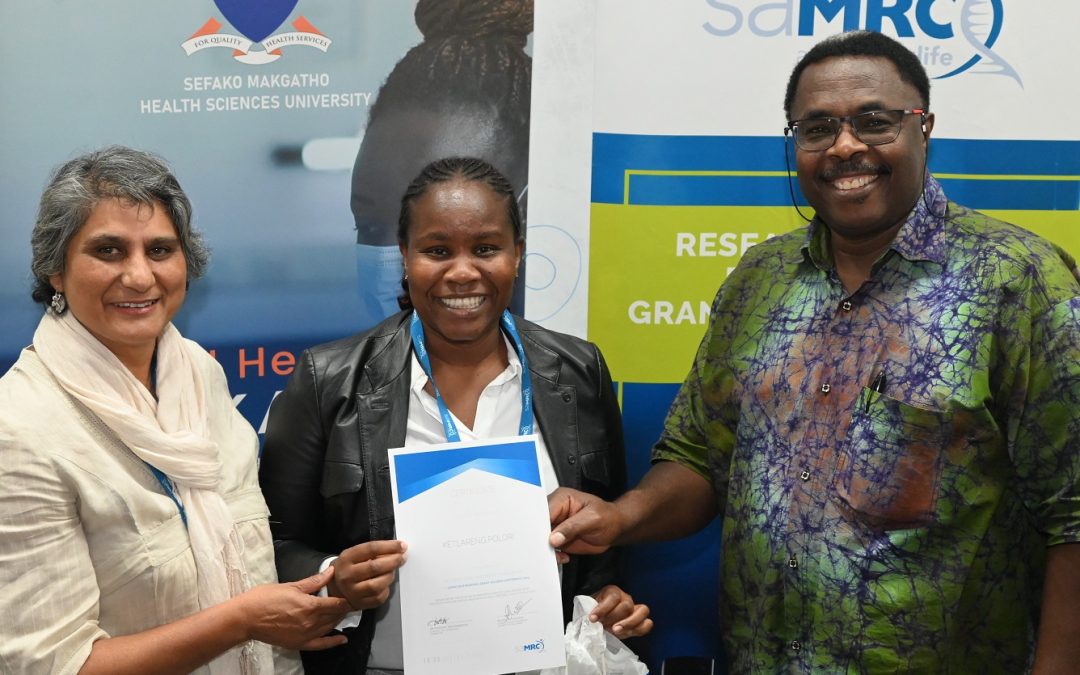
The conference closed with an awards ceremony recognising research excellence, followed by a networking dinner that celebrated collaboration, creativity, and shared purpose.
The SAMRC Regional RCD Conference at SMU not only celebrated scientific discovery but strengthened South Africa’s collective resolve to advance health research—transforming knowledge into impact.
By Dimakatso Modise