
by Kegorapetse | May 24, 2018 | All News, SMU Media
NOTICE TO ALL NSFAS FIRST ENTERING STUDENTS AND SENIOR STUDENTS THAT APPLIED TO NSFAS FOR THE FIRST TIME FOR 2018
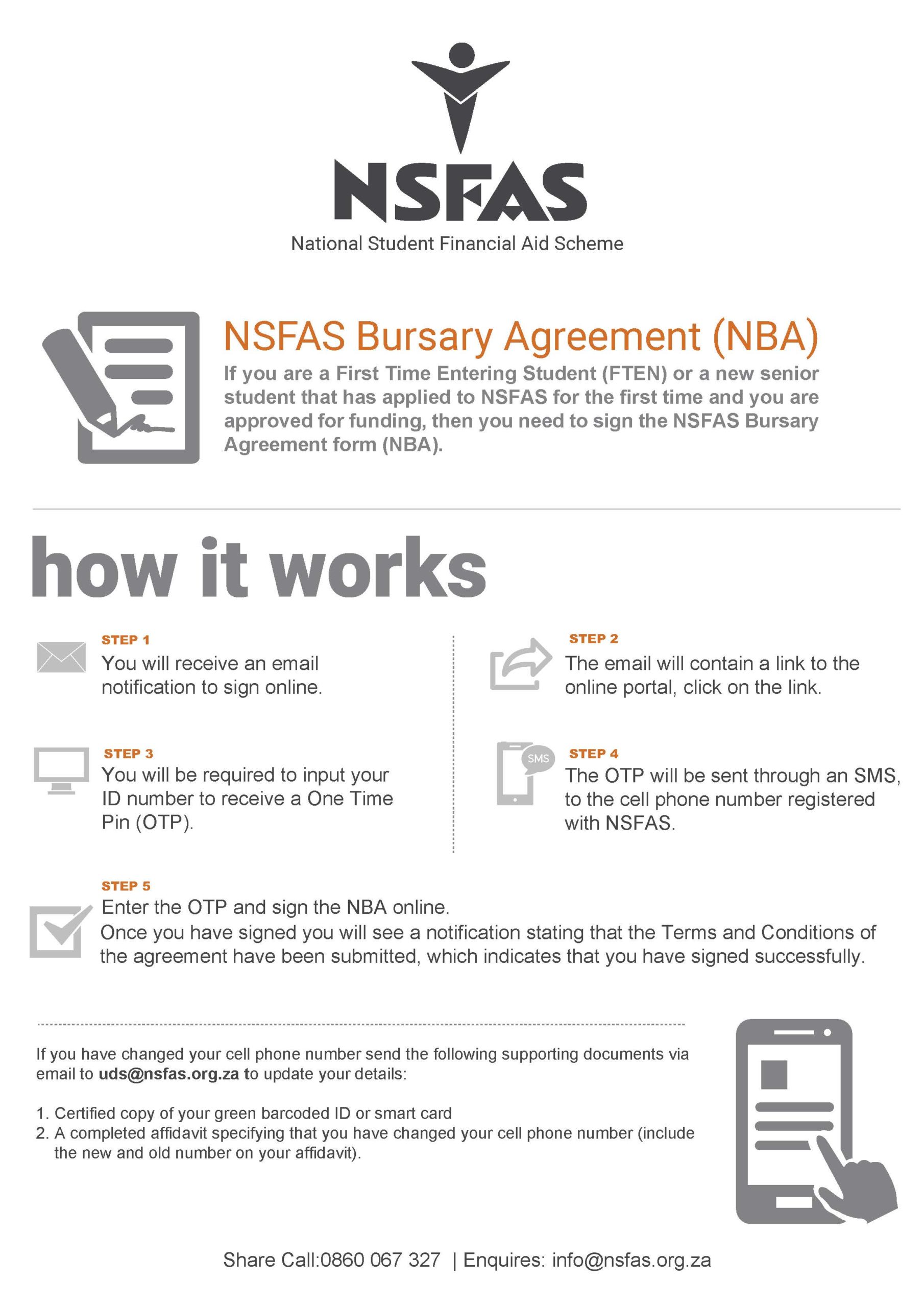
PROCESS FOR SIGNING OF THE NEW BURSARY AGREEMENT (NBA)
- You will receive an e-mail notification to sign online
- The e-mail will contain a link where you can click to reach the online portal;
- You will be required to input your ID number to receive the One Time Pin (OTP). The OTP will be sent through an SMS (to your number registered with NSFAS;
- You must sign the NBA online; and
- Once you have signed, you will see a notification stating that the Terms and Conditions of the agreement have been submitted, which indicates that you have signed successfully.
Please note that NSFAS will only make payment to students who have signed successfully. The deadline for the signing of all NBA’S at SMU is FRIDAY, 6TH JULY 2018.
PLEASE NOTE : ALL STUDENTS WHO RECEIVED NSFAS IN 2017 MUST NOT SIGN THE NBA ONLINE.
by Kegorapetse | May 17, 2018 | SMU Media
Media Invite 17 May 2018
For Immediate Release
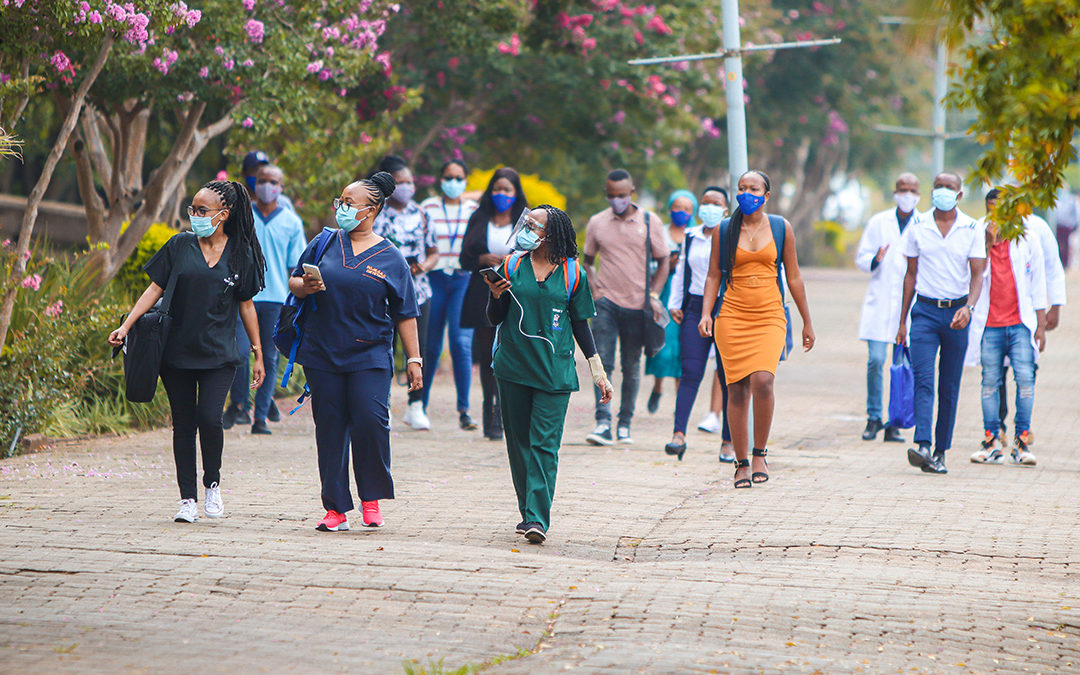
Invitation to SMU 2018 Open Days to witness the Wonders of Science
On Friday 18 May 2018, from 7h30 to 16h00, thousands of learners dressed in their school uniforms will converge at the SMU Sports Complex, in Ga-Rankuwa, Pretoria. These Grades 10, 11 and 12 learners, studying Maths, Physical Science and Life Science have been invited to 2018 Open Day to witness the wonders of science demonstrated by academics and senior students, of the SMU. They will be coming from the catchment areas of Free State, Gauteng, Limpopo, Mpumalanga and North West Provinces. Parents and members of our communities are also welcome. Entrance is free of any charge.
The Open Day is a platform for the SMU to line up exciting demonstrations to inspire and fire the imaginations of these future scientists who will be attending the open day. A mascot of SMU, will also be unveiled to welcome the learners. Of a very wide menu of elaborate demonstrations that have been prepared over the months, the most notable samplings are:
(1). School of Science & Technology’s – Mobile Science Bus
● Human battery a detailed and vividly coloured model provides a visually and kinaesthetically effective method for studying the structure and function of the human body.
● Mathematical puzzles- learners will be given opportunities to solve puzzles that motivate them in Maths problem solving techniques.
● Snell’s law demonstrations – learners will learn about a formula used to describe the relationship between the angles of incidence and refraction, when referring to light or other waves passing through a boundary between two different isotropic media, such as water, glass, or air.
● Chemistry demonstration- how to water, wine, milk, beer
● Rates of chemical reactions
● Chemistry of colours – what adds colours to fire-works
● Standardization of an acid with a base
● Circuit interpretation
● Floating material –Densities
The department of public health will dedicate a senior student, who is involved in drug addiction research, to explain to the learners the dangers of use of Nyaope and other addictive substances.
In addition to these challenging demonstrations, the four schools, namely health care sciences, medicine, oral health sciences and pharmacy will also showcase their various programme offerings and also explain to the learners what it takes to be admitted to study programmes and career opportunities open to the learners, upon completion of their studies, at SMU.
Released by the SMU Marketing & Communication
Contact Dr Eric Pule, the Director, Marketing & Communication
Phone 012 521 4563

by Kegorapetse | May 3, 2018 | SMU Media
The Centre for University Teaching and Learning is pleased to call on Schools, Departments lecturers and students to NOMINATE University Teachers to EXPRESS INTEREST to apply for the 2018 Vice Chancellors Excellence Awards. Further University Teachers are invited to show an EXPRESSION OF INTEREST as an individual for the 2018 Vice Chancellor’s Teaching Excellence Awards. There will be two Categories:
- The Vice Chancellor’s Emerging Teaching and Learning Excellence Award, and
- The Vice Chancellor’s Seasoned Teaching and Learning Excellence Award.
For more details, please see the attached documents:
- CALL-FOR-EXPRESSION-OF-INTEREST_2018
- Call-for-applications
- 2018-VCs-Teaching-Excellence-Award-FORMS-FOR-NOMINATIONS
by Kegorapetse | Apr 26, 2018 | SMU Media, statements
Statement as Issued by National Institute for Communicable Diseases (NICD), The influenza season in South Africa occurs in the winter months and is expected to start in the coming weeks. On average the season begins in the first week of June. However, in past years; the season has started as early as the last week of April and as late as the first week of July.
Please visit NICD website for more details at:http://www.nicd.ac.za/index.php/influenza-season-approaching/
by Kegorapetse | Apr 17, 2018 | SMU Media
With funding from the University Capacity Development Programme of the Department of Higher Education and Training, USAf’s Higher Education Leadership and Management (HELM) Programme will, in the next three years, offer a range of professional development opportunities for university staff already in leadership and management positions as well as those in the pipeline for such positions. These opportunities will include inter alia tailor-made modules/short courses, which will eventually form part of a Postgraduate Diploma (PG Dip) in Higher Education Leadership and Management, seminars, workshops and roundtables.
For more details, please see the attached Circular and Call of Interest
USAf-Circular-8-of-2018-HELM-Call-for-Expressions-of-Interest

by Kegorapetse | Apr 13, 2018 | SMU Media
The Sugar Tax is a tax based on the sugar content of food beverages. The tax is fixed at 2.1 cents per gram of the sugar content that exceeds four grams per 100ml‚ which means the first teaspoon of sugar in 100ml is levy free. Fruit juices are exempt from the tax despite the fact that fruit juice in some instances, contain more sugar compared to sugary beverages.
Imposing sugar tax is an attempt from government to prevent or control the rapid rise in the prevalence of non-communicable diseases (diabetes type II, heart disease, obesity, etc.). The ideal would be to promote a diet which consists of a healthy variety of proteins, fats and carbohydrates. Yet, proteins are expensive even though they are a necessary component of our diet.
Sugar Tax combined with the increase in Value added Tax (VAT) will force people into purchasing more energy-dense, but less nutrient-dense food items. Foods that are energy dense have lots of calories per serving. Foods that are nutrient dense have high levels of nutrients per serving. Nutrient dense refers to the amount of vitamins, minerals, and/or protein in a food. In general, nutrient-dense food is more expensive when compared to energy-dense food. A diet high in energy but low in nutrients should not be promoted. This will affect especially the poor. There are 19 food items that are tax exempt and vegetables are part of this list. Lack of consumption of meat is a major cause of the high levels of vitamin A deficiency in our country.
The poorest of the poor, do not exclusively live on these 19 products. They require red meat. But red meat is not exempted from VAT which they need to consume to have a complete diet. Nutrient-dense vegetables have also become very expensive and the outbreak of Listeriosis, which has claimed over 180 lives, exacerbates the impact of not eating enough meat. The non- consumption of ready to eat meat like Polony (due to Listeriosis contamination from Rainbow, Enterprise processing plants) has removed from the menu of the poor, a few inexpensive protein-rich products.
This is by no means promoting the intake of processed foods. Rather, it refers to unprocessed meat, even though Listeriosis could also spread through fruit and vegetables (such as in Australia, where it was spread by watermelons). A number of recent research studies have reported on the detrimental impact of processed meats on health, especially the onset of cancer.
There is a significant increase in the prevalence of non-communicable diseases within the South African population. There are high levels of obesity in young children, even within poor communities. Government is making an honest attempt at promoting a healthy lifestyle, including dietary intake.
The sugar tax and increase in VAT to 15 percent does not differentiate between the poor and the rich. With the increase in VAT, more of the middle-class will be sucked into poverty and opt for cheaper energy-dense food items. The outcome of this is that there will be a differentiation in the outcome, between the poor and the rich. The poor will experience a more negative impact.
The treatment of non-communicable diseases is a daunting task and any intervention that assists in prevention of sugar related non-communicable disease should be welcomed by the health industry. The consumption of large amounts of sugary beverages has been proven to be a major factor leading to obesity, almost everywhere in the world. That is what the sugar tax targets. Whether the sugar tax, together with the increase in VAT, will have the desired outcome, is something that will become apparent in a few years from now. Public health strategies are long-term strategies and difficult to predict. But what is known however is that the United States of America (USA), Mexico, Brazil and France have all experienced lower demand for sugary beverages due higher beverage prices.