
by Lorato | Aug 6, 2026 | Accolades and Achievements, All News, Alumni, SMU Media, Student Media
Sefako Makgatho Health Sciences University (SMU) has promoted Prof Sechene Stanley Gololo from Associate Professor to Full Professor in recognition of his distinguished academic leadership, research excellence, and sustained contributions to teaching, postgraduate supervision, and community-focused scientific research. The promotion marks a significant milestone in his academic career and reinforces SMU’s commitment to advancing research and innovation in the health sciences.
 The appointment reflects the rigorous criteria for promotion to the rank of full professor, including extensive research output, successful postgraduate supervision, curriculum development, academic leadership and national and international scholarly recognition. Prof Gololo’s achievements include supervising more than twenty master’s students and seven doctoral candidates, publishing more than 50 peer-reviewed scientific articles, contributing to book chapters, securing research funding, and providing strategic leadership within the university.
A phytochemist and biochemist, Prof Gololo’s research focuses on the ethnobotanical and pharmacological properties of South African medicinal plants, particularly their antioxidant and antimicrobial potential. His work also examines how environmental conditions influence the accumulation of bioactive compounds in medicinal plants and explores the use of phytochemical analysis to assess water quality. His research has contributed to the scientific understanding of indigenous medicinal plants while supporting the development of innovative health solutions.
Among his notable achievements, Prof Gololo led a team of researchers whose work led to provisional approval of intellectual property for “Molle mist” as a potential inhalant remedy for COVID-19. He currently serves as Head of the Department of Biochemistry and Biotechnology and Vice-Dean of the School of Science and Technology, while also contributing as a journal reviewer and editorial board member for several international scientific journals.
 Reflecting on his promotion, Prof Gololo said, “Being promoted to Full Professor is both a great honour and a humbling recognition of years of dedication to teaching, research and academic leadership. This achievement is not mine alone; it reflects the support of my colleagues, students and the university, whose encouragement has enabled me to pursue research that addresses real challenges facing our communities.”
Looking to the future, he emphasised his commitment to strengthening research capacity and mentoring the next generation of scientists. “My goal is to expand impactful research on medicinal plants, strengthen national and international collaborations and continue mentoring emerging researchers who will shape the future of science. I also hope to contribute to developing innovative, evidence-based health solutions that improve lives while advancing SMU’s reputation as a leading research-intensive institution.”
Prof Gololo joined SMU in 2010 as a Natural Scientist and Lecturer before progressing to Senior Lecturer, Researcher, Associate Professor, Head of Department and Vice-Dean. His career reflects more than a decade of dedication to teaching, research, postgraduate supervision and academic leadership within the institution.
Prof Gololo’s promotion demonstrates SMU’s commitment to recognising academic excellence and cultivating research leaders whose work contributes to scientific knowledge, innovation and societal development. As the university continues to strengthen its national and international profile, achievements such as this reinforce its mission to transform health services through excellence in teaching, learning, and innovative research.
By Tumelo Moila

by Lorato | Aug 6, 2026 | Accolades and Achievements, All News, Alumni, SMU Media, Student Media
Sefako Makgatho Health Sciences University (SMU) has promoted Professor Moreoagae Bertha Randa from Senior Lecturer to Associate Professor in the Department of Public Health, recognising her distinguished contributions to teaching, research, postgraduate supervision, academic leadership and community engagement.
 The promotion acknowledges Professor Randa’s sustained excellence across the University’s core academic mission. It acknowledges a career dedicated to advancing public health scholarship, strengthening health systems, and developing future health professionals. Since joining SMU in 2013, she has steadily progressed through the academic ranks while making significant contributions to public health education, research capacity development, and evidence-informed health policy in South Africa. She currently serves as Head of the Health Systems Management and Policy Unit in the Department of Public Health, where she provides strategic academic leadership, coordinates postgraduate teaching and supervision, and supports the development of research programmes aligned with national health priorities.
In addition to her departmental leadership, Professor Randa actively contributes to strengthening the University’s research enterprise. She serves as Chairperson of the School of Health Care Sciences Research Committee, contributes to Senate-level research and postgraduate structures, and has previously served on the SMU Research Ethics Committee. Through these leadership roles, she has helped strengthen research governance, postgraduate quality assurance and the University’s research culture.
Professor Randa’s appointment reflects her successful fulfilment of the University’s rigorous promotion criteria for Associate Professor, including holding a doctoral qualification, demonstrating substantial academic leadership, successful supervision of master’s and doctoral students, leading nationally impactful research, securing external research funding, publishing extensively in accredited scientific journals and making significant contributions to professional service and community engagement.
“I am deeply honoured by this promotion, which reflects not only my personal journey but also the invaluable support of colleagues, students, mentors and collaborators who have contributed to my academic growth,” said Professor Randa. “My commitment remains focused on advancing research that addresses South Africa’s pressing public health challenges, strengthening postgraduate education and research capacity, and working collaboratively to generate evidence that informs policy, strengthens health systems and ultimately improves the health and wellbeing of communities, while mentoring the next generation of researchers, educators and health leaders.”
With more than 38 years of experience spanning clinical practice, nursing education, higher education and public health research, Professor Randa has built an impressive academic portfolio centred on gender-based violence, sexual and reproductive health, mental health, health systems strengthening, health policy and healthcare quality improvement. Her work integrates implementation science, health systems research and multidisciplinary collaboration to develop innovative, contextually relevant solutions to complex public health challenges. Her research has informed policy dialogue, supported evidence-informed decision-making, and contributed to the development of interventions to strengthen health systems and improve health outcomes among vulnerable and underserved populations.
Her scholarly work has attracted significant national and international research funding through competitive grants from organisations including the British Academy, the South African Medical Research Council (SAMRC), the Centre for International Reproductive Health Training (CIRHT), the University of Michigan’s Centre for Global Health Equity (CGHE) and the Global Challenges Research Fund (GCRF). These awards have supported innovative research, strengthened multidisciplinary collaborations, and expanded partnerships with leading institutions in South Africa and abroad.
 Professor Randa has successfully led and co-led several nationally and internationally funded multidisciplinary research projects addressing priority public health challenges, including health systems strengthening, gender-based violence, sexual and reproductive health, mental health, and healthcare quality improvement. Her scholarship is recognised for integrating implementation science, health systems research and interdisciplinary collaboration to generate evidence that informs policy, strengthens health systems and improves health outcomes.
Through extensive collaborations with universities and research institutions in the United Kingdom and across Africa, Professor Randa has strengthened research capacity and advanced contextually relevant solutions to complex public health challenges. These partnerships continue to enhance knowledge generation, innovation and evidence-informed practice in South Africa and beyond.
Her expertise is further recognised nationally through her appointment as a Higher Education representative on the Gauteng College of Nursing Council. In this role, she contributes to nursing education governance, professional development and the advancement of higher education within the nursing profession in South Africa. Beyond research, Professor Randa has made an enduring contribution to postgraduate education. Over the course of her academic career, she has supervised and mentored numerous master’s and doctoral candidates, many of whom now contribute to academia, research and the healthcare sector. This reflects her enduring commitment to developing the next generation of African health researchers and academic leaders. In addition to her own scholarly contributions, Professor Randa is widely recognised for her commitment to research capacity development. Through postgraduate supervision, mentoring early-career academics, facilitating research development initiatives and supporting emerging scholars, she has played a significant role in nurturing the next generation of researchers and academic leaders in public health and the health sciences. She continues to mentor emerging researchers and early-career academics, serves as a reviewer for journals, an external examiner for postgraduate theses across several South African universities and contributes to institutional and national academic committees that promote excellence in research governance, quality assurance, ethics, innovation and postgraduate education.
Professor Randa’s academic influence extends beyond the classroom. She has established herself as a respected scholar through an extensive record of publications in peer-reviewed journals, scholarly book chapters and presentations at national and international conferences. Her collaborative research, particularly in the field of gender-based violence, has contributed to the development of innovative educational resources and strengthened international partnerships aimed at improving healthcare responses and support for survivors of violence.
The promotion reinforces SMU’s commitment to recognising academic leaders whose scholarship advances research excellence, innovation, postgraduate education and societal impact. As a dedicated health sciences university, SMU continues to invest in scholars whose work advances scientific knowledge, strengthens health systems, informs public policy, develops future healthcare leaders, and contributes meaningfully to improving the health and wellbeing of communities in South Africa, across the African continent and beyond.
By Tumelo Moila

by Lorato | Aug 6, 2026 | Accolades and Achievements, All News, Alumni, SMU Media, Student Media
Sefako Makgatho Health Sciences University (SMU) proudly congratulates Professor Matlou Phineas Mokgotho on his promotion to the rank of Associate Professor in the Department of Physiology. The promotion recognises his sustained excellence in teaching, research, postgraduate supervision, academic leadership and his significant contribution to advancing biomedical sciences.
 Professor Mokgotho brings more than two decades of academic and research experience to his role at SMU. His distinguished career has included appointments at the University of the North (UNIN), the University of Limpopo (UL) and Tshwane University of Technology (TUT), where he made significant contributions to teaching, research and academic leadership. Having previously attained the rank of Full Professor and served as Head of the Department of Biochemistry, Microbiology and Biotechnology at UL, his promotion at SMU reflects his continued commitment to academic excellence and his growing impact on higher education in South Africa.
His research focuses on translational biomedical sciences, with particular emphasis on discovering therapeutic agents from African medicinal plants for the prevention and treatment of chronic diseases. By combining natural product research with molecular biology, metabolomics, mammalian cell culture, and computational drug discovery, his work seeks to identify bioactive compounds that could help combat diabetes, obesity, cardiovascular disease, cancer, and other non-communicable diseases.
Commenting on his promotion, Professor Mokgotho said: “I am deeply honoured by this recognition from SMU. This promotion reflects not only my personal journey but also the collective efforts of my colleagues, collaborators and postgraduate students who have contributed to our shared research success. I remain committed to advancing biomedical research that addresses Africa’s health challenges while mentoring the next generation of scientists.”
Throughout his academic career, Professor Mokgotho has supervised and co-supervised numerous master’s and doctoral candidates, secured competitive research funding and established national and international research collaborations. His scholarly contributions include a substantial body of peer-reviewed publications and active participation in scientific conferences, reflecting his commitment to expanding scientific knowledge and strengthening research capacity within South Africa.
His promotion also acknowledges his dedication to developing future researchers through postgraduate mentorship and his leadership in fostering an innovative research environment. By integrating cutting-edge scientific techniques with indigenous knowledge systems, his work continues to contribute towards addressing some of the country’s most pressing health challenges while supporting the development of evidence-based healthcare solutions.
As SMU continues to advance its strategic vision of transforming health services through excellence and innovation, the promotion of Professor Mokgotho highlights the University’s investment in academic leadership, impactful research and postgraduate development. His achievements further reinforce SMU’s growing reputation as a leading health sciences university committed to producing research that improves lives and addresses the healthcare needs of South Africa and beyond.
By Tumelo Moila

by Lorato | Aug 6, 2026 | All News, SMU Media
Sefako Makgatho Health Sciences University (SMU), through its Campus Health and Counselling Unit, recently hosted the 1000 Men Act for Change Movement, reaffirming its commitment to student wellness and holistic development. Held under the theme, “One Thousand Men. One Movement. One Purpose. Transforming MENtalities,” the initiative brought together students, healthcare professionals and community partners to promote positive masculinity, mental wellbeing and responsible leadership among young men.
 The programme began with health screenings and a wellness activation, providing students with free health assessments and information from healthcare organisations and community partners. The initiative encouraged participants to prioritise preventative healthcare while increasing awareness of the support services available both on and off campus. It also created opportunities for students to engage directly with organisations committed to improving health and wellbeing.
The event transitioned into a Men’s Discussion Forum, providing a safe and confidential platform for male students to discuss issues affecting their lives. Conversations focused on mental health, personal development, relationships, responsible decision-making and the importance of seeking support when facing challenges. The discussions reinforced the message that vulnerability, accountability and emotional wellbeing are essential components of positive masculinity.
Opening the programme, Tshidiso Ntshabele, Deputy Director of Campus Health and Counselling at SMU and Chairperson of the South African Association of Campus Health Services, highlighted the importance of redefining masculinity and creating supportive environments where men feel comfortable seeking help.
“The 1000 Men Act for Change Movement is about changing the narrative around what it means to be a man. True strength is demonstrated through responsibility, compassion, accountability and the courage to seek help when it is needed,” said Ntshabele.
He added that universities have a responsibility to equip young men with the skills and confidence to become responsible leaders and active contributors to society. “As a university, we are committed to creating safe spaces where young men can openly discuss their challenges, prioritise their health and become positive role models in their families and communities. Transforming mentalities starts with conversations.”
 Chairperson of the Peer Educators, Kamogelo Sadike, encouraged participants to actively engage in the day’s programme, emphasising that open dialogue can help challenge harmful stereotypes and promote healthier relationships. “Many young men carry challenges in silence because they fear being judged. Today’s dialogue reminded us that vulnerability is not weakness—it is the first step towards healing and growth,” said Sadike.
The programme also featured presentations from organisations dedicated to student health and wellbeing. Higher Health shared information on student wellness, while Oziel Mdletshi presented Dads in the Picture, highlighting responsible fatherhood, co-parenting and the lifelong influence fathers have on a child’s development. Additional presentations by representatives from B2.0, Second Chance Recovery, COSUP, DKMS and mental health facilitator Linda Maputla encouraged students to seek support, adopt healthier lifestyles and become agents of positive change within their communities.
The programme concluded with an Oath-Taking Ceremony, where participants pledged to champion wellness, respect, and responsible leadership. The symbolic commitment reflected the movement’s vision of empowering young men to become positive role models on campus and beyond.
Through initiatives such as the 1000 Men Act for Change Movement, SMU continues to advance student-centred education by promoting health, wellbeing and meaningful engagement beyond the classroom. By creating spaces for dialogue, increasing access to support services and empowering students to lead with integrity and compassion, the University is fostering a campus community where every student has the opportunity to thrive academically, socially and personally.
By Dimakatso Modise

by Lorato | Aug 6, 2026 | All News, SMU Media
Sefako Makgatho Health Sciences University (SMU) continues to strengthen its commitment to employee wellbeing through initiatives that promote holistic health, including financial wellness. The University’s Employee Health and Wellness Office, within the Human Capital and Transformation Department, recently hosted a successful Financial Wellness Day, providing employees with practical knowledge, expert advice and resources to help them make informed financial decisions that support both their immediate needs and long-term financial security.
 Coordinated by Employee Wellness Practitioner Balanganani Makhema, with support from his colleague Nthabiseng Themba, the initiative recognised the strong connection between financial wellbeing, mental health, workplace productivity and overall quality of life. By bringing together leading financial institutions and service providers, the University created an accessible platform where employees could receive personalised guidance and improve their financial literacy.
Employees participated in one-on-one consultations and interactive discussions covering a broad range of financial topics, including budgeting, debt management, retirement planning, taxation, investments, insurance, home ownership and financial planning. The sessions equipped staff members with practical tools to make sound financial decisions throughout different stages of their lives while encouraging responsible financial planning for the future.
The event attracted several reputable financial institutions and organisations, including Sanlam, the South African Revenue Service (SARS), Alexander Forbes, Old Mutual, First National Bank (FNB), SA Home Loans and Capitec. Their participation enabled employees to access credible financial information, professional advice and tailored financial solutions in a single setting, reinforcing the value of collaboration between the University and trusted external partners.
Speaking about the initiative’s significance, Makhema said financial wellness extends beyond managing money. “Financial wellness goes beyond managing money; it is about empowering employees to make informed financial decisions that support their present needs and future goals. At SMU, we recognise that financial wellbeing plays a vital role in reducing stress, improving productivity and enhancing overall quality of life. Through Financial Wellness Day, we are committed to connecting our employees with trusted financial experts, practical resources, and valuable information that will help them build a secure financial future. This initiative forms part of our ongoing commitment to promoting a healthy, informed and resilient workforce, and we look forward to expanding these wellness programmes to reach even more employees in the years ahead.”
 The Financial Wellness Day was designed to improve financial literacy, provide employees with direct access to financial institutions and service providers, promote responsible financial decision-making and reduce financial stress that can negatively affect mental wellbeing and workplace performance. The interactive format also encouraged meaningful engagement, allowing employees to ask questions specific to their personal financial circumstances while exploring financial products and services that support long-term financial security.
Among those who attended was Legodi Mashiane from the Institutional Advancement unit within the Advancement and Communication Department. He described the event as informative, relevant and empowering. “The event provided employees with an excellent opportunity to engage directly with financial experts and gain practical advice on managing their finances more effectively. Initiatives such as Financial Wellness Day demonstrate the University’s commitment to supporting employees beyond the workplace and encourage staff to participate in future wellness programmes that contribute to both personal and professional growth.”
Looking ahead, Makhema reaffirmed the Employee Health and Wellness Office’s commitment to expanding wellness initiatives across the University. “The Employee Health and Wellness Office remains committed to promoting holistic employee wellbeing. Financial Wellness Day forms part of our broader wellness strategy, and we intend to continue expanding these initiatives by strengthening partnerships with financial institutions and government stakeholders, while introducing more workshops, awareness campaigns and wellness events throughout the year. Our goal is to ensure that every employee has ongoing access to the information and support needed to achieve financial security and overall wellbeing.”
Financial Wellness Day reflects SMU’s people-centred approach to employee wellbeing by recognising that financially informed employees are better equipped to manage life’s challenges, reduce financial stress and remain productive in the workplace. Through initiatives such as these, SMU continues to invest in the wellbeing of its employees while advancing its broader mission of fostering a healthy, informed and resilient university community committed to excellence in education, research and service.
By Dimakatso Modise
by Lorato | Jul 29, 2026 | Accolades and Achievements, All News, Alumni, SMU Media, Student Media
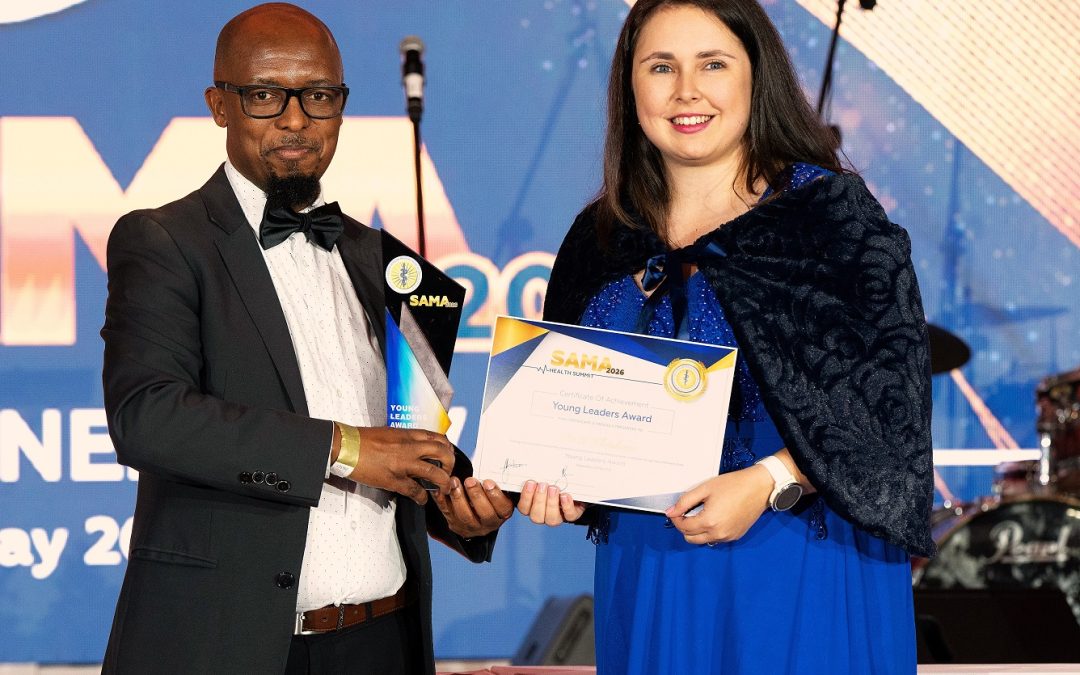
Sefako Makgatho Health Sciences University (SMU) is proud to celebrate the achievements of Dr Inge Kleinhans, Public Health Medicine Specialist, Lecturer and Unit Manager of the Bophelo Unit for Equity, Intelligence and Learning, who has been honoured with the South African Medical Association (SAMA) Young Leader Merit Award. The prestigious award recognises medical practitioners under 35 who have demonstrated exceptional leadership, innovation, community service, healthcare advocacy, and a commitment to strengthening South Africa’s health system.
 The SAMA Merit Awards acknowledge medical professionals whose contributions have had a meaningful impact on the profession and healthcare more broadly. The Young Leader Merit Award, in particular, celebrates emerging leaders whose work is shaping the future of healthcare through excellence, innovation and service. Dr Kleinhans’ recognition reflects her sustained commitment to public health medicine, research, health systems strengthening and global health equity.
Reflecting on the recognition, Dr Kleinhans described the award as both humbling and significant. “Being recognised for my leadership in public health medicine, research and health systems strengthening, and for my contributions to academia and policy in global health equity, was both humbling and deeply meaningful. Having served in various leadership spaces for over a decade, both in South Africa and internationally, I view this recognition as an affirmation of the importance of sustained commitment to health systems strengthening, public health leadership and mentorship,” she said.
Dr Kleinhans’ journey into medicine was shaped by witnessing both the challenges and strengths of South Africa’s healthcare system while growing up in the Eastern Cape and later Mpumalanga. Those early experiences inspired her commitment to building equitable, responsive and people-centred health systems. Today, her work at SMU and through national and continental health platforms focuses on leadership development, mentorship, research, advocacy, policy engagement and strengthening health and surgical systems.
 As Unit Manager of the Bophelo Unit for Equity, Intelligence and Learning, Dr Kleinhans leads multidisciplinary initiatives that advance research, collaboration and capacity development. She is passionate about ensuring that health information systems, governance and data-driven decision-making translate into meaningful improvements in healthcare delivery while preparing the next generation of public health leaders.
Mentorship remains central to her professional purpose. “I believe that mentorship, safe spaces for reflection and deliberate career development are essential to preparing young professionals for healthcare leadership,” she said.
Acknowledging those who have supported her journey, Dr Kleinhans emphasised that the achievement extends beyond individual recognition. “This award reflects not only my individual journey, but also the support of my family, friends, mentors, colleagues and loved ones who have encouraged and sustained me along the way,” she said.
Dr Kleinhans’ achievement reflects SMU’s commitment to developing leaders who advance healthcare through excellence in teaching, research and service. Her recognition by SAMA reinforces the University’s growing contribution to health systems strengthening, public health leadership and innovative research that improves health outcomes in South Africa and beyond, while inspiring future generations of healthcare professionals.
By Tumelo Moila.