by Lorato | Feb 19, 2025 | All News, SMU Media, Student Media
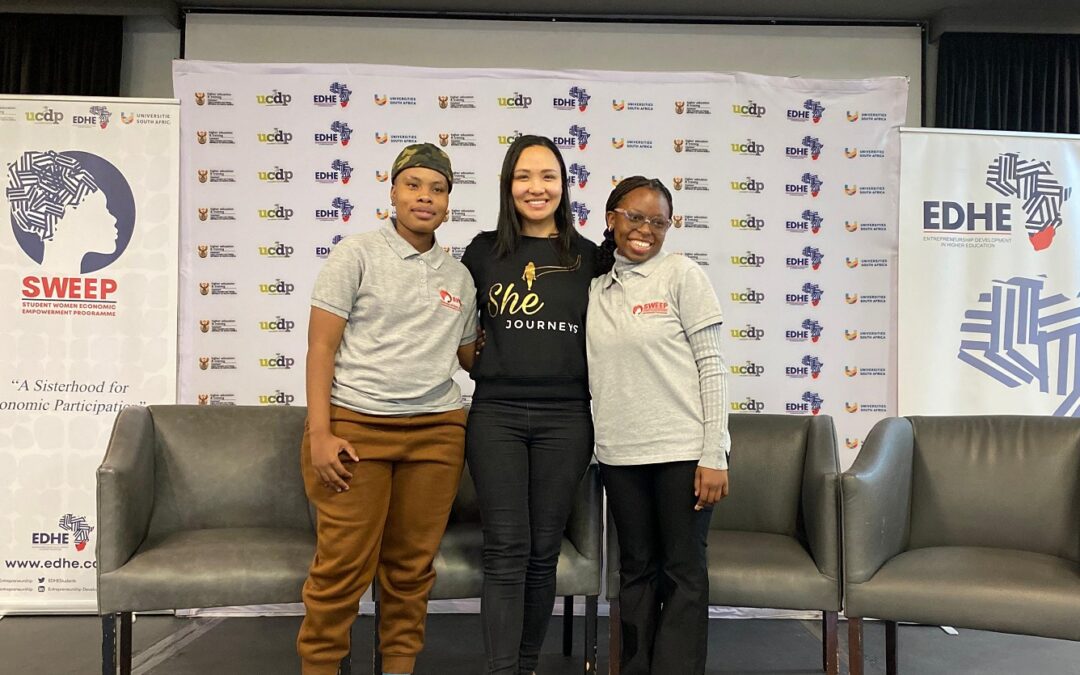
At Sefako Makgatho Health Sciences University (SMU), a quiet revolution is unfolding—one that is shaping future female leaders, entrepreneurs, and changemakers. The Student Women Economic Empowerment Programme (SWEEP) is more than a student society; it is a force redefining what it means to be a woman in higher education, proving that empowerment extends far beyond the lecture hall.
 SMU has long been recognised as a leading institution in health sciences, but SWEEP is ensuring that its impact reaches further, creating an enabling environment where female students gain not only academic knowledge but also the confidence, financial independence, and leadership skills to excel in the real world.
“Our goal is to provide a platform for women to not only succeed at university but also thrive in the outside world,” says Noluthando Nsele, Chairperson of SWEEP. “We ensure that our members gain practical insights into business, leadership, and personal growth that will set them apart in their careers.” From hosting high-impact leadership development workshops to running mentorship programmes and networking opportunities, SWEEP is actively closing the gender gap in business and leadership. Its initiatives are designed to ensure that women graduate not just with a degree, but with the ability to navigate corporate boardrooms, launch successful businesses, and advocate for change in their communities.
Building women of substance
SWEEP’s approach is holistic, addressing key challenges that women face both on and off campus. The society runs intensive training on financial literacy and entrepreneurship, equipping students with the skills to start and sustain businesses. Leadership and confidence-building initiatives ensure that women take charge of projects, develop critical decision-making abilities, and prepare for executive roles.
Beyond professional development, SWEEP acknowledges the importance of mental wellness and work-life balance, offering structured support for students juggling academic, personal, and professional responsibilities. Through self-care events, mental health discussions, and social impact projects, the society fosters a well-rounded sense of empowerment. “Through team-building events, panel discussions, and pitching competitions, SWEEP fosters community engagement and growth,” says Nsele. “We also focus on raising awareness about critical issues such as gender-based violence (GBV) and mental health, which are integral to women’s empowerment.”
One of SWEEP’s most powerful aspects is its ability to create real-world change. A recent success story saw a SWEEP member turn a small idea into a thriving bakery business, employing fellow students and demonstrating the tangible impact of the programme.
 Despite its successes, SWEEP faces significant challenges. Engagement and participation remain hurdles, with the society working to attract more students and make its activities widely accessible. Funding is another critical issue—while SWEEP has achieved remarkable feats through fundraising, the need for financial support continues to grow.
“The first challenge is engagement and participation—we believe more women should get involved, but we need to find innovative ways to market the programme effectively,” Nsele explains. “The second challenge is funding. Despite our efforts, we still lack sufficient resources to execute all our planned events and programmes. We are actively seeking sponsors and additional funding sources to expand our impact.”
In response, SWEEP is intensifying its marketing efforts, leveraging digital platforms, and forging new partnerships with organisations such as Entrepreneurship Development in Higher Education (EDHE), the British Council, and Universities South Africa (USAf). These collaborations expand students’ professional networks and create additional opportunities for funding and support.
Looking ahead, the society plans to expand outreach in 2025, reaching students across different faculties, increasing female leadership participation, and supporting the creation of more student-led businesses. Social initiatives such as pad drives and GBV awareness campaigns will remain central to SWEEP’s mission.
Beyond university: A lifetime of impact
SWEEP is not just about student life—it is a movement that prepares young women for life beyond university. By ensuring that SMU graduates leave with business acumen, leadership skills, and financial independence, SWEEP is actively shaping a new generation of female trailblazers.
More than just a student society, SWEEP is a launchpad for women ready to challenge norms, redefine success, and create lasting change. Through resilience, strategy, and relentless determination, the women of SWEEP are proving that at SMU, empowerment is not just a concept—it is a lived reality.
By Musa Msibi

by Lorato | Feb 19, 2025 | All News, Alumni, SMU Media, Student Media
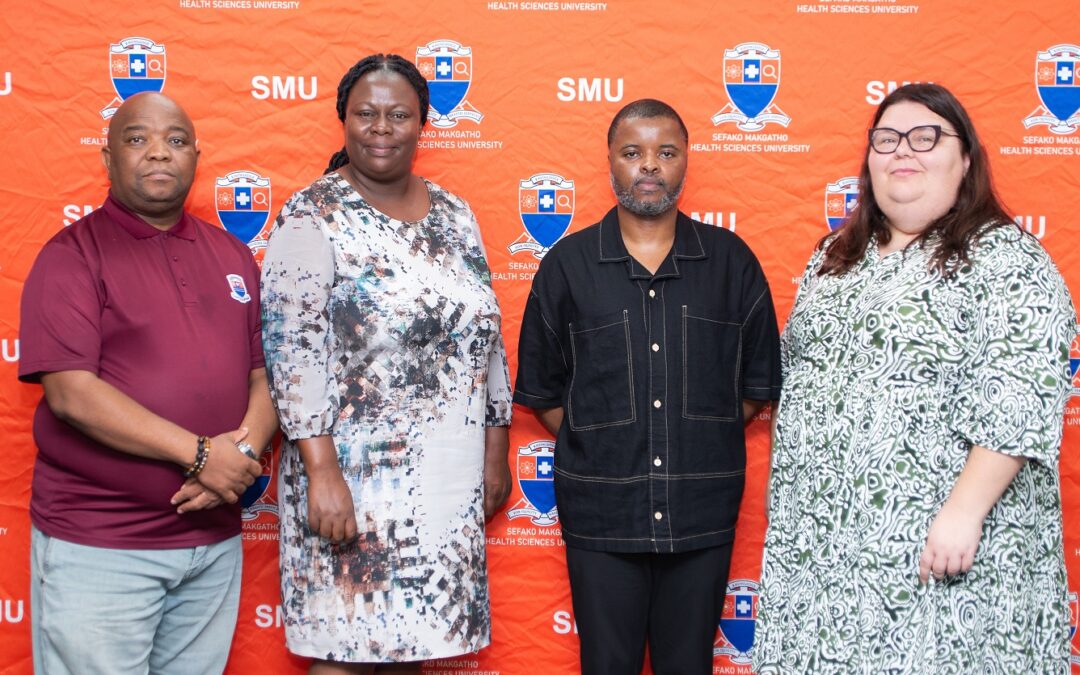
Sefako Makgatho Health Sciences University (SMU) has long been recognised as a hub for academic excellence and innovation. However, beyond its reputation for rigorous academic programmes and cutting-edge research, SMU plays a vital role in shaping the leaders of tomorrow. Through its commitment to leadership development, SMU equips students with the skills, knowledge, and experiences necessary to drive positive change in society. One notable example of SMU’s success in cultivating leaders is Jerry Thoka, whose remarkable journey is a testament to the university’s transformative power.
 From the rural village of Zebediela in Limpopo to the corridors of corporate governance and actuarial science, 28-year-old Thoka’s journey is one of resilience, faith, and a steadfast commitment to creating societal impact. Raised in a modest household by a truck driver father and a mother working on a poultry farm, he was no stranger to financial hardship. However, instead of being weighed down by his circumstances, he was driven by an unwavering desire to rise above them.
“Growing up in a financially constrained household was never easy, but it gave me the motivation to work harder,” he reflects. “I knew that education was my gateway to changing my circumstances.”
His exceptional aptitude for mathematics and science earned him top student honours at Makhutjisha Senior Secondary School, setting the foundation for his academic pursuits. Thoka began his higher education at Sefako Makgatho Health Sciences University (SMU), where he pursued a Bachelor of Science in Mathematical Sciences, specialising in Applied Mathematics and Computer Science. Recognising his passion for actuarial science, he later enrolled at the University of the Free State (UFS) to further his studies in the field. His time at UFS was marked by rigorous academic challenges, earning multiple actuarial exemptions and establishing his credibility within the Actuarial Society of South Africa (ASSA).
“Actuarial science is more than just numbers; it’s about using data to solve real-world problems and manage risks,” he explains. “This field has the power to influence financial security, social policies, and economic structures.”
Thoka’s expertise led him to Munich Reinsurance of Africa, where he currently works as an Actuarial Analyst. In his role, he engages in financial modelling and risk reserving, helping companies maintain stability in the face of uncertainty. His work underscores the critical role actuarial science plays in safeguarding financial security and mitigating economic risks.
Beyond his technical expertise, he has distinguished himself as a formidable leader in governance and policy advocacy. His leadership journey began at SMU, where he served as a mentor and later as Chairperson of the Residence Committee. His passion for student advocacy propelled him into the Student Representative Council (SRC), where he championed postgraduate funding and research opportunities.
In 2021, Thoka took on a more prominent leadership role as President General of the Institutional SRC at UFS, making history as an influential voice in university governance. As a member of the Senate and Institutional Forum, he actively contributed to shaping institutional policies, advocating for student welfare, and addressing systemic challenges in higher education.
“Leadership, to me, is about service and impact,” he asserts. “It’s about using one’s knowledge and position to create opportunities for others and drive meaningful change.” His governance work extended beyond university borders when he engaged with the South African Union of Students (SAUS) on policy development. In November 2024, he was elected as a Member of the UFS Council, where he continues to influence strategic decision-making.
“My election into the UFS Council disrupts the norm and introduces critical technical skills into governance. Having led two competitive institutions, I bring a unique student-centred perspective to the Council.” Thoka’s leadership was put to the test during the COVID-19 pandemic, where he played a pivotal role in reintegration policies, ensuring academic continuity while prioritising safety. He was also instrumental in the university’s adoption of a workers’ insourcing policy, benefiting both students and staff.
A devout Christian, he attributes much of his leadership philosophy to his faith. He believes in the principles of servant leadership, as exemplified in Matthew 23:11 (KJV): “But he that is greatest among you shall be your servant.” “Faith has kept me committed to genuine societal development, ensuring that my leadership remains rooted in integrity,” he states. “Greatness is attainable by anyone willing to serve.”
Thoka’s dedication to community upliftment extends beyond his personal achievements. He envisions a future where young professionals merge technical expertise with social responsibility. To this end, he co-founded the Chamber of Executive Youth (COEY), an initiative aimed at mentoring and equipping young professionals with critical skills while fostering leadership capabilities.
“Many skilled professionals limit their contributions to their fields, depriving society of their impact. COEY will recruit and persuade masters of scarce industries to engage in societal development and governance,” he explains. “We need to build a generation of young executives who are not only technically skilled but also socially conscious.”
His advocacy in higher education governance also centres on inclusivity and equity. As a member of the UFS Council, Jerry supports policies that ensure diverse student populations have access to quality education and resources. He emphasises the importance of scholarships, community partnerships, and outreach efforts to uplift underrepresented groups.
Thoka’s story is one of relentless ambition and purpose-driven leadership. “My aspiration is to leave behind a legacy of inspiration—a testament to the endless possibilities available to those who dare to dream. I want individuals to see, through my journey, that one’s background does not determine their ultimate success,” he concludes.
By Tumelo Moila
by Lorato | Feb 19, 2025 | Accolades and Achievements, All News, SMU Media, Student Media
Sefako Makgatho Health Sciences University (SMU) continues to assert its position as a leading global institution in health sciences, with its Internationalisation Directorate recently hosting a high-level delegation from Zimbabwe’s Midlands State University (MSU) for a benchmarking workshop. The visit underscores SMU’s growing influence in shaping higher education internationalisation strategies across Africa.
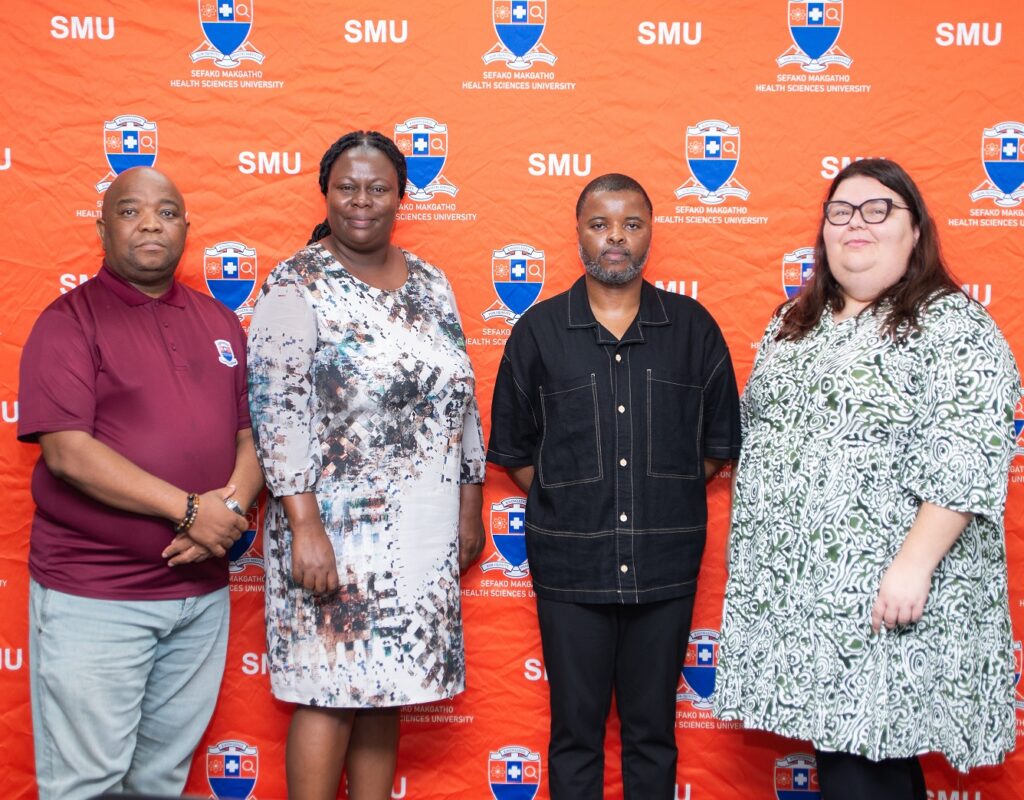 Professor Laurine Chikoko, Executive Director for International Relations and Alumni at MSU, led the delegation, seeking to gain insight into SMU’s internationalisation model—one that has rapidly positioned the university as a dynamic player in the global academic landscape. The two-day engagement delved into critical areas, including international student recruitment, alumni relations, global partnerships, and strategies to enhance institutional reputation on an international scale.
“This visit demonstrates the strides SMU has made in fostering international collaborations and advancing a global agenda in higher education,” remarks Dr Carlien Jooste, Director of Internationalisation at SMU. “As a Directorate that turns three in March, we are pleased to share our approach to internationalisation while continuously refining our strategies.”
The workshop provided MSU with a comprehensive overview of SMU’s internationalisation framework, including Memoranda of Understanding (MOUs) management, curriculum internationalisation, and integration of international students and staff. Discussions also explored how SMU ensures seamless student registration, effective alumni engagement, and strategic global partnerships.
A significant highlight of the visit was the in-depth discussions with SMU’s Student Affairs Department, led by Director, Tulani Nkuntse and Deputy Director Themba Khumalo, focusing on the integration and management of international students. Additionally, SMU’s Advancement Officer, Legodi Mashiane, engaged with Chikoko on alumni development strategies, underscoring the role of former students in strengthening institutional networks globally.
Beyond benchmarking: A vision for collaboration
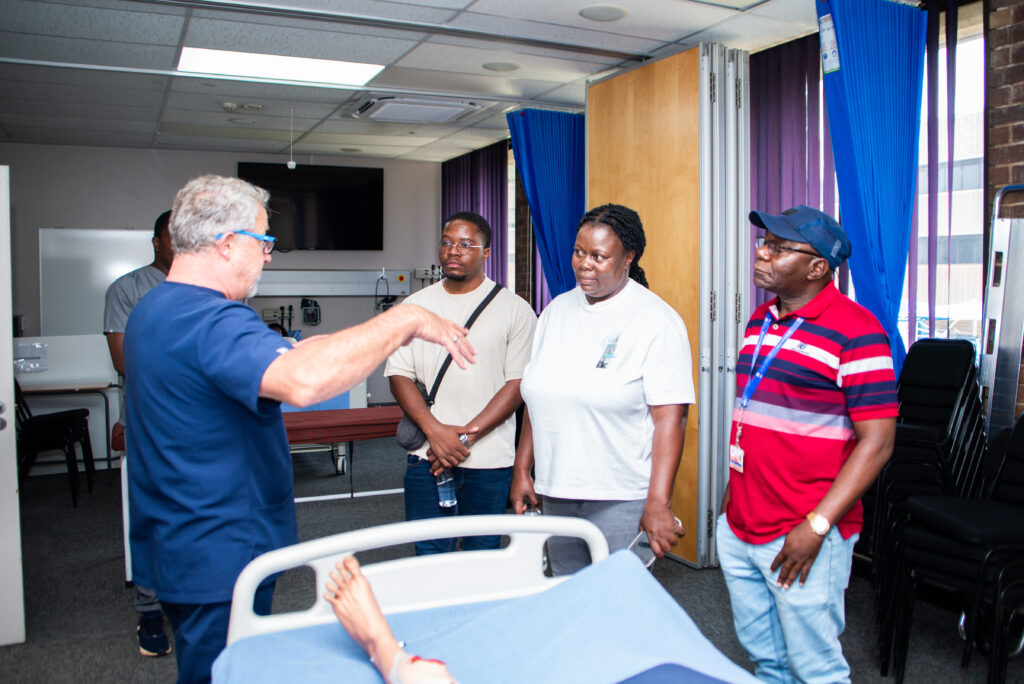 The visit concluded with a campus tour led by SMU master’s student, Tshepo Aphane, followed by a working lunch with key support directorates. Reflecting on the experience, Chikoko lauded SMU’s internationalisation efforts: “Once again, thank you for an excellent hosting. I have learned so much, and there is a wealth of knowledge to take back for the development of our office.”
The benchmarking workshop has laid the groundwork for tangible collaborations between SMU and MSU, with both institutions identifying pilot projects to strengthen academic exchange and research partnerships. SMU’s growing recognition as a benchmark for internationalisation in Africa reaffirms its commitment to shaping the future of global health sciences education.
By opening its doors to institutions across the continent, SMU continues to drive meaningful engagement and position itself as a globally competitive university, leading innovation and collaboration in health sciences education.
By The Department of Communications and Marketing

by Lorato | Feb 19, 2025 | All News, SMU Media, Student Media
For students, university life is about more than just academics – it is about growth, exploration, and discovery. At Sefako Makgatho Health Sciences University (SMU), the institution’s commitment to the quality of student life is evident in every aspect of campus life. From high-quality education to supportive staff and faculty, SMU strives to create an environment that fosters academic success, social connection, and overall well-being. For one dedicated staff member, Joseph Mnisi, this commitment has been the driving force behind his over two-decades-long career at SMU.
 Mnisi has been a steadfast pillar of student life at SMU. As the Coordinator of Student Residences 1B and 1C, he has shaped not only the physical living conditions of students but also the culture of respect, support, and inclusivity within the university’s housing system. As he prepares for retirement, he reflects on his journey, the challenges he has faced, and the impact he hopes to leave behind.
For students, university life is about more than just academics – it is about growth, exploration, and discovery. At Sefako Makgatho Health Sciences University (SMU), the institution’s commitment to the quality of student life is evident in every aspect of campus life. From high-quality education to supportive staff and faculty, SMU strives to create an environment that fosters academic success, social connection, and overall well-being. For one dedicated staff member, Joseph Mnisi, this commitment has been the driving force behind his over two-decades-long careers at SMU.
Mnisi has been a steadfast pillar of student life at SMU. As the Coordinator of Student Residences 1B and 1C, he has shaped not only the physical living conditions of students but also the culture of respect, support, and inclusivity within the university’s housing system. As he prepares for retirement, he reflects on his journey, the challenges he has faced, and the impact he hopes to leave behind.
Born on 8 August 1960 in Edenvale, within the Ekurhuleni Municipality, he later relocated to Sthame Section in Tembisa before pursuing his education in Bushbuckridge (Mpumalanga). He attended Malwana Primary and Mugena High School but left school in grade 11. Determined to further his education, he later completed his matric at Magwagwaza High School. His early career saw him working as a warehouse clerk at African Tubes and Pipes from 1983 to 1986. His passion for education led him to Setotolwane College of Education, where he earned a teaching certificate. He briefly worked as a clerk at Masana Hospital in Bushbuckridge from 1988 to 1990 before transitioning into teaching at Mugena High School from 1991 to 1995, dedicating himself to shaping young minds.
Mnisi’s path to student residence management was not a conventional one. “While working as a laboratory assistant in the Biology department during the Medunsa era in the early 2000s, I developed a dream of becoming a Student Residences Coordinator, which was then known as a Warden,” he shares. His passion for working with students was rooted in his experience as a secondary school teacher at Mugena High School (Mpumalanga) in the early 1990s, where he taught History, Biblical Studies, English, Xitsonga, and Agriculture (Years 8–12).
His transition into residence management was driven by a deep-seated desire to engage with students beyond academics. “As a father of five, I believed my fatherly qualities would enable me to excel in this role,” he explains. Over the years, he has witnessed the evolving challenges of student housing, particularly concerning gender-based violence (GBV) and mental health.
Looking back on his career, Mnisi takes pride in the personal and professional growth of the students he has mentored. “I feel a deep sense of fulfilment. I was often entrusted with students who were considered troublesome, yet through guidance and support, they transformed into responsible individuals. Many of them are now respected professionals.”
Mnisi’s role extends far beyond managing buildings. “Counselling is a major part of my role. Many students trust me with sensitive personal issues, and I provide guidance while maintaining confidentiality. They often refer to me as ‘Baba’—a sign of trust and respect.”
A typical day for him involves engaging with residence coordinators, liaising with departments, and addressing student concerns. To enhance his effectiveness, he pursued additional qualifications in management, human resources, and industrial relations.
Ensuring students feel supported both academically and personally has been another critical aspect of his role. “I conduct thorough assessments of student needs and liaise with relevant departments to provide resources. I also engage student leaders through house committee meetings to ensure collective decision-making.”
Mental health has also been a key focus. “I encourage students to report issues before they escalate, ensuring they receive the necessary support. Collaboration with academic services, health services, and student counselling has been vital in addressing students’ emotional and psychological well-being.”
As retirement approaches, Mnisi is reflective yet satisfied with his contributions. “Transforming residence culture, enhancing infrastructure, and ensuring students have a supportive environment are among my greatest accomplishments.”
When asked how he hopes to be remembered, he responds humbly: “As a dedicated leader who put students first and created a positive, lasting impact.” His advice to his successor is clear: “Lead with compassion, be open to student concerns, and prioritise continuous improvement.”
Looking ahead, he plans to spend more time with his family, travel, and explore new opportunities. However, his passion for student affairs remains. “I may offer mentorship and advisory services, but I also look forward to enjoying a well-deserved break.”
Working with students has profoundly shaped Mnisi’s perspective on life. “It has made me more patient, empathetic, and solution-oriented,” he shares. His philosophy is simple yet profound: “Learning is a process. You can receive knowledge from anyone, regardless of age. A point is a point.”
Among the many students he has impacted, the most rewarding stories are those of individuals who turned their lives around after struggling initially. While he acknowledges there is always more to be done, he is content with the progress made.
As he steps into the next chapter of his life, the SMU community will undoubtedly feel the absence of a leader who has dedicated his career to creating a safe, inclusive, and supportive environment for students. His legacy will live on in the countless lives he has touched—one conversation, one initiative, and one act of kindness at a time.
By Tumelo Moila
by Lorato | Feb 19, 2025 | All News, SMU Media, Student Media
In the pursuit of academic excellence, Sefako Makgatho Health Sciences University (SMU) has established itself as a beacon of intellectual rigour and academic distinction. With a steadfast commitment to fostering a culture of excellence, SMU has created an environment that encourages students to strive for the highest standards of academic achievement. From its esteemed faculty to its clinical training, SMU provides students with the ideal platform to explore their full potential and achieve academic success.
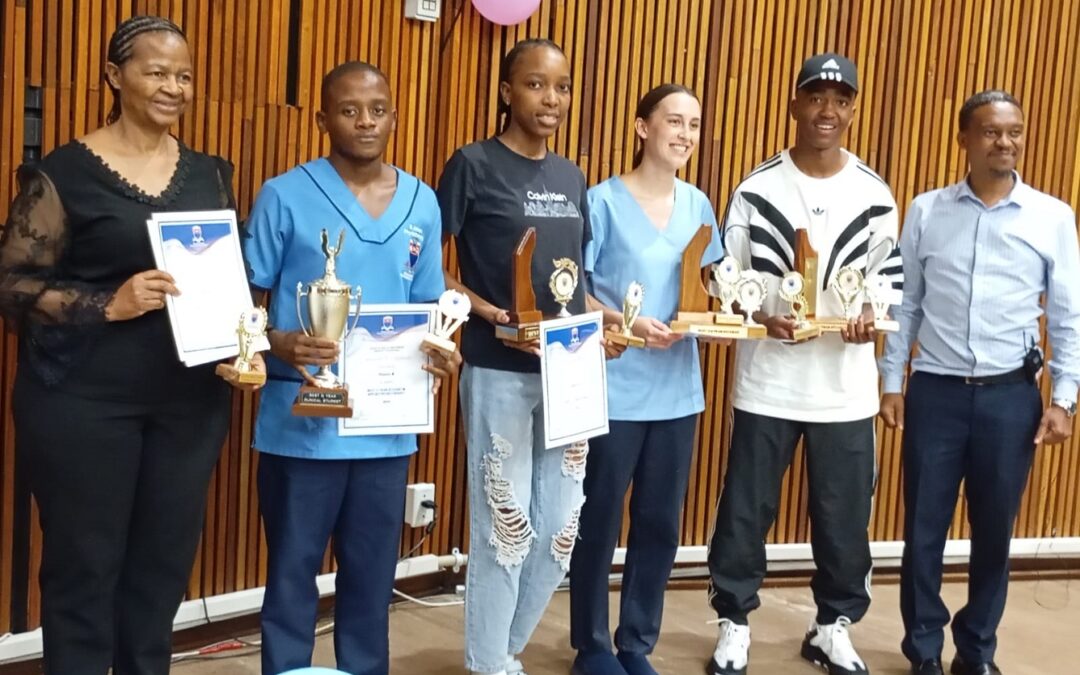
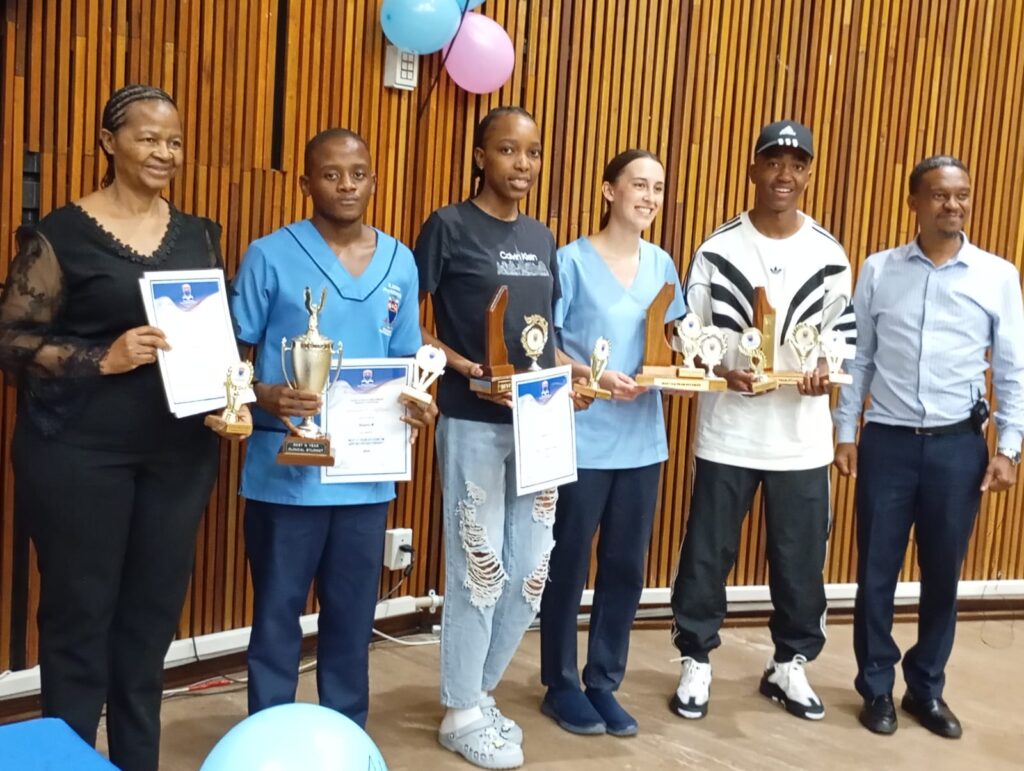 The Department of Physiotherapy recently hosted its prestigious Academic Excellence Awards Ceremony for the 2024 academic year, an event dedicated to honouring the hard work, dedication, and remarkable achievements of students in the field. This annual ceremony recognises outstanding academic performances across all year groups, celebrating students’ commitment to mastering the art and science of physiotherapy.
The event, which took place on Thursday, 6 February 2025, was attended by faculty members and students. The primary aim was to acknowledge exceptional students who have demonstrated not only academic excellence but also an unwavering passion for physiotherapy, while also welcoming the 2025 first-year students. The awards were categorised based on year groups, with distinctions given to students excelling in individual modules as well as overall academic performance.
Nkateko Chauke emerged as the top-performing first-year student, earning two prestigious awards in recognition of his academic excellence. His remarkable grasp of the foundational principles of physiotherapy secured him the Best Student in Principles of Physiotherapy award, highlighting his dedication to understanding core concepts and applying them effectively. In addition, his consistency and outstanding performance across the entire first-year curriculum earned him the Best in Overall First-Year Modules award, solidifying his status as a standout student in the programme.
Teegan Baatjies and Motheo Mapholo stood out as the top-performing second-year students, earning well-deserved recognition for their academic excellence. Teegan Baatjies received the Best in Principles of Physiotherapy award for his exemplary performance in the module, showcasing his ability to bridge theoretical knowledge with practical application.
He expressed a deep sense of accomplishment and gratitude for the recognition of his hard work. “Knowing that my dedication has paid off boosts my confidence and self-esteem. I am grateful for all the support and opportunities provided by SMU. I ensure I have enough study time before exams and use online resources to supplement my studies. Being a good listener helps me absorb class discussions, which I later revise at home. Create a study schedule and stick to it. Build a strong foundation in all subjects, develop critical thinking skills, and prioritise self-care. A balanced study-life approach ensures a clear mind when focus is needed.”
Meanwhile, Motheo Mapholo was honoured with the Best in Overall Second-Year Modules award for her outstanding performance across all subjects. Reflecting on her achievement, Motheo described the experience as both overwhelming and humbling, affirming her dedication to physiotherapy and the value of hard work. She emphasised the importance of staying organised, setting clear goals, and deeply understanding concepts, encouraging aspiring students to remain disciplined, seek help when needed, and balance their studies with self-care. “Excellence isn’t just about passing exams; it’s about preparing for real-world challenges with both knowledge and practical skills,” she shared.
Refilwe Malane and Anze Nel emerged as the top achievers among third-year students, receiving recognition for their academic excellence and practical expertise in physiotherapy. Refilwe Malane was honoured with the Best in Applied Physiotherapy award for his outstanding practical skills and ability to translate theoretical knowledge into clinical practice. Reflecting on his success, he credited his study group, lecturers, and clinical supervisors for their support and highlighted the Feynman study technique as a key tool in mastering complex concepts and applying them effectively. Meanwhile, Anze Nel secured two prestigious awards—Best in Principles of Physiotherapy and Best in Overall Third-Year Modules—for her exceptional understanding of physiotherapy principles and consistent academic excellence across all subjects. Expressing her gratitude, she described the recognition as both validating and motivating, reinforcing her dedication to physiotherapy. “It makes the long hours in front of the books worth it. It will be hard work, but if you continue to show up and believe in yourself, it will pay off,” she shared, inspiring fellow students to pursue excellence in their studies.
Throughout the ceremony, faculty members and fellow students expressed immense pride in the award recipients. The event served as a source of motivation, particularly for first-year students, demonstrating that academic excellence is both attainable and rewarding.
In his closing speech, Samkele Jiyane, Senior Class Representative and Organiser of the Ceremony encapsulated the spirit of the event: “Hard work in academics always comes with its rewards. Nothing beats the feeling of being recognised for excellence. This event is a testament to the fact that success is possible for those who commit themselves. I know the students are proud of their achievements—because I am proud of them too.”
The Department of Physiotherapy’s Academic Excellence Awards Ceremony was a true celebration of student achievement, dedication, and the pursuit of excellence. With their outstanding academic records and unwavering commitment to the field, these awardees are poised to make significant contributions to physiotherapy, ensuring a bright future for the profession and the patients they will serve.
Sefako Makgatho Health Sciences University continues to uphold its commitment to academic excellence. The institution’s dedication to fostering a culture of intellectual curiosity and academic rigour will have a lasting impact on the lives of its students. By instilling in them the values of hard work, perseverance, and a passion for learning, SMU is empowering the next generation of leaders and change-makers to make a meaningful difference in the world.
By Tumelo Moila

by Lorato | Feb 19, 2025 | All News, Alumni, SMU Media, Student Media
Sefako Makgatho Health Sciences University (SMU) continues to produce not only top-tier medical professionals but also changemakers who are redefining healthcare in South Africa. Among its most inspiring alumni are Dr Innocent and Dr Dikeledi Chauke, two medical pioneers whose journey from SMU classrooms to private practice exemplifies the university’s commitment to developing healthcare leaders.

More than just a love story, their success underscores SMU’s role in shaping resilient, highly skilled professionals equipped to lead in the demanding medical field. Their impact extends beyond the consulting room, as they actively contribute to South Africa’s healthcare system, proving that SMU graduates are at the forefront of addressing the country’s medical challenges.
SMU has long been recognised as an institution that nurtures both academic and professional success. For the Chaukes, it was at SMU that they built the foundation of their careers—gaining not only the theoretical knowledge required for medical excellence but also the practical skills, resilience, and leadership qualities necessary to thrive in South Africa’s evolving healthcare landscape.
Their journey began within the university’s corridors, balancing the pressures of medical school while developing a shared vision for the future. “Medicine was always more than just a degree—it was our calling. SMU equipped us with the tools we needed to serve communities in need and build a future where quality healthcare is accessible,” says Dr Innocent Chauke.
The couple’s academic journey was rigorous, marked by long hours of study and clinical rotations, but SMU provided them with an environment that fostered both personal and professional growth. “We were held to high standards, expected to think critically and to be ready for real-world medical challenges. Those experiences prepared us for everything that followed,” adds Dr Dikeledi Chauke.
Serving communities, changing lives
After graduating, the Chaukes embarked on careers that placed them at the heart of community healthcare. Their medical internships and community service years saw them stationed in rural hospitals, where they encountered first-hand the realities of South Africa’s healthcare system.
“Our time in community hospitals was eye-opening. It highlighted the disparities in healthcare access and deepened our commitment to patient-centred medicine,” Dr Dikeledi reflects. The lessons learned during this time influenced their decision to open a private practice in Mamelodi East, where they now provide essential medical services to underserved communities.
From general consultations and chronic disease management to minor surgical procedures, their practice embodies the principles instilled at SMU—a commitment to service, excellence in medical care, and an unwavering focus on patient well-being.
However, their journey has not been without challenges. A recent armed robbery at their practice was a stark reminder of the risks associated with healthcare entrepreneurship. “Despite setbacks, we remain committed to our vision. The need for accessible private healthcare is too great for us to back down,” says Innocent.
The Chaukes are not content with simply running a private practice—they are working towards a larger vision. Their goal is to expand their operations into a network of technologically advanced medical centres that will bring affordable, high-quality healthcare to more South Africans.
“Our long-term vision is to merge technology with medicine, ensuring that even those in underserved areas have access to the best possible care,” explains Dikeledi. This ambitious plan aligns with SMU’s ethos of producing medical professionals who not only succeed in their fields but also innovate and lead systemic change.
Their success is a testament that SMU alumni are not just entering the workforce—they are shaping industries, solving real-world problems, and driving progress in healthcare.
The Chaukes’ story is one of dedication, resilience, and visionary leadership. It is also highlights SMU’s unwavering commitment to developing professionals who are equipped to make a difference. As the university continues to cultivate top medical minds, it cements its status as a premier institution for health sciences education in Africa.
At SMU, students are not just taught—they are empowered to lead. And as the Chaukes continue to grow their impact in the medical field, they stand as a shining example of the calibre of professionals SMU produces—leaders who are not only skilled in medicine but driven by a purpose greater than themselves.
By Tumelo Moila