by Lorato | Jun 25, 2025 | All News, Alumni, SMU Media, Student Media
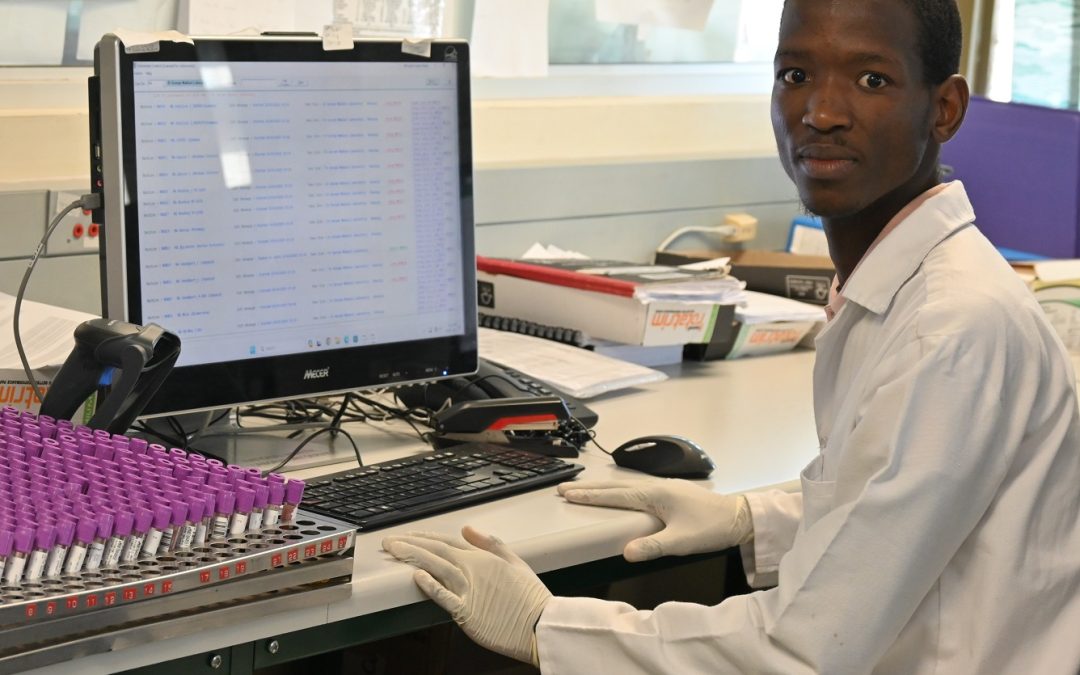
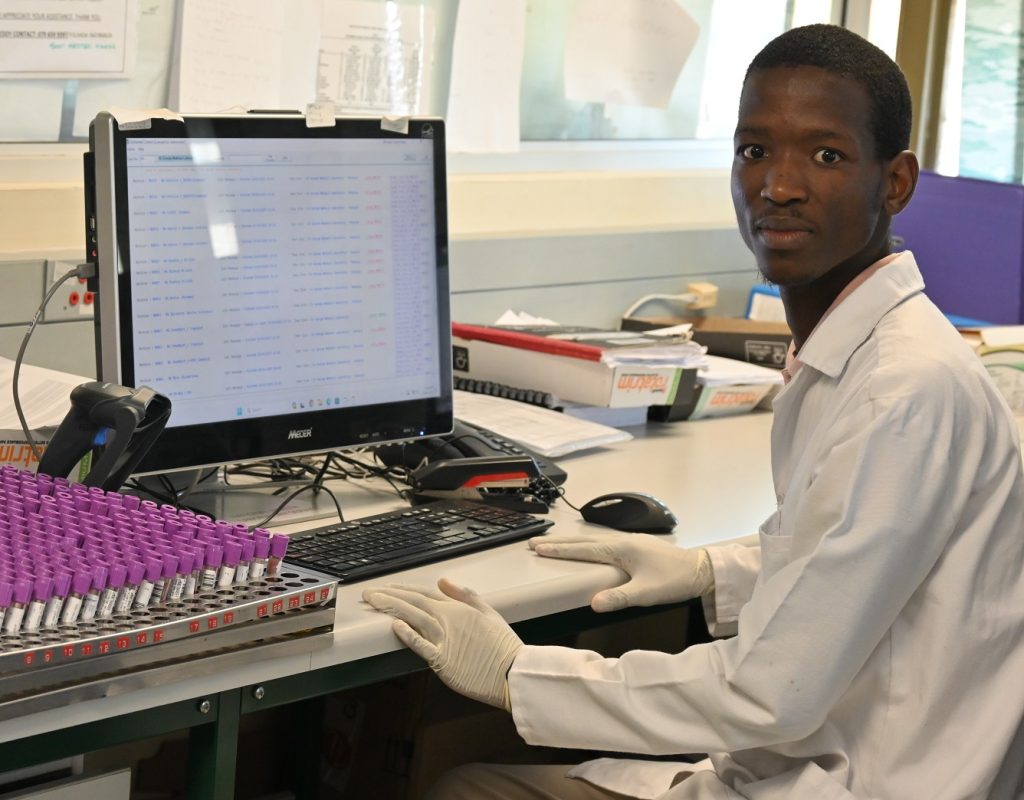
What began as a childhood curiosity in the township of Ezinketheni has flourished into a mission-driven scientific pursuit, led by Malibongwe Ngcobo, a young researcher determined to transform healthcare through innovation in haematology. A story rooted in personal loss, faith, and academic excellence, Ngcobo’s journey reflects the spirit of resilience and visionary thinking cultivated at Sefako Makgatho Health Sciences University (SMU). With every blood sample he analyses, he brings a deeply personal commitment to excellence, redefining what it means to lead with both compassion and scientific rigour in South Africa’s evolving healthcare landscape.
 After the passing of his biological mother, Ngcobo moved to Ezinketheni, Pietermaritzburg, at the age of four and was lovingly raised by his aunt and her husband, whom he honours as his parents. As the only young male in a household of girl cousins, he grew up grounded in respect, humility, and dignity.
“My foster parents instilled in me the foundational qualities of manhood, especially respect for women and others,” he shared. “My mother made sure I attended church every Sunday. Her faith in God laid the foundation for my own spiritual life, which still guides me today.”
Education was a pillar of his upbringing. His mother constantly reminded him that talent alone was insufficient—academic qualifications were the key to credibility. A cousin who regularly taught him beyond the school curriculum sparked his love for learning.
His ambition to pursue science was solidified in high school after a teacher remarked that he had the makings of a scientist. But it was the loss of his mother—who died from a haematological condition—that gave him a deep, personal motivation. “I didn’t understand what had happened to her. That drove me to learn more and help others who might face the same fate.”
 In his third year at the University of KwaZulu-Natal (UKZN), Ngcobo encountered a haematology module that changed everything. “It answered questions I’d carried for years. When I learnt UKZN didn’t offer an Honours programme in Haematology, I searched for other institutions and found SMU.”
At SMU, he discovered an academically rigorous and supportive environment. “The Department of Haematological Pathology, from the secretary to the Head of Department, offered professionalism and encouragement,” he said.
For his Honours research, Ngcobo analysed 384 haematology requisition forms to assess their completeness and accuracy. The findings were striking. “Not a single form was fully completed. Even minor omissions, like missing clinician contact details, can delay critical communication and affect patient care.”
Though the data collection process was demanding, Ngcobo attributes his growth to the programme and the guidance of his supervisor, Professor Vanessa Moodley. “I learned to persevere and think critically under pressure. Professor Moodley encouraged me to view challenges creatively and holistically.”
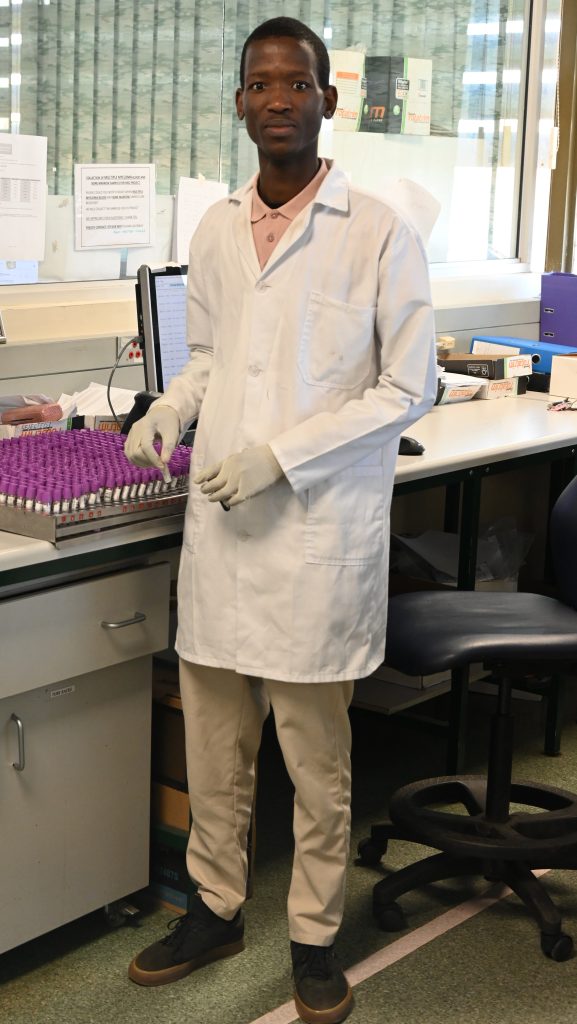
Now serving as an Intern Biological Scientist at the National Health Laboratory Service (NHLS) at SMU, Ngcobo sees this role as a crucial step towards his goal of pursuing a PhD in Haematology. He aims to contribute innovative, evidence-based solutions that enhance diagnostics and patient care.
He is deeply committed to ethical laboratory practice and raising awareness about haematological conditions. “Every blood sample represents a life. Errors—especially during the pre-analytical phase—are unacceptable. Our role as lab professionals is critical.”
Ngcobo overcame challenges such as procrastination and self-doubt through daily discipline and the unwavering support of his department. “I began by reading just five pages a day. That small step built consistency. Believing in myself and knowing support was available made a huge difference.”
To aspiring haematologists, his message is clear: “Haematology is demanding. Opportunities are scarce. To thrive, you must be exceptional, focused, and ready to exceed expectations.”
Ngcobo’s story is not just about academic success—it is a narrative of transformation, fuelled by purpose and empathy. As he continues to build his career in haematology, he remains committed to bridging the gap between complex science and patient-centred care, ensuring that every breakthrough brings tangible benefits to those who need it most.
By Dimakatso Modise
by Lorato | Jun 25, 2025 | All News, Alumni, SMU Media, Student Media
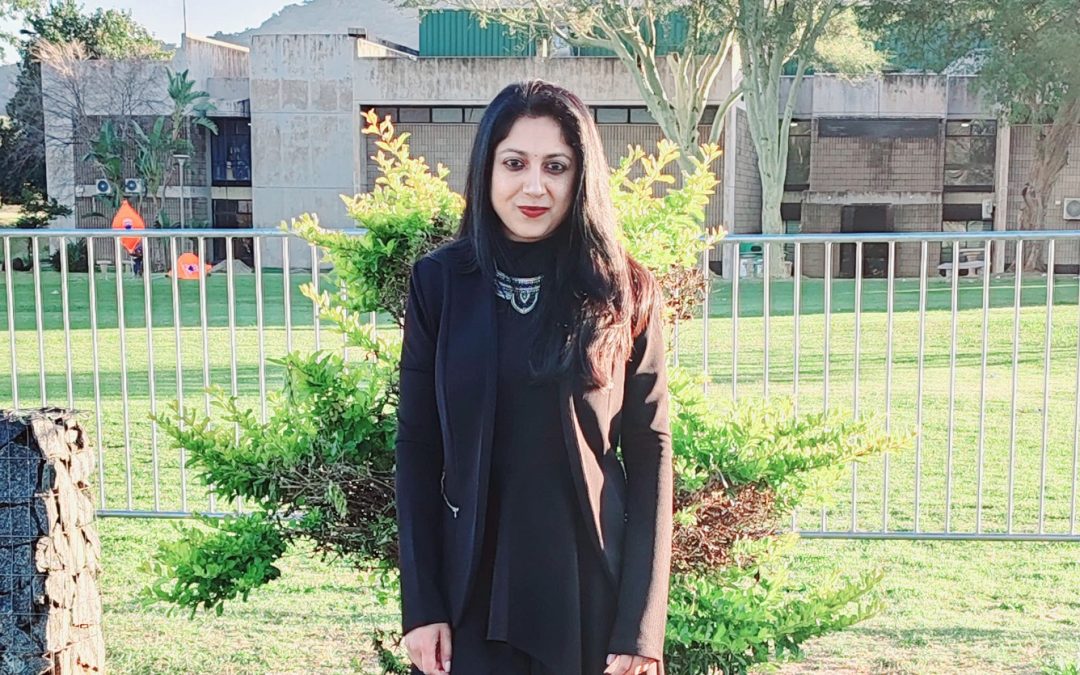
In a proud moment for Sefako Makgatho Health Sciences University (SMU), Dr Karmishtha Maharaj was conferred with a PhD in Pharmacy during the university’s recent autumn graduation ceremony. Her achievement is not only a personal milestone but a significant contribution to advancing pharmacovigilance within the private healthcare sector, particularly in the context of HIV treatment in South Africa.
 Now 39 years old, Dr Maharaj is currently based at Ampath Laboratories in Centurion, where she serves as a Pharmacogenomics Specialist. Her professional journey with Ampath spans over 13 years, beginning in 2011 as a Phlebotomy Facilitator. Originally from Newcastle in KwaZulu-Natal, Maharaj’s career has been deeply shaped by her upbringing in a close-knit family and an enduring desire to bridge patient care and pharmaceutical science.
“My interest in medicine began early,” she reflects. “From weekends volunteering at a private hospital to shadowing my uncle at his pharmacy, I was always drawn to helping others. I first trained as a nurse and later transitioned into pharmacy, blending the clinical and pharmaceutical sides of patient care.”
Maharaj’s doctoral research, conducted through SMU’s School of Pharmacy, focused on the use of routine laboratory tests as early indicators of adverse drug reactions (ADRs) in patients on Highly Active Antiretroviral Therapy (HAART). Her study, conducted at a major private HIV treatment practice in Pretoria, sought to address a critical gap in South Africa’s pharmacovigilance data, particularly within the under-researched private healthcare sector.
She strongly believes laboratory-based monitoring should become a standard in ADR surveillance. “It enables early detection of toxicity before symptoms appear, allowing timely interventions. This approach not only improves patient safety and adherence but fills major gaps in traditional pharmacovigilance, especially when managing complex cases involving multiple medications.”
Despite the private sector being relatively well-equipped, with access to electronic health records and accredited laboratories, Maharaj points out that systemic challenges remain. “There’s no coordinated pharmacovigilance framework in private care. Proactive monitoring is still underutilised, and pharmacogenomics testing is limited due to cost and lack of awareness.”
Her study reviewed 267 patient files from a private HIV clinic in Pretoria. Elevated creatinine and liver enzymes served as early warning signs of renal and hepatic toxicity. She observed that patients on concomitant medications had heightened risks, and that ART changes were most commonly associated with drugs like efavirenz and lopinavir.
“My research offers valuable insights that can contribute to national health policy,” she says. “It provides a model for integrating lab data into national pharmacovigilance frameworks, updating HIV treatment guidelines, and improving surveillance beyond clinician reporting.”
She is also eager to expand the research to public health settings and rural areas. “We need to ensure the research represents the broader HIV population. Exploring regional differences and building scalable, risk-based models could strengthen provincial and national responses to HIV care.”
Looking ahead, Maharaj envisions several research paths, including prospective studies, cost-effectiveness analysis of lab-based surveillance, and the feasibility of implementing pharmacogenomic testing and therapeutic drug monitoring locally.
She also hopes to see her findings incorporated into national medical training and treatment guidelines. “Empowering healthcare providers with these tools through education would support a more predictive, personalised approach to care.”
Completing a PhD while working full-time was no small feat. “It required planning, discipline, and self-care. My support system—family, mentors, friends—was essential. There were moments of doubt and setbacks, but also incredible breakthroughs that reminded me why this work matters.”
Now that she has earned her PhD, Maharaj plans to continue blending academic research with public engagement. “I want to raise awareness around drug safety and help integrate personalised medicine into routine care.”
She hopes her legacy is one of improved patient safety and inspired future researchers. “For young women from underrepresented backgrounds, I say: believe in your potential. Your voice matters, and your journey can change lives.”
Summing up her journey, Maharaj shares, “The rewarding challenge of pioneering new paths. As Elizabeth Blackwell said, ‘It is not easy to be a pioneer – but oh, it is fascinating!’”
By Tumelo Moila
by Lorato | Jun 25, 2025 | All News, Alumni, SMU Media, Student Media
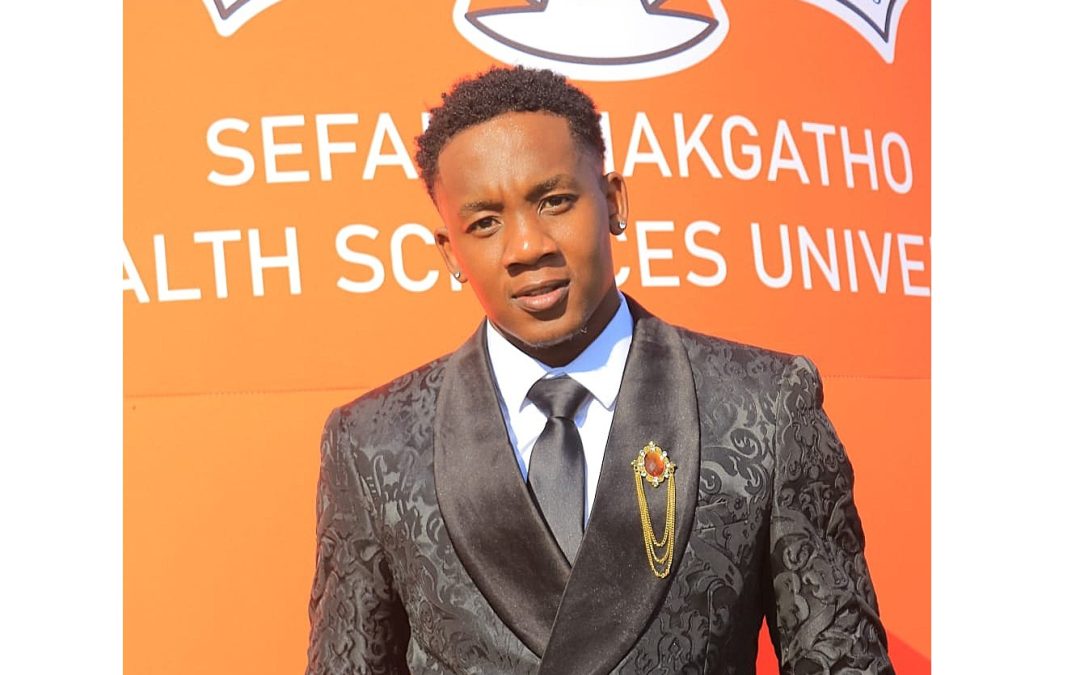
At just 25, Clement Mphethi is helping redefine what is possible for young South Africans who dare to dream beyond their circumstances. Graduating summa cum laude with a Bachelor of Science Honours in Physics from Sefako Makgatho Health Sciences University (SMU), Mphethi’s journey is one of resilience, intellect, and inspiration — a testament to the power of education to rewrite history.
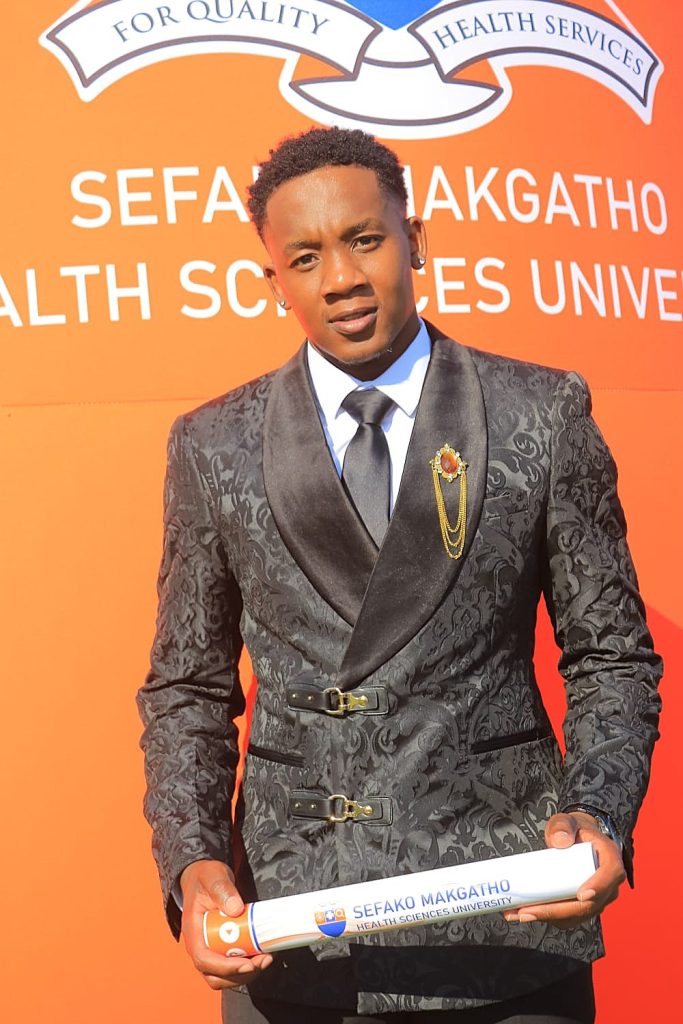 Originally from Burgersfort, Limpopo, Mphethi is the first in his family to attend university. “This achievement carries emotional weight,” he says. “It’s a tribute to the struggles of those who came before me and a reminder that determination can break generational barriers.”
Mphethi’s fascination with Physics started early. “Physics has always fascinated me. It’s the pursuit of truth, the language of the universe,” he explains. But his motivation was deeply personal. “My parents, despite their intelligence, never had the opportunity to study further. I pursued this degree for them and for everyone who never had the chance.”
Graduating with top honours was not merely a personal milestone — it was a deeply meaningful accomplishment born of sacrifice, discipline and vision. “In trying to understand the universe, I came to understand my own mind — its limits, potential, and ability to grow through adversity and purpose,” he reflects.
Now self-employed as a freelance data scientist, Mphethi applies machine learning, data analysis and statistical modelling to solve real-world problems for clients across industries. His interest in data science stems from the interdisciplinary nature of modern physics. “I studied programming languages like Python, SQL, JavaScript and tools like Power BI and Excel outside of my academic studies, driven by an interest in how they can be applied alongside physics to address real-world problems.”
During his Honours year, Mphethi delved into Quantum Physics and Statistical Mechanics, two fields that reshaped his worldview. “Quantum forced me to rethink everything. It showed me that uncertainty isn’t weakness, but part of nature. Statistical Mechanics helped me understand how order arises from chaos.”
His research focused on dye-sensitised solar cells (DSSCs), exploring how different electrolyte deposition techniques impact performance and sustainability. “Using a solar simulator, I discovered that doctor-blading achieved the highest efficiency,” he notes. “The experience taught me the importance of precision, persistence, and thinking about the environmental impact of our work.”
The journey was not without challenges. “Inconsistent results, mental fatigue, and deadlines were constant obstacles,” he recalls. “But support from my supervisors and my classmate Lebogang Motau, who also graduated summa cum laude, kept me going. That shared journey meant everything.”
Mentorship was another pillar of his success. Professor Enoch Sithole, his supervisor, left a lasting impression. “He was more than a lecturer. He challenged us because he believed in us. He taught that discipline is a form of care.”
Beyond academics, Mphethi stepped into leadership as class representative. “I learnt how to represent others, communicate effectively, and lead with empathy,” he shares.
Looking to the future, he is focused on quantum technologies and renewable energy. “Quantum computing and green tech are urgent and full of potential. That’s where I want to contribute. Physics helps us confront global challenges like climate change. It teaches us to ask the right questions.” Mphethi is also passionate about science communication. “Physics isn’t just equations. It’s about improving lives. We need to tell that story more clearly.”
His advice to aspiring students is clear: “Stay disciplined, manage your time, and don’t fear failure. Growth comes through struggle.”
As he continues his journey in research and applied science, Mphethi’s story stands as a beacon for a new generation. “I carry not just ambition, but the hopes of a family who never had these chances. My journey proves that with purpose and perseverance, even the toughest obstacles can be overcome.”
From the quiet hills of Limpopo to the dynamic frontiers of quantum physics, Mphethi is not just rewriting his own story — he’s helping rewrite South Africa’s scientific future.
By Tumelo Moila
by Lorato | Feb 19, 2025 | All News, Alumni, SMU Media, Student Media
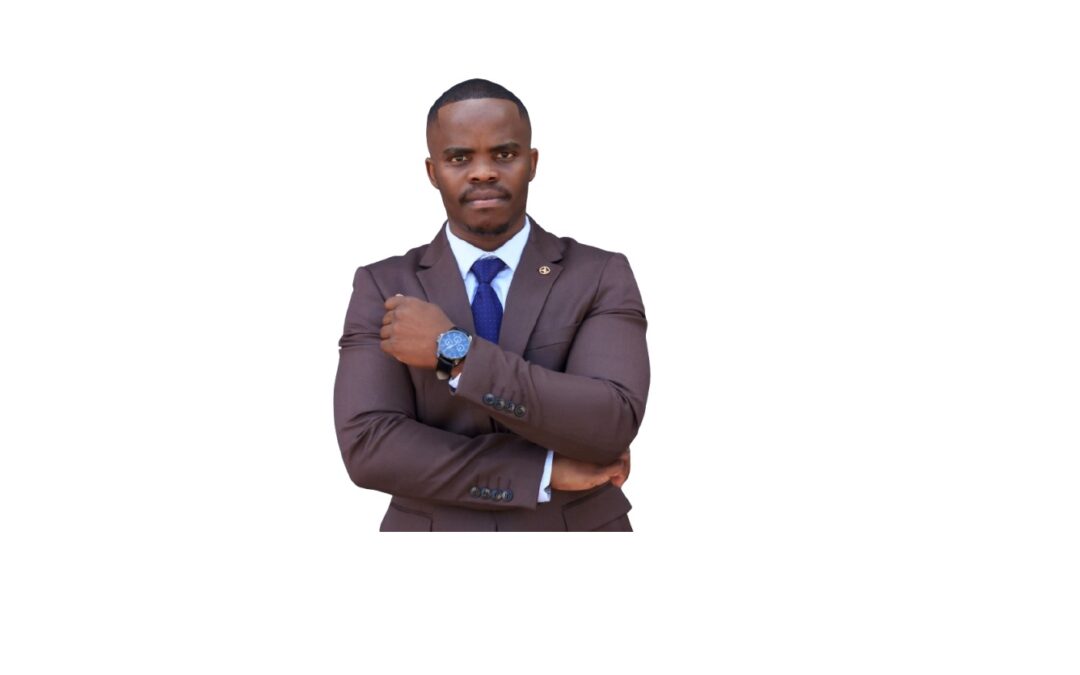
Sefako Makgatho Health Sciences University (SMU) has long been recognised as a hub for academic excellence and innovation. However, beyond its reputation for rigorous academic programmes and cutting-edge research, SMU plays a vital role in shaping the leaders of tomorrow. Through its commitment to leadership development, SMU equips students with the skills, knowledge, and experiences necessary to drive positive change in society. One notable example of SMU’s success in cultivating leaders is Jerry Thoka, whose remarkable journey is a testament to the university’s transformative power.
 From the rural village of Zebediela in Limpopo to the corridors of corporate governance and actuarial science, 28-year-old Thoka’s journey is one of resilience, faith, and a steadfast commitment to creating societal impact. Raised in a modest household by a truck driver father and a mother working on a poultry farm, he was no stranger to financial hardship. However, instead of being weighed down by his circumstances, he was driven by an unwavering desire to rise above them.
“Growing up in a financially constrained household was never easy, but it gave me the motivation to work harder,” he reflects. “I knew that education was my gateway to changing my circumstances.”
His exceptional aptitude for mathematics and science earned him top student honours at Makhutjisha Senior Secondary School, setting the foundation for his academic pursuits. Thoka began his higher education at Sefako Makgatho Health Sciences University (SMU), where he pursued a Bachelor of Science in Mathematical Sciences, specialising in Applied Mathematics and Computer Science. Recognising his passion for actuarial science, he later enrolled at the University of the Free State (UFS) to further his studies in the field. His time at UFS was marked by rigorous academic challenges, earning multiple actuarial exemptions and establishing his credibility within the Actuarial Society of South Africa (ASSA).
“Actuarial science is more than just numbers; it’s about using data to solve real-world problems and manage risks,” he explains. “This field has the power to influence financial security, social policies, and economic structures.”
Thoka’s expertise led him to Munich Reinsurance of Africa, where he currently works as an Actuarial Analyst. In his role, he engages in financial modelling and risk reserving, helping companies maintain stability in the face of uncertainty. His work underscores the critical role actuarial science plays in safeguarding financial security and mitigating economic risks.
Beyond his technical expertise, he has distinguished himself as a formidable leader in governance and policy advocacy. His leadership journey began at SMU, where he served as a mentor and later as Chairperson of the Residence Committee. His passion for student advocacy propelled him into the Student Representative Council (SRC), where he championed postgraduate funding and research opportunities.
In 2021, Thoka took on a more prominent leadership role as President General of the Institutional SRC at UFS, making history as an influential voice in university governance. As a member of the Senate and Institutional Forum, he actively contributed to shaping institutional policies, advocating for student welfare, and addressing systemic challenges in higher education.
“Leadership, to me, is about service and impact,” he asserts. “It’s about using one’s knowledge and position to create opportunities for others and drive meaningful change.” His governance work extended beyond university borders when he engaged with the South African Union of Students (SAUS) on policy development. In November 2024, he was elected as a Member of the UFS Council, where he continues to influence strategic decision-making.
“My election into the UFS Council disrupts the norm and introduces critical technical skills into governance. Having led two competitive institutions, I bring a unique student-centred perspective to the Council.” Thoka’s leadership was put to the test during the COVID-19 pandemic, where he played a pivotal role in reintegration policies, ensuring academic continuity while prioritising safety. He was also instrumental in the university’s adoption of a workers’ insourcing policy, benefiting both students and staff.
A devout Christian, he attributes much of his leadership philosophy to his faith. He believes in the principles of servant leadership, as exemplified in Matthew 23:11 (KJV): “But he that is greatest among you shall be your servant.” “Faith has kept me committed to genuine societal development, ensuring that my leadership remains rooted in integrity,” he states. “Greatness is attainable by anyone willing to serve.”
Thoka’s dedication to community upliftment extends beyond his personal achievements. He envisions a future where young professionals merge technical expertise with social responsibility. To this end, he co-founded the Chamber of Executive Youth (COEY), an initiative aimed at mentoring and equipping young professionals with critical skills while fostering leadership capabilities.
“Many skilled professionals limit their contributions to their fields, depriving society of their impact. COEY will recruit and persuade masters of scarce industries to engage in societal development and governance,” he explains. “We need to build a generation of young executives who are not only technically skilled but also socially conscious.”
His advocacy in higher education governance also centres on inclusivity and equity. As a member of the UFS Council, Jerry supports policies that ensure diverse student populations have access to quality education and resources. He emphasises the importance of scholarships, community partnerships, and outreach efforts to uplift underrepresented groups.
Thoka’s story is one of relentless ambition and purpose-driven leadership. “My aspiration is to leave behind a legacy of inspiration—a testament to the endless possibilities available to those who dare to dream. I want individuals to see, through my journey, that one’s background does not determine their ultimate success,” he concludes.
By Tumelo Moila

by Lorato | Feb 19, 2025 | All News, Alumni, SMU Media, Student Media
Sefako Makgatho Health Sciences University (SMU) continues to produce not only top-tier medical professionals but also changemakers who are redefining healthcare in South Africa. Among its most inspiring alumni are Dr Innocent and Dr Dikeledi Chauke, two medical pioneers whose journey from SMU classrooms to private practice exemplifies the university’s commitment to developing healthcare leaders.

More than just a love story, their success underscores SMU’s role in shaping resilient, highly skilled professionals equipped to lead in the demanding medical field. Their impact extends beyond the consulting room, as they actively contribute to South Africa’s healthcare system, proving that SMU graduates are at the forefront of addressing the country’s medical challenges.
SMU has long been recognised as an institution that nurtures both academic and professional success. For the Chaukes, it was at SMU that they built the foundation of their careers—gaining not only the theoretical knowledge required for medical excellence but also the practical skills, resilience, and leadership qualities necessary to thrive in South Africa’s evolving healthcare landscape.
Their journey began within the university’s corridors, balancing the pressures of medical school while developing a shared vision for the future. “Medicine was always more than just a degree—it was our calling. SMU equipped us with the tools we needed to serve communities in need and build a future where quality healthcare is accessible,” says Dr Innocent Chauke.
The couple’s academic journey was rigorous, marked by long hours of study and clinical rotations, but SMU provided them with an environment that fostered both personal and professional growth. “We were held to high standards, expected to think critically and to be ready for real-world medical challenges. Those experiences prepared us for everything that followed,” adds Dr Dikeledi Chauke.
Serving communities, changing lives
After graduating, the Chaukes embarked on careers that placed them at the heart of community healthcare. Their medical internships and community service years saw them stationed in rural hospitals, where they encountered first-hand the realities of South Africa’s healthcare system.
“Our time in community hospitals was eye-opening. It highlighted the disparities in healthcare access and deepened our commitment to patient-centred medicine,” Dr Dikeledi reflects. The lessons learned during this time influenced their decision to open a private practice in Mamelodi East, where they now provide essential medical services to underserved communities.
From general consultations and chronic disease management to minor surgical procedures, their practice embodies the principles instilled at SMU—a commitment to service, excellence in medical care, and an unwavering focus on patient well-being.
However, their journey has not been without challenges. A recent armed robbery at their practice was a stark reminder of the risks associated with healthcare entrepreneurship. “Despite setbacks, we remain committed to our vision. The need for accessible private healthcare is too great for us to back down,” says Innocent.
The Chaukes are not content with simply running a private practice—they are working towards a larger vision. Their goal is to expand their operations into a network of technologically advanced medical centres that will bring affordable, high-quality healthcare to more South Africans.
“Our long-term vision is to merge technology with medicine, ensuring that even those in underserved areas have access to the best possible care,” explains Dikeledi. This ambitious plan aligns with SMU’s ethos of producing medical professionals who not only succeed in their fields but also innovate and lead systemic change.
Their success is a testament that SMU alumni are not just entering the workforce—they are shaping industries, solving real-world problems, and driving progress in healthcare.
The Chaukes’ story is one of dedication, resilience, and visionary leadership. It is also highlights SMU’s unwavering commitment to developing professionals who are equipped to make a difference. As the university continues to cultivate top medical minds, it cements its status as a premier institution for health sciences education in Africa.
At SMU, students are not just taught—they are empowered to lead. And as the Chaukes continue to grow their impact in the medical field, they stand as a shining example of the calibre of professionals SMU produces—leaders who are not only skilled in medicine but driven by a purpose greater than themselves.
By Tumelo Moila

by Lorato | Feb 19, 2025 | Accolades and Achievements, All News, Alumni, SMU Media, Student Media
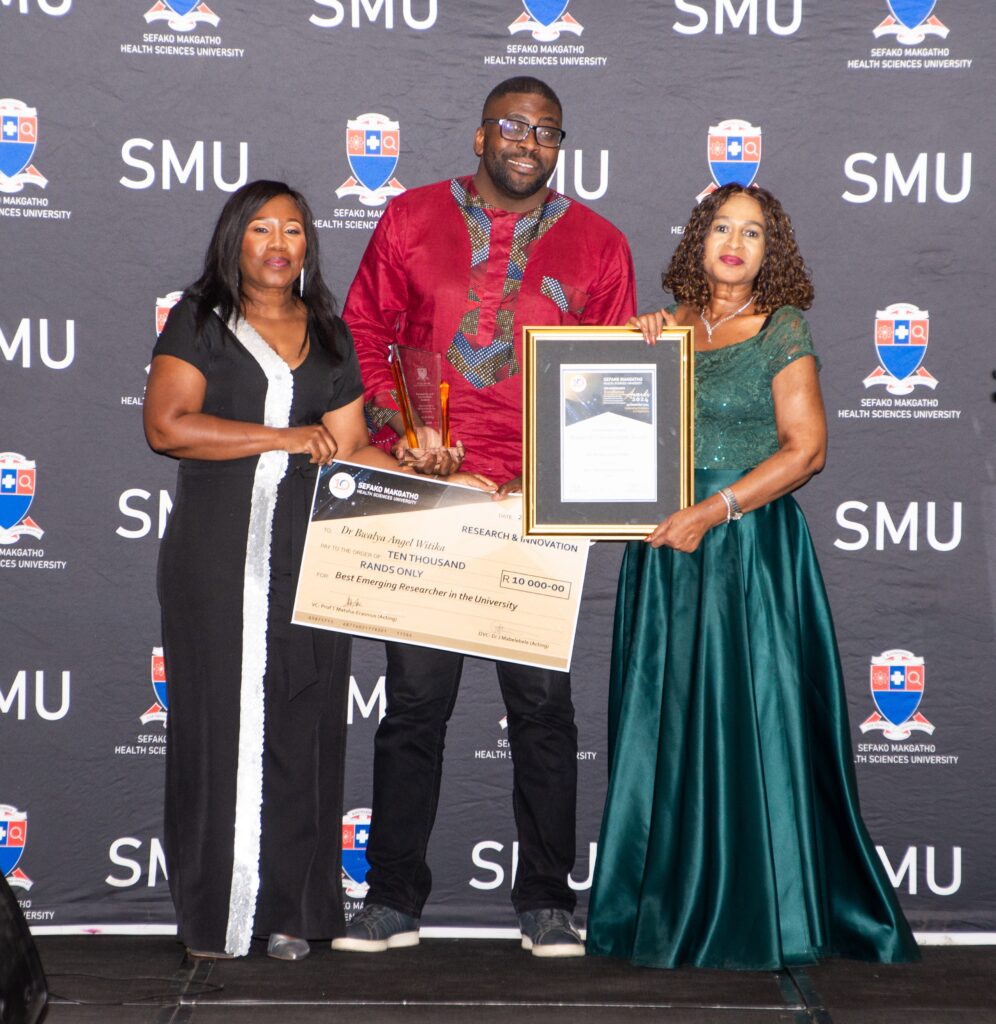
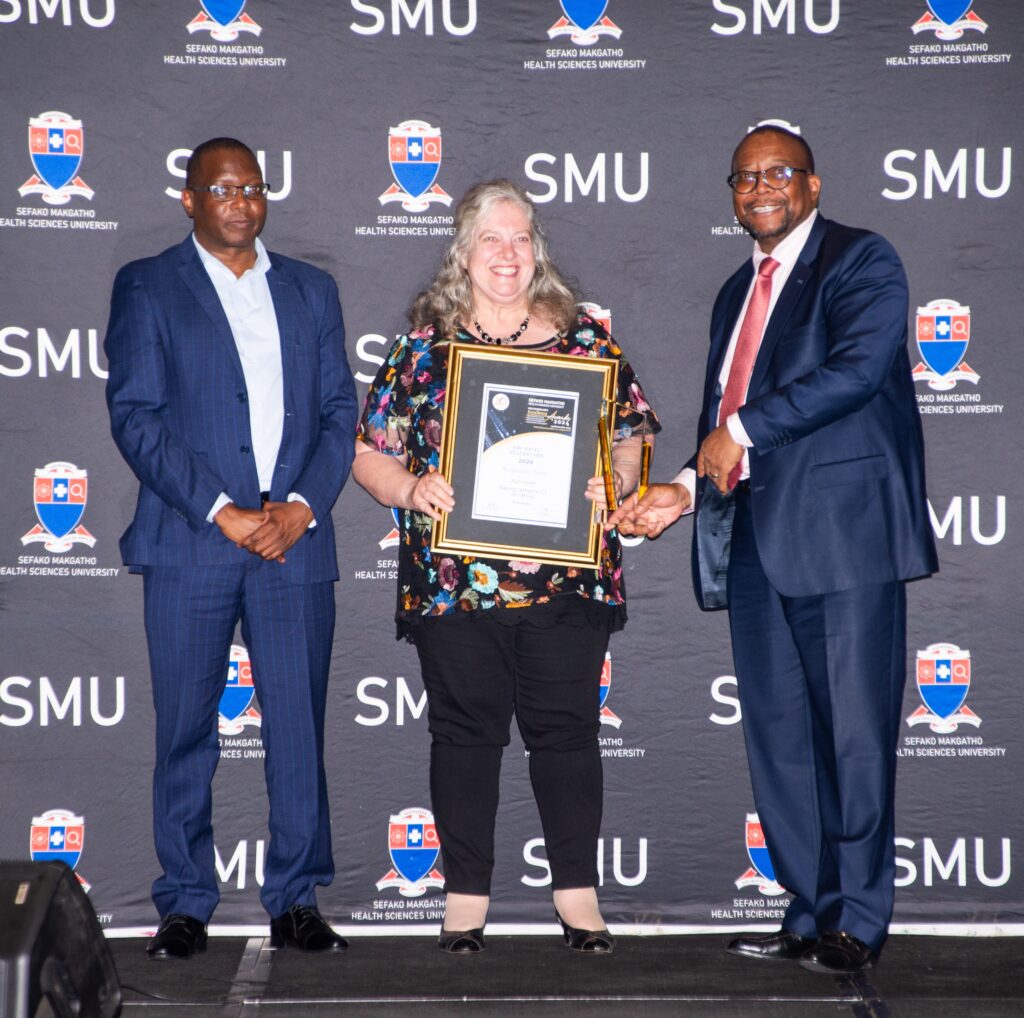
Sefako Makgatho Health Sciences University (SMU) reaffirmed its status as a premier institution in health sciences education by honouring academic and professional excellence at its prestigious Vice-Chancellor Excellence Awards ceremony. Held at The Maslow, Time Square Hotel in Menlyn, Pretoria, the event, themed “Celebrating Excellence in a Digital Era,” recognised outstanding individuals and teams driving innovation, research, teaching, and community engagement—further cementing SMU’s reputation as a leader in transformative education.
 Beyond recognising individual achievements, the ceremony underscored SMU’s unwavering commitment to excellence, relevance, integrity, equity, ubuntu, and professionalism—core values that continue to shape the institution’s impact in South Africa and beyond.
Delivering a powerful opening address, Acting Vice-Chancellor Professor Tandi Matsha-Erasmus highlighted the pivotal role of innovation in positioning SMU as a 21st-century institution. “In this digital era, our ability to innovate, engage, and support our community depends on our unwavering commitment to excellence. Tonight, we honour the exceptional individuals who embody these values and drive SMU forward,” she stated, reinforcing the university’s role as a catalyst for change in health sciences.
Among the evening’s top accolades was the Excellence in Community Engagement Award 2024, presented to Jackson Mahlaba and his team for their groundbreaking Vaccination Catch-Up Campaign. Their efforts to bridge healthcare gaps in underserved communities exemplified SMU’s mission to integrate world-class education with meaningful societal impact. “This award belongs to every team member who worked tirelessly to bring health services to those who needed them most. It is a testament to the power of collaboration and dedication,” said Mahlaba, emphasising the spirit of ubuntu that underpins SMU’s commitment to public health.
Setting new standards in administration and support
SMU’s excellence extends beyond academia and research to a culture of exceptional service and leadership. The Administration and Support Category highlighted professionals who ensure the university’s operational efficiency matches its academic prestige.
- Elisa Segaile received the Exemplary Client-Centric Behaviour Award, setting a high benchmark for student and staff service.
- Theo Bhengu was recognised for Outstanding Leadership & Professionalism, a reflection of SMU’s commitment to fostering visionary leaders within its ranks.
- Mpho Mmako earned two accolades—the Collaboration and Teamwork Award and Best Support Employee Award—demonstrating the value of collective success.
- Busisiwe Sijora was named Best Administration Employee, a recognition of her dedication to operational excellence.
 A university positioned for global competitiveness
The 2024 Vice-Chancellor Excellence Awards ceremony was more than just an evening of recognition; it was a bold statement of the university’s trajectory in a digital world. By fostering cutting-edge research, impactful community engagement, and excellence in administration, SMU continues to establish itself as a globally competitive institution that not only educates future health professionals but actively contributes to shaping South Africa’s healthcare landscape.
The Teaching & Learning Awards recognised:
- “Beginner” Teaching Excellence Award: Dr Sabashnee Govender-Davies
- “Experienced” Teaching Excellence Award: Dr Kebiditswe Masike
Several impactful projects were honoured:
- Project: Vaccination Catch-up Campaign (School of Pharmacy) – Group Leader: Jackson Mahalaba
- Project: Korwee Multipurpose Centre (School of Dentistry) – Group Leader: Emma Musekene
- Project: Creating a Healthy School through Physical Education at a School in Mapobane, Gauteng (School of Health Care Sciences) – Group Leader: Ntombenkosi Sobantu
- Project: Mathematics Career Fair (School of Science & Technology) – Group Leader: Joseph Fatlane
- Project: Child Health in the Community (School of Medicine) – Group Leader: Debbie Barnard
SMU’s leadership in Research and Innovation was recognised through the following awards:
- Best Emerging Researcher: Dr Bwalya Witika
- Best Overall Female Researcher: Prof Hannelie Meyer
- Best Overall Research Supervisor: Prof Moliehi Matlala
- Best Established Researcher in the School of Health Care Sciences: Prof Mathilda Mpata Mokgatle
- Best Established Researcher in the University: Prof Hannelie Meyer
NRF Rated Research Recognition Awards
- Rating Category: C2: Dr X Siwe-Noundou
- Rating Category: C2 (re-rating): Prof A Oettlé
- Rating Category: Y2: Dr LO Jolaoso
- Rating Category: Y2: Dr V Thibane
- Rating Category: C3: Dr G Ugwunnadi
- Rating Category: C2: Prof Mathilda Mpata Mokgatle
- Rating Category: Y2: Dr Bwalya Witika
The awards ceremony was a proud moment for SMU, showcasing the university’s dedication to fostering academic and professional excellence. Matsha-Erasmus closed the event with a heartfelt message to the awardees: “Tonight, we celebrate not just individual achievements but the collective progress of our university and its profound impact on society.”
SMU continues to be a beacon of excellence in health sciences education, shaping future leaders and driving transformative change.
By Dimakatso Modise