
by Lorato | Jun 3, 2026 | All News, Alumni, SMU Media, Student Media
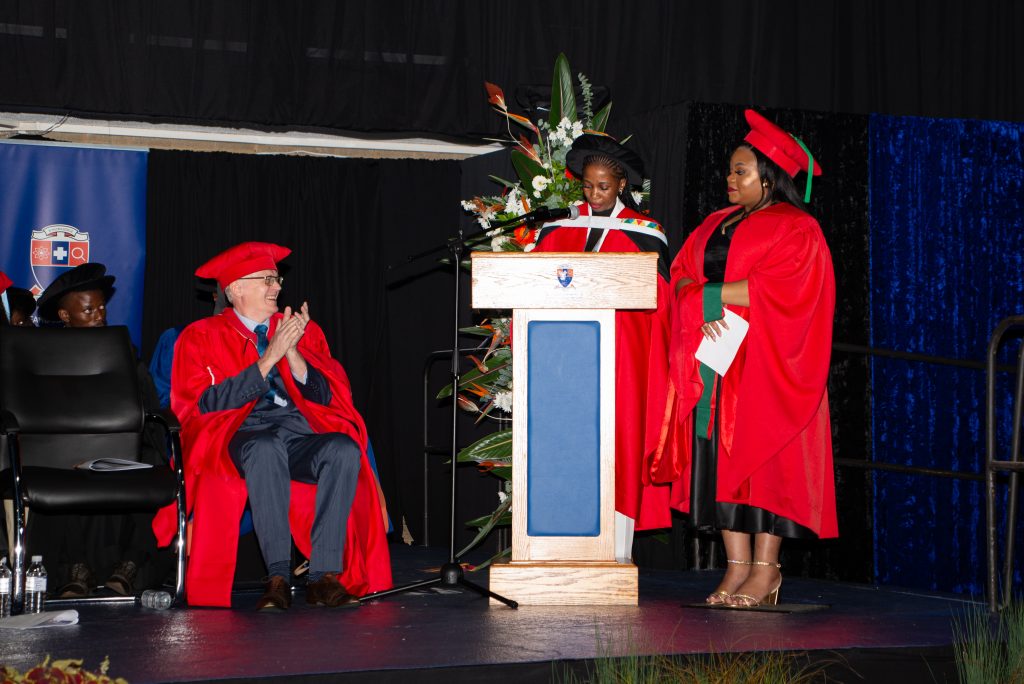
Sefako Makgatho Health Sciences University (SMU) continues to strengthen its position as a leading contributor to health sciences research through groundbreaking doctoral work that has uncovered promising antiviral compounds from South African medicinal plants. Newly graduated Doctor of Philosophy (Botany) graduate, Dr Mmamudi Anna Makhafola, has developed an innovative drug-discovery framework that combines metabolomics, computational biology and laboratory analysis to identify potential treatments targeting SARS-CoV-2 and future coronavirus threats.
 At a time when the world continues to seek new strategies to combat emerging infectious diseases, Dr Makhafola’s research highlights the untapped therapeutic value of indigenous medicinal plants. It demonstrates how African scientific knowledge can contribute to global health solutions.
Her doctoral study, titled Metabolomics approaches with in silico molecular docking and dynamics, and in vitro analysis for the discovery of South African plant-derived target drugs focusing on SARS-CoV-2 Papain-like Protease (PLpro) inhibitors, focused on the SARS-CoV-2 papain-like protease (PLpro), a critical enzyme involved in both viral replication and immune evasion.
The study explored two medicinal plants widely used in South African traditional medicine for respiratory ailments, Lippia javanica and Acorus calamus. Using an advanced untargeted UPLC-MS/MS metabolomics approach, Dr Makhafola successfully identified key bioactive compounds within the plants, including flavonoids, iridoid glycosides, phenylpropanoids and jasmonate derivatives.
“The objective was to establish and validate an integrated metabolomics-guided drug-discovery framework capable of identifying antiviral compounds from South African medicinal plants,” said Dr Makhafola. “Our findings demonstrate that traditional medicinal plants remain a valuable source of bioactive molecules that can be developed into future therapeutic agents.”
Following phytochemical profiling, the study employed advanced computational techniques to assess the therapeutic potential of compounds identified in medicinal plants. Among the most promising were catechin-7-glucoside and S-adenosyl-methionine, which emerged as leading candidates due to their strong and stable interactions with the viral target. The findings underscore the value of South Africa’s rich medicinal plant heritage as a source of novel bioactive compounds that may contribute to the development of future therapies against emerging health challenges.
Laboratory-based analyses further confirmed the antiviral activity of these compounds. The findings demonstrated that selected plant-derived compounds, especially Catechin-7-glucoside, possess promising therapeutic potential and warrant further investigation as candidates for future drug development.
“One of the most exciting aspects of the research was observing how plant-derived compounds could influence multiple biological pathways associated with disease processes,” said Dr Makhafola. “These findings highlight the potential of medicinal plants as valuable sources of bioactive compounds for future therapeutic development.”
 The findings were further supported by cellular and metabolic analyses, which demonstrated measurable biological responses associated with the investigated compounds. These results provide additional evidence of the value of integrating metabolomics, computational approaches and laboratory-based validation in natural product drug discovery.
Dr Makhafola gratefully acknowledges the financial support received through the South African Medical Research Council (SAMRC) Research Capacity Development Initiative (RCDI) Nested Scholarship Programme, which funded her doctoral studies. This support played a significant role in enabling the successful completion of the research.
Beyond the scientific discoveries, the research has already generated significant academic impact. Dr Makhafola has published multiple peer-reviewed articles arising from her doctoral work and continues to contribute to teaching, community engagement, postgraduate supervision and research as a part-time lecturer in SMU’s Department of Biology and Environmental Sciences. Her work spans metabolomics, medicinal plant research, drug discovery and infectious disease biology.
The study provides an important scientific foundation for the development of novel therapies against SARS-CoV-2 and future emerging coronaviruses while showcasing the value of South Africa’s rich biodiversity. It also demonstrates the growing importance of interdisciplinary approaches that combine traditional knowledge with cutting-edge technologies.
Dr Makhafola’s achievement reflects SMU’s commitment to excellence in teaching, learning and innovative research. By advancing scientific discovery, nurturing emerging researchers and translating knowledge into solutions that address global health challenges, the university continues to strengthen its research footprint and contribute meaningfully to improving health outcomes in South Africa and beyond.
By Tumelo Moila

by Lorato | Jun 3, 2026 | All News, Alumni, SMU Media, Student Media
Sefako Makgatho Health Sciences University (SMU) PhD candidate and part-time junior lecturer, Bontle Jessica Sibiya, has achieved remarkable recognition on both international and institutional platforms for her research addressing critical gaps in our understanding of human papillomavirus (HPV) among men who have sex with men (MSM) in South Africa.
 Sibiya was honoured as one of four best oral presenters sponsored by The FEBS Journal at the prestigious International Centre for Genetic Engineering and Biotechnology (ICGEB) “Translational Virology of Oncogenic Viruses: From Epidemiology to Intervention in Sub-Saharan Africa” Symposium, hosted recently by the University of KwaZulu-Natal (UKZN) in Durban. She further cemented her success by securing first place in the Best Oral Presenter (Student Category) at the SMU School of Medicine Research Day, where she presented the same study to a home audience.
The accolades coincide with another major milestone in her academic journey. Sibiya graduated as part of the SMU 2026 Autumn Graduation cohort after completing her MSc in Medicine (Medical Virology), with the award-winning research forming the basis of her master’s degree.
“This recognition is deeply meaningful because it validates years of hard work and highlights the importance of addressing overlooked public health challenges,” said Sibiya. “I am honoured that this research has resonated with both international experts and my colleagues at SMU.”
The symposium was co-hosted by UKZN’s Discipline of Virology at the Nelson R. Mandela School of Medicine and the ICGEB, one of the world’s leading intergovernmental organisations dedicated to life sciences research. The event brought together renowned virologists, oncologists and public health experts from across the globe.
Sibiya’s presentation, titled “Translating Epidemiology into Intervention: Urethral High-Risk HPV Burden and HIV-Associated Immunosuppression Among Men Who Have Sex with Men in South Africa,” examined the relationship between HIV-related immunosuppression and urethral HPV infection in MSM.
The cross-sectional study enrolled 199 participants from Gauteng and North West provinces, settings where no prior published data existed on urethral HPV prevalence among MSM. HIV prevalence in the cohort was 66.3%, and urethral HPV infection was detected in 20.9% of participants, with 16.2% of the cohort co-infected with both HIV and urethral HPV. High-risk HPV genotypes accounted for more than half of all urethral infections, with HPV 16, 18 and 68 among the most common. Notably, 60.0% of urethral infections were caused by genotypes targeted by the nonavalent Gardasil®9 vaccine, highlighting a substantial prevention opportunity for MSM. In South Africa, where HPV vaccination is currently offered only to adolescent girls through the national programme using the bivalent Cervarix® vaccine, these findings underscore the need to consider broader-valent vaccines and gender‑inclusive HPV vaccination strategies that explicitly include MSM in high HIV‑burden settings.
Importantly, the research demonstrated a clear association between declining CD4+ T-cell counts and an increased likelihood of HPV infection, highlighting the impact of HIV-associated immunosuppression on vulnerability to oncogenic HPV.
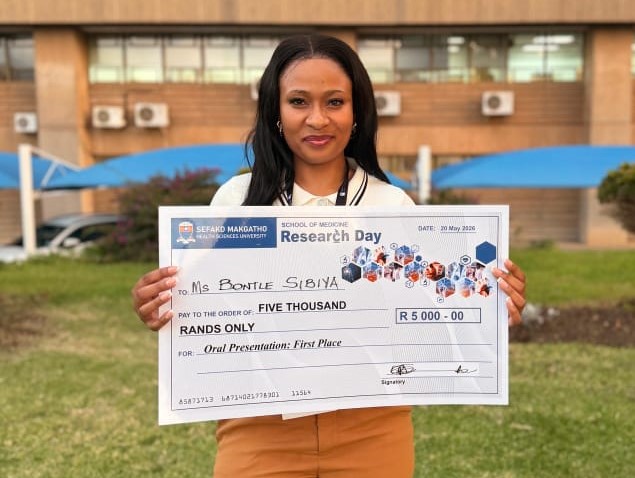 “The urethra has largely been overlooked as a potential reservoir for high-risk HPV,” explained Sibiya. “Our findings suggest that it may play a significant role in ongoing transmission and cancer risk, particularly in settings with a high burden of HIV.”
The research calls for the integration of urethral HPV screening into routine sexual health services for MSM and the expansion of HPV vaccination programmes, particularly the use of the nonvalent vaccine, among high-risk populations. The study was supervised by Dr Ramokone Lisbeth Lebelo and Dr Varsetile Varster Nkwinika from the Department of Virology at SMU.
SMU researchers believe the study contributes critical evidence needed to inform public health policy and strengthen prevention strategies.
“This work exemplifies the kind of impactful, translational research that addresses pressing health challenges in South Africa,” said Sibiya. “Ultimately, our goal is to ensure that scientific evidence translates into interventions that improve health outcomes and reduce the burden of HPV-associated diseases.”
By Tumelo Moila

by Lorato | Jun 3, 2026 | All News, Alumni, SMU Media, Student Media
Sefako Makgatho Health Sciences University (SMU) continues to demonstrate its commitment to advancing health systems innovation through impactful doctoral research aimed at solving some of South Africa’s most persistent healthcare challenges. A newly completed PhD study by Dr Mmabatho Miriam Ndwandwe has introduced a comprehensive governance framework designed to address chronic medicine shortages in public health facilities across the Eastern Cape Province, a problem that continues to undermine patient care and delay progress towards universal health coverage.
 Medicine stock-outs remain one of the most critical barriers to effective healthcare delivery in South Africa’s public sector. Despite existing procurement policies and regulatory frameworks, many facilities continue to experience frequent shortages of essential medicines, exposing deep structural weaknesses in governance, accountability and supply chain coordination. Dr Ndwandwe’s research responds directly to this challenge by proposing a practical, evidence-based framework to strengthen medicine governance from provincial to facility level.
At the heart of the study is a clear warning about the systemic nature of the problem. “Medicine shortages in the public health system are not only a supply chain issue, but a governance failure that requires coordinated leadership, transparency and accountability at every level of the system,” said Dr Ndwandwe, highlighting the urgency for structural reform.
Her doctoral research adopted a sequential explanatory mixed-methods design, combining quantitative data from 394 healthcare professionals with qualitative insights drawn from 20 in-depth interviews with healthcare managers operating at both facility and provincial levels. The study included nurses, pharmacists and medical officers across clinics, community health centres and hospitals in the Eastern Cape, ensuring a comprehensive view of the health system.
The quantitative findings revealed that more than 70 per cent of respondents reported frequent medicine stock-outs that severely disrupted service delivery. Statistical analysis further showed significant associations between perceptions of stock management and professional category, indicating inconsistencies in how shortages are experienced across different healthcare roles.
The qualitative phase provided deeper insight into the structural drivers of these shortages. Participants identified weak pharmaceutical supply chain systems, fragmented communication channels, poor budget transparency, limited functionality of Pharmacy and Therapeutics Committees (PTCs), and inadequate accountability mechanisms as key contributors to ongoing challenges.
“Health professionals consistently highlighted the lack of coordination between procurement processes and facility-level needs,” Dr Ndwandwe explained. “Without functional governance structures and clear accountability systems, even well-designed policies fail to translate into reliable medicine availability.”
Using the World Health Organization’s Good Governance for Medicines (GGM) Model as a guiding framework, the study developed a four-pillar governance model. This includes strengthened leadership and accountability mechanisms, improved transparency in procurement and financial systems, enhanced functionality of governance structures such as PTCs, and improved capacity-building alongside compliance monitoring.
Stakeholder validation confirmed that the framework is both practical and aligned with the National Health Act and international governance standards. Experts noted its strong potential to improve coordination between provincial authorities and frontline healthcare facilities, thereby strengthening the overall efficiency of medicine supply systems.
 Dr Ndwandwe, who brings extensive experience in public health leadership, including roles as a hospital Chief Executive Officer and senior provincial health manager, said her work is grounded in practical experience. Her background in pharmacy, supply chain management and health systems governance adds critical depth to the study’s findings and recommendations.
The research concludes that resolving medicine shortages requires more than logistical fixes; it demands a transparent, accountable and fully integrated governance system that connects policy with implementation. The proposed framework offers a realistic and scalable pathway towards achieving this transformation.
SMU emphasised that research of this nature reflects its broader mission to produce knowledge that directly responds to national health priorities. Through rigorous academic inquiry and innovation, the university continues to strengthen South Africa’s health systems and improve access to essential medicines.
As the country works towards achieving universal health coverage, Dr Ndwandwe’s research stands as a significant contribution, demonstrating how SMU continues to shape solutions that improve healthcare delivery and ultimately enhance the well-being of communities across South Africa.
By Tumelo Moila.

by Lorato | Jun 3, 2026 | All News, Alumni, SMU Media, Student Media
Sefako Makgatho Health Sciences University (SMU) continues to assert its growing global footprint, as MBChB IV student Freddy Kunene returns from a transformative international experience at the Asia World Model United Nations (AWMUN), held in Seoul, South Korea. His participation marks a significant milestone not only in his personal academic journey but also in SMU’s broader mission to produce globally engaged health sciences graduates capable of shaping international dialogue.
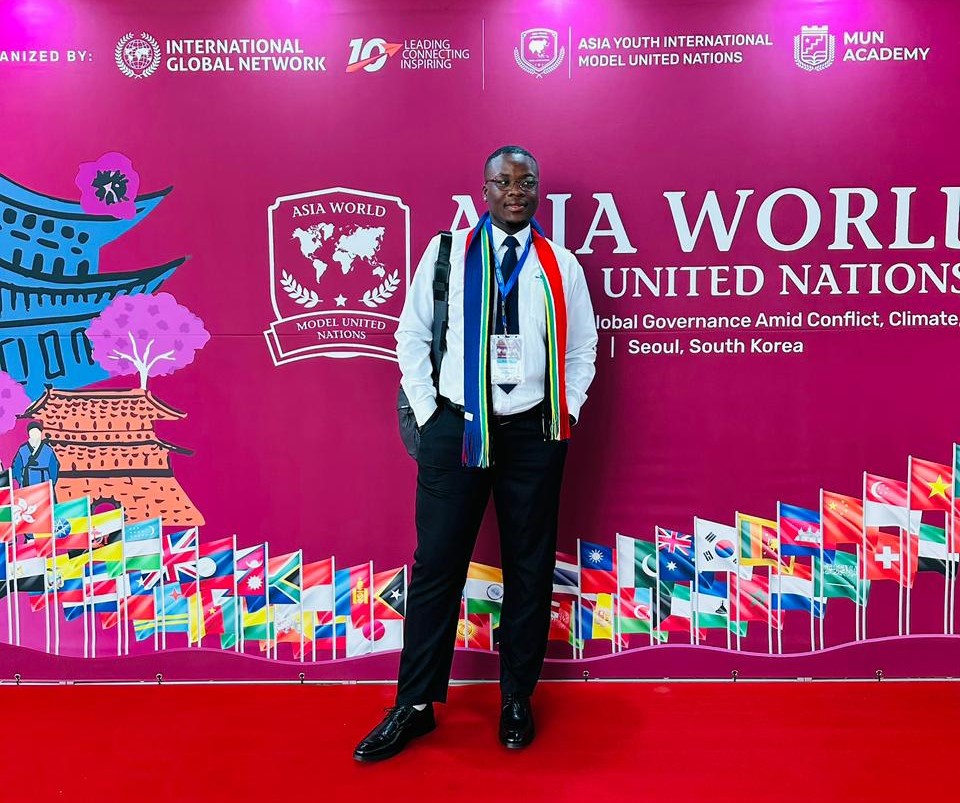 Kunene was selected through a competitive process that considered both academic excellence and leadership capacity, making him one of only two South Africans in the programme and the sole representative from SMU. Supported by the School of Medicine, the Student Affairs Directorate, and the Internationalisation Directorate, his selection reflects SMU’s commitment to expanding access to high-impact global learning opportunities.
Organised by the International Global Network (IGN), AWMUN brings together young leaders aged 15 to 25 from across the world to simulate United Nations councils and debate urgent global challenges such as disease outbreaks, climate change, and international development. The programme is designed to strengthen diplomacy, public speaking, negotiation, and cross-cultural collaboration skills in future global leaders.
Reflecting on the experience, Kunene described it as a defining moment in his academic and personal development.
“AWMUN is a global programme that brings together student leaders from across the world to engage in dialogue on pressing global issues, including disease outbreaks, climate change, and other challenges affecting humanity. I was fortunate to be selected to participate in this programme, an opportunity made possible through the support of the Office of the School of Medicine Deanery under the leadership of Prof Chauke, the Office of Student Affairs under Mr Nkuntse, and the Office of Internationalisation under Dr Jooste,” he said.
At just 20 years old, Kunene experienced international travel for the first time, navigating unfamiliar environments while representing both South Africa and SMU on a global stage. The experience, he said, pushed him far beyond his comfort zone and reshaped his confidence.
 “This experience was truly life-changing. It pushed me far beyond my comfort zone — navigating new languages, unfamiliar food, and an entirely different environment. Even the memory of my first flight still stands out as a moment of both excitement and disbelief. Through it all, I learned, adapted, and grew,” he added.
Beyond formal debates, Kunene highlighted the value of building international networks with fellow delegates, noting that these connections will continue to influence his academic and leadership journey.
One of the most memorable highlights came during the closing gala dinner, where he received recognition for best dressed after proudly wearing IsiXhosa traditional attire. The choice, he said, was intentional and deeply symbolic.
“For the event, I carefully selected IsiXhosa traditional attire after reflecting on South Africa’s rich cultural diversity and asking myself which outfit would stand out while honouring my identity. Wearing it made me feel confident and deeply connected to my roots,” he explained.
He added that the moment carried broader significance. “Standing on that stage meant more than recognition — it symbolised a dream realised. It felt like I was carrying the hopes of my ancestors, proving that our voices belong in global spaces too.”
Kunene’s achievement reinforces SMU’s vision of transforming health services through excellence and innovation, while strengthening its institutional values of leadership, excellence, and ubuntu. His journey demonstrates how SMU continues to empower students to transcend local boundaries and engage meaningfully in global academic and professional spaces.
As SMU advances its mission of producing socially responsive and globally competitive health professionals, stories such as Kunene’s affirm that its students are not only participants in global conversations — they are active contributors shaping them.
By Tumelo Moila

by Lorato | May 28, 2026 | All News, Alumni, SMU Media, Student Media
Sefako Makgatho Health Sciences University (SMU) has strengthened its position as a continental leader in health sciences education following a landmark clinical benchmarking session with Botswana’s private institution, Boitekanelo College.
 Hosted at SMU and led by acting Deputy Vice-Chancellor Professor Dini Mawela, the engagement operationalised the Memorandum of Understanding (MOU) signed between SMU and Boitekanelo College in September 2025. The visit marked a major step towards expanding African-led healthcare education partnerships across the SADC region.
Leading the Botswana delegation was Dr Tiro Mampane, SMU alumnus and founder and president of Boitekanelo College, who graduated from the university’s School of Medicine in 2003. Returning to his alma mater more than two decades later, Dr Mampane arrived with an ambitious vision to establish a school of dentistry in Botswana inspired by the SMU model.
“Of course, the journey has been very difficult but fulfilling because obviously I’m very passionate about it. It’s really close to my heart,” said Dr Mampane. “When I was here, I didn’t just learn medicine. I also saw what was going on in SMU. And basically, I want to replicate SMU in Botswana.”
Dr Mampane emphasised that health sciences programmes remain critical in addressing unemployment and strengthening healthcare delivery across the region. “Health programmes… the advantage about them is that currently, the sought-after employment rate with them is very high compared to other programmes,” he said.
The visit was coordinated through SMU’s Internationalisation Directorate under the leadership of Dr Carlien Jooste, who highlighted the university’s commitment to active and mutually beneficial African partnerships.
“My department advocates for partnerships that are mutually beneficial and active, which means that we do not enter into partnerships without evidence of collaboration already taking place,” Dr Jooste explained.
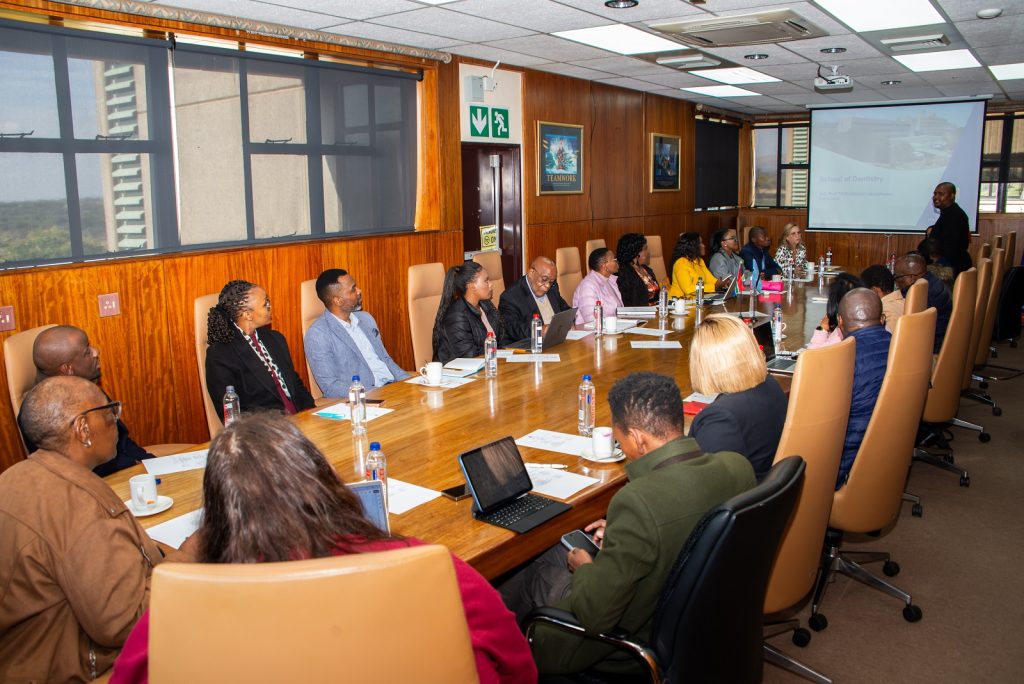 She added that the benchmarking visit followed extensive engagements in Gaborone earlier this year, where SMU academics and leadership interacted with Boitekanelo College and other institutions in Botswana. Those discussions showcased the strength of SMU’s dentistry programmes and inspired the current collaboration.
Importantly, Dr Jooste described the partnership as part of a wider shift toward African-centred academic development. “For years, universities in the Global South were dictated to by the Global North on how to internationalise,” she said. “Partnerships with SADC and other African countries now allow us to develop mutually beneficial partnerships on our terms.”
Boitekanelo College plans to implement the project through a phased academic rollout beginning with Oral Hygiene, progressing to Dental Therapy, and eventually introducing a full Dentistry degree programme. Dr Jooste stressed that benchmarking should promote adaptation rather than duplication.
“Benchmarking is not a copy-and-paste exercise,” she noted. “It is a learning exercise that allows you to take and implement what works for your programme and institution.”
The partnership framework also includes student clinical rotations, staff exchanges, collaborative teaching opportunities, and joint research initiatives aimed at strengthening healthcare systems across borders.
Following tours of the SMU Dental Hospital, the Botswana delegation acknowledged the scale of investment required to establish a world-class dental programme. However, the engagement reinforced confidence in the partnership’s long-term impact.
As discussions expanded into future regional community dentistry projects and collaborative healthcare initiatives, the benchmarking session reaffirmed SMU’s growing reputation as a premier African institution advancing excellence, innovation, and transformation in health sciences education.
By Rose Moreki