by Lorato | Apr 21, 2022 | All News, SMU Media, Student Media
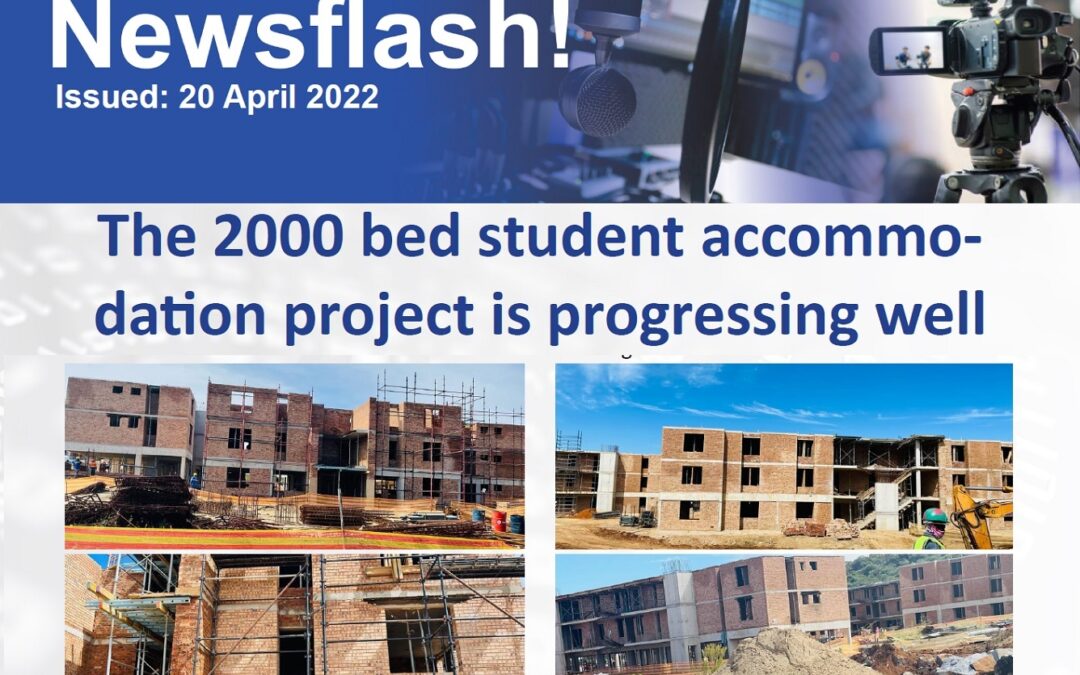
The University has a stated objective, of ensuring student life that contributes towards a conducive living and studying environment. A critical aspect in this regard is adequate student accommodation. It is in this context that the 2000 bed student accommodation complex is being constructed on the foot of the mountain overlooking the SMU campus.
During a recent site visit by a delegation led by the Vice – Chancellor, Prof. Peter Mbati, the team was informed that Phase 1 of the 2000 bed accommodation project has reached approximately 30% completion. Interestingly, it is envisaged that this phase will be completed by December 2022.
According to Ms. Nangamso Makgoka, Acting Director Built Environment, the interesting part of the project is that the 2000 bed residence’s foundation was built on a bed rock, thus giving assurance on the longevity and durability of the buildings.
To access full article, please follow this link: The 2000 bed student accommodation project is progressing well
by Kegorapetse | Jan 27, 2021 | All News, SMU Media
Circular Notice No.1 of 2021 refers to the attached falsified draft policy brought to the attention of the National Student Financial Aid Scheme (NSFAS) on Sunday, January 24, 2021, by university student representative counsels.
The attached falsified document on the NSFAS letterhead purports to articulate the scope and principles of the private accommodation policy. It also provides a comprehensive explanation for the criteria and procedure for accreditation, minimum standards for rooms specifications, as well as the responsibilities of students and service providers.
The Department of Higher Education and Training (DHET) Minimum Norms and Standards for Accreditation of Private Accommodation is the only policy of the DHET in existence that institutions must refer to in accrediting private accommodation and such NSFAS has not developed the said document, it is therefore a falsified document and should not be considered.
Sincerely,
Download NSFAS-CIRCULAR-NOTICE-NO.-1-OF-2021
Download NSFAS-False-Private-Accommodation-Policy
by Lorato | Jan 30, 2026 | All News, SMU Media, Student Media
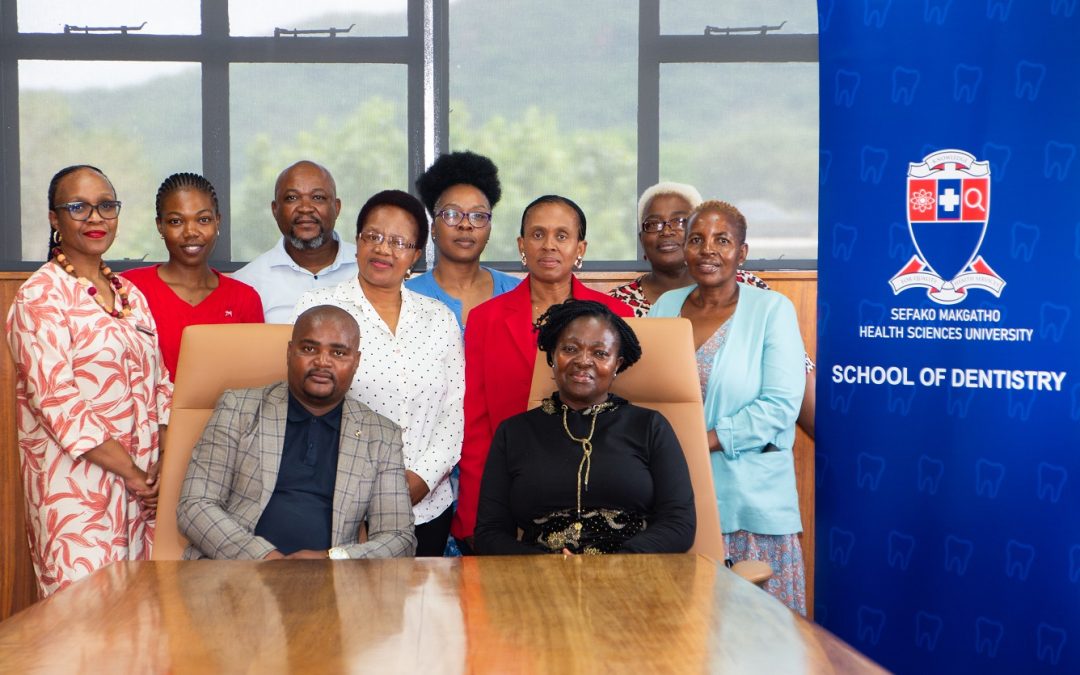
Sefako Makgatho Health Sciences University (SMU) and the University of Eswatini (UNESWA) have taken a decisive step towards strengthening dental education in Southern Africa through a series of reciprocal benchmarking visits designed to sharpen programme delivery, enhance academic collaboration, and build long-term regional partnerships.
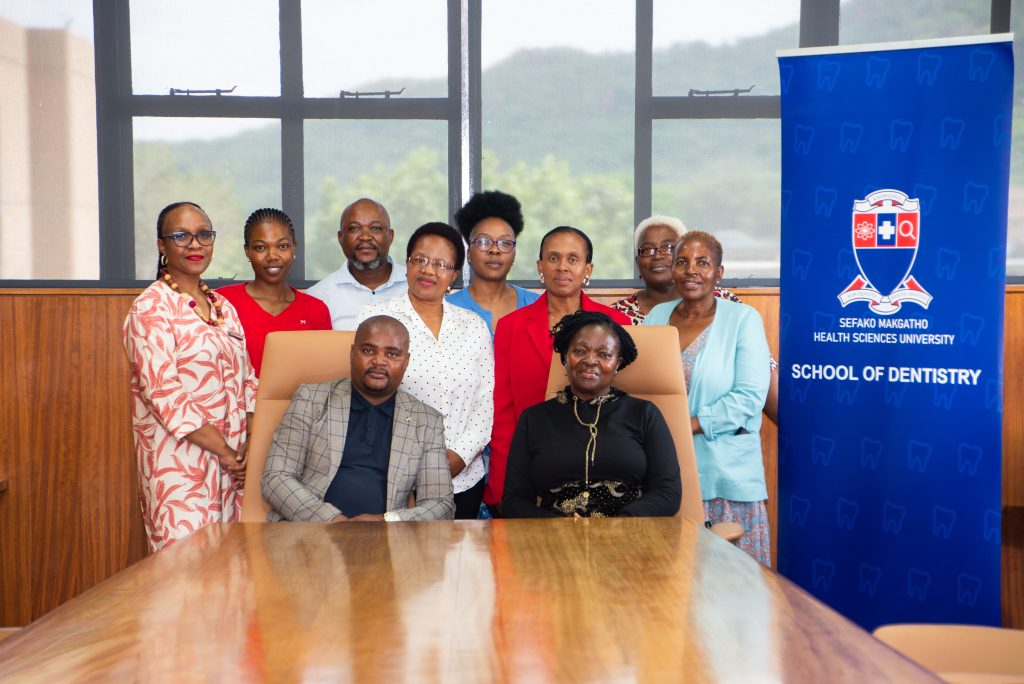 In an era where clarity, relevance, and impact matter more than ever, both institutions approached the exchange with a clear purpose: improve programme quality, accelerate student development, and open meaningful pathways for clinical training and mobility. The visits were structured to deliver immediate value — not abstract intentions — and to lay the groundwork for sustained cooperation.
The collaboration began when SMU’s School of Dentistry supported UNESWA in designing and refining its new dental programme, offering guidance on curriculum development, module outcomes, and the practical competencies required of a modern dental graduate. Earlier this year, an SMU delegation led by Acting Deputy Vice-Chancellor for Academic and Research, Prof Dini Mawela, travelled to Eswatini to review UNESWA’s newly accredited programme.
The visit included an on-site evaluation of facilities, discussions on community-based learning, and detailed engagements on SMU’s clinical training model. Prof Mawela was joined by senior staff members Prof Irene Munzhelele, Dr Sandeepa Singh, Gracia Malaka, Kelebogile Mothupi, and Director of Internationalisation, Dr Carlien Jooste, who each contributed expertise from their respective specialisations.
Their message was clear and direct: regional collaboration is a strategic investment that raises educational standards for all institutions involved.
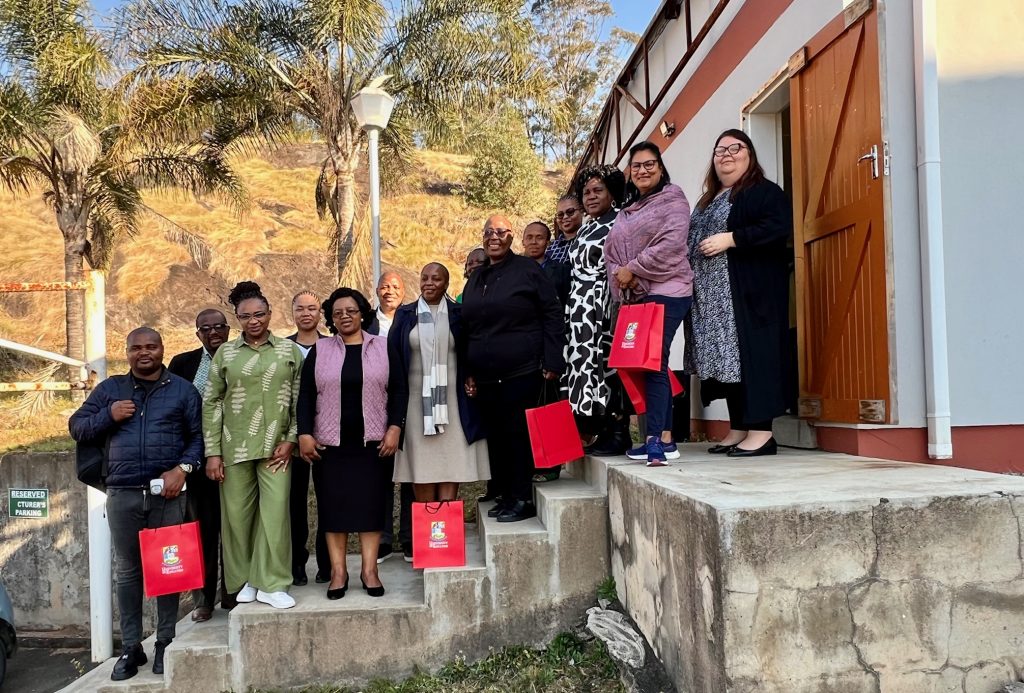 On 2 December 2025, the partnership advanced significantly when a UNESWA delegation undertook a return visit to SMU’s School of Dentistry to deepen discussions and benchmark SMU’s clinical and academic infrastructure. The delegates were welcomed by the Acting Head of Department for Dental Therapy and Oral Hygiene, Gracia Malaka, representing the Acting Dean, Prof Irene Munzhelele.
To ensure the exchange programme is both practical and sustainable, UNESWA’s delegation — led by Prof Tengetile Mathunjwa-Dlamini — outlined three immediate priorities: finalising the recruitment process for participating students, identifying suitable accommodation and infrastructure needs, and strengthening operational plans for long-term collaboration.
Prof Mathunjwa-Dlamini stressed that the visit was not a ceremonial gesture but a call to action: “We are here to formalise our partnership and ensure that our plans translate into real opportunities for our students and staff.”
Malaka reinforced this focus on implementation. He highlighted the regulatory requirements that all participating students must fulfil, including registration with the Health Professions Council of South Africa (HPCSA) and compliance with South Africa’s professional training standards for foreign students — a crucial step in ensuring patient safety, academic credibility, and ethical practice.
The meeting concluded with a guided tour of SMU’s clinical facilities and the state-of-the-art Skills and Simulation Centre, where UNESWA representatives observed SMU’s approach to hands-on training, assessment, and clinical preparedness.
Both universities described the exchange as the beginning of a confident new phase of academic cooperation — one defined by precision, urgency, and a shared commitment to producing highly skilled dental professionals for the region.
by Lorato | Nov 26, 2025 | All News, SMU Media, Student Media
Sefako Makgatho Health Sciences University (SMU) alumnus and retired Head of the Department of Cardiology, Professor Pindile Mntla, is celebrated for a career defined by vision, resilience, and unwavering commitment to medical education and research.
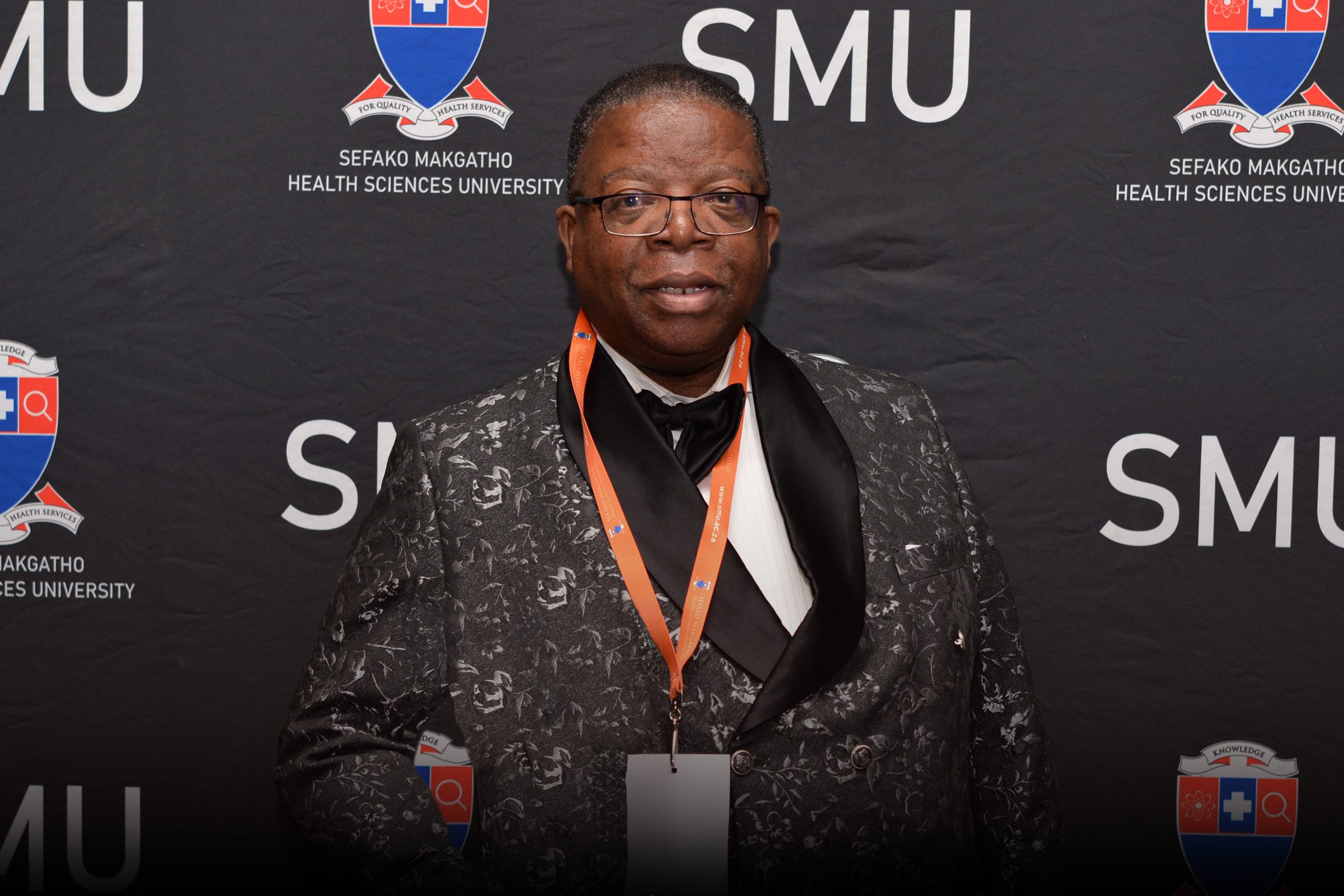 Born at Malmesbury Hospital in Cape Town, Prof Mntla was the second of five children, though only three survive today. Raised in Idutywa by his maternal grandfather and uncle, he attended primary school in Bolotwa and completed secondary education in Cofimvaba and at St John’s College in Mthatha. His early years instilled in him discipline and curiosity. “I owe much of my resilience and work ethic to those formative years,” he reflects.
Mntla graduated as a medical doctor from the Medical University of Southern Africa (MEDUNSA), now SMU, in 1984. During his years there, he was introduced to politics through the formation of Azanian Students Organisation (AZASO), where he served as the founding secretary of the Medunsa branch. He had already been exposed to uMkhonto weSizwe (MK) activities as a Grade 11 pupil at St John’s College, assisting with distributing literature, knitting jerseys, and supporting cell activities in Spring Street.
His medical training coincided with turbulent times in South Africa. Initially slated for an internship at Edendale Hospital in 1985, he refused to sign the “Inkatha Pledge” and was redirected to Natalspruit Hospital (now Telle-Mogoerane Hospital) during the height of the East Rand uprisings. Prof Mntla recalls the horrors of the era: a house in Thokoza, along with his graduation gown, hood, and books, was burnt, and he was closely monitored by Internal Security. Despite these challenges, he resolved early in his medical career that private practice would not be his path.
His registrar years at Wits were also marked by systemic inequities: restrictions on accommodation due to the Group Areas Act, unequal benefits compared to fellow registrars, and ongoing discrimination. Yet these obstacles did not deter him.
Returning to his alma mater in 1994 as a lecturer in Cardiology and Internal Medicine, Mntla co-launched the Refresher Course alongside Prof Willie Bam and departmental administrator Mrs Jackson in 1995. What began in a modest lecture hall evolved into a nationally recognised platform, now hosted at the CSIR, providing doctors with access to the latest cardiology knowledge in a structured, professional setting.
Mntla’s research collaborations, including work with the late Prof Bongani Mayosi, addressed critical cardiology issues such as pericardial disease, rheumatic heart disease, hypertension, and heart failure. Mentorship remains a core principle for him; numerous Master’s and PhD students under his guidance have completed studies shaping clinical practice today.
Beyond SMU, Prof Mntla has contributed to the Medicines Control Council (now SAHPRA – South African Health Products Regulatory Authority), the College of Physicians Council, and the Colleges of Medicine of South Africa (CMSA) Senate, and chairs the Nelson Mandela/Fidel Castro (NMFC) Medical Collaboration Programme. He has served on advisory boards, including the South African Medical Research Council (SAMRC), acted as an external examiner for the University of Botswana and the University of Malawi, and participated in medical outreach through the Phalala Programme in Eswatini.
Mntla’s personal legacy is equally profound. He is married to Dr Edith Nonhlanhla Mntla (née Madela) and is a proud father of three children, two of whom have followed him into the medical profession. “Seeing my children pursue medicine fills me with immense pride,” he reflects.
“Prof Mntla embodies a rare blend of vision and humility,” says Dr Edith Mntla. “He inspires excellence while nurturing talent.” His leadership journey includes serving as Deputy Dean for Students (2002), Director of the School of Medicine (2005–2009), and Acting Dean of the Faculty of Health Sciences.
Throughout his career, he has exemplified intellect, action, mentorship, and service. “He doesn’t just teach medicine; he teaches us how to serve humanity,” Dr Mntla adds. His story remains one of resilience, leadership, and lasting influence on South African medicine.
By Tumelo Moila

by Lorato | Oct 30, 2025 | Accolades and Achievements, All News, Alumni, SMU Media, Student Adverts
A brilliant young scholar from Sefako Makgatho Health Sciences University (SMU), Tumiso Matsobane Kekana, is redefining the intersection of Mathematics and Material Science through his pioneering research in Chemical Graph Theory (CGT). His work, which investigates the structural and mechanical properties of complex molecular compounds such as dendrimers and graphene, has attracted both national and international recognition for its scientific precision and potential applications in nanotechnology and materials engineering.
 Born on 22 July 1997, Kekana recently graduated cum laude with a Master of Science in Mathematics from SMU. His dissertation, “Computational Analysis of Complex Dendrimer and Graphene Structures via Neighbourhood Multiple Degree-based Topological Indices and M-Polynomials,” advances the mathematical modelling of molecular structures and their behaviours under various conditions.
“Mathematics is not just about numbers—it’s about revealing the patterns that govern our universe,” he explains. “Through Chemical Graph Theory, we can predict the properties of materials before they even exist in a lab. That’s the power of mathematical innovation.”
At the core of Kekana’s study lies the use of Topological Indices (TIs)—numerical descriptors that model molecular structures as graphs. His research introduces neighbourhood multiple degree-based TIs, offering more accurate predictions of graphene’s mechanical properties, such as Young’s Modulus, Poisson’s Ratio, and Shear Modulus. His results confirm the predictive strength of these mathematical tools, marking a step forward in computational chemistry.
Beyond research, Kekana is a full-time lecturer in SMU’s Department of Mathematics and Applied Mathematics, where he teaches Advanced Calculus and Linear Algebra and mentors young mathematicians. Through his involvement in the department’s Community Engagement Committee, he helps organise mathematics competitions and outreach programmes for high school learners, nurturing future problem-solvers.
“Relevance beats cleverness every time,” he reflects. “If our teaching and research don’t connect to real-world challenges, then we’ve missed the purpose of science.”
 Kekana’s contributions have been recognised through peer-reviewed publications in international journals such as Frontiers in Applied Mathematics and Statistics and Discrete Mathematics, Algorithms and Applications. His recent paper, co-authored with Dr Kazeem Aremu and Professor Maggie Aphane, presents a new method for computing topological descriptors of graphene using Neighbourhood Multiple M-Polynomials—a breakthrough simplifying complex molecular analysis.
Kekana’s success story began on the dusty streets of Ivory Park. After matriculating from Thuto Ke Maatla Comprehensive School in 2015 with results that initially barred university admission, he spent two years upgrading his marks at Tembisa High ABET School. In 2018, he was finally accepted to study Mathematics at SMU—a dream fuelled by his mentor, Godfrey Tshehla (PhD candidate in Financial Mathematics at Wits), whose passion for mathematics inspired him deeply.
Although he failed his Honours year in 2021, his supervisor, Dr Aremu, refused to let him quit. “He reminded me of my ‘why’,” Kekana recalls. Repeating the programme in 2022, he graduated with distinction.
Yet another obstacle emerged after his Honours degree: university debt barred him from accommodation and registration. Forced back to his two-room shack in Ivory Park, he began his Master’s degree under severe hardship—no electricity, no proper study space, and constant financial strain. To survive, he sold achaar and relied on Hands of Compassion, the SMU feeding scheme. Drawn by the difficult environment, he briefly turned to gambling (dice), even becoming a “knox man” as a means of survival. Despite these challenges, he completed his MSc degree cum laude in record time and published two Q2-ranked journal papers.
Now a PhD student, full-time researcher, and lecturer, Kekana’s journey embodies resilience, passion, and purpose. “Where you start doesn’t define where you can go,” he says. “With perseverance, even dust can give birth to diamonds.”
By Tumelo Moila