
by Lorato | Jul 2, 2025 | All News, SMU Media, Student Media
At just 30 years old, Dr Sedzani Pheladi Malovhela is already making an indelible mark in South Africa’s public health system, particularly in the field of paediatrics. Raised between Venda, Burgersfort, and finally Pretoria, Dr Malovhela’s journey is one defined by resilience, faith, and an unwavering commitment to the well-being of children.
 A proud alumna of the Sefako Makgatho Health Sciences University (SMU), she credits much of her medical foundation to the institution’s robust clinical training and early exposure to real-world cases. “SMU pushed me to grow under pressure,” she reflects. “It wasn’t just about mastering the textbook but learning to treat patients as whole beings. That changed me.”
A grateful product of Princess Park College in Rosslyn, Malovhela has consistently pursued academic excellence, having matriculated with distinctions in all seven subjects. “I’ve always been committed to giving my best—not just for results, but because excellence is a habit I value,” she reflects. Now a passionate voice in paediatrics, Malovhela describes finding purpose in the field: “The more time I spent in paediatrics, the more I felt alive there. Children don’t just get better physically; they thrive when someone genuinely advocates for them. I wanted to be that person.” This conviction also underpins her caregiver-centred approach: “In paediatrics, every child should be managed as part of a team — and that team always includes the caregiver. They are our best partners on this journey.”
But her calling to paediatrics was truly cemented during her internship at Rob Ferreira Hospital in Mpumalanga amidst the chaos of the COVID-19 pandemic. One night, she was called to assist a child suffering from sepsis. Despite the team’s best efforts, they lost the child. “That moment broke me—but also became my turning point,” she says. “I never wanted to find myself lacking again. I wanted to be the doctor children could rely on.”
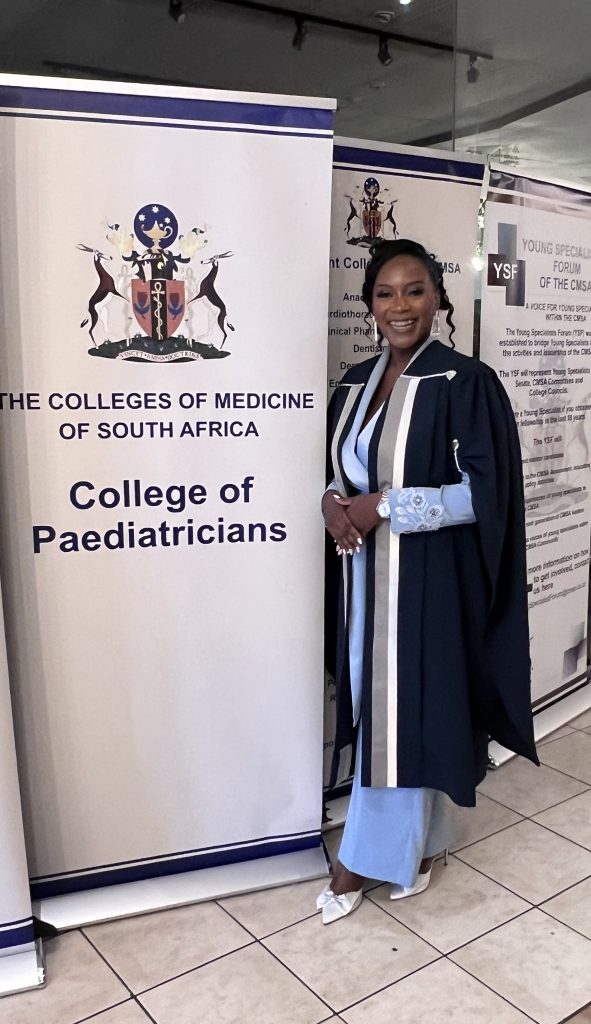 Today, Malovhela serves as a medical officer rotating through remote clinics in Pretoria East and as far as Bronkhorstspruit, where her dedication to paediatric health has earned her the 2024 award for Best Medical Doctor in her subdistrict. Her passion lies especially in neonatology—caring for newborns in their most vulnerable hours. “It’s more than clinical,” she shares. “It’s emotional, it’s spiritual. I pray over each one. I hope they grow to fulfil their purpose.”
Her work doesn’t stop within the clinic walls. Malovhela is a fierce advocate for community outreach and education. She supports adolescents at Wozanibone High School, in Kanana, Bronkhorstspruit and educates caregivers on children’s health and development, often addressing the socio-economic factors that undermine well-being. “There’s still a significant knowledge gap,” she says. “We need to empower families, not just treat conditions.”
One of the most defining influences in her journey is fellow SMU alumna Dr Amukelani Mthombeni. “She didn’t just diagnose patients, she saw them,” Malovhela recalls. “She taught me to listen deeply—to look for the story behind the symptoms.”
Balancing this demanding career with personal wellness is no easy feat. “I’m intentional about protecting my peace,” she says. “Whether it’s solo brunches, swimming, or running—I find joy in quiet, nurturing spaces.” A lover of fitness, she proudly boasts five half-marathon medals earned in 2025 alone.
But her heart remains firmly with the children. “Paediatrics is tough, yes. But it’s purposeful. Even on the hard days, my love for this work lifts me.”
Looking ahead, Malovhela dreams of specialising in neonatology, while also integrating advocacy and public health research. She envisions creating a space where medicine, community, and education intersect—a “soft space where little ones can thrive.”
Her mentorship journey began in 2018 as a peer mentor at SMU and continues today through lived example. “You don’t need to be loud to lead,” she says. “Just walk boldly in your purpose, and others will follow the light.”
To aspiring doctors, she offers this advice: “Medicine is not a race. Be gentle with yourself. Let your purpose anchor you, and let self-care sustain you.”
In a world where children often go unheard, Malovhela has chosen to be their voice, their advocate, and their healer. In her own words: “At the centre of it all is the child. And that’s who I show up for, every time.”
By Tumelo Moila
by Lorato | Jul 2, 2025 | All News, SMU Media, Student Media
In the quiet rural village of Mathopestad in the North West, few would have imagined that a young boy from its dusty streets would one day contribute vital research to South Africa’s understanding of the COVID-19 pandemic. Moeletsi Kevin Ditse, now a final-year Bachelor of Medicine and Bachelor of Surgery student at Sefako Makgatho Health Sciences University (SMU), has emerged as a remarkable young scholar, shedding light on the role of forensic pathology in global health crises.
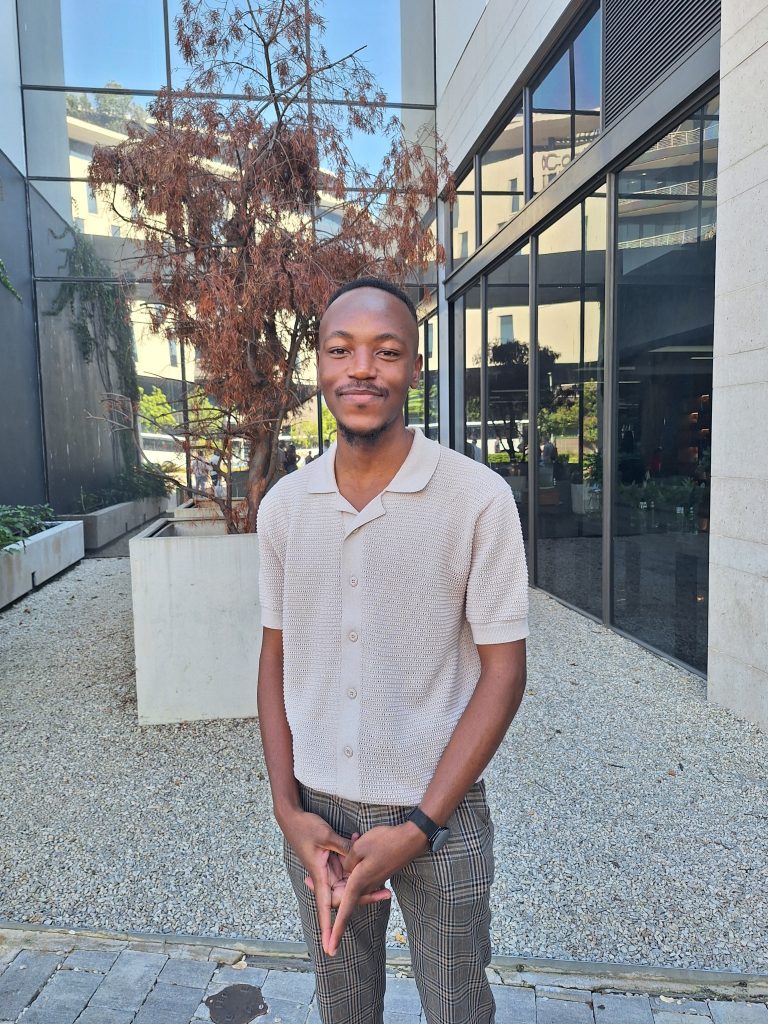 Born and raised in Mathopestad, Ditse matriculated from Lesele Secondary School in 2019 before embarking on his medical journey at SMU. Passionate about medicine and driven by curiosity, Ditse chose to explore uncharted territory for his undergraduate research: “A retrospective analysis of COVID‐19 cases seen at a medico-legal mortuary from March 2020 to February 2022.”
“When the pandemic hit, a lot of research focused on clinical aspects and hospitalised patients,” Ditse said. “But very little was being done from a forensic perspective, especially here in South Africa. I wanted to bridge that gap.”
His research was conducted at Ga-Rankuwa Forensic Pathology Services, where he meticulously analysed post-mortem reports of individuals who tested positive for SARS-CoV-2. The study used a manual data collection method, with each case anonymised and transferred electronically after being reviewed over a six-month period.
One of Ditse’s most striking findings was the unexpectedly even age distribution of COVID-19 fatalities. “It was surprising,” he admitted. “Contrary to global findings that suggested older people were more susceptible, we observed equal infection rates among young and elderly individuals. That challenged existing assumptions.”
Moreover, his analysis revealed that more men than women succumbed to the virus. However, there were minimal socioeconomic disparities, as most cases came from the low-income areas surrounding Ga-Rankuwa.
“The role of medico-legal mortuaries has been severely underappreciated,” Ditse explained. “During the pandemic, forensic pathology helped distinguish COVID-19-related deaths from suicides, domestic violence, and other causes. It also contributed to protocols for safe handling of deceased patients and offered insights into organ complications caused by the virus.”
Despite the study’s limitations, such as a small sample size and the inability to conduct full-body autopsies due to safety protocols, Ditse believes the research has contributed meaningfully to the national dialogue on pandemic preparedness and forensic integration.
The experience was not without challenges. Balancing academic responsibilities with high-level research proved demanding. “Transporting myself to the mortuary, analysing data from over two years of cases, and keeping up with coursework required discipline,” he shared. “I’m grateful to my supervisors, Dr Charmaine Van Wyk and Dr Keven Hlaise, who supported me throughout.”
Beyond research skills, Ditse said he gained an appreciation for the ethics of medical inquiry. “Understanding how to seek ethical clearance, protect the identity of deceased individuals, and uphold standards of confidentiality was eye-opening.”
Looking forward, Ditse aspires to continue research in forensic pathology. “There’s so much still to uncover. I’m not sure exactly what I’ll explore next, but this journey has definitely sparked something in me.”
To fellow medical students, his message is simple but powerful: “Don’t wait. There are platforms like the South African Medical Journal for Undergraduate Students where we can publish and grow. Research is not just for professors—it’s for all of us.”
Ditse’s work stands as a testament to the critical, often invisible role that forensic medicine plays in public health. As he notes, “In times of crisis, understanding the cause of death isn’t just about science—it’s about accountability, planning, and saving lives.”
His story is not just that of a student fulfilling a requirement, but of a future doctor rising to the moment with purpose, courage, and a deep commitment to truth.
By Tumelo Moila

by Lorato | Jun 25, 2025 | Accolades and Achievements, All News, Alumni, SMU Media, Student Media
At the heart of SMU’s research strategy lies a commitment to interdisciplinary collaboration, knowledge generation, and technology transfer. By fostering innovation and expanding its research capacity, the university aims to play a pivotal role in addressing South Africa’s pressing healthcare challenges — from infectious diseases to mental health and non-communicable conditions.
 A prime example of this ambition is the School of Pharmacy’s recent achievement: securing its second provisional patent. Dr Bwalya Witika, a senior lecturer in Pharmaceutics and his postdoctoral fellow, Dr Jean Ngilirabanga, who joined him in 2023, successfully filed a patent titled “Eutectic Compositions”, with the priority date of 9 June 2025. Their work explores novel drug delivery mechanisms by combining compounds to lower melting points, enhancing the efficacy and tolerability of treatments such as nonsteroidal anti-inflammatory drugs (NSAIDs). This breakthrough reaffirms the school’s growing reputation for pharmaceutical innovation and research excellence.
Eutectic compositions are mixtures of substances that, when combined, melt at a temperature lower than either of the individual components. In pharmaceutical science, this characteristic is highly valuable for improving drug solubility, stability and delivery, two critical challenges in modern medicine. Witika traced the origins of this research back to 2022, inspired by the urgent need for safer pain management alternatives during the global opioid crisis. “NSAIDs weren’t enough, and opioids came with long-term risks. I wondered—what if we enhanced NSAIDs with something like chilli?” he explained, referring to Nonivamide, a compound structurally related to capsaicin.
 The research process involved formulating innovative drug combinations that provided synergistic pain relief. Despite the scientific and administrative challenges, the work culminated in a promising invention that could reshape pain treatment approaches. While the research was conducted internally at SMU, Witika confirmed that discussions with potential industry partners are already underway. “For now, it’s been in-house, but the potential for wider collaboration is significant,” he said.
Filing a provisional patent provides legal protection while allowing further refinement of the invention. Witika praised SMU’s Technology Transfer Office (TTO) for its vital support throughout the process. “TTO Liaison Officer Pontsho Mampuru is a superhero, relentless in his commitment. It’s been a pleasure working with TTO,” he added.
This development follows SMU’s historic first patent in 2024: Raloxifene Hydrochloride Hydrate Solvate, a novel compound with the potential to revolutionise treatment for postmenopausal osteoporosis and breast cancer. That breakthrough was led by Emmanuel Kiyonga, a master’s graduate in the School of Pharmacy, and marked the beginning of a new era of innovation for the university.
Together, these patents underscore SMU’s transformation into a research-intensive health sciences institution committed to addressing global health challenges through science and invention. Witika and Ngilirabanga are optimistic about the future of their research. They believe their eutectic formulation could make a major impact on drug development, particularly in the field of pain management. Further patent filings and commercialisation efforts are already underway. “This is just the beginning,” said Witika. “We’re at the forefront of something meaningful. It’s vital that inventors maintain a connection to their work—we must ensure that identity is preserved in the products we create.”
For Witika, the success is both professional and deeply personal. “Even though this is my second patent, the feeling is just as incredible. You’re reminded that you’re contributing something small but significant.” His advice to fellow academics? “Go for it. Don’t hold back.”
For Ngilirabanga, this has been a great success. “I am immensely proud of this achievement, and I am excited about the future. This is my first patent, the first of many. To my fellow academics, keep pushing. Let’s make SMU proud,” said Ngilirabanga.
Looking ahead, they hope that this achievement—along with future innovations—will encourage university leadership to recognise and support the vital role of research in shaping a better world. “These are small steps,” he said, “but they’re paving the way for greater impact on science, patients, and future scholars.”
By Tumelo Moila

by Lorato | Jun 25, 2025 | All News, Alumni, SMU Media, Student Media
In a proud moment for Sefako Makgatho Health Sciences University (SMU), Dr Karmishtha Maharaj was conferred with a PhD in Pharmacy during the university’s recent autumn graduation ceremony. Her achievement is not only a personal milestone but a significant contribution to advancing pharmacovigilance within the private healthcare sector, particularly in the context of HIV treatment in South Africa.
 Now 39 years old, Dr Maharaj is currently based at Ampath Laboratories in Centurion, where she serves as a Pharmacogenomics Specialist. Her professional journey with Ampath spans over 13 years, beginning in 2011 as a Phlebotomy Facilitator. Originally from Newcastle in KwaZulu-Natal, Maharaj’s career has been deeply shaped by her upbringing in a close-knit family and an enduring desire to bridge patient care and pharmaceutical science.
“My interest in medicine began early,” she reflects. “From weekends volunteering at a private hospital to shadowing my uncle at his pharmacy, I was always drawn to helping others. I first trained as a nurse and later transitioned into pharmacy, blending the clinical and pharmaceutical sides of patient care.”
Maharaj’s doctoral research, conducted through SMU’s School of Pharmacy, focused on the use of routine laboratory tests as early indicators of adverse drug reactions (ADRs) in patients on Highly Active Antiretroviral Therapy (HAART). Her study, conducted at a major private HIV treatment practice in Pretoria, sought to address a critical gap in South Africa’s pharmacovigilance data, particularly within the under-researched private healthcare sector.
She strongly believes laboratory-based monitoring should become a standard in ADR surveillance. “It enables early detection of toxicity before symptoms appear, allowing timely interventions. This approach not only improves patient safety and adherence but fills major gaps in traditional pharmacovigilance, especially when managing complex cases involving multiple medications.”
Despite the private sector being relatively well-equipped, with access to electronic health records and accredited laboratories, Maharaj points out that systemic challenges remain. “There’s no coordinated pharmacovigilance framework in private care. Proactive monitoring is still underutilised, and pharmacogenomics testing is limited due to cost and lack of awareness.”
Her study reviewed 267 patient files from a private HIV clinic in Pretoria. Elevated creatinine and liver enzymes served as early warning signs of renal and hepatic toxicity. She observed that patients on concomitant medications had heightened risks, and that ART changes were most commonly associated with drugs like efavirenz and lopinavir.
“My research offers valuable insights that can contribute to national health policy,” she says. “It provides a model for integrating lab data into national pharmacovigilance frameworks, updating HIV treatment guidelines, and improving surveillance beyond clinician reporting.”
She is also eager to expand the research to public health settings and rural areas. “We need to ensure the research represents the broader HIV population. Exploring regional differences and building scalable, risk-based models could strengthen provincial and national responses to HIV care.”
Looking ahead, Maharaj envisions several research paths, including prospective studies, cost-effectiveness analysis of lab-based surveillance, and the feasibility of implementing pharmacogenomic testing and therapeutic drug monitoring locally.
She also hopes to see her findings incorporated into national medical training and treatment guidelines. “Empowering healthcare providers with these tools through education would support a more predictive, personalised approach to care.”
Completing a PhD while working full-time was no small feat. “It required planning, discipline, and self-care. My support system—family, mentors, friends—was essential. There were moments of doubt and setbacks, but also incredible breakthroughs that reminded me why this work matters.”
Now that she has earned her PhD, Maharaj plans to continue blending academic research with public engagement. “I want to raise awareness around drug safety and help integrate personalised medicine into routine care.”
She hopes her legacy is one of improved patient safety and inspired future researchers. “For young women from underrepresented backgrounds, I say: believe in your potential. Your voice matters, and your journey can change lives.”
Summing up her journey, Maharaj shares, “The rewarding challenge of pioneering new paths. As Elizabeth Blackwell said, ‘It is not easy to be a pioneer – but oh, it is fascinating!’”
By Tumelo Moila

by Lorato | Jun 18, 2025 | All News, SMU Media, Student Media
At the heart of the Sefako Makgatho Health Sciences University (SMU) Skills Centre lies a dynamic, human-centred teaching innovation that continues to shape the clinical competencies of future healthcare professionals: the Standardised Patient (SP) Programme. Established in 2011, SMU’s SP Programme has evolved from a modest team of five to a dedicated group of fourteen trained individuals. These SPs play a pivotal role in preparing students for the realities of clinical practice. Carefully trained to portray specific medical conditions consistently, they are an integral part of a simulation-based teaching strategy that brings realism, rigour, and empathy into the learning environment.
 The SP Programme is embedded across several disciplines, including medicine, nursing, speech-language pathology and audiology, psychiatry, occupational therapy, human nutrition and dietetics, physiotherapy, and dentistry. Through the simulation of a wide range of clinical scenarios, SPs help students develop essential skills in communication, history-taking, physical examination, and counselling within a safe, structured setting.
“The SP Programme brings an irreplaceable human element to our simulations,” explains Xolelwa Dyani, SP Facilitator at the SMU Skills Centre. “Students interact with ‘patients’ who talk, move, and respond just as real individuals would. That makes all the difference when preparing them for actual patient care.”
A distinctive feature of the programme is the use of moulage—a specialist technique that replicates physical injuries and conditions such as bruises, wounds, and burns. “It adds both visual and tactile realism,” Dyani adds. “Students must respond not just with clinical knowledge, but with empathy and professionalism.”
Beyond classroom simulations, SPs play a critical role in high-stakes assessments such as Objective Structured Clinical Examinations (OSCEs). They are also actively involved in Interprofessional Education and Collaborative Practice (IPECP) initiatives. SMU is a proud participant in Africa Virtual Interprofessional Education (AFRI-VIPE), a virtual interprofessional education platform connecting universities across the continent.
Dr Kefillwe Evelyn Hlabyago, a lecturer who has worked with SPs at SMU for over a decade through the Bachelor of Medicine and Bachelor of Surgery (MBChB) 6 and Master of Medicine (MMED) Family Medicine programmes, notes: “They offer students a safe environment in which to practise clinical consultations and procedures. Mistakes are allowed, discussed, and corrected. This approach helps produce more confident and competent healthcare professionals.”
From the student’s perspective, the impact is equally significant. Nomfundo Ngwenya, a sixth-year MBChB student, reflects on how the SPs have contributed to her clinical development: “They challenged us to adapt, reflect, and be more thoughtful in how we approach patient care. I remember one SP asking to speak Portuguese during a family medicine session—it reminded me that real patients don’t follow scripts, and adaptability is key.”
SMU’s SP Programme has also garnered national and international interest. As the first university in South Africa to establish such a programme, SMU has become a recognised leader in simulation-based education. Institutions from across the country and abroad regularly visit the university to learn from its approach.
Peter Mashaba, one of SMU’s experienced SPs, underscores the importance of their work: “We are not merely actors—we are educators. We provide students with honest feedback on their communication skills, bedside manner, and overall approach. Our insights help shape not only better clinicians, but more compassionate ones too.”
The flexibility of the programme allows for simulation sessions to be conducted at the Skills Centre, across various departments, and at clinical partner sites such as Jubilee Hospital. According to Dyani, this adaptability is crucial to the seamless integration of SPs into a broad range of academic and clinical training contexts. For further information or to schedule the use of SPs, departments are encouraged to contact the Skills Centre.
With its innovative design, expanding reach, and lasting impact, the SP Programme continues to set the benchmark for experiential learning, equipping SMU students with the confidence, skills, and compassion needed to thrive in their clinical careers.
By Dimakatso Modise